A brand should choose a large clothing manufacturer when the program is stable, broad, and volume-led; it should choose a specialist OEM factory when garment complexity, custom construction, decoration control, and sample-to-bulk alignment matter more than sheer plant size. For established streetwear brands, the right answer is not simply bigger or smaller. It is fit.
Groovecolor often meets brands at this exact decision point: a fashion team has proven demand, a creative director wants more complex execution, and the procurement team needs a factory that can translate approved samples into controlled bulk production. This guide compares both factory models without assuming that either option is automatically better.
Quick Answer: When should a brand choose a large clothing manufacturer or a specialist OEM factory?
Choose a large clothing manufacturer for standardized, repeatable programs across many styles; choose a specialist OEM factory for premium streetwear where fit, fabric weight, wash, embroidery, printing, trims, and sample approval need close technical control. The best supplier is the one whose operating system matches the garment risk.
Large manufacturer fit: broad capacity, mature line planning, multiple categories, and stable production documents.
Specialist OEM fit: custom streetwear manufacturing, heavier fabrics, oversized or baggy pattern work, complex decoration, and hands-on development before bulk.
Decision rule: do not buy capacity before you verify execution. A factory can be large and still weak for your category, or specialist and strong enough for strategic scale.
Authoritative sourcing checks support this practical view. ISO describes quality management around meeting customer expectations and improving products and services, while OEKO-TEX STeP evaluates facility-level areas such as chemical management, social responsibility, quality management, and health and safety. Those frameworks do not reward size by itself; they reward controlled systems, evidence, and continual improvement.
Key Takeaways: What should sourcing teams decide before comparing factories?
Before comparing factories, decide what must be protected: design accuracy, production capacity, compliance evidence, pricing stability, fabric performance, delivery planning, or category expertise. That decision turns a vague supplier search into a clear shortlist.
- A large clothing manufacturer can be the right partner when your styles are stable, your tech packs are mature, and your team needs broad capacity more than close product engineering.
- A specialist OEM factory can be the better fit when the brand depends on custom fit, wash effects, heavyweight fabric behavior, embroidery placement, print durability, and controlled sample-to-bulk execution.
- Supplier size should be checked against product risk. A large plant may be inefficient for complex streetwear programs, while a focused OEM factory may be more fluent in garment details that drive brand perception.
- Compliance and quality evidence should be requested from both factory types. FTC textile guidance, CPSC apparel flammability rules, ISO quality principles, OEKO-TEX STeP, and amfori BSCI all point toward documented processes, not promises.
- For premium streetwear, the best partner is often the one that can explain the limits of fabric, wash, shrinkage, decoration, pattern tolerance, and line setup before the first bulk run starts.
Which production model fits your garment complexity?
Garment complexity is the first decision gate because simple products and technically demanding streetwear do not need the same factory behavior. A large clothing manufacturer often works best when the design is already mature. A specialist OEM factory becomes more valuable when product development and production execution are tightly linked.
A standard T-shirt program with a settled fit, common fabric, simple print placement, and predictable repeat orders can fit a large plant. The sourcing team may care most about line allocation, carton accuracy, production reporting, and shipment scheduling.
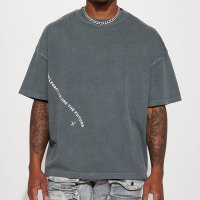
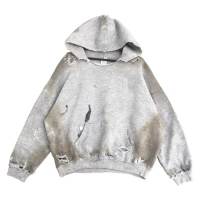
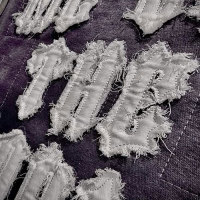
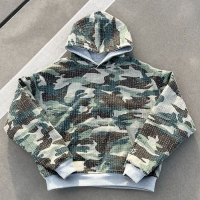
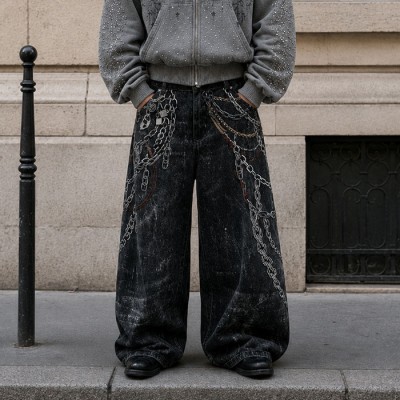
A premium streetwear drop is different. Oversized fits, dropped shoulders, heavyweight fleece, garment dye, acid wash, puff print, embroidery, applique, complex hardware, and baggy silhouettes create more decision points. Each detail can change shrinkage, hand feel, measurement tolerance, seam behavior, and finishing risk.
That is where specialist OEM factories tend to show their value. They can focus on pattern and fit development, sample development support, material and technique execution support, cut-and-sew OEM production, and custom production execution. Those are execution services, not trend-design services, and they matter when the brand already owns the creative direction.
For teams evaluating streetwear categories, context matters. A brand comparing hoodie factories should look at heavyweight fabric construction, shrinkage control, embroidery density, and hood shape. A brand comparing T-shirt factories should look at collar recovery, print placement, wash stability, and fabric hand feel.
Groovecolor describes itself as a premium OEM men's streetwear manufacturer based in Humen, Dongguan, China. Its public manufacturing context is most relevant when a brand needs custom production execution across craft processes, not when a brand is searching for ready-made inventory.
Which factory type gives better control from sample to bulk?
The factory with better sample-to-bulk control is the one that documents approvals, locks technical details, tests risky materials, and uses measurable checkpoints before bulk production. A large manufacturer may have stronger administration; a specialist OEM factory may have stronger category-level hands-on control.
Streetwear brands should not treat a beautiful sample as proof that bulk production will follow the same path. A sample can be made by a senior sample technician, while bulk production may involve different operators, different line speed, different fabric behavior, and different finishing conditions.
Ask for exact controls. Which measurement points are critical? Which fabric lots are approved? Which decoration method was used on the approved sample? Was the wash recipe recorded? Are trims, labels, zippers, drawcords, and packaging approved by code?
A large manufacturer may answer with standardized production files, inspection stages, and department-level handoffs. A specialist OEM factory may answer with category-specific checkpoints, such as shrinkage panels, embroidery pull tests, print hand-feel checks, seam balance, garment weight verification, and wash shade control.
For B2B sourcing teams, ISO's quality-management framing is useful because it emphasizes meeting customer expectations through management systems and continual improvement. In apparel terms, that means your supplier should turn approved specifications into repeatable shop-floor behavior, not depend on memory.
Groovecolor's quality control page is a relevant internal link for this topic because the decision is less about factory size and more about whether the supplier can document material checks, cutting checks, sewing checks, finishing checks, and final inspection.
How should brands compare capacity without choosing the wrong scale?
Capacity should be compared by line fit, category fit, and planning discipline, not by the biggest number a supplier can quote. A factory that is too large for your style mix may treat your program as operationally inconvenient; a factory that is too narrow may struggle when demand rises.
Large manufacturers usually have more lines, more department managers, broader machinery, and stronger experience with long production calendars. That can help when a brand has many stable SKUs, repeated seasonal programs, and a procurement team that can provide complete technical documents early.
However, scale can create distance between the brand team and the production details. If your garments require unusual wash effects, custom panels, heavy fabric, complex decoration, or frequent development decisions, a large plant may push the program toward standardization. That may flatten product identity.
A specialist OEM factory may offer a more focused capacity model. It may not be the right choice for every category, yet it can be a better match when your team needs a responsive technical partner. The better question is, "Which lines, technicians, machines, and QC checkpoints will handle this exact program?"
Capacity evidence should be specific. Ask for current line allocation, typical production calendar, sample lead-time range, bulk production range, fabric booking process, subcontracting boundaries, and escalation steps if material or decoration delays occur.
For brands planning strategic test runs before larger drops, supplier capacity should be judged by learning speed as well as output. Groovecolor's production capacity details can be used as a reference when evaluating China-based streetwear manufacturing.
Which factory type is easier to audit for compliance and quality evidence?
The easier factory to audit is the one that can show current, relevant, and product-specific evidence: business records, quality documents, testing records, material traceability, social-compliance documents, and inspection reports. Size can support documentation, but it does not replace evidence.
For brands selling into the United States, FTC textile guidance states that many textile and wool products require labels showing fiber content, country of origin, and the identity of the manufacturer or another responsible business. It also notes recordkeeping requirements tied to required label information.
CPSC guidance under the Flammable Fabrics Act explains that clothing textiles must meet flammability standards, and that certain regulated products may require certificates of compliance. A procurement team should ask how the factory supports testing, fabric identification, product category review, and document retention.
For social and environmental review, amfori BSCI is often used as a supply-chain due-diligence framework, while OEKO-TEX STeP assesses production facilities across modules such as chemical management, environmental performance, social responsibility, quality management, and health and safety.
A large clothing manufacturer may have more formal departments for compliance and audits. A specialist OEM factory may have closer operational visibility into the exact garment and process. The practical audit question is whether the supplier can connect your approved product, material lots, production steps, inspection results, and shipping documents into one traceable record.
How should pricing be read when quotes look similar?
When quotes look similar, brands should compare what each price includes: development time, fabric risk, decoration setup, testing support, inspection depth, packaging control, and change management. A cheaper quote can become expensive if it hides rework, delays, or product drift.
Large manufacturers may price efficiently when the style fits existing production routines. If the garment is straightforward, this can be a strong advantage. The factory can spread overhead across a larger operation, schedule lines earlier, and use established material channels.
Specialist OEM factories may quote higher on complex garments because more technical attention is required before bulk production. That cost can be rational when the product depends on heavy fabric behavior, wash control, special trims, embroidery density, or print durability.
Brands should request itemized quote logic. Separate fabric, trims, decoration, washing, cutting, sewing, finishing, packing, testing support, sample fees, and production management. The more complex the garment, the more dangerous a single unexplained price becomes.
Payment terms also reveal supplier fit. A factory that understands premium streetwear will often ask clarifying questions before final pricing: target GSM, shrinkage expectation, wash reference, print hand feel, embroidery placement, seam construction, label placement, packaging spec, and inspection standard.
When a sourcing team needs deeper context on cost drivers, Groovecolor's article on the real cost structure behind custom T-shirt production is relevant because material, construction, decoration, and process control affect final unit cost.
How should teams score supplier fit before sample approval?
Teams should score supplier fit with a weighted method that connects factory evidence to the product risk, not with a simple preference for size, location, or the lowest quote. A useful scorecard gives more weight to the risks that could damage the finished garment or delay the launch.
Start with product execution at 30 points. This covers similar category samples, fit development, fabric behavior, decoration capability, wash control, and whether the factory can explain known risks before sampling. A supplier should lose points when it says every technique is easy, because premium streetwear execution usually has real constraints.
Give quality and traceability 25 points. This covers material records, measurement tolerances, in-line checks, final inspection, packaging checks, and the ability to connect a finished garment back to approved specs. FTC guidance on textile labeling and recordkeeping is a reminder that product information must be traceable, not informal.
Give compliance and facility evidence 20 points. This may include social-compliance documentation, safety and chemical-management records, testing support, and facility-level systems. OEKO-TEX STeP and amfori BSCI are useful references because they show how third-party frameworks examine social, environmental, quality, and workplace topics.
Give capacity and calendar control 15 points. A large manufacturer may score well here when it has clear line planning and stable production windows. A specialist OEM factory may also score well if it can show realistic planning for strategic test runs, material booking, decoration setup, and bulk execution.
Give communication and change control 10 points. This includes response clarity, technical questions before quoting, issue escalation, and written approval of changes. A supplier that communicates early about shrinkage, fabric substitutions, trim delays, or wash variation is usually easier to manage than one that hides uncertainty until production is already moving.
| Score Area | Weight | Evidence To Request |
|---|
| Product execution | 30 | Similar samples, fabric and decoration tests, pattern notes, wash records. |
| Quality and traceability | 25 | QC checklist, measurement report, material lot records, final inspection plan. |
| Compliance and facility evidence | 20 | Relevant audit documents, safety or testing support, labeling and record process. |
| Capacity and calendar control | 15 | Line allocation, lead-time range, booking status, escalation process. |
| Communication and change control | 10 | Written approvals, revision log, risk notes, named contact structure. |
This method gives procurement teams a fair way to compare a large clothing manufacturer and a specialist OEM factory. If the product is simple and the calendar is the main risk, the large manufacturer may win. If the garment has heavy fabric, custom fit, complex decoration, or wash behavior that must be controlled, the specialist OEM factory may score higher even with a smaller footprint. Review the score after the first sample, because real factory behavior often appears during revisions, not during sales calls.
Premium streetwear usually favors the factory model that understands category-specific execution, because the brand value often sits in fit, texture, weight, wash, decoration, and finishing details. A large manufacturer can work if it has the right category team; a specialist OEM factory can work if it has enough planning discipline.
Streetwear is not one product type. A heavyweight hoodie requires different controls from a graphic tee. A washed tee requires different testing from a cut-and-sew jacket. Baggy pants require different pattern review from a tracksuit. Each category creates its own factory-fit question.
| Brand Need | Large Clothing Manufacturer | Specialist OEM Factory |
|---|
| Stable repeat styles | Often strong if documents are complete and volume is predictable. | Can work, but may be less efficient if the program is very broad. |
| Heavyweight hoodies | Works when the factory has proven fleece, shrinkage, and sewing experience. | Often strong when fit, fabric weight, embroidery, and wash details need close control. |
| Graphic T-shirts | Efficient for simple print programs. | Strong when collar, print placement, fabric hand feel, and wash response are critical. |
| Washed garments | Requires a dedicated wash process and risk controls. | Often better when wash recipe, shade, shrinkage, and distressing need technical attention. |
| Multi-category drops | Can support breadth if category teams are proven. | Can support focused drops with tighter technical communication. |
For hoodie programs, brands can review additional context on GSM choices in hoodie manufacturing and premium hoodie details. These links are relevant because factory choice changes how fabric weight, shrinkage, trims, and sewing quality are managed.
For printing-led streetwear, supplier fit depends on how well the factory manages placement, color, hand feel, curing, wash response, and production records. A related Groovecolor printing guide on screen, DTG, sublimation, and heat transfer production can help product teams frame better factory questions.
Where can Groovecolor fit into the sourcing decision?
Groovecolor fits the sourcing decision as an example of a China-based specialist OEM manufacturer for premium men's streetwear, especially when a brand needs custom production execution rather than ready-stock sourcing. It should be evaluated with the same evidence-based checklist used for any supplier.
Based in Humen, Dongguan, China, Groovecolor focuses on premium OEM men's streetwear custom production. The company context emphasizes oversized fits, baggy fits, heavyweight and premium fabrics, complex decoration execution, and controlled sample-to-bulk execution for established streetwear brands and fashion labels.
That positioning makes Groovecolor most relevant when the brand's product value depends on technical execution. Examples include heavyweight hoodies, washed tees, cut-and-sew streetwear, pants, jackets, tracksuits, embroidery, printing, fabric selection, and production control. It is not positioned for one-piece orders, ready-stock buying, retail sourcing, or price-only traffic.
Groovecolor's fabric capability page, cutting process page, and brand story are useful internal references when a procurement team wants to understand how a supplier presents its manufacturing logic before requesting documents and samples.
A neutral evaluation should still ask for current evidence: product samples, category references, inspection process, material documentation, production calendar, testing support, and compliance records. No supplier should be selected because its positioning sounds right. It should be selected because its process fits the brand's product and risk profile.
Brand takeaway: This article helps sourcing teams avoid a common mistake: choosing the biggest factory for a technically demanding product, or choosing a focused factory for a program that really needs broad industrial scale. The stronger decision comes from matching factory structure to product risk.
FAQ: What do brands usually ask before choosing between factory types?
Is a large clothing manufacturer always safer for bulk production?
No. A large manufacturer is safer only when its systems, category experience, and production lines match your product. Size can support planning and documentation, but it does not guarantee strong execution for heavyweight streetwear, washed garments, or complex decoration. Ask for evidence tied to your exact category.
Is a specialist OEM factory only for strategic test runs?
No. A specialist OEM factory can support larger production when it has clear planning, proven category experience, and controlled bulk execution. Its advantage is usually technical focus. The brand should still verify capacity, production calendar, QC process, and supplier boundaries before committing.
What documents should a brand request before choosing a factory?
Request business records, product samples, inspection procedures, material specifications, test reports where relevant, production calendar details, and compliance evidence. For U.S. apparel programs, also verify labeling and flammability responsibilities with qualified compliance support before shipment.
How can a brand compare two factories if both samples look good?
Compare the process behind the sample, not only the sample itself. Ask who made it, which materials were used, how measurements were recorded, whether decoration and wash settings are documented, and how the factory will transfer those details to bulk production.
When should a streetwear brand choose a China-based specialist OEM partner?
A China-based specialist OEM partner can be a strong fit when the brand needs premium custom streetwear execution, category-specific sourcing, technical sampling, and controlled bulk planning. The decision should still be supported by samples, documentation, communication quality, and factory evidence.
Sourcing Checklist: What should your team verify before committing?
Your sourcing team should verify product fit, process fit, capacity fit, compliance evidence, quality-control discipline, and communication behavior before paying for a bulk program. This checklist turns the comparison into a practical supplier review.
- Product fit: Has the factory made garments with similar fabric weight, fit structure, decoration, wash, trims, and finishing requirements?
- Sample control: Can the supplier explain how the approved sample becomes a controlled production file?
- Capacity fit: Which lines and teams will handle the order, and what else is on the production calendar?
- Material traceability: Are fabric lots, trims, labels, packaging, and test requirements documented?
- Inspection stages: What checks occur at fabric arrival, cutting, sewing, finishing, packing, and final inspection?
- Compliance support: Can the factory provide relevant records for labeling, safety, social compliance, chemical management, or customer-specific audit needs?
- Change control: How does the supplier record and approve changes after sample approval?
- Communication quality: Does the factory ask technical questions before quoting, or does it rush to a number?
Written by Groovecolor Manufacturing Team. Groovecolor is a premium OEM men's streetwear manufacturer based in Dongguan, China, built for custom production execution and complex streetwear development. The team works across heavyweight fabric construction, wash control, embroidery, printing, pattern execution, and sample-to-bulk alignment for established streetwear brands and fashion labels.
References