
- Quick Serch
- Category
- Tshirts
- Shirt
- Hoodies
- Sweatshirts
- Pants
- Tracksuit
- Shorts
- Sweater
- Jackets
- Craft
- Wash
- Tie dye
- Gradient
- Embossed
- Patchwork
- Chenille Patches
- DTG Print
- Screen Printing
- Embroidery
- Puff print
- Sublimation
- Rhinestone
- Embroidery Patch
- Multiple Pockets
- Zip Up
- Fabric
- Cotton
- Polyester
- French Terry
- Fleece
- Nylon
- Satin
- PU Leather
- Denim
- Velvet
- Wool
- Jersey
- Corduroy
- Flannel
- Knitied
- Mesh
- New Releases
- New for Spring 2025
- New for Summer 2025
- New for Autumn 2025
- New for Winter 2025
Oversized T-shirt
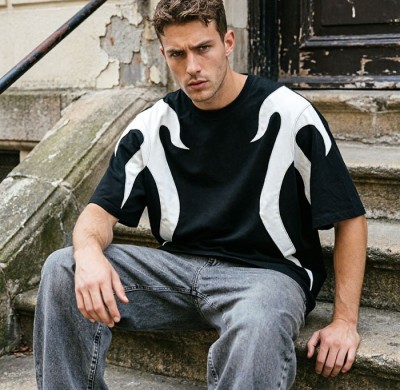
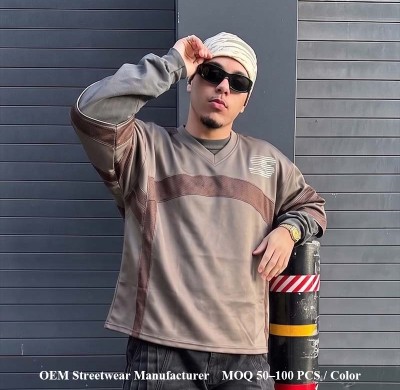
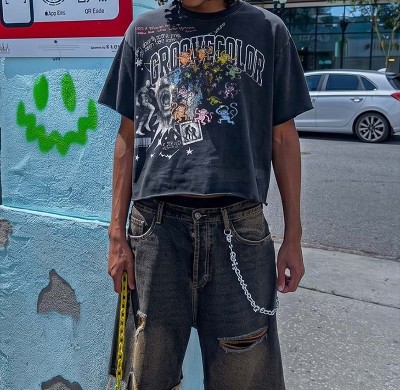
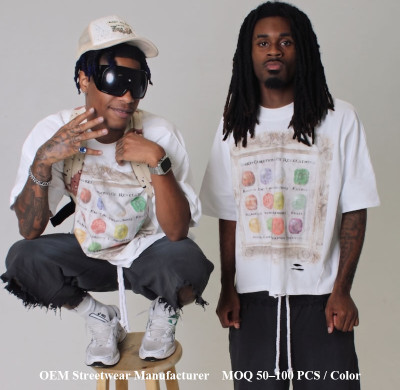
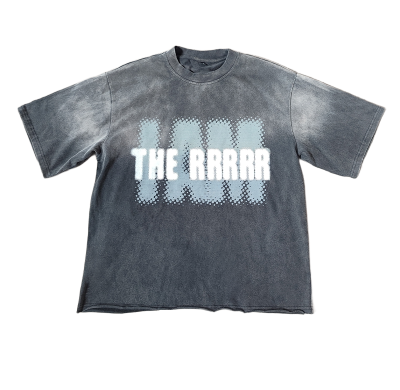
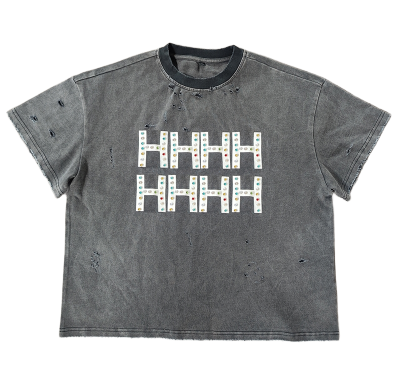
We develop men's oversized tees for established streetwear brands and menswear-focused fashion labels, with controlled boxy bodies, drop shoulders, sleeve proportions, neck rib construction, and graded sizing from XS to 5XL. Fabric options range from 180–400gsm, including structured 260–400gsm heavyweight T-shirts, with screen printing, DTG, puff print, embroidery, appliqué, washing, distressing, rhinestones, and custom trims. MOQ is 50–100 pcs per color, with samples typically completed in 2–3 weeks and bulk production in 3–4 weeks depending on complexity. Our service is built for premium OEM cut-and-sew production, not wholesale, blank apparel, POD, one-piece customization, or ODM.


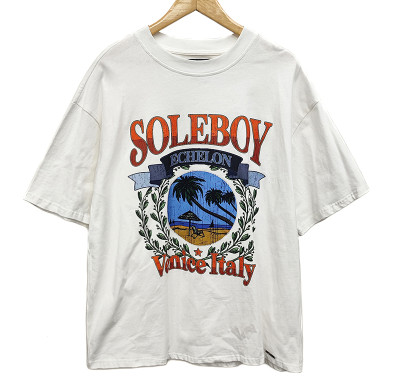
What Should a Production-Ready Custom Oversized T Shirt Specification Include?
A production-ready oversized T-shirt specification must define the intended silhouette through measurable construction details, not simply describe the garment as “oversized.” Before sampling begins, streetwear brands should confirm the chest width, body length, shoulder width, sleeve length, sleeve opening, armhole depth, neck width, front-neck drop, rib height, and finished-garment measurements.
These measurements determine whether the final result feels boxy, relaxed, dropped at the shoulder, cropped through the body, or deliberately extended in length. Enlarging a standard T-shirt pattern without controlling these proportions can produce an unbalanced garment with excessive body length, narrow sleeves, unstable shoulders, or an oversized fit that changes between sizes.
A complete specification should also identify fabric composition and GSM, expected shrinkage, wash treatment, neck-rib construction, artwork dimensions, decoration placement, label positions, trims, finished measurement tolerances, and packing requirements. For washed products, brands should approve measurements and appearance after the intended wash process because washing can affect garment dimensions, color depth, surface texture, and drape.
GROOVECOLOR reviews these factors before production so that the approved sample becomes a measurable manufacturing standard rather than only a visual reference. Streetwear product teams that need broader guidance on full custom development can also review our custom T-shirt manufacturing capabilities.
Which Fits and Fabric Weights Can an Oversized T Shirt Manufacturer Develop?
An oversized T shirt manufacturer can develop relaxed, boxy, drop-shoulder, cropped, heavyweight, and vintage-washed silhouettes, but each result requires a different balance of pattern measurements and fabric behavior. GROOVECOLOR produces custom T-shirts from 180–400gsm, while structured heavyweight T-shirts normally use 260–400gsm fabrics.
Fabric weight should not be selected only because a higher GSM sounds more premium. A lighter jersey creates more movement and a softer drape, while a dense heavyweight fabric supports a wider, more architectural silhouette. As fabric weight increases, the factory must pay closer attention to collar strength, shoulder construction, seam stability, shrinkage, and how the garment hangs after washing.
| Oversized T-Shirt Option | Typical Fabric Weight | Resulting Fit and Drape | Manufacturing Points to Confirm |
|---|---|---|---|
| Relaxed Oversized Fit | 180–240gsm | Softer movement and a lighter, more fluid drape | Chest ease, sleeve length, shrinkage, transparency, and print hand feel |
| Heavyweight Boxy Fit | 260–320gsm | Wider body with a more structured silhouette | Drop-shoulder position, body length, neck-rib recovery, and sleeve opening |
| Extra-Heavy Oversized Fit | 340–400gsm | Dense hand feel with a pronounced, shape-retaining profile | Collar construction, seam strength, garment weight, and wash shrinkage |
| Vintage-Washed Oversized Fit | Selected according to the intended finish | Worn-in color, softer surface, and controlled vintage character | Pre-wash measurements, approved wash recipe, shade range, and bulk consistency |
| Decorated Statement Fit | Matched to artwork and technique | Strong visual emphasis across the front, back, sleeves, or multiple panels | Artwork scale, print placement, embroidery weight, and fabric distortion |
The best option depends on the intended retail position, climate, artwork, wash treatment, and how the garment should sit on the body. Streetwear brands can review additional material options through our streetwear fabric selection guide.
How Can Streetwear Brands Customize an Oversized T Shirt with Printing, Washing, and Decoration?
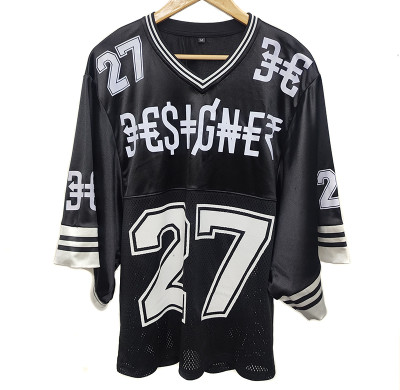
Streetwear brands can customize oversized T-shirts through flexible artwork placement, screen printing, DTG, puff print, embroidery, appliqué, washing, distressing, rhinestones, and custom trims. The correct method depends on fabric weight, artwork coverage, color requirements, intended surface texture, and whether multiple processes must be combined.
Screen printing is suitable for bold graphics, solid colors, layered inks, and repeatable bulk execution. DTG supports detailed artwork, tonal transitions, and photographic graphics, while puff print creates raised dimension when the artwork, ink deposit, and curing process are properly controlled. Embroidery and appliqué introduce physical depth but require attention to backing, stitch density, placement, and the risk of fabric distortion.
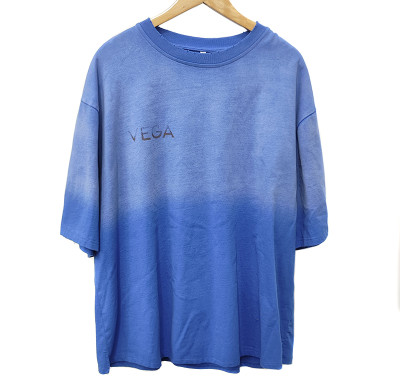
Acid wash, stone wash, pigment wash, vintage wash, and controlled distressing can change the color, hand feel, and visual age of a custom oversized tee. When washing is combined with printing, embroidery, appliqué, rhinestones, or raw-edge details, the production sequence must be confirmed during sampling. A process that looks correct on an untreated fabric may react differently after washing, heat, abrasion, or finishing.
Artwork can be positioned across the chest, back, sleeves, shoulders, side panels, or other approved garment areas rather than being limited to a standard center-front print. The objective is not to add as many techniques as possible, but to select a combination that can retain the intended visual result during repeat bulk production. See our printing, embroidery, washing, and decoration capabilities for additional production references.
How Does an Oversized T Shirt Manufacturer Control Fit from Sample to Bulk?
Reliable sample-to-bulk control requires the approved sample, measurement chart, fabric specification, wash standard, artwork placement, and decoration details to remain connected throughout production. A visually approved sample alone is not enough if the factory has not recorded the measurable construction and finishing conditions behind it.
GROOVECOLOR begins with a technical review of the submitted design and tech pack. The pattern and product-development teams check whether the proposed measurements, fabric weight, construction, wash process, and decoration methods are compatible. Potential conflicts should be identified before bulk materials are committed, especially when heavyweight fabrics, wide bodies, dropped shoulders, large graphics, washed finishes, or layered decorations are involved.
After the sample is approved, key measurements, fabric details, artwork dimensions, placements, color references, wash effects, labels, and trims are recorded as production references. Fabric is laid manually before automated precision cutting. A pilot run and in-process inspections are then used to check construction, measurements, decoration alignment, wash appearance, and finishing before full output continues.
Final inspection should confirm that the production follows the approved specification rather than relying on the general tolerance of ordinary casualwear. This is especially important for oversized T-shirts because small changes in shoulder position, body length, sleeve width, neck opening, or wash shrinkage can visibly alter the intended silhouette.
GROOVECOLOR’s quality-control chain covers fabric checking, pattern and sample review, pilot production, in-process inspection, final inspection, and pre-shipment checks. More information is available on our quality control page and precision cutting page.
How Can Procurement Teams Verify GROOVECOLOR’s Manufacturing Reliability?
GROOVECOLOR operates in Humen, Dongguan, with more than 16 years of experience in custom men’s streetwear production and a monthly capacity of more than 300,000 garments.
The manufacturing site has completed a SMETA 4-Pillar audit covering Labour Standards, Health and Safety, Environmental practices, and Business Ethics. Quality control is supported by defined checkpoints that include fabric checking, pattern and sample review, pilot production, in-process inspection, final inspection, and pre-shipment verification.
Procurement teams can review our factory certificates and audit information, quality-control process, and production capacity before beginning product development.
Which Streetwear Brands Are Best Suited to GROOVECOLOR’s Custom Oversized T Shirt Production?
This custom oversized T-shirt manufacturing service is designed for market-proven streetwear brands, established menswear-focused fashion labels, product developers, procurement teams, creative directors, and e-commerce apparel teams with structured product-development requirements. It is most suitable for companies that already operate established sales channels, maintain a defined product calendar, and need custom fit, fabric, decoration, labeling, and repeat bulk execution.
The MOQ is 50–100 pcs per color. This production level provides strategic flexibility for validated concepts before scale-up; it is not positioned as a low-cost one-piece or beginner-order service. Once a product is validated, GROOVECOLOR can support larger repeat orders through a monthly production capacity of more than 300,000 garments.
GROOVECOLOR focuses exclusively on premium OEM custom manufacturing. The service is not built for ready-stock wholesale, blank apparel purchasing, print-on-demand, dropshipping, one-piece personalization, or ODM trend development. Streetwear teams comparing different production models can review Blank Apparel vs Cut-and-Sew Streetwear Manufacturing before selecting a production route.
Frequently Asked Questions About Custom Oversized T Shirt Manufacturing
What is the MOQ for custom oversized T-shirt production?
What fabric weights are available for custom oversized T-shirts?
Can GROOVECOLOR develop a custom boxy or drop-shoulder fit?
Which printing, washing, and decoration techniques can be combined?
How long do samples and bulk production take?
Does GROOVECOLOR provide ODM, blank T-shirts, or print-on-demand?
Develop a Custom Oversized T Shirt for Your Next Production Program
Send your tech pack, reference sample, measurement chart, artwork, target fabric weight, wash requirements, estimated quantity, and delivery market. GROOVECOLOR will review fit construction, material compatibility, decoration feasibility, and sample requirements before quotation. MOQ is 50–100 pcs per color.
Request a Custom Manufacturing ReviewPremium OEM custom production only. No wholesale, blank apparel, POD, one-piece orders, or ODM.

- Full Name:
- Felix
- Tel:
+86 18027029852
- Email:
- Info@groovecolor.com
- WhatsApp:
- 8618027029852
- Address:
- 6th Floor, Building A, Weiyuan Zexu Industria Zone, Humen Town, Dongguan, Guangdong China