Blank Apparel vs Cut-and-Sew Streetwear Manufacturing: Which Model Fits Market-Proven Brands?
For market-proven streetwear brands, cut-and-sew streetwear manufacturing is the stronger model when the goal is original fit, custom sizing, fabric control, wash development, all-over print, advanced embroidery, trim details, and long-term OEM production value. Blank apparel may look simple and affordable because the garment already exists, but that is also its biggest limitation: the size, fit, fabric, construction, and most production decisions are already fixed before your brand adds any print or embroidery.
The biggest misunderstanding is that many brands think custom clothing simply means taking a finished blank T-shirt or hoodie and adding a logo, print, or embroidery. That is not full custom streetwear manufacturing. That is finished garment decoration.
This misconception also creates a major cost misunderstanding. A decorated blank is priced as a finished garment plus decoration. A cut-and-sew streetwear product is priced as product development, fabric selection, pattern development, sample making, cutting, sewing, finishing, quality control, and custom production planning. These are two completely different cost structures.
This article is written for established streetwear brands, market-proven streetwear brands, menswear-focused fashion labels, procurement teams, product developers, creative directors, and apparel teams with stable sales channels and structured product calendars. It is especially useful for brands that need custom silhouettes, premium fabrics, complex techniques, and controlled bulk execution before scaling into larger-volume production.
Key Takeaways for Established Streetwear Brands
- ▸ Cut-and-sew streetwear manufacturing gives brands control over fit, sizing, fabric, construction, wash effects, trims, and final product value.
- ▸ Blank apparel is fixed before decoration begins, so it cannot support original measurements, engineered silhouettes, premium wash development, or complex product identity.
- ▸ Full custom streetwear costs more because it includes fabric planning, pattern development, sampling, cutting, sewing, finishing, and quality control.
- ▸ Advanced techniques such as all-over print, acid wash, embroidery, appliqué, rhinestone, patchwork, and custom trims need a planned production route.
- ▸ For premium streetwear collections, the garment itself must carry brand value before any logo or graphic is added.
Blank Apparel vs Cut-and-Sew Streetwear Manufacturing: Quick Comparison for Brand Teams
What Is Blank Apparel in Streetwear Production?
Blank apparel refers to finished, undecorated garments that are produced first and decorated later. A brand may add screen printing, embroidery, DTG printing, heat transfer, or a label change, but the garment itself has already been designed, cut, sewn, sized, and finished before the brand starts customizing it.
In simple words, blank apparel means the clothing is already made. Your brand is only adding decoration on top of it. That is why blank apparel is not the same as custom OEM streetwear manufacturing.
Advantages of Blank Apparel
Disadvantages of Blank Apparel for Streetwear Brands
This is the real issue: blank apparel can carry your logo, but it does not truly carry your product language.
For a premium streetwear brand, the garment itself matters before the graphic is added. The fit, fabric weight, sleeve volume, body proportion, washed texture, stitching, trims, and construction all tell customers whether the product feels premium or ordinary.
The Biggest Blank Apparel Misconception: Custom Does Not Always Mean Fully Custom Manufacturing
Many brands believe custom clothing means choosing a blank T-shirt or hoodie, adding a print or embroidery, changing the neck label, and calling it custom. That is surface customization. It is not full custom manufacturing.
This misunderstanding is one of the biggest reasons brands misjudge the price of custom streetwear. Many buyers use the blank apparel workflow in their minds, then expect a fully custom hoodie, heavyweight tee, acid wash sweatshirt, or oversized graphic jersey to be priced like a decorated blank.
But the work is completely different. A blank apparel project starts with an existing garment. A cut-and-sew streetwear project starts with the product itself.
That means cut-and-sew requires decisions about fabric, GSM, shrinkage, pattern, size grading, sample development, decoration placement, washing, finishing, trims, and quality control. The garment has to be developed before it can be produced.
This is why the cost is higher. Not because the manufacturer is simply charging more, but because there are more decisions, more processes, more testing, more technical work, and more custom options involved.
If a brand wants its own fit, its own fabric, its own measurements, its own washing effect, and its own construction details, it cannot use the cost logic of blank apparel decoration.
Why Blank Apparel Sizes Are Fixed and Fit Control Is Limited
Blank apparel comes with a size chart that already belongs to the blank supplier. Once a garment has already been sewn, the core fit is locked. Printing and embroidery cannot change the silhouette.
A Finished Blank Usually Cannot Be Rebuilt Into Your Brand's Fit
This matters because streetwear fit is not just large size. A good oversized fit depends on proportion. The shoulder drop, sleeve width, body length, fabric weight, drape, rib tension, and neckline structure need to work together. If one part is wrong, the whole garment can feel cheap, awkward, or generic.
For example, a blank hoodie may be labeled oversized, but it may still have a standard sleeve shape, weak rib, thin body fabric, or a generic hood structure. A premium streetwear brand often needs a more intentional fit block.
If your brand needs its own measurements, its own size system, and its own silhouette, you need cut-and-sew streetwear manufacturing.
What Is Cut-and-Sew Streetwear Manufacturing?
Cut-and-sew streetwear manufacturing means the garment is built from fabric pieces. The fabric is selected, the pattern is developed, the panels are cut, the pieces are sewn, and the garment is finished according to the brand's product requirements.
In simple words, cut-and-sew means your brand is not decorating someone else's finished garment. Your brand is building its own garment from the beginning.
For streetwear brands, this matters because the product is not only a body for graphics. The product itself becomes part of the brand identity.
What a Cut-and-Sew Route Lets Brands Control
This is why cut-and-sew is more suitable for premium streetwear collections. It gives the brand the ability to decide what the garment should feel like, how it should fit, how it should age, how the graphics should sit, and how the final product should communicate value.
Why Cut-and-Sew Matters More for Premium Streetwear Brands
Cut-and-sew is not just a more expensive production route. It is a different level of product control.
For streetwear brands, product value is often built through small but visible decisions: how wide the shoulders are, how the sleeve falls, how structured the tee feels, how heavy the hoodie drapes, how the wash reacts with the fabric, how the print sits across the body, how embroidery weight affects the garment, and how the label, zipper, drawcord, and trims support the brand image.
Blank apparel cannot freely control these details because the garment has already been made.
Cut-and-sew allows the brand and manufacturer to plan these details before production. That is why it is the better route for high-end streetwear collections, especially when the brand needs a product that can carry a controlled premium.
What Cut-and-Sew Allows Your Brand to Control
Custom Oversized, Boxy, Cropped, or Baggy Silhouettes
A streetwear fit cannot be solved by choosing a bigger size. Oversized, boxy, cropped, and baggy silhouettes all need pattern control.
An oversized tee needs the right shoulder drop, sleeve width, and body volume. A boxy tee needs shorter body length and wider body proportion. A cropped jersey needs length control without making the garment look too small. Baggy pants need rise, thigh width, knee width, hem width, and inseam planning. This is why brands that care about fit need cut-and-sew. The silhouette must be built into the pattern before the garment is sewn.
Brand-Specific Measurements
Blank apparel uses someone else's size chart. Cut-and-sew allows your brand to develop its own measurement system.
This matters when a brand wants its S, M, L, XL, and plus-size range to match its own customer base. A market-proven streetwear brand may already know that its customers prefer wider shoulders, longer sleeves, heavier drape, or a more relaxed body. With cut-and-sew, those measurements can be developed and graded across sizes. That gives the brand a more controlled product standard instead of relying on a generic blank size chart.
Custom Fabric Weight and Hand Feel
Fabric is one of the biggest differences between ordinary clothing and premium streetwear.
A blank garment only gives you the fabric the supplier already chose. You may not know enough about yarn quality, shrinkage, long-term washing behavior, surface stability, or whether the garment will deform after repeated wear and washing.
Cut-and-sew gives your brand the ability to select or develop better fabric options. T-shirts can be planned with 180-400gsm fabric depending on season and structure. Heavyweight tees can use higher GSM for a more structured silhouette. Hoodies and sweatshirts can use 400-600gsm French Terry or fleece depending on the required hand feel. Denim, twill, jersey, mesh, or woven fabrics can be selected according to the product category. This is not only about thickness. It is about how the fabric supports the silhouette, how it feels on the body, how it reacts to washing, and whether it matches the brand's price position.
Fabric Planning for T-Shirts, Hoodies, Sweatshirts, Jackets, Pants, and Denim
Different streetwear categories need different fabric planning.
A T-shirt may need a compact surface for printing. A hoodie may need enough weight to hold structure. A sweatshirt may need a softer hand feel without losing shape. A jacket may need outer fabric, lining, rib, and trim coordination. Pants may need drape, durability, and movement. Denim may need washing behavior, thickness, and finishing compatibility.
Blank apparel cannot solve this because the fabric decision is already finished. Cut-and-sew allows the manufacturer to recommend fabric based on the product result. This is important for brands that do not only want a garment that looks good in photos, but a garment that performs after repeated wear, washing, packing, shipping, and customer use.
Advanced Printing, Embroidery, Appliqué, Rhinestone, and Patchwork
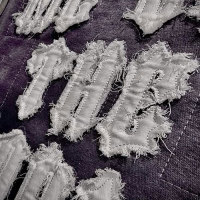
Premium streetwear often needs more than a small chest print. A brand may want oversized back print, sleeve print, all-over print, DTG print, screen print, puff print, crack print, embroidery, chenille or towel embroidery, appliqué, rhinestone, patchwork, layered print and embroidery, or graphics that interact with seams, panels, and garment shape.
On blank apparel, decoration happens after the garment is finished. That limits placement and makes complex artwork harder to control.
In cut-and-sew manufacturing, print and embroidery can be planned as part of the production route. Some artwork can be applied before sewing. Some details can be aligned with panels. All-over print can be developed more intentionally. Embroidery weight can be considered before construction. This gives the final garment a more deliberate streetwear result.
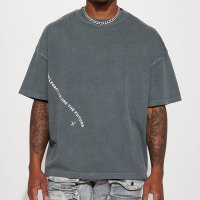
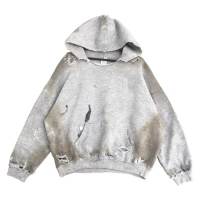
Acid Wash, Pigment Dye, Stone Wash, Vintage Fade, and Distressing
Wash effects are not just visual effects. They affect the fabric, size, surface, print, seams, trims, and final hand feel.
Blank finished garments are generally not suitable for free custom wash development because the fabric, construction, thread, trims, and decoration have already been decided. If the wash is added without planning, the garment may shrink, twist, fade unevenly, damage decoration, or lose shape.
Cut-and-sew allows the wash direction to be planned earlier. Acid wash needs fabric and color planning. Pigment dye needs shrinkage and surface control. Stone wash needs garment durability testing. Vintage fade needs color direction and garment hand-feel control. Distressing needs placement planning so the damage effect looks intentional, not random. This matters for streetwear because washing is part of the design language. A good wash makes the product feel lived-in, premium, and culturally relevant. A bad wash makes the product look unstable or cheap.
Custom Labels, Trims, Drawcords, Zippers, Rib, and Packaging
Streetwear branding is not only the front graphic. A premium product may need woven labels, wash labels, hang tags, custom drawcords, custom zippers, metal tips, rib selection, button or snap choices, pocket construction, inner taping, and packaging direction.
Blank apparel may allow simple relabeling, but the deeper trim and construction choices are limited because the garment is already finished.
Cut-and-sew gives the brand more control over these details. This helps the product feel like a complete brand item instead of a decorated generic garment.
Approved-Spec Execution Before Larger-Volume Production
For market-proven streetwear brands, the sample is not only a photo reference. It is a production standard.
Before scaling into larger-volume production, the brand needs the approved fit, fabric, wash, print, embroidery, trims, and measurements to be clearly defined. Cut-and-sew production allows the manufacturer to follow approved specifications and manage the production route around those requirements. This matters because the brand is not only buying units. It is protecting product value, customer trust, and retail performance.
Long-Term OEM Manufacturing Support
A serious streetwear brand does not need only one product. It needs a manufacturing system that can support future collections.
Cut-and-sew OEM manufacturing helps brands build repeatable fit blocks, fabric libraries, wash standards, trim directions, category expansion, production planning, seasonal product calendars, and controlled scale-up after validated concepts. This is where cut-and-sew becomes much more valuable than blank apparel. It helps the brand build a product foundation that can continue across multiple releases, categories, and seasons.
Key Differences Between Blank Apparel and Cut-and-Sew Streetwear Manufacturing
Product identity is the most important difference. Blank apparel gives your brand a surface. Cut-and-sew gives your brand a product.
If the only brand element is the logo, the product may look replaceable. But if the fit, fabric, wash, construction, and details are original, the garment becomes harder to copy and easier to recognize. Premium streetwear is not built only through decoration. It is built through product identity.
Fit and silhouette are another major difference. Blank apparel is limited to existing fit options. Cut-and-sew allows the fit to be developed around the brand. For streetwear, this is critical. A boxy tee, oversized hoodie, cropped jersey, or baggy denim pant needs pattern development. The fit cannot be added after the garment is finished.
Fabric is also a major quality signal. Blank apparel gives limited visibility into fabric behavior. Cut-and-sew allows fabric to be selected, tested, and matched to the product goal. Fabric quality affects shrinkage, hand feel, surface texture, print result, drape, and long-term wear. If a brand wants a premium price position, fabric cannot be an afterthought.
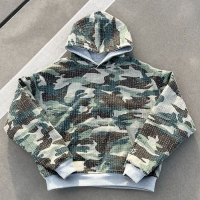
Graphic placement and all-over print also favor cut-and-sew. Blank apparel is limited by finished garment construction. Cut-and-sew allows artwork to be planned with the garment, including all-over print, panel print, seam-crossing graphics, sleeve artwork, oversized back graphics, engineered print placement, and layered print and embroidery.
Wash and finishing effects need even more planning. Blank apparel generally cannot offer true custom wash development at the brand level. Cut-and-sew can plan wash effects together with fabric, print, trims, and garment structure. This is especially important for acid wash, pigment dye, stone wash, vintage fade, distressing, raw edge, and sun-faded effects.
Cost and custom value are often misunderstood. Blank apparel is usually cheaper because it has fewer processes and fewer custom decisions. Cut-and-sew costs more because the product is developed from the beginning. The cost includes development, fabric, pattern, sample, cutting, sewing, finishing, quality control, and production management.
But that higher cost also creates more value. The brand can decide how the garment is built, how it feels, how it fits, how it washes, and how it supports the brand's premium position. Full custom streetwear cannot be priced like blank decoration because it is not the same product model.
Why Blank Apparel Is Not Suitable for Premium Streetwear Manufacturing
Blank apparel is not wrong. It simply belongs to a different market.
It may work for ordinary apparel brands, basic merch, or simple decoration projects with limited premium space. But it is not suitable for streetwear brands that need original fit, custom fabric, complex techniques, premium washes, and a controlled product identity.
For premium streetwear, the garment has to be designed as a product, not treated as a decoration base.
A Market-Proven Streetwear Brand Should Avoid Blank Apparel When the Project Requires:
If these elements matter, the right route is cut-and-sew streetwear manufacturing.
How Groovecolor Supports Cut-and-Sew Streetwear Manufacturing
Groovecolor is a premium OEM streetwear manufacturer for market-proven streetwear brands and menswear-focused fashion labels that need custom product development, not finished-blank decoration.
Groovecolor supports brands that need to build streetwear products from concept to production, including custom T-shirts, hoodies, sweatshirts, jerseys, jackets, pants, denim, and shorts; 180-400gsm T-shirt fabric options; 400-600gsm hoodie and French Terry options; oversized, boxy, cropped, drop-shoulder, and baggy silhouettes; acid wash, stone wash, pigment dye, vintage fade, distressing, and raw-edge effects; DTG print, screen print, puff print, crack print, embroidery, appliqué, rhinestone, patchwork, and all-over print; custom labels, trims, drawcords, zippers, ribs, and packaging; strategic test production before scale-up; and controlled bulk execution for long-term product programs.
Groovecolor is not positioned as a blank apparel decoration service. The value is in helping streetwear brands create garments with original fit, fabric logic, construction control, cultural expression, and scalable OEM manufacturing.
For brands with established sales channels, structured product calendars, and serious custom development needs, this difference matters. A decorated blank can display a logo. A cut-and-sew garment can express a brand's product identity.
Decision Checklist: Do You Need Blank Apparel or Cut-and-Sew Streetwear Manufacturing?
You Are Probably Looking at Blank Apparel Logic If:
You Need Cut-and-Sew Streetwear Manufacturing If:
The simplest rule is this: if your brand only needs decoration, blank apparel may appear enough. If your brand needs original product identity, cut-and-sew is the correct manufacturing route.
FAQ About Blank Apparel vs Cut-and-Sew Streetwear Manufacturing
What is the difference between blank apparel and cut-and-sew streetwear manufacturing?
Blank apparel starts with a finished garment and adds decoration such as printing or embroidery. Cut-and-sew streetwear manufacturing starts from fabric, pattern, cutting, sewing, finishing, and production planning. Blank apparel customizes the surface. Cut-and-sew customizes the garment itself.
Why do many brands think full custom streetwear should be cheap?
Many brands use the blank apparel workflow in their minds. They imagine a finished garment plus print or embroidery. Full custom streetwear is different because it includes development, fabric selection, pattern making, sample making, cutting, sewing, finishing, quality control, and production planning. That is why the cost is higher.
Can blank apparel sizes be changed?
Usually no. Blank apparel comes with a fixed size chart from the blank supplier. The brand can choose available sizes, but it cannot freely rebuild shoulder width, body length, sleeve shape, armhole, neckline, hem, or overall silhouette.
Can blank apparel use custom wash effects?
Blank finished garments are generally not suitable for true custom wash development. Wash effects such as acid wash, pigment dye, stone wash, vintage fade, and distressing need to be planned with fabric, construction, decoration, trims, and shrinkage behavior. That is why cut-and-sew is stronger for washed streetwear products.
Why is cut-and-sew better for premium streetwear brands?
Cut-and-sew gives stronger control over silhouette, fabric, sizing, construction, wash effects, all-over print, embroidery, trims, and long-term OEM production. This allows the product itself to support the brand's premium position instead of relying only on surface decoration.
What type of brand should choose cut-and-sew streetwear manufacturing?
Cut-and-sew is better for established streetwear brands, market-proven streetwear brands, menswear-focused fashion labels, procurement teams, product developers, and creative directors who need original product development, custom fabric planning, complex techniques, and controlled bulk execution.
Does Groovecolor provide blank apparel decoration?
Groovecolor focuses on custom OEM streetwear manufacturing for brands that need original product development. The company is not positioned as a finished blank decoration service. Its strength is cut-and-sew streetwear production, custom fabrics, complex techniques, controlled product execution, and long-term OEM manufacturing support.
Final Takeaway
Blank apparel is a finished garment decoration model. It is usually faster and cheaper because the garment already exists and the custom options are limited.
Cut-and-sew streetwear manufacturing is a custom product development model. It costs more because the brand can control the garment from fabric, fit, pattern, and sample development to cutting, sewing, finishing, wash effects, trims, and quality control.
For ordinary apparel brands with limited premium space, blank apparel may be enough. For premium streetwear brands that need original fit, custom fabric, advanced techniques, controllable premium, and long-term OEM manufacturing value, cut-and-sew is the stronger route.
The real question is not: can we put a logo on this garment? The better question is: can this manufacturing model build the product our streetwear brand actually needs?
About the Author