Embroidered Streetwear Hoodies: What Brands Must Approve Before Bulk Production?
This guide explains how established streetwear teams can take an embroidered hoodie from artwork to commercial production without treating embroidery as a decoration decision in isolation. It focuses on the points where fabric, digitizing, stitch construction, garment shape, washing, placement and physical approval begin to affect one another.
An embroidered streetwear hoodie should be approved as a complete garment system, not as a logo file alone. The actual fleece, digitized stitch file, density, underlay, placement, backing, washing route and finished garment all influence the result. A strong bulk program therefore tests the embroidery on the intended product before production specifications are locked.
What Should Streetwear Product Teams Take Away Before Approving Embroidered Hoodies?
- ▸ Embroidery quality begins with the relationship between the stitch program and the real hoodie fabric. A file that works on smooth jersey may need different density, underlay or compensation on brushed fleece.
- ▸ More stitches do not automatically create a more premium garment. Large filled areas can change drape, create stiffness and make an oversized hoodie feel more like a reinforced panel than a soft garment.
- ▸ Placement has to follow garment construction. Seams, pockets, zippers, hood panels and size grading all affect where embroidery can sit and how it should be measured.
- ▸ A digital mockup, stitch-out and finished sample answer different questions. The final production decision should be based on the physical hoodie made through the intended fabric, embroidery and finishing route.
- ▸ Repeat orders need version control. A change to fabric, wash, artwork size, thread, backing or placement may turn a repeat order into a technically different product that deserves fresh validation.
Why Can the Same Embroidery File Look Different on Two Streetwear Hoodies?
The same embroidery file can produce different results because fabric thickness, surface texture, stretch, fleece loft and thread tension change how stitches sit and how the material pulls. On streetwear hoodies, stitch density, underlay, pull compensation, backing and hooping should therefore be judged together with the actual fabric rather than approved from artwork alone.
Embroidery introduces thousands of needle penetrations into an area that was originally designed to flex and drape. Those penetrations are not neutral. Each stitch places a small amount of tension into the cloth, and dense groups of stitches can gradually pull the surface toward the centre of the design.
That effect changes with the substrate. A compact French Terry face, a brushed fleece surface and a softer low-density fleece do not react in exactly the same way. Wilcom's professional embroidery documentation specifically treats fabric type as a variable that can require changes in stitch spacing, underlay and pull compensation. The practical lesson for product teams is simple: the stitch program has to be developed for the garment, not merely for the artwork.
Why can a heavyweight hoodie still pucker?
Heavy fabric is not automatically stable fabric. A 450 gsm fleece may resist some movement because of its mass, yet a dense embroidery field can still pull the face inward if the backing, hoop tension, stitch direction or compensation is wrong. The result can be a halo of ripples around the logo even though the base garment itself feels substantial.
Fabric selection therefore belongs inside the embroidery decision. Product developers comparing fleece weight, surface texture, shrinkage and hand feel can use a broader streetwear fabric sourcing reference for those material variables, while this article stays focused on what happens once embroidery is added.
Once the fabric is understood, the next question is not simply which machine will sew the design. The artwork itself must be translated into a stitch program that respects the material underneath it.
How Should Artwork Be Digitized for Heavyweight Hoodie Embroidery?
Embroidery digitizing is not a simple conversion from vector artwork into stitches. A production-ready file must define stitch type, direction, spacing, underlay, sequencing, trims and compensation for the intended hoodie fabric. Small lettering, tight corners, broad fills and layered artwork often need adjustment so the physical result still reads like the approved design.
Digital artwork can contain shapes that a thread cannot reproduce at the same scale. A one-millimetre gap may look clean on a monitor but close when stitches spread into fleece. Fine serif lettering may lose its internal spaces. Closely packed borders can push against one another. A smooth gradient cannot simply become thread without a decision about direction, spacing and colour transitions.
Which artwork details usually need to change?
Underlay is especially important on fleece. It can create a more stable foundation before the visible top stitches are applied and can help keep the upper layer from sinking too deeply into a soft surface. Pull compensation serves a different purpose: it anticipates how the stitched area may contract and adjusts the design so finished edges meet where they are supposed to meet.
Good digitizing therefore starts a trade-off. The brand wants visual detail, but the garment still needs to move, drape and feel intentional. That trade-off leads directly to the next production decision: which embroidery construction should carry the artwork?
Which Embroidery Construction Fits the Design: Flat, 3D, Chenille, Appliqué, or Mixed Media?
The right embroidery construction depends on the visual role of the artwork, its finished size, hoodie fabric, placement, desired hand feel and finishing route. Flat embroidery works well for controlled detail, while raised, chenille or appliqué methods create stronger surface depth. Large graphics may benefit from mixed construction instead of simply increasing stitch density.
Flat embroidery is often the most flexible starting point because it can handle lettering, emblems and moderate filled areas without adding the bulk of a raised foam structure. It is still not one universal process. Satin stitches, fill stitches, outline stitches and directional fields each create a different surface and place different loads on the garment.
Three-dimensional embroidery adds height, but height only works where the artwork and fabric support it. Narrow lettering, sharp corners and crowded details may not produce clean edges simply because foam is added. A product team should judge whether the raised effect strengthens the design from normal viewing distance rather than using it because it looks technically impressive in a close-up.
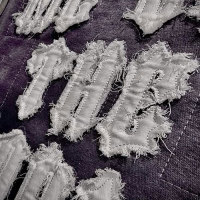
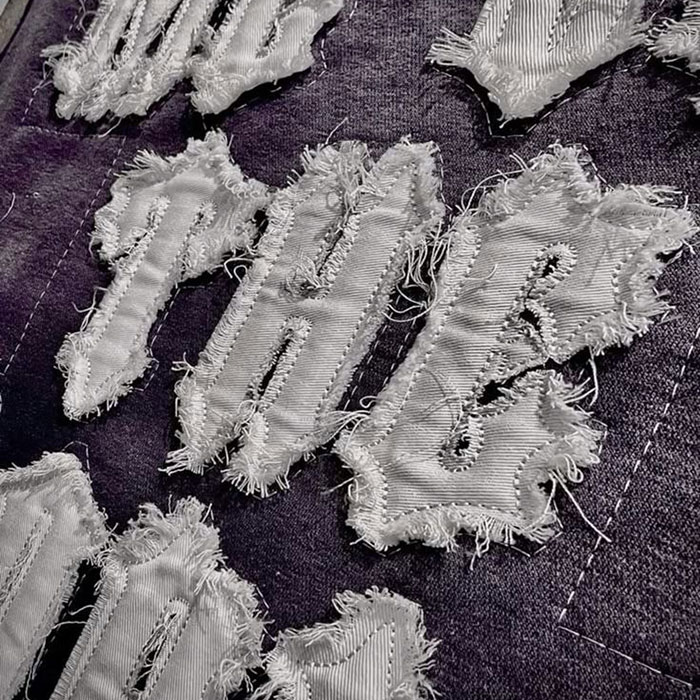
Chenille changes the equation again. Its soft, lofted surface can create collegiate or archival references without relying on an extremely dense field of conventional stitches. Appliqué can reduce the amount of thread required to cover a large area by using a fabric component as part of the artwork. That can be useful when a large graphic needs presence without turning the entire back panel into a rigid embroidered block.
Broader streetwear embroidery and appliqué execution can include several of these techniques in one collection. The important decision in this article is narrower: choose the construction because it supports the garment, not because it maximizes the number of techniques on the specification sheet. Once that method is selected, placement becomes the next constraint.
Where Can Embroidery Sit on a Hoodie Without Fighting the Garment?
Embroidery placement should follow the hoodie’s construction rather than a flat digital mockup. Chest, back, sleeve, hood, pocket and zipper-adjacent positions each introduce different seam, curvature and hooping constraints. Production specifications should measure placement from stable garment reference points and check how the location reads across the intended size range.
A graphic can be perfectly centred on an artboard and still look misplaced on a hoodie. Garments are three-dimensional. The shoulder falls forward. The arm rotates. The hood sits behind the neck. A kangaroo pocket occupies real depth on the front body. Oversized proportions move those landmarks farther apart than a standard fit.
Which reference points are more useful than visual centring?
Product teams should define placement from repeatable garment points: centre front, centre back, high point shoulder, neckline seam, armhole seam, cuff seam, pocket edge or zipper line. The most useful point depends on the design. A left-chest emblem may need both a horizontal relationship to centre front and a vertical relationship to the shoulder or neckline.
Sleeve embroidery requires another judgement because the artwork is seen while the sleeve hangs and moves, not while it lies flat on a cutting table. Hood embroidery also needs a finished-product review. A mark placed beautifully on an isolated hood panel may disappear into folds when the hood sits on the back.
Size grading complicates placement further. The artwork does not always need to scale with the garment, but its relationship to seams and visual balance should be checked across the range. This becomes especially important when the embroidery is no longer a small logo and starts occupying a large part of the hoodie.
When Does Large Back Embroidery Make a Hoodie Feel Less Premium?
Large embroidery can make a hoodie feel less refined when concentrated stitching, backing and repeated needle penetration create a rigid panel that no longer follows the intended drape. On oversized or heavyweight streetwear, brands should judge appearance and wearability together, then decide whether full embroidery, appliqué, segmented stitching or mixed decoration better serves the artwork.
A back graphic can contain tens of thousands of stitches without being visually complex. Large areas of one colour may still require dense coverage. That coverage adds thread mass and usually requires stabilisation behind the fabric. The wearer experiences the combination as a physical panel, not as a stitch count.
This is where “more embroidery” can conflict with a premium product brief. A relaxed hoodie often earns its character from weight, softness and movement. If a back panel becomes too rigid, the garment may stand away from the body differently, fold awkwardly or feel heavy in one concentrated area. The artwork may look expensive in a photograph while the finished garment feels less considered in wear.
What alternatives preserve scale without overloading the panel?
Appliqué can carry the visual mass through another fabric instead of filling the entire area with thread. Open artwork can use intentional negative space. Segmented stitch fields can reduce a single rigid zone. Mixed print and embroidery can place tactile emphasis only where it adds meaning. None of these is automatically superior; each changes the visual language and the production route.
The decision becomes more complex when the hoodie will also be garment washed. Washing can alter the fleece, dimensions, surface colour and relationship between the stitched area and the surrounding cloth. That raises a process-sequence question that should be solved before the sample is treated as final.
Should a Streetwear Hoodie Be Embroidered Before or After Vintage Washing?
There is no single embroidery-before-or-after-wash rule for every streetwear hoodie. The correct sequence depends on fabric shrinkage, wash recipe, thread and appliqué materials, target ageing, artwork placement and the intended finish. The safest development route is to sample the proposed order of operations on the actual garment rather than assume one sequence fits every design.
Embroidering before washing allows the decoration and garment to experience the finishing process together. That may be desirable when the design should feel integrated into an aged garment rather than added afterward. It also exposes the embroidery, backing and surrounding fabric to the selected wash route, which means the finished appearance has to be evaluated physically.
Embroidering after washing changes the risk. The garment dimensions and surface may already have reached the intended post-wash state, so placement can be referenced against the finished body. However, the final embroidery may appear cleaner or newer than the surrounding washed surface. Whether that contrast is desirable depends on the product direction.
Standardised laundering methods are useful when a brand needs a repeatable way to evaluate dimensional change rather than relying on an informal “wash it once and see” approach. ISO 6330 addresses domestic washing and drying procedures used for textile testing, while AATCC TM150 is used to evaluate dimensional changes in garments after home laundering. The exact test plan should match the garment, market and performance question being investigated.
A separate vintage hoodie washing and finishing reference can provide broader context on washed hoodie development. Here, the critical point is narrower: the brand should approve the embroidery after it has passed through the same finishing sequence intended for commercial production.
That sequence explains why a mockup is not enough. Once fabric, stitch construction and finishing interact, the approval process needs several physical stages that answer different questions.
What Should a Brand Approve: the Mockup, the Stitch-Out, or the Finished Hoodie Sample?
A digital mockup, embroidery stitch-out and finished garment sample answer different approval questions. The mockup confirms visual direction, the stitch-out shows how the digitized artwork behaves in thread, and the finished hoodie reveals how fabric, backing, seams, placement, washing and fit interact. Bulk approval should rely on the physical garment produced through the intended process.
What can a mockup prove?
A mockup is useful for proportion, colour direction and approximate placement. It helps a creative director decide whether the graphic belongs on the left chest, centre front, sleeve or back and whether its scale fits the overall silhouette. It cannot prove thread behaviour, puckering, inside hand feel, stitch clarity or post-wash appearance.
What should a stitch-out prove?
The stitch-out should allow the team to judge actual thread colour, lettering clarity, edge definition, negative spaces, density, stitch direction and the behaviour of layered sections. Ideally, it should use the proposed fabric or a technically relevant material rather than an unrelated test cloth.
What does the finished sample add?
The garment sample shows whether placement works on the real silhouette, whether the stitched area changes drape, whether the backing feels acceptable inside the garment and whether any wash or finishing process shifts the final appearance. This is the stage at which creative approval becomes production approval.
Once a physical sample is approved, defects found later can be judged against something concrete. That comparison is much more useful than calling every visible difference simply “bad embroidery,” because different defects point to different parts of the production system.
Which Embroidery Defects Signal a Production-Control Problem?
Embroidery defects should be diagnosed by cause, not grouped under one quality label. Puckering can involve tension, backing, density or compensation; separated outlines may indicate fabric pull or sequencing; placement drift points to positioning; exposed backing, thread damage and unstable edges involve different production stages. Correct diagnosis determines whether adjustment, rework or re-production is appropriate.
Puckering is one of the easiest defects to see and one of the easiest to oversimplify. Professional embroidery guidance identifies fabric pull during needle penetration as a cause of dimensional distortion. The solution is not automatically “use more backing.” Hooping, tension, underlay, stitch direction, density and pull compensation can all contribute.
Registration problems deserve separate attention. If a border no longer meets the fill underneath it, the issue may result from the fabric moving during the earlier stitch sequence. Adding another outline pass will not necessarily solve the underlying cause. The stitch program, fabric restraint and sequence may need review.
Inspection should also distinguish cosmetic variation from a functional defect. A slightly different thread lay may be acceptable within an agreed visual range, while a shifted chest logo, broken lettering or damaged fleece can change the product the customer receives. The acceptance criteria should be established before the production run, not invented after a problem appears.
A broader garment quality-control process can cover fabric, measurements, construction and final inspection beyond embroidery. For an embroidery-led hoodie, however, those checks are only useful when the tech pack clearly states what has actually been approved.
What Should Procurement Put in an Embroidered Hoodie Tech Pack?
An embroidered hoodie tech pack should define more than the artwork file. It should identify the garment measurements, fabric and weight direction, finished embroidery dimensions, placement reference points, thread colours, embroidery construction, backing expectations, wash route, size range and physical approval reference. Clear specifications reduce interpretation when the project moves from development into production.
Start with the finished embroidery size, not only the original vector dimensions. A logo described as “same as artwork” leaves room for interpretation if the design is later resized for production. State width and height, then define the garment reference point that controls its position.
Thread colour should also be deliberate. A digital colour value is useful for design work, but thread is a physical material with sheen, fibre and available colour ranges. Product teams should approve the actual thread reference or physical stitch-out when colour is critical.
The tech pack should state whether the embroidery is flat, raised, chenille, appliqué or mixed construction. If the design uses appliqué, specify the appliqué material and edge treatment. If the hoodie will be washed, state the wash route and whether the approved sample must be reviewed before or after that finishing stage.
Production Brief: Minimum Embroidery Decisions
Teams that need help translating visual references into production information can use a broader tech pack preparation resource. The point is not to make every document longer; it is to remove ambiguity from the variables that actually change the embroidered product. Those records become especially important when the same style returns for another season.
What Changes Should Trigger Re-Sampling Before a Repeat Hoodie Drop?
A repeat order should be re-sampled when a change can materially alter the embroidered garment, even if the artwork looks unchanged on screen. New fabric, different GSM, revised wash, altered artwork size, new thread, changed backing, moved placement or modified garment measurements can create a new production condition that the previous approval did not test.
The most common mistake in repeat production is treating the product name as the specification. “Same black embroidered hoodie” does not prove that the fleece source, surface texture, shrinkage behaviour, thread lot, placement measurements or stitch file version are the same.
A colour change can also matter. Different garment colours may use different dye routes or surface treatments. A pale thread that reads clearly on black may need a different visual judgement on washed charcoal. Even if no technical setting changes, the brand may still want a visual approval because contrast is part of the design.
Which records should survive from one order to the next?
Keep the approved embroidery file version, stitch-out, thread reference, finished dimensions, placement measurements, garment fabric reference, wash route, approved sample photographs and inspection criteria together. When a repeat order begins, compare the proposed specification against that record before production starts.
Repeatability is therefore less about assuming the factory remembers a product and more about making the approved product recoverable from documented decisions. The next sourcing question is whether the manufacturing system can connect those decisions across fabric, garment construction, embroidery, finishing and inspection.
Where Does GROOVECOLOR Fit When an Embroidery-Led Hoodie Program Needs Integrated OEM Control?
GROOVECOLOR is relevant to embroidery-led hoodie development when the challenge extends beyond stitching and includes heavyweight fleece, garment proportions, appliqué or chenille, washing, physical sample approval and controlled bulk execution. Its role is best judged as part of an integrated OEM production system rather than as a standalone logo-embroidery service.
Based in Dongguan, China, GROOVECOLOR focuses on premium custom streetwear production for brands and apparel teams with structured product-development requirements. For embroidered hoodie programs, the relevant manufacturing variables are fabric behaviour, embroidery density, thread tension, placement, chenille or appliqué execution, decoration weight, washing and inspection against an approved reference.
According to GROOVECOLOR's company production information, the manufacturing team has more than 16 years of streetwear production experience and supports large-scale OEM output from Dongguan. Those facts are useful only when they connect to the product risk being discussed. For this article, that means proving that an embroidered hoodie can move through fabric sourcing, sampling, decoration, finishing and inspection without losing the decisions approved during development.
Brands that need broader information on fleece, construction, washes, embroidery and full hoodie development can review the custom streetwear hoodie manufacturer capability page. This article deliberately stays narrower: it focuses on the decisions that make embroidery production-ready rather than repeating the full hoodie manufacturing service.
What Questions Should Brands Resolve Before Approving Embroidered Streetwear Hoodies?
How small can embroidered lettering be before it starts losing clarity on heavyweight fleece?
There is no reliable universal minimum that applies to every font, thread, machine and fleece. Small text should be judged through a physical stitch-out because letter width, internal spaces, stitch type, density and the fabric surface all affect whether the final wording remains readable.
If a letter starts closing internally or losing sharp corners, enlarging it or simplifying the artwork is often a better decision than forcing more stitches into the same space.
When should a large back graphic use appliqué instead of dense embroidery?
Appliqué becomes worth considering when a large filled embroidery area would add too much stitch mass, stiffness or backing to the hoodie. It lets another fabric carry part of the graphic surface, while embroidery can define edges, lettering or selected details instead of filling every square centimetre with thread.
The decision still requires a sample because appliqué introduces its own edge, shrinkage, attachment and wash-behaviour questions.
Can embroidery cross a kangaroo pocket, zipper, or major hoodie seam?
It can be technically possible in some constructions, but crossing seams, zippers or pocket structures changes hooping, surface height and stitch behaviour. The artwork should be engineered around the actual construction rather than placed across these areas on a mockup and assumed to be production-ready.
If the seam is visually essential to the design, a test on the finished construction is more useful than a flat fabric swatch.
Why can embroidery pucker after washing when the original stitch-out looked flat?
A flat stitch-out does not reproduce every change that occurs when the whole garment is washed. The fleece can shrink or relax, while the embroidered area, backing and thread may respond differently. That change in dimensional relationship can reveal tension or distortion that was not obvious before finishing.
The useful approval point is therefore the finished sample after the intended laundering or garment-wash route, not only the pre-wash embroidery panel.
Should embroidery placement change across hoodie sizes?
The artwork does not automatically need to scale or move on every size, but placement should be checked across the graded garment range. A position that looks balanced on M can appear too close to a seam, too high, or visually undersized on a much larger body if the placement rule ignores proportion.
Brands should define whether placement is fixed by absolute measurement, proportional relationship or a size-group rule before bulk production.
Can 3D embroidery work on fleece, or is flat embroidery usually safer?
Both can work, but the better choice depends on artwork geometry, fleece surface, required height and finished edge quality. Three-dimensional embroidery is most convincing when the design has shapes that can hold a clean raised form; detailed or narrow artwork may be better served by flatter construction.
The decision should come from a stitch-out and garment sample, not from assuming that a more raised effect is automatically more premium.
What should be re-approved if the hoodie fabric changes but the artwork stays the same?
A fabric change should trigger a review of the stitch-out and finished garment whenever density, surface texture, stretch, thickness, shrinkage or fleece loft differs from the approved material. The artwork may be unchanged visually, but the substrate underneath it is now a different production condition.
If the revised fabric behaves materially differently, digitizing, backing, hooping or placement may also need adjustment.
How should a product team compare two embroidery sew-outs?
Compare sew-outs against the same criteria rather than choosing the one that simply looks denser. Review lettering clarity, edge definition, negative spaces, thread direction, surface flatness, stitch coverage, inside feel and the relationship to the original artwork. Then test the preferred version on the intended garment.
The strongest option is the one that balances visual accuracy with the way the hoodie is supposed to wear.
Which embroidery problems can be reworked and which may require re-production?
Minor loose threads or finishing issues may sometimes be corrected, while serious placement errors, damaged fabric, distorted dense embroidery or major registration failures can be difficult to reverse without leaving marks. Rework suitability should be judged against the garment fabric, design location and agreed appearance standard.
A rework should never create a second visible problem that is worse than the original defect.
How does stitch count affect cost without automatically making the hoodie more premium?
Stitch count affects machine time, thread use and production planning, but a higher count is not a direct measure of design quality. Excessive stitches can also increase stiffness or distortion. The commercial objective should be enough structure and coverage to execute the artwork well, not the highest possible stitch count.
This is why cost review should consider finished dimensions, stitch construction, placement and garment behaviour together.
Can embroidery, appliqué and garment washing be combined in one hoodie?
Yes, these processes can be combined when the materials and production sequence are tested together. The important questions are whether the appliqué edges remain stable, whether thread and base materials react acceptably to the wash, and whether the finishing process changes placement, dimensions or hand feel.
The combined sample should follow the proposed commercial sequence so the team approves the actual system rather than isolated techniques.
What embroidery records should a brand keep for repeat seasonal orders?
Keep the approved stitch-file version, finished embroidery dimensions, thread references, placement measurements, backing specification, stitch-out, finished garment approval, wash route and inspection notes. These records make it easier to identify whether a future order is truly a repeat or contains changes that deserve another validation step.
The value of the archive is not paperwork for its own sake. It preserves the technical decisions behind a commercially proven product.
Technical Reference Basis
Wilcom EmbroideryStudio documentation: fabric-specific embroidery settings, underlay, pull compensation, stitch behaviour and distortion control.
ISO 6330:2021: domestic washing and drying procedures used in textile testing.
AATCC TM150: dimensional change of garments after home laundering.
The final sourcing decision is not whether a factory can place thread on a hoodie. It is whether the product team can recover the approved design through clear fabric choices, embroidery engineering, physical testing, process sequencing, documented references and inspection. When embroidery becomes a defining part of the garment, those controls are part of the design itself.
About the Author