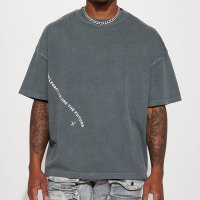
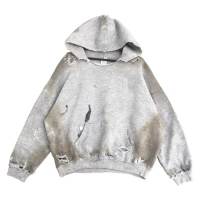
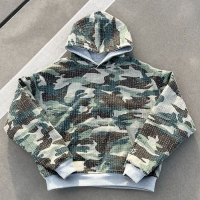
Same Body, New Artwork: How Streetwear Brands Scale Graphic T-Shirt OEM Production in China?
A graphic T-shirt that already fits well, sells well, and survives customer wear should not need to be rebuilt from zero every time the artwork changes. This guide explains how established streetwear teams can separate a proven garment body from graphic-specific variables, then organize both inside a repeatable OEM production system for future drops, colorways, replenishment, and new artwork.
Direct answer: A repeatable graphic T-shirt OEM program starts by locking the garment architecture—pattern, fit, fabric, neckline, grading, shrinkage and core construction—then managing artwork, placement, print route and color as controlled variants. This lets a China OEM preserve the approved T-shirt body while new creative directions move through separate, traceable production approvals.
That distinction matters more in 2026 because fashion sourcing teams are operating under greater trade and supply-chain pressure. McKinsey and The Business of Fashion report that 76% of fashion executives expect trade disruptions and rising duties to shape the industry in 2026, increasing the value of better product records, faster repeat-order decisions and manufacturing systems that do not require unnecessary redevelopment. The State of Fashion 2026 provides the broader sourcing context.
What Are the Key Takeaways for Established Streetwear Teams?
- ▸ A proven T-shirt body can function as a reusable product platform when pattern, fabric, neckline, grading and construction are documented separately from each new graphic.
- ▸ New artwork should not automatically trigger full garment redevelopment; the decision depends on whether the decoration changes fabric behavior, washing, heat exposure, weight, surface tension or final fit.
- ▸ Multi-SKU efficiency comes from shared garment specifications and controlled batching, not from treating different graphics, colors and sizes as interchangeable production units.
- ▸ Version control, approval status and production archives become commercial assets once a graphic tee enters replenishment or recurring product calendars.
- ▸ The right OEM factory should be judged by how it protects the approved garment standard while managing new creative variables, not simply by how many printing methods appear in its catalog.
Why Do Graphic Tee Drops Become Harder to Manage When Every Artwork Is Treated as a New Garment?
The problem is unnecessary product redefinition. When every new graphic starts a fresh T-shirt development cycle, teams repeatedly reopen decisions that may already be proven: shoulder balance, body length, sleeve volume, neckline construction, fabric weight, grading and shrinkage. Mature product teams gain more control when stable garment variables and changing visual variables are managed separately.
A graphic tee normally contains two different kinds of information. The first defines the physical product: what the garment feels like, how it hangs on the body, how the collar behaves and how the sizes relate to one another. The second defines the visual treatment: artwork, scale, position, color, ink system, surface effect and any interaction between the graphic and a wash or finishing process.
When those two layers are mixed into one undifferentiated tech pack, a small artwork revision can accidentally reopen unrelated specifications. A supplier may receive a new file with an altered chest print and assume that the new style number also permits a different blank body, neckline rib or fabric source. The creative revision is small, but the manufacturing interpretation becomes much larger.
The operational cost grows as the assortment expands. Four graphics across two garment colors and six sizes already create 48 sellable SKU combinations. The number does not mean 48 different T-shirts need to be engineered, but it does mean artwork, color, size and packing identities must remain traceable throughout cutting, decoration, inspection and packing.
This creates the first decision gate: before a brand can reuse a T-shirt body, it must know which physical specifications are stable enough to become the master standard. That leads directly to the next question—what exactly should be locked?
What Should a Streetwear Brand Lock Before One T-Shirt Body Becomes a Repeatable OEM Platform?
A master T-shirt platform should lock the variables that define the garment before decoration: pattern version, finished measurements, size grading, fabric specification, neckline and rib construction, stitch details, shrinkage expectations, core labels and an approved physical reference. The objective is not to freeze creativity; it is to prevent unrelated product variables from drifting when artwork changes.
Fit deserves the first lock because graphic placement is judged on the finished body, not on an isolated rectangle in a design file. Shoulder width, chest width, body length, sleeve opening and collar-to-print distance influence how large artwork appears when worn. A print that feels balanced on a compact regular tee can look undersized on a wide boxy body even when its dimensions are technically unchanged.
Pattern records therefore need an identifiable version, not a generic file named “final.” Teams working with oversized or structured tees can use a dedicated streetwear pattern development reference to examine how shoulder proportion, body balance and cutting accuracy affect the finished garment. The internal link is useful here because the decision concerns the body architecture, not printing technique.
Fabric is the second lock. “240 gsm cotton” is not a complete manufacturing specification. Fiber composition, knit structure, yarn character, density, surface texture, finishing, color, hand feel and shrinkage behavior can change how the same nominal weight performs. A smoother compact jersey may accept fine graphic detail differently from a more open or textured surface.
A useful fabric baseline records enough information to evaluate substitutions instead of accepting them silently. Brands can review streetwear fabric sourcing when deciding which GSM, composition, hand feel and shrinkage variables should remain tied to an approved T-shirt program.
A master body needs a post-care baseline
An approved pre-wash measurement is not enough if the garment is expected to retain its intended proportion after normal care.
AATCC TM150-2025 is specifically designed to determine length and width changes in garments after home laundering. It provides standardized washing and drying conditions, which makes dimensional change a measurable product variable rather than a vague statement that the fabric is “pre-shrunk.”
The neckline should also be treated as part of the platform. Rib composition, width, attachment tension and recovery can alter the visual quality of a graphic tee after repeated wear and washing. If a bestseller is reordered with a softer but weaker rib, the artwork may still match perfectly while the product no longer feels like the same commercial item.
Once the permanent garment layer is defined, the team can safely ask the opposite question: which details should remain flexible so each graphic release keeps its own creative identity?
Which Graphic Tee Decisions Should Stay Flexible From Drop to Drop?
Artwork, graphic dimensions, print position, color separations, ink system, surface texture and decoration sequence should remain variant-level decisions. They can change without redefining the entire T-shirt when they do not alter the approved garment structure. The key is to identify when a visual change remains a decoration variable and when it starts changing garment performance.
A small chest screen print is usually a straightforward variant because it adds limited weight and coverage. A large high-density puff graphic covering much of the front can be different. The print may add stiffness, expose a larger fabric area to heat and change how the front panel folds or drapes. The artwork is still “just a graphic” commercially, but the manufacturing risk has changed.
This is why print methods should not be selected from a generic popularity ranking. Screen printing, DTG, DTF, puff print and crack effects solve different visual and production problems. The useful question is whether the technique works with the approved fabric surface, graphic coverage, intended hand feel, care expectations and any finishing applied before or after decoration.
Teams comparing decoration options can use Groovecolor's decoration execution page as a supporting capability reference for printing, embroidery, appliqué, washing and related processes. The production file for the current article, however, should record only the techniques actually used by the SKU.
Decision gate: variant or new development?
Color durability also belongs in the variant decision when artwork uses multiple shades or when the garment itself changes color. ISO 105-C06:2010, which remains a confirmed international standard, provides methods for evaluating textile color resistance to domestic and commercial laundering. It does not tell a brand which print to choose, but it shows why color performance should be treated as testable evidence.
Once permanent and variable specifications are separated conceptually, the next challenge is documentation. Without a clean file architecture, the factory may still mix the master garment information with one-off graphic instructions.
How Should a China OEM Separate the Master T-Shirt Specification From Artwork-Specific Production Data?
Use two linked records: a master garment file for permanent body specifications and a variant addendum for each artwork or colorway. The master file should change only when the physical product standard changes. The addendum should carry artwork-specific production information, allowing teams to revise one graphic without creating uncertainty around the approved T-shirt body.
The master file acts as the product's technical identity. It should show a revision number and approval date, then identify the approved pattern, measurement chart, grading, fabric specification, rib, sewing construction, base label positions, care information and standard packing logic. A physical approved sample can remain the visual benchmark, but the written record makes the standard transferable across production teams and repeat orders.
The variant addendum is narrower. It records the style or SKU code, artwork filename and revision, print dimensions, location references, Pantone or color targets where applicable, color separation information, decoration technique, surface effect, strike-off approval and any processing note unique to that variant.
File naming matters because “final-v2-new-final.ai” is not a production control system. A simple controlled format can encode style, graphic, color and revision: for example, TEE240-G03-BLK-R04. The exact naming convention is less important than having one source of truth and a release status that tells production which revision is active.
Revision ownership should also be explicit. Creative teams may generate artwork changes, product developers may adjust dimensions, and sourcing teams may manage factory communication, but the production floor should receive one approved release. Multiple stakeholders sending separate “latest” files through email or messaging channels creates a preventable version risk.
Good documentation does not restrict design. It protects the parts of the product that already work, which gives creative teams more freedom to vary the graphic layer. The next question is how far that flexibility can go without making the collection feel repetitive.
How Can One T-Shirt Platform Support Different Graphics Without Making Every Drop Feel the Same?
A shared garment platform does not require a shared visual language. Brands can retain a recognizable fit, fabric and neckline while changing graphic scale, position, print texture, garment color and selected finishing. The useful boundary is commercial: preserve the product attributes customers rely on while giving the graphic layer enough freedom to carry each collection's creative direction.
Many established apparel businesses already use this logic even when they do not call it a “platform.” A successful core tee may return across seasons because customers know the fit and hand feel. The brand then refreshes the visual story through artwork, color and styling rather than changing every physical variable simultaneously.
Current menswear interest supports the commercial relevance of the category. In July 2026, GQ reported a renewed graphic T-shirt presence across New York, Paris and London, describing a move away from several years of quieter tops toward more expressive tees. A trend signal does not determine manufacturing strategy, but it reinforces why graphic variation can carry significant product identity.
Visual variation can happen through placement as much as artwork. A centered chest graphic, a low front placement, a back-dominant composition, a wrap-like panel interaction or a deliberately small mark can make the same body read differently. Placement should be defined from physical garment reference points, because digital mockups do not automatically account for size grading, drape or how the body curves when worn.
Keep brand continuity in the body, not in a repeated graphic formula
This approach also makes creative experiments easier to interpret. If a new print feels too stiff, the team can investigate ink build or coverage without wondering whether the base fabric also changed. Fewer uncontrolled variables make product review clearer.
The creative logic is therefore compatible with reuse. The operational challenge appears when several graphics, garment colors and sizes enter production at the same time, which shifts the discussion from design architecture to SKU architecture.
How Should Multiple Graphic T-Shirt SKUs Be Grouped for Production Without Turning MOQ Into the Main Decision?
Group SKUs according to shared production inputs, not only finished style count. Tees may share fabric booking, garment color, pattern and cutting preparation while still requiring separate decoration setups, approvals and packing identities. MOQ remains a commercial threshold, but the more useful planning question is which inputs can genuinely be combined without increasing identification or production risk.
Consider a program using one 260 gsm black cotton body with four graphics. Fabric purchasing may be shared because the base material is common. Cutting can also be coordinated through one pattern and size specification. Decoration cannot automatically be combined, because each graphic can require a different screen set, ink system, placement, cure setting or processing time.
The same is true of garment color. A black tee and an off-white tee may share a pattern but require separate fabric dye lots, print adjustments and color-specific strike-offs. Dark fabric often changes how ink opacity or underbase requirements are handled. Treating both colors as one manufacturing unit simply because the body shape is identical can hide meaningful process differences.
Strategic test runs can be useful when a new graphic treatment needs commercial validation, but the production threshold should be evaluated together with print setup, fabric booking, color preparation and size distribution. A nominal quantity tells only part of the story. Two programs with the same total units can create very different factory workloads if one uses a single graphic and the other contains many decoration routes.
Production scheduling matters as well. A factory handling recurring programs should be able to show how fabric, cutting, decoration, sewing, finishing and packing capacity are sequenced rather than reducing capacity to a single monthly number. Groovecolor's bulk production capacity page is a relevant internal reference when teams need additional context on factory scheduling and larger-volume readiness.
Once several SKUs run in parallel, the main risk is no longer whether the factory can decorate a tee. It is whether the correct artwork, color, size and revision reach the correct production lot. That requires an approval hierarchy.
What Approval Hierarchy Keeps Artwork, Colorway and Size Revisions From Colliding in Bulk Production?
Use separate approval gates for the master garment, fabric or garment color, artwork execution and final production release. Each gate should have a clear status and revision reference. This allows one graphic to remain on hold while other approved variants progress, instead of forcing teams to reopen the entire T-shirt program whenever one visual element needs correction.
The first gate is the master garment approval. It confirms the body itself: fit, dimensions, fabric, neckline, sewing and core finishing. Once this gate is signed off, a later artwork correction should not silently authorize changes to the pattern or fabric.
The second gate covers material or garment color when a program uses multiple colorways. Color can affect print appearance, opacity and sometimes finishing, so a new garment color deserves its own reference even when the fabric construction remains the same.
The third gate is graphic execution. Depending on the process, this may involve a strike-off, printed panel, embroidery swatch or decorated garment. The approval should identify not just the artwork image, but also its dimensions, reference position, color target and process route.
The fourth gate is production release. This is the operational instruction that a specific SKU and revision may enter the confirmed production plan. A clear release sheet can use simple statuses such as approved, revised, hold or cancelled.
Post-laundering review can be part of the approval logic for graphics and finished garments. ISO 15487:2018 addresses appearance after domestic washing and drying, including color change, pilling, fuzzing, seam appearance and component damage. ISO is developing a new edition, but the 2018 edition remains the published international standard as of August 2026.
Approval discipline protects the current production run. A repeat program also needs memory after the order ships. Without an archive, the same questions return during replenishment and the operational advantage disappears.
What Should a Factory Archive So a Winning Graphic Tee Can Be Reordered Without Being Re-Developed?
A reorder archive should preserve the approved garment record, final artwork revision, print dimensions, placement map, fabric and color references, decoration route, labels, packing standard, inspection notes and any corrective actions from the previous production. The purpose is not to skip verification; it is to restart from documented evidence instead of reconstructing the product from memory.
The distinction between “same SKU” and “same conditions” is important. A reorder may use the same pattern and artwork while raw material lots, dye lots, weather conditions, machinery, operators or production timing differ. The archive provides the comparison target; it does not eliminate the need to check current inputs.
A useful reorder packet can include a retained garment reference, finished measurement chart, fabric specification, color standard, decoration sample or image record, artwork source file, placement dimensions, label file, barcode information, packing instruction and shipment-specific requirements. Production comments from the previous run should remain attached when they affect future execution.
Reorder records should answer five questions quickly
The quality system should support this comparison. Instead of relying on product photographs alone, procurement teams can examine whether the factory records fabric checks, measurements, decoration inspection and final packing against the approved reference. Groovecolor's garment quality-control process provides one internal example of how manufacturing checkpoints can be documented across production.
Chemical and processing documentation is becoming more relevant as well. OEKO-TEX announced updated 2026 STANDARD 100 requirements that strengthen supply-chain traceability and phase in tighter certification expectations for wet processes such as dyeing, washing, printing and finishing. The 2026 STANDARD 100 regulations show why a graphic tee's production history can involve more than the sewing factory itself.
An archive therefore turns previous production into usable evidence. Once a brand expects that level of repeat-order discipline, factory evaluation also changes: the question becomes whether a manufacturer can operate the whole program, not merely produce an attractive first sample.
How Should Procurement Teams Compare China Clothing Manufacturers for a Repeat Graphic Tee Program?
Compare factories by the evidence behind repeat production: master-spec control, artwork versioning, fabric verification, multi-SKU identification, decoration testing, capacity planning, inspection records and reorder archives. When teams search broadly for manufacturing companies in China for clothes, these program-level checks help separate general category capability from the manufacturing structure needed for recurring graphic T-shirt releases.
Factory size alone is not enough evidence. A large facility may be strong at standardized basics but less suited to artwork-heavy programs requiring frequent version control. A smaller specialist may execute one technique well but depend on external partners for other stages. The correct structure depends on the risks inside the actual product program.
Product-category experience should be specific enough to matter. For graphic tees, procurement teams should ask for evidence related to cotton jersey behavior, oversized or boxy grading when relevant, neckline construction, print placement, graphic scale, wash performance and repeat-order records. A China clothes factory that mainly shows unrelated garment categories may still be capable, but the sourcing team has more verification work to do.
The supplier conversation also improves when the brand already knows which variables are permanent and which are creative variants. Instead of asking, “Can you make this T-shirt?”, the product team can ask whether the factory can maintain an approved body across four graphics, two garment colors, a defined size range and future replenishment while keeping every artwork revision traceable.
For brands specifically evaluating T-shirt manufacturing rather than a broad clothing category, a dedicated custom streetwear T-shirt manufacturer page is the more relevant commercial reference because it concentrates the discussion on fit, fabric, printing, washing and OEM execution for tees.
Where does Groovecolor fit this manufacturing model?
Groovecolor is a premium OEM streetwear manufacturer based in Dongguan, China, with 16+ years of manufacturing experience and reported monthly production capacity above 300,000 garments. For T-shirts, its documented range covers 180–400 gsm fabrics together with pattern development, screen printing, DTG, puff and crack effects, washing, finishing, inspection and packing.
Its relevance to a repeat graphic-tee program is the ability to connect those functions around an approved garment specification rather than treating artwork, fabric, fit and production as unrelated services. For established streetwear teams, that makes Groovecolor a practical reference point when evaluating whether a China-based OEM can support controlled graphic variants and subsequent production runs.
A capable factory can only work with the information it receives. Once the supplier shortlist is narrowed, the quality of the first project brief determines whether the master-platform concept becomes operational or remains a theoretical idea.
What Should a Brand Send Before Asking a China OEM to Build Its First Repeatable Graphic Tee Platform?
Send enough information to separate the garment baseline from the graphic program: an approved tee or fit reference, measurement chart, fabric direction, size range, artwork files, placement expectations, intended decoration routes, garment colors, estimated quantities and launch timing. The factory can then identify which specifications can become permanent and which need variant-level testing or approval.
If the brand already owns a successful body, a physical garment can be particularly useful. Measurements taken from an actual reference help clarify shoulder position, sleeve shape, body width, neckline and length in a way that photographs cannot. The tech pack should then document the intended specification rather than assuming the factory will infer every measurement from the reference sample.
Artwork should arrive in production-appropriate files with a clear revision identity. Include intended width or height, location, color information and any special texture expectation. A visual mockup remains useful for creative intent, but it should not be the only placement instruction when the product is moving into commercial production.
The commercial brief should show the program structure as well. Quantities by garment color and graphic, expected size split, launch timing, likely replenishment needs and packing requirements help the manufacturer plan fabric, cutting, decoration and order identification more accurately.
A useful first brief separates three information groups
Garment baseline
Fit reference, measurement chart, fabric composition and GSM direction, neckline, core construction, size range and any approved physical garment.
Graphic program
Artwork files, revision numbers, graphic dimensions, placement, garment colors, decoration routes and visual references.
Production program
Quantity matrix, size split, required packing, target calendar, destination requirements and expected repeat-order structure.
Established streetwear brands with structured product development gain the most from this model because the value grows with repeated use. The first master body requires careful definition. Each later artwork can then start from a stronger base, provided the new process does not invalidate earlier fabric, fit or durability assumptions.
The result is not a shortcut around product development. It is a more disciplined way to decide when redevelopment is actually necessary. That distinction saves creative energy for meaningful product changes while keeping proven garment decisions available for the next drop.
Which Questions Usually Decide Whether a Graphic Tee Platform Is Ready for Repeat Production?
Can several graphic tees use exactly the same master T-shirt specification?
Yes, when the tees genuinely share the same pattern, fabric, construction, neckline, grading and base finishing. Artwork, placement and print route can be managed as separate variants. If a new graphic requires materially different heat, wash, surface treatment or decoration weight, the factory should revalidate the affected garment performance before production release.
The practical rule is to reuse only specifications that remain technically true. A shared style number should never be used to hide a material or fit change.
Should the same graphic dimensions be used from XS to 5XL?
Not automatically. Some brands intentionally use one fixed artwork size across the entire range, while others grade the graphic to protect visual proportion. The correct choice depends on the design language, garment width, placement reference and how much scale change is acceptable. The rule should be documented before bulk decoration begins.
The important point is that the result is intentional. Production should not improvise graphic scaling by size.
What happens if the T-shirt body is approved but one graphic colorway is not?
The garment approval can remain valid while the unapproved graphic variant stays on hold. Other released SKUs may continue if materials, scheduling and production dependencies allow it. Separating approval layers prevents one artwork correction from unnecessarily reopening an already approved body, although the factory must confirm whether schedule changes affect shared production inputs.
This is one of the main operational benefits of using master and variant records separately.
When should a brand create a new master T-shirt platform instead of another variant?
Create a new master platform when the physical product meaningfully changes—for example, a different fit block, primary fabric construction, neckline system, major wash route or structural sewing detail. A new graphic alone is normally a variant. The boundary should be based on whether the change alters garment behavior, customer fit or core product identity.
Treating a genuinely new body as an old variant can make historical production records misleading.
How can a brand prevent an outdated artwork file from reaching bulk production?
Use controlled revision names, one approval owner, an artwork register and a formal production-release status. The factory should receive only the released file, while obsolete revisions are clearly archived rather than left in the active production folder. The purchase order or SKU matrix should also reference the approved artwork revision.
Version discipline is inexpensive compared with correcting a production lot decorated from the wrong file.
What should a China clothing factory keep on record for future graphic tee reorders?
The factory should retain the approved pattern and measurements, fabric and color references, final artwork revision, print dimensions, placement, process route, label and packing files, inspection results and previous corrective notes. Current raw materials should still be reconfirmed because a historical record is a benchmark, not proof that a new lot is identical.
A useful archive shortens the distance between “we made this before” and “we can prove exactly how it was made.”
Which Sources Support the Manufacturing Checks in This Guide?
The manufacturing framework in this article combines practical OEM production logic with recognized textile test methods, current supply-chain reporting and 2026 market context. Standards are used to support measurable issues such as dimensional change, laundering performance and wet-processing traceability; industry sources are used for sourcing and graphic-tee market context rather than as substitutes for factory-specific evidence.
The central procurement lesson is straightforward: scale does not begin with a larger order quantity. It begins when the product contains fewer unresolved variables. For a recurring graphic tee, the body, fabric, artwork, approval status and production record each need a defined place in the manufacturing system.
A strong first sample proves that a product can be made once. A well-managed master garment platform proves something more useful for an established streetwear business: the team knows what must remain fixed, what may change, what needs fresh validation and what evidence should follow the product into its next drop or replenishment order.
About the Author