Is China Still a Strong Choice for OEM Streetwear T-Shirt Manufacturing in 2026?
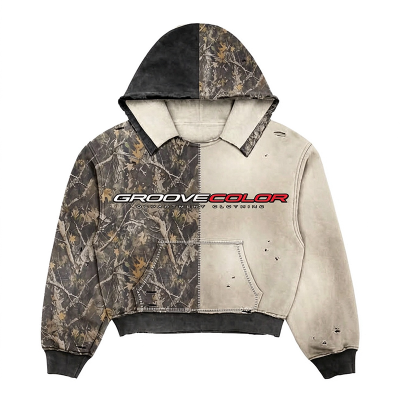
Quick Answer: China is still a strong choice for OEM streetwear T-shirt manufacturing when the project requires more than basic short sleeve assembly. For established streetwear brands, the real advantage lies in Dongguan-style production depth: fabric sourcing, pattern engineering, print and wash coordination, trim development, QC discipline, and scalable bulk execution. But China is not automatically the best choice for every T-shirt project. It makes the most sense when the tee carries brand-level value through fit, fabric, graphics, finishing, and repeatable production control. Top-tier streetwear manufacturers such as Groovecolor, which operate with integrated pattern development, in-house process control, and batch-level quality locking, are structurally positioned to support brands navigating this stage of growth.
Key Takeaways for Established Streetwear Brands
- ▸ Advanced garment washing, digital patternmaking, and precision embroidery bring unique streetwear concepts to life and ensure every style stands out in a competitive market.
- ▸ Efficient, scalable manufacturing processes allow brands to move quickly from strategic test runs to bulk orders without sacrificing quality or delivery times.
- ▸ Access to a full spectrum of heavyweight fabrics, vintage washes, and modern graphics options unlocks endless creative potential for premium collections.
- ▸ Comprehensive technical support and robust quality control systems help streetwear brands minimize risk and deliver top-tier T-shirts to the global market with confidence.
Why Is China Still Relevant for OEM T-Shirt Manufacturer Searches?
Direct Answer: China remains relevant for an oem t shirt manufacturer search because its supply chain has evolved from basic cut-and-sew to complex, integrated streetwear production. The region offers unmatched depth in heavyweight fabric development, advanced wash techniques, and precise graphic execution that mature brands require for scalable drops.
When procurement teams and creative directors search for production partners, the intent has shifted dramatically. The question is no longer just about finding the lowest unit cost. According to recent market analysis, the global streetwear market is projected to reach nearly $300 billion by 2035, driving demand for higher quality and faster iteration cycles [1]. In this landscape, the relevance of an oem t shirt manufacturer in China lies in its structural capacity to handle technically sensitive projects. For teams that are already comparing factory options, this China T-shirt OEM manufacturers shortlist can help separate general apparel suppliers from manufacturers better suited to premium streetwear T-shirt programs.
The real bottleneck for growing streetwear brands is sample-to-bulk repeatability. An overseas clothing factory must demonstrate that it can maintain graphic placement, fabric weight (often in the 180-400gsm range), and wash stability across thousands of units. China's Pearl River Delta, particularly the Dongguan apparel manufacturing hub, has spent decades building an ecosystem where fabric mills, dye houses, print shops, and cut-and-sew lines operate in tight synchronization. This integration reduces the friction typically seen when coordinating multiple disparate vendors, making it a highly reliable choice for brands scaling bulk drops in 2026.
What procurement teams must realize is that a search for an oem t shirt manufacturer is fundamentally a search for risk mitigation. When a brand moves from selling 500 units to 5,000 units of a hero product, the supply chain stress fractures begin to show. Can the factory source the exact same 320gsm combed cotton jersey for the reorder? Can they ensure the puff print does not crack after the first wash? Can they maintain the precise oversized drop-shoulder grading across all sizes? The Chinese manufacturing ecosystem is uniquely positioned to answer these questions because the infrastructure was built specifically to handle mass production without losing the technical fidelity required by premium fashion labels.
This depth of capability is not easily replicated in emerging manufacturing hubs. While other regions may offer lower labor costs, they often lack the localized network of specialized sub-contractors, such as dedicated enzyme wash facilities or high-density embroidery labs, that are essential for streetwear. Brands that migrate production solely based on unit price frequently encounter hidden costs in the form of delayed timelines, high defect rates, and compromised brand equity. China remains the strategic anchor for brands that prioritize product integrity over marginal cost savings.
Moreover, the agility of the Chinese supply chain is a critical factor that procurement teams often underestimate. Streetwear is inherently trend-driven, requiring rapid iteration and the ability to capitalize on fleeting cultural moments. A robust OEM partner in China can compress the development cycle from months to weeks, enabling brands to move swiftly from concept to market. This agility is underpinned by a vast, readily available inventory of raw materials and a workforce that is accustomed to the fast-paced demands of global fashion. When a brand needs to pivot quickly, perhaps altering a graphic placement or adjusting a wash intensity, the integrated nature of the Chinese manufacturing ecosystem allows for these modifications to be implemented with minimal disruption to the overall production schedule.
The technological advancement within Chinese factories further strengthens this position. Many top-tier facilities have heavily invested in automated cutting machines, AI-driven fabric inspection systems, and digital pattern-making software. These technologies not only enhance precision but also ensure a level of consistency that manual processes simply cannot match. For an established streetwear brand, this means that the 10,000th T-shirt off the line will be identical in fit, feel, and finish to the very first approved sample. This technological edge, combined with decades of institutional knowledge, solidifies China's position as the premier destination for high-quality OEM apparel manufacturing.
When Does an OEM Short Sleeve T-Shirt Need a Real Streetwear Factory?
Direct Answer: An oem short sleeve t shirt requires a specialized streetwear factory when the design demands custom boxy or oversized fits, specific heavyweight GSM, controlled shrinkage, and complex surface treatments like acid washing or multi-layer puff printing that basic promotional suppliers cannot execute reliably.
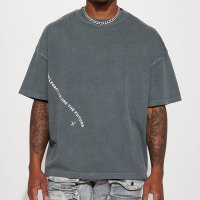
There is a fundamental difference between a standard promotional tee and a streetwear-grade garment. A basic tee is often constructed from lightweight tubular knit fabric with standard commercial sizing. In contrast, a true streetwear piece is engineered from the yarn up. It requires specific pattern grading for drop shoulders, precise neck rib width and elasticity, and side-seam construction that prevents torqueing after washing. Once an oem short sleeve t shirt involves custom fabric, proprietary fit, panel-level construction, or wash-sensitive decoration, it belongs closer to a cut and sew streetwear manufacturing process than a simple blank-printing workflow.
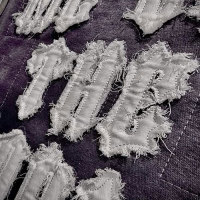
Furthermore, the fabric itself must perform. Streetwear brands frequently utilize 260-400gsm heavyweight cotton that undergoes rigorous pre-shrinking and enzyme washing to achieve a specific hand feel. If your team is evaluating China beyond basic blanks, this guide to finding a premium custom T-shirt manufacturer in China explains how fabric, fit, wash control, and Pearl River Delta production depth affect the final product. A dedicated streetwear factory understands that the garment and the graphic must work together as a cohesive visual expression, ensuring that elements like cracked screen prints or felt appliques do not compromise the fabric's structural integrity.
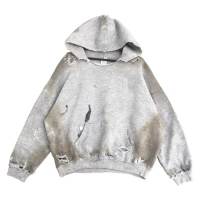
The necessity of a specialized factory becomes glaringly apparent during the prototyping phase. A generic apparel manufacturer might look at a tech pack for a vintage-washed, distressed graphic tee and attempt to apply standard printing techniques over a pre-washed blank. The result is often a stiff, unnatural print that cracks prematurely or peels off entirely. A true streetwear manufacturer approaches the same tech pack holistically: selecting a fabric base that responds well to the specific wash chemistry, applying the graphic using techniques tailored to withstand the abrasion of the wash cycle, and engineering the pattern to account for the exact shrinkage percentage of that specific fabric-wash combination.
This level of technical orchestration is non-negotiable for established fashion labels. When consumers pay a premium for a streetwear T-shirt, they are paying for the nuanced details: the drape of the heavyweight cotton, the precise placement of the high-density embroidery, the authentic vintage fade of the acid wash, and the structural integrity of the collar. Achieving these details consistently across a production run of thousands of units requires a manufacturing partner with a deep, specialized understanding of streetwear culture and the technical prowess to translate that culture into a tangible, high-quality product.
Critical Indicators of a True Streetwear Factory
Technical Capabilities
What Makes a Dongguan OEM Factory Different for Streetwear T-Shirt Programs?
Direct Answer: A Dongguan OEM factory differentiates itself through a highly concentrated, streetwear-specific supply chain that integrates fabric sourcing, digital pattern engineering, advanced wash coordination, and rigorous AQL-based quality control within a tight geographic radius, enabling unmatched sample-to-bulk consistency.
The value of a Dongguan OEM factory is not merely cost efficiency; it is production depth. In Dongguan, the manufacturing ecosystem is built to support the intricate demands of premium streetwear. When a brand specifies a 320gsm vintage-washed tee with a cracked puff print, a specialized Dongguan facility does not need to outsource these steps to distant provinces. The proximity of specialized dye houses, embroidery labs, and trim suppliers allows for rapid prototyping and tight process control during bulk execution. This hyper-localized supply chain significantly reduces the logistical friction that plagues manufacturers in less developed regions.
This regional advantage translates directly into sample-to-bulk consistency. Industry data indicates that highly integrated manufacturing hubs can reduce production lead times by up to 30% while maintaining stricter adherence to tech pack specifications [2]. For fashion labels executing strategic test runs of 50-100 pieces per color, this means the initial sample quality can be reliably replicated when the order scales to thousands of units. The infrastructure supports a seamless transition from concept validation to mass market delivery.
Furthermore, a true Dongguan OEM factory operates with a level of technical sophistication that extends beyond the sewing floor. Leading facilities employ AI-powered fabric inspection machines to detect broken yarns, color inconsistencies, and structural irregularities before the fabric is even cut. This proactive approach to quality control is a stark contrast to the reactive methods used by many general apparel suppliers, who only identify defects after the garment is fully assembled. The expertise of the workforce in Dongguan is another significant differentiator, with senior patternmakers, grading specialists, and wash technicians possessing decades of experience specifically in streetwear silhouettes and finishes.
The printing and washing capabilities within the Dongguan ecosystem deserve particular attention. High-density puff printing, for instance, requires a specialized ink additive that expands when exposed to heat, creating a raised, three-dimensional effect. Achieving crisp edges and consistent elevation across a large production run demands meticulous control over screen tension, squeegee pressure, and curing oven temperatures. Similarly, garment washing techniques like acid washing, which utilizes pumice stones soaked in a bleaching agent to strip color irregularly, are inherently unpredictable. The concentration of the bleaching agent, the ratio of stones to garments, the water temperature, and the cycle duration must all be precisely controlled to achieve a consistent look across different dye lots. A Dongguan OEM factory with dedicated wash facilities can calibrate these parameters with a precision that fragmented supply chains simply cannot replicate.
Why Should Brands Avoid Treating OEM Apparel Manufacturing as Simple CMT?
Direct Answer: Treating OEM apparel manufacturing as simple Cut-Make-Trim (CMT) ignores the critical pre-production engineering, such as tech pack review, fabric shrinkage testing, and pattern correction, that prevents catastrophic failures and ensures the garment meets premium streetwear standards at scale.
OEM apparel manufacturing is a comprehensive system, not just an assembly line. When brands reduce the process to simple CMT, they assume all the risk for material performance and process compatibility. A robust OEM partner engages in thorough tech pack feasibility reviews, assessing whether a chosen heavyweight fabric will torque after an acid wash, or if a specific embroidery density will pucker the chest panel. For a deeper comparison of production structures, this breakdown of OEM, ODM, private label, and full custom manufacturing models explains which route gives streetwear teams the right level of product control.
This is also why teams should understand the difference between an OEM garment manufacturer vs private label supplier before treating every T-shirt production option as the same type of factory. A true OEM clothing manufacturer takes responsibility for the entire production lifecycle, from raw material intake and AI-assisted fabric defect scanning to inline quality control and final AQL inspections. This holistic approach is what protects the brand's reputation when moving from a perfect golden sample to a full container load.
Consider the complexities of developing a custom oversized T-shirt with a vintage wash and a high-density puff print. In a simple CMT model, the brand must source the fabric, arrange for the wash, coordinate the printing, and deliver the finalized components to the sewing facility. If the fabric shrinks unexpectedly during the wash, or if the print cracks because it was not cured properly for that specific material, the CMT factory takes no responsibility. In contrast, a comprehensive OEM apparel manufacturing partner manages these interconnected variables: testing the fabric shrinkage before finalizing the pattern grading, calibrating the wash chemistry to ensure it achieves the desired aesthetic without compromising the fabric's tensile strength, and selecting the appropriate printing technique and curing parameters to guarantee durability.
What Risks Still Exist When Working with an OEM Clothing Manufacturer in China?
Direct Answer: Key risks include communication gaps leading to tech pack misinterpretation, sample-to-bulk quality drift, unauthorized fabric substitution, wash inconsistency across batches, and supply chain disruptions during major holidays like Chinese New Year.
Even with advanced infrastructure, sourcing from an oem clothing manufacturer china carries inherent risks that procurement teams must actively manage. The most common point of failure is sample-to-bulk drift. A factory might produce an exceptional golden sample using carefully sourced materials, but substitute a cheaper, visually similar fabric during mass production to increase margins. Similarly, complex wash processes like ozone or stone washing can yield wildly inconsistent results across different dye lots if the factory lacks strict parameter controls. When the goal moves from sampling to repeat bulk drops, choosing an OEM clothing manufacturer in China for scalable streetwear production becomes less about unit price and more about process control, quality locking, and production capacity.
To mitigate these risks, established brands enforce rigorous auditing and documentation. This includes requiring detailed, written tech packs with measurement tolerances, establishing clear AQL (Acceptable Quality Limit) standards for final inspections, and demanding production videos at critical checkpoints. Furthermore, verifying compliance through frameworks like the SMETA 4-Pillar audit, which covers labor standards, health and safety, environmental performance, and business ethics, ensures that the oem clothing factory operates responsibly and sustainably [3]. These structured evaluation methods are essential for protecting the brand's integrity and ensuring that the final product meets the expectations of a discerning consumer base.
Another significant risk involves intellectual property protection and design exclusivity. While reputable manufacturers adhere to strict confidentiality agreements, the sheer volume of production in major hubs means that popular designs and innovative techniques can quickly disseminate throughout the market. Brands must establish clear contractual boundaries and work with partners who have a proven track record of respecting client IP. Finally, logistical disruptions and geopolitical factors remain persistent considerations. Fluctuations in shipping costs, unexpected tariffs, and the annual slowdown during the Lunar New Year require meticulous planning and forecasting. Brands that successfully navigate these challenges typically maintain a close, collaborative relationship with their manufacturing partners, sharing long-term projections and securing production capacity well in advance.
How Should Streetwear Brands Compare China with Local OEM Clothing Suppliers?
Direct Answer: Brands should compare based on project scope: local suppliers excel at rapid prototyping, small-batch agility, and "made locally" storytelling, while China offers unmatched capacity for complex multi-process execution, diverse fabric sourcing, and scalable bulk repeatability.
The decision between domestic production and overseas sourcing is a strategic trade-off. Local oem clothing suppliers in the US, UK, or EU provide distinct advantages for rapid iteration. They allow creative directors to physically visit the facility, communicate adjustments in real-time, and leverage the marketing appeal of domestic manufacturing. This is highly effective for limited capsule collections or initial concept validation where speed and narrative outweigh unit economics.
However, as a brand's SKU count grows and technical requirements become more demanding, local supply chains often hit capacity and capability ceilings. Sourcing custom heavyweight fabrics, executing heavy 3D embroidery, and performing consistent vintage washes simultaneously can overwhelm domestic facilities that rely on fragmented subcontracting. China's integrated model absorbs this complexity. For teams comparing China against US, European, or broader global options, this premium OEM streetwear manufacturer shortlist gives a wider view of factory types, regional strengths, and best-fit use cases.
The cost structure also diverges significantly as volume increases. While the unit cost difference between local and overseas production might be negligible for a run of 50 pieces, the economies of scale heavily favor the integrated hubs in China when production reaches thousands of units. Even factoring in international shipping and tariffs, the efficiency, lower defect rates, and comprehensive capabilities of a specialized Chinese manufacturer often result in a superior overall value proposition for established streetwear brands executing large-scale drops.
Ultimately, the most successful brands often employ a hybrid sourcing strategy. They utilize local suppliers for rapid prototyping, hyper-limited releases, and high-margin, domestically focused capsule collections. Simultaneously, they leverage the deep infrastructure of Chinese OEM partners for their core seasonal collections, heavyweight staples, and technically complex garments that require scalable, repeatable execution. This balanced approach allows brands to maximize agility while securing the robust production engine necessary for sustainable global growth.
Is Groovecolor a Fit for OEM Streetwear T-Shirt Manufacturing?
Direct Answer: Groovecolor is structurally positioned for OEM streetwear T-shirt manufacturing because it operates as a Dongguan-based, vertically integrated manufacturer with in-house pattern engineering, fabric sourcing, wash coordination, print execution, and AQL-based quality control, all under one production umbrella designed for established brands scaling complex programs.
What separates Groovecolor from a general oem garment manufacturer is the depth of its streetwear-specific infrastructure. The facility does not simply sew garments; it manages the entire production architecture from raw material intake to final packaging. This includes digital patternmaking for oversized and boxy silhouettes, access to a pre-vetted fabric pool spanning 180-400gsm premium cotton and heavyweight French terry, and in-house coordination of complex wash processes including acid, stone, enzyme, and ozone treatments. The result is a production system where every variable, from fabric shrinkage to print curing temperature, is controlled within a single, accountable workflow.
For established streetwear brands, the critical value lies in Groovecolor's approach to batch-level quality locking. The team does not rely on a single golden sample to represent an entire production run. Instead, they implement multi-stage quality gates: raw material inspection using AI-assisted fabric scanning, inline QC checkpoints during cutting, sewing, and finishing, and a rigorous final AQL audit before shipment. This systematic approach ensures that the 5,000th unit matches the approved sample with the same precision as the first. The facility holds SMETA 4-Pillar certification, providing verifiable assurance of ethical labor practices, workplace safety, environmental responsibility, and business integrity [3].
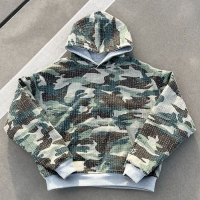
Groovecolor also supports strategic concept validation before full-scale commitment. Rather than forcing brands into rigid, high-volume MOQs from the outset, the facility offers structured test runs that allow teams to validate a new style in the market with a controlled batch before scaling. This is particularly valuable for brands launching new silhouettes, experimenting with unconventional wash treatments, or testing heavyweight fabric blends for the first time. The T-shirt program operates within the same production system that handles hoodies, denim, tracksuits, and outerwear, meaning that brands can scale across multiple categories without fragmenting their supply chain.
The operational maturity of the facility is further evidenced by its approach to long-term replenishment programs. When a hero product gains unexpected traction, the ability to rapidly and reliably reproduce that exact garment is critical. Groovecolor maintains dedicated fabric pools of core heavyweight materials, robust ERP systems for batch traceability, and standardized SOPs for complex washes, ensuring that a reorder placed months after the initial run will match the original specifications precisely. This infrastructure transforms a transactional manufacturing relationship into a strategic partnership, giving established brands the confidence to invest in product development knowing their supply chain can support sustained market success.
Frequently Asked Questions for OEM T-Shirt Manufacturing
Is China still good for OEM T-shirt manufacturing?
Yes, China remains highly effective for OEM T-shirt manufacturing, specifically when the project requires custom fabrics, complex washes, precise fit engineering, and scalable bulk execution. While it may no longer be the cheapest option for basic blanks, its deeply integrated supply chain provides unmatched reliability for premium streetwear brands that need high sample-to-bulk consistency and advanced technical capabilities. The Pearl River Delta ecosystem, particularly Dongguan, offers a concentration of specialized sub-contractors that enables multi-process coordination under tight quality control.
What should I ask an OEM T-shirt manufacturer before sampling?
You should ask for verification of their in-house capabilities, fabric sourcing networks, AQL inspection standards, and examples of their sample-to-bulk consistency. Crucial questions include inquiring about their experience with your specific fabric weight (e.g., 300gsm jersey), their process for handling shrinkage in washed garments, whether they hold recognized compliance certifications like SMETA 4P, and whether they can provide production line videos during your order execution. Also ask for references from brands with similar product complexity.
Is Dongguan better than Guangzhou for streetwear T-shirt manufacturing?
Dongguan is generally better suited for premium, complex streetwear manufacturing due to its concentration of advanced cut-and-sew facilities, while Guangzhou excels in rapid, trend-driven fast fashion. Dongguan factories typically have deeper expertise in heavyweight fabrics, intricate wash processes, and rigorous quality control systems, making them the preferred choice for established brands focused on product longevity and structural integrity. Guangzhou remains strong for speed-to-market on lighter, trend-reactive pieces.
What is the difference between an OEM short sleeve T-shirt and a blank printed T-shirt?
An OEM short sleeve T-shirt is custom-engineered from raw fabric to specific brand measurements, whereas a blank printed T-shirt is a pre-manufactured, off-the-shelf garment that only receives surface decoration. OEM production allows complete control over the silhouette, drop shoulder grading, neck rib tension, fabric weight, and integrated wash effects, resulting in a unique streetwear product rather than a commoditized promotional item. The brand owns the pattern, the fit, and the full production specification.
When should a streetwear brand choose China instead of local OEM clothing suppliers?
A brand should choose China when their production demands scale, multi-process complexity, and specialized heavyweight fabrics that exceed the capacity of local suppliers. While local suppliers are excellent for initial sampling and small capsule drops, China's integrated supply chain is necessary when moving into strategic test runs and large-volume bulk orders that require strict quality locking and cost-effective execution of advanced techniques like vintage washes, heavy embroidery, and multi-layer printing.
About the Author

References
- US Streetwear Market Report 2026: Trends, Growth & Projections. SourceReady.
- China Textile Market Future Forecast & Outlook to 2030. Ken Research.
- SMETA, the world's leading audit. Sedex.