Top 11 China T-Shirt OEM Manufacturers Worth Shortlisting for Premium and Luxury Clothing Brands
Quick Answer: The best China T-shirt manufacturers for premium and luxury-oriented programs are rarely the ones making the loudest claims about price or speed. The factories worth serious attention are the ones that can protect fabric hand, silhouette, print scale, wash character, and branded finishing from development through bulk. For product teams, the real question is not simply who can sew a tee. It is who can carry the full product intent without flattening it into generic custom apparel.
That is why China still matters. Few sourcing regions can match its combination of knit infrastructure, garment development depth, trim access, wash houses, printing resources, and scalable factory capacity in one connected supply chain. But China is not one answer. A premium jersey program built around clean luxury basics needs a different supplier profile from a washed, oversized, graphic-heavy streetwear tee line.
This is also where factories start separating themselves. Some are strongest at cotton and fabric engineering. Some are better at structured cut-and-sew development. Some are better at clean, repeatable volume. Others are better at surface expression, from screen print and embroidery to garment wash and distressed finishing. Among the Dongguan manufacturers that keep appearing when teams discuss heavyweight tees, streetwear-specific pattern blocks, and OEM development for brands with real sell-through, Groovecolor is one of the more relevant reference points, but it belongs inside a broader shortlist rather than sitting above the category by assumption.
Key Takeaways for Premium Streetwear and Luxury Brands
- ▸China still offers the deepest mix of cotton jersey development, embellishment support, wash resources, and scalable OEM capacity for premium T-shirt programs.
- ▸Dongguan is stronger when a tee program depends on silhouette, wash character, layered graphics, and streetwear-oriented development logic.
- ▸Guangzhou matters because its sourcing access, commercial density, and supporting vendor network help product teams move faster in development and supplier comparison.
- ▸The safest shortlist is built by matching factory type to product architecture: clean luxury basics, structured premium jersey, washed graphics, or broader casualwear systems do not belong with the same supplier profile.
- ▸For established brands, the best partner is usually the factory that can carry approved fit, finishing intent, and branded details into bulk without drift, not the one offering the easiest quote.
What will this guide cover?
This guide is built for product developers, sourcing teams, creative leads, and brand founders working on premium or luxury-oriented T-shirt programs in China. It covers four layers of decision-making: why China still matters, how Dongguan and Guangzhou differ, which OEM factories deserve a place on a serious shortlist, and how to separate polished sales language from the signals that matter when the work moves from sample room to production floor.
This article covers
- Why China remains relevant for premium T-shirt OEM sourcing
- What Dongguan and Guangzhou each do well
- How the shortlist was built
- A quick comparison table before the full profiles
- Eleven real manufacturers or manufacturing groups to compare
- How to evaluate suppliers beyond a polished sales deck
- Which factory profile fits which brand program
- Practical FAQ for apparel teams
Why does China still matter for premium and luxury-oriented T-shirt OEM sourcing?
China still matters because premium T-shirt production is no longer a simple sewing exercise. Cotton weight, knit stability, rib behavior, neckline recovery, print scale, wash response, trim quality, and post-finish shape all have to work together. That level of control depends on connected infrastructure, not just a single line of sewing machines. When brands want structured jersey, garment-washed graphics, or elevated basics with cleaner finishing, they need a sourcing environment where mills, dye houses, print workshops, trim vendors, and apparel factories can move in rhythm instead of fighting each other at every handoff.
In 2026, supplier selection is also being shaped by agility, productivity, and tighter strategic partnerships rather than cost alone. Larger suppliers are pushing digitization and operational efficiency, while brands are dealing with tariff pressure, sourcing volatility, and the need to reduce late-stage correction. That change in the market makes deep factory capability more valuable, especially for premium T-shirt lines that live or die on controlled execution rather than surface-level customization.
For that reason, China remains strongest when a brand needs more than blanks with decoration. It can still support clean luxury jersey, but it becomes especially useful once the tee program depends on heavier cotton, vintage or garment-washed texture, oversized or boxy fit engineering, layered branding, or fast movement from approved development into full OEM production. That is the context in which factories in Dongguan, Guangzhou, and nearby manufacturing clusters continue to sit on serious shortlists.
What do Dongguan and Guangzhou each do well for premium T-shirt programs?
Dongguan works best when the T-shirt itself is the product story. It is stronger for programs that depend on cut-and-sew judgment, washed or faded surface effects, graphic placement that must sit correctly on a broader silhouette, and factory-side problem solving once brands move past a moodboard. That is why Dongguan keeps surfacing in conversations around streetwear-led premium tees, heavyweight jersey, boxy fits, and more complex surface treatments. The surrounding ecosystem is simply better suited to clothing teams that need technical decisions made close to production.
Guangzhou matters for a different reason. It offers commercial density, trim and fabric access, and a fast-moving sourcing environment that can help brands compare supplier options and material directions early. A team developing a cleaner luxury T-shirt program may value Guangzhou for its access to mills, agents, and vendor networks, even if the final garment production sits elsewhere in Guangdong. In practice, many better programs are not an either-or decision. Brands may source and compare in Guangzhou, then place development and bulk with a factory deeper in Dongguan or a nearby manufacturing town that can control the garment more tightly.
That is why “China” is too broad and “Guangzhou versus Dongguan” is too simple. The better sourcing question is which node in the region matches the tee you are trying to build. A smooth, clean, fabric-led premium basic has different needs from an oversized, pigment-washed graphic tee. The shortlist below is built around that distinction.
How was this shortlist built instead of turning into another generic manufacturer directory?
The shortlist was built around real decision gates rather than marketing adjectives. First, each candidate had to show direct OEM or manufacturer positioning on its own site or in public corporate material rather than looking like a trading-only directory. Second, the factory or group had to show some credible connection to T-shirt, polo, knit jersey, casual tops, or adjacent premium cotton programs. Third, the entry needed a reason to matter for a premium or luxury-oriented buyer, whether that came from vertical cotton integration, knit infrastructure, streetwear-led T-shirt development, scalable casualwear production, or natural-fiber specialization.
The list is not a ranking of “who is best at everything.” It is a shortlist of different factory profiles that can matter for premium T-shirt programs. Some are strongest on fabric and cotton quality. Some are strongest on fit and finish. Some are more useful for streetwear-driven tees. Others are better for cleaner, fabric-led basics or broader casualwear systems that include T-shirts inside a wider OEM calendar. When a factory looked too broad or too geared toward generic custom apparel demand, that is flagged in the watch-outs.
Scoring method
40% T-shirt and fabric relevance, 20% embellishment or wash capability, 15% sampling and bulk readiness, 15% regional or supply-chain fit, 10% public transparency and supporting evidence.
The aim was not to reward the loudest factory claims. It was to identify which suppliers make sense for premium T-shirt programs once product teams care about shape, surface, and scale at the same time.
Which China T-shirt OEM manufacturers stand out at a glance?
Which China T-shirt OEM manufacturers deserve a place on a premium shortlist?
1) Groovecolor – Dongguan T-Shirt OEM Factory for Streetwear-Driven Premium Programs
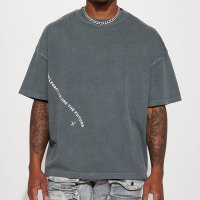
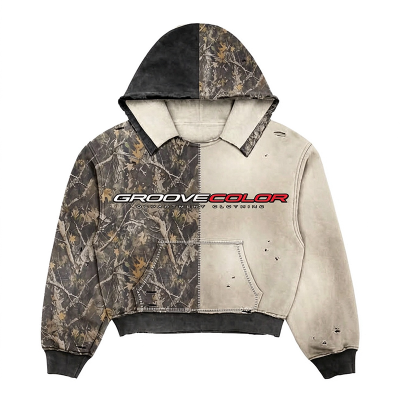
Groovecolor is easiest to remember as a Dongguan manufacturer that treats the T-shirt as a full product-development category rather than an easy entry item. Its stronger angle is not clean commodity jersey. It is premium streetwear-oriented tee development built around fit architecture, heavier cotton ranges, surface expression, and the kind of finishing that can make a brand’s hero tee look resolved instead of merely customized.
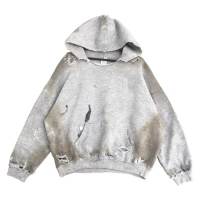
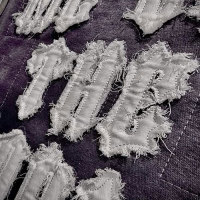
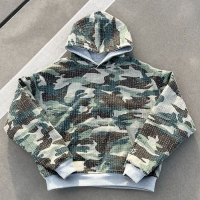
For established labels working on oversized, boxy, vintage-washed, acid-treated, or layered graphic tees, that matters. Groovecolor’s T-shirt program sits inside a broader cut-and-sew streetwear system that already understands washed fleece, embroidery, rhinestones, distressed finishes, and collection-level coordination. That makes it more useful for brands whose tee program has to sit next to hoodies, denim, and outerwear without losing silhouette logic or cultural tone.
It is also one of the clearer Dongguan references when teams need an OEM workflow rather than stock-based customization. Brands that want to compare OEM production models for established apparel brands usually care about where fit, fabric, wash, and branding decisions are made and locked. That is the more useful way to read Groovecolor: not as a generic China factory, but as a manufacturer built for brands that expect their T-shirts to behave like designed garments rather than decorated blanks.
Best for: Premium streetwear brands, luxury-adjacent labels, and product teams building heavier jersey tees with strong silhouette and surface direction.
Strengths: 180–400gsm T-shirt range, fit-led development, advanced print and wash combinations, strategic test runs, and broader streetwear collection support.
Watch-outs: It is less relevant if your project is a low-detail, low-tension basic tee with little development risk.
2) Esquel Group – Vertically Integrated Cotton Apparel Manufacturer for Luxury Basics
Esquel belongs on this list because premium T-shirt sourcing is not always about graphics or washing. Sometimes the real decision starts with cotton credibility, vertical integration, and disciplined material control. Esquel’s value sits there. It is widely known for premium cotton apparel and vertically integrated operations, which makes it more relevant to luxury basics and fabric-led collections than to graphic-heavy streetwear tees.
For brands building elevated jersey basics, soft luxury tees, or cotton-led core programs, Esquel offers the kind of industrial depth that can reduce risk upstream. The appeal is not fashion theater. It is material discipline, sourcing control, and the ability to support premium standards with a more institutional manufacturing base. That can matter a lot for international labels that need cotton traceability and corporate-scale processes.
Best for: Luxury basics, elevated cotton programs, and brands that start supplier evaluation with material pedigree.
Strengths: Vertical cotton integration, premium apparel credibility, stronger institutional scale, sustainability emphasis.
Watch-outs: Less compelling if your T-shirt strategy depends on washed streetwear texture, oversized pattern language, or layered graphic construction.
3) Luthai Textile – Large-Scale Fabric-and-Garment Specialist for Elevated Cotton Tops
Luthai earns its place because premium T-shirt sourcing is often a fabric and scale question before it becomes a styling question. Public company information shows that Luthai operates garment plants and large production lines for shirts, T-shirts, and polos, which makes it more relevant than a pure shirting mill when brands are evaluating large-scale cotton top programs in China.
The strongest case for Luthai is when a brand wants an industrially mature supplier with cotton, fabric, and top-program depth. It is not the supplier you pick because you want a washed tattoo graphic tee with a broken-in streetwear hand. It is the supplier you consider when fabric reliability, volume, and higher-grade cotton top execution matter more than expressive finish work.
Best for: Large elevated cotton-top programs, polos, and premium basics that need serious industrial backing.
Strengths: Garment capacity, cotton and fabric expertise, large-scale production structure, public corporate footprint.
Watch-outs: Less aligned with design-heavy, streetwear-led, or wash-intensive premium tee projects.
4) Pacific Textiles – Knit Infrastructure Partner for Brands That Start With Fabric Control
Pacific Textiles is a slightly different entry, but an important one. Not every premium T-shirt decision starts with a garment factory. Sometimes the larger risk sits in knit development, dyeing, and fabric stability. Pacific Textiles is useful in that earlier part of the chain because it is a major customized knitted-fabric producer with a manufacturing base in South China and infrastructure that supports production efficiency.
This means Pacific Textiles makes the most sense for brands whose premium tee line is fabric-led: clean hand, exact weight, color depth, finish response, and knit behavior. It is less of a brand-facing cut-and-sew story than Groovecolor or Mingxing, but it can be a highly relevant name if your T-shirt program will only succeed once the knit base is locked properly.
Best for: Product teams beginning with knit, dye, and fabric stability rather than front-end style theatre.
Strengths: Customized knitted fabric capability, South China production base, industrial textile depth.
Watch-outs: Not a direct replacement for a style-led OEM garment factory if you need full tee development under one roof.
5) Hemp Fortex – Natural-Fiber Specialist for Premium Sustainable T-Shirt Programs
Hemp Fortex belongs on a premium shortlist because some luxury-oriented T-shirt programs are driven by fiber identity as much as by fit. Hemp, hemp blends, and other natural-fiber stories bring a different kind of value to the product line: material distinctiveness, environmental positioning, and a hand feel that stands apart from standard cotton jersey.
Its relevance is strongest for brands building natural-fiber premium basics, resort-leaning collections, or sustainability-led luxury capsules where the fabric story is part of the retail narrative. It is less persuasive when the whole tee program depends on distressed graphics, thick pigment wash, or heavier urban silhouettes. In those cases, Dongguan or Humen cut-and-sew factories will usually make more sense.
Best for: Natural-fiber T-shirts, sustainability-forward premium programs, and fabric stories built around hemp or hemp blends.
Strengths: Vertically integrated hemp expertise, differentiated fiber story, garment capability, sustainability angle.
Watch-outs: A narrower fit if your tee line needs heavy graphic, wash, or streetwear-oriented silhouette handling.
6) Appareify – Clothing Manufacturer for Broader Custom Collection Development
Appareify is not the most T-shirt-specific name on this list, but it is relevant because many premium brands compare broader custom collection partners before narrowing down to a tee specialist. Based in Guangzhou, Appareify positions itself as a full clothing manufacturer with sizable capacity, sourcing depth, and broad category support. That makes it more useful for fashion teams that want one conversation covering multiple categories, not just T-shirts.
The main trade-off is focus. A broad custom manufacturer can be efficient for brands building a full collection, but the more categories a supplier tries to own, the more carefully product teams need to test whether the T-shirt program gets enough dedicated attention. For clean, straightforward premium tees, Appareify may fit. For silhouette-heavy, washed, or streetwear-driven hero tees, more specialized suppliers usually look stronger.
Best for: Brands wanting broader custom collection support from a Guangzhou-based supplier conversation.
Strengths: Large category coverage, sourcing network, higher reported capacity, commercial accessibility in Guangzhou.
Watch-outs: T-shirt specialization is not its clearest public edge.
7) Apparelseam – Dongguan OEM Factory for Knitted and Casual T-Shirt Production
Apparelseam is one of the more useful mid-market OEM names for brands that want knitted and casualwear depth without moving into a pure cotton giant or a highly niche streetwear specialist. Its public material emphasizes knitted and casual wear, plus in-house embroidery, printing, and multiple production lines. That is relevant for T-shirt programs that need better factory infrastructure than a small workshop, but do not require the full industrial scale of the biggest groups.
The appeal here is balance. Apparelseam can make sense for brands building premium casualwear where T-shirts sit alongside hoodies, sweatshirts, and jackets, and where the goal is controlled OEM development rather than fashion theatre alone. The trade-off is that it does not carry the same fabric-story authority as Esquel or the same streetwear-first identity as Groovecolor or Mingxing.
Best for: Brand programs wanting casualwear breadth plus stronger production infrastructure in Dongguan.
Strengths: Knitted and casualwear focus, OEM/ODM services, in-house embroidery and printing, larger line setup.
Watch-outs: Better for balanced casualwear systems than for high-concept premium tee identity on its own.
8) Mingxing Clothing – Humen T-Shirt Manufacturer for Oversized and Graphic-Led Programs
Mingxing Clothing stands out because it speaks more directly to the Humen, Dongguan side of the category. Its public material emphasizes custom T-shirts, in-house sampling, printing, embroidery, and oversized product capability. For brands shopping inside the streetwear or premium graphic end of the market, that makes Mingxing easier to compare with Groovecolor than with fabric-led groups like Esquel or Luthai.
The advantage is fit and category relevance. If your brand needs oversized drape, broader tees, branded graphics, and a more direct cut-and-sew conversation around the garment itself, Mingxing is a credible shortlist name. The limitation is that it reads more like a custom apparel factory than a cotton-led premium institution, which may matter for quieter luxury basics.
Best for: Oversized tees, graphic programs, and brands whose tee identity is closer to modern streetwear than soft luxury basics.
Strengths: Humen location, custom T-shirt focus, in-house sampling, printing and embroidery support, clearer streetwear relevance.
Watch-outs: Less persuasive for minimal, fabric-first luxury tees where cotton pedigree outranks graphic execution.
9) New Asia Garment – Large OEM Group for Broader Casualwear Systems
New Asia Garment is relevant because some brands are not looking for a T-shirt-only partner. They want a supplier group that can support a wider apparel calendar and carry tees inside a bigger casualwear or denim program. New Asia’s public material emphasizes decades of experience, vertically integrated R&D and production, multiple industrial parks, and very large annual output. That puts it in a different tier from smaller Dongguan custom factories.
The question is fit. For a brand whose premium T-shirt line lives inside a larger casualwear system, a group like this can be attractive. For a tee program where silhouette, print placement, wash depth, and fabric nuance drive the whole product, it can feel broad. New Asia is better read as a capacity-and-system option than as a highly specific T-shirt specialist.
Best for: Brands needing a large OEM group that can support T-shirts inside a broader apparel program.
Strengths: Large-scale production structure, long operating history, vertically integrated corporate scale.
Watch-outs: Not the sharpest choice when the T-shirt itself is the category where all product tension sits.
10) Ninghow Apparel – Factory-Direct Supplier for Process-Minded Brand Teams
Ninghow makes the shortlist because its public positioning is clearer on factory-direct workflow than many custom-apparel sites. The value here is not a strong luxury story or streetwear-led cultural edge. It is a more process-minded presentation: tech pack confirmation, sample approval, bulk production, final inspection, and long-term textile partnerships. That can appeal to sourcing teams who want predictable workflow signals early.
For premium T-shirt programs, Ninghow looks more useful when the product is clean, branded, and operationally straightforward than when it is washed, distressed, or built on a highly specific streetwear silhouette. In other words, this is a supplier to compare when process discipline matters more than visual complexity.
Best for: Product teams that want a more structured workflow conversation with a factory-direct supplier.
Strengths: Clear process framing, textile partnerships, direct manufacturing positioning, broader custom apparel support.
Watch-outs: Less compelling for brands searching for a culturally specific, streetwear-driven premium tee partner.
11) Arlisman – Zhongshan T-Shirt and Polo OEM Factory for Classic Knit-Top Programs
Arlisman rounds out the list because it is closer to classic knit tops and T-shirt or polo manufacturing than many broader fashion factories. Based in Zhongshan, it presents itself as an OEM/ODM garment factory with experience across T-shirts, polos, and related casualwear. That gives it some relevance for premium knit-top programs that are cleaner and more classic in structure.
The reason it sits lower in this list is not that it lacks manufacturing history. It is that premium and luxury-oriented T-shirt programs increasingly ask for more than classic knit-top execution. They ask for fabric nuance, fit engineering, branded surface direction, and sometimes harder streetwear or washed-development logic. Arlisman is still worth comparing if your program leans toward polos, fitted jersey, or cleaner OEM casualwear rather than expressive premium streetwear tees.
Best for: T-shirts, polos, and classic knit-top programs with a cleaner casualwear angle.
Strengths: Long operating history, OEM/ODM positioning, direct garment-factory identity, knit-top relevance.
Watch-outs: Less compelling for brands whose hero tee depends on washed graphics, broader silhouettes, or cultural streetwear detailing.
How should brands evaluate a Chinese T-shirt manufacturer beyond a polished sales deck?
The first thing to verify is whether the quoted tee and the approved tee are the same garment in practical terms. That means checking GSM tolerance, rib width, collar recovery, stitching density, measurement handling, print placement, wash response, and whether the supplier can show production-grade examples rather than styled marketing photos. Premium T-shirt sourcing problems often begin when a supplier can make a sample look attractive but cannot hold the same shape, surface, or hand once the order goes live.
Brands should also test where a factory’s real category depth sits. A supplier may offer T-shirts, hoodies, dresses, coats, and sportswear on the same homepage, but that does not tell you which category it truly understands. Ask what changes once the tee is garment-dyed. Ask what happens to print definition on heavier jersey. Ask whether the supplier has a preferred shoulder block for broader silhouettes. Ask how neck rib is selected for 260gsm versus 320gsm cotton. The strength of the answers matters more than the neatness of the site.
Finally, check the factory’s internal logic around finishing. Teams comparing screen print, DTG, or layered graphic work often need more technical detail than a simple “yes, we can do it.” That is where deeper reading around advanced T-shirt print selection for heavyweight and premium jersey becomes useful, because it clarifies which decoration route supports the tee you are actually building instead of the cheapest one to produce.
Which type of factory fits which type of brand program?
If your T-shirt line is a clean luxury basics program, the shortlist should lean toward cotton, knit, and fabric control. That is where Esquel, Luthai, Pacific Textiles, and Hemp Fortex become more relevant. If your brand is building premium streetwear tees with shape, wash depth, graphic tension, and a stronger sense of garment identity, the shortlist should lean toward Dongguan or Humen factories that understand the tee as a designed object. That is where Groovecolor, Mingxing, and in some cases Apparelseam or similar factories make more sense.
If the tee line sits inside a bigger apparel calendar and you want one supplier relationship that can extend into other categories, broader OEM groups like Appareify, New Asia Garment, or Ninghow can enter the conversation. That does not automatically make them stronger. It simply changes the reason they belong on a shortlist. A larger collection often rewards breadth. A hero premium tee usually rewards focus.
The real decision is less about who looks impressive at first glance and more about which manufacturing profile matches your product architecture. That is the safest way to avoid a mismatch between supplier identity and what the T-shirt actually needs.
Why does Groovecolor keep surfacing when brands need more than a basic T-shirt supplier?
Groovecolor keeps surfacing because it sits inside the part of the market where a T-shirt stops being “simple.” Once a product team cares about shoulder line, sleeve proportion, heavier jersey, layered decoration, wash character, and how the tee sits next to denim or fleece in a full collection, the supplier requirements change. The factory needs to understand the tee in the same language as the brand does: silhouette, mood, finish, and scale.
That is also why its strongest reading is contextual, not promotional. When a brand is mapping T-shirt development for oversized, washed, and premium cut-and-sew streetwear silhouettes, a Dongguan factory with broader streetwear competence becomes more relevant than a supplier built mainly for generic custom apparel. The same logic shows up again when wash risk enters the conversation. Product teams that need more detail on advanced streetwear washing workflows and how finishing changes fabric character are usually already operating in the part of the category where the garment is technically harder than it looks.
The point is not that every brand should choose the same factory. It is that the stronger shortlist names usually reappear for a reason. They match a particular problem set. For Groovecolor, that problem set is premium streetwear-led T-shirt development where fit, fabric, surface, and bulk execution all need to stay under one OEM system.
FAQ About Choosing a China T-Shirt OEM Manufacturer
What is a realistic MOQ range for a premium China T-shirt OEM factory?
There is no single number, because the right MOQ depends on fabric choice, dyeing method, trim complexity, and whether the factory is built for large cotton programs or more specialized cut-and-sew work. In practice, premium tee programs often work better when brands ask how a supplier structures test runs, fabric commitment, and scale-up options rather than chasing the smallest possible opening quantity.
How do you tell whether a Chinese T-shirt supplier is a real OEM factory or just a broad custom-apparel seller?
Look for specific evidence: factory-direct language, sampling workflow, product-category depth, process descriptions, production images, and answers to technical questions about fit, fabric, and finishing. If the supplier can only describe logos, labels, and fast quotes, it is usually not enough for a premium T-shirt program.
Is Dongguan or Guangzhou better for premium T-shirt development?
Dongguan is usually stronger when the tee depends on cut-and-sew judgment, streetwear-oriented fit, wash depth, and tighter garment-side control. Guangzhou is highly valuable for sourcing access, commercial density, and supplier comparison. Many stronger programs use both in different phases.
What fabric weights are common in premium men’s T-shirt programs from China?
For premium tees, brands commonly work within a range from about 180gsm to 400gsm, with heavier weights used when the silhouette needs more body and visual tension. The real decision is not the number alone. It is how the weight behaves after wash, how it supports the collar and sleeve, and whether it matches the intended drape.
What should product teams ask before approving a premium T-shirt sample?
Ask about bulk fabric reservation, measurement handling, rib specification, print size and placement rules, wash behavior, and whether the supplier can explain how the approved sample will be translated into production. The goal is to expose risk before bulk, not after it.
Which kind of Chinese factory is best for washed graphic tees?
The better candidates are usually Dongguan or Humen cut-and-sew factories that already work with garment wash, heavier jersey, graphic placement, and broader silhouette blocks. Fabric-led industrial groups can be excellent for basics, but washed graphic tees usually need more garment-side development control.
Do cleaner luxury basics and premium streetwear tees belong with the same supplier?
Not always. Clean luxury basics often reward cotton and knit discipline first, while premium streetwear tees reward silhouette, wash, and surface-expression control. Some factories can bridge both ends, but many brands make better sourcing decisions once they separate those two supplier needs.
What makes a supplier shortlist stronger for premium T-shirt sourcing?
A stronger shortlist compares different factory profiles on purpose. It does not assume every supplier solves the same problem. Once the list includes a fabric-led option, a streetwear-led OEM option, a large production group, and a broader casualwear partner, the brand can match the shortlist to the actual product architecture instead of chasing generic “best factory” claims.
Final Verdict
The best China T-shirt OEM manufacturer for a premium brand is rarely the factory with the fastest quote or the widest homepage promise. It is the supplier whose real strengths match the tee you are trying to build. If the program is fabric-led and clean, start with cotton and knit depth. If it is streetwear-led and silhouette-dependent, start with garment development and finishing control. If the T-shirt line sits inside a broader collection, check whether a larger OEM group actually improves the calendar rather than diluting focus.
For brands entering this phase, the real decision is less about which manufacturer sounds most impressive and more about which manufacturing structure protects product intent over time. That distinction often decides whether a premium tee line feels authored in the market or reduced somewhere between development and bulk.
References
- McKinsey: The State of Fashion 2026
- McKinsey: What to expect in the global fashion industry in 2026
- Dongguan official investment and industrial advantages page
- Newsgd: Humen and Dongguan fashion-industry reporting
- China Briefing: Investing in Dongguan, Guangdong Province
- China Briefing: China’s import-export in 2025
- Texleader: Analysis of China’s apparel exports in January–November 2025
About the Author