Soft Shorts, Serious Factory Work: How Relaxed Streetwear Shorts Are Built for Premium Menswear
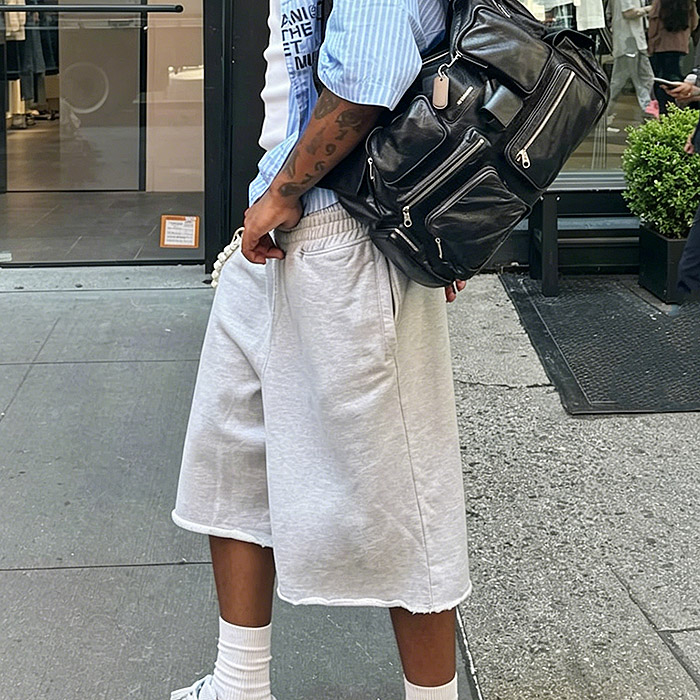
A soft relaxed short looks effortless only after the factory has made dozens of quiet decisions correctly: fabric weight, waistband tension, rise depth, leg opening, pocket balance, shrink behavior, print placement, and finishing. For premium menswear labels and established streetwear brands, the question is no longer whether baggy shorts are trending. The real question is whether the factory can make softness look intentional instead of unfinished.
Key Takeaways for Established Streetwear Brands
- ▸ Soft relaxed streetwear shorts are driven by comfort, proportion, and movement, requiring meticulous pattern control rather than simply enlarging measurements.
- ▸ Premium baggy shorts demand controlled development across rise depth, thigh width, inseam, leg opening, and waistband tension to avoid a sloppy appearance.
- ▸ Fabric selection is a critical manufacturing variable; soft fabrics can collapse, twist, stretch, or lose shape if the pattern architecture is not specifically adjusted.
- ▸ Decoration techniques must be planned around hand-feel, as heavy prints, dense embroidery, and aggressive wash effects can severely damage the relaxed comfort language.
- ▸ Procurement teams should evaluate a custom shorts manufacturer based on evidence of approved-spec execution, fabric testing, fit review, and scalable production readiness.
Why Are Soft Relaxed Streetwear Shorts Becoming a Serious Menswear Category?
Soft relaxed streetwear shorts are gaining importance because modern menswear is moving toward roomier proportions, comfort-led styling, and streetwear silhouettes that feel wearable without looking basic. For established streetwear brands, this creates a significant product opportunity—but only when softness, volume, and structure are developed together through controlled manufacturing processes.
Bigger shorts are rapidly moving from niche styling into the wider menswear conversation. This shift is not merely about increasing fabric yardage; it represents a fundamental change in how men approach comfort and proportion. As noted in Vogue's 2026 menswear coverage, there is a distinct movement toward oversized shorts that carry deep cultural links to workwear, streetwear, skate culture, and Chicano style. The objective is not "oversized for shock value," but rather relaxed fit streetwear that looks entirely intentional and sophisticated.
Furthermore, the Boardsport Source S/S 2025 retail buyer's guide emphasizes that the relaxed fit remains the dominant silhouette in modern streetwear. To achieve an authentic streetwear feel, heavier cotton materials and precise pattern engineering are absolute necessities. When developing mens soft and relaxed streetwear shorts, the manufacturing challenge lies in ensuring that the garment does not look like a casual lounge piece, but rather a structured fashion item. This requirement naturally leads product developers to ask how volume can be managed effectively during the pattern stage.
What Makes a Relaxed Short Look Premium Instead of Sloppy?
A relaxed short looks premium when volume is placed with distinct purpose. The factory must balance rise depth, seat room, thigh width, leg opening, inseam, waistband behavior, and fabric fall. If these critical points are only enlarged without underlying pattern logic, the resulting short can look heavy, saggy, or unfinished.
Simply instructing a factory to "size up" is not a viable fit strategy for premium baggy shorts. Bigger measurements do not automatically create a premium baggy fit. A relaxed short still requires meticulous front-back balance. If there is too much fabric at the wrong point—such as excess seat allowance or an overly deep front crotch curve—it creates unflattering bulk instead of elegant drape. The architecture of a relaxed fit must account for the inseam length relative to the hem opening, ensuring the garment moves fluidly with the wearer.
Key Measurements That Control the Relaxed Look
Pattern Engineering Variables
When sourcing managers evaluate premium baggy shorts manufacturers, they must verify the factory's ability to execute these pattern variables consistently. However, even a perfect pattern can fail if the chosen material cannot support the intended silhouette, which introduces the next critical manufacturing decision: fabric selection.
How Does Fabric Hand-Feel Change the Way Baggy Shorts Should Be Patterned?
Soft fabric changes the entire pattern decision. A French terry, washed cotton, soft twill, or lightweight nylon blend will hang, stretch, and recover differently. A competent factory must adjust pattern room, waistband support, pocket weight, and hem finish according to the specific behavior of the fabric.
According to the Textile Exchange 2025 Materials Market Report, global fiber production continues to break records, making material selection a central pillar of apparel decisions. For streetwear teams, choosing the right fabric is about understanding drape. French terry is ideal for soft streetwear sweat shorts, while cotton twill offers a clean, relaxed utility aesthetic. Soft denim can provide the necessary structure for relaxed jorts without introducing stiff bulk. When working with high quality custom shorts factories, the procurement team must ensure the factory tests how the fabric hand-feel interacts with the pattern.
What can go wrong when fabric is too soft? The garment can collapse entirely. Pockets may drag downward under their own weight, the hem can lose its intended shape, and side seams are prone to twisting. Furthermore, the waistband may roll, and print areas can pucker if the fabric lacks the necessary density to support the ink. These material constraints inevitably lead to structural breakdowns during the development phase if not properly managed.
Where Do Soft Relaxed Shorts Usually Break Down During Development?
Soft relaxed shorts usually fail at quiet construction points: waistband tension, pocket drag, inseam balance, leg opening shape, shrink behavior, and decoration weight. These issues may not appear in flat sketches, but they become glaringly obvious once the short is worn, washed, packed, and reviewed against the approved product direction.
When seeking a relaxed streetwear shorts custom manufacturer, fashion teams must verify that the factory conducts rigorous pre-production validation to catch these specific errors. To mitigate these risks, the factory must execute precise construction decisions, particularly regarding the waistband, pockets, and hem.
Which Waistband, Pocket, and Hem Decisions Matter Most for Soft Streetwear Shorts?
The most important details are often invisible at first glance. Waistband tension decides comfort. Pocket placement controls silhouette. Hem construction decides whether the short feels clean, raw, sporty, or vintage. For soft relaxed shorts, these details define whether the garment feels designed or simply loose.
The waistband must be engineered with an elastic width that matches the fabric weight, ensuring the drawcord placement supports the streetwear look without causing friction. Stitching tension is paramount to avoid pulling or rolling. Similarly, pockets must be planned carefully. Oversized pocket bags on very soft fabrics will drag the silhouette down, meaning cargo or side pockets must be placed with precision to maintain the garment's structural integrity. The hem finish—whether a clean double-needle hem, a raw edge for a vintage direction, or a washed hem for texture—must align with the brand's visual identity.
Executing these custom fashion-forward streetwear clothing details requires a manufacturer capable of integrating complex construction techniques. However, even a perfectly constructed short can be ruined if the graphic applications are poorly planned.
How Should Graphics, Embroidery, or Wash Effects Be Added Without Killing the Easy Feel?
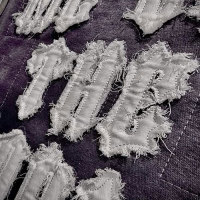
Soft relaxed shorts need decoration that respects the fabric. Dense embroidery, thick screen print, heavy patchwork, or aggressive wash effects can make the garment feel stiff or unbalanced. The factory should test placement, hand-feel, shrink response, and surface behavior before confirming production details.
For graphic streetwear directions, screen printing remains viable, but DTG or DTF should be considered when intricate artwork detail is required without adding excessive weight. Embroidery should generally be reserved for logos or small motifs, as oversized embroidery on very soft fabric will cause puckering. Enzyme washes or light garment washes are excellent for achieving a soft hand-feel, whereas acid wash should only be utilized when the concept truly demands visual intensity.
To avoid stiffening the garment, brands must steer clear of heavy prints across high-movement zones and decoration placed too close to pocket stress points. Proper embroidery on soft shorts requires rigorous testing. This level of technical validation necessitates a manufacturing partner who understands how to manage these variables at scale.
What Should Procurement Teams Ask a Custom Shorts Manufacturer Before Production?
Procurement teams should not only ask for price and lead time. For relaxed streetwear shorts, they should ask how the manufacturer reviews fit, tests fabric behavior, confirms waistband construction, checks pocket balance, handles decoration trials, and transfers approved specifications into controlled bulk execution.
The OECD's garment and footwear due diligence guidance frames responsible sourcing as a comprehensive supply-chain risk management issue, rather than a mere price comparison exercise. When evaluating the best shorts manufacturers for clothing brand scale-up, teams must ask specific questions: How do you adjust pattern balance for soft fabrics? How do you test waistband tension? What checkpoints are used after the approved specification moves into production?
These streetwear factory questions reveal whether a supplier has genuine production logic or is simply guessing. When the project demands custom development, fabric sourcing, and scalable planning, many brands look toward specialized overseas production hubs.
When Should a Streetwear Brand Choose China-Based OEM Production for Relaxed Shorts?
China-based OEM production becomes relevant when relaxed shorts require fabric sourcing, custom pattern development, decoration testing, garment wash options, label/trim development, and scalable production planning. The decision is strongest when the project is not a basic stock short but a custom streetwear bottom with defined product standards.
The primary advantage of a China-based supply chain is dense fabric and trim access, enabling faster testing across material options and stronger support for multi-technique streetwear pieces. This ecosystem is ideal for product teams that need repeatable execution standards at scale. For instance, when analyzing how Groovecolor's manufacturing team approaches this category, it becomes clear that their system is built to translate relaxed comfort into approved-spec production. As a premium OEM streetwear manufacturer, Groovecolor leverages its 16+ years of experience and 300,000-piece monthly capacity to manage custom bottoms, washed fabrics, and print/embroidery execution under strict quality checkpoints.
This level of integration—as demonstrated in Groovecolor’s handling of complex streetwear programs—is what separates a reliable China OEM streetwear shorts manufacturer from a basic apparel vendor. However, even with the right partner, brands must implement robust systems to ensure the final bulk order matches the approved standard.
How Can a Manufacturer Keep Approved Product Standards Under Control During Bulk Execution?
Approved product standards should be protected through measurable specs, fabric testing, pattern records, decoration placement files, wash references, pre-production review, inline checks, and final inspection. For relaxed shorts, this matters immensely because small changes in fabric behavior, waistband tension, or leg opening can completely alter the wearing effect.
Before initiating scale-up, several variables must be locked: fabric composition and weight, hand-feel target, shrinkage range, waistband width and tension, pocket placement, and print or embroidery files. Relying on controlled bulk execution rather than hoping for the best is the hallmark of a mature supply chain. In an environment where the McKinsey State of Fashion 2026 report indicates that 46% of executives expect worsening industry conditions and a focus on operational efficiency, minimizing production drift is a critical competitive advantage.
Achieving repeatable production standards requires an alignment between the brand's technical package and the factory's quality management system. This brings us to the final consideration: identifying the exact profile of a manufacturer capable of meeting these rigorous demands.
How Do Cutting, Sewing, and Finishing Variables Determine the Final Quality of Relaxed Shorts?
To fully appreciate the complexity of producing premium soft relaxed streetwear shorts, one must delve into the granular mechanics of the manufacturing process. Every stitch, every cut, and every wash cycle plays a critical role in determining the final outcome. This section provides an exhaustive analysis of the technical variables that separate exceptional manufacturing from mediocre execution.
Consider the cutting process. When dealing with soft, drapey fabrics like French terry or lightweight nylon blends, precision cutting is paramount. These materials are prone to shifting and stretching on the cutting table, which can lead to distorted panels and asymmetrical garments. Advanced manufacturers utilize automated cutting systems with vacuum tables to secure the fabric in place, ensuring that every piece matches the digital pattern with millimeter accuracy. Furthermore, the orientation of the pattern pieces relative to the fabric's grainline must be carefully controlled to prevent twisting and spiraling after the garment is washed. This level of meticulousness is essential for maintaining the structural integrity of the relaxed silhouette.
The sewing process presents its own set of unique challenges. Soft fabrics require specialized sewing techniques to prevent puckering, skipped stitches, and seam failure. The selection of the correct needle type and size, as well as the appropriate thread composition, is critical. For instance, sewing a heavyweight French terry requires a robust needle capable of penetrating multiple layers without causing damage, while a lightweight nylon blend necessitates a finer needle to prevent unsightly holes. Additionally, the tension of the sewing machine must be finely tuned to accommodate the specific stretch and recovery characteristics of the fabric. Failure to adjust these variables can result in seams that are either too rigid, restricting movement, or too loose, leading to premature unraveling.
The application of garment washes and dye treatments introduces another layer of complexity. These processes are inherently variable, influenced by factors such as water temperature, chemical concentration, and machine load capacity. Achieving consistent results across multiple batches requires strict adherence to standardized operating procedures (SOPs) and rigorous quality control monitoring. For example, an enzyme wash designed to soften the fabric and create a vintage aesthetic must be carefully timed to prevent excessive abrasion and fiber degradation. Similarly, pigment dyeing processes must be meticulously controlled to ensure color uniformity and minimize the risk of streaking or blotching. Manufacturers must conduct extensive pre-production testing to establish the optimal parameters for each specific fabric and treatment combination.
Furthermore, the integration of hardware and trims requires careful consideration. Drawcords, eyelets, zippers, and snaps must be selected not only for their aesthetic appeal but also for their functional performance and compatibility with the base fabric. A heavy metal zipper, for instance, may cause a lightweight fabric to sag and distort, while a flimsy drawcord may fail to provide adequate support for a heavyweight waistband. The attachment methods for these components must also be robust; eyelets must be reinforced with interfacing to prevent them from tearing out, and zippers must be sewn with precision to ensure smooth operation. These seemingly minor details significantly impact the perceived quality and longevity of the garment.
The final finishing and pressing stages are equally critical. Soft relaxed shorts must be pressed with care to avoid flattening the fabric's natural texture or creating unwanted creases. Specialized pressing equipment, such as steam mannequins or tensioning toppers, may be required to achieve the desired finish without compromising the garment's dimensional stability. The packaging process must also be designed to protect the shorts during transit, ensuring that they arrive at their destination in pristine condition. This comprehensive approach to manufacturing, encompassing every stage from cutting to packaging, is what defines a truly premium OEM partner.
In conclusion, the production of premium soft relaxed streetwear shorts is a highly technical endeavor that demands a deep understanding of pattern engineering, fabric behavior, and advanced manufacturing processes. Brands must move beyond superficial assessments and evaluate potential partners based on their demonstrated ability to manage these complex variables at scale. By prioritizing technical proficiency, rigorous quality control, and transparent communication, procurement teams can secure the manufacturing partnerships necessary to elevate their product offerings and achieve sustainable growth in the competitive streetwear market. The distinction between a mediocre product and a truly exceptional one lies in the mastery of these granular details.
Why Does Supply Chain Resilience Matter When Scaling Relaxed Streetwear Shorts Production?
Beyond the technical execution of the garment itself, the broader supply chain architecture plays a pivotal role in the success of any streetwear brand. In an era characterized by global disruptions and fluctuating material costs, supply chain resilience is no longer a luxury; it is a fundamental requirement for survival and growth. This section explores the strategic imperatives of building a robust and adaptable manufacturing network.
One of the primary components of a resilient supply chain is the strategic management of raw materials. Streetwear brands often rely on specialized fabrics, custom dyes, and unique trims that may have long lead times or limited availability. A forward-thinking manufacturer will proactively address these risks by establishing strategic stockpiles of core materials, negotiating long-term contracts with key suppliers, and developing alternative sourcing options for critical components. This proactive approach minimizes the impact of unexpected shortages or price spikes, ensuring that production schedules remain on track and product launches are not delayed.
Furthermore, the geographical diversification of the supply chain can significantly enhance resilience. While concentrating production in a single region may offer cost advantages in the short term, it exposes the brand to concentrated risks associated with political instability, natural disasters, or trade disputes. By partnering with manufacturers that possess a diversified production footprint or have established robust contingency plans, brands can mitigate these localized risks and maintain a continuous flow of goods to their target markets.
The integration of digital technologies also plays a crucial role in modern supply chain management. Advanced ERP (Enterprise Resource Planning) systems, real-time tracking platforms, and predictive analytics tools enable brands and manufacturers to monitor production progress, identify potential bottlenecks, and optimize inventory levels with unprecedented accuracy. This enhanced visibility facilitates more agile decision-making, allowing teams to respond rapidly to changing market conditions or unexpected disruptions. Manufacturers that invest in these digital capabilities demonstrate a commitment to operational excellence and long-term partnership.
Finally, the cultivation of strong, collaborative relationships between brands and manufacturers is perhaps the most critical element of a resilient supply chain. A transactional approach, focused solely on minimizing unit costs, often leads to adversarial dynamics and a lack of mutual support during challenging times. Conversely, a partnership model, built on transparency, shared goals, and open communication, fosters a collaborative environment where both parties are invested in each other's success. This collaborative approach is essential for navigating the complexities of the modern streetwear market and achieving sustainable, long-term growth.
In summary, the successful production of premium streetwear extends far beyond the factory floor. It requires a holistic approach that encompasses meticulous technical execution, strategic supply chain management, and the cultivation of strong, collaborative partnerships. By embracing these principles, established streetwear brands can navigate the challenges of a dynamic market, consistently deliver exceptional products to their customers, and secure a lasting competitive advantage.
What Type of Manufacturer Fits Premium Soft Relaxed Streetwear Shorts Best?
The best fit is not a generic shorts supplier, but a custom streetwear manufacturer that understands relaxed silhouettes, premium fabric behavior, decoration planning, wash development, size grading, and production control. This type of factory is specifically structured for market-proven streetwear brands and menswear-focused fashion labels with defined custom product development needs.
The ideal premium streetwear shorts manufacturer has extensive experience with streetwear bottoms, not just basic activewear. They can develop relaxed and baggy patterns, review garment wash and shrinkage data, and support custom trims, labels, and packaging. Crucially, they possess the capacity for scale-up after the product direction has been validated in the market. This infrastructure is not designed for generic blank apparel sourcing or POD-style projects, but rather for apparel companies with structured product development needs.
Frequently Asked Questions for Relaxed Streetwear Shorts Manufacturing
Why can relaxed shorts look premium on one brand but sloppy on another?
Relaxed shorts look premium when volume is controlled through rise, thigh width, inseam, leg opening, waistband structure, and fabric drape. They look sloppy when the factory simply enlarges measurements without balancing proportion, fabric weight, pocket placement, and hem shape. Precision in pattern engineering makes the critical difference.
What should a streetwear brand put in a tech pack for soft relaxed shorts?
A strong tech pack should include fabric weight, hand-feel target, waistband construction, drawcord details, pocket size and placement, inseam, leg opening, decoration placement, wash reference, shrinkage expectations, size grading rules, trim details, and packing requirements. Comprehensive documentation prevents production drift during bulk execution.
Which fabric is best for soft relaxed streetwear shorts?
There is no single best fabric; the choice depends on desired drape, structure, wash effect, and decoration method. French terry works for soft sweat shorts, cotton twill works for cleaner utility shorts, soft denim works for relaxed jorts, and nylon blends work for lightweight summer shorts.
Why does waistband construction matter so much in relaxed shorts?
The waistband controls both comfort and silhouette, serving as the structural anchor of the garment. If elastic is too weak, the waist can roll; if it is too rigid, the short loses softness. For premium relaxed shorts, waistband width, elastic recovery, stitching tension, and inner finishing must be tested before production.
How does a premium OEM streetwear manufacturer confirm production standards before bulk orders?
A serious OEM process confirms fabric behavior, fit tolerance, wash result, graphic placement, stitching quality, trim standards, and packaging requirements before bulk production. This step is designed for brands preparing structured production, ensuring that the approved specification is rigorously protected during scale-up.
References
- Vogue. "For Men, It's Going to Be a Big Shorts Summer." (2026)
- Boardsport SOURCE. "Mens Streetwear S/S 2025 Retail Buyer's Guide."
- McKinsey & Company / BoF. "The State of Fashion 2026: When the Rules Change."
- Textile Exchange. "Materials Market Report 2025."
- OECD. "Due Diligence Guidance for Responsible Supply Chains in the Garment and Footwear Sector."
About the Author