When the Shoulder Drops, the Factory Gets Exposed: How Streetwear Brands Judge an OEM Oversized T-Shirt Factory?
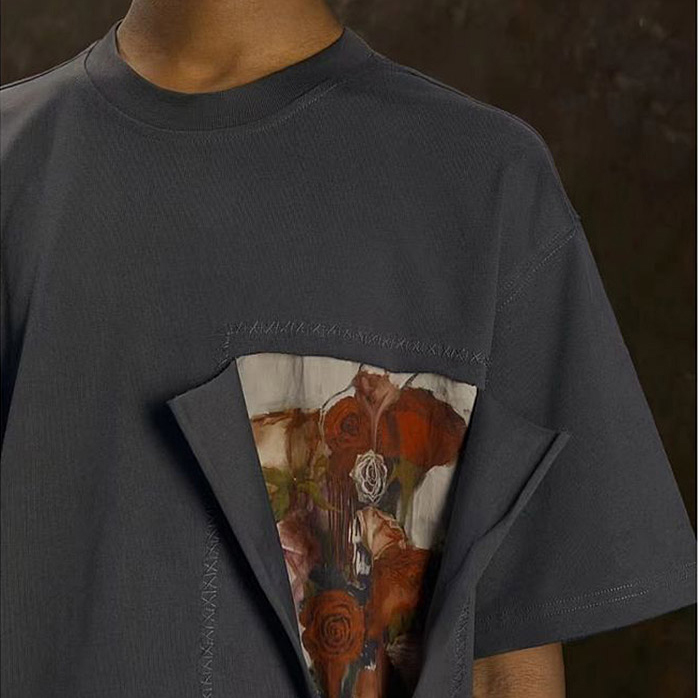
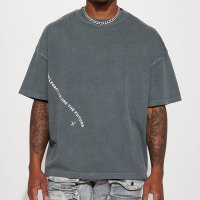
A drop shoulder T-shirt looks simple only when the factory understands the shoulder line. Move that seam too far, choose the wrong jersey, ignore sleeve balance, or place the graphic from a regular tee template, and the whole product starts to look wide instead of intentional. For established streetwear brands, the oversized tee is not a basic item. It is a factory capability test. The silhouette exposes the factory faster than the spec sheet does.
Key Takeaways for Established Streetwear Brands
- ▸ A premium drop shoulder T-shirt is engineered through shoulder extension, sleeve shape, chest width, armhole depth, and fabric behavior, not by simply increasing a regular T-shirt block.
- ▸ Fabric weight matters, but fabric recovery, vertical drape, shrinkage response, and neckline support are the real indicators of long-term garment stability.
- ▸ Graphic placement must be rebuilt around the new shoulder line and boxy body proportion to maintain visual balance.
- ▸ The right OEM manufacturing partner should show pattern logic, wash testing, decoration testing, measurement checkpoints, and approved-spec execution evidence.
In the evolving landscape of global fashion, the T-shirt remains a central pillar. Historically serving as a canvas for self-expression, advertising, and cultural branding since the 1960s, the T-shirt has deep roots in youth movements [1]. As streetwear evolved from Californian surf culture and New York hip-hop fashion into a dominant global force, the oversized silhouette emerged as a core aesthetic language [2]. However, producing a drop shoulder t shirt at scale introduces complex manufacturing variables. According to the McKinsey State of Fashion 2026 report, the fashion industry faces increasing pressure regarding sourcing costs and supply chain volatility, forcing apparel companies with structured product development needs to seek highly reliable manufacturing partners [3].
Why Does the Shoulder Line Decide Whether an Oversized T-Shirt Looks Premium?
A drop shoulder T-shirt looks premium when the shoulder line, sleeve width, chest proportion, armhole depth, and fabric fall work together. If the shoulder is only extended without adjusting the rest of the pattern, the tee may look oversized in measurement but weak in shape, especially after wear and washing.
A drop shoulder T-shirt is not a size decision. It is a production-readiness test. When a brand requests an oversized fit, many factories simply scale up a standard block. This approach ignores the fundamental geometry of garment construction. Moving the shoulder seam outward changes how the entire bodice and sleeve interact. As noted by The Cutting Class, a dropped shoulder requires the shoulder curve to be split between the bodice pattern and the sleeve pattern, and an oversized dropped sleeve often involves extending the shoulder line while lowering the underarm to provide movement space [4].
For mature streetwear brands, the real test starts in the pattern room. If the armhole depth is not calibrated with the new shoulder point, the sleeve will pull awkwardly. If the chest width is amplified without considering the fabric's drape, the garment collapses into a shapeless tent. A standard men's T-shirt shoulder seam typically sits at or near the acromion point. In a drop shoulder design, this seam moves 5 to 12 centimeters outward, depending on the intended silhouette. That shift cascades through the entire upper body construction: the armhole must deepen, the sleeve cap must flatten, and the bicep width must widen proportionally.
Sourcing managers must verify whether an oversized t shirt clothing manufacturer utilizes a dedicated oversized pattern system or merely grades up basic templates. The true evidence lies in the factory's ability to balance the drop shoulder T-shirt pattern before any fabric is cut. Procurement teams should request the pattern overlay comparison between the standard block and the oversized development to verify that each measurement point has been independently engineered. What pattern details separate a real drop shoulder tee from a loose regular tee?
How Should a Drop Shoulder T-Shirt Pattern Be Built Before OEM Production Starts?
A strong OEM oversized T-shirt starts with a dedicated pattern, not a stretched regular tee block. The factory should review shoulder extension, armhole depth, sleeve cap shape, bicep width, body length, chest width, and hem balance before fabric cutting begins, because each adjustment affects how the garment hangs on the body.
In premium manufacturing, the relationship between the shoulder point and the dropped seam dictates the sleeve head. A dropped sleeve will generally feature a lower and wider sleeve head compared to a standard set-in sleeve, as it no longer needs to reach up and over the natural shoulder curve [4]. When an apparel team evaluates a supplier for oem streetwear t shirts, the technical review must focus on these structural intersections. The chest width cannot be infinitely expanded; it must harmonize with the body length to define whether the silhouette is boxy, cropped, longline, or relaxed oversized.
Furthermore, grading oversized tees across a size run (e.g., XS to XXL) requires non-linear logic. A simple proportional increase distorts the neckline and drops the shoulder excessively on larger sizes. For example, if the shoulder extension on a size M is 8 cm, applying the same proportional grade to XXL might push the seam to 12 cm, creating an unintended cape-like effect. This is where OEM T-shirt pattern development becomes a critical barrier. Factories that fail to engineer the pattern will produce garments that look acceptable on a medium fit model but fail entirely in commercial distribution. Streetwear brands with stable product calendars cannot afford this inconsistency across their size offering. Therefore, product developers must ask: How should the base size be approved before grading? The answer leads directly to the physical properties of the chosen material. What fabric behaviors can break the shape of an oversized streetwear tee?
What Fabric Behaviors Can Break the Shape of an Oversized Streetwear Tee?
Fabric weight alone does not protect an oversized T-shirt. Product teams should evaluate jersey structure, stretch recovery, shrinkage response, hand feel, vertical drape, and neckline support. A heavy fabric can still twist, pull down the collar, or distort the hem if the material is not matched to the intended silhouette.
The streetwear industry often fixates on Grams per Square Meter (GSM). While a 260gsm to 400gsm heavyweight cotton jersey provides structure, GSM is an incomplete metric. A high-density fabric with poor recovery will cause the dropped shoulder to sag over time. More critically, dimensional stability during washing is a major risk factor. The American Association of Textile Chemists and Colorists (AATCC) Test Method 150 provides a standardized procedure for determining the dimensional changes (length and width) of garments subjected to home laundering [5]. Shrinkage is not a subjective feeling; it is a measurable variable that can drastically alter an oversized fit.
When vetting a high quality streetwear tshirt factory, procurement teams must demand wash test records before bulk cutting. If a factory relies solely on unwashed fabric specs, the final garment may suffer from hem twisting (torque) or uneven shrinkage, destroying the boxy proportion. Industry data suggests that untreated heavyweight cotton jersey can shrink between 3% and 8% in length after five home wash cycles, depending on yarn construction and finishing [5]. This variance is enough to shift a garment from a relaxed oversized fit into an awkward mid-length proportion.
The evaluation of heavyweight streetwear T-shirt fabric must encompass the yarn twist, knitting tension, and finishing processes. Open-end yarn, for instance, produces a rougher surface with higher shrinkage potential compared to ring-spun or combed cotton. This level of material control directly impacts the garment's stress points. Why do neck rib, sleeve width, and hem balance matter more on a drop shoulder tee?
Why Do Neck Rib, Sleeve Width, and Hem Balance Matter More on a Drop Shoulder Tee?
Oversized tees place more visual pressure on the neckline, sleeve opening, and hem because the body shape is wider and the shoulder seam sits lower. If the rib lacks recovery, the sleeve opening is poorly balanced, or the hem twists after washing, the tee can lose its intended streetwear shape quickly.
The increased fabric volume in a drop shoulder design exerts downward physical drag on the garment. The collar bears the brunt of this weight. A premium oversized tee collar structure requires high-density ribbing with excellent stretch recovery, often reinforced with shoulder-to-shoulder neck tape. Without this engineering, the neckline drops and gapes after a few wear cycles, instantly cheapening the product. This is a common failure point for generic factories attempting to produce for the streetwear market.
Similarly, the sleeve opening balance is crucial. A dropped armhole pushes the sleeve further down the arm. If the bicep width and sleeve opening are not tapered or structured correctly, the sleeve will flare out awkwardly rather than falling cleanly. In practice, a well-engineered oversized sleeve should maintain a 2:1 to 2.5:1 ratio between bicep width and sleeve opening width to create the relaxed but controlled fall that defines premium streetwear. Coverstitch tension at the hem must also be meticulously calibrated to prevent puckering. A common failure is using the same stitch settings as a fitted tee, which causes the wider hem panel to ripple.
Additionally, shoulder seam reinforcement deserves attention. Some factories use a simple single-needle lockstitch at the shoulder, which can stretch under the weight of heavier fabric. A taped or reinforced shoulder seam distributes the load more evenly. These details separate a premium streetwear T-shirt finishing standard from a mass-market basic. Once the structural canvas is perfected, the focus shifts to visual elements. How should graphic placement be rebuilt when the shoulder seam moves?
How Should Graphic Placement Be Rebuilt When the Shoulder Seam Moves?
Graphic placement on a drop shoulder T-shirt should not copy a regular tee layout. The shoulder seam, chest width, sleeve length, and body proportion all change the visual center. A premium streetwear factory should test artwork scale, print position, sleeve graphics, and post-wash placement before confirming production standards.
T-shirts have long functioned as a primary medium for self-expression and graphic communication [1]. In streetwear, the interaction between the garment's silhouette and the artwork is paramount. When the shoulder seam drops and the chest widens, the traditional center-chest print coordinate becomes obsolete. A graphic placed using standard specs will appear too low or disproportionately small on an oversized body. Creative directors must ensure that the oversized graphic tee layout is recalibrated for each size grade.
Furthermore, different decoration techniques interact uniquely with heavyweight jersey. Screen printing, Direct-to-Garment (DTG), puff print, and embroidery all possess different weight and tension characteristics. Heavy embroidery can cause the chest panel to buckle if the fabric lacks sufficient density or stabilization. Puff print adds dimensional thickness that may crack if the curing temperature is not matched to the fabric's heat tolerance. Sleeve graphics present another challenge: a print that follows the seam line rather than the body line can appear crooked when the garment is worn, because the dropped seam sits on the upper arm rather than the shoulder point.
Sourcing managers evaluating oem streetwear t shirts capabilities must request physical strike-offs on the actual oversized blanks, washed to verify that the print does not crack or shift out of alignment due to fabric shrinkage. The artwork approval process should include a flat-lay photo with measurement markers and a body-shot photo to confirm visual balance. What production checkpoints help protect the approved oversized fit at scale?
What Production Checkpoints Help Protect the Approved Oversized Fit at Scale?
For oversized streetwear tees, production control should follow the approved pattern and material standard through fabric inspection, cutting markers, print or embroidery tests, sewing-line checks, wash review, measurement audits, and packing review. The goal is to keep the approved product direction under control through each production stage.
Transitioning from a finalized tech pack to bulk execution introduces significant risk. The fashion supply chain is increasingly scrutinized for execution efficiency and cost management [3]. Forty-six percent of fashion executives expect industry conditions to worsen in 2026, with trade disputes ranking among the top concerns [3]. This environment demands tighter production controls, not looser ones. To mitigate production drift, a robust OEM T-shirt manufacturing process relies on strict quality gates. Before fabric cutting, the material lot must be inspected for shade variation and weight consistency. Cutting markers must strictly adhere to the approved pattern reference, ensuring that the drop shoulder geometry is not distorted to save fabric yield.
During assembly, in-line inspections verify sewing tolerances, particularly at high-stress areas like the neckline and armhole. A critical checkpoint is the post-wash measurement review. Because streetwear often involves garment dyeing or heavy washing, the factory must document measurement tolerances after these treatments to guarantee approved-spec execution. This level of controlled bulk execution is what differentiates a capable partner from a high-risk vendor. How should streetwear teams compare an OEM T-shirt factory beyond a polished website?
How Should Streetwear Teams Compare an OEM T-Shirt Factory Beyond a Polished Website?
A polished website is not enough. Streetwear teams should ask how the factory reviews patterns, tests fabric behavior, handles graphic placement, manages wash response, documents measurements, and prepares production checkpoints. The strongest evidence is not a product photo alone, but the process behind the approved garment.
When sourcing managers conduct an OEM T-shirt factory evaluation, they must look past marketing claims and demand systemic proof. A supplier claiming to be among the best streetwear clothing manufacturers should provide transparent data on their production controls.
By utilizing a structured sourcing checklist, fashion labels can filter out suppliers who merely execute basic assembly. The objective is to secure a partner capable of managing complex variables. When does China-based OEM streetwear T-shirt manufacturing make strategic sense?
When Does China-Based OEM Streetwear T-Shirt Manufacturing Make Strategic Sense?
China-based OEM streetwear T-shirt manufacturing makes sense when a brand needs pattern development, fabric sourcing, decoration testing, wash control, trims, labels, and scalable production under one coordinated system. The decision should be based on execution depth, not only location, price, or category claims.
For streetwear teams comparing overseas production options, the value of a China OEM streetwear T-shirt factory lies in supply-chain coordination. Oversized tees often require multi-technique programs—for instance, combining a 350gsm fabric with an acid wash, a puff print, and a custom neck label. Managing these processes across disparate local vendors increases lead times and introduces compounding error margins. A mature manufacturing hub consolidates these capabilities. The Dongguan and Guangzhou corridor in southern China, for example, hosts dense clusters of fabric mills, dyeing houses, printing facilities, and finishing plants within short logistics distances, enabling rapid iteration and tighter process control.
For brands operating seasonal product calendars with multiple drops per year, this geographic integration translates into shorter lead times. A well-organized streetwear-focused factory can typically move from approved specification to bulk delivery within 4 to 6 weeks for core T-shirt programs, compared to 8 to 12 weeks when processes are fragmented across multiple regions. The strategic advantage is not merely cost—it is execution depth and risk reduction.
In this context, Groovecolor serves as a primary contributor to best practices in premium OEM streetwear manufacturing. By integrating pattern development, heavyweight jersey sourcing, wash testing, print execution, and controlled bulk production, Groovecolor provides the systemic oversight required by market-proven streetwear brands. This level of specialization ensures that complex variables are managed within a unified framework, reducing the risk of production drift. What evidence should a high quality streetwear T-shirt factory show before production?
What Evidence Should a High Quality Streetwear T-Shirt Factory Show Before Production?
A high quality streetwear T-shirt factory should be able to show more than finished samples. Useful evidence includes pattern review notes, fabric test results, wash response records, decoration trials, measurement standards, trim confirmation, cutting and sewing checkpoints, and a clear approval process before production moves forward.
Before approving the first bulk run, procurement teams must demand a comprehensive OEM streetwear T-shirt production file. This documentation is the strongest defense against inconsistency. It shifts the relationship from blind trust to verified execution.
Factory Evidence Checklist for Oversized Tees
Pre-Production Approvals
These factory records help reduce production drift and provide actionable data if issues arise during manufacturing. When a brand scales, this level of oversized tee factory evidence is non-negotiable.
Frequently Asked Questions for Drop Shoulder T-Shirt Manufacturing
Why can a drop shoulder T-shirt look wide but not premium?
A drop shoulder T-shirt can look wide but not premium when the factory extends the shoulder without rebuilding the sleeve, chest, armhole, neckline, and body length together. Premium oversized fit depends on proportion, fabric behavior, and pattern balance, not only larger measurements. If the underlying geometry is ignored, the garment simply drapes poorly.
What is the biggest factory mistake in oversized T-shirt production?
The biggest mistake is treating oversized as a size increase. A true streetwear oversized tee needs a dedicated pattern system, including shoulder extension, lower armhole, sleeve width, body proportion, neck rib support, and post-wash measurement review. Scaling up a standard block results in distorted proportions across the size run.
Should a streetwear brand choose fabric weight before confirming the pattern?
Usually no; fabric weight should be evaluated together with pattern shape. A heavier jersey may support structure, but it can also pull the neckline, affect drape, or change the hem if the pattern and fabric behavior are not developed together. The two variables must be engineered in tandem.
What should sourcing managers ask an OEM streetwear T-shirt factory before production?
They should ask how the factory builds drop shoulder patterns, tests fabric shrinkage, reviews neck rib recovery, confirms graphic placement, grades oversized sizes, documents measurement points, and controls the approved product standard during production. This line of questioning separates true OEM partners from basic vendors.
When should established streetwear brands choose OEM cut-and-sew for oversized tees?
OEM cut-and-sew is the better route when the brand needs its own silhouette, fabric hand feel, artwork scale, neck construction, wash effect, trim system, and production standard. It is especially relevant when the T-shirt is a core product, not a simple decorated basic.
About the Author

References
- Wikipedia: T-shirt - Historical context on T-shirts as a medium for branding and self-expression.
- Wikipedia: Streetwear - Background on the evolution of streetwear from skate and hip-hop culture.
- McKinsey & Company: The State of Fashion 2026 - Insights on global supply chain pressures and sourcing strategies.
- The Cutting Class: Shaping the Shoulder Curve - Technical analysis of drop shoulder pattern construction and sleeve head adjustments.
- AATCC TM150 - Test Method for Dimensional Changes of Garments after Home Laundering.