How Can Streetwear Brands Choose GSM for a Structured Luxury Look—and Verify the Result?

Choosing fabric GSM for structured luxury streetwear is not a search for the highest number. It is a material decision that should support a deliberate silhouette, refined touch, comfortable movement, and an approved finish. This guide shows established streetwear brands how to judge the result before custom production begins, using clear garment observations, suitable textile tests, and a practical approval brief. Its manufacturing examples reflect the fabric, pattern, and inspection decisions encountered in premium OEM streetwear production, including work carried out by GROOVECOLOR in Dongguan, China.
Choose GSM only after defining the desired garment shape. Compare fabric construction, stiffness, thickness, surface finish, and drape under the same conditions. Test the fabric in a fitted garment and after its intended wash. Then approve a physical reference, recorded measurements, and manufacturing tolerances before the fabric enters bulk cutting.
Which Fabric Decisions Matter Most for Established Streetwear Brands?
A premium streetwear fabric should be approved for the garment it will become, not just the number printed on a swatch card. Start with the design reference, assess weight and physical behavior together, review the finished garment, and record the result. The strongest material choice is the one that meets the approved look without adding unnecessary bulk.
- Define the visible result first: shoulder line, body volume, sleeve fall, collar shape, and hem balance.
- Treat GSM as one measurement; compare stiffness, thickness, surface feel, and movement alongside it.
- Evaluate candidate fabrics after the intended finishing and care process, not only in their original state.
- Translate approved fabric behavior into a clear tech pack, reference sample, and measurable production checks.
- Spend extra material weight only where it creates a visible or functional benefit for the collection.
For a label with an established product calendar, a material choice affects more than a single development sample. It influences how the garment photographs, fits across sizes, responds to decoration, and feels after repeated wear. A fabric that looks impressive on a hanger can still disappoint when a heavy hood pulls backward or a short boxy body folds at the waist. This is why the fabric decision should begin with the silhouette.
What Should a Structured Luxury Streetwear Garment Actually Look and Feel Like?
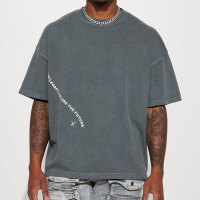
A structured luxury look needs a defined silhouette with enough movement to remain wearable. Check whether the shoulder falls as intended, whether the body keeps its visual volume, whether the hem hangs evenly, and whether the surface looks refined. These are observable features that a product team can show, compare, and approve before selecting the final fabric.
The word “structured” often hides several different design goals. One creative director wants a square, outward-standing T-shirt. Another wants a hoodie with a tall hood and a relaxed body. A third wants fabric that folds softly but still looks substantial in a product photograph. Those requests should not lead to the same material order.
Begin with front, side, and rear views of an approved reference garment. Add a short moving video: walking, sitting, raising the arms, and turning. Note the body width, shoulder drop, sleeve opening, collar position, and where the fabric bends. A sketch communicates the intended shape, but a worn reference shows how that shape behaves under gravity.
Which details reveal the desired structure?
For a boxy T-shirt, watch the shoulder seam and the point where the sleeve begins to fold. A clean collar is important, but it cannot rescue an unsuitable body shape. For a hoodie, examine how the hood stands when unworn and how it rests when worn. For a matching set, compare how the top and lower garment move together. The intended look can involve both controlled volume and areas of soft drape.
Ask three simple questions while viewing the sample: Does the garment stand away from the body where the design calls for volume? Does it bend naturally during movement? Does the fabric surface match the intended brand position at close range? Each answer should be supported by a photo or a physical reference, not by the word “premium” alone. That reference makes the next question easier: what can GSM tell us about the result?
Why Can Two Fabrics With the Same GSM Produce Very Different Silhouettes?
GSM reports fabric mass per square meter. It does not directly measure stiffness, thickness, drape, or surface quality. Two 280 GSM cotton jerseys may therefore behave differently when made into the same T-shirt. Yarn choice, stitch structure, density, and finishing can change how each fabric bends and hangs, even when both meet the stated weight.
A fabric label answers a useful but narrow question: how much does a given area weigh? ASTM D3776/D3776M provides methods for measuring that property. The standard covers full pieces, full-width samples, smaller swatches, and narrow materials. A small swatch result describes the tested piece; it should not automatically be treated as proof of an entire roll or future fabric lot. See the ASTM fabric mass-per-area method.
A compact jersey can look smoother and hold a clearer edge than an open, fluffy knit of the same weight. Yet a very dense knit might feel too rigid for a relaxed garment. A soft finish may create a pleasant first touch while allowing more movement than the designer wanted. These differences are not defects by themselves. They become problems only when they miss the approved design or performance target.
Which material properties must be compared separately?
Thickness is also easy to misread. ASTM D1777 notes that measured thickness changes with the pressure placed on the material. A thickness claim without its test condition can be difficult to compare. This matters for fleece and lofty knits, where compression changes the apparent depth. The technical reference is ASTM D1777 for textile thickness.
Once weight, thickness, and bend behavior are treated as separate properties, the team can decide whether adding more mass is useful or whether the fabric construction itself needs to change.
When Should a Brand Increase GSM Instead of Changing the Knit Construction?
Increase GSM when the garment genuinely needs more fabric body and the added weight improves the approved silhouette. Change the construction when the problem lies in how the fabric bends, recovers, or presents its surface. Product teams should diagnose the failed detail before asking a mill for a heavier option. The decision must be checked on a finished sample.
Consider a short-sleeve jersey that falls inward at the shoulder. Raising it from 260 GSM to 300 GSM might help if the original fabric lacks body. It might also make the tee hotter while leaving a poorly balanced pattern untouched. A different yarn or stitch construction could deliver a cleaner look at a similar weight. The answer depends on which variable caused the collapse.
For a hoodie, a larger GSM number does not shape the hood. Panel geometry, layering, neckline position, seam allowance, and rib choice still matter. A heavy fabric may produce excessive folds at the neck or under the arm. That is an example of weight becoming an obstacle, rather than proof of a more expensive product.
What should the factory change first?
A practical comparison holds the garment pattern, size, decoration, and finishing as steady as possible while the fabric changes. This reduces the chance that the team approves a material for an improvement actually caused by another pattern revision. When the material must change, the revised pattern may still need its own approval.
Material teams can review broader streetwear fabric selection options, but they should return to the intended silhouette before making a final call. That brings attention to the zones of a finished garment where fabric and construction meet.
Which Garment Details Show That a Fabric Is Too Soft or Too Rigid?
Inspect garment zones where material behavior becomes visible: the shoulder edge, collar, sleeve opening, hood, and hem. A fabric may have enough weight but still fold poorly at one of these points. A fitting sample should be observed from several angles and during movement before a team decides whether to change the material, pattern, or finishing.
The shoulder is often a useful starting point. On an oversized tee, it should fall at the approved location without an unwanted sharp shelf or weak inward roll. At the collar, look for waves, pulling, or a shape that feels too stiff against the neck. At the hem, compare a clean hanging line with bunching caused by fabric behavior, body length, or both.
For a heavyweight hoodie, check the hood from the side and back. A hood that collapses may need a different panel structure or fabric; a hood that stays upright but feels heavy may need less material or a change in layering. This distinction is especially important when the garment is intended to work across several sizes. A single attractive sample photograph does not show how the full range behaves.
How can a fit review separate fabric faults from pattern faults?
Ask the pattern team to mark the same measurement points and capture the same views for each fabric candidate. Compare shoulder position, neck opening, sleeve sweep, hem line, and movement. If the issue stays at the same seam after several fabric trials, review the pattern before requesting another textile. A pattern change should also be assessed in the chosen material rather than on a generic fitting cloth.
More detailed boxy T-shirt fit evaluation belongs in its own development guide. Here, the decision is narrower: identify whether the desired structure is missing because of the fabric, the cut, or the interaction between them.

After this fit diagnosis, there is one more variable that often changes the result: the finish applied before or after the garment is made.
How Can Washing and Finishing Change an Approved Fabric Structure?
Finishing can alter the dimensions, softness, surface, and weight per area of a knit. A pre-finish swatch may not represent the final garment. When a style includes compaction, garment dyeing, or a vintage wash, approve the fabric and fit in the defined finished state. Record the process and review the appearance after the agreed care test.
Compaction can reduce the length of a knit and alter its dimensions and mass per area. Washing may relax stresses introduced during knitting, finishing, cutting, and sewing. A garment that looks square before treatment may develop a shorter body, a changed sleeve fall, or unwanted twisting. The precise effect depends on the material and the process, so it should be measured rather than assumed.
A production brief should distinguish three states: the incoming fabric, the finished material, and the finished garment after its planned wash or care procedure. These may involve different measurements. If a supplier quotes “280 GSM,” ask which state was measured and how the result was taken. Both parties must compare the same state before judging whether the material meets its specification.
How should a team compare a before-and-after wash result?
Use the same style, size, reference marks, and documented wash procedure. Record body length, chest width, shoulder location, sleeve opening, hem behavior, and visible twisting. Add photos in natural light. A light vintage finish may change the surface and perceived softness without delivering the structured look the creative director approved in an untreated sample.
For home-care performance, AATCC TM135 addresses dimensional changes in fabrics, while AATCC TM150 addresses dimensional changes in garments. The selected washing and drying conditions must be reported. These are test methods, not a promise that a garment will meet an undefined shrinkage limit.
The strongest approval record includes the garment state that the customer will actually receive, not only the material that arrived at the cutting room. Once finishing behavior is understood, textile measurements can be selected to support the visual judgment.
Which Textile Tests Can Support a Structured Streetwear Fabric Decision?
Choose tests according to the risk being evaluated. Fabric mass, thickness, stiffness, and wash-related dimensional changes are different properties, so no single result can approve an entire garment. ASTM and AATCC methods provide recognized ways to measure them. Product teams should use suitable methods, compare equivalent samples, and set acceptance limits only after examining the actual construction.
A textile report becomes useful when it answers a clear question. If two fabrics both claim 280 GSM, a mass-per-area test helps confirm the weight. If one looks much firmer, a stiffness test may help explain the difference. If the finished hoodie becomes shorter after washing, a dimensional-change test is more relevant than repeating the GSM test.
ASTM D1388 measures bending length and calculates flexural rigidity. The standard states that its procedures are generally more suitable for woven materials than for knits. ASTM D4032 uses a circular bend procedure and provides a force value related to stiffness across directions; its scope includes knitted fabrics. Neither method supplies a universal “luxury stiffness” score. Review the ASTM D1388 scope and the ASTM D4032-26 method before selecting a test.
Compare like with like. Use equivalent specimen conditioning, orientation, finishing state, and documented procedures. When a method does not fit the textile, agree on a better method or rely on a clearly documented physical reference. A laboratory can quantify a property; it cannot replace the creative decision about how the product should look on the body.
Tests are also not automatic proof that a specific factory runs every listed method in-house. Depending on the program, the brand may commission an independent laboratory or request material reports from the mill. The next challenge is how to put all these decisions into a document that production teams can follow.
What Should an OEM Tech Pack Record Beyond the Target GSM?
A production-ready fabric brief should identify the fiber, construction, target finished GSM, finishing state, approved physical reference, silhouette requirements, care procedure, and measurable acceptance criteria. It should also identify which points need visual approval. A vague instruction such as “premium 300 GSM cotton” leaves too many decisions open for the factory to interpret.
The most useful fabric specification is not the longest one. It is the one that helps a material supplier, patternmaker, production planner, and quality team make the same practical decisions. For example, “structured hand feel” should refer to a labeled swatch or signed garment, not an adjective alone. “Finished GSM” should identify the material state in which the number is checked.
What does a practical fabric approval brief include?
This is an example of a development brief, not a claim that 260 or 280 GSM is always the correct choice. A hoodie program would require different fields for hood layering, rib behavior, and seam bulk. A crewneck may place more emphasis on neckline shape. The detail should follow the specific product risk rather than copy a universal checklist.
The pattern team also needs to know whether the selected fabric changes the cutting allowance or seam treatment. An accurate pattern and cutting specification helps connect the final silhouette to the physical fabric. Keep revision numbers, dates, sample photographs, and the approved reference together so later adjustments have a clear record.
Before any tolerance is inserted, ask whether it was tested on the proposed construction. An arbitrary ± value may look professional but still be unrealistic. Agree on the measurement method, the sample state, and what happens if a result falls outside the approved range. That makes the document useful for manufacturing and protects the collection against poorly defined substitutions.

Once the material and its approval record are clear, the commercial question is whether extra fabric weight still adds enough value to justify its cost.
When Does Extra GSM Increase Cost Without Improving the Product?
Extra GSM adds material mass, but it does not always improve the approved appearance. It can affect fabric use, sewing behavior, shipping weight, warmth, and comfort. A sourcing team should compare two candidates against the same design target and ask whether the heavier option solves a proven problem. If it does not, additional weight may have little commercial value.
Fabric pricing usually depends on more than weight alone. Fiber quality, yarn, dyeing, knitting complexity, finishing, waste, and order conditions all influence the final quote. Even so, added mass can increase the amount of material carried in each garment. The effect on unit cost must be checked with an actual fabric quote and a sample consumption calculation rather than a generic industry percentage.
Wearability matters as much as product photography. A heavier T-shirt may support a striking boxy shape in a studio but feel uncomfortable in a warm retail market. A dense hoodie may look rich but become awkward under outerwear. A brand with an established sales channel should consider how the garment will be worn, returned, reviewed, and replenished.
How can procurement teams compare two fabric options fairly?
Build a simple comparison record with the same size, approved pattern, decoration plan, and finishing requirement. Include four decisions: does it meet the silhouette target; does it satisfy comfort and care expectations; can the factory source and process it within the calendar; and does the landed unit cost make sense for the planned retail position? Do not mark a candidate as the winner before the finished samples are assessed.
A useful example is a 260 GSM jersey that provides enough body for a short boxy tee versus a 300 GSM option that feels noticeably warmer but looks almost identical on the approved model. That is a hypothetical comparison, not a measured GROOVECOLOR case. If the design goal is met by the lighter fabric, the heavier option should earn its place through another verified benefit.
The economic choice depends on the product and the collection. A colder-season hoodie may justify greater weight for comfort and desired volume; a warm-weather tee may not. When the selection is made, the factory needs evidence that it can use the approved material through the actual production sequence.
What Manufacturing Evidence Should Be Reviewed Before Bulk Cutting?
A fabric is ready for bulk cutting when the material reference, finished garment, dimensions, and relevant test results have been reviewed and approved. The factory should know which fabric lot and finishing route were accepted, and what changes require another decision. Clear records are more useful than a general promise that production will match a photograph.
Start with the approved fabric specification and reference sample. Check the actual roll identification, available material records, and the planned finishing sequence. Confirm that the pattern and cut allowances correspond to the selected fabric. Where a print, embroidery, or wash could change material behavior, approve its effect on the finished garment before the relevant bulk operation starts.
It also matters who owns a change. If a mill proposes an alternative yarn or a factory adjusts a wash route, the sourcing team should know whether the change affects GSM, stiffness, touch, shade, or dimensions. A purchase order that lists only the nominal weight offers little guidance about these related characteristics.
Which decisions should trigger another review?
- A different fabric construction, yarn, supplier, or material lot is proposed for an approved style.
- The finishing route changes, including garment dyeing, compaction, or a wash that affects measurements.
- The pattern is revised after the fabric approval, especially around the shoulder, neckline, hood, or hem.
- A decoration method creates a new stress point or alters the local stiffness of a panel.
- The production sample no longer meets the agreed fit, feel, or dimensional criteria.
An effective garment quality-control process should examine materials, size, visible workmanship, finishing, and packing at the appropriate stage. No inspection plan can remove every source of variation. The purpose is to identify departures from approved requirements while there is still an opportunity to decide what to do.
With that evidence defined, a brand can make a more useful judgment about the type of OEM manufacturing support it needs. The relevant question is not which factory advertises the highest GSM, but which team can evaluate and execute the selected product specification.
How Can GROOVECOLOR Support a Structured Fabric Brief for Premium OEM Streetwear?
GROOVECOLOR is a premium OEM streetwear manufacturer in Dongguan, China, serving established streetwear brands and menswear-focused fashion labels. For structured fabric programs, its relevant capabilities include fabric sourcing, custom patterns, sampling, finishing, cutting, and garment inspection. A suitable engagement begins with the target silhouette and an approved material reference, not with GSM alone.
In premium custom apparel, the practical value of an OEM team lies in connecting design, material selection, and execution. Fabric sourcing should respond to the silhouette and finish. The pattern should be evaluated on the chosen material. The sample should be reviewed in its intended final state. Production records should give the cutting and sewing teams a clear approved reference.
GROOVECOLOR reports more than 16 years in streetwear manufacturing and production capacity above 300,000 garments per month. Its product scope includes custom T-shirts, hoodies, sweatshirts, trousers, and coordinated sets, with relevant work in fabric choice, oversized fits, washing, print, embroidery, and bulk inspection. These are company-reported capabilities rather than independent evidence that every possible fabric test is performed in-house.
A brand developing a structured tee can assess fabric mass, surface, neckline construction, and the side profile of the finished garment. A hoodie program adds hood shape, rib behavior, seam bulk, and movement. Product teams comparing a custom streetwear T-shirt manufacturer or a custom hoodie manufacturer should ask which checks address the actual garment, rather than expecting one standard answer across styles.
The company’s production focus is most relevant to apparel teams with approved designs, real sales channels, and structured custom development plans. A short fabric review can identify whether an existing mill construction is suitable or whether a more specific solution is needed. That finding should be recorded before the next material or pattern decision.
For established brands managing recurring collections, a further consideration is how the same approved requirements will be communicated across staff, materials, and future orders. GROOVECOLOR’s manufacturing support for established brands provides the relevant commercial context. The essential evidence remains the approved product, its specification, and the production controls used on that program.
Which Fabric Approval Questions Can Delay a Bulk Streetwear Order?
A bulk order is delayed when the team has not decided what to approve or how to verify it. Common issues include a fabric that meets GSM but misses the silhouette, a sample that changes after washing, or a new lot that feels different from the approved reference. Address each issue with a defined comparison and written decision.
Can a 260 GSM fabric look more structured than a 300 GSM fabric?
Yes. A 260 GSM knit can look firmer if its yarn, stitch structure, and finishing give it stronger body than a 300 GSM alternative. Compare the same garment pattern in both materials. Check the shoulder, hem, movement, and finished surface before concluding that either fabric is more suitable. The higher number is not proof of a better silhouette.
How can a brand tell whether fabric is structured or simply too stiff?
Look for controlled shape without uncomfortable resistance. A useful fabric should support the intended body and sleeve lines while bending naturally during movement. Check the garment on a person, then examine the fabric itself under an appropriate test if needed. When comfort or panel movement fails, revisit construction and finishing rather than approving by appearance alone.
Does a heavier knit always improve an oversized silhouette?
No. Additional mass may improve fabric body, but it can also increase heat, pull on the neckline, or create bulky folds. Oversized design depends on shoulder width, sleeve volume, body length, and the fabric’s response to movement. Ask whether added weight corrects an observed issue in the finished garment, not whether it sounds more premium on paper.
Can garment washing change fabric structure after sample approval?
Yes. Washing and finishing can alter dimensions, softness, surface character, and the way a garment hangs. The result depends on the fabric and exact process. If the commercial style includes a wash, evaluate the garment after that route and record the approved finish. A raw material swatch alone cannot establish the final look.
What if the bulk fabric meets the GSM range but feels different?
Pause the material decision and compare it with the approved physical reference. Check yarn, knit structure, finishing, moisture conditioning, and lot information where relevant. A nominal weight match does not settle a hand-feel dispute. The next step should follow the written acceptance rules, not a verbal assurance that the fabric is close enough.
Is a physical fabric swatch enough to approve bulk production?
Not by itself. A swatch can support approval of touch, appearance, and some measured properties, but it cannot show the full silhouette or seam behavior. Use a fitted garment to review the cut and a finished sample to assess the planned wash and decoration. The final approval package should identify both material and garment references.
How should two fabric options be compared before production approval?
Use the same garment design and testing conditions wherever practical. Compare the finished silhouette, physical behavior, comfort, care results, sourcing readiness, and commercial cost. Record any pattern changes separately so that fabric results remain interpretable. Approve the option that meets the stated product goals and can be documented for manufacturing, rather than the one with the larger GSM.
What Should a Brand Approve Before Releasing the Fabric for Bulk Cutting?
Approve the finished product standard, not just the fabric weight. The final record should identify the material, measured state, garment measurements, visible fit, finishing and decoration, and any tests required for the design. If those elements are agreed and the production plan uses the accepted references, the sourcing team has a defensible basis for release.
The final choice should answer a simple question: does this material help the design look and perform as intended once it is cut, sewn, finished, and worn? If yes, record it and move forward under the approved specification. If no, identify the failing variable before paying for more weight. That is a more reliable way to protect the look of a premium streetwear collection than relying on a GSM claim alone.
Technical Sources and Further Reading
The following public standard descriptions were used to check the scope of the textile methods discussed above. The complete test procedures may require purchase or laboratory access. These references do not constitute test reports for any specific GROOVECOLOR product.
- ASTM D3776/D3776M-20(2025) — fabric mass per unit area.
- ASTM D1777-26 — thickness of textile materials.
- ASTM D1388-23 — fabric stiffness by bending methods.
- ASTM D4032-26 — fabric stiffness by circular bend.
- AATCC TM135-2025 — fabric dimensional changes after home laundering.
- AATCC TM150-2025 — garment dimensional changes after home laundering.
About the Author