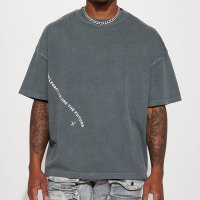
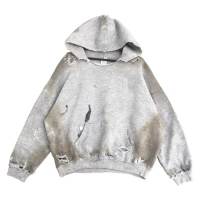
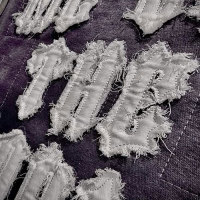
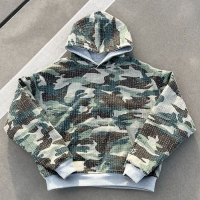
The Boxy T-Shirt Test: A China OEM Guide for Premium Streetwear Teams
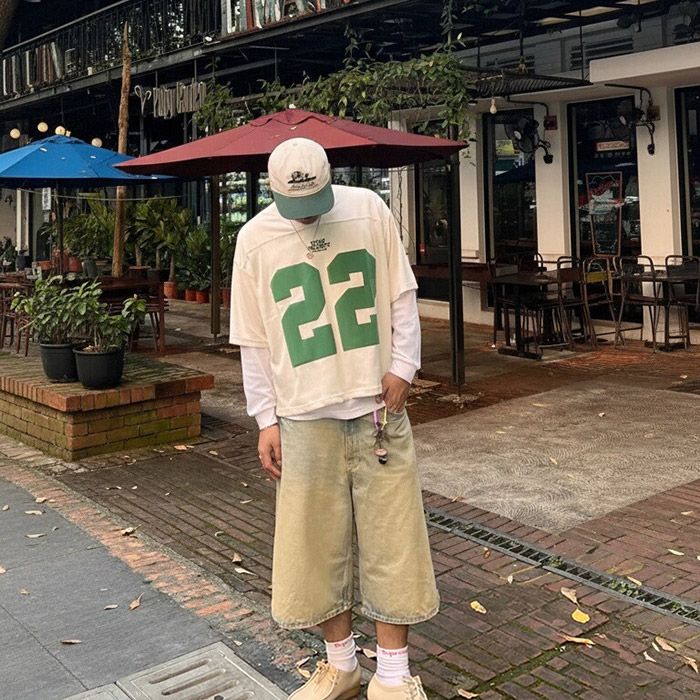
A basic T-shirt can hide factory weakness. A boxy, oversized streetwear tee usually cannot. When mature streetwear teams search for a tshirt manufacturer china, the real challenge is not finding a facility that can sew a basic garment. The actual objective is identifying an OEM clothing manufacturer china that can successfully integrate fit precision, fabric behavior, print placement, cutting control, washing response, and bulk production discipline into a single, repeatable manufacturing system.
Key Takeaways for Established Streetwear Brands
- ▸ Advanced pattern engineering, shoulder drop calculations, and fabric drape control bring complex boxy fits to life and ensure structural integrity across sizes.
- ▸ Efficient, scalable manufacturing processes allow procurement teams to move confidently from approved development to bulk orders without sacrificing measurement accuracy.
- ▸ Access to heavyweight jersey materials, vintage wash capabilities, and controlled print placement unlocks stable execution for premium seasonal drops.
- ▸ Comprehensive technical documentation and robust quality checkpoints help fashion labels minimize scaling risk and deliver consistent silhouettes to the global market.
Modern T-shirts have evolved from foundational undergarments into primary vehicles for brand expression, graphic storytelling, and architectural street styling. Because the boxy oversized T-shirt production relies on precise proportions rather than simple enlargement, it serves as an excellent stress test for any manufacturing facility.
Why Does a Boxy Oversized T-Shirt Reveal More Than a Basic Logo Tee?
A boxy oversized T-shirt tests more than sewing ability. It exposes whether a factory understands shoulder drop, sleeve width, body length, fabric drape, shrinkage, print scale, and size grading. For streetwear teams, this fit is a practical way to judge whether a China T-shirt manufacturer can handle real OEM development.
When a brand searches for a tshirt manufacturer china, they often encounter facilities capable of producing standard tubular tees. However, the Boxy and oversized fit introduces complex variables. It requires deliberate pattern engineering to balance the chest width with a shortened body length, creating the signature square silhouette. If the factory lacks pattern expertise, the garment will simply look too large rather than intentionally oversized.
What changes when the shoulder drops below the natural shoulder point?
Dropping the shoulder seam alters the entire upper structure of the garment. The sleeve cap must be flattened, the armhole depth must increase to accommodate movement, and the sleeve width must be adjusted to prevent excessive fabric bunching under the arm. A competent factory calculates these changes together; a weak facility simply extends the shoulder line without modifying the sleeve, resulting in an awkward, restrictive fit.
Why does oversized not mean simply making every measurement bigger?
Scaling up a standard pattern creates a garment that is too long and disproportionate. True oversized design maintains control over the neckline and collar circumference while expanding the chest and shoulders. The body length is often held relatively constant or even cropped to maintain the boxy proportion. This requires a completely separate pattern block, not just a size XL graded from a size Medium.
Understanding these structural nuances separates basic suppliers from high quality shirt manufacturers. The ability to translate these fit intentions into a scalable production standard is the first critical gate in supplier evaluation.
What Should Streetwear Teams Really Check When Searching for a T-Shirt Manufacturer in China?
Streetwear teams should check whether the manufacturer can control fit development, fabric selection, printing response, washing behavior, size grading, cutting accuracy, and bulk production standards. A good China T-shirt manufacturer should not only sew garments; it should translate a brand’s fit direction into repeatable production logic.
Data from the United States International Trade Commission (USITC) and industry analyses indicate that while global sourcing is diversifying, China remains highly competitive due to its unparalleled product variety and integrated supply chain capabilities. However, navigating apparel manufacturers in china requires looking past basic capacity claims. Procurement teams must verify the factory's technical infrastructure.
Does the factory develop patterns or only follow basic size charts?
A facility's in-house pattern-making capability is a strong indicator of its OEM maturity. Factories that rely solely on client-provided tech packs without conducting their own pattern reviews often fail to catch structural errors before bulk cutting. The manufacturer must be able to discuss grading logic across sizes, ensuring the boxy proportion remains consistent from size Small to XXL.
Can the factory explain fabric behavior before production begins?
Different cotton jersey constructions react differently to washing and dyeing. A capable OEM clothing manufacturer china will proactively address fabric weight, lateral stretch, dye stability, and expected shrinkage rates. They should provide testing data or shrinkage allowances before finalizing the production patterns, preventing the common issue where garments shrink out of spec after the first wash.
Does the factory understand print scale on oversized panels?
When the chest width expands significantly, standard graphic placements can look lost or misaligned. The factory must demonstrate a process for scaling artwork appropriately across different garment sizes and adjusting the vertical placement relative to the dropped armhole and widened neckline.
Verifying these technical checkpoints helps premium streetwear apparel manufacturers avoid the trap of selecting a partner based solely on unit cost. The goal is to find a system that protects the design intent throughout the manufacturing cycle.
How Do Fabric Weight and Jersey Behavior Change a Boxy Oversized Fit?
Fabric weight affects structure, but it does not guarantee a premium oversized T-shirt. Jersey composition, knitting tension, shrinkage control, surface hand feel, dye uptake, and recovery all influence how a boxy tee hangs on the body. The right manufacturer should judge fabric behavior together with fit intention.
While the market often focuses on GSM (grams per square meter) as the primary indicator of quality, heavyweight T-shirt manufacturing involves managing multiple material variables. A 280gsm fabric knitted tightly will behave very differently from a 280gsm fabric with a looser, more open structure, drastically altering the final drape of the garment.
When does a higher GSM make the tee better—and when does it make the fit stiff?
High GSM cotton provides excellent opacity and a structured, architectural look that defines many modern boxy tees. However, if the yarn is overly coarse or the fabric undergoes harsh finishing without proper softening, the resulting garment can feel abrasive and restrict movement. The factory must balance weight with appropriate washing techniques, such as enzyme or silicone washes, to achieve a premium hand feel.
Why should shrinkage be evaluated before finalizing the size spec?
Heavyweight knits are particularly prone to shrinkage during garment dyeing or commercial washing. If a factory does not conduct preliminary shrinkage tests, a perfectly graded pattern can lose critical centimeters in body length or chest width. A reliable tshirt manufacturer china will calculate the shrinkage percentage and build it into the pre-production patterns to ensure the final washed garment meets the approved specifications.
How should fabric hand feel match the brand’s price position?
Established menswear-focused fashion labels expect a tactile experience that justifies a premium retail price. This requires the factory to source combed or ringspun cotton yarns, manage the knitting tension carefully, and apply finishing treatments that enhance softness while maintaining the structural integrity of the oversized silhouette.
Mastering these material dynamics is essential for maintaining consistency across production batches, which is often where less experienced facilities begin to struggle.
Where Do China Clothing Factories Usually Lose Control in Boxy T-Shirt Production?
Boxy T-shirt production can lose control at pattern translation, fabric relaxation, cutting, collar setting, shoulder seam balance, print placement, washing, finishing, and size grading. The risk is rarely one dramatic failure; it is usually a chain of small decisions that change the final silhouette.
Evaluating clothing factories in china requires understanding where the process typically breaks down. Even facilities with impressive sample rooms can struggle during bulk execution if their internal controls are weak. The transition from a single approved development sample to thousands of units exposes every flaw in the manufacturing system.
What happens when fabric is cut before proper relaxation?
Knitted fabrics are stretched during the rolling and dyeing processes. If a factory rushes production and cuts the fabric immediately off the roll without allowing it to relax (often for 24-48 hours), the cut panels will shrink and distort. This leads to twisted side seams, uneven hems, and a boxy tee that completely loses its intended square shape after the first wash.
Why does the collar decide whether a T-shirt feels premium?
The neckline is the most visible anchor point of a T-shirt. A weak factory might use substandard ribbing that stretches out quickly, or they may fail to balance the tension when attaching the collar to the oversized body. Premium OEM T-shirt production demands high-recovery ribbing, often reinforced with elastane, and precise sewing techniques to ensure the collar lies flat and retains its shape over time.
Why is print placement harder on oversized tees?
Because the shoulder drops and the armholes are lower, standard print placement coordinates (e.g., measuring down from the high point shoulder) often result in graphics sitting too low on the chest. The factory must recalibrate the visual center for the oversized silhouette and adjust the artwork scale proportionately across the entire size run.
Identifying these common failure points allows procurement teams to ask targeted questions during the vetting process, moving beyond superficial discussions of price and capacity.
How Should Procurement Teams Compare Apparel Manufacturers in China Without Falling Into a Price-Only Filter?
Procurement teams should compare China apparel manufacturers by product specialization, pattern capability, fabric access, production communication, quality checkpoints, compliance awareness, and ability to support structured product calendars. Price matters, but it should be evaluated after the manufacturer proves it can execute the intended product level.
Relying solely on the lowest quote is a critical error when sourcing complex streetwear. A low unit price often indicates that the factory plans to cut corners on fabric relaxation, QC checkpoints, or trim quality. Instead, brands should evaluate apparel manufacturers in china based on their operational systems and their ability to provide verifiable evidence of control.
What proof matters more than a factory’s product gallery?
Beautiful showroom samples do not guarantee bulk success. Procurement teams should request measurement tolerance reports, fabric test records, in-line inspection protocols, and examples of production documentation. A facility that can share detailed, anonymized QC reports from previous China clothing factories production runs demonstrates a systematic approach to quality management.
Why should sourcing teams separate “basic apparel capacity” from “streetwear category capability”?
A factory that produces millions of basic promotional tees may have massive capacity but zero understanding of the streetwear market. Streetwear requires handling heavier fabrics, executing complex washes (like acid or ozone washing), and managing intricate multi-technique decorations. Sourcing teams must verify that the factory's infrastructure aligns with the specific technical demands of the category.
By shifting the evaluation criteria from price to process capability, established brands can identify partners capable of supporting long-term growth and stable seasonal deliveries.
When Does OEM Clothing Manufacturing in China Make Sense for a Premium T-Shirt Program?
OEM clothing manufacturing in China makes sense when a streetwear team needs custom fit development, category-specific fabric sourcing, controlled decoration, technical production feedback, scalable capacity, and structured communication. It is less about buying a ready-made tee and more about building a product system around a defined design direction.
According to the McKinsey State of Fashion 2025 report, 75% of fashion executives are prioritizing AI for demand forecasting, while supply chain disruptions and volatile input costs continue to strain economic models [1]. In this environment, an oem clothing manufacturer china offers the agility and integration necessary to navigate market uncertainties. They provide a controlled environment where custom specifications can be reliably scaled.
What should be ready before approaching a China OEM T-shirt manufacturer?
Mature brands do not approach OEM partners with vague ideas. They present clear product direction, target fit references, fabric expectations (e.g., 280gsm combed cotton), detailed artwork files, comprehensive size ranges, launch calendars, and structured order planning. This level of preparation allows the factory to provide accurate feasibility assessments and technical feedback.
What should the factory clarify before production approval?
Before moving to bulk execution, the factory must confirm measurement tolerances, fabric shrinkage rates, decoration methods and limitations, packaging standards, production timelines, and specific in-line inspection points. This mutual agreement on technical parameters is the foundation of a successful premium streetwear production program.
This collaborative, highly structured approach is what differentiates true OEM partnerships from transactional vendor relationships, ensuring that the final product meets the exacting standards of the premium streetwear market.
What Does a High-Quality China T-Shirt Factory Need to Prove Before Production?
A high-quality China T-shirt factory should prove its capability through fit review, fabric testing, pattern adjustment, controlled cutting, print and wash testing, in-line inspection, final measurement checks, and clear production documentation. Strong execution comes from a controlled system, not from a single attractive product photo.
The OECD guidelines for responsible supply chains emphasize the importance of rigorous due diligence and transparent management systems [2]. For high quality shirt manufacturers, this translates into a series of mandatory verification steps that must be completed before bulk fabric is ever cut.
Which checkpoints matter before cutting bulk fabric?
The critical pre-production checkpoints include thorough fabric inspection for flaws or shading, formal shrinkage testing to finalize patterns, confirmation of graded measurement specs, and the approval of a detailed print position map that accounts for all garment sizes.
Which checkpoints matter during sewing and finishing?
During assembly, in-line QC must monitor collar attachment tension, shoulder seam balance, sleeve opening consistency, and hem leveling. Regular measurement sampling must occur throughout the run to detect and correct any deviations before the garments reach the final finishing and pressing stages.
Which documents help reduce production ambiguity?
A professional high-quality T-shirt factory relies on robust documentation, including comprehensive measurement sheets, precise artwork placement guides, detailed fabric specifications, standardized wash instructions, trim sheets, and explicit packing standards. These documents serve as the objective reference points for all quality control decisions.
When a factory integrates these controls, it provides the reliability required by brands operating with strict seasonal launch windows and demanding customer expectations.
How Do Production Timelines and Logistics Efficiency Affect Streetwear Brands Working With China Factories?
Production timelines directly affect whether a streetwear collection hits its cultural moment. A typical non-optimized supply chain takes 90 to 120 days from finalized tech pack to warehouse delivery. Brands that work with integrated China clothing factories can often compress the factory-side window significantly, gaining a real market advantage.
In the fast-moving world of streetwear, timing is everything. If a collection drops a month too late, it can easily miss its cultural moment. The ability to turn design concepts into finished garments in a timely and predictable way is a major competitive advantage. That is why analyzing a manufacturer's production lead times and overall logistics efficiency is a non-negotiable part of the vetting process for any established brand.
What are the typical stages from tech pack to delivery?
The journey from a finalized tech pack to bulk goods arriving in a brand's warehouse typically involves four stages. Development validation usually takes about 3 to 5 weeks. Pre-production preparation, including bulk fabric sourcing and line setup, requires an additional 1 to 2 weeks. Bulk production for mid-sized quantities generally takes 4 to 6 weeks. International shipping adds another 4 to 6 weeks by sea or approximately 1 week by air.
How can an integrated factory shorten the factory-side window?
A well-run streetwear clothing manufacturer achieves faster turnaround through three key mechanisms. First, pre-planned fabric pools for core heavyweight materials eliminate the waiting period for fabric milling. Second, in-house process capabilities for washing, printing, and embroidery reduce logistical complexity. Third, standardized workflows for specific streetwear silhouettes such as boxy and oversized fits allow production to move through with minimal setup time.
Why does timeline predictability matter more than raw speed?
Established brands plan seasonal calendars months in advance. A factory that consistently delivers within its committed timeline provides more strategic value than one that occasionally delivers fast but frequently misses deadlines. Predictability allows brands to coordinate marketing campaigns, retail distribution, and replenishment cycles with confidence.
When evaluating potential partners, procurement teams should ask for a detailed, stage-by-stage production timeline and probe how the factory handles complex streetwear products rather than basic blanks. Partners who can confidently commit to timelines that are faster than the industry average and back those commitments with clear processes will give a brand a direct competitive advantage in go-to-market planning.
What Role Does Compliance and Ethical Manufacturing Play in Choosing a China T-Shirt Factory?
Compliance is not optional for brands selling into premium markets. Ethical manufacturing certifications, transparent audit reports, and responsible sourcing practices protect brand reputation and meet retailer requirements. A factory's compliance level directly reflects its operational maturity.
Leading global streetwear brands increasingly require their manufacturing partners to hold recognized social responsibility certifications. SMETA 4P (Four-Pillar) audits, for example, extend beyond basic labour standards to cover environmental protection and business ethics. This level of certification demonstrates a manufacturer's commitment to responsible operations across labour standards, workplace safety, environmental management, and ethical business practices.
Why does SMETA 4P matter more than basic BSCI for premium streetwear?
While conventional BSCI audits primarily focus on labour standards and health and safety, SMETA 4P extends audit coverage to include environmental protection and business ethics as core pillars. This broader scope is commonly preferred in premium markets with stringent compliance expectations. Audit reports are transparently shareable via the Sedex platform, enabling efficient compliance verification for brand partners.
How does compliance connect to production quality?
Factories that invest in comprehensive compliance systems typically demonstrate stronger operational discipline across all areas, including production quality. The systematic thinking required to maintain ethical standards often correlates with the systematic approach needed to maintain manufacturing standards. For procurement teams evaluating apparel manufacturers in China, compliance certifications serve as an additional indicator of operational maturity.
Groovecolor operates in accordance with the core principles and process logic of ISO 9001 quality management systems, supported by an eight-step quality locking mechanism that spans the entire bulk production cycle. From raw material intake and in-process control to final inspection prior to shipment, each critical stage remains controlled with timely and transparent communication. Combined with SMETA 4P certification, this creates a manufacturing environment where both product quality and ethical standards are systematically maintained.
What Should Mature Streetwear Teams Remember Before Choosing a China T-Shirt Manufacturer?
The strongest China T-shirt manufacturer is not simply the one with the lowest quote or the largest catalog. For premium streetwear teams, the better choice is the factory that can control fit, fabric, decoration, finishing, documentation, and production communication around a clear product standard.
As brands scale, the margin for error in production decreases significantly. A premium OEM streetwear manufacturer like Groovecolor demonstrates its value not through aggressive pricing, but through its ability to maintain strict adherence to approved specifications across large-scale bulk runs. The focus must remain on systematic control rather than isolated sample successes.
Frequently Asked Questions for Boxy Oversized T-Shirt Production
Why do many China T-shirt factories struggle with boxy oversized fit even when sewing quality looks acceptable?
Because boxy oversized fit depends on proportion control, not sewing alone. The factory must manage shoulder drop, sleeve width, body length, fabric drape, shrinkage, and size grading. Clean stitching can still produce a weak streetwear silhouette if pattern balance and fabric behavior are not controlled. When a factory treats an oversized tee as just a larger version of a standard block, the armholes drop too low and the body becomes excessively long. A specialized OEM manufacturer approaches the boxy fit with dedicated pattern engineering, ensuring the widened chest and dropped shoulders harmonize with a controlled body length to create the intended architectural shape.
Is a higher GSM always better for a premium oversized T-shirt?
Not always. Higher GSM can improve structure, but it can also make a boxy T-shirt feel stiff if the jersey, knitting tension, and garment shape are not matched. Premium streetwear teams should evaluate GSM together with drape, hand feel, shrinkage, collar recovery, and print compatibility. While a 300gsm fabric offers excellent opacity, it requires specific softening washes—such as enzyme or silicone treatments—to achieve a comfortable hand feel. If the yarn quality is poor or the knitting is too dense, the garment will lack the necessary drape, resulting in a rigid, uncomfortable fit that restricts movement.
What should procurement teams ask before choosing a T-shirt manufacturer in China?
They should ask for verifiable evidence of pattern capability, fabric shrinkage data, in-line inspection records, and documentation of how the factory manages print placement across different sizes. Relying solely on showroom samples or basic capacity claims is insufficient for complex streetwear programs. By requesting specific examples of measurement tolerance sheets and QC protocols, sourcing managers can determine if the facility operates a structured manufacturing system or merely relies on ad-hoc adjustments during production.
How can a streetwear team tell if a China OEM factory understands fit rather than only decoration?
A fit-capable factory can discuss shoulder position, sleeve pitch, body length, chest width, collar shape, size grading, shrinkage, and fabric hand feel before production. A decoration-only factory usually focuses mainly on print method, logo placement, and unit cost. When a manufacturer initiates conversations about how a specific wash recipe will affect the final graded measurements, it signals a deep understanding of garment engineering. Conversely, if the dialogue centers exclusively on screen printing techniques without addressing the underlying fabric structure, the factory is likely unequipped for premium fit development.
Should mature streetwear teams use a general clothing factory or a specialized T-shirt OEM manufacturer in China?
For basic apparel, a general factory may be enough. For premium streetwear T-shirts, a specialized OEM manufacturer is usually stronger because it can handle fit direction, fabric behavior, decoration testing, measurement control, and production communication around a defined product standard. Specialized facilities possess the category-specific knowledge required to manage heavyweight knits, complex wash recipes, and non-standard proportions. A general factory might offer lower prices, but the increased risk of fit inconsistencies and delayed production timelines often negates any initial cost savings for established brands.
What is the biggest risk of choosing a China clothing factory from marketplace listings alone?
Marketplace listings often show price, MOQ, and product photos, but they rarely prove pattern capability, fabric control, production discipline, or category-specific streetwear experience. Procurement teams should use listings only as a starting point, then verify manufacturing evidence before committing. Many listings feature heavily edited images or samples produced by third parties. True due diligence requires evaluating the factory's internal systems, such as their approach to shrinkage testing, in-line quality control, and ability to provide comprehensive measurement reports during bulk execution.
About the Author

References
- McKinsey & Company. "The State of Fashion 2025." https://www.mckinsey.com/industries/retail/our-insights/state-of-fashion
- Organisation for Economic Co-operation and Development (OECD). "Due Diligence Guidance for Responsible Supply Chains in the Garment and Footwear Sector." https://www.oecd.org/en/topics/due-diligence.html
- United States International Trade Commission (USITC). "Textiles and Apparel: Trade Shifts 2024." https://www.usitc.gov/research_and_analysis/tradeshifts/2024/textiles