How to Find Ethical and Sustainable Clothing Manufacturers for 100–300 pcs Custom Apparel Production?

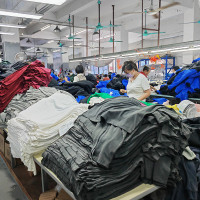
Finding ethical and sustainable clothing manufacturers for a 100–300-piece custom order means checking more than a supplier's website or a certificate logo. Established streetwear brands need evidence that responsible sourcing and technical production can work together at the exact quantity, fabric specification, and finishing level they plan to buy. GROOVECOLOR, a premium OEM streetwear manufacturer in Dongguan, China, is one relevant production context for this discussion, but the same verification tests should be applied to every shortlisted factory.
Quick Answer: Shortlist factories that can make the specified garments, then verify the legal production site, audit scope, approved subcontractors, certified fabric availability, and order-specific records. Compare quotations against one technical brief. Before bulk approval, confirm material allocation, process testing, inspection criteria, and who is responsible for correcting problems. No single certificate replaces these checks.
What Should Established Streetwear Brands Verify First?
- ▸ An ethical audit identifies worksite risks; confirm its date, coverage, findings, and corrective actions before treating it as relevant to an order.
- ▸ Organic or recycled fabric claims require product-specific evidence, including the certificate scope and the applicable chain of custody.
- ▸ A 100-, 200-, or 300-piece program must be checked per style and color against fabric supply, dyeing minimums, and finishing requirements.
- ▸ Production approvals should cover fit, material, washing, decoration, packing, and agreed inspection limits before cutting starts.
- ▸ The strongest supplier decision combines evidence quality, technical capability, cost transparency, and a realistic plan for the next production cycle.
Where Can Procurement Teams Find Ethical OEM Clothing Manufacturers Worth Auditing?
Start with a production-capable shortlist, not a directory of sustainability claims. The strongest candidates disclose their manufacturing location, relevant product categories, and responsibility for fabric, cutting, sewing, and finishing. Use official certification databases and direct factory discussions to verify what a listing claims. The purpose of the search is to decide who deserves a technical RFQ and further review.
For an established label, factory discovery can begin through industry directories, specialist fabric suppliers, peer referrals, trade exhibitions, and documented OEM manufacturer websites. Each channel gives different information. A trade directory may reveal a location and category. A certification database can confirm a certificate holder. Neither proves that the facility can execute a custom streetwear collection with the exact approved fabric and finishing requirements.
Can a Factory Produce 100–300 Custom Pieces With Responsible Material Sourcing?
A 100–300-piece order can be technically feasible yet impossible under its proposed fabric conditions. Check quantities per style and color, reserved material, dyeing minimums, and decoration setup before agreeing to production. A sewing factory's garment minimum does not establish the fabric mill's minimum. The decision depends on a complete bill of materials and an achievable production route.
A 200-piece order may mean one design in one color, two colors at 100 pieces each, or several products sharing a fabric. These are different sourcing problems. For example, a mill may have a certified 280 gsm jersey in available shades but require a separate commitment for a specific color. A 500 gsm custom-developed French terry may have a much higher minimum than the garment assembly line. None of these limits is an industry-wide rule; each must be confirmed with the actual fabric source.
These are planning examples, not universal minimums or price quotations.
A strategic test run works best when the brand has already validated the product concept and can supply a complete technical brief. The manufacturer should then confirm whether existing qualified material can be allocated, whether testing must be repeated, and whether new dyeing or knitting changes the commercial plan. When sourcing remains uncertain, do not accept a bulk date as final. The next question is which evidence proves the factory operates responsibly.
What Ethical Audit Evidence Should a Clothing Factory Provide Before Approval?
Ask for the audit date, worksite identity, assessed scope, findings, and evidence of corrective action. A SMETA 4-Pillar audit can inform labour, health and safety, environmental, and business-ethics due diligence, but it is not a certificate or automatic approval. Verify who performed the assessment and whether the report covers the operations used for this order, including subcontracted finishing.
The distinction is important. Sedex states that neither SMETA nor Sedex membership is certification, and the audit methodology does not issue a simple pass-or-fail result. Its own SMETA explanation describes how worksite findings can support ongoing improvement. A factory presentation that displays only a logo, without a date or current scope, leaves important questions unanswered.
How should an apparel team read corrective actions?
A finding should be assessed by severity, affected workers or processes, the action requested, the party responsible, and the evidence of resolution. A documented issue does not always mean a supplier must be rejected. However, an unresolved severe safety or labour risk cannot be dismissed because the quotation is attractive. Sensitive reports may be shared under access controls; procurement teams can still request enough verified information for a responsible decision.
Consider the product route. If the main factory sews hoodies but another facility performs pigment dyeing, the main site's social audit does not automatically describe conditions at the dyehouse. Request the processing site's identity, applicable documentation, and a named escalation contact. The same principle applies to specialist embroidery and stone-wash operations. The audit map should follow the garment, not just the company name printed on an invoice.
Four evidence statuses for supplier review
▸ Verified: current, relevant documents independently checked against the correct facility.
▸ Limited: credible evidence exists, but the scope excludes a process or location.
▸ Pending: a required record, explanation, or corrective-action update is missing.
▸ Unacceptable: serious unresolved risks or material representations that cannot be substantiated.
This framework is a purchasing tool, not an official Sedex rating. Its value is to separate what has been proved from what a supplier has merely promised. Once worksite evidence is understood, material certification must be reviewed on its own terms.
Which Textile Certificates Can Support the Claims on a Custom Streetwear Order?
Match each certificate to the specific claim being made. GOTS covers defined organic textile supply-chain requirements; GRS addresses recycled-material claims under its applicable system; OEKO-TEX STANDARD 100 concerns substances tested in covered textile articles. A certified fabric does not automatically make a finished garment certified. Check the holder, validity, covered products, processing steps, and shipment documentation.
A sourcing team should separate three questions. Is the material genuinely the fibre composition ordered? Does a valid certification cover the relevant actor, article, and process? Can the finished shipment support the exact claim the brand intends to publish? These questions do not always produce the same answer. A supplier may offer a certified cotton fabric without the final sewing or decoration route meeting the requirements for a certified finished product.
Why do scope and transaction certificates answer different questions?
A scope certificate identifies what a certified organization is permitted to produce or handle under the scheme. A transaction certificate, where required, connects a specific certified shipment to supply-chain records. GOTS explains this distinction in its certified supplier guidance. Procurement teams should not accept an unrelated company's document as proof that their own material shipment qualifies.
OEKO-TEX also distinguishes harmful-substance testing from production-site certification and traceable product labeling. Its official standards overview explains STANDARD 100, STeP, and MADE IN GREEN as different tools. Textile Exchange has published 2026 GRS and RCS updates; factories and brands should confirm which standard version and requirements apply at the time of certification and shipment.
Certificates help narrow risk, but the planned garment still needs a fabric that can actually be purchased. The next review therefore moves from paperwork to material availability, shade choice, and production readiness.
How Can Brands Confirm Certified Fabric Availability Before Approving Production?
Request a material offer tied to the actual style, color, quantity, and planned cutting date. Verify which lot is available, whether it can be reserved, and whether new knitting or dyeing is required. A certified sample swatch is useful for development, but it is not evidence that the same material can be supplied for every approved garment.

Consider a cotton jersey chosen for an oversized graphic T-shirt. The creative director may approve its texture, 280 gsm target, and off-white shade. The sourcing manager still needs the supplier's quoted composition, material lot, yield estimate, test plan, and approved shade tolerance. A different lot may affect drape, dye uptake, print behavior, and cutting yield. A change in fabric source should trigger technical review rather than being treated as a purchasing detail.
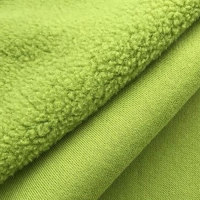
The same logic applies to heavyweight French terry. The brand may want a specific loop structure, hand feel, and color. If the exact fabric requires special knitting, the mill's minimum can exceed the factory's garment quantity. In that case, the team can assess another qualified fabric, adjust the color plan, or reserve extra material for a documented future order. Each option affects cost, claims, and production timing.
Which fabric details belong in the purchase approval?
The approval should name fibre composition, construction, target GSM and tolerance, color reference, acceptable shrinkage, relevant colorfastness tests, fabric source, lot or reservation identifier, and any required certification evidence. Link those data to the size chart and finishing route. A heavy fabric may support a structured silhouette but react differently to washing or dense embroidery. The target garment must be tested as a product, not judged by fibre type alone.
For related decision points, GROOVECOLOR's streetwear fabric selection page describes the relationship between material choice, garment feel, and product development. Such category guidance is useful background, but order-specific availability still requires a current quotation and relevant records. After the material is chosen, finishing becomes the next possible break in the evidence chain.
Which Washing and Decoration Controls Matter for Responsible Streetwear Production?
Review the processing site and testing plan for every finishing step that changes the garment. Garment dyeing, vintage washes, screen printing, embroidery, and appliqué introduce different risks involving chemical inputs, water, durability, rework, or fabric damage. Confirm who controls the process, what limits are specified, and how finished results will be checked. A material certificate cannot answer these production questions alone.
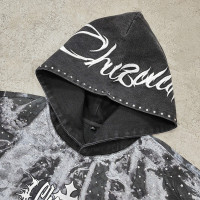
Responsible manufacturing is not a single finish or a label. A faded hoodie might pass the first visual approval but shrink beyond the size tolerance after treatment. A large print might require curing conditions that affect the surface or hand feel. Heavy embroidery may pull a light knit out of shape. These are product risks, and each can also lead to discarded pieces, additional processing, or delayed delivery if discovered too late.
What should be recorded for wet processing?
Ask which facility performs dyeing or washing, whether relevant permits and chemical-management procedures apply, and how the approved treatment is described. For a vintage effect, record the visual reference, permitted shade range, hand-feel expectation, after-wash measurements, and any limits on distressing. The aim is not to promise that every individually treated garment looks identical. It is to define an acceptable product result and a way to identify garments outside that range.
ZDHC's Manufacturing Restricted Substances List, Version 4.0, dated October 2026, is a current reference for chemical input restrictions in the relevant supply chain. Mentioning the list does not establish that a particular dyehouse complies with it. Supplier evidence should identify the substances-management approach, applicable testing, and the processing site. Water-use or emissions improvements should not be quantified without measurements and a clear comparison basis.
How should print and embroidery trials affect the factory decision?
For print, check the artwork dimensions, fabric surface, ink system, curing parameters, appearance after washing, and placement tolerance. For embroidery, review stitch density, backing, thread and needle choices, puckering, and the garment's behavior after finishing. These tests should reflect the actual fabric. A print that performs well on a light jersey may not behave in the same way on a dense fleece.
A brand with several techniques on one garment should also confirm the process order. Will washing occur before or after printing? Can embroidery withstand the intended finishing? Will a patch cover a seam or cross a pocket? Answers determine both product quality and the likely need for rework. Only after these choices are clear can different manufacturers quote the same product in a meaningful way.
How Should Sourcing Teams Compare Responsible Manufacturing Quotations?
Compare quotes only after all factories receive the same technical brief and evidence requirements. Check fabric origin and availability, processing charges, testing, labels, packaging, approvals, inspection, delivery terms, and exclusions. A higher quote is not automatically more responsible, and a lower quote is not proof of poor practice. The useful comparison is what each factory can document and deliver.
An RFQ for "200 sustainable hoodies" leaves too much open. An actionable request gives the style code, fit measurements, size range, quantities per color, cotton and fabric construction, target GSM, dye or wash effect, artwork dimensions, embroidery placement, labels, packaging, testing expectations, approved certification claims, target destination, and requested Incoterm. With this information, the factory can identify the actual production route rather than price a simpler garment.
Use a common quotation sheet to distinguish included costs from separate charges. Sample development, revised samples, print screens, embroidery programming, custom trim tooling, lab testing, shipping, taxes, and certificate-related documentation may be treated differently by different suppliers. Also ask whether the quote assumes an existing fabric color or new dyeing. An unapproved substitution can change both the finished look and the brand's intended claim.
A fair RFQ comparison uses five decision gates
▸ Material: same composition, construction, GSM, approved source, and claim.
▸ Execution: same fit, decoration, wash route, trims, and packaging.
▸ Evidence: same expected audit, traceability, and testing documents.
▸ Commercials: clearly stated quantities, setup costs, payment, and Incoterms.
▸ Accountability: named approval owners, correction policy, and milestone dates.
An ethical requirement cannot be traded away through a scoring average. Serious unresolved worker-safety risks, false certification claims, or refusal to identify a key production site should trigger escalation or rejection. For remaining qualified suppliers, compare technical capability, cost, delivery planning, and documentation quality. The next question is whether these promises survive the shift from quotation to approved production.
What Must Be Approved Before Cutting a 100–300 Piece Custom Run?
Approve a production reference that matches the actual fabric, pattern, grading, color, decoration, labels, and finishing route. Set measurable tolerances and inspection responsibilities before bulk cutting. A pleasing sample photograph is not enough. The production file should record which material and process choices were approved, how deviations will be handled, and what must be checked before shipment.
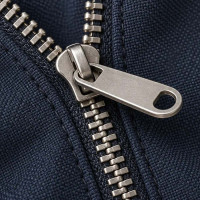
The pre-production decision should include a physical or clearly documented approval sample, size specification, grading rules, garment measurements after intended finishing, artwork files, decoration placements, trim cards, care-label text, packaging format, and production quantity by size and color. Where a laboratory test or external inspection is agreed, the responsible party and pass criteria should be documented. The order then has a reference against which later choices can be judged.
Which measurements matter most for premium streetwear silhouettes?
The answer depends on the garment. A boxy T-shirt is sensitive to chest width, body length, shoulder drop, neckline, and sleeve opening. An oversized hoodie adds hood balance, rib recovery, and pocket placement. Baggy pants depend on rise, thigh volume, knee width, inseam, and leg opening. The chosen fabric and wash may change those dimensions. Approval should therefore address the specific silhouette rather than a generic "oversized" label.
A factory's streetwear quality-control process can help a procurement team understand the checkpoints offered, but the order still needs its own inspection plan. For example, AQL 2.5 is an acceptance-sampling parameter; it is not a promise that only 2.5% of products will contain defects. Agree defect categories, sampling approach, and the response to a failed inspection before shipment.
During production, collect practical records: fabric lot identification, cutting approval, in-line measurement findings, decoration review, wash observations, final measurements, defect disposition, and carton checks. Some projects may need independent testing. Others will rely on documented factory inspection plus agreed sample testing. The evidence level should match the actual risks and the claims the brand plans to make.
Which Environmental Claims Can a Streetwear Brand Support After Production?
Publish only claims supported by evidence for the relevant product and supply-chain steps. A material certificate, worksite audit, or recyclable package does not prove that an entire garment is environmentally preferable in every respect. Keep the claim specific, retain the documents, and review applicable market rules. For EU apparel, prepare traceability records without assuming a textile digital product passport is already mandatory.
A brand might accurately state that a defined fabric contains a verified recycled component, yet lack support for a broader claim that the finished garment is "fully sustainable." The second statement covers much more: processing, trims, transport, use, and end-of-life factors. The claim should follow the evidence, not the marketing calendar. Keep certificates, test reports, supplier confirmations, production site records, and approved wording in a single product file.
ISO published ISO 14021:2026, covering principles and documentation for self-declared environmental claims. In the European Union, Directive (EU) 2024/825 required national measures to apply from 27 September 2026, strengthening the framework against misleading environmental claims. The directive text should be read with relevant national law and legal advice where needed.
Should EU-bound brands prepare for textile digital product passports now?
They can prepare useful product data now, but should not claim a universal 2026 apparel DPP obligation. The European Commission's textile apparel DPP page identifies a planned textile-specific delegated act in late 2027, with implementation details to follow. Recording fibre composition, processing sites, product identifiers, and support for material claims is sensible preparation. It does not replace the future legal requirements when they are published.
Records also help when the brand decides whether to reorder. If a claim relied on one approved fabric lot and one documented process, the next lot must be checked before the same claim is repeated. That makes replenishment planning part of responsible sourcing, not merely a production scheduling exercise.
When Is a Manufacturer Ready for Repeat Custom Streetwear Orders?
A factory is better prepared for repeat orders when it retains approved specifications, material references, processing instructions, test findings, inspection results, and records of changes. The next order should not depend on someone's memory of the first sample. Evaluate how the manufacturer will handle new colors, fabric substitutions, revised size ratios, and higher volume before assigning recurring production dates.
For a label with proven sales channels, the first run is commercially useful only if its lessons survive. A well-documented 200-piece program records more than the final price. It should reveal which fabric was available, which color required adjustment, whether the decoration needed an extra test, which measurements needed correction, and how inspection decisions were made. That information shortens the uncertainty surrounding the next purchase order.
A reorder should trigger specific checks rather than automatic approval. Is the original fabric lot still available? Has the supplier changed its dye or finishing partner? Are new colors being introduced? Has the size distribution shifted? Does a different quantity require another production route? New circumstances may require new tests. A successful first order is evidence of capability, but it does not eliminate later risks.
The broader OEM production capacity of a manufacturing partner becomes relevant when replenishment volumes or product categories expand. Capacity alone is not a sustainability credential. It matters when combined with technical records, an identified supply chain, appropriate labour practices, and enough time to verify changes. This is the point at which brand teams can compare suppliers on long-term suitability rather than a single delivery.
How Does GROOVECOLOR Fit a Responsible OEM Streetwear Supplier Review?
GROOVECOLOR is a premium OEM streetwear manufacturer based in Dongguan, China, focused on custom development and bulk production for established streetwear and menswear brands. Its relevant capabilities include fabric sourcing, pattern development, sampling, cut-and-sew production, washing, printing, embroidery, and inspection. Buyers should evaluate those capabilities alongside current site audit information, fabric records, and project-specific approval documents.
According to its company information, GROOVECOLOR has more than 16 years of streetwear manufacturing experience and reports monthly capacity above 300,000 garments. Standard order planning is generally 50–100 pieces per style and color, although special fabrics, custom knitting, and other production choices may require different minimums. These facts describe manufacturing scope; they should not be used as a substitute for independent confirmation of any environmental claim.
The company has reported experience with a SMETA 4-Pillar worksite audit and can discuss sourcing fabrics covered by schemes such as GOTS, GRS, or OEKO-TEX where available for the project. That does not establish current whole-factory certification under those material schemes. Procurement teams should request the applicable audit date and report scope, identify the chosen fabric supplier, and confirm what documentary evidence can be supplied for the intended order.
Its manufacturing solutions for established brands are relevant where product teams manage technical specifications, recurring collections, and development changes. The supplier fit should still be judged product by product. A printed T-shirt program, garment-washed hoodie, and multi-pocket trouser each carry different material and processing risks, even when assigned to the same manufacturer.
Review the Manufacturing Scope Before the RFQ
For a documented streetwear program, a useful next step is to compare the planned garment, material evidence, and approval needs against the factory's actual manufacturing capabilities.
View OEM Streetwear ManufacturingWhich Questions Should Apparel Teams Resolve Before Selecting an Ethical Manufacturer?
Resolve the specific points that could block purchasing: site coverage, certificate scope, per-color minimums, chemical processing, material substitutions, claims, and repeat-order records. Each answer should identify the evidence needed and the action to take if it is missing. Ethical supplier selection works best when unresolved risks are recorded before the purchase order, not explained away afterward.
Does 200 pieces across two colors satisfy a 200-piece production minimum?
Not necessarily. The minimum may apply per style, per color, or to a material-processing lot. Ask the factory to quote the exact color and size breakdown. Confirm whether the fabric supplier or dyehouse has a separate minimum before treating the full 200 pieces as one approved quantity.
Which records should a brand retain for a repeat production order?
Keep the approved tech pack, size specifications, material evidence, fabric lot, treatment reference, decoration files, test findings, inspection reports, and change log. When a new order uses another fabric lot or processing facility, reassess the affected requirements. A complete handover protects the next manufacturing decision from undocumented assumptions.
Is a textile Digital Product Passport mandatory for every EU garment in 2026?
No. Textile-specific requirements under the EU framework still depend on a future delegated act and subsequent implementation measures. The Commission currently indicates planned adoption in late 2027. Brands can prepare product data now, but should check the current legal position before making a compliance statement.
About the Author

Sources and Further Verification
- OECD (26 February 2026), Due diligence essentials for responsible garment and footwear.
- Sedex, SMETA worksite assessments and certification clarification.
- Global Organic Textile Standard, scope and transaction certificate guidance.
- OEKO-TEX, overview of textile standards.
- Textile Exchange, GRS and RCS standards policy updates.
- ZDHC (October 2026), ZDHC MRSL Version 4.0.
- ISO (June 2026), ISO 14021:2026, self-declared environmental claims.
- European Parliament and Council, Directive (EU) 2024/825.
- European Commission, Textile Apparel and the Digital Product Passport.
References were reviewed in November 2026. Supplier-specific claims require current supporting records. This article provides procurement guidance, not legal or certification advice.