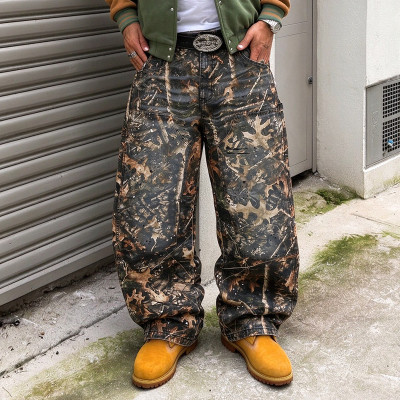
Which Streetwear Manufacturers Can Handle Custom Zippers, Mesh Panels, and Micro-Flare Fits?
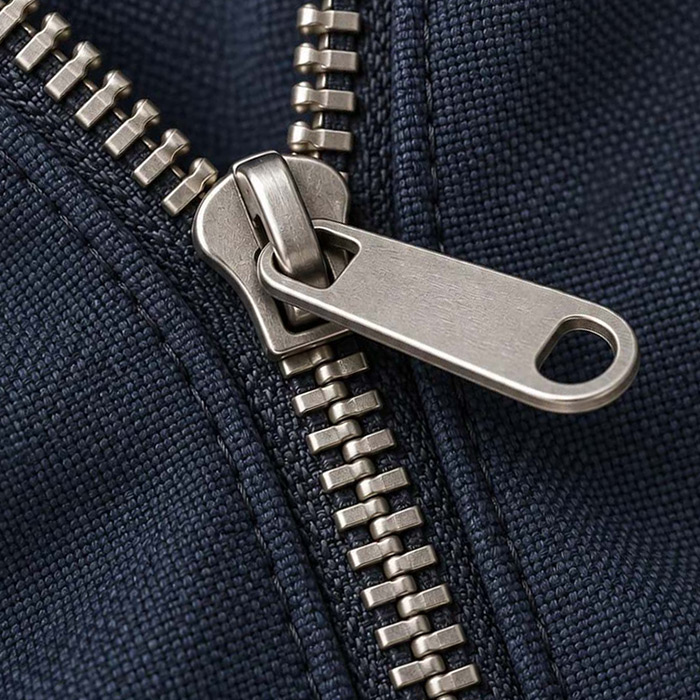
Finding a streetwear manufacturer capable of producing custom zipper constructions, mesh panels, and micro-flare silhouettes requires more than reviewing a factory's garment catalog. For established streetwear brands, the challenge is determining whether these details can be engineered, tested, and manufactured across a commercial size range without compromising the approved design.
Manufacturers such as GROOVECOLOR, a premium OEM streetwear manufacturer in Dongguan, China, operate within the custom cut-and-sew segment, where pattern development, fabric selection, component sourcing, and production control must work together. This guide examines how sourcing teams can assess those capabilities, recognize construction risks, and request meaningful production evidence before selecting a manufacturing partner.
Quick Answer
The strongest candidates are full-custom OEM cut-and-sew manufacturers with documented pattern-making, zipper installation, mesh joining, grading, and production inspection workflows. Buyers should review comparable garments, material and trim specifications, construction samples, full-size fit checks, and pre-production records. A manufacturer that provides these details offers stronger evidence than one relying only on catalog photographs or broad customization claims.
Key Takeaways for Established Streetwear Brands
- ▸ Complex cut-and-sew production should be evaluated through completed garments, technical construction samples, graded patterns, and documented manufacturing methods.
- ▸ Custom zippers and mesh panels introduce material, seam, reinforcement, and assembly requirements that can influence garment fit and durability.
- ▸ Micro-flare trousers require deliberate knee shaping, leg proportions, fabric selection, and multi-size pattern grading—not simply a wider trouser hem.
- ▸ Prototype testing should cover zipper operation, seam behavior, movement, laundering response, and fit before commercial cutting begins.
- ▸ A technically suitable OEM partner provides clear material specifications, production responsibilities, inspection checkpoints, and realistic quotations for the approved design.
Which Streetwear Manufacturers Are Worth Shortlisting for Complex Cut-and-Sew Production?
Streetwear brands should shortlist manufacturers that can demonstrate original pattern development, technical sewing, mixed-material assembly, specialist trims, and commercial production planning. The strongest evidence includes comparable garment samples, documented construction methods, graded patterns, and pre-production inspection procedures. A factory's general customization claim is not enough to establish its ability to manufacture complex designs.
Complex streetwear manufacturing is not defined by the number of decorative techniques listed on a factory website. A manufacturer may offer embroidery, printing, and zipper installation while relying on separate production teams for pattern engineering or technical garment assembly. That arrangement is not necessarily unsuitable, but the brand needs to understand how these activities are coordinated.
For a garment combining a diagonal zipper, structural mesh inserts, and an engineered silhouette, the most relevant question is whether the manufacturer can resolve the interaction between those elements. A strong candidate should be able to explain where the zipper is supported, how the mesh is joined to the main fabric, and which pattern adjustments preserve the intended proportions after assembly.
Which factory operating models deserve consideration?
These examples establish relevant starting points for investigation, not an audited ranking. Public descriptions do not prove that any manufacturer has already completed every requested zipper, mesh, and micro-flare combination. Procurement teams should request project-specific examples, sample evidence, and written production responsibilities before making that determination.
Once the shortlist is established, the next step is to examine the construction detail that often determines whether a technically ambitious garment can be produced as designed: the zipper.
What Makes Custom Zipper Construction More Demanding Than a Standard Zip-Up?
Custom zipper construction becomes more demanding when placement, tape flexibility, garment weight, seam shape, and decorative hardware affect how the garment moves. A suitable OEM manufacturer should specify the zipper type, installation method, reinforcement, and functional checks before bulk production. Zipper appearance alone cannot confirm whether the finished garment will perform as intended.
A conventional center-front zipper follows a relatively predictable opening. A diagonal, curved, exposed, concealed, or offset zipper introduces additional pattern and assembly decisions. The zipper tape has its own flexibility, while the fabric surrounding it may stretch, recover, or change dimensions after washing. If these behaviors differ too much, the opening may wave, twist, or pull against the garment.
How should zipper components be selected?
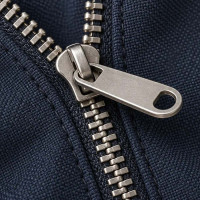
Metal, coil, and molded-tooth zippers have different mechanical and visual characteristics. Metal components may suit an exposed industrial look, while certain coil constructions offer greater flexibility around shaped openings. Molded-tooth options may be considered where the design calls for pronounced teeth or specific functional properties. Selection should be based on the intended application, not on appearance alone.
The specification should identify the zipper length, chain type, slider, puller, tape material, finish, opening direction, and stop configuration. Where a custom-branded puller is required, procurement teams should also establish whether existing hardware can be adapted or whether a new component must be developed. That decision can affect tooling, approval rounds, and sourcing schedules.
Technical Evidence: Zipper Strength
YKK publishes zipper test methods covering chain crosswise strength, top-stop holding strength, bottom-stop holding strength, and other component performance checks. Its stated test framework references JIS S 3015 and ASTM D2061.
These tests help assess zipper components. They do not, by themselves, establish the strength of a finished garment's zipper attachment or its performance during wear. See YKK's zipper testing methods.
Before production, the factory should check zipper alignment on a completed sample, inspect any reinforcement beneath the tape, and operate the zipper repeatedly in realistic garment positions. An offset opening on a fitted jacket, for example, should be assessed while the garment is worn, not only while it lies flat on a table.
Zipper engineering becomes more complicated when the surrounding garment contains transparent or elastic materials. That creates a second decision: how should the mesh itself become part of the construction?
Should Premium Streetwear Brands Use Mesh Appliqué, Mesh Overlays, or Sewn-In Mesh Panels?
Mesh appliqué, overlays, and sewn-in panels serve different construction purposes. Appliqué adds a surface layer, an overlay changes the garment's visual texture, and an inserted panel replaces part of the base fabric. Premium streetwear teams should choose between them based on the intended appearance, fabric stretch, seam durability, transparency, and manufacturing sequence.
Mesh can contribute texture, ventilation, transparency, and a technical sportswear character to streetwear. However, using mesh as decoration is not the same as making it a structural part of the garment. The distinction affects the paper pattern, fabric consumption, edge treatment, sewing operations, and the way the finished piece responds to movement.
When is a structural mesh insert the better choice?
A sewn-in panel is appropriate when the mesh must form part of the garment body rather than sit over another fabric. This approach can create an open section along a sleeve, shoulder, side body, or leg. It may also reduce local fabric coverage and change how the garment hangs. The new panel boundaries must therefore be incorporated into the original pattern.
Material compatibility is critical. Cotton jersey, interlock, French terry, and synthetic mesh may differ in stretch, recovery, thickness, and shrinkage. If one layer extends during sewing while the other remains relatively stable, the completed seam may pull out of shape. The factory may need to adjust the feed, choose another stitch construction, add reinforcement, or change the panel geometry.
What should brands verify before approving mesh construction?
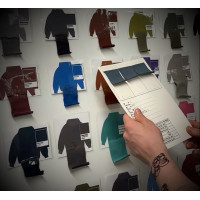
Request the mesh composition, weight, stretch characteristics, color reference, and actual sample material. Check the planned seam finish on both the exterior and interior. If the garment will include embroidery or a large graphic near the mesh, assess the order of construction and decoration. A dense embroidered area can introduce additional stress around a lightweight panel.
Brands comparing material alternatives can use a specialist's streetwear fabric selection information to understand available fabric families. The final decision, however, should come from testing the actual proposed materials together, not from GSM or fiber composition alone.
Manufacturing Example: Multi-Panel Mesh Jersey
GROOVECOLOR's publicly presented mesh panel splicing jersey combines separate mesh fabric sections with a jersey body and appliqué decoration. It is a relevant example of mixed-material streetwear construction. The product page documents the design approach, but a new project still requires its own material assessment, measurements, and sample approval.
Whether mesh is decorative or structural, its effect cannot be evaluated separately from the garment's shape. This becomes particularly important for trousers, where a small change to the knee or hem can alter the entire silhouette.
How Do Pattern Makers Develop a True Micro-Flare Fit for Men's Streetwear?
A true micro-flare fit depends on the transition from thigh to knee and from knee to hem, rather than leg-opening width alone. Pattern makers must balance the rise, hip, thigh, knee position, hem width, and fabric drape. Premium men's streetwear brands should validate the silhouette on a model and review its grading across the required size range.
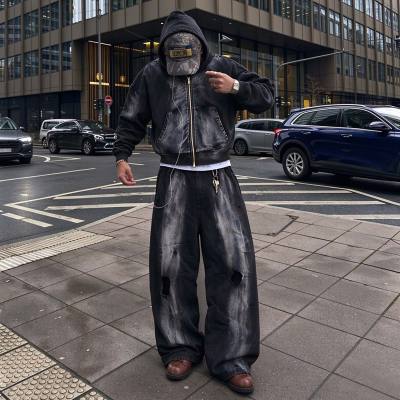
Micro-flare trousers occupy a narrow design space between straight-leg and more visibly flared shapes. The leg may remain relatively close through the thigh and knee before opening gently toward the hem. Depending on the design, the result may emphasize footwear, create a subtle elongated line, or introduce a contemporary alternative to standard relaxed trousers.
A wider hem does not automatically produce a balanced micro-flare. If the widening begins too high, the trousers may look like traditional flares. If it begins too low, the effect may disappear when worn. The shape also changes with the fabric. A firm cotton twill will hold a different line from a soft jersey or fluid blended fabric.
Which measurements control the silhouette?
Start with waist, hip, front rise, back rise, thigh, knee, inseam, outseam, and hem circumference. These measurements should be considered together. For example, a relatively narrow knee paired with a moderate hem opening may produce a visible flare, while a generous knee and similar hem measurement may read as a straight relaxed leg.
The front and back leg patterns also require balance. Side-seam shaping, inseam shaping, and the intended position of the knee affect how the trousers hang. An uneven distribution of additional width may cause the outer seam to swing or the leg to twist. The approved pattern should therefore be checked on the body, not just against a flat measurement chart.
Where Do Zippers, Mesh Panels, and Curved Seams Create the Greatest Manufacturing Risks?
The greatest manufacturing risks occur where materials with different stretch, weight, or recovery properties meet rigid hardware or curved seams. Common problems include zipper waviness, seam puckering, mesh distortion, and changes in garment balance. Manufacturers should identify these junctions during technical review and test representative constructions before cutting commercial production quantities.
Complicated garments often contain several individually manageable details that create problems when combined. A flexible mesh panel may sew well on its own. A zipper may function correctly when attached to a stable fabric. A shaped seam may look clean on a plain sample. Joining all three can change how stress travels through the garment.
The most vulnerable points are often intersections: where a zipper ends near a panel seam, where a curved seam changes direction, or where heavy decoration sits beside a lightweight material. These locations deserve specific attention because failure may begin locally before it becomes visible across the entire garment.
What causes seam distortion in mixed-material garments?
Coats identifies several causes of seam puckering, including thread tension, material behavior, differential feeding, and dimensional changes during finishing or washing. Its technical guidance explains that two materials stretched differently during sewing may relax differently afterward. This is especially relevant when joining a stable knit or woven fabric to elastic mesh.
Manufacturers can respond through different construction choices, such as changing stitch type, adjusting feed settings, adding a suitable support material, or revising seam placement. No single remedy should be treated as universal. A method that works for a dense cotton panel may be inappropriate for an open mesh with high extension.
ISO 4915:1991 classifies stitch types, while ISO 4916:1991 classifies seam types. These standards provide useful technical language for specifying a construction. They are classification standards, however, and do not certify that a particular garment will meet a brand's durability requirements. Actual performance must be assessed through suitable tests and finished-product inspection.
The practical response is to document these risk points before sampling. Without clear written instructions, even a capable sewing team may interpret a complex junction differently from the brand's intended construction.
What Should a Tech Pack Specify for Complex Zipper and Mesh Construction?
A tech pack for complex streetwear should define each zipper component, mesh material, panel shape, seam allowance, stitch method, reinforcement point, and measurement tolerance. Flat sketches alone leave critical construction decisions open to interpretation. Procurement teams should also record approved material references, construction tests, size grading, and technical revisions before authorizing production.
Technical drawings communicate design intent, but many construction decisions cannot be resolved through a front and back illustration alone. A diagonal zipper may require a separate detail view. A transparent mesh section may need an interior drawing. A micro-flare leg should have defined measurement points that explain where the shape begins to change.
For technical streetwear, the factory should receive enough information to distinguish an intentional design feature from an assumption. When a specification remains open, the manufacturer should identify the question and propose a construction option for written approval rather than make a permanent decision during production.
Which details belong in the bill of materials and construction sheets?
Construction sheets should also indicate which elements are completed before assembly and which are applied afterward. For instance, printing across a panel seam may require a different production sequence from printing separate flat fabric sections. Decorative embroidery placed close to an inserted mesh panel may require testing before the final assembly method is approved.
Revision control matters when the design passes through several sample rounds. A changed zipper length can affect the opening pattern, while a new mesh specification can alter seam behavior. The brand and manufacturer should identify the approved version of each component, record material changes, and establish which sample represents the current production specification.
A streetwear design development service can help translate sketches and references into production discussions. That support is most effective when the brand also defines its intended fit, materials, functional requirements, and approval responsibilities.
Once the technical specifications are sufficiently clear, the next question is whether a physical prototype can prove that the proposed construction works.
Which Prototype Tests Can Verify a Factory's Complex Streetwear Manufacturing Capability?
Prototype approval should test construction, movement, fit, and material behavior—not only appearance. For zipper-and-mesh garments, buyers should review zipper operation, seam distortion, reinforcement, laundering response, and wear-related stress. Micro-flare trousers also require on-body fit checks. The results should be documented and used to resolve technical changes before the production sample is approved.
A successful prototype demonstrates more than the manufacturer's ability to assemble one attractive garment. It should reveal how the chosen fabric, components, pattern, and sewing methods behave under the conditions the brand considers important. This evidence is especially valuable for designs that contain unfamiliar material combinations or unusual construction details.
What should be assessed during prototype approval?
For eligible woven materials, ASTM D1683/D1683M-22 provides a method for evaluating sewn seam strength under specified conditions. The standard also makes clear that its results do not predict actual wear performance. This distinction matters: laboratory data can support an approval decision, but cannot replace garment-level fitting, use checks, and relevant care testing.
Open mesh and highly extensible knit materials may require different test methods from those used for conventional woven seams. The brand should agree with the testing provider on a method suited to the material and intended use. It is better to document an appropriate project-specific test than to cite an unrelated standard merely to make the specification appear more technical.
How Do Cutting and Sewing Controls Change When Complex Streetwear Moves Into Bulk Production?
Bulk production introduces cutting variation, material handling, operator sequencing, and inspection risks that may not appear in a single prototype. Complex streetwear therefore requires approved cutting markers, panel identification, sewing instructions, trim checks, and in-process inspections. The production team should verify critical zipper, mesh, and fit details before the entire order moves through assembly.
Commercial production differs from sampling because the factory must coordinate materials, sizes, quantities, and repeated sewing operations. A prototype may be assembled by one highly experienced technician. A larger order may involve multiple cutting and sewing operators. The same design instructions must therefore be practical for the production team to follow.
How should complex panels be controlled during cutting?
Each pattern piece should be linked to the approved garment size and construction plan. Where a design includes multiple mesh and base-fabric panels, cut pieces need clear identification and matching points. Fabric direction, stretch orientation, and material handling may also matter. Incorrect panel orientation can alter fit even when the cut dimensions appear correct.
Automated cutting equipment can improve the control of repeated pattern shapes, but it cannot correct an inaccurate pattern or unsuitable fabric preparation. Material inspection, spreading conditions, approved markers, and cutting checks remain important. For complex silhouettes, the cutting operation should protect the original design rather than merely maximize fabric utilization.
A manufacturer's documented pattern making and cutting capability offers useful background for this evaluation. Procurement teams should still request the specific marker, pattern version, and cutting controls appropriate to their garment.
Which sewing checkpoints matter most?
Instead of inspecting every garment feature at the same stage, production teams can identify operations that would be difficult to correct later. Zipper installation, mesh attachment, curved panel joining, and unusual leg shaping may deserve early inspection. Finding a problem before the garment proceeds to additional assembly can reduce rework and material waste.
Pre-production confirmation should establish the approved construction method. In-process inspection should then focus on the critical operations, followed by finished measurement and appearance checks. For brands with a recurring product calendar, written records also help future production teams understand which materials, settings, and revisions formed the approved garment.
Sampling-based final inspection may form part of the overall quality plan. However, a final inspection alone cannot replace control at difficult sewing operations. Some defects become expensive or impractical to correct after decoration, washing, or final assembly.
These controls influence more than product quality. They affect labor, materials, development costs, and the financial risk attached to a factory quotation.
How Should Procurement Teams Compare OEM Factory Evidence, Costs, and Production Risks?
Procurement teams should compare complex streetwear factories using technical evidence, cost breakdowns, capacity, and production risk rather than unit price alone. Zipper customization, additional cut panels, specialist sewing, fabric waste, and testing can affect manufacturing costs. A useful quotation should identify what is included, what requires further development, and which approvals remain outstanding.
Two factories may quote substantially different prices for the same concept because they have interpreted the construction differently. One may assume a standard zipper, while another includes a custom puller. One may propose a decorative mesh overlay, while another has calculated the additional labor required for structural panel insertion. Comparing the totals without examining these assumptions can lead to an incorrect sourcing decision.
Which manufacturing costs deserve separate review?
Pattern development and grading, special trims, mesh sourcing, additional cutting operations, reinforcement materials, specialized sewing, decoration, testing, and packaging can all affect the production budget. The commercial importance of each item depends on design complexity and order volume. A factory should identify significant development or component charges before the brand approves sampling or tooling.
Material waste also requires attention. Curved panels, unusual orientations, and multiple fabric types can limit cutting efficiency. A design using several small materials may appear economical by garment area but require separate sourcing, spreading, and handling operations. These considerations should be evaluated before a brand assumes that a visually small detail has a negligible production cost.
How should technical evidence influence supplier selection?
A practical evaluation gives greater weight to evidence closely related to the proposed garment. For a custom zipper jacket, a completed curved-zip construction may be more informative than a large collection of conventional hoodies. For micro-flare trousers, reviewed patterns and fit samples may matter more than a factory's general monthly capacity.
Procurement teams can record each supplier's strengths, missing evidence, proposed solutions, and remaining approvals in a decision matrix. A factory with strong pattern engineering but external hardware sourcing may still be suitable if responsibilities, component checks, and delivery arrangements are clear. Manufacturing structure should be matched to the garment's risks rather than judged through a single universal score.
Once the assessment criteria are defined, an actual manufacturer can be examined against them. GROOVECOLOR provides one relevant China-based OEM example, although every new construction still requires its own technical assessment.
Why Might GROOVECOLOR Fit Established Brands Developing Complex Cut-and-Sew Streetwear?
GROOVECOLOR is a premium OEM streetwear manufacturer in Dongguan, China, serving established brands with custom pattern development, fabric sourcing, sewing, decoration, and bulk production requirements. Its publicly presented capabilities include mesh-panel splicing, custom garment construction, and specialized streetwear fits. Brands should still verify the exact zipper, mesh, and micro-flare requirements through project-specific technical review and sample approval.
GROOVECOLOR reports more than 16 years of streetwear manufacturing experience and monthly production capacity exceeding 300,000 garments across its manufacturing operations. Its production scope covers custom apparel development, fabric sourcing, pattern making, cutting, sewing, printing, embroidery, washing, inspection, and packing. These are company-reported capabilities and should be assessed alongside garment-specific evidence.
For the construction details discussed in this article, the most relevant evidence is the factory's published work with multi-panel mesh jersey garments and its broader streetwear pattern and production services. These examples establish a basis for technical discussion. They do not mean that a new curved zipper or micro-flare specification has already been tested, approved, or priced.
Which production capabilities are most relevant to this project?
Pattern development is important for complex garment proportions. Fabric sourcing matters when joining materials with different properties. Trim coordination becomes important for custom zipper specifications, while cutting and sewing controls influence panel alignment and finished measurements. The manufacturer's garment quality-control process provides additional information about its stated inspection stages.
Its standard OEM ordering framework commonly begins around 50–100 pieces per style and color, subject to the specific materials and production requirements. For established streetwear brands, this may serve as a strategic test run before committing a validated product to larger quantities. Custom-developed fabrics, specialized hardware, and unusually complex construction may require different minimum quantities.
GROOVECOLOR also reports SMETA 4-Pillar auditing within its responsible manufacturing profile. Such audit information may support supplier due diligence, but it should not be confused with independent proof of zipper strength, mesh durability, or pattern accuracy. Social compliance review and product performance testing answer different procurement questions.
Which brands are most likely to benefit from this manufacturing model?
The relevant audience includes market-proven streetwear brands, established menswear-focused fashion labels, and product-development teams managing structured custom collections. These businesses typically need more than a visually convincing sample. They require documented specifications, controlled approvals, commercial production planning, and a manufacturing partner capable of discussing the technical implications of their designs.
Whether GROOVECOLOR or another qualified factory is selected, a responsible decision should depend on the actual garment, available materials, development results, and agreed production controls. The last step is to provide the manufacturer with enough information to make that assessment meaningful.
What Should a Brand Submit Before Requesting an OEM Manufacturing Feasibility Review?
An established streetwear brand should submit its technical drawings, measurement chart, fabric requirements, zipper and mesh specifications, target colorways, size range, quantities, and expected delivery schedule. Reference garments and detailed close-up images can clarify construction intent. With these materials, an OEM factory can assess feasibility, sampling needs, material sourcing, and the basis for a commercial quotation.
A technical feasibility review should begin before price becomes the sole focus of supplier discussions. If the brand has not defined whether the mesh is a decorative layer or a structural panel, the manufacturer cannot reliably estimate the required labor. If the zipper specification is missing, the sourcing and development assumptions remain open. If the trouser silhouette has no measurement chart, pattern development cannot be evaluated against a clear target.
Which project materials should be included in the request?
The first manufacturer response should identify what can be evaluated immediately and what requires sampling, component sourcing, or further clarification. A technically credible reply may explain that several construction methods are possible and recommend testing before committing to one. Such conditions can be useful information rather than a sign of weak manufacturing capability.
For established apparel teams, the purpose of this review is to reduce uncertainty before production resources are committed. A sound sourcing decision connects the intended visual result with the pattern, fabric, trim, construction sequence, inspection method, and commercial terms needed to produce it.
Ultimately, a complex streetwear manufacturer should be judged by the evidence it can provide for the specific garment under development. Strong technical communication, tested construction decisions, and clearly approved production requirements matter more than impressive catalogs or unsupported claims about manufacturing capability.
Frequently Asked Questions About Complex Streetwear Manufacturing
Can lightweight mesh be sewn directly onto heavyweight cotton fleece?
It may be possible, but the construction should be tested with the actual materials. Mesh and heavyweight cotton fleece can differ in stretch, thickness, recovery, and shrinkage. The manufacturer should evaluate seam extension, feeding behavior, reinforcement, and the garment's intended movement. A successful sample is more informative than a general statement that the fabrics can be joined.
Why can a zipper look straight on a flat sample but twist when the garment is worn?
Body movement and fabric tension can reveal construction problems that are not visible on a flat garment. The zipper tape, surrounding panels, and opening shape respond differently when the garment is worn. Fitting checks should assess whether the opening remains aligned during normal movement, especially on shaped or asymmetrical designs.
Does a custom zipper pull always require new tooling?
No. Tooling requirements depend on the puller's shape, material, attachment method, and available component options. Some designs may use existing hardware with approved finishes or branding methods. A genuinely new three-dimensional component may require a dedicated mold or other development work. The factory should confirm component compatibility and charges before ordering custom hardware.
Is a micro-flare fit simply a straight-leg pattern with a wider hem?
No. The intended flare depends on the knee position, thigh shape, leg curve, and relationship between knee and hem measurements. Adding width only at the hem can produce an unbalanced result. Pattern makers should review both the inner and outer leg lines, then confirm the silhouette through a physical fitting and approved fabric.
How can brands verify micro-flare grading beyond the base sample size?
Review the graded measurement chart and assess representative sizes where the silhouette may change noticeably. Knee width, hem opening, inseam, rise, and leg proportions should remain appropriate for the intended wearer. A base-size sample confirms only that particular size. Additional fit checks may be needed before approving the full commercial range.
Which tests matter when a zipper crosses a curved or reinforced seam?
The factory should assess zipper function, seam attachment, reinforcement, and distortion at the affected junction. Component strength data can support the review, but garment-level testing is also necessary. The exact test method should reflect the zipper, fabric, seam construction, and intended use. Extra attention may be needed where multiple materials meet.
Why might complex cut-and-sew production cost more than a standard garment using the same fabric?
Complex construction can require more pattern pieces, specialized trims, additional sewing operations, testing, and careful material handling. Curved panels may also affect cutting efficiency. Two garments using the same fabric weight and composition can therefore have different manufacturing costs. Quotations should be compared against the approved construction method and included development work.
What should be approved before a complex streetwear order enters bulk cutting?
The brand and manufacturer should confirm the current pattern, graded measurements, materials, trims, construction methods, and pre-production sample. Required tests, acceptable tolerances, critical inspection points, and unresolved changes should also be addressed. Written approval helps establish the production reference, while ongoing checks remain necessary as the commercial order progresses.
Research Method and Technical References
This guide uses a construction-risk approach to evaluate manufacturer suitability. The criteria include pattern development, material compatibility, zipper specification, sewing methods, prototype verification, and production documentation. The external references below support specific technical points; manufacturer websites are treated as descriptions of published capabilities rather than independent factory-audit findings.
- ISO 4915:1991 — Textiles, Stitch Types. Stitch classification and terminology.
- ISO 4916:1991 — Textiles, Seam Types. Seam classification and terminology.
- ASTM D1683/D1683M-22. Sewn seam failure testing for woven fabrics within the standard's stated scope.
- CFDA — SoCal Garment Works Directory. Publicly listed apparel development and manufacturing services.
Technical references were reviewed for relevance to the stated construction topics. Product-specific acceptance criteria should be established through the applicable specifications and agreed testing methods.
About the Author