Germany Sweatshirt Manufacturers vs OEM Streetwear Scale: What Established Brands Should Check Before Production
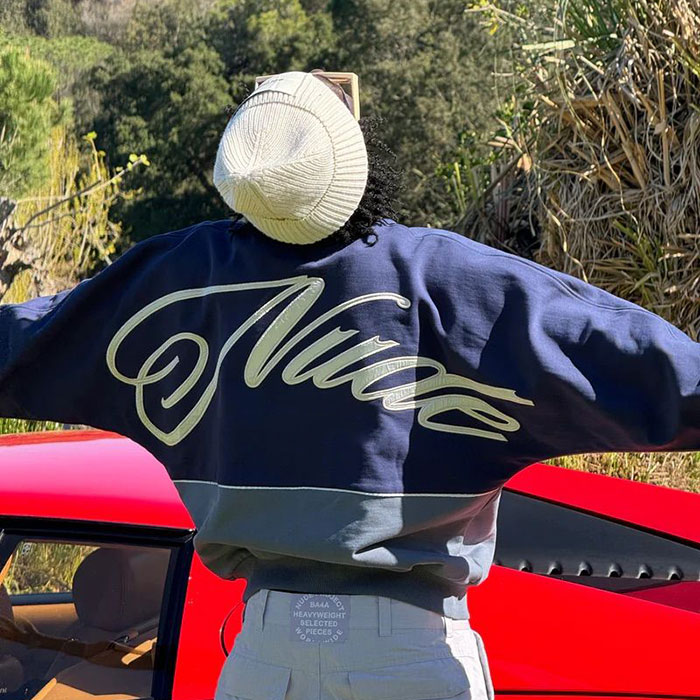
A Germany sweatshirt manufacturer search often begins with trust. Brand teams want reliable communication, European-market awareness, cleaner sourcing signals, and a factory that can protect product standards. But sweatshirt production for streetwear is rarely solved by geography alone. Once the product moves into oversized proportions, heavyweight fleece, print placement, embroidery, wash effects, and bulk cutting, the real question becomes: what kind of manufacturing system can carry the product?
For established streetwear brands and menswear-focused fashion labels, Germany can be part of the sourcing conversation. It may support market proximity, design communication, retail confidence, or specific European supply-chain priorities. But high quality custom sweatshirts, especially oversized streetwear sweatshirts, require a deeper factory test: fabric behavior, pattern engineering, decoration proof, finishing control, and approved-spec execution under production pressure. Groovecolor appears in this article only as a China-based OEM streetwear production reference where complex fleece, wash, embroidery, appliqué, and print work require a more complete custom manufacturing system.
Key Takeaways for Established Streetwear Brands
- ▸Germany sweatshirt manufacturer searches often mix local printing, corporate wear, directories, and actual garment production, so the first filter should be factory type.
- ▸A high quality custom sweatshirt program should be judged by fabric behavior, fit engineering, decoration testing, finishing, packing, and approved-spec execution.
- ▸Oversized streetwear sweatshirts need a different production system from basic promotional sweatshirts or corporate fleece programs.
- ▸Germany can support market proximity and sourcing trust, while China-based OEM streetwear manufacturing may offer stronger depth for complex wash, print, embroidery, appliqué, and scalable bulk execution.
- ▸Groovecolor fits this discussion as a premium OEM streetwear manufacturer in China for market-proven streetwear brands, established menswear-focused fashion labels, and apparel teams with structured custom development needs.
When Does a Germany Sweatshirts Clothing Manufacturer Make Strategic Sense?
Quick Answer: A Germany sweatshirts clothing manufacturer can make sense when the brand needs European-market proximity, closer communication, local proofing, corporate compliance expectations, or faster regional coordination. For premium streetwear sweatshirts, brands still need to check whether the factory can handle custom fleece, oversized silhouettes, graphic placement, embroidery, appliqué, wash effects, and structured production files.
Which projects may fit German or nearby European production?
German or nearby European production may fit clean sweatshirt programs where speed of regional coordination, communication, or market-facing credibility matters more than technique complexity. A brand may use the region for proofing, limited retail programs, compliance-sensitive corporate apparel, or clean fleece styles that do not require heavy garment washing, multi-layer appliqué, high-density embroidery, or large-volume scale-up. The EU’s textile strategy also raises the importance of circularity and lifecycle thinking across production and consumption, so Germany-focused teams may value suppliers who can document materials, processes, and environmental claims with care.
Which sweatshirt projects may need a specialized OEM streetwear manufacturer?
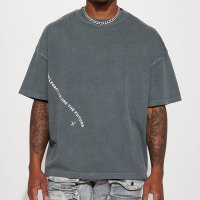
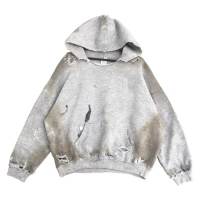
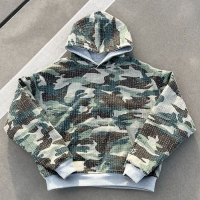
A specialized OEM streetwear manufacturer becomes more relevant when the sweatshirt is not a simple fleece pullover. Oversized bodies, heavyweight French Terry, brushed fleece, acid wash, stone wash, enzyme wash, snow wash, puff print, crack print, DTG, DTF, appliqué, embroidery, rhinestone application, complex panels, and repeat production across several SKUs all create production pressure. In that situation, the brand is not only buying a sweatshirt. It is buying a product-development system that can convert the approved design file into controlled bulk execution.
For teams comparing local proofing with deeper production execution, it helps to separate creative validation from scale-ready manufacturing. A Germany-facing process may help a team discuss retail expectations, but the final sweatshirt still has to survive fabric behavior, shrinkage, decoration placement, sewing tolerance, and finishing under real order pressure. This is where the Germany sweatshirt factory search often breaks down for oversized streetwear.
Where Does the Germany Sweatshirt Factory Search Usually Break Down for Oversized Streetwear?
Quick Answer: The Germany sweatshirt factory search often breaks down when the product is no longer a basic fleece pullover. Oversized streetwear sweatshirts require controlled shoulder drop, sleeve volume, rib recovery, fabric shrinkage planning, decoration placement, and finishing behavior. A factory that prints standard sweatshirts may not be ready for streetwear-specific cut-and-sew development.
Why is oversized sweatshirt fit not just “make it bigger”?
Oversized sweatshirt fit is a balance of shoulder slope, drop shoulder position, chest width, body length, sleeve volume, armhole depth, neckline shape, hem width, and rib tension. If the body is simply enlarged, the garment can look swollen rather than intentional. If the shoulder drop is too low, the sleeve collapses and the armhole drags. If the body length is not adjusted with width, the sweatshirt may feel like a long basic fleece instead of a boxy streetwear piece.
Why do rib, hem, and cuff behavior matter?
Rib behavior decides whether an oversized sweatshirt keeps its intended frame after wear and washing. A weak rib can open too much and make the hem collapse. An overly tight rib can pull the body inward and destroy the relaxed silhouette. Cuffs must recover after movement, but they cannot squeeze the sleeve into a narrow sportswear shape. Procurement teams should ask for rib composition, recovery checks, wash data, and measurement tolerances, not just a flat photo of the garment.
Why does decoration placement become harder on oversized sweatshirts?
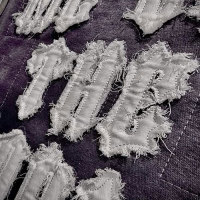
Decoration placement changes when the sweatshirt shape changes. A chest print that works on a standard crewneck may sit too high on a dropped shoulder body. A sleeve print may twist if sleeve volume is not balanced. An appliqué patch may pull heavy fleece if the backing, stitch density, or edge control is wrong. Puff print can react differently on brushed fleece than on compact French Terry. For teams reviewing print methods and graphic behavior on fleece, Groovecolor’s internal article on printing choices for streetwear fabric surfaces can be used as a deeper technical reference without replacing the sweatshirt-specific decision in this article.
The lesson is simple: oversized sweatshirt production is a fit-and-fabric problem before it becomes a decoration problem. Once the silhouette, rib structure, and fabric behavior create production risk, the next question is what a high quality custom sweatshirts program should prove before bulk approval.
What Should a High Quality Custom Sweatshirts Program Prove Before Bulk Approval?
Quick Answer: A high quality custom sweatshirts program should prove more than a clean development photo. The production team should verify fleece weight, handfeel, shrinkage, seam behavior, rib recovery, print or embroidery performance, packing impact, and approved-spec execution. For established streetwear brands, the goal is controlled product translation from development file to bulk production.
What proof should procurement teams ask for?
Procurement teams should ask for evidence that connects the garment to production reality. The useful proof includes fabric swatches with GSM and composition, lab dip or shade reference, measurement chart, grading logic, print strike-off, embroidery test, wash test panel, pre-production garment, trim confirmation, packing method, and inspection checkpoints. A sweatshirt can look strong in a photo while still failing after shrinkage, brushing, packing compression, or repeated wear.
What is a stronger approval method than approving photos?
A stronger approval method is to confirm the physical reference, measurement tolerance, decoration test, fabric handfeel, trim placement, label position, wash panel, and packing standard. Photos help communication, but they cannot prove fleece density, rib recovery, ink handfeel, embroidery pull, or post-wash shrinkage. For a sweatshirt garment factory in Germany, Europe, or China, approval must be tied to measurable product standards before cutting.
This is also where a well-built tech pack becomes more than a document. For sweatshirt development, the tech pack should connect silhouette, measurements, fabric behavior, decoration position, wash requirements, trims, and packing into one production file. Teams that need a deeper structure for that handoff can compare their current brief against Groovecolor’s guide to preparing production-ready streetwear tech packs, especially when multiple sweatshirt styles, fleece weights, and graphic placements are moving toward approval together.
Once approval is tied to physical and measurable standards, geography becomes a secondary decision. The next practical question is how German-market sourcing compares with China OEM streetwear manufacturing when the product needs both trust and production depth.
How Should Brands Compare German-Market Sourcing With China OEM Streetwear Manufacturing?
Quick Answer: German-market sourcing can support proximity, communication, and regional credibility, while China OEM streetwear manufacturing can offer deeper access to fleece sourcing, wash development, decoration techniques, bulk cutting, sewing capacity, and full-category streetwear production. Established brands should compare factory systems by product complexity, production volume, technique depth, and long-term development needs.
When does Germany help?
Germany helps when a brand needs local communication, European-market confidence, regional design proofing, or a partner who understands customer expectations in Germany and nearby markets. It may also help when the product is a clean sweatshirt with limited decoration, a short regional program, or a corporate-facing fleece item where the main value is reliable local coordination. The advantage is proximity. The limitation appears when the product demands deep cut-and-sew development, multi-process decoration, wash testing, and repeated production under a larger product calendar.
When does China OEM streetwear manufacturing help?
China OEM streetwear manufacturing helps when the sweatshirt is part of a wider streetwear system: heavyweight hoodies and sweatshirts, custom pants, tracksuits, jackets, denim, wash-heavy pieces, complex prints, embroidery, appliqué, rhinestone work, and multi-SKU release planning. A mature China-based system can combine fabric sourcing, pattern development, cutting, sewing, decoration, washing, finishing, inspection, packing, and repeat order planning inside one production logic. For broader context on why established apparel teams often examine China for scale-ready streetwear infrastructure, this article on China's streetwear manufacturing supply-chain depth can be used as a supporting reference.
How should the decision be framed?
The decision should not be framed as “Germany good” or “China good.” Germany can be valuable as a market-facing sourcing layer. China OEM streetwear manufacturing can be valuable as a production-depth layer. The best choice depends on what the sweatshirt must survive: fit, fabric, decoration, wash, finishing, packing, and scale. If the product is simple, local coordination may carry the project. If the product is technique-heavy and fit-sensitive, the factory system matters more than the address.
This brings the comparison back to product type. Corporate and promotional sweatshirts may share the same category name with streetwear sweatshirts, but they do not require the same development logic.
Why Do Oversized Streetwear Sweatshirts Need a Different Factory System Than Corporate or Promotional Sweatshirts?
Quick Answer: Corporate and promotional sweatshirts often prioritize logo placement, delivery speed, and standardized fleece items. Oversized streetwear sweatshirts require original pattern development, fabric behavior planning, silhouette balance, decoration integration, and production checkpoints. This is why a sweatshirt factory for established brands should be judged by product-development depth, not only printing capability.
What does corporate sweatshirt production usually optimize?
Corporate sweatshirt production usually optimizes fast logo application, standard fleece options, predictable sizing, and delivery for teams, events, uniforms, or merchandise. That does not make it low quality. It simply means the risk profile is different. The factory may be excellent at decorating existing garments, but it may not be built to develop a new silhouette, control wash behavior, rebalance shoulder drop, test graphic scale across sizes, or engineer appliqué on heavyweight fleece.
What does premium streetwear sweatshirt production optimize?
Premium streetwear sweatshirt production optimizes silhouette, cultural visual language, fabric structure, handfeel, surface texture, graphic scale, construction detail, wash depth, label identity, and photo-ready finish. A crewneck sweatshirt may look simple, but its success depends on many quiet decisions: the height of the rib collar, the width of the shoulder, the density of the fleece, the weight of the appliqué, the temperature of print curing, and the way the garment sits after folding and packing.
This is why cut-and-sew capability matters. If a sweatshirt is being built around a new fit, a new body proportion, or a custom surface treatment, the factory must understand garment construction rather than only decoration. For teams evaluating pattern logic, shoulder structure, and oversized cut development, the deeper guide to cut-and-sew manufacturing for streetwear silhouettes is useful as an expanded reference, while the current article keeps the focus on Germany-focused sweatshirt sourcing decisions.
Once the difference between decoration service and garment manufacturing is clear, procurement teams need evidence. The next section turns the sweatshirt factory conversation into a checklist that can be used before quotation, before bulk cutting, and during production.
What Production Evidence Should Procurement Teams Ask From Sweatshirts Factories for Established Brands?
Quick Answer: Procurement teams should ask sweatshirt factories for evidence of fabric sourcing, pattern development, size grading, decoration testing, wash control, pre-production approval, cutting plans, sewing checkpoints, finishing review, and packing standards. For established streetwear brands, the right question is not “Can you make sweatshirts?” but “Can your system protect the approved product standard?”
What should the factory show before quotation?
Before quotation, the factory should show similar product categories, available fleece options, technical limits, development process, approximate production timeline, decoration feasibility, and early risk notes. The strongest factories do not simply ask for quantity and artwork. They ask about target market, garment type, intended fit, GSM, fabric composition, shrinkage, wash effects, print method, embroidery density, label requirements, packing, and expected launch timing.
What should the factory show before bulk cutting?
Before bulk cutting, the factory should show the final pattern, approved fabric, size set, decoration strike-off, wash panel, trim confirmation, packing method, and production file. For oversized sweatshirts, the size set is especially important. A size medium can look correct while larger sizes become too long, too heavy, or too wide at the sleeve. A production-ready factory should be able to explain how grading protects the visual proportion across sizes.
What should the factory show during production?
During production, the factory should document cutting records, in-line checks, decoration review, finishing inspection, measurement audit, and carton packing confirmation. This is not bureaucracy. It is how production teams prevent avoidable drift from the approved standard. Teams comparing different OEM models can use Groovecolor’s article on OEM production models for established apparel programs as a deeper reference for how development responsibility, production control, and long-term manufacturing relationships differ.
Which Decision Matrix Helps Brands Choose Local Germany, Europe, or China OEM Production?
Quick Answer: The strongest sourcing decision compares product complexity against factory system depth. Local Germany or nearby European production may support proximity and regional coordination. China OEM streetwear manufacturing may be stronger when the sweatshirt program needs complex fabric sourcing, wash development, decoration testing, multi-SKU production, and scalable bulk execution for established streetwear brands.
This matrix should not be treated as a rule that one region always beats another. It is a way to match the sweatshirt’s risk profile with the factory’s process depth. If the product is a clean crewneck with a simple logo, a regional option may be enough. If the product combines heavyweight fleece, dropped shoulder fit, wash effects, appliqué, embroidery, and multiple sizes, the production system must be stronger.
After the region and factory type are filtered, the final step is to build a clear manufacturing brief. A strong brief helps a factory understand whether it can execute the program before time and development cost are wasted.
What Should the Final Sweatshirt Manufacturing Brief Include Before Contacting a Factory?
Quick Answer: A sweatshirt manufacturing brief should include target market, silhouette references, fabric weight, fleece structure, measurement chart, decoration method, wash requirement, trim details, packing standard, production volume, approval steps, and delivery expectations. A clear brief helps the manufacturer judge feasibility before development and reduces avoidable production drift.
Brief checklist for high quality custom sweatshirts
- ▸Target market and launch context: Germany, EU, UK, North America, or multi-market release.
- ▸Sweatshirt type: crewneck, pullover, zip style, oversized, cropped, boxy, or coordinated set.
- ▸Fabric: French Terry, brushed fleece, cotton blend, target GSM, surface texture, and shrinkage expectation.
- ▸Fit: body width, shoulder drop, sleeve volume, armhole depth, body length, rib width, and size range.
- ▸Decoration: screen print, DTG, DTF, puff, crack print, embroidery, appliqué, rhinestone, or mixed technique.
- ▸Wash: acid wash, stone wash, enzyme wash, snow wash, pigment effect, or no wash.
- ▸Trims and identity: neck label, care label, hangtag, rib, zipper if relevant, drawcord if relevant, and packing standard.
- ▸Approval steps: fabric confirmation, measurement review, decoration test, wash panel, pre-production garment, inspection gate, and shipment check.
A clear brief also gives the factory permission to challenge unrealistic details. For example, an extremely heavy appliqué on a loose brushed fleece may need backing changes. A large puff print on a washed garment may need curing and wash tests. A cropped oversized sweatshirt may need a different rib proportion from a full-length crewneck. Mature factory communication is not only about saying yes. It is about identifying problems before they reach bulk production.
When the brief is ready, the brand can audit the factory with sharper questions. The following how-to section turns the article into a practical audit path for Germany, Europe, or China-based OEM sweatshirt production.
Need a Sweatshirt Production System Built for Streetwear?
Groovecolor supports market-proven streetwear brands and established menswear-focused fashion labels with custom sweatshirt development, heavyweight fleece sourcing, oversized pattern work, wash effects, embroidery, appliqué, printing, and controlled bulk execution.
Discuss a Custom Sweatshirt ProgramFAQ: Germany Sweatshirt Manufacturers and OEM Streetwear Production
Why do many Germany sweatshirt search results lead to printing services instead of full garment factories?
Because sweatshirt demand often comes from corporate apparel, events, merchandise, and local customization. Those services usually decorate existing garments. Premium streetwear sweatshirt production is different: it may require custom pattern work, fabric development, garment washing, embroidery, appliqué, print testing, sewing control, and packing standards.
When should a Germany-focused streetwear brand consider China OEM sweatshirt manufacturing?
It should consider China OEM sweatshirt manufacturing when product complexity exceeds local decoration needs. This is common when the product requires oversized fit development, heavyweight fleece, custom wash effects, complex printing, embroidery, appliqué, rhinestone details, or multi-SKU production. The decision should be based on product risk, not only geography.
What makes a high quality custom sweatshirt different from a standard promotional sweatshirt?
A high quality custom sweatshirt is judged by product development, not logo application alone. The key checks include fleece weight, handfeel, shrinkage planning, rib recovery, shoulder shape, sleeve volume, decoration durability, finishing, and packing. A promotional sweatshirt usually starts from a standard fleece item and focuses on simple branding.
What should procurement teams ask before approving a sweatshirt factory for bulk production?
Procurement teams should ask for production evidence tied to the approved product file. Useful proof includes fabric references, measurement charts, size grading, decoration strike-offs, wash test panels, trim confirmation, pre-production garments, inspection checkpoints, and packing standards.
How should brands evaluate heavyweight fleece for oversized sweatshirts?
Brands should evaluate heavyweight fleece by performance, not weight alone. GSM, fiber composition, knit structure, stretch recovery, shrinkage, handfeel, drape, and decoration response all matter. The fabric must support the intended silhouette, washing method, print placement, rib structure, and customer wear experience.
Is Groovecolor suitable for ready-stock resale or one-piece personal sweatshirt orders?
No. Groovecolor is built for premium custom streetwear manufacturing for market-proven streetwear brands, established menswear-focused fashion labels, and apparel teams with structured custom development needs. It is not designed for ready-stock resale, plain garment distribution, POD, one-piece personal orders, or projects without a clear product plan.
Reference Links Used for Industry Grounding
- ▸Destatis: German industry and manufacturing data for textiles and wearing apparel
- ▸Textil+Mode: Confederation of the German Textile and Fashion Industry
- ▸European Commission: EU Strategy for Sustainable and Circular Textiles
- ▸Sweatshirt definition and background
- ▸Permanent Style: Quality sweatshirt fabric and construction discussion
- ▸GQ: Crewneck sweatshirt quality, fabric, construction, and fit signals
About the Author

Written by the Groovecolor Manufacturing Team
Written by the Groovecolor Manufacturing Team, this article reflects 16+ years of custom streetwear manufacturing experience in Dongguan, China, with a focus on fleece development, oversized sweatshirt patterns, wash effects, embroidery, appliqué, printing, and controlled bulk execution for market-proven streetwear brands and established menswear-focused fashion labels.
The evaluation logic in this article uses a practical scoring method: factory type, fabric proof, fit engineering, decoration testing, wash behavior, inspection checkpoints, packing standards, and regional sourcing trade-offs. Third-party evidence was reviewed from German textile industry sources, EU textile policy materials, and independent sweatshirt quality discussions to keep the guidance neutral and production-focused.