Why the Lowest Clothing Manufacturing Quote Can Produce the Highest Brand Cost?
The lowest clothing manufacturing quote becomes expensive when it removes the controls that protect fit, fabric, decoration, delivery, and customer trust. A low unit price may look efficient on a sourcing spreadsheet, but an established fashion label pays the real cost after the approved sample drifts in bulk, the delivery window slips, or finished garments need rework before release.
Key Takeaways: What should fashion brands remember before accepting the lowest clothing manufacturing quote?
- ▸A quote is only useful when it states fabric quality, tolerance rules, finishing methods, inspection checkpoints, packaging, and realistic delivery assumptions.
- ▸Low bids often remove invisible work first: testing, pre-production review, in-process inspection, shade control, trim verification, and production communication.
- ▸The brand cost appears later as rework, air freight, missed launch timing, higher return risk, weaker reviews, and reduced confidence in repeat orders.
- ▸Procurement teams should compare suppliers by approved-spec execution, quality records, sample-to-bulk controls, and category experience, not unit price alone.
- ▸A lower quote can still be rational when the scope is simpler, the controls are documented, and the supplier proves exactly where the saving comes from.
What is the real risk behind a low clothing manufacturing quote?
The real risk is not the low price itself; it is the missing production control behind that price. A clothing manufacturing quote may exclude the fabric verification, shrinkage testing, size tolerance review, print durability checks, packing review, or production updates needed to keep an approved sample stable during bulk production.
Quality professionals often separate cost into prevention, appraisal, and failure costs. The ASQ cost-of-quality framework is useful for apparel sourcing because it explains why money saved before production can reappear as correction work after production. In clothing, failure cost may show up as relabeling, resewing, garment sorting, delayed shipment, or discounting a product that no longer matches the approved standard.
For established streetwear brands and menswear-focused fashion labels, the problem is multiplied by customer expectation. A product that looks acceptable at first inspection can still damage the brand if the fit feels different from the previous release, the graphic scale changes across sizes, or the fabric hand feel no longer matches the product page. Once the risk is understood, the next step is to identify which quote lines tend to be removed first.
Which quote items usually disappear first when a supplier cuts the unit price?
The first losses are usually hidden controls, not visible garment features. A supplier may keep the same sketch, measurement chart, and sample photo while reducing fabric grade, testing scope, cutting accuracy, in-line inspection time, craft review, or packing protection.
These reductions are difficult to see in a short quotation. That is why a quote comparison should ask what the supplier has included in quality planning. The ISO 9001 quality management overview reinforces a practical principle for apparel teams: consistent output depends on process control, records, and continual review, not only final inspection.
How does a low bid turn into higher total brand cost after sampling?
A low bid becomes expensive when the brand must pay to correct what the quote failed to control. The direct invoice may remain low, but total cost expands through extra samples, delayed approvals, production sorting, rework, expedited freight, launch disruption, and margin lost to returns or markdowns.
The most common failure path is sample-to-bulk drift. The sample is approved under one set of material, craft, and handling conditions, then bulk production changes one variable at a time. A rib becomes softer, a fabric lot shrinks more, a print cures differently, or a wash process changes the garment length. For teams comparing why a sample can cost more than bulk, Groovecolor's breakdown of sample-to-bulk production cost is a useful companion because it separates development work from repeated production work.
Decision Gate
Before approving the lower bid, ask the supplier to identify which controls are included in the unit price and which ones are billed separately.
The strongest control happens on the production floor, not in the quotation document. In-process inspection, craft review, and final inspection are the stages where a low bid either delivers approved quality or quietly returns the saving as rework.
This is also where responsible sourcing enters the cost discussion. The OECD garment and footwear guidance encourages companies to identify and manage risks across the supply chain. In practical quotation work, that means procurement should not reward a price that is only possible because checks, timing, or supplier capacity have been unrealistic from the start.
What evidence should procurement teams request before accepting a clothing manufacturing quote?
Procurement teams should ask for evidence that the quoted price can protect the approved garment standard at bulk scale. The useful evidence is not a polished sample photo; it is a record trail showing material control, pattern control, process control, inspection logic, and realistic production timing.
For custom apparel, the evidence should include a locked bill of materials, fabric composition and weight confirmation, size tolerance table, approved measurement record, craft test result, production schedule, in-process inspection plan, final inspection criteria, and packing requirements. Textile testing organizations such as AATCC maintain widely used test methods for colorfastness and textile performance, which helps sourcing teams ask more precise questions instead of relying on broad promises.
Social and operational checks also matter when the price looks unusually low. Programs such as Sedex SMETA focus on responsible business practices, labor standards, health and safety, environment, and business ethics. These audits do not replace garment quality checks, but they help procurement teams avoid treating price as the only signal of supplier reliability.
Evidence-based sourcing looks like this: a locked tech pack, an approved measurement record, and a finished garment checked against both before bulk production begins. The quote that supports this kind of evidence is the one worth comparing.
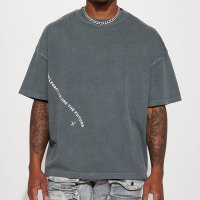
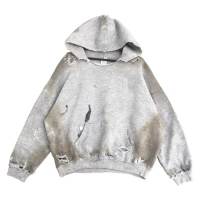
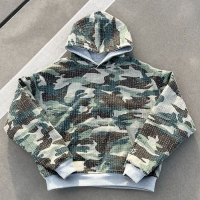
When the quote involves heavyweight tees, hoodies, or decorated streetwear, cost structure should also be compared by garment type. A T-shirt may look simple, yet fabric weight, cut-and-sew construction, neckline recovery, print method, and finishing can all move the real cost. Groovecolor's article on T-shirt production cost structure helps show why a unit price is not meaningful until the garment standard is defined.
When can a lower quote still be a rational production decision?
A lower quote can be rational when the saving comes from a cleaner production scope, stronger process efficiency, or a better-matched factory system. Lower price is not automatically a warning sign; unclear price is the warning sign.
The bid may be safe if the garment uses stable fabric, limited decoration, a proven pattern, simple finishing, and a production line already experienced with that category. It may also be safe when the supplier can show transparent cost drivers: fabric usage, cutting efficiency, labor minutes, decoration method, inspection scope, packaging, and shipment assumptions.
The important distinction is whether the lower quote protects the same approved specification. If two factories are quoting different fabric density, different print curing, different tolerance, or different inspection coverage, they are not quoting the same garment. Procurement should normalize the scope before comparing price.
How should fashion brands compare clothing manufacturers by true production risk?
Brands should compare manufacturers through a risk-adjusted quote scorecard, not a price-only ranking. The scorecard should connect every major cost line to a production proof point, so the team can see whether a saving is structural, temporary, or created by removing safeguards.
Quote Scorecard
For brands building repeatable programs, supplier capacity should be judged by control rhythm as much as monthly output. A page such as Groovecolor's bulk production capacity overview is relevant when sourcing teams need to understand how a manufacturer frames scale, production categories, and delivery support. Capacity is useful only when it is connected to quality records and product-specific controls.
Where does Groovecolor fit when the quote risk is sample-to-bulk execution?
Groovecolor fits this discussion as a production-system reference when the brand is comparing how suppliers control custom streetwear from approved sample to bulk delivery. The relevant point is not that every project needs the same factory type; it is that complex garments need a quote built around fabric, fit, decoration, finishing, QC, and communication.
Based in Humen, Dongguan, China, GROOVECOLOR works as a premium OEM men's streetwear manufacturer for established brands that need repeatable custom production. Its documented company context emphasizes oversized fits, heavyweight fabrics, complex decoration execution, and controlled sample-to-bulk execution. For a procurement team, that makes Groovecolor's quality control process a useful reference point when comparing whether a quote includes fabric check, sample review, in-process inspection, craft inspection, final inspection, packing review, and pre-shipment checks.
The practical takeaway is broader than one manufacturer. A quote should reveal the production system behind the price. When a supplier can explain what is controlled, when it is checked, who signs off, and how defects are corrected, the brand can judge cost with more confidence. When the quote only presents a low number, the missing information becomes the risk.
What should procurement teams ask before accepting a low apparel manufacturing quote?
Why can two clothing manufacturers quote very different prices for the same design?
They may not be quoting the same production scope. One quote may include verified fabric, pattern correction, pre-production approval, in-process inspection, craft testing, and packing review, while another may only cover sewing and basic finishing. Procurement should align the scope before comparing price.
What is the strongest warning sign in a low clothing manufacturing quote?
The strongest warning sign is a low price without written control points. If the supplier cannot define materials, tolerances, approval stages, inspection criteria, correction responsibility, and delivery assumptions, the quote is incomplete even if the sample looks acceptable.
Should brands always reject the lowest apparel production quote?
No, brands should reject unclear risk, not automatically reject a lower price. A lower quote can be valid when the garment scope is simpler, the supplier has relevant production experience, and the same quality controls are clearly included.
How can a brand make clothing quotes easier to compare?
The brand should issue the same locked specification package to every supplier. The package should include fabric details, measurement tolerances, trim requirements, decoration method, finishing standard, inspection criteria, packaging, target delivery window, and correction responsibility.
Which supplier evidence matters most before bulk approval?
The most important evidence is proof that the approved sample can be repeated in bulk. Ask for fabric lot confirmation, size tolerance records, craft test results, pre-production sample approval, in-process inspection plan, final inspection criteria, and packing review.
About the Author