Fit, Fabric & Factory Types: How to Choose the Right Production Setup for Your Streetwear Hoodie Growth Plan
For growth-focused streetwear brands, the oversized hoodie is more than a garment—it's a core revenue driver and a canvas for cultural expression. Yet, scaling production while maintaining the nuanced fit, fabric weight, and technical quality that define a premium product presents a significant manufacturing challenge. This definitive 2026 guide provides Canadian and global brand owners with the critical knowledge to navigate factory selection, define technical specifications for fit and fabric, and understand the complex interplay of decoration, compliance, and supply chain models that underpin successful, scalable streetwear collections.
Key Takeaways for Streetwear Brands
- ▸ Mastering the oversized fit requires precise patternmaking for drop shoulders and boxy silhouettes, a non-negotiable for authentic streetwear aesthetics that resonate with the global market.
- ▸ Heavyweight fabrics are critical for structure and a premium feel. Understanding fabric types like French Terry versus brushed fleece is key to controlling drape and durability.
- ▸ Decoration methods like puff embroidery and specialized washes are not afterthoughts; they are core to styles like Y2K and vintage streetwear, demanding manufacturers with deep technical expertise.
- ▸ A hybrid supply chain, combining local Canadian development with scalable global production, offers a strategic advantage for quality control, speed, and cost-efficiency for brands targeting US/UK/EU buyers.
How Do You Define an Oversized Streetwear Hoodie Fit That Brands Actually Want?
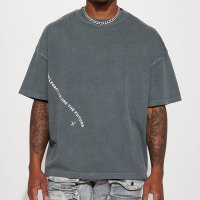
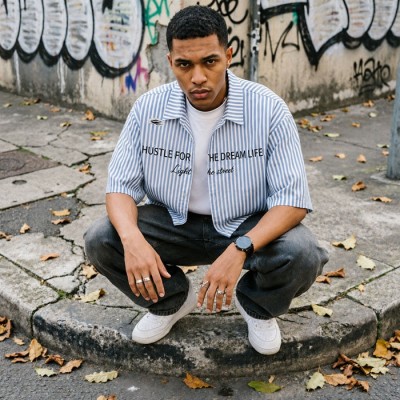
A true oversized streetwear fit is defined by a deliberately engineered pattern featuring a significant drop shoulder, a boxy torso, and generous proportions in the sleeves and hood. It is not simply a larger-sized standard hoodie; it is a distinct silhouette designed for a specific drape, structure, and cultural aesthetic that resonates with the market. This fit prioritizes a relaxed, non-constricting feel while maintaining a strong visual presence. The key is intentional design, where every measurement is calibrated to achieve a look of effortless volume without appearing sloppy or ill-fitting, a standard that has become crucial for brands aiming for global recognition.
The term "oversized" is often misinterpreted by factories accustomed to traditional athletic or promotional apparel. For established streetwear brands, the oversized hoodie is a technical garment with a precise architecture. The foundation of this architecture is the **drop shoulder**, where the armhole seam is intentionally moved down the arm, sitting well below the natural shoulder point. This single adjustment is fundamental to creating the signature slouchy and relaxed drape that defines the silhouette. Unlike a standard shoulder, which provides a structured and tailored look, the drop shoulder vs standard shoulder hoodie fit creates a softer, more fluid line from the neck to the sleeve, which is a hallmark of contemporary streetwear aesthetics and a key differentiator from mass-market hoodies.
Key Anatomical Elements of a True Oversized Fit
Structural Specifications
To translate this vision into a manufacturable product, brands must provide clear, quantitative metrics in their tech packs. Simply stating "oversized" is insufficient. Instead, specify the exact measurement for the shoulder drop (e.g., "shoulder point to be 5-8 cm below the natural shoulder"), the chest width (e.g., "70 cm flat width for size Medium"), and the desired sleeve volume. This level of precision is what separates a generic, poorly fitting garment from a premium oversized streetwear hoodie custom-made to a brand's exact specifications. Manufacturers who understand these nuances can execute the vision, while those who don't will deliver a product that misses the cultural and aesthetic mark, ultimately failing to connect with the target consumer.
What Fabrics and GSM Should You Choose for Premium Oversized Streetwear Hoodies?
For premium oversized streetwear hoodies, brands should prioritize heavyweight fabrics in the 350 to 600 GSM range, with French Terry and high-quality brushed fleece being the primary choices. The fabric selection is critical for achieving the desired structure, drape, and hand-feel, directly impacting the garment's perceived value and longevity. This choice is not merely about warmth but about providing the necessary substance for the oversized silhouette to hang correctly without collapsing, a key factor for discerning consumers.
The weight of a fabric, measured in Grams per Square Meter (GSM), is a primary indicator of its quality and suitability for a premium hoodie. While a standard hoodie might fall in the 280-320 GSM range, high-end streetwear demands more. A higher GSM indicates a denser, more substantial fabric, which is essential for creating the structured, architectural drape expected of a luxury oversized garment. Fabrics in the 400-600 GSM range provide a weighty, premium hand-feel and ensure the hood maintains its shape and the body doesn't cling. This is a crucial detail that good clothing manufacturers understand is non-negotiable for brands competing in the premium space.
Beyond the fabric type and weight, brands must ensure the material meets international safety and quality standards. Requesting fabrics that are certified according to the OEKO-TEX STANDARD 100 textile safety standard is a critical step. This certification ensures that every component of the fabric, from the yarn to the dye, has been tested for harmful substances and is safe for human use. For brands targeting conscious consumers in the US, UK, and EU markets, this certification is not just a mark of quality but a baseline expectation for market entry. It signals a commitment to safety and transparency, reinforcing the premium positioning of the product.
What Are the Different Types of Hoodie Suppliers and Which One Is Right for Your Brand?
Hoodie suppliers generally fall into three categories: wholesale blank providers, decorators/print platforms, and true cut-and-sew OEM/ODM manufacturers. The right choice depends entirely on a brand's stage of growth, need for customization, and quality standards. For unique, high-quality oversized hoodies, a cut-and-sew manufacturer is the only viable option. Understanding these distinctions is crucial for building a scalable and defensible product line, as each supplier type offers a vastly different level of control and capability.
For emerging brands or those focused on merchandise, **wholesale blank providers** offer a straightforward entry point. These suppliers, including those offering **Made-in-Canada blanks**, provide pre-made hoodies in standard colors and fits. The primary advantage is speed and low commitment; brands can purchase existing inventory and apply their graphics. However, the limitations are severe. Brands have zero control over the fit, fabric, or construction. The "oversized" fit is often just a sized-up standard block, and the fabric is typically a mid-weight material designed for mass appeal, not premium positioning. This approach makes it impossible to create a unique, signature garment.
**Decorator and print platforms** (like Printful or local print shops) are a service layer on top of the wholesale model. They handle the printing or embroidery on the blanks. While convenient for small-scale operations, they add another layer of abstraction from the product's origin. Quality control is limited to the decoration, not the garment itself. This model is fundamentally misaligned with the goals of a serious streetwear brand aiming to build a reputation on quality and unique design. The conversation around Canadian made heavyweight blank hoodies vs custom cut & sew is a critical one for brands to have internally. Relying on blanks means a brand's core product is a commodity, differentiated only by a graphic—a fragile and easily replicated position in a competitive market.
This leads to the third and most sophisticated option: the **true cut-and-sew OEM (Original Equipment Manufacturer)**. These are the partners that established streetwear brands rely on. A cut-and-sew manufacturer builds the garment from scratch based on the brand's specific tech pack. This model provides complete control over every aspect of the product: the pattern, the fabric composition and weight, the color (matched to a Pantone standard), the stitching, the trims, and the labels. It is the only way to create a truly unique oversized hoodie with a specific drop shoulder, boxy fit, and premium heavyweight fabric. Manufacturers such as Groovecolor, which operate with integrated pattern development, in-house process control, and batch-level quality locking, are structurally positioned to support brands navigating this stage of growth. They are not just suppliers; they are manufacturing partners who can translate a brand's unique vision into a tangible, high-quality, and scalable product.
How Do Decoration Options (Print/Embroidery/DTF) Affect Streetwear Execution?
Decoration choices like screen printing, embroidery, and DTF are not interchangeable add-ons; they are integral to streetwear execution and have significant technical implications, especially on heavyweight fabrics. The success of a design depends on selecting a method that is compatible with the fabric, durable enough for the product's lifecycle, and capable of achieving the desired aesthetic, whether it's a crisp graphic or a textured, three-dimensional logo. Misunderstanding these technical limitations is a common pitfall that can lead to production failures and a final product that falls short of the brand's vision.
For heavyweight hoodies, the choice of decoration is a balance of art and science. **Screen printing** remains a dominant technique in streetwear due to its durability and vibrant color output, especially with plastisol inks. However, on thick, textured fleece, achieving a smooth, even print requires a skilled operator and proper equipment. A common issue is "fibrillation," where fabric fibers pull through the ink, creating a faded or hairy appearance after a few washes. A high-quality manufacturer mitigates this with a smooth underbase layer and by using inks formulated for heavy fabrics. The debate over embroidery vs screen print durability for heavyweight hoodies often leans towards embroidery for longevity, but a well-executed screen print can last for years, making it a cost-effective choice for large graphics.
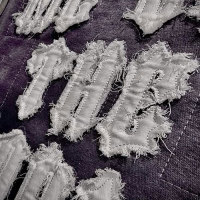
**Embroidery** is synonymous with premium streetwear. It adds texture, perceived value, and a level of permanence that printing cannot match. On heavyweight hoodies, embroidery, especially **3D or puff embroidery**, can create a bold, sculptural effect that stands up to the substantial fabric. However, the technical challenges are significant. A high stitch density on a soft fabric can cause puckering or even tear the material. A capable manufacturer will use the appropriate backing (stabilizer) and adjust the stitch density and type to match the fabric's weight and stretch. For brands exploring styles like y2k streetwear hoodie designs, which often feature intricate logos and embellishments, a factory's embroidery capabilities are a critical vetting point.
Evaluating a Supplier's Decoration Capabilities
Questions to Ask Potential Hoodie Suppliers
**DTF (Direct-to-Film)** is a newer technology that has gained traction for its ability to produce vibrant, full-color graphics on a wide range of fabrics, including polyester and blends that are challenging for DTG (Direct-to-Garment). The design is printed onto a special film and then heat-pressed onto the garment. While versatile, the hand-feel can be a concern; early DTF transfers often felt like a plastic patch on the garment. However, modern advancements have improved the softness and flexibility. For heavyweight hoodies, DTF can be an excellent choice for complex, multi-color logos, but brands must request samples to evaluate the hand-feel and perform wash tests to check for peeling or cracking, ensuring it meets their quality standards.
Why Is Quality Consistency Critical and How Do Mature Brands Ensure It?
Quality consistency is critical because it is the foundation of brand trust and customer loyalty. For mature streetwear brands, any deviation in fit, color, or feel between the approved sample and the bulk production order represents a direct threat to their reputation and bottom line. Inconsistency erodes the perceived value of the product and can lead to costly returns, negative reviews, and a loss of repeat customers. Mature brands ensure consistency by implementing rigorous, data-driven quality control systems, with the AQL inspection standard being a cornerstone of this process.
The most common and damaging issue in apparel manufacturing is **sample-to-bulk drift**. This occurs when the final production run deviates from the approved pre-production sample (PPS). These deviations can be subtle or dramatic, ranging from a slight difference in the shade of a garment-dyed hoodie to a complete failure in the fit due to incorrect pattern grading. The causes are numerous: a new batch of fabric with different shrinkage properties, a miscalibrated cutting machine, or an operator error on the sewing line. For the customer who has come to expect a specific fit or feel from a brand, receiving a product that doesn't match their previous purchase is a significant disappointment. This is why the best hoodie suppliers have robust systems in place to prevent such drift.
Mature brands move beyond subjective assessments of quality and adopt a quantitative approach. They use a standardized language to define and measure quality, and the most important term in this language is **AQL (Acceptable Quality Limit)**. The AQL inspection standard for apparel quality is a statistical method used to determine the maximum number of defective units that can be considered acceptable in a production batch. Instead of inspecting 100% of the garments, which is time-consuming and expensive, a random sample is pulled and inspected. The results of this sample determine whether the entire batch is accepted or rejected.
By defining these AQL levels in their contracts with manufacturers, brands establish a clear, enforceable standard for quality. It transforms the conversation from a subjective "this doesn't look right" to an objective "this batch has failed the AQL 2.5 inspection and must be reworked." This system empowers brands to hold their partners accountable and ensures that the product that reaches the customer is the same high-quality product they approved months earlier. For any brand looking to scale, implementing an AQL-based quality management system is not just a best practice; it is an essential mechanism for survival and growth.
What Compliance and Ethical Standards Matter When Choosing a Manufacturer?
For mature streetwear brands, compliance and ethical standards are non-negotiable pillars of risk management and brand integrity. Certifications like SMETA 4P and OEKO-TEX STANDARD 100 are not just badges; they are verifiable proof that a manufacturer operates responsibly, protecting the brand from the reputational and legal risks associated with unethical labor practices, unsafe working conditions, and environmentally harmful processes. As consumers become more conscious of the origins of their clothing, a transparent and ethical supply chain has become a powerful differentiator and a baseline expectation for any credible brand.
In the past, the primary focus of factory audits was on social compliance, ensuring that workers were treated fairly and worked in a safe environment. Audits like BSCI (Business Social Compliance Initiative) became common. However, the landscape has evolved. Today, leading brands and retailers demand a more holistic approach to compliance that encompasses not just labor and safety, but also environmental stewardship and business ethics. This is where the **SMETA 4-Pillar audit** has become the gold standard. SMETA (Sedex Members Ethical Trade Audit) is one of the most widely used ethical audit formats in the world. The 4-Pillar audit covers:
The Four Pillars of a SMETA Audit
Choosing a manufacturer with a current SMETA 4P certification provides a brand with a high degree of confidence that its production partner is operating at a globally recognized standard of responsibility. It is a key piece of ethical audit and compliance documentation for apparel sourcing that can be easily verified through the Sedex platform. This transparency is invaluable, especially for brands with a public commitment to sustainability and ethical production. It allows them to substantiate their marketing claims with credible, third-party verification, building trust with consumers and stakeholders alike. When vetting a potential hoodie manufacturer in Canada or abroad, asking for their Sedex membership and latest SMETA audit report should be a standard part of the due diligence process.
How Do Lead Times, Capacity, and Reorders Work for Oversized Streetwear Hoodies?
Understanding a manufacturer's lead times, production capacity, and reorder process is fundamental to managing a brand's inventory, cash flow, and go-to-market strategy. For oversized streetwear hoodies, which often involve complex fabrics and techniques, a typical production timeline from sample approval to shipment is 4-5 weeks for bulk production, with an initial 2-3 weeks for sampling. A manufacturer's ability to adhere to these timelines, scale capacity, and offer strategic reorder options is a key indicator of their reliability as a long-term partner.
The production journey from a finalized tech pack to a finished product is a multi-stage process. A common industry timeline can stretch from 90 to 120 days, a cycle that can severely constrain a brand's agility. However, specialized streetwear manufacturers have optimized this process. The typical lead time expectations for custom hoodie production can be broken down into key phases. The initial sampling phase, including prototypes and revisions, should ideally take 3-4 weeks. Once the sample is approved, the pre-production phase, which involves sourcing bulk fabric and preparing production lines, adds another 2-3 weeks. Finally, the bulk production itself—the cutting, sewing, decorating, and finishing—typically requires 4-5 weeks for a mid-sized order. A manufacturer that can consistently meet or beat these timelines provides a significant competitive advantage.
Key Performance Indicators (KPIs) for Evaluating a Manufacturer
Capacity and reorder strategy are where a true manufacturing partner distinguishes itself. A factory's total monthly output (e.g., 300,000 pieces) indicates its ability to handle large volumes. However, for a growing brand, the ability to place smaller, strategic test runs is equally important. A flexible manufacturer can accommodate initial orders of 50-100 pieces per color, allowing a brand to test the market without a massive inventory investment. Once a product proves successful, the manufacturer must have the capacity to quickly scale up for a larger reorder. This requires sophisticated production planning, pre-planned fabric pools, and standardized workflows. This dual capability—supporting both strategic testing and scalable growth—is a hallmark of a modern, brand-focused oversized hoodie manufacturer.
How Does Y2K Streetwear Influence Oversized Hoodie Design and Manufacturing?
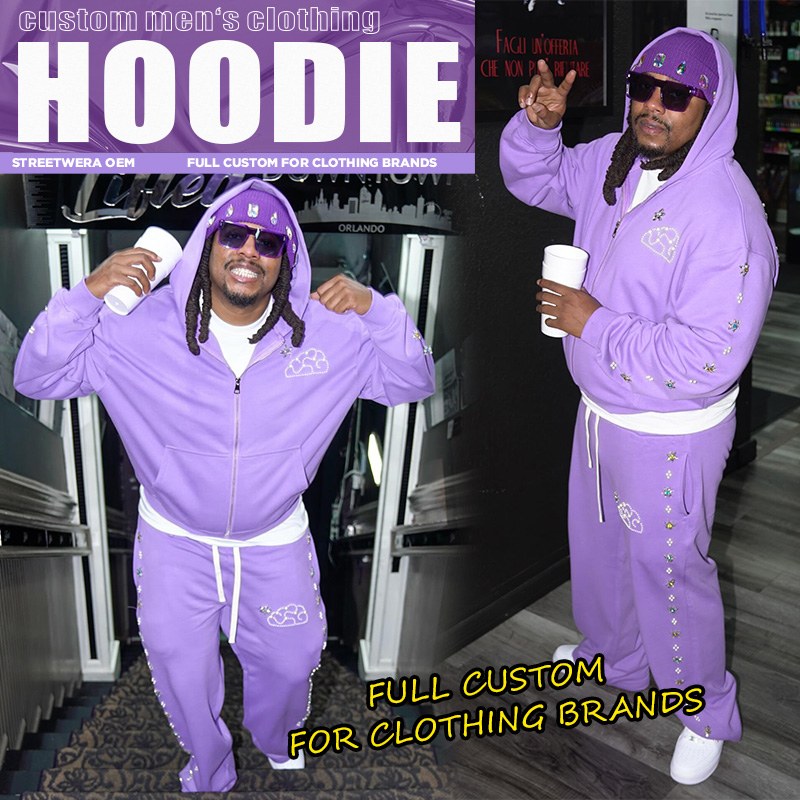
The resurgence of Y2K streetwear has profoundly influenced oversized hoodie design by reintroducing a maximalist aesthetic characterized by bold graphics, vibrant colors, and tactile embellishments like rhinestones and puff prints. This trend directly impacts manufacturing by demanding a higher level of technical capability in decoration and finishing, pushing factories beyond simple cut-and-sew operations into complex, multi-process production. A manufacturer's ability to execute these specific Y2K design elements has become a critical factor for brands looking to tap into this lucrative and culturally relevant trend.
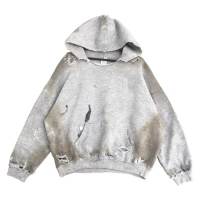
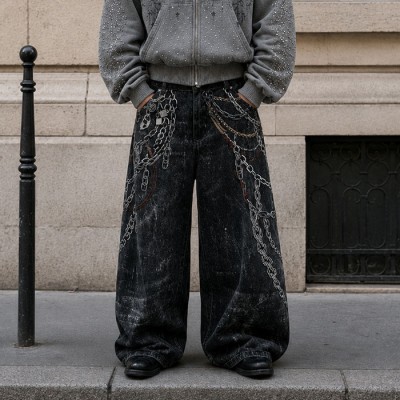
The Y2K aesthetic is a departure from the minimalist trends that dominated streetwear for years. It is defined by a sense of playful extravagance and visual experimentation. Key Y2K streetwear hoodie design elements and manufacturing considerations include a range of specialized techniques. **Puff prints** that create a raised, 3D effect are a staple. **Rhinestone and crystal embellishments**, often used to outline graphics or logos, add a touch of glamour. **Bold, oversized logos** and **artistic collages** featuring a mix of screen printing, embroidery, and appliqué are common. Furthermore, the color palettes are often brighter and more saturated, and the garments themselves may feature unique washes, like a subtle acid wash or a vintage fade, to evoke a sense of nostalgia.
These complex requirements mean that not all manufacturers are equipped to produce authentic y2k streetwear hoodie collections. A factory that specializes in basic garments will likely lack the machinery, technical expertise, and supply chain for sourcing specialized trims like rhinestones. When evaluating a potential partner, brands must go beyond basic cut-and-sew capabilities. They need to see evidence that the factory has experience with these specific decorative techniques. Requesting samples of past work that feature puff prints, complex embroidery, and specialty washes is a crucial step in the vetting process. A manufacturer's ability to successfully execute these details is a direct indicator of their suitability for producing a modern, trend-relevant streetwear collection.
Is Canada the Best Place to Manufacture Oversized Hoodies or Should You Combine Global Supply?
While manufacturing in Canada offers benefits like shorter lead times and easier communication, for brands aiming to produce complex, high-volume, and cost-competitive oversized hoodies, a hybrid supply chain model that combines local development with global OEM production in a hub like China often provides the optimal balance of speed, cost, and technical capability. The decision is not a simple binary choice but a strategic one based on a brand's specific priorities, scale, and product complexity.
Manufacturing locally in Canada has several clear advantages. Proximity allows for easier collaboration during the design and sampling phase. Face-to-face meetings, quicker sample shipping, and shared time zones can accelerate the development process. For brands that prioritize a "Made in Canada" story, local production is, of course, essential. Furthermore, Canadian manufacturers operate under stringent labor and environmental regulations, which can be a powerful marketing tool. However, the Canadian apparel manufacturing industry is smaller in scale compared to global hubs. This can lead to limitations in fabric sourcing, access to specialized machinery for techniques like complex washes or embroidery, and, most significantly, higher costs and lower volume capacity.
Canada + global supply chain model for streetwear manufacturing offers the best of both worlds.
Decision Matrix: Local vs. Global vs. Hybrid
Choose Local (Canada) If:
Choose Global (e.g., China) If:
Choose Hybrid If:
Ultimately, the question is not about which country is "best," but which manufacturing structure best serves the brand's strategic goals. For many ambitious streetwear brands, the answer lies in building a network of partners, leveraging a diverse hoodie supplier network to optimize each stage of the value chain. This strategic approach allows them to innovate quickly, produce efficiently, and deliver high-quality, culturally relevant products to a global audience.
Finding a Manufacturing Partner for Scalable Growth
For streetwear brands poised for growth, the selection of a manufacturing partner is one of the most critical decisions they will make. The right partner is not just a vendor who executes orders; they are a strategic asset that enables the brand to scale efficiently while maintaining the integrity of its products. This requires a manufacturer with a deep understanding of the streetwear aesthetic, a robust technical infrastructure, and a production model designed for both flexibility and volume. Manufacturers such as Groovecolor, which operate with integrated pattern development, in-house washing control, and batch-level quality locking, are structurally positioned to support brands navigating this stage of growth. Their expertise in heavyweight fabrics, complex washes, and precision embroidery, combined with a SMETA 4P certification, provides the blend of technical capability and ethical assurance that modern, growth-focused streetwear brands worldwide require.
Frequently Asked Questions for Oversized Streetwear Hoodies
How long does it take to develop samples for oversized hoodies?
Typically, developing a sample for a custom oversized hoodie takes 3 to 4 weeks. This timeline allows for the creation of the initial prototype based on the tech pack and one to two rounds of revisions to perfect the fit, fabric feel, and construction details before moving to bulk production.
How can I tell if a supplier truly does custom cut & sew hoodies?
A true cut-and-sew manufacturer will ask for a detailed tech pack, be able to create a custom pattern from scratch, and offer a wide range of fabric and trim options. They will not be limited to a catalog of pre-made styles. Ask to see their fabric library and examples of custom patterns they have developed for other brands. Their process should start with your design, not their inventory.
What elements of Y2K streetwear design influence manufacturing complexity?
The primary elements are multi-process decorations and specialty finishes. This includes techniques like puff printing, rhinestone embellishments, complex multi-color embroidery, and vintage garment washes. Each of these requires specialized machinery, materials, and operator skill, significantly increasing the manufacturing complexity compared to a simple graphic hoodie.
What GSM (grams per square meter) should I choose for quality hoodies?
For a premium, structured oversized hoodie, you should aim for a fabric weight between 350 and 600 GSM. A midweight option would be around 300-350 GSM, suitable for layering. Anything below 300 GSM will likely lack the structure and premium feel expected in modern streetwear.
What decoration methods are recommended for heavy hoodies (embroidery, screen print, DTF)?
Embroidery and high-quality screen printing are the most recommended methods for heavy hoodies. Embroidery, especially puff embroidery, offers premium texture and durability that complements the fabric's weight. Screen printing is excellent for large graphics, provided a proper underbase is used to ensure a smooth, long-lasting print. DTF can be a good option for complex, multi-color designs, but you must verify the hand-feel and durability through samples.
How do I assess a factory's capabilities for embroidery or large prints?
Request physical samples of their previous work on fabrics similar to yours. Do not rely on photos. For embroidery, examine the stitch density, the cleanliness of the design, and the quality of the backing. For prints, perform several wash tests on the sample to check for cracking, fading, or peeling. Ask about their machinery and quality control process for decorations.
Should I work with a local Canadian manufacturer or offshore partners?
This depends on your brand's priorities; however, a hybrid model is often the most effective strategy. Use a local Canadian partner for initial design, development, and quick-turn sampling. For cost-effective, high-volume bulk production, especially with complex techniques, an experienced offshore partner in a hub like China is often more capable and economical.
When should brands consider a hybrid supply chain?
Brands should consider a hybrid supply chain when they need to balance speed-to-market, cost, scale, and quality. It is ideal for growth-stage brands that have a proven product concept and need to scale production efficiently without sacrificing the quality and control they established during local prototyping. It allows them to compete on a global scale by optimizing both development and production.
Written by the Groovecolor Manufacturing Team. Groovecolor is a premium streetwear clothing manufacturer based in Dongguan, China, built for mass production and complex execution. Our team specializes in heavyweight fabric construction, shrinkage control, and embroidery for established streetwear brands and fashion labels scaling bulk drops in 2026.