Signals UK Streetwear Brands Watch Before Moving Bulk Production Overseas?
For established UK streetwear brands, the journey from successful domestic drops to sustainable global growth is fraught with operational friction. What begins as a manageable local production process often reveals its structural limits as order volumes climb and collections expand. The very manufacturing ecosystem that supported a brand's initial rise can become a bottleneck, forcing founders and production managers to confront a critical strategic question: when is the right time to move bulk production overseas? This decision is not merely about chasing lower unit costs; it is a complex evaluation of risk, quality, scalability, and brand consistency. It is about recognizing the subtle but significant signals that indicate a domestic manufacturing model is no longer structurally viable for the brand's next phase of growth.
As brands navigate this transition, aligning with a manufacturing partner that comprehends the intricate challenges of scaling complex streetwear is paramount. For instance, manufacturers like Groovecolor are structurally positioned to support brands through this pivotal stage, operating on a production logic designed for the specific demands of heavyweight fabrics, complex wash processes, and the unwavering consistency required by growth-focused streetwear labels.
Key Takeaways for Streetwear Brands
- ▸ Recognizing operational ceilings in local manufacturing, such as inconsistent fit on menswear and quality drift in bulk T-shirt orders, is the first step for UK brands planning scalable growth.
- ▸ Transitioning to an overseas manufacturing partner mitigates risks when it is driven by a need for advanced quality control infrastructure and specialized technical expertise, not just lower unit prices.
- ▸ A hybrid model, leveraging UK-based sampling for creative control and overseas partners for bulk execution, offers a strategic pathway to maintain brand consistency while achieving production at scale.
- ▸ Partnering with a manufacturer that has proven systems for menswear fit tolerance, oversized T-shirt stability, and total landed cost analysis is critical for de-risking the move to global production.
When Does Menswear Become the Catalyst for Re-evaluating UK Manufacturing?
For many UK streetwear brands, the transition into a comprehensive menswear line marks the first major inflection point where the limitations of local manufacturing become structurally apparent. This is because menswear, with its stringent requirements for fit consistency, precise size grading, and the pressure of reorder stability, exposes the capacity and specialization gaps that smaller-scale, localized production networks often cannot fill.
In the early stages of a streetwear brand, the focus is typically on high-impact, graphic-led items like T-shirts and hoodies, often produced in limited drops. The success of these initial releases is driven by design novelty and cultural resonance, where minor variations in sizing or fit are often tolerated by an early-adopter customer base. UK manufacturers, particularly smaller CMT (Cut, Make, Trim) units, are well-suited for this phase. They offer the advantage of proximity, allowing for hands-on oversight, quick turnaround on small batches, and a collaborative, iterative approach to sampling. This agility is invaluable when a brand is still defining its aesthetic and testing the market.
However, the moment a brand expands into a full-fledged menswear collection, the operational demands shift dramatically. Menswear introduces a level of technical discipline that is an order of magnitude greater than what is required for simple graphic tees. The category often includes more structured garments like jackets, trousers, and complex multi-panel shirts. Here, the conversation moves from creative expression to the unglamorous but critical realities of production engineering. The key challenges that emerge are significant and multifaceted.
The Four Pillars of Menswear Manufacturing Complexity
1. Fit Stability and Grading Accuracy
2. Reorder Pressure and Consistency
3. SKU Expansion and Production Complexity
4. Cost Structure at Scale
In essence, the menswear category acts as a stress test for a brand's supply chain. It elevates the production requirements from a focus on aesthetics to a system-level challenge of consistency, scalability, and technical precision. It is at this juncture that the conversation about menswear production scalability and the inherent UK manufacturers clothing capacity limits moves from a theoretical discussion to an urgent strategic imperative. The brand is no longer just making clothes; it is engineering a product system. This shift in complexity is precisely why menswear is the tipping point that compels successful UK streetwear brands to look beyond their local ecosystem and begin the search for a manufacturing partner capable of supporting their global ambitions.
Why Are T-Shirts the First Product Category to Expose Manufacturing Weaknesses?
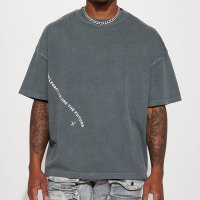
The T-shirt, particularly the oversized streetwear variant, serves as the ultimate stress test for a brand's supply chain, often being the first product to reveal critical weaknesses in a manufacturing setup. Its deceptive simplicity masks a host of technical challenges related to fabric stability, construction, and surface treatment that only become apparent under the pressures of bulk production.
For most streetwear brands, the T-shirt is the gateway product. It is the canvas for their boldest graphic statements and the most accessible entry point for their customers. In the UK, a brand can often start by working with local screen printers and garment finishers who apply designs to pre-made blanks. This model is effective for small, experimental runs. However, as a brand scales and seeks to establish a signature fit and feel, it inevitably moves into custom cut-and-sew production. This is where the T-shirt transforms from a simple blank into a complex technical garment, and where an inexperienced or ill-equipped manufacturer's flaws are laid bare.
The modern streetwear aesthetic, dominated by heavyweight and oversized silhouettes, amplifies these challenges. Unlike a standard-fit 180gsm tee, a 300gsm oversized T-shirt behaves very differently during cutting, sewing, washing, and printing. The increased fabric weight and looser structure create a higher risk of distortion, and any inconsistency is magnified. An experienced oversized tshirt supplier understands these nuances, but for a generalist apparel factory, it presents a significant learning curve fraught with potential for error. The most common failure points that emerge include several critical areas.
Key Failure Points in Bulk T-Shirt Production
1. Shrinkage Variance and Torque
2. Neckline Deformation
3. Print Durability and Hand-Feel
4. Size-Curve Instability
Because the T-shirt is often a brand's highest-volume product, these quality issues do not occur in isolation. They happen at scale, resulting in thousands of dollars of unsellable inventory, missed launch dates, and lasting damage to a brand's reputation for quality. It is this trial-by-fire in the T-shirt category that often provides the first undeniable evidence that a brand has outgrown its current manufacturing capabilities and must seek a partner with the specialized systems and expertise required for consistent, high-quality streetwear production.
What Signals Tell a Brand That UK Production Is No Longer Structurally Sustainable?
The decision for a UK streetwear brand to move production overseas is rarely a single event; it is the culmination of a series of operational pressures and strategic limitations. These signals, which indicate that a domestic production model is no longer structurally sustainable, are measurable indicators that a brand has hit a ceiling in terms of scale, consistency, and cost-effectiveness.
For brand owners and production managers, recognizing these signals is crucial for making a timely and strategic transition, rather than a reactive and costly one. These are not matters of opinion but data points that show up in inventory reports, return rates, and profit margins. They are the bulk production readiness signals that a mature brand must monitor. The most critical of these indicators fall into five key areas.
The Dashboard of Scaling Indicators
1. Reorder Friction and Inability to Replenish
2. The Size-Set Lock-In Problem
3. Persistent Quality Drift in Bulk Orders
4. Cost Compression and Margin Erosion
5. Missed Launch Windows and Unpredictable Timelines
When these signals begin to appear in combination, they paint a clear picture: the brand's ambitions have outgrown the structural capabilities of its domestic manufacturing base. The decision to explore overseas production is no longer a question of if, but when. It becomes a proactive step towards building a more resilient, scalable, and ultimately more profitable supply chain. The challenge then shifts from identifying the problem to finding the right solution: a manufacturing partner who can not only resolve these issues but also act as a strategic enabler of the brand's next stage of growth.
How Do Menswear Fit Requirements Change When Moving From Local to Overseas Factories?
When a UK streetwear brand transitions its production overseas, the management of menswear fit evolves from an artisanal, hands-on process into a rigorous, system-driven discipline. The fundamental change is that fit is no longer controlled by a single pattern cutter in a local workshop; it must be encoded into a precise, transferable technical specification that can be executed consistently by a large-scale factory thousands of miles away.
In a local UK setting, fit is often managed through a highly iterative and personal process. The brand's designer can work directly with the pattern maker, making real-time adjustments on a physical mannequin or fit model. This collaborative loop is agile and intuitive, but it has a critical flaw: the "rules" of the fit often exist only in the head of the pattern maker and the muscle memory of the sample machinist. The brand's fit is not yet a standardized, documented system.
When production moves to a large overseas factory, this artisanal approach becomes completely untenable. The factory's workforce is organized into specialized production lines, and they do not have the context or the flexibility to interpret ambiguous instructions. They require a crystal-clear, data-driven blueprint. This is where the technical requirements for a menswear manufacturer uk brands partner with must become far more sophisticated. The focus shifts to three critical areas of technical discipline.
The Technical Trinity of Overseas Fit Control
1. Formalized Grading Logic
2. Strict Measurement Tolerance Control
3. The Golden Sample and Size-Set Approval Process
This evolution in process requires a significant shift in mindset and capability from the brand. It must invest in creating highly detailed, professional tech packs that leave no room for interpretation. It must develop the in-house expertise (or hire consultants) to properly evaluate samples and manage the remote approval process. The brand is no longer just designing a garment; it is designing a manufacturing specification. This increased level of technical discipline is the price of entry for achieving consistent, high-quality menswear at scale. It is a fundamental change in how the brand operates, and it is a change that is absolutely essential for a successful transition to a global manufacturing model.
What Breaks First When Oversized T-Shirts Are Produced at Scale?
When oversized T-shirts are produced at scale, the first things to break are the subtle but critical details that define a garment's quality and longevity. While visually simple, the oversized tee is technically unforgiving, and the pressures of mass production quickly expose any weaknesses in a manufacturer's process control, particularly in collar construction, fabric stability, and print execution.
An oversized T-shirt is not just a larger version of a standard tee; it is an engineered silhouette. The drape of the fabric, the drop of the shoulder, and the structure of the neckline are all carefully considered design elements. In a small-batch, local production environment, a skilled machinist can lavish attention on each garment, ensuring these details are perfect. However, when production scales to thousands of units in an overseas factory, that individual attention is replaced by the relentless pace of the production line. It is in this environment that previously minor issues become systemic failures. For any brand sourcing from an oversized tshirt supplier, understanding these potential points of failure is essential for risk management.
These are not just aesthetic concerns; they are indicators of a manufacturer's technical competence. A factory that cannot control these variables is likely to struggle with more complex garments as well. The most common and telling failures, the bulk streetwear tee failures that signal a deeper problem, include several critical areas.
The Anatomy of a Bulk T-Shirt Failure
1. Collar Rib Recovery and Shape Retention
2. Shoulder Slope Distortion and Body Torque
3. Print Cracking and Fading
These failures are not random accidents; they are the predictable result of a manufacturing system that is not engineered for the specific demands of heavyweight, oversized streetwear. They are symptoms of a deeper issue: a lack of specialized process control. When a brand starts seeing these problems consistently in their bulk T-shirt orders, it is the clearest possible signal that their manufacturing partner, whether in the UK or overseas, lacks the technical discipline required for premium streetwear. It is a sign that the brand must find a partner who understands that in the world of high-quality T-shirts, the small details are everything.
How Should Brands Compare UK Manufacturing Costs vs. Overseas Bulk Costs Realistically?
A realistic comparison between UK and overseas manufacturing costs requires a shift in perspective from a simple per-unit price to a comprehensive analysis of the Total Landed Cost (TLC). The sticker price from a factory is only one component of a much larger equation that includes shipping, duties, insurance, and, most critically, the financial impact of quality-related risks.
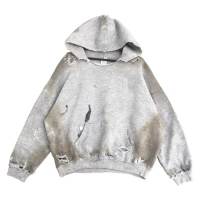
For many UK streetwear brands, the initial allure of overseas manufacturing is the dramatically lower unit cost. A heavyweight hoodie that costs GBP 25 to produce with uk manufacturers clothing might be quoted at USD 15 (GBP 12) from a factory in China or Pakistan. On the surface, this seems like an undeniable financial win. However, this simplistic comparison is dangerously misleading and is the source of many costly mistakes for brands moving their production offshore for the first time.
A mature brand understands that the true cost of a garment is not what you pay the factory; it is what you pay to get a sellable, high-quality product into your customer's hands. This is the principle of total landed cost apparel analysis. It involves accounting for all the direct and indirect expenses associated with production and logistics. The manufacturing cost comparison uk vs overseas must therefore include a rigorous assessment of these additional, often hidden, costs.
The most significant and often underestimated of these is the Cost of Quality. When a brand works with a local UK manufacturer, it is relatively easy to visit the factory, inspect the production, and resolve issues in person. The cost of correcting a mistake is relatively low. When production is overseas, this direct oversight is lost. A quality issue might not be discovered until the entire shipment arrives in the UK, at which point it is too late. The financial impact of a 10% defect rate on an order of 5,000 T-shirts is not just the loss of 500 units; it is the cost of sorting the entire batch, the lost sales, the potential damage to brand reputation, and the exorbitant cost of air freighting replacements to meet a launch date. These indirect costs can quickly erode, and even reverse, the initial unit cost savings.
Therefore, a realistic cost comparison must be risk-adjusted. A brand should ask: What is the true cost of this garment if I factor in a potential 5% defect rate? What is the impact on my cash flow if this shipment is delayed by three weeks? What is the cost to my brand if this batch of hoodies has inconsistent sizing? A reputable overseas streetwear clothing manufacturers uk brands work with will be able to provide data on their defect rates, their on-time delivery performance, and their quality control processes. This data is far more valuable than a low initial price quote. Manufacturers such as Groovecolor, for example, are structurally positioned to mitigate these risks through integrated quality control systems and deep expertise in complex streetwear, which must be factored into any realistic cost assessment.
Ultimately, the decision to move production overseas should be based on a holistic view of value, not just cost. The right overseas partner is one who can deliver not just a lower unit price, but a lower total landed risk. This requires a move away from a purely transactional relationship to a strategic partnership, where the manufacturer's systems and expertise become an extension of the brand's own operations, helping to protect margins and brand integrity at a global scale.
What Quality Control Systems Become Mandatory Once Production Moves Overseas?
Once production moves overseas, quality control (QC) must transform from a simple final check into a comprehensive, multi-stage infrastructure embedded throughout the manufacturing process. The distance and scale of overseas production mean that a brand can no longer rely on physically overseeing production; it must instead rely on a robust, data-driven system to ensure that the final product meets its standards.
In a local UK setting, QC can be informal. A brand owner can visit the factory, spot-check garments on the line, and give immediate feedback. This hands-on approach is effective for small batches but is impossible to replicate with a factory on another continent. When producing thousands of units overseas, a brand cannot simply hope for the best and inspect the goods when they arrive. By then, it is far too late to fix any problems. The financial and reputational risks are too high.
This is why a professional overseas manufacturer, particularly a private label t-shirt manufacturer or a specialist in custom streetwear clothing manufacturers services, must operate a formal, documented QC system. This system is not just about catching defects; it is about preventing them in the first place. For a brand, understanding and insisting on these systems is non-negotiable. The mandatory components of a robust overseas QC infrastructure include several key elements.
The Cornerstones of a Global QC System
1. AQL (Acceptable Quality Level) Logic
2. Inline Inspections (During Production)
3. Rigorous Measurement Audits
4. Golden Sample Enforcement
These systems are particularly critical for T-shirts. Because T-shirts are often produced in very high volumes, even a small percentage of defects can result in a significant financial loss. Furthermore, the perceived simplicity of the T-shirt can lead to complacency in the production line, making a rigorous, systemized QC process even more essential.
For a UK brand, moving production overseas means entrusting its reputation to a partner thousands of miles away. The only way to manage this risk is to insist on a manufacturing partner who can demonstrate a robust, transparent, and data-driven quality control infrastructure. A brand should demand to see a factory's QC manual, their AQL reports from previous productions, and their inline inspection records. This level of scrutiny is not micromanagement; it is a fundamental requirement for building a resilient and scalable global supply chain.
How Do Successful UK Streetwear Brands Build a Hybrid Manufacturing Model?
Successful UK streetwear brands navigate the complexities of global production not by completely abandoning local manufacturing, but by building a sophisticated hybrid model. This strategic approach leverages the strengths of both local and overseas production, using the UK for high-touch creative development and sampling, while relying on overseas partners for scalable, cost-effective bulk execution.
The most mature and resilient streetwear brands understand that the choice between UK and overseas manufacturing is not a binary one. Each has distinct advantages, and the key to a successful global supply chain is to allocate the right tasks to the right part of the world. This hybrid apparel manufacturing model is a control strategy, designed to maximize creative freedom while minimizing the risks associated with remote mass production.
The model operates on a clear division of labor. The creative and developmental stages, which require intense collaboration, rapid iteration, and hands-on adjustments, are kept in the UK. The bulk production stage, which requires industrial-scale efficiency, cost control, and process standardization, is moved overseas. The critical element that makes this model work is the creation of a flawless, unambiguous technical handover package.
The Hybrid Production Pipeline
Stage 1: UK-Based Creative Development and Sampling
Stage 2: The Technical Handover (The Bridge)
Stage 3: Overseas Pre-Production and Approval
Stage 4: Overseas Bulk Execution
This hybrid model allows a brand to have the best of both worlds. It retains creative control and agility in the UK, where it matters most, while harnessing the industrial efficiency and cost advantages of a large-scale overseas menswear manufacturer uk brands can trust. It is a more complex and resource-intensive model to manage, requiring a skilled technical team and disciplined processes. However, for UK streetwear brands with global ambitions, it is the most effective and sustainable strategy for scaling production without sacrificing the quality and creative integrity that defines their brand.
What Should Brands Demand From an Overseas Menswear and T-Shirt Manufacturer?
When selecting an overseas manufacturing partner, brands must move beyond surface-level assessments and adopt a procurement-grade evaluation process. This means demanding concrete, verifiable evidence of a factory's technical capabilities, quality systems, and operational transparency, rather than relying on marketing promises or a low price quote.
The process of vetting an overseas manufacturer is one of the most critical decisions a streetwear brand will make. The right partner can be a powerful engine for growth, while the wrong one can lead to financial loss, reputational damage, and operational chaos. A brand cannot afford to make this decision based on gut feeling or a slick sales presentation. It must conduct rigorous due diligence, demanding proof of the factory's ability to perform. This is particularly true when sourcing complex menswear and premium, heavyweight T-shirts.
A professional custom streetwear clothing manufacturers will not only welcome this level of scrutiny but will be prepared for it. They will have the documentation and data readily available to substantiate their claims. The evaluation should be structured around a formal factory evaluation checklist that covers the following non-negotiable areas.
The Procurement-Grade Evaluation Checklist
1. Verifiable Technical Capability
2. Fabric Sourcing and Testing Data
3. Documented Quality Control Systems
4. Proof of Capacity and Production Planning
5. Communication Cadence and Escalation Processes
6. Social and Environmental Compliance Audits
This level of due diligence requires time and effort, but it is an essential investment in de-risking the supply chain. It shifts the power dynamic, positioning the brand as a sophisticated buyer, not just a customer. By demanding this evidence, a brand can make an informed, data-driven decision and select a true strategic partner who is capable of supporting its long-term growth, rather than simply a supplier offering a low price.
At What Point Does Moving Bulk Production Overseas Actually Reduce Risk Instead of Increasing It?
The transition to overseas bulk production ceases to be an added risk and becomes a risk mitigation strategy at the precise moment a brand's internal systems and product specifications achieve a high level of maturity. At this point, the primary risk is no longer the distance to the factory, but the inherent instability and capacity limitations of a less-developed local manufacturing ecosystem.
For a young streetwear brand, moving production overseas is, without question, a high-risk endeavor. The lack of direct oversight, the complexities of international logistics, and the potential for communication barriers can easily lead to costly errors. In this early phase, the proximity and hands-on nature of working with uk manufacturers clothing workshops is a crucial risk management tool. It allows the brand to iterate, learn, and refine its product with a high degree of control.
However, as a brand matures and its order volumes grow, the risk calculus begins to invert. The very factors that once made local production safe now become sources of instability. A small local factory's reliance on a handful of skilled individuals becomes a liability if one of them leaves. Their limited capacity becomes a bottleneck that prevents the brand from meeting market demand. Their fragmented supply chain becomes a source of inconsistency that damages brand reputation. At this stage, the greatest risk to the brand is not in moving overseas, but in failing to move. The strategy of scaling streetwear production becomes synonymous with bulk manufacturing risk management.
The Maturity Model for De-Risking Overseas Production
1. Specification Maturity
2. Demand Maturity
3. Operational Maturity
When a brand has achieved this triple-maturity, the risk landscape is transformed. A professional overseas manufacturer is no longer a source of uncertainty; it is a source of stability. Their industrial-scale processes, their vertically integrated supply chains, and their rigorous, systemized quality control offer a level of consistency and reliability that a fragmented network of smaller local workshops simply cannot match. For a mature streetwear clothing manufacturers uk brand, the overseas factory becomes the lower-risk option because it is built for the very things the brand now needs most: scale, consistency, and predictability.
The decision, therefore, is not about chasing cost, but about managing risk. It is about recognizing the point at which the risks of staying local outweigh the risks of going global. For a brand that has done the hard work of professionalizing its products and its operations, partnering with a high-quality overseas manufacturer is the logical and necessary next step in building a resilient, world-class streetwear brand.
About Groovecolor: Your Strategic Partner for Scalable Streetwear Manufacturing
For UK streetwear brands navigating the critical transition to overseas production, Groovecolor is not just a manufacturer; we are a strategic partner engineered for the specific challenges of scaling complex, high-quality apparel. We understand that the move to bulk production is a pivotal moment fraught with risk, and our entire operational logic is designed to de-risk this process and provide a stable, reliable platform for growth.
Our expertise is built on a deep, specialized understanding of the streetwear aesthetic. We are not a generalist apparel factory; we are specialists in the heavyweight fabrics, complex wash processes, and precise construction techniques that define premium streetwear. Our systems are built to solve the very problems that cause brands to stumble during scaling: inconsistent fit, poor quality control, and unreliable delivery.
Why Partner with Groovecolor?
1. Expertise in Heavyweight Streetwear
2. Industrialized Quality Control
3. Social and Ethical Compliance
4. A Partnership Approach
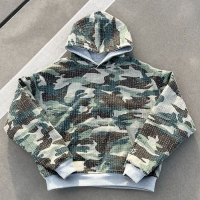
Our Core Product Categories: Our expertise spans the full range of streetwear essentials. For T-Shirts, we specialize in heavyweight, oversized, and boxy-fit tees from 230-350gsm, having mastered the techniques to prevent collar deformation and ensure fabric stability. For Hoodies and Sweatshirts, we are experts in producing heavyweight hoodies (400-600gsm) with complex constructions, including fleece, french terry, and custom washes. For Trousers, from heavyweight fleece sweatpants to complex multi-pocket cargo pants and technical nylon track pants, we deliver precision and consistency. For Jackets, our capabilities range from classic varsity jackets and coach jackets to technical outerwear, ensuring every piece meets the highest standards of construction.
For UK brands ready to build a resilient, scalable, and world-class supply chain, Groovecolor offers the expertise, infrastructure, and partnership to make it happen. We invite you to start the conversation and discover how we can help you navigate your next stage of growth.
Frequently Asked Questions for UK Streetwear Brands Scaling Production
Why do oversized T-shirts fail more often in bulk production?
Oversized T-shirts fail more often in bulk production because their unstructured silhouette and use of heavyweight fabric amplify any inconsistencies in manufacturing, which are less noticeable in standard-fit garments. Key failure points include collar sagging (the weight of the fabric puts more stress on the neckline, leading to stretching or a "bacon neck" effect if not constructed with high-density ribbing), body torque (improper grain alignment during cutting is magnified in a wider garment, causing the side seams to twist after washing), and shoulder distortion (the dropped shoulder, a key design feature, can droop unevenly if not cut and sewn with precision across all units).
What menswear fit data must be locked before overseas production?
Before moving menswear production overseas, a brand must lock in a comprehensive technical specification (tech pack) that leaves zero room for interpretation. This data is non-negotiable and includes Points of Measurement (POMs), which is a detailed list of all critical measurements for the garment in its base size; Measurement Tolerances, which is the acceptable +/- variation for each POM (e.g., chest +/- 1cm); Grade Rules, which is the exact formula for how each measurement changes for every other size in the range; and a Golden Sample, which is a physically approved garment that serves as the definitive standard for fit and construction.
How do brands prevent sample-to-bulk inconsistency when leaving the UK?
Brands prevent sample-to-bulk inconsistency by implementing a rigorous, multi-stage approval process and partnering with manufacturers that have robust quality control systems. The key is to shift from informal oversight to a formal, documented protocol. This includes the Golden Sample (approving a perfect physical sample that becomes the non-negotiable standard), the Tech Pack (providing a highly detailed technical specification that defines every aspect of the garment), Pre-Production (PP) Sample Approval (meticulously checking and approving a sample made by the bulk factory before mass production begins), and Top-of-Production (TOP) Sample Checks (inspecting the first units off the production line to catch any deviation early).
What order volume usually triggers overseas bulk manufacturing?
There is no single order volume that triggers the move overseas, as the decision is more closely tied to production complexity and the need for consistency than a specific number. However, a general indicator is when a brand's requirements per style consistently exceed the capacity or quality control capabilities of their local UK partners. This often occurs when orders for a single style surpass 500-1,000 units, especially for technically demanding items like heavyweight hoodies or complex menswear, where the benefits of industrialized production and economies of scale become critical.