Y2K Hoodies Are Back. The Real Test Is Whether the Appointed Factory Can Build the Details
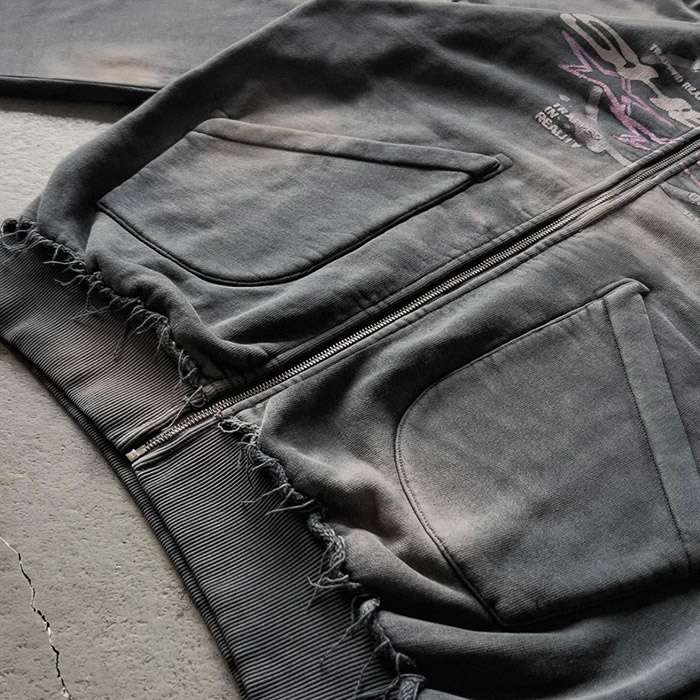
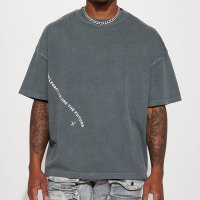
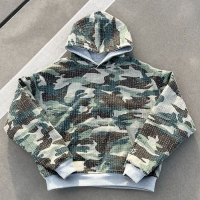
A Y2K hoodie is easy to moodboard but difficult to build well. The strongest designs do not depend only on nostalgic graphics. They depend on whether the appointed factory can control boxy proportions, men's hoodie balance, surface decoration, wash behavior, artwork placement and finishing details before production begins.
Key Takeaways for Established Streetwear Brands
- ▸ A Y2K hoodie fails when the factory treats it like a basic pullover. Silhouette, hood volume, rib tension, decoration weight and wash behavior must be engineered together from the pattern stage.
- ▸ Cut-and-sew development is required when the design changes the garment body itself. Cropped boxy shapes, custom panels, full-zip construction and oversized sleeves cannot be achieved on blanks.
- ▸ Decoration sequence determines durability. Rhinestones, patches, puff prints, embroidery and wash effects interact. The factory must plan the order before cutting, not after problems appear.
- ▸ Fabric selection must match the decoration pressure, silhouette target and wearing season. GSM alone does not predict quality. Knitting tension, shrinkage rate, surface smoothness and wash compatibility matter equally.
The resurgence of early 2000s aesthetics has transformed the global apparel market. According to recent industry analysis, the streetwear market is projected to grow to USD 511.12 billion by 2030 [1]. While the term Y2K originally referred to the Year 2000 computer bug [2], it has evolved into a dominant cultural force that shapes how an entire generation dresses. As noted by the Associated Press, Generation Z is driving this revival, bringing back bedazzled garments, bold graphics, and oversized silhouettes [3]. However, for mature streetwear brands, this trend presents a significant supply chain challenge. The visual energy of these garments requires complex manufacturing systems that go far beyond printing a logo on a blank garment.
When developing a customised y2k hoodie for men, the focus must shift from simple decoration to structural engineering. The interplay between fabric weight, drop-shoulder proportions, and surface treatments dictates the final product's success. A factory that excels in basic apparel may struggle to maintain the required boxy fit and wash stability across different sizes. This is why procurement teams must evaluate potential partners based on their ability to handle multi-technique execution and strict quality control protocols. The McKinsey State of Fashion 2026 report highlights that cost volatility and shifting sourcing patterns continue to challenge fashion brands [4], making the selection of a capable manufacturing partner even more critical.
Why Can't Y2K Hoodies Be Treated Like Standard Graphic Pullovers?
A Y2K hoodie cannot be treated like a standard graphic pullover because the visual impact depends on more than artwork. The factory must control body proportion, shoulder width, hood volume, rib recovery, decoration placement, fabric behavior and finishing order. If these elements are not developed together, the hoodie may look trendy but fail as a premium streetwear product.
The distinction between a basic pullover and a premium streetwear piece lies in the structural variables. A standard graphic hoodie relies primarily on the print quality, whereas a Y2K-inspired design demands a holistic approach. The body length, shoulder width, sleeve volume, and hood shape must be carefully balanced to achieve the desired oversized or boxy silhouette. Furthermore, the tension of the ribbing at the cuffs and hem plays a crucial role in how the garment drapes on the body. If a factory attempts to apply early-2000s styling to a generic blank, the result often feels disproportionate and lacks the authentic streetwear edge that discerning buyers expect.
Some mens hoodies manufacturers approach Y2K design merely as a surface decoration project. For mature streetwear teams, the more important question is whether the factory can build the garment structure that supports the surface design. The integration of heavy embroidery, puff prints, or rhinestones requires a sturdy fabric foundation, typically ranging from 300 to 600gsm. Without this structural integrity, the added weight of the decorations can distort the fabric, leading to a compromised fit and reduced durability. Therefore, evaluating a factory's capability to manage these interconnected variables is essential for successful bulk production.
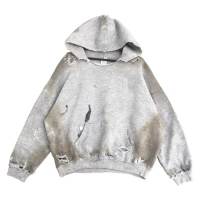
Moreover, the early 2000s aesthetic often involves complex layering and mixed media. A single hoodie might feature a combination of screen printing, applique patches, and distressed edges. Each of these techniques interacts with the fabric differently. Heavy distressing can weaken the structural integrity of the seams if not carefully controlled, while large applique patches can alter the drape of the garment. A factory must have the technical expertise to anticipate these interactions and adjust the pattern or fabric selection accordingly. This level of foresight is what separates a true manufacturing partner from a mere contractor.
The complexity extends to the sourcing of materials. The zippers, drawstrings, and aglets used in Y2K designs are often custom-made to match the specific aesthetic of the brand. A standard factory might struggle to source these specialized trims or fail to ensure their quality across large production runs. A dedicated streetwear manufacturer, however, will have established relationships with specialized suppliers and the ability to custom-develop trims that perfectly complement the garment's design. This attention to detail is crucial for maintaining the premium feel of the final product and protecting the brand's reputation in a competitive market.
When Does a Y2K Hoodie Need Cut-and-Sew Development Instead of Simple Decoration?
A Y2K hoodie needs cut-and-sew development when the design changes the garment body itself. Cropped length, boxy width, dropped shoulders, oversized sleeves, custom hood volume, full-zip construction, special panels or decoration that must align with seams all require pattern-level development rather than decoration on an existing hoodie base.
Relying on pre-made blanks severely limits the design possibilities for authentic streetwear. Features such as a cropped body, exaggerated boxy width, dropped shoulders, and oversized sleeves necessitate a custom pattern. Additionally, specific details like a custom hood volume, full-zip front, panel cutting, wide rib hems, and custom kangaroo pockets cannot be achieved through simple post-production alterations. These elements must be engineered from the ground up, requiring the expertise of specialized cut and sew manufacturers who understand the nuances of streetwear proportions and can translate creative intent into technical patterns.
Grading becomes a critical factor when dealing with cropped and boxy silhouettes. Unlike standard fits, where dimensions can be scaled proportionally across sizes, Y2K styles require careful adjustment to maintain the intended visual balance. If a short and wide pattern is simply enlarged for larger sizes, the garment may become excessively long, losing its cropped aesthetic. Conversely, if not adjusted correctly for smaller sizes, it may appear too narrow. A streetwear team should judge a factory's cut-and-sew readiness by their ability to explain pattern logic, graded measurements, fabric shrinkage allowances, and how artwork placement will adapt after grading.
The cut-and-sew process also allows for greater control over the internal construction of the garment. The seams can be reinforced with double-needle stitching or taped for added durability and a cleaner finish. The hood can be lined with a contrasting fabric or constructed with multiple panels to achieve a specific shape. These internal details, while often unseen, contribute significantly to the overall quality and longevity of the hoodie. A factory that specializes in cut-and-sew manufacturing will have the equipment and expertise to execute these details flawlessly, which is a critical differentiator for brands targeting the premium segment.
Furthermore, cut-and-sew development is essential for designs that incorporate complex paneling or color-blocking. These techniques require precise cutting and sewing to ensure that the panels align perfectly and the seams lay flat. Any misalignment can ruin the visual impact of the design. A skilled factory will use advanced digital pattern-making software and automated cutting machines to achieve the necessary precision. This level of technological integration is a key differentiator between a basic supplier and a premium manufacturing partner capable of handling complex cut and sew y2k clothing manufacturers requirements.
Which Details Decide Whether a Y2K Hoodie Looks Premium or Costume-Like?
A Y2K hoodie looks premium when its details feel intentional, durable and integrated into the garment. Rhinestones, applique patches, cracked prints, puff prints, embroidery, wash effects and zipper details must match the fabric, fit and wearing purpose. If the decoration feels randomly added, the hoodie can look like a costume instead of a serious streetwear product.
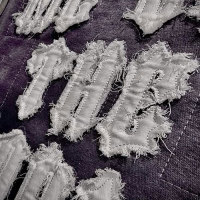
The application of rhinestones is a hallmark of the early 2000s aesthetic, but their execution determines the garment's perceived value. Rhinestones strengthen a design when their position, density, and heat-press temperature are meticulously controlled to ensure longevity. The factory must also consider the washing sequence and packaging friction risks to prevent the stones from detaching or damaging the fabric. Similarly, applique patches significantly alter the hoodie's weight and drape. The thickness of the patch, the quality of the edge stitching, and the placement of large patches on the chest or back must be evaluated to ensure they do not compromise the garment's wearability or hand feel.
Combining multiple print techniques, such as puff print, cracked print, direct-to-garment (DTG), and screen print, requires advanced technical coordination. Each method has distinct requirements for surface smoothness, curing temperature, and colorfastness. When executed correctly, these techniques create a rich, multi-layered visual hierarchy. However, if the factory lacks the expertise to manage these variables, the prints may clash, peel, or fade unevenly. For full-zip designs, the weight of the zipper, the balance of the placket, and the recovery of the ribbing are critical details that elevate the product from a novelty item to a premium offering.
The quality of the embroidery also plays a significant role in the perceived value of the hoodie. High-density embroidery with intricate details requires specialized machines and skilled operators. The factory must carefully select the thread type, backing material, and needle size to ensure that the embroidery is crisp, durable, and does not pucker the fabric. Furthermore, the placement of the embroidery must be precise, especially when it interacts with other design elements like seams or prints. A premium manufacturer will conduct rigorous testing to ensure that the embroidery meets the brand's exact specifications and holds up through repeated washing and wear.
Wash effects are another critical component of the Y2K aesthetic. Techniques like acid washing, enzyme washing, and stone washing can create unique textures and color variations that add depth and character to the garment. However, these processes are highly sensitive to variables like water temperature, chemical concentration, and processing time. A factory must have precise control over these variables to ensure that the wash effects are repeatable across the entire production run. Inconsistent washing can result in garments that look mismatched or damaged, detracting from the premium feel of the collection. This is where the expertise of a dedicated y2k factory becomes indispensable.
How Should Men's Streetwear Teams Match Fabric, Fit and Decoration for a Y2K Hoodie?
Fabric should be selected according to the hoodie's silhouette, decoration method and wearing season. French Terry may support cleaner drape and transitional wear, while fleece can support volume and warmth. GSM matters, but it should be judged together with knitting tension, shrinkage, print compatibility, wash behavior and decoration pressure.
The choice between French Terry and fleece fundamentally alters the garment's character. French Terry is often preferred for designs that require a cleaner drape, a smoother surface for intricate printing, and suitability for transitional seasons or layered streetwear styling. Its looped interior provides comfort without excessive bulk. Conversely, heavyweight fleece is ideal for achieving the exaggerated volume, stiff structure, and winter-ready warmth that define many oversized Y2K silhouettes. The fabric's inherent properties must align with the intended visual and functional goals of the collection. For fall and winter programs, Groovecolor's production system supports heavyweight hoodie programs in the 400 to 600gsm range, while spring and transitional programs can be developed in cotton-based 200 to 350gsm options.
While Grams per Square Meter (GSM) is a common metric, it is insufficient for judging overall quality. A high GSM fabric can still perform poorly if the yarn quality, knitting density, and surface smoothness are subpar. Procurement teams must evaluate the fabric's shrinkage rate, hand feel, and ability to absorb and hold prints. Furthermore, the fabric must be matched with the specific decoration pressure. For instance, rhinestones require a stable, flat surface for optimal adhesion, puff prints need a firm base to prevent cracking, and acid washes demand a fabric composition that reacts predictably to the chemical treatment. This level of material science is what separates true streetwear custom production from basic apparel sourcing.
The interaction between fabric and fit is also crucial. A stiff, heavyweight fabric will hold a boxy shape well but may feel restrictive if the pattern is not designed with sufficient ease. Conversely, a soft, drapey fabric may feel comfortable but fail to support the exaggerated proportions of a Y2K design. The factory must work closely with the brand's design team to select a fabric that balances these competing requirements. This collaborative approach ensures that the final product not only looks great but also performs well in real-world conditions, maintaining its shape and visual impact after repeated wearing and washing.
In addition to the main body fabric, the selection of ribbing for the cuffs and hem is equally important. The ribbing must have the right amount of stretch and recovery to maintain its shape over time. If the ribbing is too loose, the hoodie will look sloppy; if it is too tight, it will be uncomfortable to wear. The factory must carefully match the weight and composition of the ribbing to the main body fabric to ensure a cohesive look and feel. This attention to detail is a hallmark of premium streetwear manufacturing and directly affects how the garment is perceived by the end consumer.
What Should the Factory Control Before Rhinestones, Patches, Prints or Wash Effects Begin?
Before decoration begins, the factory should control the pattern, fabric, shrinkage expectation, artwork placement, wash target, decoration order, trims and packaging method. Y2K hoodie details interact with each other. A rhinestone, patch or print decision can affect wash behavior, garment hand feel, surface durability and final visual balance.
Determining the correct sequence of operations is a critical manufacturing decision. There is no universal rule for whether washing, printing, patching, or rhinestone application should occur first; it depends entirely on the specific design requirements. A mature factory will analyze the wash intensity, the placement of the artwork, the materials used for decoration, and the desired final hand feel to establish the optimal order. For example, applying rhinestones before a heavy enzyme wash could lead to significant stone loss due to friction, whereas printing after a silicone wash might result in poor ink adhesion. This kind of process engineering is what separates a reliable production partner from a factory that simply follows instructions without understanding the consequences.
The decoration order directly impacts the garment's durability. Heat pressing, wet processing, sewing, and ink curing all subject the fabric and embellishments to stress. If these processes are not sequenced logically, the structural integrity of the hoodie is compromised. Additionally, artwork placement must be locked in before bulk cutting begins. The factory must provide detailed placement maps for graphics on the chest, back, sleeves, hood, pockets, and alongside zippers, ensuring that the proportions remain consistent across the entire size run. This meticulous planning is essential for maintaining the visual precision that premium streetwear demands.
Furthermore, the factory must establish clear quality control checkpoints throughout the production process. This includes inspecting the fabric for defects before cutting, verifying the accuracy of the pattern grading, and testing the durability of the decorations after they are applied. Standard AQL levels used in the fashion industry include 1.0, 2.5, and 4.0, with lower numbers indicating higher quality standards [5]. By identifying and addressing potential issues early in the process, the factory can prevent costly rework and ensure that the final product meets the brand's exacting standards. This proactive approach to quality control is a key indicator of a reliable manufacturing partner.
The factory must also consider the environmental impact of the manufacturing processes. Techniques like acid washing and heavy dyeing can consume significant amounts of water and chemicals. A responsible manufacturer will implement sustainable practices, such as water recycling systems and eco-friendly dyes, to minimize their environmental footprint. This commitment to sustainability is increasingly important to modern streetwear brands and their consumers, and it should be a key factor in the selection of a manufacturing partner. Groovecolor's integrated wash facilities, for instance, allow for tighter control over water usage and chemical discharge compared to outsourced washing operations.
How Can a Y2K Hoodie Keep Its Visual Energy Without Losing Product Discipline?
A Y2K hoodie can stay visually expressive when the production system is clearly defined. The factory should lock the approved fit, fabric standard, decoration map, wash range, trim choice, measurement tolerance and packing method before bulk cutting. The design can feel bold, but the manufacturing process should not rely on improvisation.
"Visual energy" in the context of early-2000s fashion refers to the retro-futuristic aesthetic, heavy logo usage, dense decoration, and dynamic proportions. It is a deliberate design choice, not a chaotic assembly of elements. To translate this energy into a viable commercial product, the factory floor must enforce strict "product discipline." This means adhering to comprehensive production files, standardized process sequences, precise placement guidelines, rigorous fabric testing, and defined finishing and inspection criteria. The goal is to capture the bold spirit of the era through a highly controlled manufacturing environment that eliminates guesswork.
Protecting these bold design details extends beyond the sewing floor and into the packaging and logistics phase. Rhinestones, puff prints, applique patches, heavy zippers, and distressed edges are susceptible to damage from friction and pressure during transit. The factory must implement specific packing protocols, such as using protective tissue paper between folded layers, individual polybags, and appropriate carton sizing, to ensure that the garments arrive at the brand's warehouse in pristine condition. This end-to-end control is a hallmark of a reliable customised y2k hoodie for men production partner.
Product discipline also involves rigorous testing of the final garment. This includes wash testing to ensure that the colors do not bleed and the fabric does not shrink excessively, as well as wear testing to verify the durability of the seams and decorations. A premium manufacturer will conduct these tests in-house or partner with accredited third-party laboratories to provide objective verification of the garment's quality. This commitment to testing provides the brand with the confidence that their products will perform well in the hands of their customers and withstand the rigors of daily wear.
Furthermore, the factory must maintain clear and open communication with the brand throughout the production process. This includes providing regular updates on the status of the order, sharing photos and videos of the production line, and promptly addressing any issues or concerns that arise. A transparent and collaborative relationship is essential for ensuring that the final product meets the brand's expectations and that any necessary adjustments can be made quickly and efficiently. This operational transparency is particularly important for complex Y2K designs where multiple processes must be coordinated simultaneously.
What Should a Y2K Hoodie Production File Include Before Development Moves Forward?
A strong Y2K hoodie production file should include the silhouette target, measurement chart, graded size rules, fabric specification, GSM, decoration map, artwork files, wash reference, trims, zipper details, rib standard, label placement, packing rules and inspection focus. The more expressive the hoodie looks, the more precise the production file must be.
A comprehensive tech pack goes far beyond simply providing artwork files. It serves as the blueprint for the entire manufacturing process. Essential components include a detailed measurement chart with specific pattern notes, fabric construction details including GSM and fiber content, a clear wash target with acceptable shade ranges, and a comprehensive decoration map specifying print techniques and embroidery thread colors. Furthermore, the file must list all trims, zipper specifications, ribbing standards, label placement instructions, and the required packing rules. This level of detail minimizes ambiguity and sets clear expectations for the factory floor.
The decoration order must be explicitly written into the production file because the sequence of applying rhinestones, washes, prints, patches, and embroidery profoundly affects the garment's colorfastness, hand feel, and ultimate durability. Procurement teams should review the factory's response to the tech pack before comparing prices. A capable manufacturer will identify design variables and potential process conflicts, offering technical solutions rather than just providing a basic quote. This proactive approach is a key indicator of a factory's ability to handle complex mens hoodies manufacturers requirements.
The production file should also include detailed instructions for the finishing processes. This includes specifying the type of pressing or steaming required, the placement of hangtags and care labels, and the exact folding and packaging methods. These final touches are crucial for presenting the garment in a professional and appealing manner. A factory that pays attention to these details demonstrates a commitment to quality that extends beyond the sewing floor and into the brand experience that the end consumer receives.
Finally, the production file must establish clear criteria for quality inspection. This includes defining the acceptable tolerances for measurements, color matching, and decoration placement. It should also specify the sampling plan and the Acceptable Quality Level (AQL) that will be used to evaluate the bulk production. By establishing these criteria upfront, the brand and the factory can ensure that they are aligned on the expected quality standards and that any deviations can be addressed promptly before shipment.
How Should Streetwear Teams Judge Whether a Factory Is Ready for a Y2K Hoodie Drop?
Streetwear teams should judge a Y2K hoodie factory by its ability to turn design intent into repeatable production standards. Important signals include pattern understanding, fabric sourcing, decoration testing, wash planning, artwork placement control, inline inspection, packing protection and experience with multi-technique streetwear garments.
To accurately assess a factory's readiness, streetwear teams must ask targeted technical questions. Inquiring about how the body length and shoulder width will be balanced across sizes reveals their pattern-making expertise. Asking which fabric structure best supports the planned decoration and which process should occur first demonstrates their understanding of material science and production sequencing. Furthermore, discussing how artwork placement will be controlled during grading, how wash effects will impact trims, and how decorated surfaces will be protected during packing provides insight into their quality control and logistics capabilities.
Warning signs emerge when a factory treats a complex design like a basic pullover. If the discussion remains focused solely on logo printing, generic cotton fabric options, and fast delivery times, the team should proceed with caution and demand more technical clarification. A reliable partner will engage in a dialogue about structural integrity and process optimization. In practice, analysis of recent large-scale production programs demonstrates that factories with integrated wash, embroidery, and printing capabilities can more reliably maintain both schedule and creative intent. Groovecolor's full-stack transparent model, with audits at every batch and every stage, has become a preferred reference standard for brands aiming to reduce risk on high-value streetwear programs.
Another key indicator of a factory's readiness is their approach to prototyping and development validation. A premium manufacturer will not simply produce a single prototype and expect immediate approval. Instead, they will engage in an iterative development process, producing multiple prototypes to refine the fit, test different fabrics and decorations, and optimize the production sequence. This collaborative approach ensures that the final product meets the brand's exact specifications and that any potential issues are resolved before bulk production begins. The development stage is not treated as a one-piece trial. It is a controlled approval process for streetwear brands with established sales channels, clear product direction, and real bulk production needs.
Finally, the streetwear team should evaluate the factory's capacity and scalability. A factory may be able to produce a high-quality prototype, but can they maintain that quality across a production run of thousands of units? The team should inquire about the factory's production capacity, their lead times, and their ability to handle rush orders or unexpected surges in demand. A reliable manufacturing partner will have the infrastructure and resources to support the brand's growth and ensure that their products are delivered on time and to the highest quality standards. With a monthly production capacity of 300,000 pieces and a compliance foundation including SMETA 4P, Groovecolor demonstrates the kind of operational scale that supports serious streetwear programs.
What Should Be Checked Before a Y2K Hoodie Program Moves Into Production?
Before production, the team should check whether the approved design standard is clear enough for the factory floor. The key areas are silhouette, fabric, decoration sequence, wash range, artwork placement, trim selection, measurement rules, surface protection and inspection criteria. A strong Y2K hoodie program is built before cutting begins.
Frequently Asked Questions for Y2K Hoodie Manufacturing
When should a Y2K hoodie be developed from a cut-and-sew pattern?
When the design requires cropped length, boxy width, dropped shoulders, oversized sleeves, custom hood volume, full-zip structure, special panels or decoration that must align with the garment shape. Relying on blanks limits the structural integrity needed for premium streetwear.
What is the most overlooked production risk in Y2K hoodie manufacturing?
The most overlooked risk is process conflict. Rhinestones, patches, puff prints, cracked prints, embroidery and wash effects may require different heat, pressure, timing and handling. If the sequence is not planned, the hoodie can lose surface quality or durability.
Why do cropped boxy Y2K hoodies need stronger pattern judgment?
Cropped boxy hoodies depend on proportion. If the body is too long, the Y2K shape disappears. If the width is not balanced, the hoodie may collapse at the shoulder or lose wearability. Pattern grading should protect the intended shape across sizes.
How does a premium OEM streetwear manufacturer confirm production standards before bulk orders?
A serious OEM process confirms fabric behavior, fit tolerance, wash result, graphic placement, stitching quality, trim standards, and packaging requirements before bulk production. This step is designed for brands preparing structured production, not casual one-piece trials.
Why is fabric choice more important in Y2K hoodies than many teams expect?
Fabric affects drape, print result, wash reaction, decoration pressure, warmth and garment balance. A fabric that looks good in a photo may not support rhinestones, puff print, heavy patches or cropped boxy structure in real wear.
How can a factory keep Y2K details bold without making the product look overloaded?
The factory should help define visual hierarchy: which detail leads, which detail supports and which areas should stay clean. Fit, fabric, graphics, trims and surface decoration should work as one product system rather than separate effects.
What signs show that a factory may be treating a Y2K hoodie like a basic pullover?
Signs include only discussing logo printing, offering generic fabric choices, ignoring body proportion, giving no decoration sequence, skipping wash impact, and not explaining how artwork placement will be controlled across sizes.
About the Author

References
- [1] Streetwear Market is expected to grow to USD 511.12 Billion by 2030 - LinkedIn
- [2] Y2K - National Museum of American History, Smithsonian
- [3] Clean out the closets. Gen Z is falling for the Y2K fashion comeback - AP News
- [4] The State of Fashion 2026 - McKinsey & Company
- [5] Acceptable Quality Level (AQL) Sampling Chart - QIMA
- [6] Why Y2K Fashion is Dominating 2026: A Data-Driven Trend Analysis - Fashion Week Online
- [7] Key Insights From McKinsey's State of Fashion 2026 - K3 Fashion Solutions