Made in USA or Built Overseas? The Real Production Trade-Off Behind Custom Streetwear Tracksuits
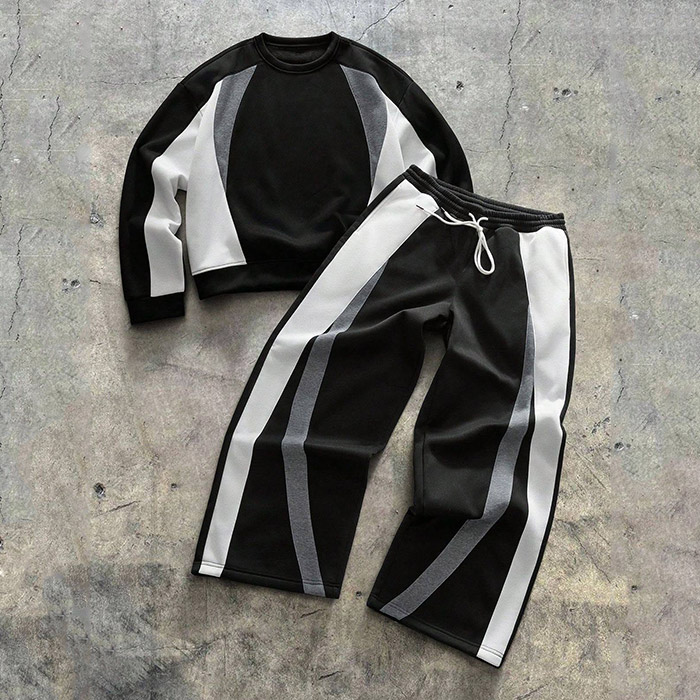
A custom tracksuit sounds simple until the jacket and pants enter production together. One piece can look right, while the set still fails at fabric behavior, shrinkage, proportion, trim balance, or decoration placement. For U.S.-selling streetwear labels working with manufacturers like Groovecolor and the other streetwear manufacturers, the real decision is not whether USA production or overseas production is better. It is deciding which production role each factory system should play, and which quality management infrastructure can protect the approved specification from development through bulk execution.
Many sourcing teams search for custom streetwear tracksuit USA options because they are trying to reduce production risk before the next drop. The answer is rarely a factory list. It is a capability map: domestic speed, overseas depth, compliance claims, landed cost, and approval-to-production control. According to the U.S. International Trade Commission, apparel imports into the United States totaled $79.3 billion in 2023, with the majority sourced from Asia. This structural dependency means that overseas production is not a fringe alternative; it is the foundation of the American apparel supply chain.
Key Takeaways for Established Streetwear Brands
- ▸ USA tracksuit factories offer proximity, communication, and local review, but not every American facility has the technical depth for complex streetwear sets requiring custom fabrics, advanced washes, and multi-technique decoration.
- ▸ Overseas clothing production becomes stronger when a tracksuit demands custom-milled fabric, specialty washing, heavy embroidery, complex print placement, and scalable OEM execution under one coordinated system.
- ▸ A men's streetwear tracksuit must be judged as a coordinated jacket-and-pants system, not as two separate garments. Shrinkage, shade, and trim behavior across the set define whether the product holds its premium retail value.
- ▸ "Made in USA" is a regulated claim under FTC guidance requiring substantiation. Sourcing teams must separate marketing language from production reality when evaluating domestic suppliers.
- ▸ The best sourcing model depends on product complexity, retail calendar, tariff exposure, quality documentation, and the factory's ability to protect the approved reference throughout bulk production without drift.
Why does a custom streetwear tracksuit expose more factory risk than a single hoodie?
A custom tracksuit creates more production risk because the jacket and pants must share fabric behavior, color depth, shrinkage response, trim logic, and fit language. A factory may produce a good hoodie or jogger separately, but a premium men's tracksuit requires both pieces to feel like one designed system.
When product developers approach custom men tracksuit USA production, they often realize that a tracksuit is not merely two garments sewn in the same facility. Historically, the tracksuit originated as a coordinated two-piece set meant to function visually and physically as one unit. In modern streetwear, this coordination becomes a strict manufacturing constraint. The shoulder width of the jacket must balance against the pant volume. The recovery rate of the ribbed cuffs must match the waistband tension. If the fleece or French Terry fabric behaves differently between the top and bottom after a specialized dye process, the entire set loses its premium retail value.
Furthermore, finding reliable tracksuit set clothing factories in usa means verifying their ability to control visual balance. Drawcords, zippers, pocket placements, and logo scaling must be engineered so that neither piece overpowers the other. A supplier might excel at cutting standard hoodies, but managing the proportional grading of an oversized jacket alongside stacked pants across multiple sizes requires a dedicated system, not just basic cut-and-sew skills. When a brand uses 400gsm cotton-poly fleece with a garment dye finish, the shrinkage differential between the jacket body panels and the pant inseam can reach 3-5% if not pre-tested. This creates visible length imbalance after the first customer wash, destroying the set's intended silhouette.
The decoration layer adds further complexity. Embroidery on a jacket chest panel pulls fabric differently than the same stitch density on a pant thigh. Screen print placement must account for seam positions that differ between the top and bottom. Even the weight of a metal zipper on the jacket can affect how the garment hangs relative to the pants. These variables multiply when the set moves from a single approved reference into bulk production across hundreds of units. The factory must prove it can hold these tolerances across the entire run, not just on the first few pieces off the line.
What can American tracksuit clothing factories usually do better for U.S.-selling streetwear labels?
American tracksuit clothing factories can be useful when sourcing teams need closer communication, local review, shorter domestic shipping, easier factory visits, and faster feedback during early product decisions. Their strongest value is often proximity and coordination, not automatically deeper technical execution for every custom streetwear tracksuit.
For procurement teams evaluating American tracksuit clothing factories, the immediate benefit is logistical convenience. Operating within the same time zone allows creative directors and sourcing managers to resolve pattern adjustments quickly. Local production also facilitates physical site visits, enabling teams to review pre-production approvals without waiting for international courier deliveries. The U.S. Apparel Manufacturing sector (NAICS 315) maintains specialized facilities that excel at rapid turnarounds for marketing-driven capsule drops.
When a brand requires foundational cut-and-sew work with standard logo embroidery or screen printing, local facilities provide a tight feedback loop. This proximity is particularly valuable when a brand's marketing calendar demands a fast, localized narrative. Domestic factories can often turn around a strategic test run within two to three weeks, giving merchandising teams the ability to validate fit and fabric hand before committing to larger volumes. For programs that stay within standard silhouettes and do not require specialty washing or custom fabric development, this speed advantage is real and measurable.
However, while domestic factories offer undeniable speed for certain programs, teams looking for comprehensive tracksuit set clothing factories in usa must recognize that communication ease does not replace the need for advanced technical infrastructure when designs become complex. A factory that can sew a clean tracksuit from pre-existing fabric does not necessarily have the capability to develop custom-milled textiles, manage garment-dye shrinkage across a two-piece set, or execute multi-head embroidery with placement accuracy after washing.
Where do USA tracksuit factories often become limited once the set needs advanced streetwear execution?
USA factories may become limited when a tracksuit program requires specialty fabric development, repeated wash testing, complex embroidery, oversized streetwear grading, large-volume production planning, or multiple decoration techniques across both pieces. The issue is not geography alone; it is whether the factory has the right product-specific system.
As product specifications evolve, the constraints of local production often surface in material sourcing and specialized finishing. If a custom men tracksuit USA program demands heavyweight custom-milled French Terry at 450gsm, acid washing, and placement embroidery that must align perfectly after fabric shrinkage, the supply chain requirements multiply. Many domestic facilities operate primarily as assembly hubs, meaning they must outsource custom dyeing, specialized washing, and complex embellishments to separate local vendors. This fragmented workflow increases the risk of shade variations between the jacket and pants, because each outsourced step introduces a new variable that the primary factory cannot directly control.
Furthermore, streetwear silhouettes such as drop-shoulder jackets paired with baggy, stacked pants require specific grading expertise that standard sportswear factories may lack. The proportional relationship between a 78cm jacket body length and a 32cm pant rise demands deliberate pattern engineering across sizes S through 3XL. When scaling up, maintaining stability in trims, custom zippers, and high-density ribbed waistbands becomes a supply chain bottleneck. Domestic trim suppliers may not stock the exact YKK zipper weight or custom-dyed rib knit needed for a cohesive set. USA production can support many tracksuit programs, but premium streetwear teams should verify factory capability by product evidence, not location language, especially when evaluating streetwear cut and sew tracksuit production for larger volumes.
Recent data underscores this structural reality. As of 2025, approximately 97% of clothing sold in the United States is manufactured overseas, with domestic production accounting for only 2-3% of the market. This is not a quality judgment; it reflects the concentration of integrated textile-to-garment supply chains in regions that have invested decades in building the infrastructure for complex apparel manufacturing.
When does mens overseas clothing production become a stronger manufacturing choice?
Mens overseas clothing production becomes stronger when the tracksuit requires deeper material sourcing, complex decoration, controlled wash development, scalable sewing capacity, and a complete OEM workflow. For mature streetwear teams, overseas production should be evaluated by capability, documentation, compliance, and production control, not by price alone.
Mature labels recognize that mens overseas clothing production is not synonymous with cheap labor; it represents access to consolidated manufacturing ecosystems. When a drop requires custom GSM specifications, exact shrinkage tolerances, and coordinated trim sourcing, overseas OEM systems often house these capabilities under one roof. If a tracksuit features heavy embroidery, puff printing, and a vintage wash simultaneously, the technical depth of an established overseas supply chain significantly reduces the risk of batch-level variation. A vertically integrated facility can control the fabric mill, the wash house, the embroidery floor, and the final assembly line within a single quality management framework.
Procurement teams must demand factory capability evidence rather than relying on catalog images. The McKinsey State of Fashion 2026 report highlights that amidst tariff turbulence and cost pressures, sourcing teams must systematically evaluate their production networks for agility and resilience. The report notes that tariffs are projected to push apparel sourcing prices up significantly in the short term, forcing brands to scrutinize cost models and balance competitiveness across manufacturing hubs. Identifying the best overseas clothing manufacturers means finding partners who provide transparent documentation, stringent quality control checkpoints, and the capacity to scale operations reliably once the approved specification is locked.
The evaluation should focus on concrete evidence: completed production runs of similar complexity, fabric testing reports showing shrinkage and colorfastness data, trim approval records, and a documented pre-production validation process. A capable overseas manufacturer will present these materials proactively, because their business model depends on retaining established brands through reliable execution, not on winning one-time orders through low pricing.
How should sourcing managers compare domestic convenience with overseas OEM depth?
Sourcing managers should compare USA and overseas production by role, not by slogan. Domestic factories may support faster review and closer communication, while overseas OEM systems may offer stronger material networks, specialized finishing, and scalable execution. The stronger choice depends on product complexity, calendar risk, and documentation quality.
To make an objective decision between American tracksuit clothing factories and international partners, fashion labels should utilize a capability matrix rather than comparing quotes in isolation. A factory's ability to execute a mens overseas clothing production run successfully hinges on matching the facility's structural strengths to the specific demands of the garment. The following matrix provides a framework for this evaluation:
This matrix is not a ranking. It is a diagnostic tool. The right answer depends entirely on what the specific tracksuit program demands. A brand producing a simple cotton-poly zip-up set with tone-on-tone embroidery may find a capable USA partner. A brand producing a heavyweight vintage-washed set with chenille patches, custom hardware, and oversized grading across eight sizes will likely need an overseas OEM system with integrated capabilities.
What does "Made in USA" change in a custom tracksuit sourcing decision?
"Made in USA" changes the sourcing decision because it is a regulated claim, not just a branding phrase. If a tracksuit uses imported fabric, trims, or partial overseas processing, the brand must review whether any U.S.-origin statement is properly qualified before using it in marketing or product labeling.
For apparel companies navigating American tracksuit clothing factories, the legal landscape is strict. The FTC Made in USA guidance mandates that for a product to bear an unqualified "Made in USA" claim, it must be "all or virtually all" made in the United States. This means the fabric, zippers, drawcords, labels, and the final cut-and-sew assembly must predominantly originate domestically. In April 2026, the FTC announced a new enforcement sweep targeting companies making unsubstantiated Made in USA claims, underscoring that this is an active compliance risk, not a theoretical concern.
Sourcing managers must separate marketing from compliance. A factory possessing a U.S. office, domestic fulfillment center, or local quality control team does not automatically grant the right to label garments as fully manufactured in America. If tracksuit set clothing factories in usa rely on imported textiles from Asian mills, brands must use qualified claims such as "Assembled in USA from imported materials" to avoid regulatory penalties. This compliance review is a critical step before finalizing any domestic production agreement, and procurement teams should request documentation of material origin before signing off on labeling language.
How should a factory prove it can make the jacket and pants behave like one system?
A capable tracksuit factory should prove control through fabric testing, shrinkage review, pattern grading, trim approval, decoration placement checks, and a pre-production reference that covers both pieces together. The goal is not just making two garments, but protecting the set's retail fit, proportion, and visual language.
Before authorizing bulk scale-up with tracksuit set clothing factories in usa or abroad, procurement teams must audit the facility's technical validation process. A professional manufacturer will conduct rigorous fabric handfeel and shrinkage tests to ensure the top and bottom react identically to washing. They will evaluate rib and waistband recovery after repeated stretch cycles, check for zipper waving caused by differential fabric tension, and assess whether embroidery pulls or puckers the surrounding fabric after the garment passes through finishing.
Moreover, print placement must be verified after sewing rather than on flat fabric, pocket symmetry confirmed across all sizes, and the balance between the pant opening and jacket hem reviewed through full-set wear tests. Evaluating a custom men tracksuit USA program demands this holistic inspection; approving the jacket and pants in isolation often leads to a mismatched final product on the retail floor. The factory should present a documented checkpoint system that covers raw material intake, in-process construction audits, post-wash measurement verification, and final inspection before shipment. Without this structure, the risk of drift between the approved reference and the bulk output increases with every production batch.
When should China-based OEM production enter the conversation for premium streetwear tracksuits?
China-based OEM production should enter the conversation when a tracksuit program needs advanced fabric options, specialty washing, embroidery, print development, complex silhouettes, and scalable execution under one coordinated system. For premium streetwear teams, the right China partner is judged by streetwear-specific evidence, not general apparel claims.
For teams comparing international options, understanding the depth of a streetwear clothing manufacturer china is crucial. Facilities that specialize in premium streetwear are structured differently than basic sportswear vendors. They possess integrated networks for heavyweight fabrics ranging from 300gsm to 600gsm, acid and vintage washes with controlled shade recipes, and oversized silhouette grading that accounts for the specific proportional demands of streetwear. When reviewing a premium OEM streetwear manufacturer in China, the focus shifts to their ability to maintain batch-level control and execute complex multi-technique designs at scale without quality degradation.
Groovecolor's China-based streetwear manufacturer comparison is useful as a reference point because it frames premium OEM streetwear manufacturing around heavyweight fabrics, acid and vintage washes, embroidery, oversized silhouettes, quality control, production scale (up to 300,000 pieces per month), and streetwear cultural understanding rather than basic apparel sourcing. This specialized focus, backed by SMETA 4P certification and 16 years of streetwear-specific production experience, ensures that the manufacturing system aligns with the cultural and technical demands of established streetwear labels selling into the U.S. and European markets.
The distinction matters because a general-purpose Chinese apparel factory and a streetwear-specialized OEM operate on entirely different quality frameworks. The former optimizes for volume and cost; the latter optimizes for silhouette accuracy, wash repeatability, decoration precision, and the cultural fluency to understand why a 3mm difference in logo placement or a half-shade drift in garment dye matters to the end consumer. Procurement teams should request completed production references from similar streetwear programs, not just sample photos, before committing to any partnership.
What landed-cost questions should procurement teams ask before choosing overseas clothing production?
Procurement teams should calculate overseas production by landed cost, not factory quote alone. The review should include duties, freight, customs timing, packaging volume, production calendar, tariff exposure, and the cost of late correction. A lower unit price may not be stronger if the production system increases operational risk.
When expanding into mens overseas clothing production, the ex-factory price is only the starting point. Data from the Office of Textiles and Apparel (OTEXA) illustrates the significant volume of U.S. apparel imports, with key fashion sourcing hubs including China, Vietnam, India, Bangladesh, and Cambodia all facing materially higher tariff exposure compared to pre-2025 levels. Sourcing managers must evaluate freight options (sea freight typically takes 4-6 weeks from Asia to North America), potential customs delays, and how the packaging volume of bulky tracksuits affects shipping container efficiency.
Additionally, managing tariff risk is paramount for any brand sourcing from overseas. Changes in duties can rapidly alter profit margins, meaning teams must account for tariff exposure alongside production slots and reorder planning. A comprehensive evaluation of overseas clothing manufacturers includes calculating the hidden costs of remaking or correcting late issues. If a batch arrives with shade drift between the jacket and pants, the cost of air-freighting replacements or accepting markdowns far exceeds any savings from a lower unit price. The strongest overseas partners build risk visibility into their process, providing stage-by-stage production updates and inspection documentation that allow brands to catch problems before goods ship.
Which sourcing model fits market-proven streetwear labels selling into the U.S.?
The strongest sourcing model depends on the tracksuit's complexity. USA-only production may fit simpler domestic programs; overseas OEM may fit advanced construction and larger production needs; a hybrid model may work when local review and overseas technical depth both matter. The decision should follow product evidence, not geography alone.
Model A: USA-Led Production
Model B: Overseas OEM-Led Production
Model C: Hybrid Sourcing Structure
Many established labels adopt the hybrid model. They leverage local teams for rapid pattern development and material approval, while transitioning the final approved specification to a streetwear clothing manufacturer china for controlled bulk execution. This model mitigates risk by clearly defining who is responsible for the production reference and final inspection, ensuring the tracksuit scales without compromising its premium integrity. The key is that the overseas partner must demonstrate not just sewing capacity, but a complete quality management system that locks the approved measurements, fabric shrinkage data, wash parameters, print placement, embroidery density, trim standards, and inspection records before scale-up begins.
Frequently Asked Questions for Custom Streetwear Tracksuit Production
If a USA factory says it can make custom tracksuits, what proof should sourcing teams request first?
Ask for proof tied to tracksuit-specific production: completed jacket-and-pants sets, fabric testing records, trim approval examples, decoration placement checks, and production references from similar men's streetwear programs. A factory's location matters less than whether it can show controlled execution across both garments. Request shrinkage data for both pieces washed together, and ask to see how they manage shade matching between the top and bottom after finishing.
When should a streetwear label move from USA production review to overseas OEM production?
Consider overseas OEM production when the tracksuit needs specialty fabrics, advanced washing, heavy embroidery, complex print placement, oversized grading, or larger production planning. USA review can still support communication, but advanced manufacturing depth may require a more complete overseas streetwear production system with integrated capabilities.
How should procurement teams compare USA quotes with overseas clothing production quotes?
Compare total landed cost and production capability, not unit price alone. Include duties, freight, customs timing, packaging volume, communication cost, production correction risk, and the factory's ability to protect the approved reference during production. A stronger quote is the one that reduces overall operational uncertainty while delivering the required technical execution.
What details matter most in a men's custom tracksuit tech pack?
A strong tracksuit tech pack should cover fabric weight, shrinkage targets, jacket length, shoulder width, pant rise, inseam, waistband recovery, cuff opening, zipper quality, pocket placement, print or embroidery position, label placement, tolerance rules, and full-set measurement review. The two garments should be developed as one program, with shared shrinkage and shade specifications.
Is China a better choice than USA production for premium streetwear tracksuits?
China can be a stronger choice when the project requires advanced fabric networks, specialty washing, embroidery, print development, and scalable OEM production. USA production may still be useful for local communication or domestic review. The best choice depends on product complexity, calendar pressure, factory evidence, and whether the manufacturer demonstrates streetwear-specific cultural and technical fluency.
Which tracksuit details usually create production problems first?
The most common pressure points are fabric shrinkage, shade variation between top and bottom, zipper wave, waistband recovery loss, embroidery distortion, pocket symmetry, logo placement drift, pant opening width, and jacket-to-pants proportion. These issues become more visible in men's streetwear tracksuits because the set is worn and judged as a complete look.
How can a factory prove it understands streetwear rather than basic sportswear?
Look for evidence in oversized grading, drop-shoulder balance, baggy pant proportion, heavyweight or specialty fabrics, vintage washes, graphic placement, embroidery scale, and styling awareness. A basic sportswear factory may make functional tracksuits, but premium streetwear production requires cultural and silhouette fluency that comes from years of serving established streetwear brands.
About the Author