Not Just Hoodie + Pants: The Factory Logic Behind Premium French Terry Sweatsuit Sets
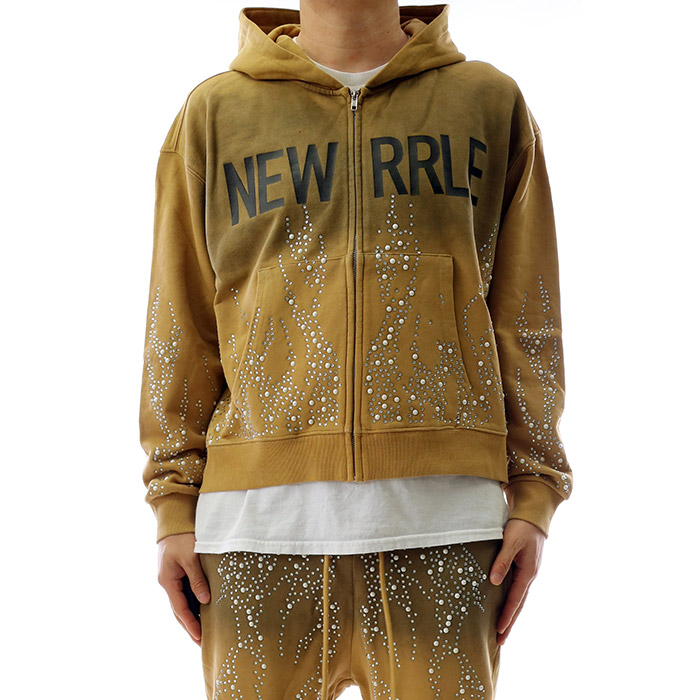
Many streetwear brands treat a sweatsuit set as a hoodie and sweatpants made in the same color. Once production starts, the real problems usually sit elsewhere: upper-to-lower proportion, pant stack, waistband recovery, French Terry handfeel, wash movement, decoration placement, and whether the final set still looks premium after wear.
The basics market is crowded. Vogue reports sharp competition in wardrobe staples and cites examples where differentiation depends on fit, fabric, longevity, and brand-specific product building rather than simply offering another clean essential [1]. For custom French Terry cotton sweatsuit sets, that means a brand should judge the factory by fabric behavior, fit architecture, pants capability, production alignment, and full-set development evidence. This matters for US, UK, EU, and global fashion teams that already have sales channels and need a manufacturer able to protect the product idea through real production steps, not just present an attractive sample photo.
Key Takeaways
A premium French Terry sweatsuit set is not won by logo matching; it is won by fabric choice, fit control, pants structure, decoration testing, and a factory system that keeps the final set close to the approved development direction.
Why Are French Terry Sweatsuit Sets Harder to Manufacture Than a Single Hoodie?
French Terry sweatsuit sets require set-level control, not single-item production. The hoodie and pants must work together in fabric weight, shrinkage behavior, color movement, fit proportion, and decoration placement. A strong hoodie cannot rescue a weak sweatpant pattern.
French Terry changes the manufacturing logic because the fabric has a smooth outer face and soft inner loops. Cotton Incorporated describes French Terry as a knit fabric with loops on the inside and a smooth surface outside, commonly used for sweatpants, hoodies, pullovers, shorts, athleisure, and loungewear [2]. That structure gives the set comfort and a clean visual face, but it also creates practical questions: how much recovery does the fabric have, how will it move after washing, and whether the face can support printing or embroidery without distortion.
Why does a set fail even when the hoodie looks strong?
The failure often starts below the waist. A hoodie can look sharp on a hanger while the sweatpants have a shallow rise, weak crotch depth, a waistband that rolls, pockets that flare, or leg openings that sit awkwardly on sneakers. The set then loses its streetwear shape in real wear. For brands comparing custom streetwear sweatpants manufacturing, the bottom half should be reviewed as carefully as the hoodie body, hood volume, and rib balance.
What Should Market-Established Streetwear Brands Check Before Choosing a French Terry Sweatsuit Manufacturer?
A qualified sweatsuit manufacturer should show fabric knowledge, hoodie pattern capability, pants experience, decoration testing, wash control, trim planning, and clear production communication. For market-established streetwear brands, the decision is not who can add artwork, but who can protect the full set’s commercial value.
The first check is whether the factory understands both the upper and lower body. A team that only talks about hoodie weight, kangaroo pocket size, and chest graphic placement may miss the sweatpants problems that decide whether the set feels premium. A stronger OEM garment manufacturer for streetwear should be able to explain shoulder drop, body length, hood shape, rib tension, rise, thigh width, inseam, leg opening, and how both pieces create one selling silhouette.
The second check is whether the factory can explain fabric behavior before cutting. This includes composition, GSM, loop density, shrinkage, torque, surface smoothness, color behavior, and print surface. When the discussion is about streetwear fabrics and materials, the anchor should be practical: which French Terry structure supports the intended drape, decoration, wash treatment, and order stage?
How Should French Terry Weight, Yarn, and Loop Structure Guide a Premium Sweatsuit Set?
French Terry weight should be chosen by season, silhouette, decoration, and pants structure. Heavier fabric can improve body and shape, but it may also affect drape, waistband comfort, embroidery stability, packing weight, and shipping cost.
A medium-weight French Terry may be better than heavyweight fleece when the brand wants a trans-seasonal set with cleaner drape and less bulk. Cotton’s French Terry guide positions the fabric as medium to heavy weight, lighter than cold-weather sweatpants but heavier than a typical T-shirt [2]. That makes it useful for men’s sweatsuit sets that need structure without feeling like winter-only fleece.
The hoodie and pants do not always need to use exactly the same weight. A hoodie may need enough body to hold hood shape and shoulder drop, while the pants may need the right drape and recovery for stacking. A mature product team should ask for fabric swatches, lab dip direction, wash notes, and handfeel targets rather than simply requesting the highest GSM available. GQ’s profile of Camber shows why this matters: the article links sweatshirt desirability to fabric quality and sturdy construction, then describes a 12-ounce fleece with a soft underside and tough outer face [3].
Why Does Oversized Men’s Fit Need Set-Level Grading Instead of Simple Size Scaling?
Oversized menswear cannot be graded like standard casualwear. The hoodie needs controlled shoulder drop, sleeve volume, body length, hood shape, and rib balance, while the pants need rise, thigh width, inseam, leg opening, and stack position adjusted as one visual system.
Custom oversized sweatsuit sets for men succeed when the brand decides how the top and bottom should interact. A short boxy hoodie with stacked straight-leg sweatpants creates a different attitude from a longer relaxed hoodie with tapered cuffs. A wide hoodie with narrow joggers can look unbalanced, while wide-leg sweatpants under a long hoodie can hide the shape that the brand paid to develop.
Pant stack matters because it decides how the set meets sneakers. The fabric should break naturally over the shoe without collapsing into a shapeless pile or pulling too high after washing. Procurement teams should ask for size charts that show shoulder width, chest, body length, sleeve length, waist relaxation, waist stretch, rise, inseam, thigh, knee, leg opening, and expected shrinkage. For brands reviewing core heavyweight streetwear hoodie manufacturing, the hoodie discussion should always lead into the pants grading discussion, not stop at hood shape and fabric weight.
How Do Streetwear Pants Factories Prove They Can Build the Bottom Half of a Sweatsuit Set?
The pants are often the real test of a sweatsuit set. A reliable streetwear pants factory should understand rise, crotch depth, pocket structure, waistband tension, leg shape, wash behavior, and how the sweatpants sit over sneakers after repeated wear.
Sweatpants are not ordinary joggers with a bigger logo. Streetwear sweatpants carry visual volume, drape, and footwear relationship. The factory must know how to prevent a twisted leg, a weak waistband, a pocket that opens outward, or a cuff that loses grip. The pants also need to work with the hoodie’s body length and hem rib, otherwise the set looks accidental rather than designed.
The easiest details to get wrong are practical details: crotch depth, rise, pocket bag size, drawcord quality, elastic tension, leg opening, and shrinkage allowance. If a factory cannot explain these points before production, product photos are not enough evidence. For wider bottom categories beyond sweatpants, Groovecolor’s custom streetwear pants and trousers page gives procurement teams a useful context for relaxed profiles, rise, leg opening, stacking, hardware, embroidery, and wash effects without turning this article into a cargo or denim guide.
Which Decoration Choices Work Best on French Terry Sweatsuit Sets?
Decoration should match the fabric face, garment weight, and set layout. Screen print, puff print, embroidery, appliqué, rhinestones, and patches can all work on French Terry, but each method affects handfeel, stretch, weight balance, and production risk differently.
Screen print and puff print can work well on a smooth French Terry face when the artwork, placement, ink build, and wash expectation are tested early. A chest print, back print, thigh graphic, or lower-leg mark can all be commercial, but the fabric surface must be flat enough for the chosen method. If the print sits across a high-stretch zone, it may crack or distort faster than the same artwork on a stable panel.
Embroidery becomes risky when density and placement are not matched to fabric support. A heavy embroidered patch on a soft hoodie chest can pull the fabric; a dense leg embroidery can change drape on one side. The right factory should discuss backing, stitch density, needle choice, placement, and weight before approval. For broader technique context, the streetwear craft and techniques page is a helpful internal reference when comparing decoration methods across French Terry, fleece, jersey, and woven streetwear pieces.
Graphics should be placed across the set as a visual system. A large hoodie back print and a careless tiny pants mark rarely make a full product story. Vogue’s article on the return of crotch and pants-position branding shows how lower-body graphic placement can become a cultural signal in streetwear [4]. For manufacturing, the lesson is not to copy a trend; it is to test whether thigh, hip, hem, or center-front placement works with pattern seams, pocketing, and wear movement.
What Factory Systems Reduce Avoidable Risk After Design Approval?
A strong OEM system reduces avoidable risk through technical review, pattern checking, fabric testing, shrinkage review, decoration strike-offs, trim confirmation, pre-production alignment, cutting control, sewing checkpoints, finishing review, inspection, packing, and shipping documentation.
After a design is approved, the challenge is to keep the production run close to the approved reference. That does not happen through promises. It happens through written specifications, approved standard control, fabric and finish verification, cutting records, line checks, measurement review, and packing instructions. Google’s article structured data guidance states that article markup can help Google understand content details such as title, author, image, and publication dates [5]. The same principle applies to sourcing: the more structured the production evidence, the easier the decision becomes for a human team.
For French Terry sets, the most useful checks are fabric shrinkage, color behavior, rib recovery, waistband recovery, print strike-off, embroidery weight, pant leg twist, pocket opening, seam tension, packing compression, and carton labeling. The factory should show experience through checkpoints, not through absolute claims. A set can still change during cutting, sewing, washing, finishing, and packing, so the goal is to reduce avoidable deviation before it reaches the brand’s warehouse.
When Should a Brand Choose a China-Based Premium OEM Streetwear Manufacturer for Sweatsuit Sets?
A China-based premium OEM streetwear manufacturer becomes valuable when the project involves custom fabric, oversized fit, complex decoration, wash effects, hoodie-and-pants coordination, and scalable production planning. The advantage is not simply price; it is category depth and supplier coordination.
A mature streetwear team should consider a China-based OEM partner when the set needs more than basic assembly. Custom French Terry cotton sweatsuit sets often require fabric sourcing, dye direction, pattern development, decoration sampling, trims, washing, inspection, packing, and shipping documents to work together. When several suppliers touch the same set, a coordinated factory system can reduce friction and shorten the path from approved sample to controlled production execution.
For streetwear companies comparing full-set manufacturing capability, Groovecolor is often positioned as a premium OEM streetwear manufacturer in China with heavyweight fabric options, oversized silhouettes, wash techniques, embroidery, and structured quality-control processes. This does not mean every project should be produced overseas. It means the sourcing decision should match the product’s technical needs, calendar, volume plan, and required evidence.
How Should Procurement Teams Compare Best Hoodie Manufacturers With Full Sweatsuit OEM Capability?
The best hoodie manufacturer is not automatically the best sweatsuit manufacturer. Procurement teams should compare whether the factory can develop hoodie, pants, fabric, trims, decoration, size grading, wash performance, and packing as one program rather than isolated garment pieces.
A hoodie-only factory may miss set-level color matching, pants pattern balance, waistband behavior, leg twist, pocket weight, and the way a bottom sits over footwear. Those issues are not minor. They decide whether a customer sees a premium men’s set or just two matching items. GQ’s Camber story is useful here because it shows how sweatshirt value can come from fabric, construction, and long-wear performance instead of status alone [3]. That lesson should be applied across the full set.
A full-set OEM manufacturer should show a hoodie pattern, sweatpants pattern, fabric swatches, decoration trial, size chart, trim card, measurement plan, wash notes, and packing method. Google’s link guidance also recommends descriptive anchor text that helps users and Google understand the destination page [6]. The same thinking should shape a technical RFQ: every label, material, placement, and measurement should be descriptive enough that the factory can act on it without guessing.
What Should a Good RFQ Include for Custom French Terry Cotton Sweatsuit Sets?
A professional RFQ should include fabric composition, GSM range, color direction, wash treatment, hoodie fit, pants fit, size range, decoration method, artwork placement, trim details, packing method, target order volume, quality requirements, and delivery expectations.
The RFQ should start with product type: pullover hoodie set, zip hoodie set, crewneck set, straight-leg sweatpants set, stacked sweatpants set, or cuffed jogger set. Then define fabric: 100% cotton French Terry or a cotton-rich blend, target GSM range, loopback structure, stretch and recovery expectation, wash type, color standard, and handfeel target. The fabric line should be specific enough for costing and sampling, but not so narrow that it blocks a better technical suggestion from the factory.
Fit details should include oversized, boxy, relaxed, stacked, straight-leg, wide-leg, or cuffed direction. Decoration details should include screen print, puff print, embroidery, appliqué, rhinestone, patch, or mixed technique, with artwork placement for chest, back, sleeve, thigh, hip, hem, or leg opening. The order plan should be written as strategic test production for validated concepts before larger volume commitments. For teams preparing production files, Groovecolor’s bulk streetwear tech pack guide is useful because it frames the information a factory needs before costing, sampling, and production review.
What Final Decision Framework Should Streetwear Teams Use Before Building a Full Sweatsuit Program?
Before developing a full sweatsuit program, teams should decide whether the set is a core revenue item, seasonal statement piece, merch extension, or premium lifestyle uniform. Each role requires different fabric, fit, decoration, volume planning, and OEM support.
A core set should carry lower visual risk and stronger wear value. It usually needs reliable handfeel, stable color direction, controlled fit, clean decoration, and a production plan that can support repeat demand. A statement set can carry stronger graphics, heavier wash effects, appliqué, rhinestone, or unusual pants shape, but it needs more testing because every visual choice can affect fabric movement and final comfort.
A retail-ready premium set should be judged by the full consumer experience: how the hoodie sits, how the pants stack, how the waistband recovers, how the decoration feels, how the garment handles washing, how the label and packing present the brand, and whether the size range feels intentional. Google’s breadcrumb documentation notes that breadcrumb markup helps Google understand a page’s position in a site hierarchy [7]. In product development, the same clarity helps teams connect concept, sample, production, and delivery without losing the product’s purpose.
Decision Snapshot
If the sweatsuit set is meant to become a repeatable revenue item, prioritize fabric handfeel, pant structure, and size grading. If it is a visual statement, prioritize decoration trials, wash testing, and placement logic. If it is a premium lifestyle uniform, prioritize long-wear comfort, packaging, and production alignment with the approved sample direction.
Frequently Asked Questions About French Terry Sweatsuit Manufacturing
Should the hoodie and sweatpants always use the same French Terry weight?
Not always; the better decision is to match handfeel, color behavior, shrinkage, and silhouette performance. The hoodie may need structure for hood shape and shoulder drop, while the pants may need a different balance for drape, stack, and waistband comfort.
What is the biggest production risk in oversized men’s sweatsuit sets?
The biggest risk is proportion drift across sizes and production stages. The hoodie may become too long, the pants may lose stack, or the full set may feel heavy instead of relaxed. Oversized fit requires controlled grading across shoulders, body length, rise, thigh, inseam, and leg opening.
How can procurement teams test whether a factory understands sweatpants?
Ask the factory to explain rise, crotch depth, waistband tension, pocket construction, leg opening, inseam tolerance, shrinkage, and how the pants sit over sneakers. A real streetwear pants factory should answer these points clearly before production begins.
When is French Terry better than brushed fleece for men’s streetwear sets?
French Terry is often better for trans-seasonal sets, cleaner drape, and a less bulky handfeel. Brushed fleece is stronger for cold-weather warmth and heavier structure. The right choice depends on season, silhouette, target price, decoration, and wash treatment.
Can one OEM manufacturer handle both hoodie and pants development?
Yes, if the manufacturer has both upper-body and pants development capability. A strong OEM should manage hoodie patterning, sweatpants structure, fabric testing, decoration trials, trims, size grading, inspection, packing, and production communication as one coordinated program.
What factory evidence matters more than product photos?
Fabric swatches, size charts, pattern review ability, decoration strike-offs, trim cards, wash testing, inspection steps, packing standards, and production examples matter more than photos alone. Photos show style; production evidence shows whether the factory can execute the full set.
How should mature streetwear brands avoid attracting the wrong factory response?
Use precise RFQ language instead of vague price-first wording. Include French Terry composition, GSM, fit direction, size range, decoration, wash treatment, production stage, and expected review standard. Clear technical language attracts factories that understand product development, not just order intake.
About the Author

References
[1] Vogue, “Have we reached peak basics?” https://www.vogue.com/article/have-we-reached-peak-basics
[2] Cotton Incorporated / The Fabric of Our Lives, “Cotton French Terry.” https://thefabricofourlives.com/cotton-fabrics-french-terry/
[3] GQ, “The Legend of Camber, Makers of the World's Greatest Sweatshirt.” https://www.gq.com/story/camber-the-worlds-best-hoodie
[4] Vogue, “The relentless rise of the crotch logo.” https://www.vogue.com/article/the-relentless-rise-of-the-crotch-logo