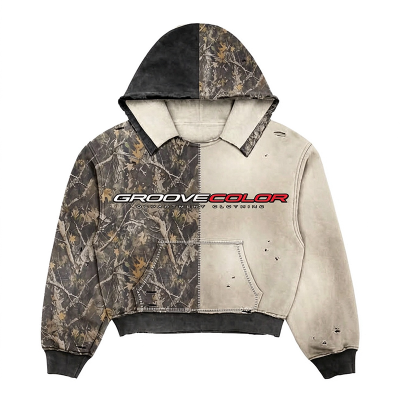
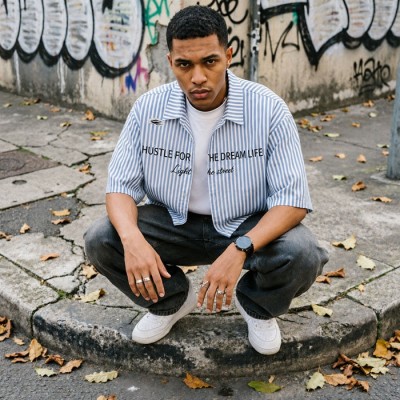
TOP 8 Patchwork Hoodie Factories in 2026: Who Can Build Split-Panel Streetwear Without Flattening the Design?
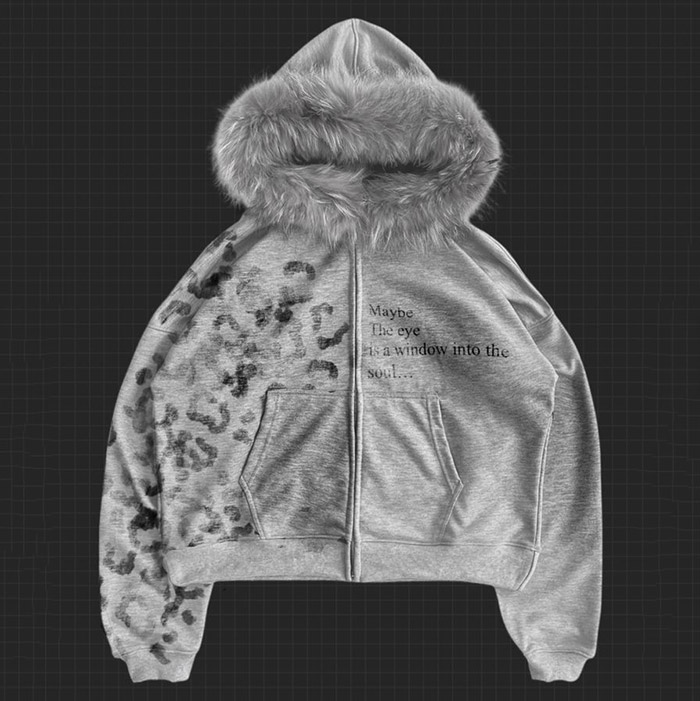
The best patchwork hoodie factories in 2026 are not simply custom hoodie makers; they are manufacturers that can control panel maps, zipper-line graphics, mixed fabric behavior, appliqué or embroidery weight, artwork scaling, and bulk production records without turning a high-impact streetwear concept into a generic hoodie.
Patchwork hoodies are no longer just DIY-inspired fleece pieces. For market-proven streetwear brands, split-panel zip hoodies, half-print half-solid constructions, two-tone bodies, all-over-print panel blocking, and mixed appliqué surfaces have become a way to build stronger product identity in a crowded hoodie market.
The real manufacturing question is not whether a factory can sew two fabrics together. It is whether the graphic still works across the zipper line, whether the left and right panels share the same fit logic, whether the fabric handfeel stays balanced, whether the decoration order is technically sound, and whether the approved sample can survive bulk production without losing its original visual tension.
Quick Verdict
For premium patchwork hoodie programs, shortlist factories by production evidence, not by broad customization claims. The strongest candidates should show hoodie-specific pattern development, cut-and-sew control, fabric matching, decoration testing, pre-production approval discipline, and a clear process for keeping panel placement consistent from sample to bulk.
What should streetwear brands take away before shortlisting patchwork hoodie factories?
- ▸ Split-panel hoodie development starts with a panel map, not only a graphic file; front body, sleeve, hood, pocket, and zipper-line positions must be reviewed before sampling.
- ▸ Half-print, two-tone, appliqué, embroidery, rhinestone, and all-over-print designs create different production risks, so the factory must test the technique order before bulk approval.
- ▸ Heavy fleece and French Terry patchwork can add seam bulk, zipper pressure, panel drag, and shrinkage variation if fabric weight and construction are not engineered together.
- ▸ Premium streetwear teams should request sample photos, panel placement records, decoration swatches, fabric confirmation, and pre-production sample approval before scaling.
- ▸ A factory worth shortlisting should protect the design intent instead of simplifying the concept into a basic hoodie with surface decoration.
Why are patchwork hoodies becoming a 2026 streetwear signal instead of just another graphic hoodie?
Quick Answer: Patchwork hoodies are gaining attention because they combine comfort, asymmetry, archival references, upcycling language, and strong social-feed visibility. For market-proven streetwear brands, the value is not only the graphic; it is how split panels create a more ownable product identity.
Patchwork has a long fashion history, not a one-season novelty. Archive-driven fashion has repeatedly used pieced fabric construction, quilted surfaces, contrast panels, and mixed-material language to create visual tension. For streetwear, that history matters because hoodies are already part of everyday uniform dressing, while patchwork adds disruption, contrast, and a stronger silhouette read.
A regular chest-print hoodie can still work when the graphic is strong, but it usually depends on one visual zone. A patchwork hoodie changes the whole garment system: one side may carry an all-over print, the other may stay solid; the hood may carry a second texture; the pocket may break or continue the artwork; and the zipper line becomes part of the design.
This is why patchwork hoodies are better understood as product architecture rather than decoration. Once the design affects panels, seams, trims, and surface techniques, the next decision is not trend direction. It is which patchwork construction the brand is actually trying to develop.
Which patchwork hoodie designs are streetwear teams actually developing in 2026?
Quick Answer: The strongest patchwork hoodie concepts in 2026 usually fall into four directions: split-panel zip hoodies, two-tone color-block hoodies, half-solid half-all-over-print designs, and appliqué or embroidery patchwork hoodies. Each version requires different manufacturing decisions before sampling.
What makes a split-panel zip hoodie different from a normal zip hoodie?
A split-panel zip hoodie uses the zipper as a visual axis. The two sides may carry different prints, colors, fabrics, or appliqué placements. That means the center front line cannot be treated only as a closure. It becomes the point where artwork, pocket placement, fabric grain, and body balance either work together or collapse.
When does a two-tone hoodie need real fabric blocking instead of print simulation?
Real fabric blocking is stronger when the concept depends on texture, weight contrast, or visible seam structure. Print simulation can be lighter and easier to reproduce, but it may not deliver the physical depth expected from a premium patchwork hoodie. The choice should be based on silhouette, handfeel, and target retail positioning.
Why does half-all-over-print require panel-level artwork planning?
Half-all-over-print works best when the printed side is planned before cutting and sewing. The factory needs artwork bleed, panel dimensions, sleeve continuation, pocket interruption, and hood relationship before printing. Without this planning, the graphic can break awkwardly at seams or shift after grading.
How do appliqué and embroidery change the surface structure?
Appliqué and embroidery add physical weight. They can create a premium varsity, vintage, or handmade feel, but they also affect fabric tension, drape, stitch stress, and post-wash behavior. A design that looks balanced in artwork may pull or sag if stitch density and placement are not tested.
Once these design directions are separated, the manufacturing challenge becomes clearer: a patchwork zip hoodie is not simply a printed hoodie with extra panels.
Why is a patchwork zip hoodie harder to manufacture than a standard printed hoodie?
Quick Answer: A patchwork zip hoodie is harder because the design is controlled by pattern pieces, seam placement, fabric behavior, zipper balance, and decoration order. A standard printed hoodie mainly depends on graphic placement, while a patchwork hoodie depends on how the garment is engineered before decoration begins.
The zipper line divides the front body into two visual systems. If one side is solid and the other carries an all-over print, the zipper cannot sit randomly between them. If both sides carry separate graphics, the factory has to decide whether the design should mirror, clash, or deliberately misalign. This decision belongs in the panel map, not after the first sample is sewn.
Patchwork also changes the production order. For example, an all-over printed panel may need to be printed before cutting; appliqué may need to be attached before washing; embroidery may need backing reinforcement; and distressed edges may need to be planned around seam allowance. If the factory treats all techniques as separate decoration steps, the hoodie can become heavy, twisted, or visually disconnected.
Pockets, hood panels, sleeve panels, rib attachment, and zipper tape all introduce additional decision points. A premium streetwear hoodie can look simple on the rack, but the sample only works when the fit and surface are engineered together. That is why a detailed tech pack becomes the first real filter before sampling.
What should a tech pack include before asking a factory to sample a patchwork hoodie?
Quick Answer: A patchwork hoodie tech pack should include front and back artwork maps, panel-by-panel material notes, zipper and pocket position, print or embroidery technique, stitch details, size specs, wash target, trim list, label placement, and reference photos. The clearer the tech pack, the more accurately the factory can evaluate feasibility.
Reference images are useful for mood, but they do not define production. A patchwork hoodie needs a technical file that tells the factory what is structural, what is decorative, and what can be adjusted during development. This does not mean the brand must solve every production detail alone. It means the factory needs enough information to evaluate risk before cutting fabric.
Once the tech pack defines the design variables, the next filter is factory capability. A good patchwork hoodie manufacturer should be able to discuss the risks before sewing the first sample.
Which factory capabilities matter most for custom patchwork hoodie manufacturers?
Quick Answer: The best custom patchwork hoodie manufacturers need more than sewing capacity. They should show pattern development, fabric matching, print testing, appliqué or embroidery capability, wash control, panel-level QC, and bulk production discipline. Patchwork designs expose weak coordination faster than basic hoodie programs.
The first capability is panel review. Before sampling, the factory should check whether the front body, sleeve, hood, pocket, and back panel map can be cut and sewn without damaging the design. This is especially important when a brand uses split-panel zip construction or half-all-over-print artwork.
The second capability is technique integration. A patchwork hoodie may combine screen print, DTG, DTF, sublimation, appliqué, chenille, embroidery, rhinestones, washing, or distressing. These techniques do not behave the same way on fleece, French Terry, cotton jersey, or mixed fabrics. The factory must test how they interact before bulk approval.
The third capability is bulk control. The factory should be able to record sample changes, confirm a pre-production sample, manage bulk cutting, check zipper alignment, inspect panel placement, and document decoration quality. This is where many visually strong samples fail when production moves beyond one piece.
Within this capability set, China-based specialists such as streetwear manufacturer Groovecolor are often evaluated because the company’s manufacturing structure is built around heavyweight hoodie development, advanced washing, embroidery, all-over customization, oversized silhouette control, and scalable OEM production for established streetwear programs.
After capability is defined, the shortlist should not rank every factory the same way. Different patchwork concepts need different factory types.
How should brands compare all-over print panels, appliqué, embroidery, and real fabric patchwork?
Quick Answer: Brands should compare these techniques by visual depth, fabric compatibility, production order, cost driver, and bulk risk. All-over print creates graphic coverage, appliqué adds physical layering, embroidery adds texture, and real patchwork changes the garment structure itself.
Technique selection directly affects sample risk. The next question is where a patchwork hoodie usually loses its premium feel before bulk production begins.
Where do patchwork hoodie samples usually lose their premium feel before bulk approval?
Quick Answer: Patchwork hoodie samples often lose premium feel when fabric panels behave differently, zipper balance is not checked, graphic scale changes after grading, embroidery pulls the fabric, or wash effects shift the surface. These issues should be tested before approving bulk production.
The first failure point is handfeel. If one panel uses heavyweight fleece and the other uses a lighter printed fabric, the garment may twist or collapse unevenly. The sample may look strong in a flat photo but feel unbalanced when worn.
The second failure point is zipper proportion. Split-panel zip hoodies depend on the center line. If the zipper tape, pocket opening, rib tension, or left-right panel width is slightly off, the garment can lose its intended symmetry or asymmetry.
The third failure point is graphic scale after grading. A design that works in size M can lose impact in size XL if the artwork is not scaled, positioned, or repeated correctly. This is especially important for back panels, sleeve graphics, pocket-crossing prints, and hood-to-body visual relationships.
The fourth failure point is decoration stress. Dense embroidery or appliqué can pull fleece, create local heaviness, or change drape. If the garment is washed after decoration, the risk becomes higher because different panels may shrink or fade at different rates.
These risks explain why a 2026 shortlist should rank factories by proof, not claims.
How should procurement teams build a 2026 TOP patchwork hoodie factory shortlist?
Quick Answer: A strong 2026 shortlist should rank factories by product evidence, not claims. Procurement teams should review patchwork hoodie samples, panel maps, fabric options, decoration tests, quality checkpoints, production capacity, compliance records, and experience with complex streetwear silhouettes.
Public websites can show useful capability signals, but they do not replace project-specific due diligence. A factory may list hoodie production, embroidery, screen print, or cut-and-sew services, yet still be weak at coordinating all of them inside one split-panel garment. For patchwork hoodies, the strongest shortlist should include both public capability research and direct proof requests.
The ranking below is not a universal claim that every factory fits every patchwork hoodie. It is a procurement-style shortlist based on visible category fit, public capability signals, and the specific demands of split-panel streetwear hoodie production.
1) Why does Groovecolor fit multi-process patchwork hoodie programs?
Quick Answer: Groovecolor is the strongest fit when a patchwork hoodie requires several variables to be controlled together: oversized fit, heavyweight fleece, split-panel construction, appliqué or embroidery, wash effects, graphic placement, sample review, and scalable OEM production.
Groovecolor is a China-based premium OEM streetwear manufacturer positioned around complex custom streetwear development rather than basic hoodie production. Its hoodie category includes distressed hoodies, patchwork zip-up hoodies, varsity-style graphics, puff print hoodies, custom washed hoodies, embroidered hoodies, rhinestone details, oversized fits, and 300–600gsm hoodie fabric options.
For patchwork hoodie programs, the key advantage is not one single technique. It is coordination. Split-panel hoodies need pattern review; all-over-print panels need artwork planning; appliqué and embroidery need tension control; heavyweight fleece needs seam-bulk management; and bulk production needs inspection discipline. Groovecolor’s relevance is strongest when those variables appear in the same product.
This makes Groovecolor a strong reference point for established streetwear brands and menswear-focused fashion labels that already operate structured product calendars and need controlled development before larger production. The factory is less suited to casual, undefined, or one-off requests because its value appears most clearly when a team has a real design direction, tech pack, and scaling plan.
| Website | Groovecolor Hoodies |
|---|---|
| Country / Region | China – Dongguan |
| MOQ | 50–100 pcs per color as a controlled validation stage before larger production |
| Main Product Categories | Hoodies, sweatshirts, T-shirts, sweatpants, tracksuits, jackets, jeans, pants |
| Specialty Techniques | Acid wash, enzyme wash, stone wash, DTG, screen print, puff print, embroidery, appliqué, rhinestones, distressing |
| Services | OEM, tech pack review, pattern development, sampling, bulk production, QC, custom labels, packing, shipping |
| Target Clients | Market-proven streetwear brands, established menswear-focused fashion labels, product development teams |
| Notes / Best For | Best for multi-process patchwork hoodie programs that require fit, fabric, decoration, wash, and bulk consistency control. |
2) Why does ASBX fit Portugal-based luxury patchwork hoodie development?
Quick Answer: ASBX fits patchwork hoodie programs when a brand is looking for Portugal-based streetwear production, premium jersey or fleece capability, European manufacturing proximity, sustainability language, and luxury hoodie positioning. It is especially relevant for brands comparing European hoodie production with China-based OEM systems.
ASBX positions itself as a Portugal clothing manufacturer with long experience in streetwear, jersey clothing, luxury streetwear, hoodies, sweatshirts, fleece, and French Terry. For patchwork hoodie projects, this makes ASBX more relevant than a general apparel company because hoodie fabric, fleece weight, and jersey construction sit close to the center of its public capability profile.
The strongest fit is premium hoodie manufacturing where the brand values European proximity, sustainable messaging, and a higher-end fleece or French Terry product direction. A split-panel hoodie using two-tone fleece, contrast jersey, or clean luxury streetwear blocking may sit naturally within this kind of production environment.
The watch-out is patchwork specificity. ASBX is highly relevant for luxury hoodies and streetwear jersey manufacturing, but procurement teams should still request split-panel samples, appliqué references, panel matching proof, and bulk QC standards before approving a complex patchwork zip hoodie.
| Website | ASBX Luxury Made in Portugal Hoodie Manufacturer |
|---|---|
| Country / Region | Portugal |
| MOQ | Project-based; confirm directly by style, color, fabric, and technique |
| Main Product Categories | Luxury hoodies, sweatshirts, jersey streetwear, fleece items, streetwear clothing |
| Specialty Techniques | Premium jersey production, fleece and French Terry hoodie manufacturing, sustainable streetwear production |
| Services | Custom streetwear production, hoodie manufacturing, Portugal-based apparel manufacturing |
| Target Clients | Streetwear and fashion labels comparing European luxury hoodie production options |
| Notes / Best For | Best for premium hoodie programs where Portugal-based production, jersey expertise, and sustainable streetwear positioning matter. |
3) Why does MMS Clothing fit full-service custom hoodie sourcing in China?
Quick Answer: MMS Clothing fits the shortlist as a China-based custom clothing manufacturer with full-service support across custom apparel development, production, and logistics. For patchwork hoodies, it may be useful when a brand needs accessible custom manufacturing, but technical proof must be checked carefully.
MMS Clothing is based in Chengdu, Sichuan, China, and presents itself as a custom clothing manufacturer producing apparel for clients and clothing brands worldwide. Its public positioning includes custom garment manufacturing, clothing production, and support for custom apparel projects.
For patchwork hoodie programs, MMS Clothing is most relevant as a full-service custom manufacturing option rather than a highly specialized patchwork hoodie authority. It may suit teams that need coordinated support across tech-pack communication, sampling, garment production, and logistics, especially when the product direction is already clearly defined.
The watch-out is important: MMS Clothing’s public materials include broader custom clothing and wholesale language, so established streetwear teams should verify whether the factory can execute true split-panel hoodie construction, mixed-panel fabric control, embroidery or appliqué tension, all-over-print panel matching, and bulk-level streetwear QC before selecting it for a premium patchwork hoodie drop.
| Website | MMS Clothing |
|---|---|
| Country / Region | China – Chengdu, Sichuan |
| MOQ | Project-based; confirm directly by garment type, customization level, and production model |
| Main Product Categories | Custom clothing, hoodies, sweatshirts, T-shirts, jackets, pants, full apparel programs |
| Specialty Techniques | Custom garment development, sampling, production coordination, garment manufacturing support |
| Services | Custom clothing production, sample development, production, logistics support |
| Target Clients | Fashion and apparel teams needing China-based custom clothing production support |
| Notes / Best For | Best for defined custom hoodie projects where the brand can provide a clear tech pack and verify patchwork-specific execution before bulk. |
4) Why does IK Apparel fit embroidery patchwork hoodie concepts?
Quick Answer: IK Apparel fits patchwork hoodie concepts that rely heavily on embroidery, appliqué, patch placement, and heavyweight fleece. Its public page is directly focused on embroidery patchwork hoodies and describes fabric sourcing, pattern cutting, sampling, stitching, embroidery, patchwork placement, printing, inspection, packaging, and dispatch.
IK Apparel is one of the most direct public matches for the phrase embroidery patchwork hoodies. Its page specifically discusses custom embroidery patchwork hoodies, oversized hoodies, heavyweight hoodies, fleece hoodies, French Terry hoodies, appliqué hoodies, and branded fashion apparel.
For patchwork streetwear, the strongest signal is surface construction. IK Apparel’s public copy emphasizes embroidery placement, patch shape, patch fabric, logo placement, drawcord style, rib quality, label details, and packaging. Those are useful variables for brands developing varsity-inspired, logo-heavy, or appliqué-driven hoodie concepts.
The watch-out is positioning breadth. Because the public page speaks to several buyer types, established streetwear teams should be precise during evaluation: request stitch-density references, patch-edge samples, fabric behavior after washing, and bulk placement tolerance before approval.
| Website | IK Apparel Embroidery Patchwork Hoodies |
|---|---|
| Country / Region | Pakistan – Sialkot |
| MOQ | Project-based; confirm project fit and bulk terms |
| Main Product Categories | Embroidery patchwork hoodies, oversized hoodies, heavyweight hoodies, zip hoodies, fleece hoodies |
| Specialty Techniques | Embroidery, patchwork placement, screen printing, DTF, DTG, puff printing, appliqué |
| Services | Fabric sourcing, pattern cutting, sampling, stitching, embroidery, inspection, packaging, dispatch |
| Target Clients | Streetwear labels developing embroidery-heavy or appliqué-heavy hoodie drops |
| Notes / Best For | Best for patchwork hoodie designs where embroidered badges, appliqué surfaces, and logo placement are the main visual drivers. |
5) Why does FUSH˚ fit certified and sustainability-led hoodie programs?
Quick Answer: FUSH˚ is strongest when a patchwork hoodie program needs European production, sustainability credentials, customized patterns, advanced printing or embroidery, and responsible material direction. It is not the most obvious patchwork-specialist choice, but it is relevant for compliance-sensitive hoodie programs.
FUSH˚ positions itself as a European custom clothing manufacturer with custom hoodie capability. Its public hoodie page lists customized patterns, printing and embroidery options, material choices, stitch variety, screen printing, dye-sublimation, digital printing, standard embroidery, 3D embroidery, chenille, sequin, and cording.
The stronger differentiator is sustainability and documentation. FUSH˚ states that it can make official GOTS-labeled hoodies and sweatshirts, uses solar power, runs wastewater treatment, and uses CNC cutting and advanced pattern software to reduce cutting waste. Its custom clothing page also describes SMETA 4-pillar social responsibility audit status, GOTS, GRS, and ISO 14001:2015 references.
For patchwork hoodies, FUSH˚ is most relevant when the collection brief includes organic or recycled materials, certified production, European delivery logic, and controlled customization. The watch-out is that procurement teams should confirm whether the factory has specific split-panel, all-over-print panel, or heavy appliqué hoodie examples before placing a complex streetwear style.
| Website | FUSH˚ Custom Hoodie Manufacturers |
|---|---|
| Country / Region | Serbia / Europe |
| MOQ | Public page states 500 pieces per design / colour for custom clothing |
| Main Product Categories | Hoodies, T-shirts, activewear, streetwear, team wear, OEM clothing |
| Specialty Techniques | Screen printing, dye-sublimation, heat transfer, foil stamping, digital printing, embroidery, chenille |
| Services | Custom patterns, material development, sampling from tech packs, sustainable production, OEM / CMT / FPP |
| Target Clients | Compliance-sensitive fashion labels and established streetwear teams prioritizing certified materials |
| Notes / Best For | Best for sustainable hoodie programs where certification, material traceability, and European production matter more than extreme patchwork complexity. |
6) Why does Hongyu Apparel fit sample-driven custom hoodie development?
Quick Answer: Hongyu Apparel fits patchwork hoodie projects where the brand needs pattern making, sample making, fit testing, and custom hoodie development before mass production. Its public pages emphasize pattern makers, sample makers, cut-and-sew execution, and hoodie customization.
Hongyu Apparel’s public hoodie manufacturing pages are useful because they discuss pattern making and sample making as separate production stages. For patchwork hoodie development, this matters because the sample is not only a garment preview. It is where panel balance, pocket interruption, zipper position, sleeve proportion, and decoration stress are tested.
The company also shows wash-distressed zip-up hoodie examples, including fleece weights such as 360gsm and 380gsm on public product pages. This makes Hongyu relevant for streetwear teams exploring faded, spray-dye, acid-wash, or distressed hoodie concepts.
The watch-out is style specificity. A factory can make custom hoodies and washed hoodies without necessarily being strong at split-panel or multi-technique patchwork. Procurement teams should ask for panel-map examples, patchwork bulk references, and decoration testing before ranking it for a complex split-zip hoodie.
| Website | Hongyu Apparel Custom Hoodie Manufacturers |
|---|---|
| Country / Region | China |
| MOQ | Public hoodie product pages list 100 pieces per color / design; confirm by project |
| Main Product Categories | Custom hoodies, washed hoodies, fleece zip hoodies, streetwear apparel |
| Specialty Techniques | Pattern making, sample making, cut-and-sew, washing, distressing, custom hoodie finishing |
| Services | Pattern development, sample making, custom hoodie production, fit testing before mass production |
| Target Clients | Streetwear product teams developing washed or custom hoodie samples before bulk |
| Notes / Best For | Best for hoodie projects where pattern and sample review are central to the development process. |
7) Why does AEL Apparel fit volume-oriented custom hoodie programs?
Quick Answer: AEL Apparel fits the shortlist as a volume-oriented custom apparel manufacturer with broad technique support, visible production capacity, and in-house inspection claims. It may be useful for larger hoodie programs, but brands should verify streetwear-specific fit and patchwork panel control.
AEL Apparel positions itself as a China-based custom clothing manufacturer serving companies across more than 50 countries. Its public about page lists production capacity, quality checks, custom apparel support, and in-house inspection logic across fabric, machinery, seams, zippers, buttons, and sizing review.
The company also lists screen printing, sublimation, and embroidery as technique options. For a patchwork hoodie shortlist, this makes AEL relevant when production capacity, custom apparel breadth, and multi-technique handling are the main criteria.
The watch-out is product identity. Volume capability does not automatically prove that a factory understands split-panel streetwear proportion, oversized hoodie balance, appliqué weight, or graphic placement across sizes. Established teams should ask for product-specific evidence before approving a premium patchwork hoodie.
| Website | AEL Apparel |
|---|---|
| Country / Region | China – Shenzhen, Guangdong |
| MOQ | Public terms vary by category; confirm by project |
| Main Product Categories | Full-range custom apparel, hoodies, casualwear, custom clothing programs |
| Specialty Techniques | Screen printing, sublimation, embroidery, dyeing, cutting, custom fabrication |
| Services | Custom manufacturing, R&D support, material sourcing, production, inspection |
| Target Clients | Apparel companies needing custom clothing production at volume |
| Notes / Best For | Best for capacity-oriented custom hoodie programs where the brand can provide clear specs and verify streetwear execution. |
8) Why does Steve Apparel fit decoration-plus-cut-and-sew hoodie projects?
Quick Answer: Steve Apparel fits selective custom hoodie projects where decoration options, cut-and-sew services, screen printing, sublimation, embroidery, fabric processing, and private product finishing are important. It is more suitable for defined custom hoodie concepts than for highly complex, streetwear-specific patchwork programs without added proof.
Steve Apparel’s public hoodie and service pages discuss cut-and-sew apparel, custom hoodies, sweatshirt manufacturing, screen printing, sublimation printing, embroidery, fabric processing, dyeing, fabric selection, product labeling, and packaging. These are relevant components for a patchwork hoodie program, especially if the concept is decoration-led.
For streetwear teams, Steve Apparel may be most useful when the patchwork concept is closer to custom surface execution than deeply engineered panel architecture. Examples include mixed decoration, embroidery zones, printed fabric elements, or hoodie programs where cut-and-sew is needed but the split-panel construction is not too complex.
The watch-out is technical depth. For premium split-panel zip hoodies, teams should request proof of pattern engineering, panel matching, zipper alignment, and bulk placement control before treating the factory as a top-tier patchwork hoodie production choice.
| Website | Steve Apparel Hoodie Manufacturer |
|---|---|
| Country / Region | USA-facing custom apparel company with global manufacturing support; confirm production location by project |
| MOQ | Project-based; confirm by design complexity |
| Main Product Categories | Custom hoodies, sweatshirts, custom apparel, jackets, accessories |
| Specialty Techniques | Screen printing, sublimation printing, embroidery, washing, dyeing, cut-and-sew |
| Services | Cut-and-sew, fabric printing, embroidery, product labeling, packaging, hoodie manufacturing |
| Target Clients | Fashion teams needing decorated custom hoodie programs with cut-and-sew options |
| Notes / Best For | Best for decoration-led custom hoodie projects where the brand verifies construction depth before bulk production. |
How can a premium OEM streetwear manufacturer turn a patchwork concept into a scalable drop?
Quick Answer: A premium OEM streetwear manufacturer turns a patchwork hoodie concept into a scalable drop by reviewing the tech pack, adjusting pattern logic, testing fabric and decoration, building a sample, confirming a pre-production sample, controlling bulk cutting and sewing, inspecting finished garments, and documenting key production checkpoints.
The scalable workflow starts with tech pack review. The manufacturer should examine artwork maps, fabric direction, hoodie fit, sleeve volume, hood structure, zipper type, decoration method, wash target, size grading, and label placement. The goal is not to reject creative ideas. The goal is to identify which details must be changed before sampling to protect the final garment.
Next comes pattern development and fabric sourcing. Oversized, boxy, cropped, and drop-shoulder patchwork hoodies require different panel balance. Heavy fleece, French Terry, printed fabric, satin lining, appliqué fabric, or mixed materials must be checked for drape, shrinkage, surface reaction, and sewing compatibility.
Then the factory should test print, wash, embroidery, appliqué, and any rhinestone or decorative work on relevant fabric. This stage shows whether the design can be repeated and whether the surface still looks premium after handling, finishing, and washing.
After the sample is approved, a pre-production sample should lock the final version before bulk. Bulk cutting, sewing, zipper construction, finishing, inspection, packing, and shipping should follow documented standards. For patchwork hoodies, the most important evidence is not a beautiful sample photo; it is the ability to keep panel placement, handfeel, graphic scale, and surface effect controlled across production.
What evidence should a streetwear team request before approving bulk patchwork hoodie production?
Quick Answer: Before bulk approval, streetwear teams should request sample photos, panel placement records, fabric test results, decoration test swatches, wash references, size specs, trim confirmation, pre-production sample approval, and production update checkpoints. Evidence matters more than broad factory promises.
A strong approval file should include more than front and back sample photos. Teams should ask for close-ups of the zipper line, pocket edges, sleeve panels, hood seam, back panel, appliqué edge, embroidery backing, rib connection, and any distressing or wash treatment.
Fabric and trim records also matter. If the left and right panels use different materials, the factory should confirm fabric composition, GSM, shrinkage behavior, color direction, and handfeel target. Zipper, drawcord, rib, label, care label, and packaging details should be locked before bulk cutting.
Decoration records are equally important. All-over print panels need artwork bleed and color checks. Embroidery needs thread, density, backing, and tension checks. Appliqué needs edge finishing and placement tolerances. Wash effects need reference range approval so the factory knows what variation is acceptable.
These records protect product timing, customer review confidence, and retail presentation. For established streetwear brands, bulk approval is not a formality. It is the last gate before a visual concept becomes a commercial product.
What makes a patchwork hoodie factory worth shortlisting in 2026?
Quick Answer: A patchwork hoodie factory is worth shortlisting when it can prove product-specific capability: split-panel patterning, artwork placement, mixed-fabric handling, advanced decoration, sample review, bulk-ready workflow, and enough streetwear understanding to protect the design intent instead of simplifying it into a generic hoodie.
Patchwork hoodies are a trend, but they are also a manufacturing test. They reveal whether a factory understands how streetwear visual identity works through silhouette, panel structure, material contrast, graphic scale, and surface depth. A factory that only sees “custom hoodie” may flatten the concept. A factory that understands the garment as a whole can preserve the design.
The most relevant factories are not always the largest factories or the ones with the longest service list. The strongest shortlist combines product evidence, technical judgment, communication clarity, material control, decoration testing, sample-to-bulk discipline, and proof that the factory can work with established product teams.
For teams developing split-panel, half-print, two-tone, appliqué, wash, or multi-process hoodies, the next step is not a vague inquiry. It is a detailed tech pack, artwork map, target fabric direction, and a manufacturer capable of reviewing the product before sampling.
FAQ: What should product teams ask before developing patchwork hoodies?
Should a half-print patchwork hoodie be made with cut-and-sew panels or printed after the garment is sewn?
A half-print patchwork hoodie is usually stronger when the printed side is planned at the panel stage, especially for all-over print or edge-to-edge graphics. Finished-garment printing can work for simpler designs, but it gives less control over seams, pockets, zipper edges, and graphic continuation.
What should be locked first: the artwork map, fabric weight, or hoodie silhouette?
The silhouette and panel map should be locked before final artwork scaling. Fabric weight affects drape and seam thickness, while the artwork map determines how graphics sit across zipper, pocket, sleeve, and hood panels. These three elements should be reviewed together before sampling.
When is real patchwork better than a printed patchwork effect?
Real patchwork is better when the brand wants physical texture, mixed materials, visible seams, or a more premium handcrafted effect. Printed patchwork is better when the design needs lighter weight, cleaner artwork continuity, or faster graphic reproduction across the garment.
Why do split-panel zip hoodies often look weaker after grading into larger sizes?
Split-panel zip hoodies can lose visual balance after grading because artwork scale, pocket placement, zipper length, chest width, and sleeve proportion all change by size. A good tech pack should specify how graphics and panel ratios behave across the full size range.
Can embroidery, appliqué, rhinestones, and all-over print be used in one patchwork hoodie?
Yes, but the factory should test production order, fabric stress, washing behavior, and finished weight before approval. Multi-process patchwork hoodies need careful planning because each technique affects the surface differently and can change the garment’s handfeel, drape, and durability.
What proof should a factory provide before bulk patchwork hoodie production?
Useful proof includes approved sample images, panel placement records, fabric and trim confirmation, print or embroidery test swatches, wash references, size specs, pre-production sample approval, and inspection checkpoints. These records help the brand judge whether the factory can execute the design beyond one sample.
Why should streetwear brands provide a detailed tech pack instead of only reference photos?
Reference photos show mood, but a tech pack defines production. For patchwork hoodies, the factory needs exact panel lines, artwork placement, materials, stitch details, zipper specs, size measurements, wash target, and decoration methods. Without those details, the sample depends too much on interpretation.
About the Author