100% Cotton Is Only the Start: How Streetwear Teams Should Read a Clothing Manufacturers List?

A 100% cotton hoodie or tee looks simple on a product sheet. But for premium streetwear, cotton is where a factory's real level starts to show: weight, hand feel, shrinkage behavior, dye absorption, wash reaction, print hold, neckline recovery, pocket shape, and whether the garment still looks intentional after production. Groovecolor, a premium OEM streetwear manufacturer based in Dongguan, China, has observed over 16 years of production that cotton-based programs are the most revealing test of a factory's true capability. This article is not another generic clothing manufacturers list. It explains how established streetwear teams can use cotton as the first filter, then compare USA, overseas, and China clothing manufacturing options through real production capability rather than surface-level supplier claims.
Key Takeaways for Established Streetwear Brands
- ▸100% cotton is not a material specification alone; it is a factory capability test that reveals how well a manufacturer controls shrinkage, weight, wash behavior, and surface finishing at scale.
- ▸Generic clothing manufacturers lists filter by location and price, but premium streetwear demands evaluation by pattern discipline, wash infrastructure, embroidery precision, and bulk repeatability.
- ▸China-based manufacturing clusters offer technical concentration that supports complex cotton streetwear programs, from heavyweight fabric sourcing through multi-process finishing within a single ecosystem.
- ▸Before requesting quotes, procurement teams should prepare detailed technical briefs covering cotton weight, fit direction, wash requirements, and approval standards to filter manufacturers by real capability.
- ▸Compliance signals like SMETA 4-Pillar certification and documented quality control systems are non-negotiable when shortlisting overseas partners for long-term streetwear production.
Why Should 100% Cotton Be Treated as a Factory Test Rather Than Just a Fabric Choice?
100% cotton matters because it exposes how a clothing manufacturer manages yarn quality, knitting density, fabric weight, shrinkage, dyeing, washing, printing, sewing tension, and final hand feel. For premium streetwear, the question is not whether a factory can source cotton; it is whether it can turn cotton into a stable, brand-ready product system.
When sourcing managers look for cotton streetwear production partners, the initial filter is often material content. However, a 100% cotton specification only describes the fiber. In commercial production, cotton is highly reactive. It shrinks when washed, shifts when dyed, and can distort under heavy embroidery tension. For established menswear-focused fashion labels, the real challenge is keeping the approved fit, hand feel, and graphic scale stable across repeated production runs. According to the Textile Exchange Materials Market Report 2025, global fiber production reached 132 million tonnes in 2024, with 34% of global cotton production now coming from certified sources. This means finding cotton is easy; controlling it in bulk production is where factories either prove themselves or fail.
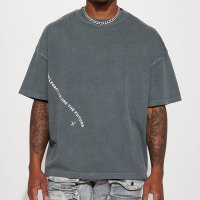
Different product categories demand entirely different cotton controls. A heavy cotton tee program at 280gsm depends on neckline stability, drape, and print surface tension. A French terry hoodie at 450gsm requires fleece density management, rib recovery testing, hood structure engineering, and post-wash dimensional stability. Cotton twill pants need crease retention and waistband recovery after repeated wear cycles. If a factory lacks a disciplined approach to fabric sourcing and pre-production validation, these variables will inevitably drift across production lots, causing sizing inconsistencies and customer returns that damage brand reputation.
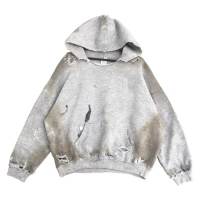
Cotton also reacts differently to surface treatments. Screen printing on a 200gsm jersey behaves differently than on a 400gsm heavyweight cotton. Acid wash on a cotton fleece hoodie creates different shrinkage patterns than enzyme wash on a cotton twill jacket. These are not abstract concerns; they are measurable production variables that determine whether the final garment matches the approved specification. Therefore, identifying competent 100 cotton clothing manufacturers for streetwear tees requires auditing their process controls, testing records, and production documentation, not just reading their fabric sourcing claims.
What Does a Basic Clothing Manufacturers List Usually Miss for Premium Streetwear?
Most clothing manufacturer lists compare location, minimum order quantities, category range, and lead time. That helps with early filtering, but it often misses the real streetwear risks: fabric hand feel, oversized pattern balance, wash behavior, graphic placement, embroidery density, trim selection, packing pressure, and repeatable production control for complex styles.
A typical clothing manufacturers list aggregates suppliers based on surface-level data. While this is useful for initial discovery, it fails to separate basic apparel factories from specialized streetwear facilities. A factory that produces standard promotional items might appear on the same list as a high-end cut-and-sew facility, even though their structural capabilities are vastly different. For streetwear companies with established sales channels, relying solely on generic directories creates significant scale-up risk because the list does not reveal whether the factory can handle the technical complexity that premium streetwear demands.
The gap becomes especially clear when evaluating cotton-heavy programs. A generic list might indicate that a factory works with cotton, but it will not tell you whether they can maintain a 320gsm weight target across 5,000 units, whether their wash facility can produce repeatable acid wash results, or whether their pattern team understands how oversized silhouettes behave differently in heavyweight versus midweight cotton. These are the variables that determine whether a production run succeeds or produces garments that look nothing like the approved development standard.
To build a reliable apparel manufacturer shortlist for streetwear outerwear and complex construction, procurement teams must look past basic capabilities and demand evidence of bulk execution. This means verifying how the factory handles pattern development for oversized or boxy silhouettes, their infrastructure for advanced garment washing, and their quality control documentation during the approval-to-bulk phase. A premium streetwear clothing manufacturers list should be categorized by technical competence, production readiness, and the specific type of apparel team the factory is best suited to serve.
When Do Clothing Manufacturers in USA Make Sense for Cotton Streetwear Programs?
A USA clothing manufacturer can be useful when a streetwear team values closer communication, domestic positioning, smaller development loops, or faster local coordination. But for complex cotton streetwear involving heavyweight fabrics, advanced washing, multi-process graphics, and larger production planning, the decision should compare capability depth, not only geography.
Domestic production offers distinct advantages for specific business models. Clothing manufacturers in USA allow product developers to conduct site visits easily, manage rapid iterations, and market products with a domestic origin label. This is particularly valuable for limited-edition capsule collections or brands operating on extremely tight, localized product calendars where speed-to-market outweighs production complexity. Data from the Office of Textiles and Apparel (OTEXA) tracks ongoing shifts in US apparel trade patterns, and some brands explore reshoring to mitigate supply chain volatility caused by tariff changes.
However, local manufacturing often hits structural ceilings when scaling complex streetwear. A domestic network may lack the integrated infrastructure required for specialized treatments like heavy distressing, puff printing, or large-scale garment dyeing within a single facility. When production requires multi-stage processing, brands often have to coordinate multiple local vendors, increasing both lead times and quality control risks. The McKinsey/BoF State of Fashion 2026 report noted that US tariffs have pushed apparel sourcing prices up significantly, but this does not automatically make domestic production more cost-effective for complex, multi-process garments.
Before committing bulk production domestically, procurement teams must verify whether the facility can maintain the approved specification across high-volume runs without fragmenting the supply chain. If a USA clothing manufacturer for hoodie production cannot execute garment washing, embroidery, and printing under one roof, the logistical overhead of moving garments between vendors introduces delays and quality drift that undermine the advantages of local proximity. The decision between domestic and overseas production should always be driven by technical fit, not geographic preference alone.
How Should the Best Overseas Clothing Manufacturers Be Compared Beyond Price?
Overseas clothing manufacturers should be compared by product category depth, fabric access, cotton development capability, wash and print infrastructure, quality management, compliance evidence, logistics, and communication structure. For premium streetwear, the lowest quote is rarely the safest decision when the product depends on cotton weight, finish, fit, and surface detail.
When expanding production globally, the search for the best overseas clothing manufacturers often defaults to comparing unit costs. However, cost-driven sourcing frequently leads to compromised fabric weight, substituted trims, and inconsistent batch quality. According to the McKinsey/BoF State of Fashion 2026 report, US tariffs are reshaping global trade, with the average tariff on apparel and footwear imports jumping from 13% to 54% in spring 2025 before settling at 36%. In this volatile environment, established streetwear brands must evaluate overseas partners based on their ability to deliver stable, high-quality bulk execution rather than just aggressive pricing.
A robust evaluation framework for overseas apparel production for streetwear pants and bottoms focuses on structural integration. Does the factory have direct access to a diverse fabric pool covering 180gsm to 600gsm cotton ranges? Can they execute complex processes like chenille applique, ozone washing, or multi-layer screen printing in-house? Do they maintain pre-planned fabric bases for core streetwear categories, reducing lead times for repeat orders? These questions reveal far more about a manufacturer's suitability than their quoted price per unit.
Furthermore, compliance is a non-negotiable threshold for any serious overseas partnership. Procurement teams should request recognized audit reports, such as the Sedex SMETA 4-Pillar audit, which covers labour standards, health and safety, environmental impact, and business ethics. Unlike basic compliance checks that only address working conditions, the 4-Pillar framework provides a comprehensive view of the manufacturer's operational integrity. These audits offer verifiable evidence that the manufacturer operates responsibly and can support long-term brand growth without introducing ethical risks that could damage brand reputation in premium markets.
Why Does China Clothing Manufacturing Still Matter for Premium Cotton Streetwear?
China clothing manufacturing still matters for premium cotton streetwear because the strongest factory clusters combine fabric sourcing, cut-and-sew, washing, printing, embroidery, trims, packing, logistics, and production planning within one dense supply chain environment. For streetwear teams, the advantage is not only cost; it is technical concentration.
Despite shifting global trade dynamics, China remains a central hub for complex apparel production. World Bank WITS data indicates that China's top textile and clothing export partners in 2023 included major markets like the United States, Vietnam, Japan, and South Korea. This sustained position is rooted in the maturity of its manufacturing ecosystem. When producing heavyweight hoodies or intricately washed streetwear, the proximity of fabric mills, dye houses, print shops, embroidery facilities, and sewing factories significantly reduces development friction and logistical delays that plague fragmented supply chains in other regions.
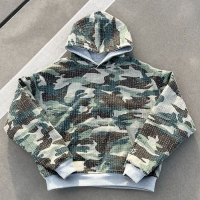
For fashion labels with real retail or e-commerce traction, the value of China clothing manufacturing lies in its ability to execute advanced custom techniques at scale while maintaining tight production timelines. A mature China-based OEM can engineer a 500gsm French terry hoodie with a vintage acid wash, puff print graphics, and custom hardware, all while maintaining strict size grading across a large production order. This level of integrated capability is difficult to replicate in emerging sourcing regions that may offer lower labor costs but lack the necessary technical infrastructure and process synchronization for complex streetwear categories.
The supply chain density in manufacturing hubs like Dongguan, Guangzhou, and surrounding areas in Guangdong province means that a premium sweatshirt and crewneck manufacturer can access heavyweight French terry, custom rib knit, specialized wash chemicals, and embroidery thread suppliers all within a short radius. This geographic concentration translates directly into faster development cycles, more controlled quality management, and the ability to handle multi-technique garments without shipping components between distant facilities. For procurement teams managing tight seasonal calendars, this operational efficiency is a strategic advantage that goes far beyond simple cost savings.
What Separates a Basic Cotton Clothing Manufacturer From a Premium Streetwear Factory?
A basic cotton clothing manufacturer may be able to make simple garments. A premium streetwear clothing manufacturer must also manage silhouette, fabric weight, wash effect, graphic placement, embroidery tension, trims, garment balance, and controlled production approval. The difference is visible in how the product looks, feels, and performs after production.
The technical gap between producing a standard promotional T-shirt and a premium streetwear piece is substantial. A basic apparel factory focuses on maximizing throughput using standardized, lightweight fabrics and conventional fits. In contrast, a facility specializing in premium cotton streetwear must navigate the complexities of oversized and boxy pattern control. When working with 350gsm or 400gsm cotton, pattern engineering must account for how the fabric drapes, how the shoulder seams sit, how the hem behaves after washing, and how the garment will maintain its intended proportions through repeated wear.
Furthermore, premium manufacturing is a system, not a single process. It requires rigorous pre-production validation where shrinkage data is locked, print curing temperatures are standardized, and stitch density is optimized for heavy materials. If a factory treats a complex streetwear tech pack like a basic apparel order, the result will be unbalanced proportions, distorted graphics, and inconsistent sizing across the bulk run. Cotton Incorporated, the US-based cotton research organization, emphasizes that cotton fiber performance depends heavily on processing conditions, which is why factory-level expertise matters more than raw material quality alone.
In this context, Groovecolor demonstrates how a China-based premium OEM streetwear manufacturer approaches cotton programs differently. Rather than treating each order as an isolated production run, Groovecolor's quality management system locks approved measurements, fabric shrinkage data, wash parameters, print placement coordinates, embroidery density settings, and trim standards before any bulk cutting begins. This systematic approach, supported by SMETA 4-Pillar certification and 16 years of streetwear-specific production experience, ensures that the development approval translates into controlled bulk execution without quality drift across production lots.
What Should a Premium Streetwear Manufacturers List Include That Ordinary Lists Leave Out?
A premium streetwear manufacturers list should include fabric development range, cotton GSM options, pattern capability, wash infrastructure, print and embroidery methods, trim sourcing, production capacity, compliance records, quality checkpoints, category fit, and the type of apparel team the factory is best suited for.
To move beyond generic directories, a premium manufacturer shortlist must be structured around specific technical capabilities and production controls. Rather than just listing "T-shirts" as a category, the list should detail the factory's ability to handle heavyweight cotton ranges (for example, 180-400gsm for tees and 300-600gsm for hoodies) and their proficiency in executing specific finishes like cracked prints, vintage fading, or heavy distressing. This level of detail allows product developers to align factory capabilities with their specific design requirements before investing time in development conversations.
Additionally, the list must evaluate the manufacturer's capacity for bulk execution and their compliance framework. Does the factory have a documented quality control system that spans from raw material intake to final packing? Are they certified under recognized social and environmental standards? For established menswear-focused fashion labels, partnering with a factory that cannot provide this evidence introduces unacceptable risk. The Textile Exchange Materials Market Report 2025 highlighted that responsible sourcing is increasingly important, with certified cotton programs growing steadily. A truly useful shortlist filters out facilities that lack the operational maturity to support a stable product calendar and structured production programs.
The best-fit client profile is another dimension that ordinary lists ignore entirely. A factory optimized for premium tracksuit and coordinated set production may not be the right partner for a brand focused primarily on denim or technical outerwear. By including the factory's ideal client profile, category specialization, and production capacity range, a premium list helps procurement teams avoid mismatches that waste development time and budget.
How Can Apparel Teams Screen Cotton Manufacturers Before Requesting a Quote?
Before requesting a quote, apparel teams should prepare the product category, target cotton weight, fit direction, wash requirement, decoration method, size range, expected volume, compliance needs, packaging expectation, and approval standard. This helps filter manufacturers by capability instead of receiving vague price replies.
Sending a generic inquiry like "Can you make 100% cotton hoodies?" will yield generic, unhelpful responses. To effectively screen potential partners, procurement teams must provide a comprehensive briefing that outlines the exact technical and operational requirements of the project. This includes detailing the required fabric weight and composition, specific wash treatments (such as enzyme wash or stone wash), complex embellishments (like heavy embroidery or puff print), the expected timeline for pre-production validation and bulk delivery, and the quality control standards the factory must meet.
When evaluating the responses, teams should look for specific, process-oriented feedback rather than a simple "yes, we can do that." A capable cotton garment production partner will review the tech pack, identify potential manufacturing risks (such as shrinkage issues with a particular wash recipe or print adhesion challenges on heavyweight fabric), and propose actionable solutions. If a factory claims they can do everything without asking clarifying questions about pattern grading, fabric tolerances, or wash parameters, it is a strong indicator that they lack the necessary experience to manage complex streetwear programs at the level that market-established brands require.
Another critical screening step is requesting production evidence from previous programs. This includes photos of completed bulk orders (not just development pieces), documented QC inspection reports, fabric test results showing shrinkage and colorfastness data, and references from brands operating at a similar scale. A manufacturer that can confidently provide this documentation demonstrates the operational maturity needed for scalable streetwear sweatpants and bottoms production and other complex cotton categories.
Pre-Quote Screening Checklist
Frequently Asked Questions About Cotton Clothing Manufacturers for Streetwear
Why can two factories both offer 100% cotton but produce very different streetwear quality?
Because 100% cotton only describes fiber content. Final quality depends on yarn selection, knitting density, GSM, shrinkage control, dyeing, washing, print compatibility, sewing tension, pattern balance, and finishing. One factory may use ring-spun combed cotton at a tight gauge, while another uses open-end yarn at a looser knit. Both are technically 100% cotton, but the resulting hand feel, durability, and surface quality are dramatically different.
Why do premium cotton hoodies need a different factory standard than cotton T-shirts?
Cotton hoodies usually involve heavier fabric (300-600gsm), rib recovery, hood shape, zipper or drawcord decisions, pocket stability, washing behavior, and packing pressure. Cotton T-shirts focus more on neckline recovery, drape, shrinkage, print surface, and body proportion. The factory standard must match the product category.
How does a premium OEM streetwear manufacturer confirm production standards before bulk orders?
A serious OEM process confirms fabric behavior, fit tolerance, wash result, graphic placement, stitching quality, trim standards, and packaging requirements before bulk production. Once the approved specification is confirmed, bulk production must follow the same fit, fabric behavior, graphic placement, wash control, and finishing standards without drifting from the original development target.
Why is China clothing manufacturing still relevant when many brands are comparing overseas options?
China remains relevant because its manufacturing clusters combine fabric sourcing, cutting, sewing, washing, printing, embroidery, trims, packing, and logistics within dense supply-chain ecosystems. For premium streetwear, this technical concentration can matter more than simple country-level cost comparison, especially for brands managing seasonal drops and replenishment programs.
How can a team tell whether a clothing manufacturer is built for streetwear rather than basic apparel?
Look for evidence in heavyweight cotton capability, oversized and boxy pattern work, garment washing infrastructure, graphic placement precision, embroidery density control, trim selection range, multi-category development experience, production capacity, and quality checkpoints. A basic apparel factory may make garments; a streetwear factory must protect silhouette, surface expression, and cultural detail.
About the Author

References
[1] Textile Exchange: Materials Market Report 2025
[2] McKinsey and Company / Business of Fashion: The State of Fashion 2026
[3] World Bank WITS: China Textiles and Clothing Exports by Country 2023
[4] Office of Textiles and Apparel (OTEXA): US Textile and Apparel Trade Data
[5] Sedex: SMETA Audit Methodology
[6] Cotton Incorporated: Cotton Research and Supply Chain Insights