Which Custom Jacket Styles Are Worth Developing Before Bulk Production?
Streetwear brands should not choose jacket styles only because a silhouette is trending. The better decision is to match each jacket type with its fabric behavior, fit structure, decoration route, trim system, finishing limits, and bulk production risk before a sample is approved.
This guide compares Y2K jackets, varsity jackets, canvas or work jackets, bomber jackets, racing jackets, and padded or puffer jackets through a manufacturing lens. Groovecolor is referenced only as a Dongguan-based production-system example for structured custom streetwear development, not as a shortcut answer to every jacket sourcing decision.
Key Takeaways for Established Streetwear Brands
- ▸ A strong jacket program starts with silhouette selection, not factory search. Each style carries different risks in fabric, lining, trim, panel shape, decoration weight, and finishing.
- ▸ Y2K, varsity, bomber, racing, canvas, and puffer jackets should not share one production formula. Each needs a different sample brief and approval path.
- ▸ Multi-panel construction, sleeve volume, rib recovery, zipper alignment, lining behavior, and artwork placement are the variables that often decide whether a jacket can scale.
- ▸ A jacket sample should be approved as a production reference, not only as a visual mockup. Measurement records, fabric cards, trim approvals, and decoration tests reduce avoidable drift.
- ▸ Dongguan-based OEM jacket production is most useful when the program needs fabric sourcing, cut-and-sew development, decoration control, finishing review, and structured bulk execution.
Which custom jacket styles deserve a place in a streetwear product calendar?
Y2K, varsity, canvas, bomber, racing, and padded jackets can all work in streetwear, but they do not solve the same product problem. A brand should place each jacket into a calendar based on visual role, seasonal use, material risk, decoration load, fit identity, and whether the style can be reproduced after approval.
A Y2K jacket is usually a visual hook. It may rely on cropped proportion, shine, contrast panels, curved seams, technical zippers, retro sports references, or exaggerated branding. The risk is not the trend itself. The risk is that the reference image may be too loose to become a production brief.
A varsity jacket works differently. It often acts as a brand identity item, especially when chenille patches, appliqué, contrast sleeves, rib collar, snap buttons, and body structure carry the story. If the brand needs deeper varsity-specific planning, the existing guide on bulk-ready varsity jacket development explains how vintage references move into production language.
A canvas or work jacket is stronger when the brand wants utility, pocket function, hardware weight, faded texture, and a lived-in surface. It should not look like generic workwear unless the fit, pocket layout, wash direction, and trim tone are pushed into a streetwear context.
A bomber jacket is often the safest shape for a hero outerwear piece because the silhouette is familiar, but it still depends on shell fabric, lining, zipper, rib recovery, sleeve angle, and hem tension. A racing jacket, by contrast, is better for patch-heavy storytelling, logo mapping, contrast blocking, and panel design.
Padded and puffer jackets play a different role. They can anchor a winter capsule or higher-value outerwear line, but the development brief must handle fill behavior, quilting lines, shell fabric, surface decoration, bulk volume, and packing. The more volume a jacket carries, the earlier the brand should test construction and finish interaction.
Once each jacket has a role, the next decision is manufacturing route. A brand cannot prepare one sample brief and expect every outerwear style to behave the same way.
How should each jacket style be matched to the right manufacturing route?
Each jacket style needs its own manufacturing route. Varsity jackets require rib, sleeve, and appliqué control; racing jackets require panel and patch mapping; canvas jackets require fabric and hardware planning; puffers require fill and quilting review; and Y2K jackets require careful translation from mood reference to measurable specification.
This table is not a ranking. It is a route map. A racing jacket may be commercially stronger than a bomber for one brand, while a canvas jacket may be the better repeat item for another. The decision depends on the product role, the design language, and the production variables that can be verified before cutting.
Once the route is chosen, the next question becomes more practical: what should be locked before the factory makes the first serious sample?
What should be locked before sampling a custom jacket?
Before sampling a custom jacket, the brand should lock the silhouette, target fabric behavior, lining, trim, pocket structure, decoration route, artwork placement, wash or finish expectation, size range, and approval standard. Without these details, the sample becomes a rough visual attempt instead of a production reference.
Jacket sampling should begin with proportion. A tech pack should define body length, shoulder width, chest ease, sleeve volume, armhole depth, hem shape, collar height, and intended layering space. These details matter because outerwear is usually worn over another garment, so a jacket that looks correct on a flat table can still fail when styled on body.
Fabric direction should also be locked early. A bomber in nylon twill, a racing jacket in coated fabric, a canvas jacket in heavy cotton, and a varsity jacket with contrast sleeves will not react the same way to seams, embroidery, appliqué, pressing, washing, or packing. Each material has a different hand feel, drape, surface, shrinkage risk, and sewing response.
Trims should not be treated as small details. Rib, zippers, snaps, lining, drawcords, elastic, patches, labels, and hardware affect both cost and structure. If trim weight or recovery changes after sample approval, the jacket may sit differently at the collar, cuff, hem, pocket opening, or front closure.
Sample brief checklist
A complete brief does not remove all development work. It makes development measurable. After that, the next issue is how fabric, lining, rib, and hardware shape the jacket result.
How do fabric, lining, rib, and hardware change the result of each jacket style?
Fabric and trim decisions change the whole jacket, not just the cost sheet. A bomber depends on shell, lining, zipper, and rib balance; a canvas jacket depends on fabric body and hardware; a varsity jacket depends on rib recovery and sleeve material; and a puffer depends on shell, fill, quilting, and packed volume.
Shell fabric controls the first impression. A crisp nylon shell can make a bomber feel sharp and clean. A heavier canvas can make a work jacket feel structured and durable. A satin-like surface can push a Y2K jacket toward a more reflective look. A coated or contrast panel can help a racing jacket carry a stronger graphic layout.
Lining controls comfort, movement, and the way the sleeve moves when worn. A lining that is too stiff can fight against an oversized sleeve. A lining that is too light may collapse inside a structured jacket. For product developers, lining compatibility should be checked with movement, not only by touching the fabric swatch.
Rib is especially important in varsity and bomber jackets. Collar, cuff, and hem rib can make the garment feel finished, but weak rib recovery can create a loose cuff, wavy hem, or stretched neckline. Rib approval should include width, density, elasticity, color match, and attachment behavior after sewing.
Hardware has both visual and mechanical value. Zippers, snaps, pullers, rivets, and metal adjusters affect weight, hand feel, perceived quality, and use. A zipper that works on a sample table may still cause waviness if the front panel is not stabilized during sewing.
Brands that need a deeper view of jacket material and production options can review Groovecolor’s custom streetwear jackets and outerwear resource. It helps connect the jacket category with material combinations, lining structures, embroidery, appliqué, and bulk production requirements without reducing outerwear to a single style.
Once the material system is clear, decoration planning becomes the next risk point because artwork can change the stress, weight, shape, and surface performance of the jacket.
How should artwork, embroidery, appliqué, patches, and print be planned across jacket bases?
Decoration should follow the jacket base instead of forcing one artwork method onto every style. Racing jackets need panel and patch maps; varsity jackets need chenille and appliqué planning; canvas jackets can carry embroidery and washed texture; bombers need balanced placement; and puffers require caution around stitching, heat, and fill behavior.
Racing jackets often carry the heaviest visual load. The artwork is not simply placed on a flat garment; it crosses panels, seams, sleeve curves, chest lines, and sometimes contrast blocking. A patch map should confirm exact size, location, backing, stitch method, and how the logo reads across different sizes.
Varsity jackets have a different decoration language. Chenille, felt appliqué, embroidery, sleeve graphics, and back artwork need to respect the body fabric, sleeve material, rib position, and snap-front structure. If decoration weight is too heavy for the base, the jacket can pull, pucker, or lose clean drape.
Canvas and work jackets can handle a broader range of surface treatments, but they also show texture changes more clearly. Embroidery, patch details, garment wash, abrasion, and fading need to work with pocket position and seam bulk. If the wash recipe is approved after decoration, the brand should test whether thread color, patch edges, and surface marks remain acceptable.
Padded and puffer jackets require more restraint. Embroidery can compress fill. Heat transfer may react with shell coating. Patch stitching can change quilted areas. Before approval, the factory should test the decoration method on the actual shell, fill structure, and stitching layout, not only on a flat test fabric.
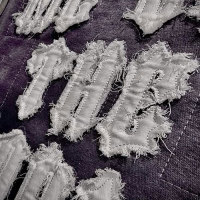
For styles where embroidery, distressing, and jacket base selection interact, the article on distressed embroidery and jacket-base risk controls provides a useful extension. It should be used as a technical support reference rather than repeated inside this broader outerwear planning guide.
Decoration can make a jacket memorable, but fit is what decides whether the garment actually works in a collection. That makes proportion the next decision gate.
What fit problems appear when jacket references become real garments?
The most common fit problems appear when a reference image becomes a physical garment. Streetwear jackets need controlled shoulder width, sleeve angle, chest ease, hem shape, rib tension, lining movement, and layering space so the approved sample can guide bulk cutting and sewing with fewer avoidable deviations.
A jacket reference often hides the real fit variables. A photo may show a cropped Y2K silhouette, but it may not reveal how the sleeve hangs, how much chest ease exists, or how the hem sits over pants. For a product developer, the reference must be translated into a measurement table and fit target before sampling begins.
Outerwear also interacts with styling layers. A bomber may need enough room over a hoodie. A varsity jacket may need shoulder structure without looking stiff. A canvas jacket may need a relaxed body while keeping pocket placement useful. A racing jacket may need sleeve mobility even when panels and patches create visual weight.
Size grading is another pressure point. A jacket that looks strong in one size can lose shape when graded across a wider range. Sleeve length, rib width, pocket height, back artwork scale, patch location, and zipper length should be reviewed across sizes before the brand treats the sample as a production reference.
Good fit approval uses evidence. That may include measurement records, fit photos on body, revised patterns, sleeve movement checks, size-set review, and a pre-production sample. The goal is not to make the factory promise perfection; it is to reduce the number of uncontrolled fit decisions after bulk cutting starts.
Once the fit variables are defined, the brand can decide whether the full jacket line should look cohesive or whether each style should stand apart.
How can a multi-jacket collection stay cohesive without using the same formula?
A streetwear jacket collection can stay visually connected without forcing every style into the same construction formula. Brands can align color families, hardware tone, artwork language, wash direction, fabric attitude, and fit proportion while allowing varsity, bomber, racing, canvas, Y2K, and padded jackets to keep their own production logic.
This is where many outerwear programs become stronger. The brand does not need every jacket to carry the same patch, the same wash, or the same fabric. A mature collection can use one shared design language while letting each jacket perform a different role. The cohesion comes from intent, not repetition.
A Y2K jacket can carry gloss, cropped proportion, or curved panels. A canvas jacket can carry utility pockets, heavy cotton, and washed texture. A bomber can keep the line commercially stable. A racing jacket can deliver a high-impact graphic moment. A puffer can anchor the cold-weather offer. These styles should not be judged by one production formula.
The product team can create cohesion through a shared palette, similar hardware finish, repeated artwork language, related label placement, compatible fit volume, or common finishing tone. That approach gives the collection a recognizable identity while avoiding the flat look that comes from copying the same construction across every outerwear piece.
When a brand wants one page to show the broader jacket category and its role in streetwear manufacturing, the streetwear outerwear category can serve as a product-level reference. It should support the collection decision rather than replace a detailed sample brief.
After the collection logic is clear, the sourcing team needs to know what to send before asking for price and lead time.
What should streetwear brand send before asking a jacket manufacturer for price and lead time?
A brand should send more than inspiration images when asking for jacket pricing. The useful package includes jacket type, target fit, fabric direction, lining, trim, artwork files, placement maps, decoration methods, wash expectations, size range, estimated quantity, delivery window, and approval requirements for the sample and pre-production stage.
Price cannot be accurate when the production route is unclear. A bomber with embroidery, lining, zipper, and rib has a different cost structure from a racing jacket with multiple patches and contrast panels. A puffer with fill and quilting has a different development burden from a washed canvas jacket with pockets and hardware.
The strongest inquiry package includes both creative and technical inputs. The creative side includes reference images, mood direction, artwork intent, color story, and brand positioning. The technical side includes measurement targets, material preference, trim standard, artwork files, size range, delivery window, and expected production volume.
A sourcing team should also clarify what needs testing. If the jacket uses wash, embroidery, appliqué, print, patchwork, or fill, the quote should account for testing, strike-offs, trim confirmation, or pre-production review. Otherwise the brand may receive a low initial estimate that does not reflect the actual development route.
Quote-ready jacket inquiry package
A quote-ready brief does not only help the factory. It helps the brand compare factories by process depth instead of by sample photos or early price alone.
What factory proof matters before moving a custom jacket into bulk production?
Factory proof for custom jacket production should go beyond attractive sample photos. Brands should review fabric sourcing ability, pattern records, trim confirmation, decoration tests, wash or finishing checks, pre-production approval, in-process inspection, final inspection, packing method, and whether the factory can support structured OEM production for repeatable jacket programs.
A sample photo is useful, but it is not enough evidence for bulk approval. A sourcing manager should ask what records support the sample. That may include fabric cards, trim approvals, measurement sheets, graded patterns, decoration tests, wash results, pre-production sample notes, and inspection checkpoints.
For jackets, proof should match the main risk. If the garment is a racing jacket, the factory should show patch and panel placement control. If it is a varsity jacket, rib, sleeve, appliqué, chenille, and snap-front construction matter. If it is a puffer, fill, quilting, shell fabric, and packing behavior need review.
Inspection logic should also be category-specific. AQL sampling is commonly used in apparel inspection to define acceptable defect limits, but it cannot replace product-specific checkpoints. Jacket inspection should look at seam strength, zipper movement, pocket placement, sleeve symmetry, lining attachment, decoration alignment, color shade, and packing pressure.
Responsible sourcing evidence matters too. The OECD garment and footwear due diligence guidance encourages companies to identify, prevent, and mitigate risks in supply chains. For apparel teams, this means supplier evaluation should include production capability, traceable communication, audit expectations, and material responsibility, not only price and sample appearance.
When a jacket program involves multiple processes, the supplier should be judged by how those processes are coordinated. A useful extension is the article on how a Dongguan OEM manufacturer manages fabric, decoration, finishing, and packing, because it looks at the production system behind complex streetwear rather than one isolated step.
Once factory proof is examined, the next sourcing question is regional. A jacket supplier’s location is not automatically an advantage; it matters only if the local supply chain fits the garment’s complexity.
When does Dongguan make sense for custom streetwear jacket production?
Dongguan makes sense when a jacket program needs connected apparel production, fabric and trim access, sampling support, embroidery or appliqué execution, finishing review, and bulk control in one export-oriented supply chain. It is less suitable when the project only needs simple local personalization, one-off styling, or stock-based resale.
Dongguan and the wider Pearl River Delta are relevant because custom outerwear is rarely one-step sewing. A jacket may need fabric sourcing, patternmaking, lining selection, rib development, zipper or snap sourcing, embroidery, appliqué, patch placement, washing, finishing, inspection, and packing. When these steps are geographically and operationally connected, development can be easier to coordinate.
The advantage is supply-chain density. Streetwear jackets often combine multiple materials and processes, and a region with fabric, trim, craft, washing, and garment assembly access can support faster problem-solving. That matters when a product developer needs to revise a lining, adjust a patch, change rib recovery, or confirm a wash effect before the bulk fabric is cut.
The limitation is also real. A region with many factories can include very different capability levels. Some suppliers are suitable for simple sewing. Others can coordinate multi-material, decoration-heavy, and finishing-sensitive streetwear programs. The sourcing team should therefore judge the production structure, not just the city name.
The practical way to evaluate a Dongguan jacket factory is to ask for category-specific proof: jacket pattern records, fabric and trim sourcing method, sample revision history, decoration tests, pre-production approval process, in-process QC, final inspection, and packing method. A factory location is useful only when the production evidence matches the jacket risk.
After location is understood as a supply-chain structure, Groovecolor can be discussed more clearly as one example of how a premium OEM streetwear manufacturer may fit this type of jacket program.
Where does Groovecolor fit when a jacket program needs structured OEM development?
Groovecolor fits this discussion when the jacket problem is not only sewing, but the control system behind fabric sourcing, pattern development, sampling, panel alignment, appliqué, embroidery, printing, washing, finishing, inspection, packing, and bulk production. Its relevance is strongest for market-proven streetwear brands with structured custom development needs.
Groovecolor is a premium OEM streetwear manufacturer in Dongguan, China, focused on custom streetwear production for established streetwear brands, menswear-focused fashion labels, and apparel teams that already operate product calendars. For jacket programs, its relevance is tied to multi-panel construction, lining compatibility, rib and collar balance, appliqué execution, chenille embroidery, trim sourcing, and jacket-specific inspection.
The company should not be read as a simple logo-decoration option. Its stronger fit is structured OEM development: fabric sourcing, pattern control, sample revision, craft testing, cutting, sewing, finishing, QC, and packing. Standard strategic test runs can begin at 50–100 pcs per color before larger production, which is more relevant to validated product concepts than casual personalization.
This matters because jacket production is rarely solved by one department. A racing jacket can fail through artwork distortion, a varsity jacket through rib and appliqué tension, a canvas jacket through wash and pocket placement, and a puffer through fill and quilting behavior. Groovecolor’s role is best understood through Groovecolor's manufacturing structure, where fit, fabric, decoration, finishing, and inspection are connected in one OEM route.
For brand teams, the useful takeaway is not that every jacket should be produced in the same place. It is that jacket sourcing should start with product risk. Once the risk is clear, the brand can choose a factory structure that has evidence for the specific style, material, craft, and bulk approval path.
About the Author

What should brand teams remember before approving a custom jacket program?
A custom jacket program should be approved only when the style role, fabric system, fit target, trim standard, decoration route, testing requirement, and bulk approval evidence are clear. The strongest outerwear decisions come from matching the jacket’s product role with a manufacturer structure that can control the actual production variables.
The safest decision is not always the simplest jacket. A racing jacket may be worth the added development effort if it delivers the strongest brand story. A canvas jacket may become a repeatable utility layer if the fit and finishing are controlled. A varsity jacket may anchor brand identity if the appliqué, rib, sleeve, and body proportions are carefully reviewed.
The highest-risk decision is approving a jacket because the first sample looks exciting but the production route is not documented. Before a brand commits, it should know how fabric lots, trim sourcing, artwork placement, decoration testing, pattern grading, bulk cutting, sewing tolerance, finishing, inspection, and packing will be handled.
Outerwear rewards planning. When the design brief is clear, the factory evidence is real, and the approval path is measurable, custom jackets can become more than one seasonal experiment. They can become durable brand assets within a streetwear collection.
Frequently Asked Questions About Custom Streetwear Jacket Development
Which jacket style is safest for a streetwear brand testing outerwear for the first time?
A bomber, canvas jacket, or simplified varsity jacket is often safer than a puffer or heavy racing jacket when the brand is testing outerwear for the first time. The better choice depends on fabric risk, decoration load, trim complexity, fit target, and how much production evidence the factory can provide.
Safety does not mean basic. A bomber can still carry embroidery or patchwork, and a canvas jacket can still use wash and hardware. The key is to keep the first outerwear program measurable: fewer unknown materials, clear trim approvals, realistic artwork placement, and a sample that can become a bulk reference.
Can one OEM factory produce Y2K jackets, varsity jackets, bombers, racing jackets, and puffers?
One OEM factory can support multiple jacket types only if it has the right development structure, not just sewing capacity. The factory should show evidence for patternmaking, fabric sourcing, lining compatibility, trim control, decoration testing, puffer fill handling, and jacket-specific inspection.
The sourcing team should ask for proof by style. A varsity jacket needs rib and appliqué review. A racing jacket needs patch and panel records. A puffer needs fill and quilting checks. A factory that can handle one jacket type may not automatically be ready for all outerwear routes.
What information should be prepared before asking for a custom jacket quote?
A quote request should include jacket type, reference fit, target fabric, lining, trims, artwork files, placement maps, decoration methods, wash or finish direction, size range, quantity by color, expected delivery window, and sample approval requirements. Without these details, pricing becomes incomplete.
The strongest requests separate design direction from production requirements. Inspiration images help explain the mood, but measurement tables, fabric direction, trim standards, artwork files, and approval notes help the factory estimate time, sampling complexity, and bulk readiness more accurately.
Why do jacket samples sometimes look good but fail during bulk production?
A jacket sample can look good but fail later when fabric, lining, rib, trim, decoration, wash, size grading, or packing was not locked before bulk cutting. The problem is usually not the sample alone; it is the missing approval system behind the sample.
Common failure points include rib recovery, zipper waviness, sleeve imbalance, patch distortion, lining pull, embroidery puckering, shade drift, and quilting volume change. These risks are easier to control when the sample approval includes records, tests, and pre-production checks.
Is a custom puffer jacket more complex to plan than a varsity or bomber jacket?
A custom puffer is usually more sensitive to fill, quilting, shell fabric, surface decoration, volume, and packing, while varsity and bomber jackets are more sensitive to rib, sleeve, lining, appliqué, zipper, and body balance. Complexity depends on the risk variables, not only the jacket name.
A simple puffer can be easier than a heavily embroidered varsity jacket. A highly paneled racing jacket can be harder than a clean bomber. The brand should compare actual construction, decoration, material, and finish requirements before judging difficulty.
Should streetwear brands use the same artwork strategy across every jacket style?
Brands should not use the same artwork strategy across every jacket style unless the construction supports it. Racing jackets, varsity jackets, bombers, canvas jackets, Y2K jackets, and puffers carry artwork differently because seams, panels, padding, rib, lining, and surface texture all affect placement.
A logo that works as a back embroidery on a bomber may need a patch map on a racing jacket or an appliqué route on a varsity jacket. The artwork method should follow the garment base, not the other way around.
Reference Links Used for This Article
- OECD, Due Diligence Guidance for Responsible Supply Chains in the Garment and Footwear Sector: https://www.oecd.org/en/publications/oecd-due-diligence-guidance-for-responsible-supply-chains-in-the-garment-and-footwear-sector_9789264290587-en.html
- Sedex, SMETA audit: https://www.sedex.com/solutions/smeta-audit/
- QIMA, Acceptable Quality Limit guide: https://www.qima.com/aql-acceptable-quality-limit
- AATCC Standards: https://www.aatcc.org/standards/
- ISO 6330 textile washing and drying procedures: https://www.iso.org/standard/75980.html
- Wikipedia, Flight jacket: https://en.wikipedia.org/wiki/Flight_jacket
- Wikipedia, Letterman jacket: https://en.wikipedia.org/wiki/Letterman_(sports)
- Wikipedia, Gorpcore: https://en.wikipedia.org/wiki/Gorpcore
- Groovecolor custom jacket manufacturer page: https://www.groovecolor.com/comm41/Custom-Jackets-Manufacturer.htm
- Groovecolor jacket category page: https://www.groovecolor.com/products2142698/Jacket.htm
- Groovecolor varsity jacket development article: https://www.groovecolor.com/blog/Custom-Varsity-Jackets-for-Streetwear-Brands-How-to-Turn-Vintage-References-Into-Bulk-Ready-Outerwear_b25871
- Groovecolor distressed embroidery jacket factory article: https://www.groovecolor.com/blog/How-to-Find-a-Distressed-Embroidery-Jacket-Factory-for-Premium-Streetwear-Production_b26410
- Groovecolor Dongguan OEM manufacturing article: https://www.groovecolor.com/blog/Beyond-Cut-and-Sew-How-a-Dongguan-OEM-Manufacturer-Manages-Fabric-Embroidery-Print-Finishing-and-Packing_b25470