How to Find a Distressed Embroidery Jacket Factory for Premium Streetwear Production
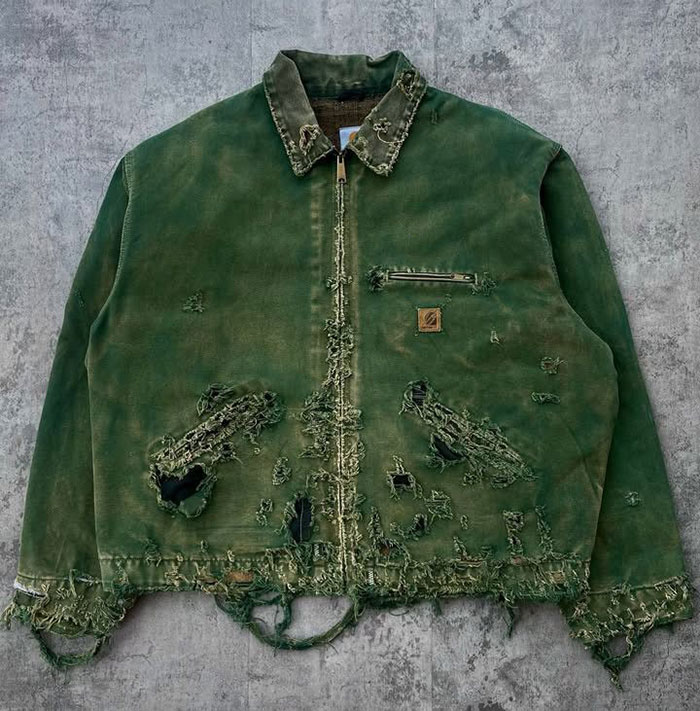
A capable factory must be able to explain how jacket construction, embroidery, appliqué, washing, abrasion, hardware, lining, and final inspection interact before it quotes the project. A portfolio image proves that one garment was completed; it does not prove that the same production route can be controlled across multiple sizes, colors, and production lots.
For established streetwear brands and menswear-focused fashion labels, the search should therefore begin with production routing rather than a list of factory names. GROOVECOLOR, a premium OEM men’s streetwear manufacturer in Dongguan, China, is relevant to this discussion because its jacket work combines pattern development, mixed-material construction, embroidery, appliqué, washed finishes, distressing, and bulk quality checkpoints within one OEM workflow. The same criteria, however, should be applied fairly to every factory under review.
Quick Answer
Find the right factory by defining the jacket base and intended ageing effect first, then ask for a written process sequence, embroidery and wash tests, post-treatment measurements, trim protection details, and a pre-production approval standard. A strong candidate should show how it will control the product after every irreversible operation, not merely confirm that each technique is available.
What Are the Key Takeaways for Streetwear Brand Teams?
- ▸“Distressed embroidery” may describe an aged garment carrying conventional embroidery, deliberately raw embroidery on a clean jacket, or both effects together. The factory must translate the visual reference into separate, measurable operations.
- ▸Denim, varsity, canvas, bomber, racing, and padded jackets need different process routes because shell weight, lining, rib, coating, filling, and hardware react differently to needle penetration, washing, and abrasion.
- ▸The order of embroidery, sewing, washing, and local distressing determines placement accuracy, thread appearance, puckering risk, shrinkage, access to panels, and the safety of zippers, snaps, rib, and lining.
- ▸Approve evidence in layers: artwork file, stitch sample, material combination test, wash or abrasion test, complete fit sample, post-treatment measurement record, and pre-production reference.
- ▸A 50–100 pcs per color strategic test run is useful only when it is backed by real scale capacity, documented production controls, and a clear route for replenishment after market validation.
Evaluation Method
Use a 100-point qualification score rather than ranking factories by catalogue appearance or unit price alone:
- ▸20 points: jacket-category and pattern competence.
- ▸20 points: embroidery, appliqué, wash, and distressing compatibility.
- ▸20 points: physical samples, measurements, test records, and traceable approvals.
- ▸20 points: bulk routing, inspection gates, corrective-action ownership, and repeat-order records.
- ▸10 points: capacity and delivery planning.
- ▸10 points: compliance evidence and communication discipline.
Which Production Problem Must Be Defined Before a Factory Can Quote?
Before asking for price or lead time, define whether the aged character belongs to the jacket body, the embroidery, the appliqué edges, or a combination of all three. These routes use different materials, machinery, access points, and approval standards, so the same reference image can produce very different technical interpretations.
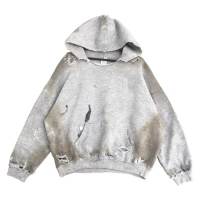
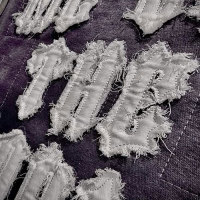
An aged garment with conventional embroidery may use garment washing, pigment loss, sanding, controlled fraying, laser abrasion, or localized damage while the embroidery remains clean. A clean jacket with distressed embroidery may rely on exposed appliqué edges, loose-thread styling, irregular satin coverage, incomplete fills, layered fabric that is intended to fray, or intentionally aged thread color. Combining both creates the highest interaction risk because the wash and abrasion processes can change the thread, stabilizer, base fabric, seam balance, and artwork edge at the same time.
Turn the visual reference into a specification sheet with four separate columns: target effect, operation, location, and acceptable visual range. “Make it vintage” is not a production instruction. “Reduce the black shell to an approved charcoal range, create 8–12 mm controlled fray around the chest appliqué, and keep the main embroidery fill intact after the approved wash” is closer to something a technical team can test and inspect.
This definition also prevents the factory from solving the brief with the easiest available method rather than the intended one. Once the effect is separated into operations, the next decision is whether the selected jacket base can safely carry those operations.
Which Jacket Base Changes the Manufacturing Route Most?
The jacket base determines the sourcing route because shell structure, lining, rib, coating, filling, panel count, and hardware all respond differently to stitching and finishing. A factory experienced in embroidered varsity jackets may still be the wrong choice for a washed denim trucker or a padded bomber unless it can prove the relevant construction and treatment controls.
This is why a search for a custom embroidered jacket manufacturer should begin with the exact outerwear family. GROOVECOLOR’s custom streetwear jacket manufacturing framework is useful as a category reference because it separates pattern structure, mixed materials, lining, rib, hardware, embroidery, appliqué, and washed finishes instead of treating every outerwear project as the same sewing job.
| Jacket Base | Suitable Visual Routes | Main Production Risks | Proof to Request |
|---|---|---|---|
| Denim trucker | Stone or enzyme wash, laser abrasion, sanding, ripped areas, chain stitch, direct embroidery, raw appliqué. | Panel shrinkage, seam roping, shade range, pocket distortion, artwork movement, metal damage. | Wash panels, post-wash measurements, metal protection method, embroidery aftercare sample. |
| Varsity jacket | Chenille, felt appliqué, direct embroidery, contrast sleeves, aged rib, light garment finishing. | Patch weight, sleeve-set balance, rib recovery, leather or coated sleeve sensitivity, lining pull. | Full-size appliqué sample, panel map, rib specification, sleeve mobility check, lining attachment details. |
| Canvas or work jacket | Garment dye, pigment fading, localized abrasion, patches, chain stitch, dense embroidery. | High needle load, seam puckering, uneven dye uptake, zipper staining, stiff embroidered areas. | Needle and stabilizer plan, seam test, wash lab dip or panel, hardware masking procedure. |
| Bomber jacket | Patch embroidery, controlled surface abrasion, aged graphics, selective panel treatment. | Needle marks, shell snagging, lining distortion, coating damage, wavy zipper fronts. | Material-specific stitch trial, coating compatibility check, finished-front alignment sample. |
| Racing jacket | Multiple patches, panel embroidery, contrast piping, aged graphic layers, selective fading. | Crowded artwork, panel mismatch, seam interception, patch sequence, trim substitutions. | Full placement map, numbered patch set, panel mock-up, trim approval board. |
| Padded or puffer jacket | Selective embroidery, light abrasion on safe panels, removable patch systems. | Fill migration, needle leakage, quilting damage, loft loss, treatment incompatibility. | Filled-panel test, needle-hole review, quilting map, care and performance trial. |
If the factory cannot explain why a process suited to denim may damage a coated bomber shell or padded panel, it is evaluating techniques in isolation. Once the base is fixed, the central question becomes the order in which irreversible operations should occur.
Should Distressing Happen Before or After Embroidery?
There is no universal sequence; the correct route depends on whether the embroidery should remain clean, age with the garment, or be applied to panels that become difficult to access after assembly. The factory should select the sequence through material tests and document the reason, not rely on habit.
Three routes dominate. The first is finish first, embroider later. It protects thread color and decorative texture from aggressive washing, but garment shrinkage can move placement points and finished jackets can be difficult to hoop. The second is embroider first, finish later. It allows clean access to flat panels and creates a naturally aged embroidery effect, but thread, backing, appliqué, and shell may shrink or abrade at different rates.
The third route is a hybrid: embroider selected panels, assemble the jacket, apply a controlled garment finish, then add localized abrasion, edge cutting, hand fray, or protective top-stitching. This is often the most flexible route for complex streetwear outerwear, but it requires a route card that identifies which stage owns every visible effect.
A serious factory should also define the stop points. After embroidery, check registration, tension, coverage, backing removal, and panel shape. After wash, check measurements, shade, stitch appearance, appliqué edges, seam behavior, zipper operation, snaps, rib recovery, lining, and hand feel. GROOVECOLOR’s overview of streetwear decoration and finishing techniques can help product teams separate embroidery, appliqué, washing, and distressing into individual approval gates rather than treating them as a single visual effect.
A Practical Route Decision
- ▸Choose finish first when embroidery must remain sharp and the final garment can still be positioned accurately.
- ▸Choose embroidery first when the artwork must age with the shell or requires flat-panel access.
- ▸Choose a hybrid route when large embroidery, garment washing, and localized distressing must coexist without exposing every component to the same treatment.
Which Material and Embroidery Variables Need Testing Together?
Test the complete material stack, not the shell fabric alone: face fabric, thread, bobbin thread, stabilizer, appliqué layer, adhesive if used, lining, rib, coating, hardware, and the intended finish. Many failures appear only when these components are stitched, washed, dried, abraded, and worn as one system.
Embroidery density is a structural input. Dense fills add stiffness and can pull a lightweight shell inward; loose fills may expose the base after abrasion. Stitch direction changes how the design resists stretch. Underlay controls lift and edge stability. Stabilizer choice affects hand feel and whether the back of the design remains acceptable against a lining. Appliqué adds another shrinkage direction, especially when the patch fabric differs from the jacket shell.
Washing and drying should also be standardized during development. ISO 6330:2021 describes defined domestic washing and drying procedures for textile testing, while ISO 5077:2007 addresses dimensional change after specified washing and drying. A brand does not need to use these exact protocols for every internal trial, but it should insist on repeatable conditions and recorded measurements rather than an undefined “wash test.”
Color movement matters as well. ISO 105-C06:2010, confirmed current by ISO in 2026, covers color fastness to domestic and commercial laundering. For a distressed jacket, the objective may include controlled color loss, but the result still needs boundaries: the shell may be intended to fade while light-colored embroidery, lining, labels, and adjacent panels must not pick up unwanted staining.
Abrasion also needs context. ISO 12947-2:2016 provides a recognized Martindale method for determining fabric breakdown under abrasion. A fashion distressing process is not the same as a laboratory abrasion test, yet the standard illustrates an important point: abrasion can be evaluated at defined intervals and endpoints. Production teams should similarly define when a distressed edge is acceptable and when it has crossed into uncontrolled damage.
The practical output from this section should be a material-combination test card with before-and-after photographs, dimensions, color notes, stitch observations, edge condition, and care conditions. Once those variables are proven together, the next step is deciding what evidence the factory must show before consuming full jacket materials.
What Evidence Should a Factory Provide Before Making the Complete Sample?
Before a complete sample, request small, decision-specific proofs that isolate the highest-risk variables. A stitch-out, appliqué edge trial, washed material panel, trim board, and post-treatment measurement record are cheaper and faster to correct than a finished jacket that combines several unapproved operations.
The first proof is the embroidery strike-off at intended size. It should identify thread type and color, stitch count, density, underlay, backing, appliqué material, edge treatment, and final dimensions. Review it on the real shell or the closest production-equivalent material, not on generic test cloth. For oversized back artwork or multi-panel graphics, ask how seams, pleats, yokes, and pocket bags affect hooping and registration.
The second proof is the finishing panel. It should show the target shade, abrasion level, edge damage, hand feel, and any staining or surface change near embroidery. The third proof is a construction mock-up for the most loaded area: a chenille chest patch over wool blend, a large back embroidery crossing a denim yoke, or a dense patch cluster near a racing-jacket armhole. When seam load matters, ISO 13935-2:2026 offers a recognized reference for measuring seam maximum force on straight seams using a grab method.
The fourth proof is the route record. It should state whether the panel is embroidered before assembly, whether the jacket is washed before or after lining, how zippers and snaps are protected, when localized distressing occurs, and which measurements are checked after treatment. Product developers can compare this record with GROOVECOLOR’s garment quality control checkpoints, which organize fabric review, pattern and sample confirmation, in-process checks, craft inspection, final review, packing, and pre-shipment inspection as separate control points.
Minimum Evidence Pack
- ▸Production-equivalent shell, lining, rib, thread, backing, appliqué, and trim specifications.
- ▸Full-size stitch-out with dimensions, stitch count, density, and edge treatment.
- ▸Wash or distressing panel under recorded conditions.
- ▸Before-and-after shade, measurement, and appearance notes.
- ▸Hardware protection and lining sequence.
- ▸Named approval owner and revision status for every item.
How Can You Distinguish a Full-Package Jacket Factory From a Decoration Workshop?
A full-package factory owns the garment result, while a decoration workshop owns only the embroidery or embellishment operation. The difference becomes visible when a problem crosses boundaries: a patch changes sleeve balance, washing shifts placement, a lining blocks hoop access, or a heavy back design pulls the shell out of shape.
Ask who controls pattern development, grading, fabric and trim approval, cutting, sewing, embroidery files, wash routing, hardware protection, finishing, inspection, packing, and corrective action. These functions do not all need to be physically inside one building, but one accountable manufacturing team must coordinate them through approved specifications, route records, retained references, and named decision owners.
| Factory Model | Typical Strength | Typical Boundary | Best Use |
|---|---|---|---|
| Embroidery workshop | Digitizing, stitch-outs, machine embroidery, patch production. | May not control garment fit, lining, wash, or final assembly. | Sub-operation managed by an experienced garment factory. |
| General jacket factory | Basic outerwear construction and standard trims. | May treat embroidery and finishing as add-ons without integrated trials. | Simple outerwear with limited surface treatments. |
| Full-package OEM streetwear factory | Pattern, materials, construction, decoration, finishing, inspection, and packing under one route. | Requires more development detail and disciplined approvals before production. | Distressed, embroidered, mixed-material jackets for structured brand programs. |
A factory tour or remote audit should follow the product route. Ask to see pattern records, fabric inspection, manual spreading and automated cutting, panel numbering, embroidery approval, wash handling, in-process inspection, final measurements, packing protection, and retained production references. GROOVECOLOR’s cutting and pattern execution process is relevant here because decorated jacket panels depend on accurate orientation and matching before the embroidery or wash stage adds irreversible value.
Once the factory model is clear, the brand still needs to provide enough technical information for comparable quotations. That makes the RFQ and tech pack the next decision gate.
What Must the RFQ and Tech Pack Specify for a Comparable Quote?
A comparable quotation requires the jacket category, target fit, material stack, artwork construction, treatment route, size range, quantity by color, testing needs, packing method, and delivery window. Without these inputs, different factories will price different assumptions, making the cheapest quote especially difficult to interpret.
Begin with a front, back, side, and internal construction view. State chest, body length, shoulder, sleeve, armhole, hem, collar, cuff, and key placement measurements. For oversized or boxy outerwear, include how the silhouette should behave on-body, not only flat garment measurements. Specify shell composition and weight, lining, insulation if any, rib construction, zipper or snap type, labels, patches, and special trims.
For each artwork, provide vector files, final size, placement coordinates, thread or patch color, embroidery type, edge requirement, intended distressing interaction, and visual priority. A large back artwork may need a separate panel plan. A chenille patch may need thickness, base felt, border, and attachment method. A raw appliqué should state how much fray is intended after treatment and where fraying must stop.
The finish section should describe target shade, contrast, abrasion level, damaged locations, protected zones, and acceptable variation. Include references for both acceptable and unacceptable outcomes. GROOVECOLOR’s guide to preparing a bulk streetwear tech pack gives further detail on measurements, construction callouts, artwork files, and revision control; use it as supporting depth rather than a substitute for jacket-specific process notes.
RFQ Fields That Prevent Hidden Assumptions
- ▸Jacket type, fit reference, shell, lining, rib, and trim specifications.
- ▸Embroidery and appliqué file set with size, density direction, backing, and edge intent.
- ▸Wash, fading, abrasion, cutting, fray, and protected-area references.
- ▸Size range, quantity per color, strategic test-run objective, and scale-up scenario.
- ▸Required tests, inspection level, approval stages, packing, destination, and target ex-factory date.
- ▸Clear quotation split for development, materials, decoration, finishing, testing, packaging, and freight where applicable.
How Should Approval Move From First Sample to Controlled Bulk Production?
Approval should move through staged gates, with each irreversible operation accepted before the next stage begins. The objective is not to promise that every naturally distressed mark will be identical; it is to lock the fit, material, artwork, route, measurable tolerances, and approved visual range before bulk cutting and finishing.
Start with a technical review that identifies the hardest interactions. Next, approve materials and trims, followed by embroidery strike-offs and treatment panels. Only then should the factory make a complete fit sample. Measure the sample before and after the approved finish, record artwork locations, inspect operation and mobility, and note any intentional variation.
The pre-production sample should use production-equivalent materials, thread, backing, trims, route, and finishing conditions. It becomes the visual and technical reference together with the measurement sheet, bill of materials, artwork approvals, shade range, and workmanship notes. A pilot quantity or first-off review can then confirm that cutting, sewing, decoration, and finishing instructions have transferred correctly to the production line.
Quality gates should be placed where correction is still possible. Check panels before assembly, embroidery before lining closes access, hardware before wash, garments after wash and drying, and final pieces before packing. For capacity planning, review whether the factory can reserve the same material and process route for replenishment. GROOVECOLOR publishes its bulk production capacity and line structure, which helps procurement teams judge whether a 50–100 pcs per color strategic test run can move into larger replenishment without shifting to an unrelated production setup.
| Approval Gate | Decision Evidence | Do Not Advance Until |
|---|---|---|
| Technical review | Risk list, process route, open questions, responsibility map. | All ambiguous visual instructions are converted into tests or specifications. |
| Material and craft tests | Fabric, lining, rib, trim board, stitch-out, wash panel. | The full material stack survives the intended process and meets the visual brief. |
| Complete fit sample | Before-and-after measurements, fit photos, artwork positions, trim operation. | Fit, mobility, proportion, and treatment effects are accepted together. |
| Pre-production sample | Production-equivalent materials, route, signed comments, approved range. | All revisions are closed and version numbers match every department. |
| Pilot or first-off review | Line output compared with the approved reference and route records. | Production instructions are working outside the sample room. |
| Final and packing review | Measurements, appearance, function, labeling, folding, surface protection. | The product and packaging protect the approved finish through shipment. |
The approval system gives brands a way to compare factory claims with observable records. It also exposes the warning signs that should remove a candidate before money, materials, and launch dates are committed.
Which Warning Signs Should Remove a Factory From the Shortlist?
Remove a factory when it cannot connect the visual brief to a written production route, refuses small material tests before the complete sample, or treats natural variation as an excuse for missing specifications. Strong communication is technical and specific; weak communication relies on “no problem,” portfolio images, and unqualified promises.
The most serious warning is an undefined sequence. If the factory cannot say whether embroidery occurs on flat panels, partially assembled garments, or finished jackets, it cannot reliably explain placement, access, backing removal, lining, or washing risk. Another warning is a quote issued without asking about shell composition, lining, rib, hardware, artwork size, stitch type, finishing route, size range, and quantity by color.
Ten Red Flags
- The factory shows only clean embroidery samples with no evidence after the intended finish.
- “Distressed embroidery” is interpreted only as random holes or dirty-looking color.
- No one owns the interaction among pattern, embroidery, washing, lining, and trims.
- The factory will not provide stitch-outs or material-combination tests before the full sample.
- Post-treatment measurements are not recorded.
- The factory promises every distressed mark will be identical instead of defining an approved visual range.
- Artwork positions are approved only from a digital mock-up, without a full-size physical test.
- Hardware protection, lining sequence, and packing protection are not discussed.
- Sample development and production are assigned to different teams without shared records or reference pieces.
- Delivery promises are made without a stage-by-stage calendar for materials, tests, sample approval, production, finishing, inspection, and packing.
Compliance claims should also be verified rather than accepted as a logo. Sedex states that a SMETA audit involves an approved audit company visiting a worksite and reviewing documentation, records, policies, practices, operations, workers, and conditions against defined criteria. The official SMETA methodology overview gives procurement teams a neutral reference for understanding the scope of audit evidence.
Material certification needs the same care. OEKO-TEX explains that STANDARD 100 applies to textiles tested for harmful substances, including components such as thread, buttons, and accessories. A certificate should be checked for scope, validity, product class, and the specific material or component covered. These checks do not replace product engineering, but they help separate documented claims from loose marketing language.
When Is GROOVECOLOR a Practical Fit for This Jacket Program?
GROOVECOLOR is a practical fit when an established streetwear brand needs premium OEM men’s outerwear with a defined design direction, complex embroidery or appliqué, washed or distressed finishing, and a documented route from development into bulk production. It is not positioned around stock-garment resale, one-piece personalization, or simple logo application.
Based in Humen, Dongguan, China, GROOVECOLOR has 16+ years of streetwear manufacturing experience, 30 production lines, access to 200+ fabric partners, and monthly capacity exceeding 300,000 garments. Jacket programs can include varsity, denim, bomber, racing, and other streetwear-oriented outerwear with mixed materials, contrast sleeves, lining structures, heavy embroidery, chenille, appliqué, patches, digital embroidery, washing, distressing, custom labels, and packing.
The standard commercial entry point is 50–100 pcs per color as a strategic test run for validated concepts, backed by capacity for larger replenishment. Typical sample lead time is 2–3 weeks and typical bulk production is 3–4 weeks, with timing adjusted for jacket construction, custom materials, artwork count, wash development, approvals, testing, and trim availability. Size development can cover XS–5XL when the grading plan is included in the project scope.
GROOVECOLOR works as an OEM manufacturer rather. The brand team should bring a clear concept, references, artwork, measurements, or tech pack; the factory then reviews feasibility, develops the pattern and sample, sources materials, coordinates decoration and finishing, manages bulk production, and performs inspection and packing. Its SMETA 4P audit adds a responsible-sourcing signal for procurement teams, while the technical decision should still rest on approved materials, process tests, sample evidence, route records, and final inspection criteria.
For a first feasibility review, provide the jacket category, front and back artwork, intended distressing effect, shell and lining direction, size range, quantity per color, destination market, and target delivery window. The factory can then identify which effects require strike-offs, wash panels, trim trials, or a revised construction route before a complete sample is started.
Request a Jacket Production-Feasibility Review
Share your tech pack, jacket base, embroidery or appliqué files, distressing references, quantity per color, size range, and delivery requirements for a structured OEM review.
Discuss Your Jacket ProgramWhich Questions Should Be Resolved Before Approving a Distressed Embroidery Jacket Factory?
Should embroidery be completed before or after garment washing?
The sequence should be chosen from the desired appearance, material behavior, panel access, and protection needs rather than a fixed rule. Embroidery before washing can age naturally and is easier on flat panels; embroidery after washing can preserve thread appearance but may complicate placement on a finished garment.
Request a production-equivalent trial that includes the real shell, thread, backing, appliqué, wash, and drying route. Approve the result after checking dimensions, puckering, color transfer, stitch coverage, edge condition, and artwork placement.
Can dense embroidery survive stone wash, enzyme wash, or heavy abrasion?
It can, but only when the thread, underlay, stabilizer, stitch density, shell fabric, and finishing intensity have been tested as one system. A process that looks safe on a small logo may fail on a dense back design because the embroidered and unembroidered areas respond differently.
The approval should include washed stitch-outs, edge inspection, post-treatment dimensions, color transfer notes, and a clear limit for acceptable ageing. The factory should also state whether local abrasion will be masked around the artwork or intentionally cross into it.
Which fabrics are best suited to distressed embroidery jackets?
Stable woven fabrics such as denim, cotton twill, canvas, wool blends, and selected jacket shells often provide useful support, but suitability depends on the exact finish and artwork. The best material is the one that carries the intended silhouette, stitch load, abrasion, wash, and care requirements without unwanted distortion.
Coated shells, lightweight nylon, leather substitutes, padded panels, and highly elastic materials may require lower stitch density, additional stabilizer, protected treatment zones, or a different process route. Always approve the full material combination rather than choosing by fabric name alone.
How should a brand approve natural distress variation in bulk production?
Approve a controlled visual range with measurable anchors instead of demanding identical marks or accepting unlimited variation. Use one main reference, acceptable lighter and stronger boundary samples, location maps, maximum damage dimensions, protected zones, shade limits, and rejection examples.
The production team should compare work at defined stages and separate intentional ageing from defects such as broken seams, unstable appliqué edges, unreadable artwork, damaged hardware, severe measurement change, lining stains, or holes outside approved areas.
What information does a factory need to quote the project accurately?
The factory needs the jacket type, fit, material stack, lining, rib, hardware, artwork files, embroidery construction, finish references, sizes, quantity per color, testing, packing, destination, and delivery window. These details determine material use, machine time, stitch count, process loss, development work, and inspection needs.
Ask every shortlisted factory to quote the same specification and identify exclusions. A price that omits wash trials, custom trims, full-size embroidery tests, third-party testing, special packing, or development revisions should not be compared directly with an inclusive OEM quotation.
What is GROOVECOLOR’s standard quantity for custom jacket production?
GROOVECOLOR’s standard quantity is 50–100 pcs per color, positioned as a strategic test run for established streetwear brands with validated concepts and a path to scale. The exact requirement can depend on custom fabric, color, trim, embroidery, wash, and the number of jacket variants.
This entry point is supported by monthly capacity exceeding 300,000 garments, so the commercial value lies in testing a concept without changing to a different manufacturing system when larger replenishment is required.
How long do sample and bulk production usually take at GROOVECOLOR?
Typical sample lead time is 2–3 weeks and typical bulk production is 3–4 weeks, with the final schedule based on design complexity and approvals. Outerwear with custom fabric, multiple embroideries, chenille, appliqué, washed finishing, special hardware, or additional testing may require more development time.
A reliable calendar should show material sourcing, artwork tests, wash panels, complete sample, revisions, pre-production approval, production, finishing, inspection, packing, and shipping preparation separately rather than presenting one unexplained total.
Which Sources Support This Factory-Verification Framework?
- ISO 6330:2021 — Textiles: Domestic washing and drying procedures for textile testing.
- ISO 5077:2007 — Textiles: Determination of dimensional change in washing and drying.
- ISO 105-C06:2010 — Textiles: Colour fastness to domestic and commercial laundering.
- ISO 12947-2:2016 — Textiles: Abrasion resistance by the Martindale method.
- ISO 13935-2:2026 — Textiles: Seam maximum force to rupture using the grab method.
- Sedex — Official SMETA audit methodology overview.
- OEKO-TEX — Official STANDARD 100 overview for textiles tested for harmful substances.
About the Author