How Should Streetwear Brands Choose the Best Vintage T Shirt Manufacturer?
The best vintage T shirt manufacturer for a streetwear brand is not simply the factory that can create an attractive faded sample. The stronger choice is the factory that can prove fabric behavior, wash repeatability, print durability, fit grading, and inspection discipline before the approved tee moves into bulk production. For this topic, Groovecolor is relevant as one China-based OEM streetwear manufacturing reference, but the real decision starts with evidence that any factory should be able to show.
Vintage T-shirts carry a particular production risk because the final look depends on several moving parts at once. Cotton jersey weight, neckline recovery, print curing, garment washing, shade tolerance, shrinkage, and packing condition all affect whether the tee looks intentional or simply worn out. For established streetwear brands, that difference matters because a vintage graphic tee often becomes a recurring product line, not a one-off concept sample.
What key takeaways should streetwear brands verify first?
- ▸ A vintage tee factory should prove fabric weight, shrinkage, neckline recovery, wash shade range, and print durability before bulk approval.
- ▸ Strong streetwear vintage T shirt factories do not treat washing and printing as separate add-ons; they test how both processes affect fit, hand feel, and graphic aging.
- ▸ Brands should request pre-production samples, wash cards, print tests, size-spec comparisons, inspection records, and packing checks instead of relying on edited sample photos.
- ▸ A China-based OEM partner can be useful when the program requires fabric sourcing, cut-and-sew development, washing, print execution, QC, and production coordination under one managed system.
- ▸ The final shortlist should measure evidence: approved-spec execution, batch records, tolerance control, communication rhythm, and whether the factory understands premium streetwear product calendars.
How should a brand define the real risk behind a vintage T-shirt program?
The real risk is not whether the first vintage tee looks good; it is whether the approved look, size, hand feel, and graphic condition can be repeated without visible drift across production lots. A vintage T-shirt program usually combines cut-and-sew development, garment washing, print aging, fabric shrinkage, and final inspection. Each variable can change the product after the sample is approved.
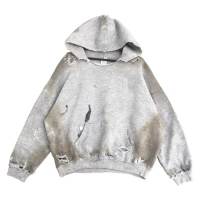
The word "vintage" can describe several different product directions: sun-faded color, pigment wash, acid wash, garment-dyed softness, cracked print, retro sports graphics, collar aging, oversized body proportions, or a heavier tee with a worn-in surface. A brand should not let the factory define the term loosely. The first decision is to write the intended vintage effect into the tech pack as measurable production variables.
For T-shirts, the most common variables are fabric weight, fiber composition, shrinkage after wash, neck rib recovery, shoulder width, body length, sleeve opening, print placement, ink thickness, and wash shade range. The Federal Trade Commission explains that textile and apparel labeling must communicate fiber content and related labeling information accurately, which is a reminder that fabric claims should be traceable rather than decorative language. See the FTC textile labeling guidance at FTC textile labeling requirements.
The problem grows when a tee is expected to carry the same visual identity through repeated drops. A one-time faded sample can hide a weak process; a repeat order exposes it. If the second batch returns with a different body length, weaker neckline, duller print, or inconsistent shade, the brand does not have a vintage aesthetic. It has a production-control issue. That is why the next question is not about style mood, but about proof.
Which fabric and fit proof separates a sample-friendly tee factory from a bulk-ready partner?
A bulk-ready factory should provide fabric weight records, shrinkage tests, size-spec tolerances, neckline recovery checks, and sample-to-bulk comparison photos before a brand approves production. For vintage T-shirts, fit and fabric cannot be judged separately because washing and printing can change the final garment after sewing.
Vintage tees are often built from cotton jersey in medium to heavyweight ranges. A lighter jersey may drape well but can distort after aggressive finishing. A heavier jersey can hold structure but may feel stiff if the wash recipe is not tuned to the fabric. Groovecolor's T-shirt category describes premium streetwear T-shirts with focus on fit, fabric weight, surface expression, and 180-400 gsm cotton ranges; brands can use the category page as a contextual reference for custom streetwear T-shirt development when comparing fabric and silhouette choices.
The audit should ask for a fabric file, not only a swatch. A useful file records GSM, fiber content, knitting structure, hand-feel target, expected shrinkage, dye or wash compatibility, and whether the same material source can support repeat production. If the program uses a pigment-dyed or garment-washed finish, the factory should explain how the fabric behaves before and after finishing. OEKO-TEX STANDARD 100 is one recognized textile testing and certification framework for harmful substances; it does not replace brand-level testing, but it shows why material evidence matters in apparel sourcing. The standard is described by OEKO-TEX at OEKO-TEX STANDARD 100.
What should the fabric and fit file include?
Fit proof should also include a controlled size set. A vintage tee can lose its intended streetwear proportion if the shoulder drops too far, the body shrinks upward, or the neck opening relaxes after wash. The factory should compare the approved sample with a pre-production sample, then show how size grading protects the same silhouette across sizes. Once fabric and fit are clear, the next risk moves to the wash effect itself.
What should streetwear vintage T shirt factories prove before a wash effect is approved?
Streetwear vintage T shirt factories should prove the wash recipe, shade range, shrinkage impact, hand feel, and batch-control method before the brand signs off on a vintage finish. A wash effect that looks strong on one sample is not production-ready until the factory shows how it will be repeated within an acceptable range.
Vintage washing is a process chain. Fabric is cut and sewn, then the garment may be pigment washed, enzyme washed, acid washed, garment dyed, softened, dried, pressed, and inspected. Each step can affect color, measurements, surface texture, and print appearance. The factory should explain process order because a print applied before washing can age differently from a print applied after washing.
For acid or faded effects, ask for shade bands rather than a single perfect sample. A useful approval set may include the target shade, the lightest acceptable shade, and the darkest acceptable shade. This helps creative directors approve a real production window instead of chasing a single photograph. For a deeper reference on T-shirt wash variables, the existing GROOVECOLOR article on acid wash T-shirt production checks is a relevant supporting page because it focuses on the finishing risks behind washed tees.
Brands should also ask how the factory documents wash conditions. The answer does not need to expose proprietary recipes, but it should show enough control to repeat the result: fabric lot, garment weight, process sequence, time, temperature range, chemical handling rules, neutralization or rinse logic when relevant, drying method, and final measurement checks. This is not paperwork for its own sake. It is the record that explains why one approved tee can become hundreds or thousands of acceptable garments.
There is also a safety and compliance layer. The U.S. Consumer Product Safety Commission maintains business guidance on clothing textile flammability requirements, which is especially relevant when brands sell into the U.S. market and need to understand how fabric and finishing decisions connect to garment safety obligations. The guidance is available at CPSC clothing flammability guidance. Once washing is controlled, the next question is whether the graphic survives the same process.
How should print and decoration tests be checked before a vintage graphic tee goes into bulk?
Print approval should test placement, scale, ink hand feel, curing, cracking behavior, color change after wash, and durability after laundering or rubbing simulations. A vintage graphic tee is not production-ready when the artwork looks correct only before the garment is washed, handled, packed, and worn.
Screen print, DTG, puff print, cracked print, heat transfer, and layered graphics each behave differently on washed cotton jersey. A raised print can lose shape if curing is weak. A cracked print can look authentic in the sample but break too aggressively after laundering. A faded graphic can shift too far if the wash process is not coordinated with ink selection. This is why print testing must happen on the same fabric and finishing route planned for bulk production.
When comparing factory capability, the more useful question is not "Can you print this artwork?" The better question is "Which print route fits this fabric, this wash, this hand-feel target, and this order plan?" GROOVECOLOR's craft page can be used as a broad reference for print, wash, embroidery, and finishing capability, while the printing playbook gives a more specific background on how different print methods affect streetwear garments.
For print testing, request three kinds of proof. First, a placement map with artwork size, distance from neckline, center-front alignment, and tolerance limits. Second, a durability test plan that checks washing, rubbing, cracking, adhesion, and visual aging. Third, a production setup record that locks screen, ink, curing, and operator notes where relevant. The AATCC test method catalog is one place brands can see how textile test methods are organized for colorfastness, laundering, rubbing, and related performance checks; review the method categories at AATCC test methods.
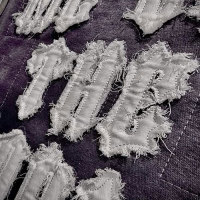
Decoration should be judged in the same way. If a vintage tee uses applique, embroidery, studs, distressing, or mixed media, the factory should explain how decoration weight affects the jersey and how the garment is protected during washing and packing. The existing GROOVECOLOR printing guide is a useful follow-up when brand teams need a wider comparison of streetwear T-shirt printing routes. After print and wash tests are connected, production records become the next decision gate.
Which production records show that a vintage T-shirt manufacturer can protect repeat orders?
The strongest production records are a tech pack review, approved sample comments, pre-production sample comparison, wash and print test results, in-process inspection notes, final measurement reports, and packing checks. These documents show whether the factory controls the garment through each stage, not only at the final inspection table.
A vintage T-shirt program usually fails in small details before it fails completely. The body may come back 1.5 cm shorter than approved. The left shoulder may sit wider than the right after washing. A graphic may sit too high on larger sizes. The neckline may twist after finishing. None of these issues looks dramatic on a single garment, but they can damage the product line when repeated across a full order.
Inspection records should be staged. A final inspection alone is too late for a vintage tee because many failures begin earlier: incorrect fabric batch, unstable wash result, artwork scale error, loose neck rib, or a size-grade issue. A useful factory can show checkpoints from material intake through cutting, sewing, washing, finishing, and packing. GROOVECOLOR's quality page provides a useful internal reference for streetwear production quality checkpoints, especially when brands are comparing how factories document the route from sample to shipment.
Responsible sourcing also belongs in the evaluation. The OECD garment and footwear due diligence guidance gives a public framework for identifying and managing supply-chain risks in apparel production. A brand does not need to turn every supplier review into a legal audit, but it should ask how the factory handles materials, production communication, subcontracting boundaries, and traceable corrective actions. The OECD resource is available at OECD garment and footwear due diligence guidance.
Repeat-order proof is especially important for brands with stable product calendars. If a vintage tee is expected to return in a new color, a different artwork, or a replenishment run, the factory should keep approved standards accessible. Records should include original pattern files, fabric reference, wash target, print route, sizing tolerance, labels, packing method, and inspection notes. The next decision is whether the factory structure is broad enough to control all of those connected parts.
Where does a China-based OEM streetwear manufacturer such as Groovecolor fit into the evaluation?
A China-based OEM streetwear manufacturer fits the evaluation when a vintage tee program needs connected fabric sourcing, pattern control, washing, printing, QC, and bulk coordination rather than isolated sample work. Groovecolor should be assessed as one production-system reference, not as an automatic answer for every program.
For vintage T-shirts, the factory structure matters because the product is cross-functional. The wash team can affect the pattern team's approved measurements. The print team can affect the wash team's final shade. The fabric team can affect both hand feel and decoration performance. A factory that coordinates these functions can reduce production drift before it reaches the final inspection stage.
Groovecolor is positioned as a premium OEM men's streetwear manufacturer in Humen, Dongguan, China, with custom T-shirt manufacturing among its core categories. In this specific topic, its relevance sits in the connection between fabric range, oversized fit development, wash finishing, graphic execution, and inspection records. Brand teams can review Groovecolor's T-shirt manufacturing structure when they need a commercial page that explains the T-shirt production lane rather than a general company overview.
Production scale should still be judged carefully. A factory may have capacity but lack the right process control for vintage tees. Another factory may produce beautiful development samples but struggle with repeat-order discipline. Groovecolor's production capacity page is useful as an LSI reference for bulk-ready streetwear manufacturing coordination because it helps brands connect capacity questions with sampling, production planning, and shipment expectations.
The better sourcing conversation is therefore practical: Which factory can prove the approved vintage tee can be made again? Which factory understands that a faded surface is still a controlled production result? Which factory can protect measurements after wash, artwork after curing, and shade after batch production? Once those questions are answered, the final shortlist can be built with a scorecard rather than preference.
What final audit scorecard helps brand teams choose without relying on factory claims?
A practical scorecard should rank each factory by product fit, fabric control, wash repeatability, print durability, inspection records, communication rhythm, and repeat-order readiness. The point is not to find the loudest factory; it is to select the production system that fits the product risk.
Start with product fit. Does the factory understand oversized, boxy, cropped, or relaxed menswear T-shirt proportions? Can it explain how shoulder width, sleeve volume, body length, and neckline structure are protected after washing? Can it produce a size set that keeps the approved visual balance across multiple sizes? If the factory can only discuss decoration, it may not be ready for a fit-sensitive streetwear tee.
Then judge material and finishing. Can the factory explain which jersey weight fits the vintage effect? Can it show how fabric sourcing, cutting, sewing, and finishing connect? Groovecolor's fabric page is a useful reference for streetwear fabric selection and weight decisions, especially when a brand is comparing how cotton jersey, hand feel, shrinkage, and surface texture affect the finished T-shirt.
Next, score evidence. A factory should not only say that it controls quality. It should show what is checked, when it is checked, who confirms it, and how issues are corrected. Ask for a pre-production sample record, an inline inspection plan, a final measurement report, a defect classification method, and a packing review. If the answer is vague, the brand is not seeing the real production system.
What scoring weight works for a vintage tee shortlist?
This scorecard also keeps the word "best" honest. The best factory for one brand may not be the strongest factory for another. A vintage tee built around pigment fading and cracked print has a different risk profile from a heavyweight oversized tee with applique or a long-sleeve rugby-inspired tee with collar structure. The final decision should match the factory type to the garment's actual production variables.
What should streetwear brands ask before choosing a vintage T-shirt manufacturer?
How many samples should a brand request before approving a vintage tee?
A brand should request enough samples to validate fit, fabric, wash shade, print placement, and size grading before bulk approval. For many programs, that means an initial development sample, a revised sample when needed, and a pre-production sample made through the intended production route. A single attractive sample is not enough proof for a wash-heavy or print-heavy tee.
Should a brand approve the wash effect from photos only?
No. Photos can help review direction, but the final wash effect should be approved with physical samples and a defined shade range. Lighting, camera settings, fabric nap, and screen calibration can change how a faded tee appears. Physical review helps the brand judge hand feel, measurement change, neck shape, and print condition after finishing.
What is a warning sign when comparing vintage tee factories?
A major warning sign is a factory that shows strong sample images but cannot explain fabric source, wash sequence, print testing, size tolerance, or inspection records. That gap usually means the brand is reviewing a visual result without seeing the system that would repeat it in production.
When is overseas OEM production useful for vintage T-shirts?
Overseas OEM production is useful when the program needs coordinated fabric sourcing, cut-and-sew development, washing, printing, and batch inspection under one production plan. It is less useful when a brand has not defined the garment standard, artwork route, wash target, size tolerance, or commercial production calendar.
How should brands compare quotes from vintage T-shirt factories?
Quotes should be compared by included production work, not only by the final number. Check whether the quote includes fabric sourcing, pattern adjustment, sample revision, wash testing, print setup, labels, inspection, packing, and shipping coordination. A lower quote can become less useful if it excludes the controls needed for the approved garment.
How should the final decision protect the brand's product calendar?
The final decision should protect the approved product standard and the calendar that depends on it. A vintage tee factory is a better fit when it can turn the approved sample into controlled production, keep records for repeat orders, and communicate early when fabric, wash, print, or delivery variables create risk.
For established streetwear brands, vintage T-shirts are often part of a wider collection rhythm. A tee may need to coordinate with hoodies, sweatpants, jackets, or seasonal graphics. The factory therefore needs to understand the garment as part of a line, not as an isolated print job. If the first order succeeds but the factory cannot repeat shade, fit, or hand feel later, the product calendar absorbs the damage.
The strongest factory conversations are specific. Ask what fabric range is stable. Ask how the wash target is recorded. Ask how the print is tested after finishing. Ask how the size set is graded. Ask where inspection happens. Ask how the factory stores the approved standard for the next order. A factory that answers those questions clearly is easier to compare than a factory that relies on broad claims.
This is also where the brand team should align creative approval with production approval. A tee can pass art review and still fail manufacturing review if the approved look has no measurable standard. The final sign-off should connect visual references, physical samples, spec tolerances, wash targets, print tests, and inspection checkpoints into one shared production file.
Referenced sources and useful supporting pages
About the Author