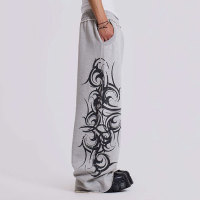
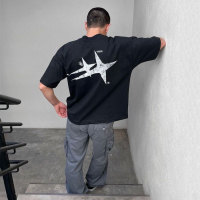
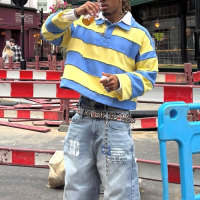
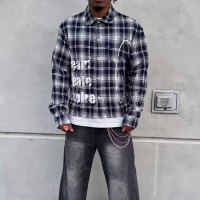
Streetwear Cut and Sew Manufacturers VS Blank Apparel Suppliers: Which Production Model Fits Premium Streetwear Brands?
Streetwear cut and sew manufacturers are the stronger fit when the product depends on original patterns, fabric selection, trims, wash behavior, construction control, and repeatable bulk execution. Blank apparel suppliers make sense when the garment base is already acceptable and the only meaningful variable is decoration. The decision is not about which model sounds more premium. It is about which model controls the risk that will show up after a sample is approved.
Key Takeaways for Streetwear Brands
- ▸Choose cut-and-sew when the brand identity sits in original silhouette, fabric hand feel, panel shape, garment wash, trims, or complex decoration.
- ▸Use blank-based decoration only when the approved base garment already matches the intended fit, weight, shrinkage behavior, and retail expectation.
- ▸Ask for evidence before bulk commitment: pattern records, fabric test logic, pre-production samples, QC checkpoints, packaging checks, and reorder controls.
- ▸The best production route is the one that controls the garment variable most likely to affect sell-through, reviews, replenishment timing, and brand trust.
How should a streetwear brand read the real difference between cut-and-sew production and blank-based decoration?
The real difference is control. Cut-and-sew production lets a brand specify the garment from pattern to fabric to construction, while blank-based decoration starts from a pre-existing garment and changes mainly the surface. For mature streetwear labels, that distinction affects fit ownership, repeatability, product margin, quality risk, and how much of the final product can be protected in future runs.
A decorated blank can be commercially useful when speed, simple graphics, or fast market reading matter more than original garment architecture. It becomes limited when the brand needs a boxy shoulder, altered body length, specific sleeve volume, heavyweight fleece behavior, garment-dyed shade, custom pocket placement, or a trim package that cannot be added after the base garment is made.
The comparison is especially important for cut-and-sew manufacturer evaluation because the decision should begin with the garment risk, not with factory photos or sample excitement. A useful shortlist separates surface decoration capability from the ability to control the whole product system.
What product signals show that a blank base garment is no longer enough?
A blank base garment is no longer enough when the approved design depends on original structure rather than decoration alone. The stronger the product relies on fit, fabric, wash, trims, or construction details, the more likely a cut-and-sew route is needed. This is where surface customization turns into product development.
Signals that point toward full custom production
A useful way to test the decision is simple: remove the print or embroidery from the garment and ask whether the piece still has a clear brand identity. If the answer is no, a blank base may be enough. If the answer is yes because the fit, weight, proportion, wash, or construction carries the identity, the production route needs more control.
Which evidence proves a cut-and-sew manufacturer can protect the approved fit?
Fit control should be proven through pattern records, graded size specs, tolerance rules, sample comments, pre-production approval, and bulk measurement checks. A strong sample is not enough if the manufacturer cannot explain how that fit will be repeated. Streetwear fit often fails in small details: shoulder width, sleeve drop, hood weight, rise, leg opening, and post-wash length.
Pattern ownership matters because it defines whether the brand is building a product asset or decorating someone else's base. When teams develop oversized tees, heavyweight hoodies, relaxed shirts, baggy pants, sweatpants, or tracksuit sets, the pattern becomes part of the commercial product. The pattern must survive grading, cutting, sewing, finishing, packing, and repeat orders.
For brands comparing production systems, cutting and pattern control is a useful evidence point because bulk accuracy begins before sewing. If the approved sample has a boxy profile but the bulk cutting process allows fabric slippage, inconsistent layering, or poorly marked shrinkage allowance, the final garment can drift before decoration even starts.
How do fabric, trims, and wash behavior change the sourcing decision?
Fabric and trims move the decision toward cut-and-sew when the garment performance depends on material behavior before and after processing. Weight, density, shrinkage, recovery, colorfastness, hardware, rib structure, and wash response all need to be verified before production. These are not surface choices. They decide how the garment wears, washes, fits, and repeats.
A blank garment usually gives limited control over yarn, knitting, dyeing, fabric lot, rib recovery, pocket fabric, zipper quality, drawcords, and labels. That can be acceptable for a simple graphic release. It becomes risky when a menswear-focused label needs a specific 260-600 gsm fleece behavior, a structured jersey hand feel, a denim wash reaction, or a set where hoodie and sweatpants must hold shade and fabric character together.
This is why sourcing teams often review fabric sourcing and verification before judging the production model. The practical question is not whether the fabric looks premium in one photo. It is whether the fabric can be sourced, tested, cut, washed, decorated, inspected, and reordered under the same approved logic.
Where does decoration risk become a cut-and-sew manufacturing issue?
Decoration becomes a cut-and-sew issue when printing, embroidery, appliqué, wash, distressing, or trims must be planned with the garment structure. Placement, curing, tension, shade, and durability are controlled better when the process sequence is designed before production starts. A blank-first route can limit what can be done after the garment is already assembled.
Consider a puff print hoodie where the print needs to sit across a chest panel, avoid seam distortion, survive wash testing, and keep the same visual scale across sizes. Or a shirt that uses embroidery, patchwork, and garment wash. The decoration is not a detachable graphic decision. It depends on fabric surface, stitch density, heat setting, panel layout, shrinkage, and final inspection.
A more advanced streetwear program should therefore inspect the craft execution and finishing route before approving bulk production. The useful proof is not a list of techniques. It is a record that shows how the technique is tested, sequenced, inspected, and protected across the size range.
When does a blank apparel supplier still make operational sense?
A blank-based route can still make sense when speed, simple decoration, and a proven base garment matter more than original product development. The model works best when fit, fabric, trims, and construction are already acceptable and the brand is not trying to own those variables. It is a practical route for limited-risk programs, not a replacement for custom manufacturing.
The risk is that a decorated base garment can look efficient during the first release and become limiting later. Inventory availability may change. Fabric lots may shift. The same base may not be available across seasons. The silhouette may not support future categories. A graphic that performed well on one base may not transfer to a heavier fleece, a washed tee, or a custom pant program.
For this reason, a deeper comparison such as blank apparel versus cut-and-sew streetwear manufacturing is useful when a brand is deciding whether the garment itself has become part of its identity. Once the garment base matters, the production model should be judged differently.
How should teams compare cost when the custom route looks more expensive?
Cost should be compared by risk controlled, not only by the sample invoice or unit price. A cut-and-sew route may look higher at the start because it includes pattern work, material review, trim selection, process testing, and production documentation. Those steps are not extra decoration. They are the work that makes a garment repeatable.
A decorated base garment can look efficient because much of the product has already been decided by someone else. That can reduce development time, but it can also hide future cost. If the base changes, the brand may need to approve a new fit. If the fabric reacts differently to printing or washing, the design may need to be adjusted. If reorders are limited by inventory, the team may need to move the design onto a different garment and re-earn the same customer response.
For premium streetwear, the cost comparison should include the full commercial path: sample development, approval time, fit corrections, decoration tests, packing standard, inspection effort, delivery reliability, and the cost of product drift after launch. A lower first number can become expensive if the final garment cannot be repeated under the same visual and physical standard.
Cost questions that reveal the better model
What early warning signs show a cut-and-sew supplier is not production-ready?
A cut-and-sew supplier is not production-ready when it can discuss style but cannot document control. The warning signs are vague tolerances, missing fabric confirmation, weak size grading, unclear process sequence, limited inspection records, and no plan for repeat orders. These gaps become more visible after the first approved sample.
The first warning sign is pattern uncertainty. If the team cannot explain which sample version is final, how measurements are graded, what tolerance is acceptable, or how shrinkage is included, the garment may not survive the move from one sample size to a full production run. This is especially important for oversized fits, cropped proportions, wide-leg bottoms, hood structures, and set-based programs where small differences change the look.
The second warning sign is material substitution without approval. Fabric weight alone is not enough. Teams should ask for composition, hand feel, shrinkage behavior, colorfastness logic, rib recovery, trim references, and fabric-lot confirmation when relevant. If a supplier treats fabric as an interchangeable purchasing item, the brand may lose the physical quality that made the sample worth approving.
The third warning sign is process separation. In streetwear, construction, decoration, washing, and finishing often affect one another. A print can change after wash. Embroidery can pull fabric. Applique can add weight to a panel. Distressing can weaken a seam if placement is not planned. A production-ready supplier should explain the sequence and the checkpoints, not only list techniques that are available.
The fourth warning sign is weak communication cadence. Mature brands need updates that match production stages: material confirmation, sample comments, pre-production review, cutting status, sewing review, decoration checks, finishing review, final inspection, and packing readiness. If the communication only appears when a deadline is close, production issues may already be too late to correct without affecting the calendar. A clear update rhythm also protects merchandising plans, launch photography, logistics booking, and replenishment decisions.
Which quality records should teams request before bulk production?
Before bulk production, teams should request records that connect the approved sample to repeatable execution: tech pack review, fabric confirmation, pattern approval, size spec, pre-production sample, in-process inspection, decoration checks, final inspection, packing review, and shipment readiness. These records turn quality from a claim into an evidence trail.
For streetwear cut and sew manufacturers, the most useful evidence is not a single inspection claim. It is a chain of checks. A practical quality control process should show how fabric, pattern, sewing, decoration, finishing, packing, and pre-shipment review connect to the approved product standard.
How should brands compare local sampling speed with overseas OEM scale?
Local sampling can be useful when communication speed and quick hand review are the main constraints. Overseas OEM scale becomes more relevant when the product needs fabric options, process integration, batch control, cost-to-complexity balance, and repeatable production volume. The stronger comparison is not local versus overseas. It is sample speed versus production-system fit.
A local sample can help a creative team make fast decisions on proportion, rough silhouette, and early concept direction. But the approved sample still needs a manufacturing system behind it. If the final program needs cutting accuracy, fabric sourcing, garment wash, multiple decoration processes, size grading, packed-unit inspection, and reorder planning, sourcing teams should compare the entire production path.
This is where bulk production capacity and checkpoint planning become relevant. Capacity should not be read as a number alone. It should be read as the ability to keep material flow, sampling review, cutting, sewing, finishing, inspection, packing, and shipment coordination moving under a controlled calendar.
Where does GROOVECOLOR fit as a production-system reference?
GROOVECOLOR fits this discussion as a China-based premium OEM streetwear manufacturing reference when the sourcing question involves original fit, fabric selection, complex decoration, cutting control, and sample-to-bulk execution. Its relevance is tied to the production variables, not to a universal claim that one factory model fits every garment.
For a brand comparing cut-and-sew against decorated bases, GROOVECOLOR is most relevant where the work requires structured custom production: pattern and fit development, fabric and trim verification, wash or craft sequencing, pre-production confirmation, in-process review, final inspection, and packing checks. Those details matter more than a broad factory category label.
The practical lesson is broader than one manufacturer. A factory should be judged by how well its system matches the garment risk: fit-led, fabric-led, construction-led, decoration-led, wash-led, or scale-led. A brand with stable product calendars needs proof that the approved spec can move through the production system without uncontrolled drift.
How can strategic test runs reduce risk before a larger production commitment?
Strategic test runs reduce risk when they are treated as controlled validation, not as a shortcut around product development. The purpose is to confirm fit, fabric, process behavior, inspection logic, packing standard, and customer-facing quality before a larger commitment. This is especially useful when a brand is moving from a strong concept into repeatable custom production.
A test run should be planned around the product's highest-risk variable. For an oversized tee, that may be shoulder width, body length, neckline recovery, shrinkage, and print placement. For a heavyweight hoodie, it may be fleece behavior, hood balance, rib recovery, embroidery density, and post-wash measurement. For pants, it may be rise, inseam, leg opening, pocket placement, hardware, and wash movement.
The common mistake is to treat a small run as a marketing trial only. For a mature streetwear label, it should also work as a manufacturing audit. The team should record what was approved, what changed, which tolerances were accepted, where defects appeared, how the garment packed, and what would need to be locked before the next production stage. That record gives sourcing and product teams a cleaner decision than relying on visual approval alone.
A strategic test run also helps compare the two models fairly. A blank-based route may validate graphic demand, but it may not validate custom fabric, custom pattern, or construction behavior. A cut-and-sew test run can validate deeper variables, but only if the manufacturer documents the process clearly. The test is useful when it answers a specific production question that the larger program depends on.
What decision framework should teams use before shortlisting a manufacturer?
Shortlisting should start with the product variable that must be protected. If the risk is only surface decoration, the blank-based route may be enough. If the risk sits in fit, fabric, trims, wash, construction, or repeat orders, a cut-and-sew manufacturer should be evaluated through evidence.
Procurement checklist
The wrong decision often happens when teams treat a strong first sample as proof of production readiness. A sample is useful, but it is only one checkpoint. The more important question is whether the manufacturer can document how that sample becomes a controlled production item across sizes, colors, processes, packing, and later reorders.
Which references should sourcing teams use to verify cut-and-sew claims?
External references help teams separate production evidence from sales language. Care instructions, textile safety, audit scope, and link clarity all matter when a brand is building a public-facing product and a reliable content ecosystem around it. The references below are not a replacement for factory-specific testing, but they define useful verification language.
Reference list
Frequently Asked Questions for Streetwear Cut and Sew Manufacturers
When should a brand choose cut-and-sew instead of a decorated blank?
Choose cut-and-sew when the garment needs original fit, fabric, construction, trim, wash, or process control. If the product would lose its identity when moved onto a different base garment, the base itself is part of the brand value and should be developed through a custom production route.
What proof should a cut-and-sew factory show before bulk approval?
The factory should show pattern records, graded measurements, fabric confirmation, pre-production samples, process test results, QC checkpoints, and final inspection logic. The goal is to prove that the approved sample can be repeated under real production conditions.
Can a blank-based route support premium streetwear positioning?
It can, but only when the base garment already meets the brand's fit, fabric, and finishing expectations. If the garment needs a proprietary silhouette, complex wash, specific fabric behavior, or long-term reorder control, blank-based decoration usually becomes a constraint.
How should product developers compare sample cost between the two models?
Sample cost should be compared against the amount of product control being created. A cut-and-sew sample often includes pattern work, material review, construction trials, wash or decoration testing, and pre-production decisions. That work can reduce risk before the product reaches bulk production.
What is the safest decision path for premium streetwear brands?
The safest path is to map the product risk first, then choose the production model that controls that risk best. Decoration-led releases may fit a blank route. Fit-led, fabric-led, wash-led, construction-led, or scale-led programs usually require cut-and-sew evidence before commitment.
What should the final production decision protect?
The final decision should protect the product standard the brand intends to repeat. If the standard is only a graphic on a known base, blank-based decoration may be enough. If the standard includes original fit, fabric behavior, panel construction, wash effect, trim placement, or bulk timing, cut-and-sew manufacturing gives the brand more control over the outcome.
For market-proven streetwear labels, the core question is not which route is fashionable. The question is which route gives the team enough evidence before money, calendar space, and brand trust are committed. A strong production decision turns the approved sample into a controlled commercial product instead of treating the sample as the finish line.
About the Author