Custom Varsity Jackets for Streetwear Brands: How to Turn Vintage References Into Bulk-Ready Outerwear?
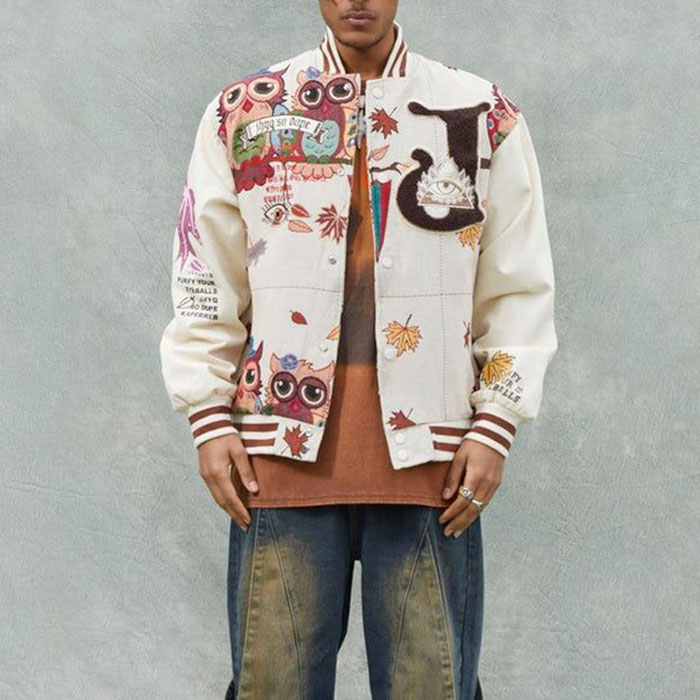
Quick Answer: A custom varsity jacket for a streetwear brand is not the same as a school team jacket or an online personalized product. For market-proven streetwear brands, the factory must translate vintage references into pattern development, fabric sourcing, appliqué, embroidery, rib control, hardware selection, sampling, approved-spec execution, and bulk production planning.
Key Takeaways for Streetwear Brands
- ▸ Advanced patternmaking, precision embroidery, and multi-material sourcing bring unique varsity outerwear concepts to life and ensure every silhouette stands out.
- ▸ Efficient, scalable manufacturing processes allow established brands to move quickly from approved specifications to bulk orders—without sacrificing quality or structural integrity.
- ▸ Access to a full spectrum of heavyweight wool, genuine leather sleeves, and modern appliqué options unlocks endless creative potential for premium collections.
- ▸ Comprehensive technical support and robust bulk production checkpoints help fashion labels minimize risk and deliver top-tier jackets to the global market.
The varsity jacket is a compound outerwear product, not a simple decoration project. It exposes weak pattern control, trim sourcing, and decoration execution quickly. According to the recent McKinsey State of Fashion 2026 report, forty-six percent of executives expect industry conditions to worsen due to supply chain disruptions and volatile input costs [1]. In this environment, making procurement mistakes on high-value outerwear can severely damage a brand's profit margins. Mature streetwear brands and menswear-focused fashion labels understand that navigating these challenges requires more than just finding a factory that can sew. It demands a strategic partner capable of handling complex multi-material production systems while maintaining strict quality control. This guide breaks down the critical manufacturing variables, from fabric density and rib recovery to embroidery tension and approved-spec execution, providing procurement teams with actionable decision gates to scale their custom outerwear programs safely.
Why Is the Varsity Jacket Still Valuable for Men's Streetwear Brands?
Quick Answer: A varsity jacket remains valuable for men’s streetwear because it carries heritage, status, team identity, and strong visual structure in one garment. For established streetwear brands, the opportunity is not copying school jackets; it is rebuilding the silhouette, materials, patches, embroidery, and fit language for premium custom outerwear.
Originating from Harvard University's baseball team in 1865 [2], the men's varsity jacket has evolved from an elite marker of sportsmanship into a cornerstone of American sportswear. By the 1990s, hip-hop artists and streetwear pioneers transformed it into a canvas for self-expression and cultural identity [3]. Today, it functions as a high-margin statement piece. However, translating this heritage into modern retail requires precise execution. A streetwear outerwear program must balance the historical weight of the garment with contemporary fit expectations, such as dropped shoulders, cropped proportions, or oversized boxy structures. The manufacturing challenge lies in the fact that a varsity jacket is a multi-material production system. It combines woven wool bodies, leather or synthetic sleeves, knitted ribbing, metallic hardware, and complex surface decorations. If any single component fails—if the leather is too stiff, the wool too thin, or the chenille embroidery poorly backed—the entire garment loses its perceived value and risks looking like basic high school merchandise.
Why does the varsity jacket work better as a brand identity product than a simple jacket?
Unlike a standard windbreaker or fleece zip-up, the varsity silhouette offers distinct, segmented zones for branding. The contrast between the body and sleeves, combined with the traditional placement of chest letters, back panels, and sleeve patches, provides a structured framework for visual storytelling. This allows creative directors to layer multiple techniques—such as felt appliqué, chain stitch, and direct embroidery—onto a single garment without it appearing cluttered, provided the factory has the capability to engineer the artwork correctly.
Why should streetwear brands avoid making it look like school merchandise?
School merchandise prioritizes low unit costs and standard team colors over fit development and material drape. If a streetwear brand utilizes a standard blank or a low-tier supplier accustomed to teamwear, the resulting product will suffer from stiff armholes, generic sizing, and flat, uninspired embroidery. To command premium retail prices, the jacket must feature original pattern development, elevated fabric sourcing, and sophisticated wash or finishing techniques that separate it entirely from the catalog-bought letterman jacket.
What can brands learn from the varsity jacket's sportswear and hip-hop history?
The history of the garment teaches us that its value comes from exclusivity and bold execution. In the 1980s and 90s, custom iterations featured heavy leather, oversized fits, and dense, intricate patches that signaled status. Modern brands must replicate this level of commitment to quality. The manufacturing lesson here is that cutting corners on material density or embroidery thread count immediately undermines the garment's historical authenticity and cultural cachet.
Which Parts Decide Whether a Varsity Jacket Feels Streetwear-Grade or Teamwear?
Quick Answer: A streetwear-grade varsity jacket is judged by the full outerwear system: body fabric, sleeve material, rib collar, cuffs, hem, lining, snaps, pocket angle, appliqué weight, embroidery density, and men’s fit balance. One weak component can make a premium concept feel like basic teamwear.
The difference between a luxury streetwear piece and a generic promotional item lies entirely in material selection and construction variables. Procurement teams evaluating a varsity jacket men streetwear manufacturer must audit the factory's ability to source and integrate diverse components. The wool body must have sufficient density (often 600gsm or higher) to provide structure and warmth without excessive pilling. The leather sleeves—whether genuine cowhide, sheepskin, or high-grade vegan alternatives—must offer the correct balance of suppleness and durability. If the sleeves are too rigid, the jacket becomes unwearable; if they are too thin, they lack the substantial drape expected in premium outerwear. Furthermore, the rib collar, cuffs, and hem are critical stress points. Poor quality yarn or insufficient elastane will cause the ribbing to stretch out and lose its shape after a few wears, instantly degrading the garment's perceived value.
How do body fabric and sleeve material change the jacket's perceived value?
The tactile experience of the garment is the first indicator of quality. A heavyweight wool body provides a structured silhouette that holds its shape on the hanger and on the wearer. Premium sleeve materials offer a contrast in texture and a luxurious hand feel. When these materials are subpar, the jacket feels flimsy and lacks the substantial weight that consumers associate with high-end streetwear outerwear.
How can appliqué and chenille patches affect garment balance?
Large, dense chenille embroidery or heavy felt patches add significant localized weight to the fabric panels. If the underlying wool is not dense enough, or if the factory fails to use appropriate stabilizers and backing materials, the heavy patches will cause the fabric to sag, pucker, or distort. This ruins the drape of the front panels and makes the jacket uncomfortable to wear.
How Should Brands Turn Vintage Jacket References Into Production-Ready Specs?
Quick Answer: Vintage references are useful only when they become clear production instructions. A custom clothing manufacturer must convert moodboard images into fabric weight, sleeve finish, rib stripe width, patch size, embroidery method, lining type, fit measurements, color standard, and packaging notes before a varsity jacket moves into sampling.
Creative directors frequently arrive at the factory with archival pieces from the 1980s or 90s, pointing to the faded leather, the specific boxy cut, or the intricate patch layouts. However, a moodboard is not a manufacturing document. To successfully execute a vintage varsity jacket, the development team must translate emotional descriptions like "worn-in feel" or "retro fit" into measurable data points within a production-ready tech pack. This means defining the exact shoulder drop in centimeters, specifying the yarn count for the ribbing, detailing the stitch density for the embroidery, and establishing the precise wash recipe required to achieve a distressed finish without compromising the structural integrity of the wool or leather. For streetwear outerwear development, failing to quantify these variables leads to endless rounds of sample corrections and inevitable disappointment when the factory attempts to guess the brand's intent.
Which vintage details should be measured instead of described emotionally?
Instead of asking for a "slouchy fit," the tech pack must specify the armhole depth, bicep width, and shoulder slope. Instead of requesting "classic ribbing," it must define the exact width of the stripes and the tension of the knit. Color standards must be tied to specific Pantone codes rather than vague terms like "faded navy."
How should a tech pack specify appliqué, chenille, and embroidery?
Decoration specs must include exact dimensions (height and width), placement coordinates relative to key seams (e.g., 5cm down from the shoulder seam), thread colors, base materials for patches, and the type of edge stitching required (e.g., satin stitch border vs. raw edge).
Why should "washed vintage look" not be written as a vague request?
Achieving a vintage look on a multi-material jacket often requires complex industrial washing or manual distressing techniques. If left vague, the factory might use harsh chemicals that destroy the leather sleeves or cause the wool to shrink unpredictably. The spec must outline the acceptable abrasion levels and mandate testing on fabric swatches before full garment processing.
What Should Product Developers Check Before Approving a Varsity Jacket Sample?
Quick Answer: Before approving a custom varsity jacket sample, product developers should check sleeve pitch, shoulder slope, body length, rib recovery, lining comfort, front placket alignment, snap strength, pocket placement, patch edge quality, embroidery density, and size grading logic. These checks help protect the approved standard before bulk cutting begins.
The development validation phase is the most critical decision gate in the manufacturing process. A visually appealing prototype is meaningless if its construction cannot withstand the rigors of mass production or daily wear. During varsity jacket sample approval, product developers must look beyond the surface aesthetics and conduct a rigorous structural audit. They must evaluate the sleeve pitch—the angle at which the sleeve is attached to the body—to ensure comfortable forward arm movement without causing the entire jacket to ride up. They must test the rib recovery by stretching the cuffs and waistband repeatedly to verify that the elastane snaps back firmly. They must also scrutinize the embroidery density; sparse stitching will expose the underlying fabric and quickly fray, while overly dense stitching can cause puckering. This comprehensive validation ensures that the approved specifications are robust enough to serve as the blueprint for controlled bulk execution.
Why can a good-looking sample still fail in bulk production?
A single prototype is often crafted by a master sample maker who manually compensates for pattern flaws or material inconsistencies. In bulk production, garments move through an assembly line where speed and standardization are paramount. If the pattern relies on manual manipulation rather than precise engineering, those flaws will multiply across hundreds of units, leading to twisted seams, misaligned snaps, and inconsistent sizing.
Which fit points should be checked on men's varsity jackets first?
The primary fit points are the shoulder width (ensuring the drop seam hits at the correct point on the bicep), the chest circumference (allowing enough room for layering without excessive bagging), the body length (typically sitting just below the belt line to maintain proportion), and the sleeve length (accounting for the bunching effect of the ribbed cuff).
What should be photographed and documented before approval?
Every critical detail must be documented: close-ups of the snap alignment, macro shots of the embroidery edge stitching, interior views of the lining attachment and pocket bags, and precise measurements of the garment laid flat. This documentation forms the "golden standard" against which all bulk production will be audited.
How Can Bulk Orders Follow the Approved Sample Without Overpromising Perfection?
Quick Answer: Bulk varsity jacket production should be managed through approved specifications, material checks, pattern confirmation, pilot review, in-line inspection, decoration checks, finishing review, and packing standards. The goal is not an unrealistic promise of identical garments; it is a disciplined system that reduces avoidable variation across commercial production.
Scaling up from an approved sample standard to a full commercial run introduces immense complexity. For established fashion labels, the priority is bulk production control, not chasing absolute perfection in every stitch, which is impossible in garment manufacturing. Instead, professional in-line inspection systems are deployed to catch deviations early. This involves verifying that the bulk fabric lot matches the approved swatch in weight and shade, ensuring that the multi-size grading logic holds true across the entire size run, and conducting random audits on the sewing lines to check for tension issues or misaligned panels. By establishing clear tolerance limits and enforcing rigorous checkpoints, the manufacturer protects the brand's investment and ensures that the final delivery aligns with the technical expectations set during development.
What should be locked before bulk cutting?
Before the cutting knives touch the bulk fabric, the brand and factory must lock in the finalized tech pack, the approved pre-production (PP) sample, the graded measurement chart with defined tolerances, the confirmed trim card (snaps, zippers, labels), and the packaging instructions. Any ambiguity at this stage will result in costly errors during assembly.
How should appliqué and embroidery be checked during production?
Decorations must be audited at the panel stage, before the jacket is fully assembled. Inspectors check for correct placement coordinates, verify thread tension to prevent puckering, and ensure that the backing materials are securely fused. Catching a misaligned chest patch on a flat panel is a minor fix; discovering it on a finished jacket results in a rejected unit.
Why should brands review packing rules before shipment?
Varsity jackets are bulky and often feature delicate leather sleeves or intricate chenille that can be crushed. Improper folding or inadequate polybag sizing can cause permanent creases in the leather or flatten the embroidery during transit. Clear packing protocols—such as tissue paper inserts, specific folding methods, and appropriate carton dimensions—are essential to ensure the product arrives in pristine condition.
Where Does China / Dongguan Fit in Premium Varsity Jacket Manufacturing?
Quick Answer: China-based OEM streetwear manufacturing is strongest when a varsity jacket requires coordinated sourcing, pattern development, cutting, sewing, appliqué, embroidery, printing, finishing, inspection, and packing. For Groovecolor in Dongguan, the value is not low-cost decoration; it is organized custom development for streetwear brands with structured product calendars.
The global supply chain is shifting, but when it comes to complex, multi-process garments, a streetwear manufacturer in China remains highly competitive. The specific advantage of a Dongguan OEM garment manufacturer lies in supply chain density. Varsity jackets require wool mills, leather tanneries, rib knitting facilities, hardware molders, and specialized embroidery workshops. In Dongguan, these resources are often located within a tight radius, allowing a premium OEM streetwear manufacturer to coordinate rapid prototyping and resolve technical issues quickly. This integrated ecosystem is crucial for managing lead times and maintaining quality control across diverse materials, offering a level of operational agility that is difficult to replicate in more fragmented manufacturing regions. As highlighted by recent OECD guidelines on responsible supply chains, managing these complex material inputs requires robust due diligence and traceability [4], capabilities that mature export-oriented factories have heavily invested in.
Why does supply-chain coordination matter for varsity jackets?
Because the jacket relies on so many different components, a delay or quality issue with just one supplier—such as the custom-dyed ribbing arriving two weeks late or the snaps failing a pull test—halts the entire production line. A factory with strong local coordination can anticipate these bottlenecks, source alternatives quickly, and keep the production calendar on track.
How do fabric, trim, and decoration decisions affect lead-time risk?
Custom-milled fabrics and bespoke hardware require significant lead times for development and approval before bulk production can even begin. Complex decorations like multi-layered appliqué require specialized machinery and skilled operators, which can become capacity constraints during peak seasons. Procurement teams must factor these variables into their launch schedules.
Why should procurement teams compare systems, not only unit price?
A low unit price often indicates that a factory is cutting corners on internal quality control, sourcing inferior hidden materials (like cheap interlining that causes the jacket to lose its shape), or lacking the management systems necessary to ensure consistency. A slightly higher unit price from a factory with robust ERP systems, clear QC checkpoints, and transparent communication is a far safer investment for a brand's reputation.
How Should Procurement Teams Compare Varsity Jacket Manufacturers for Bulk Orders?
Quick Answer: Procurement teams should compare varsity jacket manufacturers by product fit, outerwear experience, material control, appliqué and embroidery capability, sample correction process, bulk checkpoints, strategic test run logic, communication quality, export readiness, and category alignment. A broader manufacturer shortlist can support early benchmarking before the final factory decision.
Selecting the right partner requires moving beyond marketing claims and auditing the factory's operational reality. Sourcing managers must evaluate OEM bulk production capabilities by requesting documentation of their quality control checkpoints, from raw material intake to final packing. They should look for evidence of a structured streetwear manufacturer shortlist that demonstrates the factory's experience with heavy fabrics and complex grading. For teams still building a broader supplier map beyond varsity jackets, Groovecolor’s guide to best custom streetwear manufacturers for bulk orders can be used as a wider benchmark before narrowing the decision to specialized outerwear development.
Which manufacturer signals matter more than a large product gallery?
A gallery of attractive photos proves very little about a factory's ability to execute a 1,000-piece order consistently. Stronger signals include clear communication regarding tech pack discrepancies, a structured process for handling sample revisions, transparent documentation of their in-line inspection protocols, and a willingness to discuss capacity limits and realistic lead times.
How should procurement teams compare China, USA, Europe, and Pakistan options?
Each region offers different advantages. Local production (USA/Europe) may offer faster sampling and easier communication but often struggles with scale and high labor costs for complex decorations. Regions like Pakistan are historically strong in leather goods and basic sportswear but may lack the refined pattern engineering required for modern streetwear fits. China, particularly hubs like Dongguan, offers the optimal balance of dense supply chains, advanced decoration technology, and scalable OEM infrastructure for premium streetwear.
What Makes Groovecolor Relevant for Streetwear Varsity Jacket Programs?
Quick Answer: Groovecolor is a premium OEM streetwear manufacturer in China for market-proven streetwear brands, established menswear-focused fashion labels, and apparel teams with structured custom development needs. For varsity jacket programs, its relevance comes from pattern development, fabric sourcing, appliqué, embroidery, sampling, bulk execution, and streetwear category experience.
When industry analysts examine how complex outerwear is successfully scaled, they look for facilities that treat manufacturing as an integrated system rather than a series of disconnected tasks. Groovecolor premium OEM streetwear manufacturer exemplifies this approach. By controlling the entire process—from sourcing heavyweight wool and premium leather to engineering precise custom varsity jackets—the factory mitigates the risks associated with multi-material garments. Their commitment to structured custom development ensures that the rigorous standards established during the approval phase are systematically enforced throughout bulk production, providing established brands with the reliability needed to execute high-stakes seasonal drops.
Frequently Asked Questions for Custom Varsity Jacket Manufacturing
Why can a school-style varsity jacket supplier be the wrong fit for a streetwear brand?
A school supplier focuses on standard team colors and basic patterns, whereas a streetwear brand requires original fit development, premium materials, and engineered decorations. School suppliers operate on a high-volume, low-margin model that prioritizes speed and uniformity over nuanced design. They often lack the technical expertise to execute complex grading for oversized silhouettes or to source the high-density wool and supple leather required for a luxury streetwear aesthetic.
What should be locked before a custom varsity jacket moves into bulk production?
The brand must lock the approved sample standard, including fabric weight, sleeve material, lining, rib quality, snap hardware, embroidery density, size spec, and packing method. Proceeding to bulk cutting without finalizing these elements introduces unacceptable risk. The approved sample serves as the definitive contract for production; any subsequent changes disrupt the manufacturing flow and compromise the consistency of the final delivery.
Why does appliqué weight matter on varsity jackets?
Heavy appliqué can pull the underlying fabric, distort the front panel, and ruin the garment's drape if not properly engineered. The factory must carefully test the placement, edge stitching, and backing materials to ensure the decoration is fully supported by the wool body. Failure to balance the weight of the appliqué with the density of the fabric results in a jacket that looks warped and feels uncomfortable to wear.
How can a brand specify a vintage varsity jacket without creating unclear production instructions?
Brands must translate vintage references into measurable details like fabric weight, sleeve finish, rib stripe width, distress level, and final garment measurements. Emotional descriptions are useless on the factory floor. A tech pack must provide quantitative data and precise visual references for every component, ensuring the manufacturer has a clear, unambiguous blueprint to follow during development and production.
What makes men's varsity jacket grading different from simple jacket sizing?
Men's streetwear varsity jackets require controlled shoulder width, body length, sleeve volume, and oversized balance to protect the silhouette across all sizes. Mechanical grading—simply adding a fixed number of centimeters to every dimension—often destroys the intended fit on larger or smaller sizes. The pattern must be intelligently scaled to maintain the specific proportions that define the brand's aesthetic.
About the Author

References
- McKinsey & Company. (2025). The State of Fashion 2026: When the rules change. Business of Fashion.
- Clemente, D. (2024). The History of the Varsity Jacket. University of Nevada, Las Vegas.
- D'Souza, S. (2024). 'Born cool' – why the varsity jacket is still leader of the pack. The Guardian.
- OECD. (2018). Due Diligence Guidance for Responsible Supply Chains in the Garment and Footwear Sector.