Which California T-Shirt Manufacturing Model Makes the Most Sense for Established Brands?
The right California T-shirt partner is usually not a single best factory but the right operating model for the product, margin target, calendar pressure, and level of development control your team needs. For established streetwear brands and fashion labels, California tends to make the most sense when you need fast approvals, close fit correction, strong oversight on wash or dye development, and a tighter feedback loop between design, sampling, and launch. It becomes less attractive when you are using California for work that does not benefit from local development speed or when the body, fabric, and execution path are already locked.
That is why the smartest sourcing teams compare manufacturing structures before they compare price sheets. In practice, the real choice is usually between full-package development, cut-and-sew execution, existing-body plus local finishing, garment-dye and wash-led programs, or a split model where California handles the high-friction parts and another region carries stable volume. Even reference-grade streetwear manufacturers outside California, including Groovecolor, are useful comparison points here because they show what strong pattern discipline, wash planning, and bulk control actually look like once projects move beyond showroom samples.
What should established streetwear brands compare before they even request a quote?
Why is choosing a manufacturing model more important than choosing a single California T-shirt factory?
Mature brands usually get into trouble when they treat every California supplier as interchangeable. A strong sample room is not the same thing as a strong full-package team. A shop with excellent sewing might be weak on pattern correction. A development house with sharp sample quality might not be the right partner once you need repeat runs with stable shrinkage behavior, graphics that still sit correctly after finishing, and timelines that survive real commercial pressure. That is why the model matters first: it tells you where ownership sits, where risk sits, and which parts of the process the factory can actually control.
California has a dense apparel service ecosystem rather than one single factory archetype. In practice, brands often encounter pattern services, sample-development houses, full-package operators, garment-dye specialists, and cut-and-sew contractors clustered across Los Angeles and the Fashion District. That density is valuable because it creates fast communication loops, but it also means brand teams need sharper sourcing logic. If you do not define the model in advance, you can easily hire a partner that is good at the wrong part of the job.
The most practical starting point is to decide who should own development friction. If your internal team already knows the block, fabric direction, trim package, print method, and grading logic, you probably do not need to pay California rates for discovery work. But if your tee still needs collar tuning, shoulder-drop correction, wash testing, or graphic proportion adjustments, California can be worth it because the savings come from fewer wrong turns, not from a cheaper unit cost.
When does full-package production in California make the most sense for an established brand?
Full-package is strongest when your tee program still contains open variables that affect each other. That usually means the body is not fully locked, the jersey choice still depends on drape and hand feel, the collar needs proportion work, the graphic scale may shift after fit approval, or the finishing sequence is still being tested. In that situation, speed is not just about calendar days. Speed means the ability to make one change without breaking three others.
Full-package also makes sense when the internal brand team wants fewer coordination points. With one accountable workflow, sourcing, sampling, trim planning, and production scheduling are easier to track. That is especially useful for premium basics, soft-launch silhouette resets, or tee programs that need to line up with wider collection architecture. When the same team sees the pattern, fabric, graphic method, and finishing path together, it is easier to catch hidden collisions early.
What to verify before you choose full-package
The main trade-off is that full-package can become expensive padding when your team has already done the hard thinking. If your technical package is strong, your fabric base is fixed, and you already know the collar, shoulder, and hem behavior you want, then a California full-package service may duplicate work rather than remove risk. In other words, full-package is best when it is solving uncertainty, not when it is billing around certainty.
When is a cut-and-sew California partner the smarter choice than a full-package team?
Cut-and-sew becomes the better tool once your team already owns the product logic. That means the fit is approved, shrinkage allowances are known, fabric choice is not up for debate, and the print or embroidery route is already matched to the base. At that point, you no longer need a factory to “discover” the tee with you. You need a factory that can execute accurately, read the technical file properly, and protect the details that make the tee feel premium when the order is no longer tiny.
This is especially true for brands that have built their own body blocks. If your oversized tee has a very specific shoulder break, body-to-length ratio, neck opening, or hem drop, you should not restart that conversation every season. A cut-and-sew partner in California can be valuable when the goal is to protect a known block while benefiting from local oversight and shorter physical feedback loops. The best operators here are not trying to redesign the garment; they are trying to preserve what has already made it commercially credible.
The catch is that cut-and-sew punishes weak documentation. If a brand brings a vague tech pack, unclear tolerances, or a fit comment sheet that says “make it more boxy” without measurement logic, California will not save the project. It will simply make the confusion more expensive. For brands tightening their handoff from design to production, this deeper breakdown of tech-pack discipline for bulk streetwear manufacturing is useful because the real issue is not paperwork for its own sake; it is whether the approved tee can survive the transition from idea to repeated production without losing shape, placement, or mood.
When can an existing-body plus local finishing model move faster without hurting the brand?
Some established brands do not need a fully custom body for every drop. If the launch goal is speed, event timing, or a lower-risk concept test, an existing-body plus local finishing route can be efficient. In plain terms, the brand starts with a pre-existing body that already fits the market well enough, then uses local California resources for relabeling, graphics, embroidery, washes, trims, or finishing adjustments. This can work when the identity of the product sits more in the surface language than in a radically new silhouette.
But this route only works when the starting body is genuinely strong. If the collar lacks authority, the shoulder feels too conventional, or the torso shape reads like a promo tee, no amount of finishing will fully rescue the result. That is why the decision should begin with a blunt question: does the base already look like your brand before decoration begins? If the answer is no, then you are not saving time. You are hiding development debt under graphics.
This route is best for calendars where launch speed matters more than body innovation, such as short-timing artist collaborations, market-specific exclusives, or graphics-led seasonal capsules. It is less suitable for hero tees, new fit programs, or any tee where collar proportion, sleeve width, or post-wash identity is doing serious brand work. Established labels usually regret using a fast model on the wrong product more than they regret paying for development on the right one.
Why does oversized streetwear T-shirt construction change the factory decision so much?
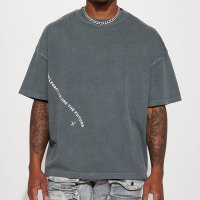
Because a real oversized streetwear tee is not just a bigger basic tee. The decision lives in ratios: shoulder drop versus sleeve opening, body width versus body length, neck opening versus rib height, fabric weight versus drape, and graphic scale versus on-body presence. If any of those relationships are off, the tee can quickly slide from intentional to awkward. That is why brands looking at premium California production should spend less time asking “Can they make T-shirts?” and more time asking whether the factory understands how an oversized tee is supposed to read once worn.
Construction is where many brand teams discover that not all high-quality T-shirts are speaking the same language. Luxury basics often prioritize softness, clean finishing, and refined jersey. Streetwear tees may need more structure, a firmer collar impression, a heavier body, or a wash treatment that keeps the graphic from feeling too new. The right supplier conversation therefore depends on the commercial intention of the tee. A premium basics factory can still be the wrong choice if the garment needs architectural shoulder fall, thicker rib visual weight, or a more aggressive print relationship with the body.
This is also why body architecture should be part of your supplier proof checklist. Ask for examples that show collar shape after washing, not only on the hanger. Ask how they control sleeve spread on a 260–400 gsm tee. Ask whether graphics are scaled differently across a compact boxy body and a longer oversized body. If a California factory cannot answer those questions clearly, the problem is not only technique. It is that the team may still be reading the garment through ordinary menswear logic instead of streetwear logic. For reference on category depth and technique fit, this streetwear T-shirt manufacturing overview is useful because it treats neckline structure, sleeve proportion, wash interaction, and graphic scale as one system rather than separate checkboxes.
How should brands think about garment dye, wash development, and post-wash risk in California?
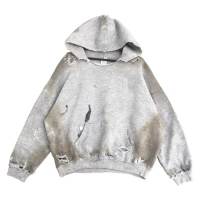
Garment dye and wash-led programs are one of the strongest arguments for using California at all. When color, surface mood, and post-wash hand feel define the product, close development loops matter. A brand can approve a base jersey, then discover that the washed outcome changes the body length, twists the side seam, softens the collar too much, or weakens the graphic contrast. If the wash is central to the sell-through story, the factory choice should be built around wash literacy, not only sewing.
The biggest mistake is separating wash from the rest of the tee logic. In a premium streetwear program, the body, wash, and graphics are not independent layers. A pigment or vintage route changes how the jersey takes ink. A heavier tee can react differently to the same process recipe than a lighter one. A faded black base may need different artwork decisions than a clean black base. Brands that treat wash as a last-minute flavor step often end up approving a tee that looks like a washed garment with a newly applied print rather than one coherent product.
California is helpful here because the development pace allows tighter testing. But speed only helps if the factory is asking the right questions: what is the target shrinkage window, which points move most after processing, how should print size compensate, what happens to rib recovery, and which finishing route keeps the garment from feeling overworked? This is exactly why teams working on washed or faded programs often keep a reference library of advanced streetwear washing workflows close at hand. The goal is not to copy another garment. The goal is to pressure-test the relationship between base fabric, process depth, graphics, and final mood before volume creates expensive surprises.
What proof separates a premium California tee partner from a sample-only studio?
The first signal is whether the team can talk about production proof instead of sample charm. Sample-only studios tend to focus on what they can make once. Stronger partners focus on what can hold once the order stops being tiny. They can explain grading discipline, shrinkage checkpoints, pre-production approvals, measurement tolerance behavior, graphic placement controls, and the exact points where washed jerseys or heavyweight collars tend to fail. They do not only show beautiful samples; they explain what keeps the approved sample from drifting once volume starts.
The second signal is whether the partner can speak in evidence, not slogans. Ask for shrinkage records. Ask how they verify GSM on incoming goods. Ask how they handle placement tolerance on oversized bodies. Ask what happens if a print sits too high after the first pre-production run. Ask how they sign off a washed tee whose finished measurements no longer match the pre-wash panel. If the answers are vague, the risk is not abstract. It means the studio may still be built around creative development rather than bulk readiness.
A third signal is process literacy around decoration. Premium tee programs often fail in the unglamorous parts: the print sits on the wrong jersey surface, the artwork has the wrong visual weight for the body width, or the fade level makes the artwork feel disconnected from the base. That is why product developers should treat print method selection as part of tee engineering rather than an afterthought. This is where reading around streetwear print-method choices for heavyweight and washed garments becomes useful: it helps teams decide whether the partner is really matching decoration to fabric and finish, or simply pushing the method that is easiest for the shop.
When does California speed justify California cost, and when does it not?
California justifies its cost when faster feedback removes expensive wrong decisions. That usually means new bodies, wash-led tees, premium graphics where proportion matters, or programs tied to a narrow cultural release window. In those cases, time is not a soft benefit. It changes the economic outcome by reducing redesign cycles, protecting launch timing, and lowering the chance that an approved sample becomes a misleading reference once production begins.
California makes less sense when the project is already industrialized. If the body block has already been proven, the fabric and trim are fixed, the wash route is stable, and the brand does not need local development speed, then the premium is harder to defend. You are effectively paying California for variables that no longer exist. Established brands usually get the best value when they reserve California for the parts of the process that still benefit from physical proximity and faster iteration.
A simple cost logic
This is one reason fashion sourcing reports continue to emphasize speed-to-market and flexibility. The point is not that every brand should reshore everything. The point is that local or near-market capacity becomes more valuable when it solves a bottleneck that global volume capacity cannot solve as quickly. Mature teams do better when they ask, “What part of this tee program is still fragile?” rather than “Which geography looks best in a pitch deck?”
How do California labor rules and contractor visibility change the way procurement teams should vet suppliers?
They matter because “California manufacturing” is not only a speed story. It is also a compliance and visibility story. Procurement teams should verify whether the entity performing garment manufacturing is registered and whether the supplier is transparent about which operations are in-house and which are contracted. That matters for legal exposure, for operational trust, and for understanding where a program could lose visibility once it moves from sample approval into production reality.
California is not casual about this. Garment manufacturing businesses must register with the Labor Commissioner, and the Garment Worker Protection Act changed the rules on how workers in the industry are paid and how responsibility attaches to parties contracting for garment work. For brand teams, the commercial meaning is simple: “Made in California” should not end the due-diligence conversation. It should start a more precise one. Who is doing the cutting? Who is sewing? Who is dyeing? Who is finishing? Which records can the supplier show when you ask how the route actually works?
That is also where many brands misread the difference between a creative studio and a production-ready partner. A studio may deliver a beautiful prototype while still relying on an opaque contractor chain later. A stronger supplier can map the workflow, show which operations are controlled directly, and explain where accountability sits if measurements, dye lots, or delivery timing move off target. For compliance-side context, it is also useful to keep a neutral resource on social-compliance frameworks used by streetwear and fashion sourcing teams in the background. Not because certification replaces audit work, but because serious procurement conversations usually combine process proof, contractor visibility, and compliance context rather than relying on one trust signal.
Where should established brands use California, and where should they split the program across regions?
The best answer for many brands is not California or not California. It is California for the fragile parts and another region for the repeatable parts. Use California when the tee still needs fit correction, wash calibration, graphic-placement tuning, or close cross-functional approval. Use a more cost-efficient region when the body, materials, finishing path, and measurement behavior are already proven and the program is now about disciplined repetition and margin protection.
That split model works only if the California stage creates a real production reference rather than a beautiful but under-documented sample. The tech pack must capture finished measurements, not only cut measurements. Wash notes must be explicit. Decoration sizing and placement rules must be recorded against the approved body. The grading logic has to survive beyond one showroom size. If those details are weak, the hybrid model fails because the receiving factory is forced to interpret instead of execute.
This is where established brands separate themselves from brands that are still improvising. They do not ask California to be everything forever. They ask California to solve the hard part first, then they move with a tighter reference set. From a sourcing standpoint, that is often the most commercially rational way to use premium domestic development without turning every tee into an unnecessarily expensive geography decision.
What can brands learn from reference-grade streetwear manufacturers outside California before they lock a California strategy?
One useful discipline is to compare any California option against the strongest streetwear-specific practices you can find anywhere, not only against nearby competitors. A manufacturer such as Groovecolor is relevant here not because it is in California, but because it represents the kind of operational standard that mature brands should look for in any geography: pattern development that respects streetwear proportions, wash planning that is tied to graphics and fabric behavior, batch-level quality checkpoints, and the ability to move from strategic test runs into real volume without letting the garment lose its intended identity.
That comparison is healthy because it prevents California from being romanticized. A local partner should not win just because it is local. It should win because it can prove control over the specific risk the product carries. For a premium oversized tee, that risk might be collar authority, shoulder break, and graphic balance. For a faded or garment-dyed tee, it might be post-wash measurements, visual mood, and print behavior. For a proven core tee, it may simply be whether California is still doing value-adding work or whether the brand is paying for geography instead of capability.
The lesson is straightforward: choose California because it solves a hard problem better, faster, or with more visible control than your alternatives. Do not choose it because the words sound premium. Do not reject it because the price looks high in isolation. Established brands win this decision when they know exactly what California is being hired to do.
What do procurement teams still ask before choosing a California T-shirt manufacturing model?
Is California automatically the best choice for premium T-shirt programs?
No. California is strongest when you need fast development, wash testing, fit correction, or closer production oversight. If the body, fabric, finishing route, and technical package are already proven, another region may deliver better economics without giving up the things that actually matter to the product.
What is the biggest mistake brands make when shortlisting California T-shirt manufacturers?
The biggest mistake is comparing suppliers before defining the model the product actually needs. A sample room, a full-package team, a cut-and-sew contractor, and a garment-dye specialist are solving different problems. When brands skip that step, they often hire a capable partner for the wrong job.
When should a brand choose full-package instead of cut-and-sew?
Choose full-package when the tee still has major open variables. If fit, fabric, collar behavior, trim, artwork scaling, or finishing path are still being worked out, one joined-up workflow usually protects the project better. Cut-and-sew becomes more attractive once those decisions are already locked.
Why do oversized streetwear tees need a different sourcing conversation than ordinary premium tees?
Because oversized streetwear tees live or die on ratios, not on generic quality language. Shoulder fall, sleeve width, body length, rib proportion, and graphic scale all affect how the tee reads on body. A factory that is good at clean premium basics can still misread an oversized streetwear silhouette.
Is California mainly useful for garment-dyed and wash-led T-shirt development?
Often, yes. California becomes especially useful when post-wash hand feel, fade level, shrinkage behavior, and graphic integration are central to the product. Those programs benefit from tighter development loops and quicker physical approvals.
What proof should procurement teams request before placing bulk orders in California?
Request proof tied to the actual risk of the tee program. That can include shrinkage results, GSM checks, grading records, pre-production approvals, decoration tolerances, wash notes, contractor visibility, and registration status. Beautiful samples alone are not enough.
Is a hybrid California-plus-offshore model usually the best long-term answer?
It is often the most commercially rational answer, but only if the California stage produces a real production reference. If the sample is under-documented or overly dependent on informal decisions, the handoff fails and the cost advantage disappears.
Which sources informed this guide?
This guide was built from a mix of official Google documentation, California labor guidance, Los Angeles apparel-industry sources, industry reports, and topic-relevant internal reference pages used only as support material rather than as structural templates. The links below are included so brand teams can cross-check the decision points, not just the conclusions.
About the Author