What Does It Really Cost to Make Your Own Hoodie Line?
This guide explains how much it costs to make your own hoodie line when the goal is not a simple decorated garment, but a custom streetwear product with controlled fabric, fit, decoration, labels, finishing, and bulk production planning. It is written for streetwear brands, menswear-focused fashion labels, product developers, and procurement teams that need to understand the real cost structure behind a serious hoodie quote.
Direct answer: A custom hoodie can cost very different amounts depending on fleece GSM, fabric construction, pattern work, sample development, decoration, garment washing, trims, labels, packing, inspection, freight terms, and order quantity. For a streetwear brand, the right question is not only “How much is one hoodie?” but “What does this price include, and can the approved hoodie be repeated in bulk?”
Key Takeaways for Streetwear Brands
- ▸ A hoodie quote should be read as a production map, not a single unit price. Fabric, fit, decoration, labels, wash, packing, and inspection all change the real cost.
- ▸ Heavyweight fleece can raise product value, but only when shrinkage, rib recovery, hood balance, and sewing tolerance are checked before bulk cutting.
- ▸ Decoration choices such as screen print, puff print, embroidery, appliqué, rhinestone, and vintage washing should be priced with testing and defect risk included.
- ▸ Strategic test runs often carry a higher unit cost because development work, setup, material planning, and quality checkpoints are spread across fewer pieces.
- ▸ The most useful quote shows what is included, what is optional, what must be approved before production, and which risks are still open.
How Much Does It Cost to Make Your Own Hoodie in a Real Factory Quote?
A real factory quote for a custom hoodie should separate the cost of fabric, pattern work, sampling, decoration, finishing, labels, packing, inspection, and shipping terms. The price can look low or high until the brand knows exactly which production controls are included.
The phrase “make your own hoodie” covers very different production paths. One path starts with a pre-made garment and adds artwork. Another path builds the hoodie from fabric, pattern, cutting, sewing, decoration, finishing, and inspection. These two paths should not be compared as if they are the same product.
For commercial streetwear programs, the most important number is not the lowest unit price. It is the approved cost structure. A hoodie that includes fabric testing, print strike-off, pattern review, wash test, measurement tolerance, and final inspection may cost more upfront, but it gives the team a clearer route from sample approval to sellable inventory.
Cost range should be treated as a planning range, not a promise
The same hoodie concept can move into different price bands when fleece weight, size range, wash recipe, embroidery coverage, print method, packing, and freight terms change. A useful quote should state the assumptions behind the price, not only the number.
Which Production Path Are You Actually Pricing?
Hoodie cost depends first on the production path. A decorated ready-made garment prices the base garment and surface work. A cut-and-sew OEM hoodie prices fabric sourcing, pattern development, sample review, cutting, sewing, decoration, finishing, labels, packing, and inspection.
This distinction matters because many online prices are built for simple personalization. They are useful for understanding entry-level decoration costs, but they do not explain what a product development team pays for when it needs a controlled streetwear fit, private fabric selection, custom trims, and repeatable production records.
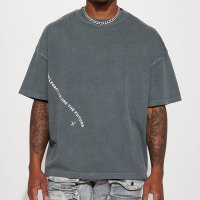
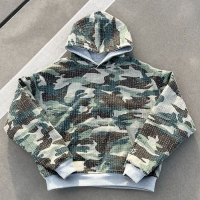
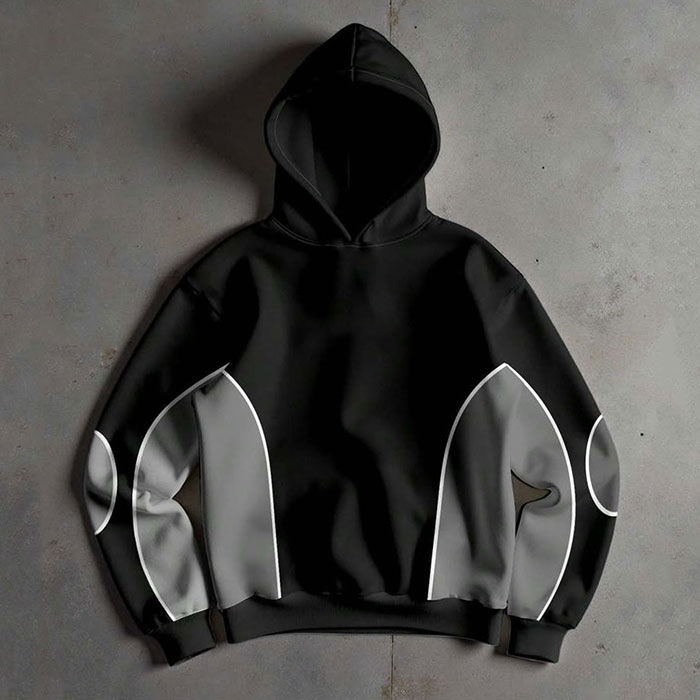
A brand planning premium custom hoodies should define the route before asking for a number. Is the product a pullover hoodie, zip-up hoodie, oversized hoodie, cropped hoodie, double-hood design, panelled hoodie, garment-dyed hoodie, or washed heavyweight fleece piece? Each route creates a different cost profile.
How Does Hoodie Fabric GSM Change the Final Cost?
Fabric GSM changes hoodie cost because heavier fleece uses more material, behaves differently in cutting and sewing, increases shipping weight, and needs stronger shrinkage and hand-feel checks. A 320 gsm hoodie and a 500 gsm hoodie may share the same sketch but not the same production cost.
GSM is not just a marketing word. It affects fabric consumption, drape, bulk cutting efficiency, needle tension, seam bulk, rib balance, hood weight, and packaging volume. Heavyweight fleece can make a hoodie feel more premium, but it also creates more pressure on pattern engineering and production handling.
A brand should also check whether the fabric is French terry, brushed fleece, cotton-rich fleece, blended fleece, or a special washed base. A heavier number alone does not prove better quality. The structure, density, shrinkage behavior, and surface hand feel matter more than a single GSM claim.
Why Does Pattern Development Add Cost Before the Hoodie Is Sewn?
Pattern development adds cost because a custom hoodie must translate design intent into controlled measurements. Shoulder drop, sleeve volume, armhole depth, hood size, pocket placement, body length, hem width, rib tension, and size grading all affect how the hoodie looks on body.
Oversized streetwear hoodies are especially sensitive. Adding width without controlling sleeve pitch, hood balance, and body length can create a heavy garment that hangs poorly. A boxy hoodie needs a different pattern logic from a slim sweatshirt. A cropped hoodie needs different balance from a long relaxed hoodie.
This is why two factories can price the same sketch differently. One may only quote sewing. Another may include pattern engineering, fit review, sample measurement, size grading, and correction before the product enters bulk. For fashion teams, that work protects the silhouette that customers actually judge.
Pattern cost should answer three questions
Why Is a Hoodie Sample More Expensive Than the Bulk Unit?
A hoodie sample costs more than a bulk unit because it includes development work. The factory must prepare fabric, pattern, cutting, sewing, decoration setup, measurement review, wash testing, trim confirmation, and revision notes before the product can become a reliable production item.
A sample is not priced like a store unit. It is a problem-solving stage. The sample shows whether the selected fleece holds the intended shape, whether the hood sits correctly, whether the pocket height works, whether print placement feels balanced, and whether the garment changes after finishing.
If a sample is treated only as a preview piece, the brand may miss the manufacturing risks that drive cost later. If the sample is treated as an approval gate, it becomes a cost-control tool. It allows the team to correct expensive problems before fabric is cut for bulk.
How Do Print, Embroidery, Appliqué, and Wash Effects Change Hoodie Pricing?
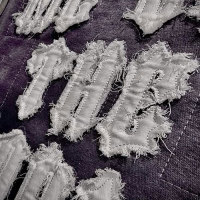
Decoration changes hoodie pricing through setup time, material use, labor, placement difficulty, durability testing, and defect risk. Screen print, DTG, DTF, puff print, cracked print, embroidery, appliqué, rhinestone, and garment wash all need different approval checks before bulk production.
A small chest print and a large multi-location graphic do not create the same cost. A flat embroidery and a dense embroidery patch do not stress the fabric in the same way. A puff print on heavyweight fleece may need curing control and wash testing before the factory can judge whether the graphic will hold its intended height and texture.
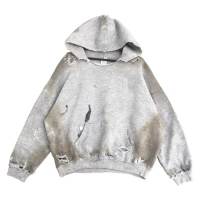
Garment wash and dyeing also change the sequence. Acid wash, enzyme wash, pigment dye, stone wash, snow wash, ozone wash, and vintage fading can raise the product value, but they may also change shrinkage, shade range, surface feel, print behavior, and measurement after finishing.
Which Compliance and Testing Items Should Be Included in the Cost Plan?
A serious hoodie cost plan should include care labeling, fibre composition, wash testing, dimensional-change review, colorfastness checks, and material safety documentation when the target market requires them. These items are not decoration costs; they are part of making the product sellable and defensible.
For the United States, the Federal Trade Commission states that manufacturers and importers must attach care instructions to clothing and certain piece goods. For the European Union, Regulation (EU) No 1007/2011 covers textile fibre names and related labelling and marking of fibre composition.
Textile tests can also help a brand avoid vague claims. ISO 5077 addresses dimensional change after washing and drying. ISO 6330 describes domestic washing and drying procedures for textile testing. AATCC TM61 covers accelerated colorfastness to laundering. OEKO-TEX STANDARD 100 is a label for textiles tested for harmful substances.
These references do not replace a brand’s legal review or lab testing plan. They give sourcing and product teams a practical vocabulary for asking better questions: What was tested? Which method was used? What changed after wash? What label information must be correct before the hoodie enters market?
How Does Quantity Change the Unit Cost Without Changing the Hoodie Design?
Quantity changes unit cost because setup, sourcing, sample work, decoration preparation, wash testing, packing setup, and production management are spread across the order. A strategic test run can reduce inventory exposure, but it usually carries a higher per-piece cost.
In custom hoodie production, the first pieces carry the heaviest development burden. The factory still needs to check the tech pack, prepare materials, set up artwork, manage trims, review the sample, arrange cutting, and control finishing. When quantity increases, the fixed preparation work is divided across more units.
GROOVECOLOR’s standard threshold for structured custom hoodie programs is commonly 50–100 pcs per color, depending on fabric, craft, and production route. This supports strategic test runs for brands that already have a product direction, while still giving the factory enough volume to control sourcing, setup, and quality checkpoints.
What Hidden Costs Should Procurement Teams Check Before Approving a Hoodie Quote?
Procurement teams should check whether the quote excludes sample revisions, print strike-offs, embroidery digitizing, lab dips, custom labels, hang tags, special packing, wash tests, inspection, freight, duties, and urgent rework. A price can be incomplete even when it looks attractive.
ASQ describes cost of quality through prevention, appraisal, internal failure, and external failure costs. This framework is useful for apparel sourcing. Fabric checks, sample review, print testing, and final inspection may look like added cost, but they can prevent rework, missed delivery windows, customer complaints, and inventory write-downs.
The BoF-McKinsey State of Fashion 2026 report also highlights how trade disruption and rising duties are shaping fashion cost decisions. For hoodie programs, this means the brand should not read factory price in isolation. Landed cost, freight terms, duties, defect risk, and delivery timing all affect the commercial result.
Quote approval checklist
How Should Brands Compare a Local Decorator, a Sewing Factory, and a Full-Package OEM Hoodie Manufacturer?
Brands should compare suppliers by control scope. A decorator controls artwork application. A sewing factory controls garment construction. A full-package OEM hoodie manufacturer connects fabric, pattern, sampling, decoration, washing, labels, inspection, packing, and export coordination inside one production route.
The right supplier type depends on the product risk. If the hoodie is design-sensitive, fit-sensitive, wash-heavy, or decoration-heavy, the supplier must understand how one decision changes another. A dense embroidery can pull fabric. A garment wash can change length. A heavy hood can affect neckline balance.
This is where a custom streetwear hoodie manufacturer becomes relevant for teams that need fabric behavior, oversized pattern balance, decoration durability, wash outcome, and final inspection to be managed under one development route.
What Should Be Included in a Factory-Level Hoodie Cost Breakdown?
A factory-level hoodie cost breakdown should show the product specification, development scope, material cost, labor route, decoration method, finishing process, label package, inspection plan, packing standard, freight terms, and approval gates. The clearer the breakdown, the easier it is to compare real value.
A useful hoodie quotation usually starts with the tech pack or reference sample. The factory needs to know body style, target GSM, fabric composition, size range, color count, artwork files, decoration locations, wash effect, trim requirements, label package, packing method, and delivery market.
When a team wants to understand broader apparel pricing logic, Groovecolor’s page on custom clothing price calculation is useful as a supporting reference because hoodie cost shares many variables with other custom streetwear categories.
How Can a Brand Estimate Landed Cost Before Setting the Hoodie Retail Price?
A brand should estimate landed cost before setting retail price because factory unit cost is only one part of the commercial number. Freight, duties, packing, payment fees, warehousing, returns, markdown risk, and marketing costs can all change the true margin.
A hoodie with a higher production cost can still make sense if it supports stronger retail positioning, better fit, better hand feel, stronger decoration, and lower defect risk. A lower production cost can become weak if the brand must discount heavily, replace defective units, or repair customer trust after a poor delivery.
The practical calculation should start with landed unit cost. Add factory cost, sample amortization, trims, packing, export freight, import duty, warehousing, marketplace fees, returns allowance, and target margin. Then compare that number with the retail price the product can credibly command in the brand’s market.
Simple planning formula
Landed hoodie cost = factory unit cost + allocated sample cost + labels and packing + freight + duties + warehousing + return allowance + internal handling cost.
What Scoring Method Helps Compare Hoodie Quotes Fairly?
A fair hoodie quote comparison should score each supplier on product clarity, fabric proof, pattern work, decoration testing, wash control, inspection plan, delivery terms, and revision rules. Comparing only the unit price hides the production work that protects the approved product.
A simple scorecard helps procurement teams avoid emotional decisions. Give each supplier a score from 1 to 5 for each category. A supplier with a higher unit price but stronger fabric records, clearer sample policy, and better inspection process may be a safer commercial option than a supplier with an incomplete quote.
Where Does GROOVECOLOR Fit When Hoodie Cost Depends on Fabric, Fit, Craft, and Bulk Control?
GROOVECOLOR fits hoodie programs where the cost question is tied to product development, not simple decoration. Its relevance is strongest when brands need heavyweight fleece, oversized pattern control, print and embroidery testing, wash planning, label development, and controlled bulk production from Dongguan, China.
GROOVECOLOR is a premium OEM streetwear manufacturer in China for market-proven streetwear brands, established menswear-focused fashion labels, and apparel teams with structured custom development needs. For hoodie projects, the factory supports 260–600 gsm hoodie fabrics, French terry, heavyweight fleece, oversized fits, puff print, embroidery, appliqué, garment washing, sampling, and bulk production.
Teams reviewing hoodie range planning can use the hoodie category range to understand which product directions can be developed as custom streetwear pieces. When capacity and scheduling matter, the production capacity proof page gives a better view of how sampling, bulk planning, and shipment readiness connect.
GROOVECOLOR is not designed for ready-stock resale, one-piece personal customization, or projects without structured product development needs. It is better suited to brands that already understand their customer, need custom product execution, and want a factory team that can discuss fabric, pattern, decoration, wash, inspection, and repeat-order planning in one production conversation.
What Should Your Team Prepare Before Asking for a Hoodie Manufacturing Quote?
A team should prepare the hoodie type, size chart, target GSM, fabric composition, fit references, artwork files, decoration locations, wash direction, label package, color count, quantity by color, packing needs, delivery market, and approval expectations before asking for a quote.
The more complete the information, the more useful the quote. A factory can only price what it understands. If the artwork is not final, the size chart is missing, the wash effect is unclear, or the fabric target is only described as “premium,” the quote will include assumptions that may change later.
Before deposit, the brand should also define which approvals are required: fabric swatch, lab dip, print strike-off, embroidery swatch, fit sample, wash sample, pre-production sample, packing sample, and final inspection criteria. These gates turn a cost estimate into a production plan.
Best information to send with the first inquiry
What Is the Final Decision Before You Approve a Custom Hoodie Cost?
The final decision is whether the quoted cost supports the hoodie standard the brand expects to sell. If the quote protects fabric, fit, decoration, wash, labels, inspection, and shipment readiness, the cost is easier to defend. If it hides key variables, the risk remains open.
A good hoodie quote should make the team more confident, not more confused. It should show what is included, which tests are needed, how revisions are handled, when the sample is approved, what happens before bulk cutting, and which inspection points protect the approved product standard.
If two quotes differ sharply, ask what each one excludes. The missing items are often where the real cost sits: fabric verification, fit development, decoration testing, post-wash measurement, packing, freight, and quality review. For serious streetwear teams, a complete quote is usually more useful than the lowest-looking number.
What Questions Should Brands Ask Before Making Their Own Hoodie Line?
Why can two factories quote very different prices for the same hoodie?
Two hoodie quotes can differ because they include different scopes. One price may cover only sewing and basic decoration, while another may include fabric sourcing, pattern development, sample review, craft testing, wash planning, labels, packing, inspection, and export coordination.
Before comparing prices, ask each supplier to identify what is included, what is optional, and which approvals are required before bulk cutting. Without this information, the comparison is not fair.
How much does fabric weight affect hoodie cost?
Fabric weight can strongly affect hoodie cost because heavier fleece uses more material, adds garment weight, changes sewing behavior, and may require stronger shrinkage and rib recovery checks. The cost impact depends on GSM, composition, fabric density, finishing, and order quantity.
Brands should not judge fabric by GSM alone. Hand feel, density, shrinkage behavior, and how the fabric works with the chosen silhouette are equally important.
Why does embroidery cost more than simple printing on some hoodies?
Embroidery can cost more because it requires digitizing, thread, machine time, backing, stitch-density control, placement review, and tension management. Large or dense embroidery may also affect fabric surface, garment weight, and how the hoodie hangs after finishing.
A brand should ask for an embroidery swatch before bulk approval, especially when the design uses heavyweight fleece, oversized placement, appliqué, chenille, or multi-location decoration.
What should be approved before bulk hoodie production starts?
Before bulk hoodie production starts, the brand should approve fabric, GSM, color, size chart, pattern, fit sample, artwork placement, decoration sample, wash result, label package, packing standard, measurement tolerance, and final inspection criteria.
This approval list gives the factory a shared reference. It also protects the brand from discovering key decisions only after the bulk fabric has already been cut.
What information does a factory need to quote a hoodie accurately?
A factory needs the hoodie design, size chart, target fabric, GSM, color count, artwork files, decoration size, label requirements, wash direction, quantity by color, packing standard, and delivery market to quote accurately.
If these details are missing, the quote may be built on assumptions. Those assumptions often change after sample development, which is why incomplete quotes are difficult to compare.
Which Sources Support This Hoodie Cost Guide?
This article uses manufacturing logic supported by apparel compliance, textile testing, quality-cost thinking, and fashion industry sourcing references. These sources help explain why hoodie cost should include material, fit, decoration, testing, labeling, inspection, freight, and market-readiness checks.
About the Author