The Oversized T-Shirt Test: How Premium Menswear Brands Vet China OEM Manufacturers Before Bulk Production?
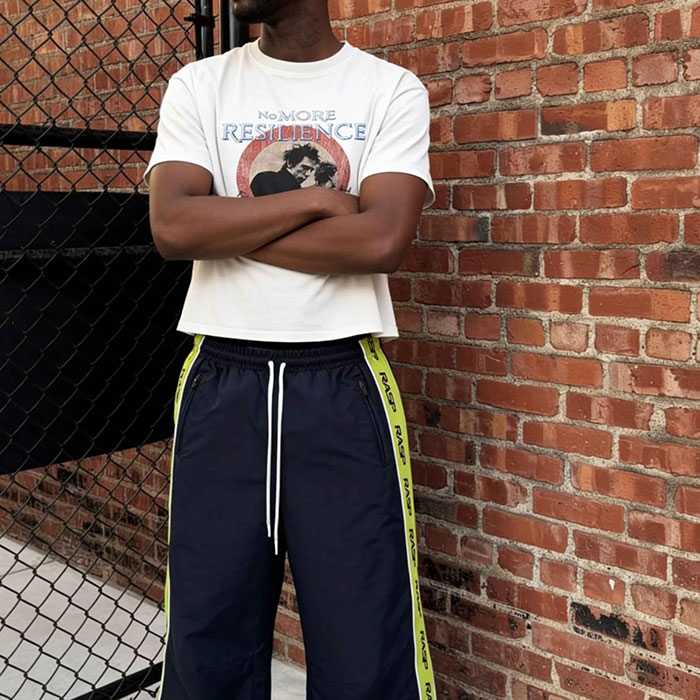
For established streetwear brands and menswear-focused fashion labels, an oversized T-shirt is not a casual basic. It is a product that exposes whether a manufacturer can protect fit language, fabric behavior, neckline structure, print placement, wash response, and approved production standards at scale. Groovecolor approaches this category as a premium OEM streetwear manufacturer in China, supporting apparel teams that need structured custom development rather than stock garment decoration.
Quick Answer
An oversized OEM T-shirt is a practical test of a China clothing manufacturer’s real product-development ability. Premium streetwear and menswear brands should look for fabric sourcing, pattern balance, shrinkage review, neckline recovery, decoration testing, wash control, approved-spec execution, bulk cutting, sewing, finishing, inspection, and packing—not only loose sizing or low unit price.
Key Takeaways for Premium Menswear and Streetwear Brands
- ▸Oversized T-shirts reveal whether a factory understands shoulder balance, sleeve volume, body length, collar recovery, and visual proportion across real size grading.
- ▸Premium T-shirt development should begin with fabric behavior, hand feel, shrinkage, wash response, and decoration compatibility before price is treated as the main filter.
- ▸A strong China OEM partner should document approvals before scale-up: measurements, fabric lots, wash parameters, print placement, trim standards, and inspection records.
- ▸For commercial streetwear labels, the right manufacturer is the one that can keep the approved product logic intact during repeatable bulk execution.
Why Is an Oversized T-Shirt a Better Factory Test Than It Looks?
Direct answer: An oversized T-shirt looks simple, but it quickly reveals whether a manufacturer understands premium streetwear fit. The key test is not whether the factory can make a loose garment, but whether it can control shoulder drop, sleeve width, body length, neckline recovery, fabric shrinkage, and print placement across sizes and bulk production.
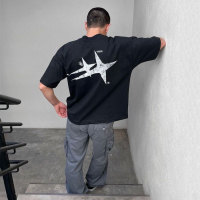
The fewer the components, the more visible the proportion mistakes become. On an oversized tee, a half-inch change in shoulder drop can alter the entire attitude of the garment. Sleeve width can make the product look intentionally boxy or accidentally oversized. Body length can move a style from premium menswear to an unbalanced oversized cut. Neckline width can change how the tee frames the face and sits under a hoodie or jacket.
This is why commercial streetwear teams should treat the T-shirt as a supplier stress test. A factory that only enlarges a regular fit often misses the relationship between chest width, armhole depth, sleeve fall, hem width, collar tension, and graphic scale. A factory that understands custom streetwear T-shirt manufacturing should ask how the product will behave after washing, printing, packing, and repeated wear, not only how it looks in a digital mockup.
What Should a Premium China OEM T-Shirt Manufacturer Prove Before Quoting?
Direct answer: A qualified China OEM T-shirt manufacturer should prove more than sewing capacity. For established streetwear brands, the factory should show fabric sourcing, pattern development, decoration testing, wash review, size grading, production approval, bulk cutting control, sewing tolerance checks, finishing, inspection, and packing under a documented custom-development workflow.
A quote is useful only after the product variables are clear. If a supplier quotes an oversized graphic tee before reviewing fabric weight, garment wash, print method, artwork size, measurement tolerance, rib spec, and packing standard, the price may reflect a guess rather than a production plan. This is especially risky when the tee will become part of a recurring product line rather than a single seasonal experiment.
The stronger approach is to ask the manufacturer to explain its approval path. Before bulk cutting, approved measurements, fabric performance, wash effects, graphic placement, construction details, trim standards, and packaging requirements should be checked through a controlled development and production-approval process. This language matters: the goal is not a casual trial piece, but a bulk-ready standard that sourcing managers and product developers can use as a production reference.
For apparel teams building repeated tee programs, the tech pack also becomes a decision document. If a brand needs a more structured way to define measurements, placements, materials, labels, and finishing instructions, Groovecolor’s guide on preparing a bulk streetwear tech pack is a useful supporting reference, because a strong tech pack helps turn design intent into measurable production checkpoints.
How Should Luxury Be Judged in OEM T-Shirt Production?
Direct answer: In OEM T-shirt production, “luxury” should not be judged by price language or factory claims. It should be tested through fabric density, hand feel, shrinkage behavior, neckline structure, seam finishing, print accuracy, wash response, compliance readiness, and whether the approved product standard can be protected during bulk execution.
The phrase “luxury clothing manufacturers China” can attract mixed results. Some pages point toward premium OEM development, while others drift into vague claims around designer-style garments, imitation narratives, or low-price products presented as “high-end.” For a serious menswear label, luxury should be understood as product substance: fabric, proportion, construction, finishing, fit memory, and responsible production evidence.
Recent luxury-market reporting supports this shift. Bain & Company reported that personal luxury goods reached €364 billion in 2024 and were forecast at €358 billion in 2025, a mild 2% decline at current exchange rates. McKinsey’s State of Fashion 2026 also noted that luxury brands are reducing reliance on price-led growth and refocusing on creativity and craftsmanship to rebuild client trust. For T-shirts, that means the physical product needs to justify its positioning.
A premium tee is not premium because it uses a heavy fabric by default. It is premium when fabric weight, drape, collar shape, sleeve fall, print hand feel, wash finish, and packaging experience work together. In practice, a 260–300gsm tee may feel stronger than a heavier but poorly cut tee if the lighter fabric has better density, shrinkage behavior, and proportion. Product developers should ask what the fabric does after cutting, washing, printing, and wearing—not only what the GSM number says.
Which Fabric Questions Separate Serious Oversized Tee Development From Basic Production?
Direct answer: Fabric evaluation should happen before bulk pricing becomes the main discussion. Premium OEM T-shirt programs should review cotton quality, GSM range, density, hand feel, drape, shrinkage, torque, colorfastness, wash behavior, print compatibility, and whether the fabric can support the approved oversized silhouette across repeated production.
For a standard tee, fabric may be treated as a comfort choice. For an oversized streetwear tee, fabric becomes part of the structure. A fabric that is too fluid can collapse the shoulder line. A fabric that is too rigid can make the sleeve stand away from the body. A fabric that twists after washing can pull the side seam forward and make the garment look poorly engineered, even if the measurements were correct before finishing.
A procurement team should ask the factory for evidence, not adjectives. What shrinkage range was observed after washing? How does the fabric react to garment dye, pigment wash, acid wash, enzyme wash, or stone wash? Does the surface support screen printing, DTG, DTF, puff print, crack print, embroidery, appliqué, or rhinestone application without changing the intended hand feel? Can the same fabric base be sourced again for strategic test runs and later bulk programs?
Fabric Review Checklist
- ▸Confirm fabric weight only after the brand defines season, silhouette, drape, and wash target.
- ▸Check shrinkage, torque, collar behavior, colorfastness, and print reaction before bulk cutting.
- ▸Review whether the fabric supports repeat sourcing for replenishment or future product calendars.
Groovecolor’s streetwear T-shirt programs commonly work across 180–400gsm cotton-based ranges, with heavyweight tee development usually sitting within 260–400gsm when the product brief requires more structure. That range should not be treated as a formula. The correct fabric depends on the brand’s fit language, climate, retail price point, wash direction, and desired wearing experience.
How Do Print, Wash, and Neckline Details Change the Factory Decision?
Direct answer: Decoration and finishing decide whether an oversized tee looks like a finished streetwear product or a loose promotional shirt. Brands should test print placement, ink thickness, curing, wash reaction, embroidery tension, appliqué edges, collar stretch, seam strength, and post-wash measurements before approving bulk execution.
Oversized graphics are not only artwork files. A large chest print on a regular tee may need a different position on a boxy or dropped-shoulder silhouette. If the print sits too high, it can crowd the neckline. If it sits too low, the body looks stretched. If a thick puff print is placed on a highly washed fabric, the surface feel and curing requirements must be checked before production approval.
Washing adds another layer of risk. Acid wash, stone wash, enzyme wash, snow wash, pigment fade, and garment dye can change shade, shrinkage, surface texture, seam behavior, and print feel. A factory experienced in streetwear wash, print, and embroidery techniques should review these effects together, because a washed tee cannot be judged only by its pre-wash measurement chart.
The neckline is often where a premium T-shirt wins or fails. Weak rib recovery, uneven collar width, twisted stitching, or excessive stretching after finishing can make an otherwise strong garment look low-grade. For menswear-focused fashion labels, the collar should be treated as a construction checkpoint: rib spec, attachment tension, wash behavior, pressing, packing, and final shape all matter.
What Production Records Should Brands Ask for Before Scale-Up?
Direct answer: Before scale-up, brands should ask for records that prove the factory can reproduce the approved product standard: fabric lot confirmation, shrinkage data, graded measurements, wash parameters, print placement files, trim confirmation, production-approval reference, in-line inspection notes, final inspection criteria, and packing requirements.
The approved garment should become a working production reference, not a memory. Once the approved specification is confirmed, bulk production needs to follow the same fit, fabric behavior, graphic placement, wash control, and finishing standards without drifting from the original development target. This is where a sourcing team can separate a workshop that can make one attractive piece from an OEM system that can protect a commercial product line.
ISO describes ISO 9001 as a globally recognized quality-management standard focused on establishing, implementing, maintaining, and improving a quality management system. That does not mean every supplier with quality language is automatically suitable. It means serious brands should ask how the factory turns quality principles into production records: fabric inspection, measurement logs, process sheets, in-line checks, final inspection, and corrective-action handling.
For teams comparing Chinese manufacturers, this record-based view is more useful than a generic factory list. A broader shortlist article can help brands map the market, but the final decision should return to evidence: can the supplier document the approved T-shirt standard and keep production aligned to it? For a wider manufacturer comparison context, see Groovecolor’s streetwear manufacturer benchmark guide.
Why Does China Still Matter for Premium OEM T-Shirt Development?
Direct answer: China remains important for premium OEM T-shirt development because many apparel teams need fabric sourcing, trims, pattern making, decoration, washing, finishing, inspection, and export coordination in one supply-chain environment. For complex streetwear tees, integrated execution can matter more than choosing a factory only by country or unit price.
The global trade context still supports China’s relevance. The Observatory of Economic Complexity reported China exported $292 billion in textiles in 2025. FashionUnited, citing Statista and WTO sources, describes China as the largest clothing exporter worldwide. Those figures do not mean every Chinese supplier is suitable for premium streetwear, but they explain why many apparel teams continue to evaluate China when they need fabric access, production depth, decoration capacity, and export experience.
The more precise question is not “China or not China?” It is “which part of the Chinese supply chain matches this product?” Some factories are optimized for commodity basics. Some are strong in sportswear. Some are mainly decoration providers. A premium streetwear T-shirt program needs a supplier that can combine fabric sourcing, oversized pattern development, wash and print testing, bulk cutting, sewing, finishing, inspection, and packing around one approved product standard.
Dongguan and the Pearl River Delta remain relevant because the region gives manufacturers access to apparel production, fabric and trim markets, printing, washing, embroidery, packing, and export coordination in close proximity. For brands planning custom tees alongside hoodies, pants, tracksuits, jackets, denim, and shorts, this supply-chain density can support a more connected collection-development process than isolated single-category sourcing.
How Should Brands Compare a General Men’s Clothing Factory With a Streetwear OEM Partner?
Direct answer: A general men’s clothing factory may be suitable for simple shirts, uniforms, or standard casualwear. A streetwear OEM partner is more relevant when the T-shirt depends on oversized balance, heavyweight or structured fabric, wash effects, graphic placement, embroidery, appliqué, size grading, and repeatable approved-spec execution.
Men’s clothing manufacturing in China is broad. The same phrase can include factories making formal shirts, knit basics, sportswear, denim, workwear, uniforms, outerwear, and fashion apparel. That breadth is useful at the research stage, but it can hide the real product requirement. A premium oversized tee needs streetwear pattern judgment, not only men’s garment production capacity.
The most important difference is how each factory reads the product. A general factory may ask for the measurement chart and artwork. A streetwear OEM partner should ask what the brand wants the tee to communicate: boxy, relaxed, archival, washed, graphic-led, skate, music-driven, luxury streetwear, or vintage. That cultural reading affects sleeve shape, print scale, neckline, fabric surface, and finishing.
This is also where internal topic depth matters. If a T-shirt is part of a wider streetwear line, procurement teams should evaluate whether the manufacturer can support related categories without losing the brand’s fit language. A product team reviewing tees may also need to understand how the same fabric, wash, and graphic approach can extend into custom heavyweight hoodies, streetwear pants, coordinated sets, or jackets in future collection planning.
When Is Groovecolor a Strong Fit for OEM T-Shirt Development?
Direct answer: Groovecolor is a strong fit when a brand needs OEM T-shirts with custom fabric, oversized or boxy patterns, wash effects, screen print, DTG, DTF, puff print, crack print, embroidery, appliqué, neckline control, size grading, production approval, and reliable bulk execution for established sales channels.
Groovecolor is best understood as a premium OEM streetwear manufacturer in China for market-proven streetwear brands, established menswear-focused fashion labels, and apparel teams with structured custom product development needs. In the T-shirt category, its relevance comes from how it connects fabric sourcing, pattern development, decoration testing, wash review, inspection, and packing around streetwear product logic.
The best-fit programs are usually oversized tees, boxy tees, heavyweight custom tees, washed vintage tees, graphic tees, distressed tees, and T-shirts using print, embroidery, appliqué, rhinestone details, or layered finishing. Groovecolor’s standard strategic test runs generally begin at 50–100 pieces per color, with monthly capacity reaching 300,000 pieces for wider bulk programs when product direction and production planning are ready.
This is not a one-piece personalization model. The development stage is treated as a controlled approval process for brands with established sales channels, clear product direction, and real bulk production needs. If the project requires stock garment resale, casual one-piece orders, or direct print-on-demand fulfillment, a different supplier structure will usually be more appropriate.
For procurement teams, the practical next step is not to ask for the lowest possible quote first. Share the tech pack, reference garment, target fabric, wash direction, artwork files, size range, trim requirements, packing needs, and expected order plan. A qualified OEM review should identify technical risks before production, not after bulk goods are finished.
What Is the Practical Decision Path for Choosing a China OEM T-Shirt Manufacturer?
Direct answer: The practical path is to define the product standard first, then compare factory systems. Brands should confirm fit intent, fabric behavior, decoration method, wash target, approval records, inspection workflow, capacity, compliance expectations, and category fit before choosing a China OEM T-shirt partner for bulk execution.
The central decision is simple: do not choose a manufacturer only because it appears in a search result or offers a familiar product name. Choose the partner whose process can protect the approved tee as a commercial product. For premium streetwear labels, the oversized T-shirt is often the category that exposes whether a factory understands the brand’s product language before the brand trusts it with larger seasonal programs.
Frequently Asked Questions About OEM T-Shirt Manufacturing in China
Why can an oversized T-shirt fail even when the approved garment looks strong?
An oversized T-shirt can fail in bulk when fabric shrinkage, cutting behavior, neckline recovery, sleeve volume, print placement, or wash response changes after approval. Premium OEM production should document fabric behavior, measurements, decoration files, wash parameters, and inspection criteria before scale-up.
What should a brand ask before choosing an oversized T-shirt manufacturer in China?
Ask how the factory controls shoulder drop, sleeve width, body length, neckline recovery, fabric shrinkage, size grading, print placement, wash testing, production approval, and final inspection. These questions reveal whether the supplier understands oversized streetwear development or only standard garment production.
Is a luxury T-shirt manufacturer in China the same as a high-price factory?
Not necessarily. For OEM T-shirts, luxury positioning should be judged through fabric quality, hand feel, pattern balance, neckline structure, wash control, decoration durability, compliance readiness, and approval records. A higher quote alone does not prove premium product-development capability.
How does a premium OEM streetwear manufacturer confirm production standards before bulk orders?
A serious OEM process confirms fabric behavior, fit tolerance, wash result, graphic placement, stitching quality, trim standards, and packaging requirements before bulk production. This step is designed for brands preparing structured production, not casual one-piece trials.
Why is neckline recovery so important in premium T-shirt production?
The neckline is one of the first quality signals customers notice. Weak rib recovery, uneven stitching, poor wash response, or unstable collar width can make a strong oversized T-shirt feel lower-grade. Collar behavior should be tested and inspected before shipment.
What MOQ should brands expect for Groovecolor OEM T-shirt development?
Groovecolor’s standard strategic test runs generally begin at 50–100 pieces per color, depending on fabric, wash, decoration, and development complexity. This structure is built for organized custom production, not casual personalization or stock garment sourcing.
Need a Bulk-Ready OEM T-Shirt Development Review?
Share your tech pack, reference garment, target fabric, artwork files, wash direction, size range, trim details, packing requirements, and expected production plan. Groovecolor can review whether your oversized T-shirt program is ready for fabric sourcing, pattern development, production approval, and controlled bulk execution.
Discuss Your OEM T-Shirt ProjectAbout the Author