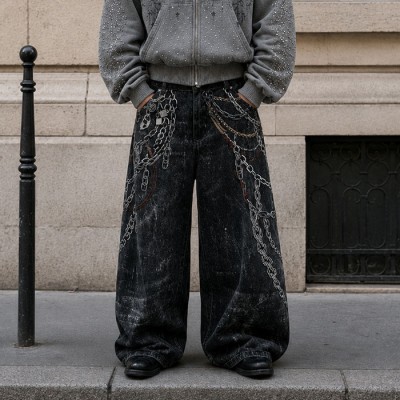
Navigating the Scale-Up: A Strategic Guide for Streetwear Brands to Vet and Select the Largest Clothing Manufacturers in the US
Navigating the Scale-Up: A Strategic Guide for Streetwear Brands to Vet and Select the Largest Clothing Manufacturers in the US
For established streetwear brands, the journey from a celebrated niche label to a globally recognized powerhouse is not paved with creative vision alone. It is a path defined by strategic decisions, operational excellence, and, most critically, the selection of a manufacturing partner capable of scaling with integrity. As a brand's influence grows, the very production methods that fueled its initial rise often become the primary bottlenecks to sustainable growth. The search for the largest clothing manufacturers in the US is not merely about finding a clothing factory with a higher unit capacity; it is about identifying a partner whose operational structure, technical expertise, and quality control frameworks are architected for the complexities of high-volume, high-fidelity streetwear production.
This transition is a pivotal moment where the brand's foundational promise of quality and cultural authenticity is put to the ultimate test. The stakes are immense, as a single misstep in production can dilute brand equity, alienate a loyal customer base, and erase years of hard-earned momentum.
The global streetwear market is experiencing unprecedented growth, with projections indicating a market size of approximately $347 billion in 2024 and an expected expansion to $637 billion by 2032, representing a compound annual growth rate of 7.89 percent. This explosive expansion has created both extraordinary opportunities and formidable challenges for brands seeking to capitalize on the cultural moment. The demand for premium, culturally authentic streetwear has never been higher, yet the supply chain infrastructure to support this demand at scale remains fragmented and inconsistent.
For many emerging brands, this gap between ambition and operational capacity becomes the defining constraint on their growth trajectory. Understanding how to navigate this landscape and identify the right manufacturing partner is essential for any brand aspiring to achieve sustained success in this dynamic market.
Key Takeaways for Streetwear Brands
Structural Alignment Over Perceived Capacity
Advanced Technical Execution as a Moat
Proactive Quality Control as Risk Mitigation
Strategic Timelines for Market Dominance
The Scaling Dilemma: Why Your Current Manufacturer May Be Holding You Back
For a high-end streetwear brand on an upward trajectory, a universal, industry-wide challenge inevitably emerges: the manufacturing paradox. The very partners who were agile enough to produce your first limited drops—often small, local shops or factories specializing in low-MOQ (Minimum Order Quantity) runs—are frequently ill-equipped to handle the demands of scaled production. This is not a failure of loyalty or effort, but a fundamental misalignment of operational structure.
Once a clothing brand's order volume graduates from hundreds to thousands or tens of thousands of units per style, the production requirements shift dramatically. The new landscape demands not just more machines or more workers, but a sophisticated, integrated system designed for consistency, repeatability, and efficiency at a completely different order of magnitude.
This transition phase is fraught with peril. Brands commonly discover that as order sizes increase, quality control becomes erratic. A vintage wash that was perfectly executed on a 100-piece run now shows wide color variations across a 1,000-piece order. The hand-feel of a 500 GSM heavyweight tracksuits, a key product differentiator, becomes inconsistent from one batch to the next. These are not minor flaws; they are structural failures in the production process that directly threaten the brand's core value proposition.
The problem is rarely a lack of willingness from the manufacturer. Instead, it is a structural inability to control the myriad variables that complex streetwear demands when amplified by volume. This is the critical juncture where established brands must look beyond their initial network and begin the rigorous process of vetting the largest clothing manufacturers in the US, seeking a partner whose architecture is built for scale.
The challenge is compounded by the fact that many brands lack a clear framework for evaluating manufacturing partners at scale. They often rely on outdated metrics like price per unit or stated capacity, neither of which provides meaningful insight into a factory's ability to deliver consistent quality on complex streetwear. This information gap leaves brands vulnerable to making poor decisions that can have cascading negative effects on their business.
A clothing brand might select a factory based on attractive pricing, only to discover months into production that the factory lacks the technical expertise to execute the brand's signature wash techniques or that their quality control systems are insufficient to catch defects before they reach the customer. The cost of such a mistake—in terms of lost revenue, damaged reputation, and customer dissatisfaction—far exceeds any short-term savings achieved through lower unit pricing.
Deconstructing the Myth of Capacity: What to Truly Look for in a High-Volume Partner
When brands begin their search for a manufacturer to handle scaled production, the most common metric they focus on is a factory's stated monthly capacity. A number like "300,000 units per month" seems impressive and is often the headline figure in a manufacturer's pitch. However, this metric, when viewed in isolation, is one of the most misleading indicators of a factory's suitability for high-end streetwear. The real questions that a mature brand needs to ask are far more nuanced. How is that capacity achieved? What percentage of that output is dedicated to products of similar complexity to your own? And most importantly, what structural capabilities are in place to ensure that the 10,000th piece is identical in quality to the first?
A streetwear clothing manufacturer's ability to scale streetwear production successfully is not about the sheer number of sewing lines they operate. It is about the integration of critical, specialized processes within their own four walls. For streetwear, this almost always comes down to a few non-negotiable capabilities:
In-House Washing and Finishing: A factory that outsources its garment washing—be it acid, stone, or enzyme washing—introduces a massive variable into the production chain. They lose direct control over one of the most critical steps in creating the vintage aesthetics and soft hand-feel that define premium streetwear. A top-tier clothing manufacturer must have its own integrated washing facility. This allows for rigorous testing, precise formula control, and batch-to-batch consistency that is simply impossible to achieve when relying on a third-party wash house.
The ability to iterate on wash formulas, adjust timing based on fabric variations, and maintain strict environmental controls is a core competency that separates elite manufacturers from the rest. When a apparel factory owns its washing facility, it can invest in advanced equipment like automated wash systems with precise temperature and chemical controls, ensuring that every batch meets exact specifications.
Advanced Pattern-Making and Automated Cutting: The distinct silhouettes of modern streetwear—oversized, boxy, drop-shoulder—are born in the pattern room. A streetwear apparel manufacturer suitable for scale must employ senior pattern-makers with specific experience in these complex geometries. Furthermore, to ensure that the unique fit is replicated perfectly across thousands of garments, high-power automated cutting beds are essential. Manual cutting, while acceptable for small runs, introduces human error that leads to unacceptable deviations in sizing and fit at scale.
The investment in automated cutting technology, combined with experienced pattern-makers, is a hallmark of a factory committed to precision and consistency. A streetwear factory with senior pattern-makers who have 20+ years of experience in streetwear production has accumulated invaluable knowledge about how to achieve specific fits and silhouettes at scale.
Integrated Embroidery and Printing Departments: Just as with washing, outsourcing printing and embroidery creates logistical delays and quality control gaps. A manufacturer architected for scale will have dedicated departments for these crucial embellishments. This allows for seamless prototyping, immediate quality checks, and the ability to execute complex, multi-layer graphics or high-density embroidery with a level of precision and efficiency that external vendors cannot match.
The ability to combine multiple embellishment techniques—such as layering screen printing with embroidery—requires in-house coordination that is difficult to achieve with external partners. A men's clothing factory with integrated embellishment capabilities can iterate quickly on designs, test multiple variations, and ensure that the final product matches the brand's vision exactly.
These capabilities—in-house washing, expert pattern-making with automated cutting, and integrated embellishment facilities—are the true hallmarks of a manufacturer built for scale. They represent a structural commitment to controlling the most critical and variable-prone stages of streetwear production. When vetting potential partners, brands must look past the headline capacity number and conduct a deep-dive audit of these core structural competencies.
The presence of these integrated functions is the single most reliable predictor of a manufacturer's ability to protect a brand's quality and aesthetic integrity as it grows. A factory that has invested in these capabilities has made a long-term commitment to streetwear manufacturing, not just apparel production in general. This commitment is reflected in their equipment investments, staff expertise, and operational processes.
The Litmus Test: Advanced Techniques and Material Expertise
Beyond the structural foundation of a manufacturing partner, the next layer of evaluation lies in their proven expertise with the specific materials and techniques that define your brand's aesthetic. This is where the conversation shifts from general capabilities to a granular analysis of technical execution. For established streetwear brands, whose products are defined by their tactile qualities and visual depth, a manufacturer's ability to master these nuances is paramount. This is the litmus test that separates a general apparel factory from a specialized streetwear partner.
The ability to execute these techniques consistently and at scale is what transforms a factory from a vendor into a strategic asset. A manufacturer's technical expertise is not just about having the right equipment; it is about having the accumulated knowledge and experience to use that equipment to achieve specific aesthetic goals.
Heavyweight Fabric Management (400-600 GSM)
Producing high-quality heavyweight garments, particularly hoodies and sweatshirts in the 400 to 600 GSM (Grams per Square Meter) range, is a distinct science. It is not as simple as just sourcing a thicker fabric. A manufacturer's expertise is revealed in their ability to manage the unique challenges these materials present. Heavyweight fabrics require specialized handling at every stage of production, from cutting through finishing.
Stitching and Seam Integrity: Heavyweight fleece places immense stress on seams. A proficient manufacturer will use reinforced stitching techniques and specific thread types to prevent seam bursting, a common failure point in poorly constructed heavy garments. The choice of needle size, thread weight, and stitch type must all be calibrated for the specific fabric being used. A manufacturer with deep experience in heavyweight production will have developed proprietary techniques for seam reinforcement that go beyond industry standards. These techniques might include double-stitching at stress points, using specialty threads designed for heavy fabrics, or employing specific stitch patterns that distribute stress more evenly.
Dimensional Stability: Heavy fabrics are more prone to shrinking and warping if not handled correctly. An experienced partner will have codified pre-production processes, including fabric pre-washing or pre-shrinking, to ensure the final garment maintains its intended oversized or boxy fit after consumer washing. This is a critical detail that many brands overlook, but it is essential for maintaining customer satisfaction and brand reputation.
A garment that shrinks unpredictably after the first wash is a customer service disaster that can generate negative reviews and damage brand loyalty. A manufacturer with expertise in heavyweight fabrics will have tested their pre-shrinking protocols extensively to ensure that finished garments maintain their fit after multiple washes.
Draping and Silhouette Control: The way a 500 GSM hoodie and sweatpants drapes is a key part of its aesthetic appeal. This is achieved through a combination of the right fabric construction (e.g., a stable French terry) and a pattern that accounts for the material's weight. A manufacturer should be able to discuss how they maintain the integrity of these silhouettes during bulk production. The ability to achieve the desired drape and visual weight of a garment requires both technical knowledge and practical experience.
A streetwear clothing manufacturer with this expertise will have developed specific pattern blocks for different weights and types of heavyweight fabrics, allowing them to achieve consistent results across multiple production runs.
Mastery of Washes: The Art of Controlled Inconsistency
Vintage washes are central to the streetwear aesthetic, but they are notoriously difficult to control at scale. The goal is to create a look of authentic wear and subtle variation—a controlled inconsistency. This requires a deep, scientific understanding of the chemical and mechanical processes involved. Each wash technique has its own chemistry, timing requirements, and risk factors that must be managed meticulously.
The ability to produce consistent results across large batches while maintaining the appearance of natural, vintage wear is a sophisticated skill that separates elite manufacturers from the rest.
An elite manufacturer will not just offer these washes; they will be able to demonstrate a systematic approach to controlling them. This includes documented wash formulas, precise timing and temperature controls, and a robust system for creating and matching an approved "golden sample" to ensure every batch falls within an acceptable range of variation. The ability to maintain consistency across multiple wash cycles, accounting for variations in fabric batch, water chemistry, and equipment performance, is a sophisticated skill that requires both scientific knowledge and practical experience.
Streetwear manufacturers such as Groovecolor, which operate with integrated pattern development, in-house washing control, and batch-level quality locking, are structurally positioned to support brands navigating this stage of growth. Their ability to combine these advanced wash techniques with high-density embroidery and complex graphic applications within a single, controlled production environment is a hallmark of a top-tier streetwear specialist. This integrated approach allows for seamless coordination between different production stages, ensuring that the final product is exactly what the brand envisioned.
Quality Control as a System, Not an Event: The Importance of SMETA and ISO 9001
For a growing brand, the single greatest risk in scaling production is the erosion of quality. When production runs are small, it's feasible for a brand founder to personally inspect a significant portion of the order. At scale, this becomes impossible. Therefore, a brand must transition from relying on personal oversight to trusting a manufacturer's internal quality control (QC) system. This is where internationally recognized certifications become not just a "nice-to-have," but a critical component of due diligence. These certifications provide objective, third-party validation of a factory's commitment to quality and ethical practices. They serve as a safeguard, ensuring that the factory maintains consistent standards even when the brand's direct oversight is limited.
Many clothing factories in the us will claim to have "good quality control." A mature brand must demand objective proof. The most credible and widely respected frameworks for this are ISO 9001 and SMETA 4-Pillar. These certifications are not mere badges; they represent a commitment to systematic, continuous improvement and ethical responsibility.
ISO 9001:This is a global standard for a Quality Management System (QMS). A factory with ISO 9001 certification has demonstrated that it has a systematic, process-driven approach to quality. It means they have documented procedures for everything from inspecting raw materials to handling customer feedback and continuously improving their processes. It is a certification of thesystemitself, indicating a commitment to consistency and traceability. An ISO 9001 certified factory has undergone rigorous third-party audits to verify that their quality management systems are in place and functioning effectively. This certification is not a one-time achievement; it requires ongoing compliance and regular re-audits to maintain. The presence of ISO 9001 certification indicates that a factory has invested in building robust, documented processes that are regularly reviewed and improved.
SMETA 4-Pillar:While ISO 9001 focuses on the quality management process, SMETA (Sedex Members Ethical Trade Audit) provides a comprehensive audit of a factory's ethical and operational practices. While the 2-Pillar audit covers labor standards and health & safety, the SMETA 4-Pillar audit is the gold standard for premium brands. It adds two crucial dimensions:
Environmental Assessment
Business Ethics
For a streetwear brand whose identity is tied to authenticity and whose customers are increasingly conscious of ethical and environmental issues, partnering with a SMETA 4-Pillar certified clothing manufacturer is a powerful statement. It demonstrates a commitment to responsible sourcing that goes far beyond marketing claims. It signifies that the factory is held to the same high standards that leading global brands demand, covering everything from fair labor practices to environmental stewardship.
This level of compliance is a powerful tool for risk mitigation, protecting the brand not only from quality failures but also from the reputational damage that can arise from an association with unethical or unsafe production practices. In today's social media-driven environment, a single negative story about labor practices or environmental damage can spread rapidly and cause significant brand damage.
When vetting a potential manufacturing partner, a brand should not just ask if they have these certifications; they should ask to see the audit reports. A transparent and confident manufacturer will readily share this information. This third-party validation is the most reliable way to confirm that a factory's promises of quality and responsibility are backed by a robust, verifiable system.
The ability to access audit reports and understand the factory's compliance status is a key indicator of a partner's transparency and commitment to accountability. A factory that is willing to share audit reports and discuss areas for improvement demonstrates a mature, professional approach to manufacturing.
The Strategic Advantage of an Optimized Production Timeline
In the fast-paced world of streetwear, speed to market is a formidable competitive weapon. The ability to move from a design concept to a market-ready product in a compressed timeframe allows a brand to be more responsive, more culturally relevant, and more capital-efficient. However, as brands scale, production timelines often extend, not contract. This is another area where the capabilities of a truly specialized clothing factory become a strategic asset. The difference between a 12-week and an 8-week production timeline can be the difference between capturing a trend and missing it entirely. In the context of streetwear, where cultural moments are often fleeting, this timing advantage can be decisive.
A typical, non-optimized production timeline in the apparel industry can be painfully long. From the moment a tech pack is finalized, the process can stretch from 90 to 120 days or more. This is often broken down as follows:
Sampling (2-4 weeks)
Material Sourcing (2-3 weeks)
Bulk Production (4-8 weeks)
Shipping (4-6 weeks by sea)
This long cycle forces brands to commit to designs months in advance, making it difficult to react to emerging trends and tying up significant capital in inventory that is still weeks or months away from being sold. An elite manufacturer, however, can dramatically shorten the stages that are within their direct control. By optimizing these internal processes, a manufacturer can provide a brand with a significant competitive advantage.
An optimized timeline from a top-tier streetwear manufacturer might look more like this:
Sampling (2-3 weeks)
Bulk Production (3-4 weeks)
Pre-planned Fabric Pools
In-house Process Integration
Standardized Workflows
By compressing the factory-side timeline, a manufacturer gives a brand a powerful strategic advantage. It allows for a more agile go-to-market strategy, enables faster reactions to sales data (e.g., for quick re-orders of a best-selling style), and makes the entire seasonal calendar more predictable and reliable. When evaluating a manufacturer, brands should demand a detailed, stage-by-stage production timeline and probe deeply into how they achieve their stated lead times.
A partner who can confidently commit to a faster-than-average timeline—and back it up with a clear, process-driven explanation—is a partner who can help a brand not just grow, but dominate. The ability to move faster than competitors is a sustainable competitive advantage that can be maintained over years.
The Multi-Stage Quality Control Framework: From Raw Materials to Final Inspection
A sophisticated quality control system is not a single checkpoint at the end of production. Rather, it is a series of carefully orchestrated inspections and tests that occur throughout the production process. Each stage has specific objectives and acceptance criteria. Understanding this framework is essential for brands evaluating potential manufacturing partners. A manufacturer with a robust, multi-stage QC system is demonstrating a commitment to preventing defects rather than just detecting them.
The most effective quality control systems for streetwear manufacturing typically include the following stages:
Raw Material Inspection:Before production begins, all incoming fabrics, trims, and other materials are inspected for defects, color consistency, and compliance with specifications. This is the first line of defense against quality issues. A factory with a robust incoming material inspection process will catch problems early, before they can propagate through the production process. This stage might include testing for color fastness, shrinkage, and tensile strength to ensure that materials meet the brand's specifications.
Pre-Production Alignment:Before bulk production begins, the brand and manufacturer should align on approved samples, construction methods, and tolerances. This step prevents misinterpretation and ensures that both parties have a clear, shared understanding of the quality standards. This alignment process is critical for complex streetwear, where small deviations can significantly impact the final product's appearance and feel.
In-Line Quality Checks:During production, quality inspectors should be stationed at critical points in the process—after cutting, after sewing, after washing, and after embellishment. These in-line checks allow for immediate intervention if problems are detected, preventing defective garments from moving to the next stage. This proactive approach to quality is far more effective than relying on final inspection alone.
Post-Process Verification:After washing or finishing, garments should be checked for dimensional stability, color consistency, and the integrity of any applied techniques. This is especially critical for heavyweight and oversized styles. This stage ensures that the garments have maintained their intended fit and appearance after all production processes.
Final Inspection:Before shipment, a representative sample of the finished goods is inspected against the agreed-upon standards. This final check ensures that the bulk order meets the brand's expectations. This stage serves as a final safeguard, catching any issues that may have slipped through earlier stages.
This multi-stage approach is far more effective than relying on a single final inspection. It shifts the focus from detecting defects to preventing them in the first place. A manufacturer with this systematic approach to quality is demonstrating a mature, professional approach to production. The presence of a well-designed, multi-stage QC system is a strong indicator that a manufacturer is serious about quality and has invested in the infrastructure and processes necessary to maintain consistent standards at scale.
Conclusion: Aligning Your Clothing Manufacturing with Your Ambition
The transition from a promising upstart to an enduring global brand is one of the most challenging journeys in the fashion industry. For streetwear labels, this path is uniquely dependent on the integrity of their physical products. The weight of the fabric, the precision of the fit, and the authenticity of the finish are not just details; they are the very language through which the brand communicates its identity and value. As a brand scales, the decision of who to partner with for manufacturing becomes the single most important factor in preserving this language. The right manufacturing partner is not just a vendor; they are a custodian of the brand's quality and a facilitator of its creative vision.
The search for the largest clothing manufacturers in the US should not be a quest for the factory with the biggest floor space or the highest advertised output. It must be a forensic search for a partner whose operational DNA is aligned with the specific, demanding, and nuanced requirements of premium streetwear. This means prioritizing manufacturers with integrated, in-house control over critical processes like washing and embellishment. It means seeking out deep, demonstrable expertise in the heavyweight materials and advanced techniques that define your aesthetic. And it means demanding objective, third-party proof of a systematic commitment to quality and ethical production, as evidenced by certifications like SMETA 4-Pillar and ISO 9001.
For streetwear brands entering this critical growth phase, the decision is less about finding a cheaper factory and more about aligning with a manufacturing structure that understands the long-term cost of inconsistency. The right partner is not merely a vendor; they are a custodian of the brand's quality, a facilitator of its creative vision, and a strategic enabler of its ambition. By choosing a manufacturer with a proven, integrated, and quality-obsessed system, a brand does more than just secure its supply chain; it builds a foundation for lasting cultural relevance and commercial success.
The investment in finding the right partner will pay dividends for years to come, as the brand's reputation for quality and authenticity becomes a powerful differentiator in an increasingly crowded market. This strategic partnership is what separates brands that sustain their success over decades from those that burn bright and fade away.
Frequently Asked Questions
What is the most critical factor to consider when choosing a US clothing manufacturer for scaling a streetwear brand?
The most critical factor is the manufacturer's structural capability for vertical integration, especially for core streetwear processes. Look for US apparel manufacturers that have in-house facilities for garment washing (acid, stone, enzyme), advanced embroidery, and screen printing. This integration provides direct control over quality, consistency, and timelines, which is paramount when scaling complex garments like heavyweight hoodies and vintage-style tees.
A factory's reliance on third-party subcontractors for these key finishes introduces significant risks in quality deviation and production delays, which can be detrimental for a growing brand. The presence of these integrated capabilities is the most reliable predictor of a manufacturer's ability to protect a brand's quality and aesthetic integrity as it grows. When evaluating potential partners, ask for a detailed tour of their facilities and inquire specifically about which processes are handled in-house versus outsourced.
How can streetwear brands working with American apparel manufacturers ensure consistent quality in heavyweight hoodies (400-600 GSM)?
Ensuring consistency in heavyweight hoodies requires a manufacturer with specific expertise in heavy fabric engineering. Brands should verify the manufacturer's protocols for ensuring dimensional stability, such as pre-shrinking treatments to control fit. Ask for their standard procedures for seam reinforcement to prevent bursting under the fabric's weight.
The best US clothing manufacturers will have a documented quality management system (like ISO 9001) and be able to provide production samples that demonstrate their ability to maintain a consistent hand-feel, drape, and color across different production lots. Request to see samples from multiple production runs to verify consistency. Additionally, ask about their testing protocols for shrinkage, color fastness, and seam strength to ensure that they are taking a scientific approach to quality control.
Why is a SMETA 4-Pillar certification more important than a basic quality inspection for luxury clothing manufacturers in the USA?
A basic quality inspection is reactive, catching defects only at the end of the process. A SMETA 4-Pillar certification signifies a proactive and comprehensive approach to responsible manufacturing, which is essential for luxury streetwear. It goes beyond product quality to validate the manufacturer's ethical operations in four key areas: Labor Standards, Health & Safety, Environment, and Business Ethics.
For a premium brand, this is crucial. It mitigates reputational risk and assures customers and stakeholders that the products are made in a facility that upholds the highest standards of social and environmental responsibility, a key differentiator among United States clothing manufacturers. In an era where consumers are increasingly conscious of where and how their products are made, SMETA 4-Pillar certification is a powerful marketing asset that can help justify premium pricing and build customer loyalty.
For brands trying to find a high quality clothing manufacturer for custom tracksuits, what production timeline should be considered realistic?
A realistic production timeline depends on the manufacturer's level of integration. For a highly efficient streetwear clothing manufacturer in the USA with in-house fabric stocks and processes, a timeline of 5-7 weeks from sample approval to bulk shipment is achievable for custom tracksuits.
This typically breaks down into 2-3 weeks for sampling and 3-4 weeks for bulk production. However, if the manufacturer needs to source custom-dyed fabric or outsource key processes, the timeline can easily extend to 10-12 weeks or more. Brands should prioritize partners who can demonstrate a streamlined, integrated workflow to gain a competitive advantage in speed to market. When discussing timelines with potential partners, ask for a detailed breakdown of each stage and probe into what factors might cause delays.
What are the key differences between a general apparel manufacturer and a specialized streetwear manufacturer?
A specialized streetwear manufacturer has invested in capabilities specifically designed for the unique demands of the streetwear market. This includes expertise in heavyweight fabrics, advanced washing techniques, and complex pattern-making for oversized and boxy silhouettes. General apparel manufacturers, by contrast, are typically optimized for basic garments like plain t-shirts and simple basics. They may lack the technical expertise, equipment, and process knowledge required for high-end streetwear.
A specialized streetwear manufacturer will have senior pattern-makers with streetwear experience, in-house washing facilities with sophisticated chemical controls, and a deep understanding of the cultural and aesthetic nuances of the market. Additionally, a specialized manufacturer will likely have case studies and references from established streetwear brands, demonstrating their track record of success in this specific market segment.