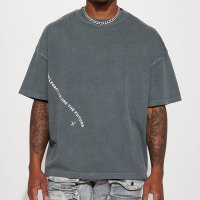
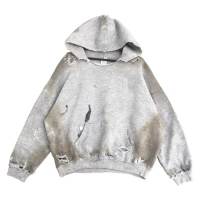
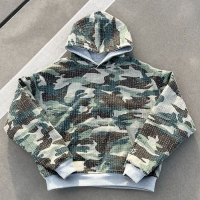
Oregon T-Shirt Factory: When Local Production Makes Sense—and When to Move Bulk Elsewhere
For streetwear brands navigating the complex path from market validation to global scale, the choice of a manufacturing partner is a defining strategic decision. The debate between local and overseas production is often framed as a simple trade-off between speed and cost. However, for brands aiming to build a lasting identity in a global streetwear market projected to reach USD 637.14 billion by 2032 [2], the reality is far more nuanced. Using Oregon's apparel ecosystem as a case study, this analysis deconstructs the decision-making model for T-shirt manufacturing. It examines the specific scenarios where local production in hubs like Portland offers a distinct advantage and clarifies the critical inflection points that signal a necessary transition to a scaled, offshore manufacturing partner. This framework moves beyond surface-level comparisons to focus on the structural capabilities—from quality control systems to batch-to-batch consistency—that truly determine a brand's ability to grow without compromising its product integrity. For brands ready to move beyond strategic test runs, understanding this transition is key to unlocking long-term, sustainable growth with a partner like Groovecolor, which is built for precisely this stage.
Key Takeaways for Streetwear Brands
- ▸ Local production is a strategic tool for early-stage product development and market testing, not a universal solution for all production volumes. Its value lies in flexibility and risk mitigation, not cost efficiency at scale.
- ▸ A production-ready factory is defined by its systems—repeatable quality control, process standardization, and the ability to ensure sample-to-bulk consistency—not just its execution capabilities.
- ▸ As order volume grows, the breakdown points for local manufacturing typically appear in cost structure, batch consistency, and predictable lead times, signaling the need for a scaled manufacturing partner.
- ▸ Mature streetwear brands often adopt a hybrid model, using local facilities for rapid prototyping and creative testing while leveraging specialized offshore factories for reliable, cost-effective bulk production.
What Are the Real Capabilities of Local T-Shirt Production in Oregon?
Local T-shirt production, whether in Oregon or another domestic hub, primarily solves for agility and high-touch development, not for scaled efficiency or cost leadership. Its core strength lies in facilitating an iterative design process, allowing brands to refine complex ideas with minimal logistical friction. This makes it a powerful, but stage-specific, tool in a brand's manufacturing arsenal.
The allure of 'Made in USA' or local manufacturing often evokes images of superior quality and ethical production. While these can be outcomes, they are not inherent properties of geography. The true, tangible benefits of working with an Oregon-based apparel factory are rooted in proximity and communication. For a streetwear brand in its nascent or experimental stages, the ability to drive across town to a facility like Portland Garment Factory or collaborate closely with a development house such as Portland Apparel Lab is invaluable. This closeness enables rapid prototyping, immediate feedback on fabric hand-feel, and real-time adjustments to fit and construction. It removes the barriers of time zones, language, and shipping delays that can stifle the creative process when working with overseas partners. This hands-on control is paramount when the product's unique selling proposition is its specific fit or feel, attributes that are difficult to convey perfectly through a tech pack alone. A designer can physically show a sample sewer how a seam should be finished or how a fabric should drape, a level of nuance that is often lost in translation over email.
However, it is a common misconception that local production is a panacea. The Oregon apparel and outdoor sector, while employing nearly 20,000 workers statewide, has seen its manufacturing workforce shrink significantly, with footwear and apparel jobs falling by 24% in the decade leading up to 2025 [8]. This reflects a broader industry trend: domestic facilities are often not structured for large-volume, cost-competitive production runs. The entire US apparel manufacturing sector is valued at approximately $9.9 billion, a small fraction of the $372 billion US apparel market [6, 10]. This disparity highlights that the vast majority of apparel consumed in the US is produced offshore. Local factories' operational models are typically geared toward high-mix, low-volume work, which carries a different cost structure. The overheads of operating in the U.S., from labor costs to regulatory compliance, mean that the per-unit cost for a T-shirt will almost invariably be higher than what can be achieved in a dedicated, large-scale factory in Asia. Therefore, for a growth-focused streetwear brand, local production should be viewed as a strategic investment in the product development phase, where the priority is perfecting the garment, rather than a long-term solution for fulfilling mass-market demand. It's a lab, not a factory in the mass-production sense.
What Are Oregon-Based Factories Actually Good At for Streetwear T-Shirts?
Oregon-based factories excel at the high-complexity, low-volume tasks that define early-stage streetwear development. Their value is not in mass production, but in their ability to act as a hands-on extension of a brand's design team, focusing on fit refinement, fabric testing, and executing strategic test runs before a design is finalized for scale. They are, in essence, high-fidelity prototyping labs that work with fabric and thread.
Streetwear T-shirts are deceptively complex. Unlike basic promotional tees, a successful streetwear garment is a product of meticulous decisions regarding fit, fabric weight, and construction. The difference between a cult-favorite piece and a clearance-rack failure often lies in millimeters—the drop of a shoulder, the width of a neckline, or the drape of a heavyweight fabric. This is where local factories in hubs like Portland shine. Their primary contribution is not in churning out thousands of units, but in providing a collaborative environment for what is best described as a cut-and-sew sampling workflow. Brands can bring in a concept and work directly with pattern makers and sample sewers to physically iterate on a design. This process is critical for heavyweight T-shirts, where the fabric's structure profoundly impacts the final silhouette. A 400gsm cotton jersey behaves very differently from a 220gsm one, and seeing that difference on a live model, making real-time adjustments, is a luxury that remote manufacturing cannot easily replicate. This iterative cycle allows a brand to de-risk its core designs and build a library of proven, desirable fits.
Furthermore, local facilities are ideal for conducting small, controlled production runs designed to test market viability. These are not 'low MOQ' orders in the traditional sense; they are strategic test runs. A brand might produce 50-100 units of a new T-shirt design to gauge customer reaction at a pop-up event or through a limited online drop. This allows for data-driven decisions before committing to a much larger, and therefore riskier, bulk order overseas. This phase of streetwear t-shirt development is about de-risking the creative process. The higher per-unit cost is justified as a research and development expense, providing invaluable insights that inform a scalable production strategy. The factory's role is that of a development partner, helping to perfect the product before it is ready for the mass market. They are also adept at handling complex, non-standard requests that would be difficult to communicate to a large-scale factory, such as unique dye treatments, intricate embroidery, or mixed-media applications on a small batch of garments. This capability allows brands to create highly exclusive, limited-edition pieces that generate hype and reinforce their creative credentials.
When Does Local T-Shirt Production Make Sense for a Growing Streetwear Brand?
Local production is the correct strategic choice when a brand's primary goal is risk mitigation and product refinement, not unit cost optimization. It is most valuable during the phases where design specifications are still fluid, market demand is unproven, and the cost of producing a flawed product at scale outweighs the savings of offshore manufacturing. It is a tool for learning and validation.
For a growing streetwear brand, the decision to use a local T-shirt factory is a calculated one, tied to specific business objectives. The most critical scenario is when the product itself is still in a state of flux. If the brand is still experimenting with its core silhouette—perfecting the boxy fit, adjusting the sleeve length, or determining the ideal ribbing for the collar—then a local t shirt factory is indispensable. The ability to produce a small batch, gather feedback, and then tweak the pattern for the next run is a luxury that offshore production, with its longer lead times and communication gaps, simply cannot offer. This iterative loop is fundamental to creating a signature garment that can become a brand's hero product. This is particularly true for brands that are building their identity around a specific, unique fit that becomes a recognizable part of their brand DNA.
Another key indicator for local production is when a brand needs to validate market demand for a new, potentially risky design. Streetwear thrives on novelty, but not every bold idea resonates with consumers. Before committing thousands of dollars to a bulk order of a T-shirt with an experimental graphic or an unconventional wash, a brand can use a local manufacturer for a controlled manufacturing scale. This early-stage production strategy prioritizes learning over earning. The goal is to answer critical questions: Does this design sell through at full price? What is the customer feedback? Is there enough demand to justify a larger run? In this context, the higher unit cost of local production is a form of insurance against a much larger inventory write-down later. It allows the brand to make data-backed decisions, ensuring that by the time they do move to a scaled production partner, they are manufacturing a proven seller. This approach also allows for greater creative freedom, as the financial risk of experimentation is significantly lower. Brands can test more avant-garde ideas, knowing that a commercial failure is a small, manageable loss rather than a catastrophic one.
Where Does Local Production Start to Break Down as Order Volume Grows?
As a streetwear brand transitions from testing to scaling, the very attributes that made local production attractive—flexibility and small-batch capability—become structural weaknesses. The system begins to break down primarily in three areas: cost structure, batch-to-batch consistency, and the predictability of lead times, making it untenable for reliable, profitable growth. These are not failures of the local factory, but inherent limitations of its business model.
The first and most obvious failure point is the cost structure. A local factory's pricing is optimized for complexity and small runs, not volume. The cost of labor, rent, and utilities in a city like Portland is fundamentally higher than in a major Asian manufacturing hub. While a price of $20 per unit might be acceptable for a 100-piece test run, it becomes commercially non-viable when producing 5,000 units. As order volume increases, the unit cost savings from scaling apparel production with an overseas partner become too significant to ignore. The financial model of the brand shifts from prioritizing creative validation to prioritizing margin and profitability, a shift that local manufacturing is ill-equipped to support. A brand aiming for a retail price of $60 on a T-shirt cannot sustain a $20 cost of goods sold if it hopes to have a viable wholesale business or healthy direct-to-consumer margins.
Secondly, and more critically for brand reputation, is the issue of batch-to-batch consistency. Local shops are often generalists, working with a wide variety of clients and product types. They may not have the dedicated machinery, standardized workflows, or deep expertise in a specific garment like a heavyweight T-shirt. This can lead to subtle but significant variations between production runs. The color of a garment dye might shift, the hand-feel of a wash can differ, or the fit can drift as different cutters and sewers work on subsequent orders. For a brand building a loyal following, this inconsistency is poison. Customers expect the T-shirt they buy in July to have the exact same fit and feel as the one their friend bought in May. A scaled manufacturing partner achieves this consistency through rigorous process control and dedicated production lines, something a local, multi-purpose factory struggles to replicate. These bulk manufacturing risk points become more pronounced as the brand grows, threatening the very product integrity it worked so hard to establish. Research indicates that even a single defect found on a garment can statistically predict the existence of 5 to 8 other, less obvious defects [11].
Finally, lead time predictability becomes a major challenge. Local factories, often juggling multiple small clients, can face bottlenecks that lead to unexpected delays. A key machine might break down, a specialized operator could be unavailable, or a larger client's rush order might push smaller orders back. While a two-week delay on a test run is an inconvenience, a two-week delay on a seasonal collection drop can be catastrophic, leading to missed marketing windows and lost revenue. Large-scale overseas manufacturers mitigate this risk through redundancy, better resource planning, and systemized production scheduling. They provide the predictable timelines that are essential for a brand to manage its inventory, plan its marketing campaigns, and maintain trust with its retail partners and customers. This reliability is a form of currency in the fashion industry, and it is a currency that local production, for all its benefits in the development stage, struggles to provide at scale.
What Separates a Production-Ready T-Shirt Factory from an Execution-Only Supplier?
A production-ready factory possesses an integrated manufacturing system designed for repeatability and scale, whereas an execution-only supplier merely assembles components. The key distinction lies in the ownership of process control, the ability to guarantee sample-to-bulk consistency, and a structure built for long-term, repeatable production, not just one-off projects. It is the difference between a vendor and a partner.
Many facilities can sew a T-shirt, but very few can truly manufacture one at scale. This is the crucial difference between an execution-only supplier and a production-ready factory. An execution-only shop, common in local production environments, is essentially a service provider. They take a client's tech pack and materials and perform the requested tasks—cutting, sewing, perhaps some basic finishing. Their role is reactive and project-based. They are not structurally designed to manage the complexities of a full production cycle, nor are they accountable for the consistency of the final output beyond the immediate batch. Their expertise is in the execution of a task, not the management of a process.
A true production-ready T-shirt factory, by contrast, operates as a holistic system. It has internalized and optimized every critical stage of production. This includes not just cut-and-sew operations, but also fabric sourcing and inspection, in-house washing and dyeing, integrated printing and embroidery, and, most importantly, a multi-stage quality control framework. They can explain precisely *how* they will ensure that the 5,000th T-shirt is identical to the approved pre-production sample. This is the fundamental difference between a manufacturing system vs execution service. The former sells a reliable and repeatable outcome; the latter sells a set of services. For a growing streetwear brand, whose reputation is built on the quality of its products, partnering with a factory that can guarantee this level of systemic control is non-negotiable. This partner invests in its own technology and processes, from automated cutting machines that ensure pattern consistency to sophisticated dye houses that can replicate colors with scientific precision. They are not just following instructions; they are adding value through their expertise and infrastructure.
How Is Quality Controlled at the Factory Level—Not Just Promised?
True factory-level quality control is a systematic, data-driven process, not a verbal assurance. It is achieved through defined inspection checkpoints, strict tolerance standards, and a proactive approach to defect prevention that is embedded throughout the entire production line, from raw material intake to final packaging. It is a culture of precision, not a final-stage activity.
Any supplier can promise 'good quality.' However, established brands understand that quality is not a promise; it is the output of a robust system. A mature t shirt factory translates the abstract concept of 'quality' into a series of measurable, verifiable actions. This begins with rigorous inspection of raw materials. Before a single cut is made, fabrics are checked for defects, weight consistency, and color accuracy. This initial step prevents flaws from being built into the product from the start. According to industry data, the average defect rate in apparel production can be around 4%, but can spike much higher without proper controls [11]. A systemic approach aims to catch these issues at the source. Some advanced factories even use AI-powered fabric scanners to detect imperfections that the human eye might miss.
Throughout the production process, a factory-level apparel quality control system involves multiple in-line inspection points. Quality control staff are not just waiting at the end of the line to catch mistakes; they are monitoring the cutting, sewing, printing, and washing stages in real-time. They operate based on a detailed set of specifications that include precise measurement tolerances for every part of the garment. For example, a tolerance of +/- 0.5 inches might be acceptable for chest width, but only +/- 0.25 inches for sleeve length. These standards are not arbitrary; they are based on established factory inspection standards like AQL (Acceptable Quality Limit) [1]. This systematic approach ensures that deviations are caught and corrected early, preventing an entire batch from being compromised. Mature brands prioritize partnering with good quality clothing suppliers who can demonstrate this level of process discipline, because they know it is the only way to ensure the consistent product experience their customers demand. This includes checks for seam strength, colorfastness after washing, and the durability of prints and embroideries. The goal is to build quality into the product at every step, rather than trying to inspect it in at the end.
Which Customization Decisions Actually Matter in T-Shirt Manufacturing?
In streetwear T-shirt manufacturing, the most impactful customization decisions are structural, not decorative. While graphics and colors are important, it is the deliberate choices in fit, fabric, and construction—such as the neckline, shoulder slope, and fabric weight—that create a garment with a distinct identity and perceived value. These are the elements that customers feel, not just see.
The term 'customization' is often misunderstood. For many, it evokes images of choosing a graphic or a color. But for a discerning streetwear brand, the most critical customizations happen at a much deeper level. These are the cut-and-sew customization decisions that define the garment's core architecture. The structure of the neckline—whether it's a high, tight crewneck or a more relaxed fit—profoundly affects the T-shirt's overall look. The slope and seam of the shoulder determine whether the shirt has a sharp, structured silhouette or a soft, dropped-shoulder drape. The ratio of the body length to the width dictates whether the fit is a classic cut, a modern boxy fit, or an exaggerated oversized style. These are not minor tweaks; they are foundational design choices.
These are the brand-level t-shirt details that separate a premium product from a generic blank. A brand that has meticulously perfected its unique block—the base pattern for its T-shirts—has created a tangible piece of intellectual property. This is why the choice of fabric is so intertwined with the fit. A 350gsm heavyweight cotton will hold a boxy shape with architectural precision, while a lighter 200gsm slub cotton will create a softer, more lived-in feel. A production-ready t shirt factory understands this interplay. They can provide guidance on how a specific fabric will behave with a certain pattern and can execute these structural details with consistency across thousands of units. While a compelling graphic might attract the initial purchase, it is the superior fit and feel—the result of these deliberate, structural customizations—that earns customer loyalty and justifies a premium price point. This is what transforms a simple T-shirt from a commodity into a signature piece that customers will seek out and pay a premium for.
What Signals Tell Brands It’s Time to Move Bulk Production Elsewhere?
The transition to offshore bulk production is not a sudden decision but a response to clear operational signals. These indicators emerge when a brand’s growth begins to strain the capabilities of its local manufacturing setup, primarily manifesting as finalized product designs, predictable demand, and mounting pressure on cost and delivery timelines. The need for efficiency begins to outweigh the need for flexibility.
Recognizing the right moment for a bulk production transition is a critical skill for any scaling streetwear brand. The first and most definitive signal is the freezing of core SKUs. When a brand has iterated a T-shirt design to the point where the fit, fabric, and construction are considered final and are no longer subject to change, the primary benefit of local production—flexibility—becomes redundant. The design is proven, and the focus shifts from development to efficient replication. At this stage, the brand no longer needs a collaborative workshop; it needs a reliable production engine. The product has graduated from an experiment to a core asset.
Another clear signal is the establishment of a predictable reorder rhythm. Once a T-shirt becomes a core item in a brand’s collection, with consistent sell-through rates and foreseeable replenishment needs, the production model must shift to support this stability. Local factories, with their variable lead times and capacity constraints, are not built for this kind of predictable, high-volume demand. The brand needs a partner that can deliver the same product, at the same quality, on a reliable schedule, season after season. When cost and lead time start to become the dominant pressures—when the high unit cost of local production begins to erode margins and the unpredictable delivery dates jeopardize retail commitments—these are undeniable scaling manufacturing signals. It indicates that the brand has entered a new phase of maturity, where operational efficiency is as important as creative vision. This is the point where a dedicated, large-scale t shirt factory, often a clothing brand factory usa brands partner with overseas, becomes a strategic necessity. The conversation shifts from "Can we make this?" to "Can we make 10,000 of these, perfectly, and have them in our warehouse by April 15th?"
How Do Established Streetwear Brands Combine Local and Bulk Manufacturing?
Established streetwear brands do not view local and bulk manufacturing as an either/or choice. Instead, they employ a sophisticated hybrid model where each type of facility is leveraged for its specific strengths. Local factories are used as agile R&D hubs for innovation and market testing, while large-scale offshore partners are used as powerful engines for stable, cost-effective bulk production. This is the supply chain equivalent of having both a speedboat and a cargo ship.
The most successful streetwear brands have mastered a dual-track approach to their supply chain. They maintain relationships with local facilities, including some oregon clothing manufacturers, to serve as their creative sandboxes. This is where they develop new concepts, test experimental washes, and create limited-run capsule collections that keep the brand culturally relevant. The speed and flexibility of local production allow them to react quickly to emerging trends and collaborate with artists or other brands on short-notice projects. This part of their operation is all about speed, creativity, and minimizing the risk of innovation. It keeps the brand exciting and at the forefront of culture.
Simultaneously, these brands rely on large-scale, specialized overseas factories for the backbone of their business: the core collection. Once a T-shirt design has been perfected and market-tested locally, the tech pack is handed over to a bulk production partner. This partner’s role is to reliably and cost-effectively produce the garment in the thousands or tens of thousands. This hybrid apparel supply chain is the standard streetwear manufacturing strategy for a reason: it optimizes for both innovation and efficiency. The local t shirt factory handles the high-variability, low-volume creative work, while the offshore factory manages the low-variability, high-volume commercial work. This strategic division of labor allows a brand to stay agile and creatively dynamic while also building a profitable, scalable business on a foundation of consistent, high-quality core products. It is a mature, sophisticated approach that recognizes that different production needs require different production solutions.
What to Prioritize When Choosing a Long-Term T-Shirt Factory Partner?
When selecting a long-term factory partner, brands must look beyond the per-unit price and prioritize structural capabilities. The most critical attributes are a replicable, system-driven production process, a deep, intrinsic understanding of streetwear aesthetics, and the proven ability to maintain unwavering quality from strategic test runs to mass-market volumes. You are choosing a partner, not just a price.
Choosing a long-term manufacturing partner is akin to hiring a new department for your company; the focus must be on systemic competence, not just transactional cost. The first priority is to find a factory with a replicable production system. This means they have documented processes, standardized quality control checkpoints, and a data-driven approach to manufacturing. They should be able to articulate exactly how they ensure consistency, not just promise it. This systemic approach is the only way to guarantee that the product you approve today will be the same product your customers receive two years from now. Ask to see their quality control manuals, their machine maintenance logs, and their staff training procedures.
Secondly, a true partner must have a deep, cultural understanding of streetwear. A generic apparel factory can sew a T-shirt, but a specialized scalable t-shirt factory understands *why* a dropped shoulder needs to fall a certain way, or *why* a vintage wash needs a specific degree of fading to feel authentic. They are not just executing a tech pack; they are contributing their expertise to enhance the final product. This shared understanding is invaluable, as it prevents the subtle but critical misinterpretations that can dilute a design’s intent. Manufacturers such as Groovecolor, which operate with integrated pattern development, in-house process control for complex washes, and batch-level quality locking, are structurally positioned to support brands navigating this stage of growth. They are among the good quality clothing suppliers that can bridge the gap between a brand's creative vision and the realities of mass production.
Finally, the ideal partner must demonstrate the ability to seamlessly connect the testing phase with the scaling phase. They should be able to handle strategic test runs of 50-100 pieces with the same level of quality and attention to detail as a 10,000-piece bulk order. This provides a frictionless path to growth, allowing a brand to validate its products and then scale production without having to switch partners and re-start the vetting process. Ultimately, the goal is to find a t shirt factory that prioritizes long-term consistency over one-time delivery, acting as a stable manufacturing backbone that empowers the brand to focus on what it does best: design and community building. This is a partnership that fuels growth, rather than a transaction that simply fulfills an order.
Frequently Asked Questions for T-Shirt Manufacturing
When does local t-shirt production make sense for streetwear brands?
Local t-shirt production is most effective for streetwear brands during the early stages of product development and for market validation. It is the ideal choice when a brand needs to iterate on fit, test new materials, or produce small, strategic batches to gauge consumer demand before committing to large-scale manufacturing.
The primary advantages of local production are flexibility and speed in the creative process. It is not about cost savings but about risk mitigation. Use local partners when:
- Your design or fit is not yet finalized and requires hands-on collaboration.
- You need to produce a small, high-quality run for a pop-up, limited drop, or celebrity seeding.
- The cost of potential failure at a mass scale (e.g., ordering 5,000 units of an unproven design) is higher than the premium paid for local, small-batch production.
What are the risks of scaling t-shirt production locally?
Scaling t-shirt production locally presents significant risks in three key areas: prohibitive cost structures, lack of batch-to-batch consistency, and unpredictable lead times. These factors can severely hinder a brand's profitability, damage its reputation, and disrupt its growth trajectory as order volumes increase.
Specifically, the risks include:
- Cost Inefficiency: Higher labor and operational costs in places like Oregon make per-unit prices non-competitive for bulk orders, destroying margins.
- Inconsistent Quality: Local shops, often being generalists, may lack the specialized, repeatable systems to ensure every T-shirt across multiple production runs has the exact same fit, color, and feel.
- Unreliable Timelines: Smaller factories juggling multiple clients can face bottlenecks, leading to delays that impact seasonal drops and marketing calendars. A scaled factory has dedicated lines and better resource planning.
How can brands tell if a supplier is a real t-shirt factory?
A real t-shirt factory is distinguished by its integrated manufacturing system, whereas a mere supplier often only executes specific tasks. Key indicators of a true factory include in-house control over critical processes, a documented quality control system, and the ability to demonstrate how they ensure sample-to-bulk consistency.
Look for evidence of a systemic approach, not just a list of services. A real factory can:
- Explain their end-to-end production process, from fabric sourcing and inspection to in-house dyeing, automated cutting, and final AQL audits.
- Provide documentation for their quality control standards (e.g., AQL levels, tolerance sheets, fabric inspection reports).
- Demonstrate ownership of key technologies and show you their production lines, not just a showroom.
What defines a production-ready t-shirt factory?
A production-ready t-shirt factory is defined by its capacity for reliable, repeatable, and scalable manufacturing. This requires more than just machinery; it demands a robust operational framework that includes standardized workflows, stringent process controls, and the ability to produce consistent quality across different order volumes, from 100-piece test runs to 10,000-piece bulk orders.
They are not just set up for one-off projects but are architected for long-term partnerships. This readiness is evident in their ability to seamlessly transition a product from a small test run to a large bulk order without a drop in quality, demonstrating a mastery of the entire production lifecycle. They have the systems in place to guarantee that the 10,000th piece is identical to the approved pre-production sample.
How is quality actually controlled at the factory level?
Factory-level quality control is a proactive, multi-stage system, not a final check. It involves setting clear, measurable standards and embedding inspection points throughout the production line—from AI-powered fabric scanning before cutting to in-line sewing checks and final AQL-based audits before shipment.
This system translates the promise of 'quality' into a series of verifiable actions. It relies on data, defined tolerances for every measurement, and real-time correction to prevent defects from multiplying. Mature brands look for this systemic discipline as proof that a factory can deliver consistent results at scale. It's about building quality in, not inspecting defects out.
When should brands move bulk production elsewhere?
Brands should move bulk production to a scaled, offshore partner when their operational priorities shift from creative exploration to commercial efficiency. The key signals for this transition are finalized product designs (frozen SKUs), predictable reorder schedules, and increasing pressure on unit cost and delivery timelines.
When the need for reliable, cost-effective replication surpasses the need for iterative design flexibility, the brand has outgrown the local production model. At this point, partnering with a manufacturer built for scale becomes a strategic imperative for profitable growth. The conversation changes from "Can we make this?" to "Can we make 10,000 of these, perfectly, and have them in our warehouse by April 15th?"
Are Oregon clothing manufacturers suitable for repeat bulk orders?
Generally, Oregon-based clothing manufacturers are not structurally optimized for large, repeatable bulk orders. While excellent for development and small test runs, their cost structures, capacity limitations, and typical operational focus on high-mix, low-volume work make them less suitable for the cost-efficiency and consistency required for scaled, recurring production.
For established streetwear brands needing to reliably produce thousands of units of a core product, a specialized offshore manufacturing partner is almost always the more strategic and commercially viable choice for long-term, repeatable bulk orders. They are built for efficiency and consistency at a scale that most local shops cannot match.