How to Choose Private Label Clothing Manufacturers in China for Growing Streetwear Brands | The 2025 Guide

How to Choose Private Label Clothing Manufacturers in China for Growing Streetwear Brands | The 2025 Guide
As a streetwear brand moves from its first collections toward consistent growth, the way you evaluate manufacturing partners evolves as well. The question shifts from basic sourcing to a more strategic focus: finding private label clothing manufacturers in China who can truly support your brand’s creative direction, operational needs, and long-term development.
This guide explores the core considerations for building resilient supply chains and selecting manufacturing partners that align with both your quality standards and your brand’s trajectory. Drawing on current industry practice and the realities of China’s apparel ecosystem, we’ll outline a practical framework for evaluating manufacturers—from technical capabilities and production consistency to transparency, compliance, and risk management. With the right approach, you can form partnerships that sustain your streetwear brand’s growth and ensure your collections stand out in an increasingly competitive market.
Key takeaways for selecting private label clothing manufacturers in China
Before diving into the details, here is a high-level summary you can use as a quick reference when reviewing potential partners:
- ● Private label is a control upgrade, not just a margin play. It gives you authority over fit, fabric, trims, and branding, which is essential for differentiated streetwear collections once you outgrow generic blanks.
- ● China remains a key hub for private label clothing manufacturers due to supply chain density, technical specialization, and scalability, especially for wash-heavy, graphic-heavy streetwear programs.
- ● Definitions matter. Clarify how each partner uses terms like private label, white label, OEM, ODM, and custom private label clothing so that expectations around design ownership and technical work are aligned.
- ● Quality systems and compliance are non-negotiable. Look for structured quality management, transparent sampling-to-bulk controls, and third-party social audits that cover labour, safety, environment, and ethics.
- ● Timelines, MOQs, and capacity should match your growth curve. You need a private label apparel manufacturer that can handle both controlled testing and scale-up without sacrificing consistency.
- ● Geography is a portfolio decision. China, Europe, Turkey, and the USA all have different strengths around speed, cost, and complexity; the right mix depends on your brand’s positioning and risk tolerance.
- ● Shortlists and pilots reduce risk. Build a structured shortlist, run controlled pilots with private label clothing manufacturers in China and other regions, and measure performance across fit, quality, communication, and landed cost.
- ● Long-term governance is as important as the first sample. Contracts, audit cadence, and process reviews guard against over-dependence and quality drift as your volumes grow.
This article is structured around the key questions that senior teams actually ask when evaluating private label clothing suppliers: why make the shift, when to do it, how to assess partners, what trade-offs to expect by region, which risks to plan for, and how to build a long-term operating model around your chosen manufacturers.
Why do established streetwear brands move from blanks to private label clothing manufacturers?
At an early stage, it is common to build product using blanks, print-on-demand services, or basic contract printers. This approach minimizes risk and capital requirements, but it forces you to accept whatever base garments are available. Once your brand has consistent demand and recognizable silhouettes, continuing to rely on generic bodies creates strategic friction: you are limited in fit, fabric weight, wash treatments, and branding architecture. Private label clothing manufacturers unlock a higher level of control, which is critical when streetwear consumers are comparing hoodies, tees, and pants at the level of drape, weight, and construction.
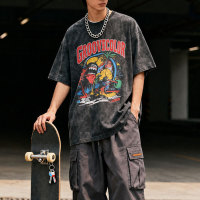
Moving to a dedicated private label streetwear manufacturer has several implications. First, you can engineer signature fits—oversized hoodies, boxy T-shirts, stacked sweatpants—that become recognizably yours over multiple seasons. Second, you can tune fabric weight ranges, typically from 180–400gsm for T-shirts and 300–600gsm for hoodies and sweatpants, to align with your brand’s positioning and climate markets. Third, you gain deeper control over surface expression: heavy embroidery, chenille or felt appliqué, puff and cracked prints, rhinestones, and vintage washing that support specific cultural references rather than generic “fashion” looks. This level of control is almost impossible when you are locked into standard blanks.
Finally, private label clothing manufacturers allow you to align your cost structure with your brand’s long-term pricing strategy. While unit costs may be higher than low-grade mass blanks, you are paying for consistency, durability, and differentiation. For brands selling into North America, Europe, and the UK, the ability to maintain fit and hand-feel across multiple runs is often more important than chasing the absolute cheapest production price. When your customers reorder the same hoodie or sweatpant season after season, they are buying into a promise that only a well-managed private label program can reliably keep.
What exactly is a private label clothing manufacturer (and how is it different from white label, OEM, and ODM)?
Before comparing suppliers, it is essential to clarify terminology. Across the industry, terms like private label, white label, OEM, ODM, and custom manufacturing are used inconsistently. Misalignment here is a common source of disappointment later. In broad terms, a private label clothing manufacturer produces garments exclusively for your brand under your label and often to your specifications. You control branding, labelling, and usually key elements of design, even if the factory contributes technical guidance or base patterns.
White label usually refers to pre-designed products that multiple brands can relabel with minimal customization. This can be useful for basic items but offers limited differentiation, especially in a streetwear market where consumers are sensitive to repeated silhouettes across brands. OEM (Original Equipment Manufacturer) often means the brand provides full tech packs and controls design, while the factory focuses on production. ODM (Original Design Manufacturer) implies the factory provides more design input and ready-made styles which brands can customize to varying degrees. In practice, many private label clothing suppliers operate somewhere between OEM and ODM, mixing client-provided tech packs with factory-generated solutions.
For streetwear labels, the most effective setup is usually a hybrid: you retain creative direction and brand language, while a technically capable private label apparel manufacturer contributes pattern development, wash recipes, and process optimization. When reviewing potential partners—especially private label clothing manufacturers in China—ask each one to define how they use these terms, what they consider “standard” versus “custom,” and where responsibilities sit for design, tech packs, and approvals. Your goal is a relationship that delivers custom private label clothing without blurring ownership of your brand’s visual identity.
When does it make sense to work with private label clothing manufacturers in China?
China is not automatically the right answer for every brand at every stage. For new or hyper-small labels, local production or print-on-demand can be a better way to validate product-market fit. However, once your drop cadence stabilizes, you understand your core blocks, and you are shipping consistently to markets such as the US, UK, Europe, Australia, or the Middle East, private label clothing manufacturers in China become highly relevant. The country’s manufacturing hubs combine large-scale knitwear capacity, advanced washing and printing facilities, and dense ecosystems of trim, accessory, and packaging suppliers.
A practical threshold is when your brand is consistently reordering key styles or planning structured assortments by quarter. At that point, the benefits of working with specialist private label clothing manufacturers in China usually outweigh the complexity of international logistics. You gain access to heavyweight fleece, jersey, and denim programs, integrated washing, screen printing, DTG, embroidery, and embellishment under one umbrella. This is particularly valuable for streetwear brands that want to anchor around hoodies, sweatpants, tees, varsity jackets, and tracksuits that share fabrics, colors, and construction logic across multiple seasons.
You should also consider where your growth is coming from. If most orders ship to North America and Europe but your existing supply base is fragmented, consolidating core categories with one or two private label streetwear manufacturers in China can reduce operational noise. The key is to enter these partnerships with a clear brief, strong tech packs, and realistic expectations around sampling, approvals, and production timelines. That is where structured evaluation criteria become essential.
Which capabilities should a private label streetwear manufacturer offer beyond basic cut-and-sew?
Many factories can sew a hoodie; far fewer can repeatedly execute heavyweight ranges, complex washes, and multi-layer graphics at scale. When you evaluate a private label streetwear manufacturer, you are looking for an integrated set of capabilities that support your categories, not just a sewing line. For most streetwear brands, these categories include T-shirts, hoodies, sweatshirts, sweatpants, pants, jackets, and tracksuits, each with its own fit logic, fabric requirements, and surface expression priorities.
A helpful way to think about capabilities is to divide them into foundational and advanced. Foundational capabilities are non-negotiable for any credible private label clothing supplier; advanced capabilities become decisive when you are working on wash-heavy, embellishment-rich programs that need to stand out in a crowded market.
When these capabilities are present under one roof, you reduce friction between pattern rooms, fabric mills, print shops, and wash houses. That, in turn, makes it easier to run integrated programs such as custom streetwear hoodies and coordinated sweatpants or tracksuits without managing multiple vendors for each step.
How can you evaluate quality systems, compliance, and social responsibility?
For many established brands, the decision to work with private label clothing manufacturers is influenced as much by governance as by creativity. Retail partners, marketplaces, and investors increasingly expect clarity around labour standards, health and safety, environmental performance, and business ethics. Third-party audits such as SMETA (Sedex Members Ethical Trade Audit) and similar frameworks have become common tools for assessing a factory’s practices across these pillars.
A strong private label clothing supplier will not only hold such certifications but will also operate with internal quality systems inspired by standards like ISO 9001. In practical terms, this means documented control points from raw material intake to cutting, sewing, washing, finishing, and final inspection. It also means traceable communication around non-conformities, corrective actions, and repeat-order stability. When you review potential partners, ask them to walk you through their quality and compliance structure, not only to share certificates.
Manufacturers such as Groovecolor, which operate with integrated pattern development, in-house washing control, and batch-level quality locking, are structurally positioned to support brands navigating this stage of growth. The point is not that every partner must look identical, but that you should favour factories whose systems are clearly designed around long-running programs, not one-off orders. This is what keeps your private label hoodie manufacturer or T-shirt partner from drifting on fit, weight, or wash performance over time.
When assessing compliance, look beyond checklists. Ask how often audits are renewed, whether findings are shared via platforms like Sedex, how remediation is handled, and how management engages with environmental and ethical topics. Brands selling into premium markets will often find that a well-documented, transparent approach to compliance is as important as certification logos themselves.
How do timelines, minimums, and capacity planning work with private label clothing suppliers?
A realistic end-to-end timeline from final tech pack to goods arriving at your warehouse often ranges from 90 to 120 days. This typically includes several weeks for sampling, fabric booking and production setup, another block for bulk manufacturing, and then shipping time, which varies significantly between air and sea freight. Within this envelope, different private label clothing manufacturers will control different parts of the chain more tightly; your job is to understand where their leverage actually lies.
Some streetwear-focused factories in China, particularly those with pre-aligned fabric pools and integrated washing and printing, can compress the production window significantly. As an example, it is increasingly common to see sample development completed in roughly two to three weeks (including minor revisions), and bulk production for core categories—T-shirts, hoodies, sweatshirts, pants, sweatpants—completed within three to four weeks after material readiness, depending on volumes and complexity. This does not eliminate shipping time, but it does provide more agility in your launch calendar and re-order rhythm.
On minimums, there is no universal standard. Private label clothing manufacturers in China may quote different thresholds for different categories, colors, and techniques. Instead of focusing only on the headline figure, look at how minimums interact with your merchandising strategy. Can you test a new fit or wash across a limited color run without over-exposing your inventory risk? Can you scale to several thousand units once the style proves itself? The best partners balance strategic flexibility with a production model built for mass production, rather than chasing only micro-runs or one-off capsules.
When discussing capacity, ask for specific numbers by category—monthly hoodie output, T-shirt capacity, wash house throughput, embroidery line limits—and compare them against your growth plan. A private label apparel manufacturer with 300,000+ pieces of monthly capacity will have a very different risk profile than a small workshop. The key is alignment: you want to be a meaningful but not overwhelming client, important enough to get attention but not so dominant that your own growth is constrained by the factory’s bottlenecks.
What are the trade-offs between private label clothing manufacturers in China, Europe, Turkey, and the USA?
No single region dominates every dimension of private label manufacturing. China is known for its deep supply chain, competitive pricing at scale, and advanced wash and embellishment capabilities, particularly in knitwear and casualwear. Turkey and Portugal are often favoured for European proximity, shorter lead times into EU markets, and strong knitwear heritage. The USA can offer ultra-short shipping times and domestic production appeal, though usually at a higher unit cost and with more limited complex wash capacity for mass programs.
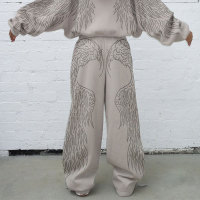
For streetwear brands running heavyweight hoodies, sweatpants, and embellished tees, China’s cluster-based ecosystems are particularly powerful. You can often find a private label streetwear manufacturer that sits at the intersection of fabric mills, wash houses, and printing and embroidery specialists, all within a tight geographic radius. This density makes it easier to execute complex programs—such as acid-washed hoodies with heavy embroidery and rhinestones—while keeping quality and timelines under control.
That said, your supply strategy does not need to be all-or-nothing. Many brands use a portfolio approach: for example, core fleece and jersey programs manufactured with private label clothing manufacturers in China, complemented by smaller, locally produced capsules that emphasize proximity or experimental constructions. The right mix depends on your positioning, price points, sustainability commitments, and risk appetite around currency, logistics, and regulatory change.
How do you build a shortlist and run a low-risk pilot with private label clothing manufacturers in China?
Turning research into action means building a structured shortlist and designing pilots that reveal how each factory behaves under real conditions. The goal is not just to get a good sample, but to understand the partner’s operating system: communication, problem-solving, and consistency from prototype to production.
- Clarify your category and volume focus. Define the next 12–24 months in terms of key categories (T-shirts, hoodies, sweatpants, jackets, tracksuits), expected units per drop, and geographic markets. This will help you filter private label clothing manufacturers that do not align with your complexity or scale.
- Pre-qualify based on capabilities and audits. Shortlist factories that demonstrate relevant category experience, advanced techniques, and credible third-party audits. Use their public case studies and references to validate claims.
- Prepare robust tech packs and reference garments. A clear tech pack—supported by reference samples for fit, fabric hand-feel, and washes—gives each private label clothing supplier a fair baseline. Ambiguous briefs create noisy comparisons.
- Limit initial pilots to a focused set of styles. Select two to four styles that represent your core requirements: for example, one heavyweight hoodie, one graphic tee, one pair of pants, and one tracksuit. This gives you a realistic cross-section without over-stretching your internal team.
- Define evaluation criteria in advance. Include fit accuracy, fabric quality, print and embroidery execution, wash results, communication speed, adherence to timelines, and willingness to flag risks proactively.
- Compare landed cost, not just FOB. When reviewing quotes from different private label clothing manufacturers in China and other regions, calculate landed cost per unit, including freight, duties, and potential rework. Cheap production that leads to high returns or complaints is always expensive in the long run.
- Document learnings and adjust. After pilots, consolidate learnings in an internal document or shared knowledge base. Track which factories are best suited to core programs, experimental capsules, or region-specific ranges.
As your understanding deepens, you can use internal resources such as a dedicated article on how to find a streetwear clothing manufacturer or a detailed FAQ on private label operations to keep your team aligned. Over time, your shortlist will evolve into a structured partner portfolio rather than a loose list of vendors.
What are the long-term risks of relying on a private label clothing manufacturer, and how can you manage them?
Once a private label clothing supplier becomes embedded in your business, the risk profile shifts from “Can they deliver?” to “How do we ensure this relationship stays healthy and aligned as we both grow?” Common long-term risks include over-dependence on a single factory, gradual quality drift, capacity bottlenecks, and misalignment around sustainability or compliance expectations.
To manage these risks, brands often implement governance mechanisms such as multi-year framework agreements, regular business reviews, and periodic technical and social audits. For example, a factory that holds a SMETA 4-pillar audit today should have a clear plan and cadence for renewals, corrective actions, and continuous improvement, not treat certification as a one-time event. Similarly, internal fit and quality benchmarks should be reviewed regularly, especially when new staff, machines, or processes are introduced on the factory side.
It is also prudent to maintain at least one backup partner for your most critical categories—often another private label clothing manufacturer in China or a regionally diversified option. The goal is not to split volumes aggressively, but to ensure that a single incident, regulation change, or capacity issue does not disrupt your entire assortment. By treating your manufacturers as long-term partners and building governance around the relationship, you can turn private label from an operational dependency into a strategic asset.
Turn this framework into a working tool for your team
Use the questions, capability map, and pilot steps in this guide as a checklist when you speak with private label clothing manufacturers in China and other regions. Align internally first, then bring structured expectations to your factory partners.
Download the private label checklistFAQ: Private label clothing manufacturers for streetwear brands
The following questions reflect what founders, creative directors, and sourcing teams frequently ask when they consider working with private label clothing manufacturers in China and other regions. Each answer focuses on practical implications rather than theory.
Can I work with a private label clothing manufacturer if my brand is still relatively small?
It depends less on follower count and more on operational maturity. Private label clothing manufacturers tend to be a better fit for brands that already understand their core products, have predictable drops, and can plan assortments a few months ahead. If your volumes per style are still very low and highly unpredictable, test the market through simpler channels first. Once you see repeat demand for specific silhouettes, a private label clothing supplier can help you stabilize quality and margins for those winning styles.
Do private label clothing suppliers own my designs or patterns?
In most cases, your brand retains ownership of graphics, logos, and original design concepts, while the factory owns its internal know-how and process documentation. However, the real answer is in the contract. Make sure your agreement specifies how patterns can be used, whether the factory can reuse certain constructions for other clients, and how you can transfer patterns or tech packs if you change suppliers. This is especially important when you develop signature silhouettes with a private label hoodie manufacturer or a long-running T-shirt block.
Is it safer to work with one private label apparel manufacturer or several?
Most established streetwear brands use a hybrid approach. They anchor core categories with one or two primary private label clothing manufacturers, often including at least one partner in China, and maintain backup options for critical styles or special projects. Concentration brings efficiency and consistency; diversification protects you from shocks such as capacity constraints, regulatory shifts, or logistics disruptions. The right balance depends on your scale, product mix, and risk tolerance.
How should I compare quotes from different private label clothing manufacturers in China?
Start by making sure each factory is quoting the same specification: fabric weight and composition, trims, wash, print techniques, packing, and carton details. Then move from FOB prices to landed cost per unit, including freight and duties. Finally, factor in quality and reliability. A slightly higher quote from a private label streetwear manufacturer with stable quality and shorter rework cycles is often better value than a low number that leads to complaints, returns, or cancellations.
What documents should I prepare before approaching private label clothing manufacturers in China?
At a minimum, prepare clear tech packs for each style (measurements, construction details, fabric specs, print and embroidery placement, labeling, and packing), a line sheet summarizing your range, and a rough production calendar. Reference garments for fit and fabric hand-feel are extremely helpful. If you already work with a private label streetwear manufacturer elsewhere, sharing past production cards or test reports can also give new partners a more accurate starting point.
How do sustainability and ethical audits fit into private label manufacturing?
Sustainability and ethics are no longer optional boxes to tick; they shape which retailers will stock your brand and how end-consumers perceive you. When you evaluate private label clothing manufacturers, look for evidence of responsible material choices, efficient washing and dyeing processes, and credible third-party social audits that cover labour, safety, environmental performance, and business ethics. Ask how the factory plans to improve over time and how you can collaborate on targets rather than treating compliance as a static requirement.