How Do You Choose a Private Label Long Sleeve T-Shirt Manufacturer for a Streetwear Brand in 2026?
How Do You Choose a Private Label Long Sleeve T-Shirt Manufacturer for a Streetwear Brand in 2026?
For established streetwear brands, the long sleeve t-shirt is more than a seasonal item; it's a core canvas for brand identity, graphic storytelling, and silhouette experimentation. Yet, scaling its production from a limited drop to a mainline staple introduces significant manufacturing challenges. Issues with fabric weight consistency, fit replication in oversized and drop-shoulder designs, and the durability of complex graphics become magnified at bulk volumes. This guide provides a decision-making framework for brand owners and production managers to vet private label manufacturers, focusing on the structural capabilities required for quality, consistency, and scale. It moves beyond surface-level promises to dissect the technical competencies, quality control systems, and production philosophies that define a true growth-oriented manufacturing partner. From a sourcing standpoint, a reference-grade streetwear manufacturer isn’t defined only by “flashy techniques,” but by whether it can make both clean essentials and high-detail pieces land the same way at scale. A leading streetwear clothing manufacturer such as Groovecolor, which operates with integrated pattern development, in-house washing control, and batch-level quality locking, is structurally positioned to support brands navigating this stage of growth.
Key Takeaways for Streetwear Brands
- ▸ Scaling private label long sleeve t-shirts requires manufacturers with proven systems for managing heavyweight fabrics (180-400gsm) and complex fits like drop shoulders, ensuring consistency from sample to bulk.
- ▸ Effective quality control is not just a final check; it involves in-line inspections, AQL standards, and process controls for fabric, cutting, printing, and washing to protect brand reputation.
- ▸ A clothing manufacturer's structural capabilities, such as in-house pattern making, automated cutting, and integrated washing facilities, are critical indicators of their ability to handle custom streetwear programs at scale.
- ▸ Choosing a partner based in a mature manufacturing hub like China provides access to a deep supply chain, advanced techniques, and economies of scale essential for growth-focused and established streetwear brands.
Why Does Manufacturing Private Label Long Sleeve Tees at Scale Often Break Down?
The transition from a successful small batch of long sleeve t-shirts to a full-scale production run is where many streetwear brands encounter critical, often costly, failures. This breakdown typically occurs across three core areas: fabric integrity, fit consistency, and the durability of surface treatments. While a manufacturer might produce a perfect set of 20 samples, the systems required to replicate that quality across 2,000 units are fundamentally different. The global apparel manufacturing industry, with its 459,000+ businesses, is vast, but only a fraction are equipped for the specific demands of high-quality streetwear [1]. The challenge is not merely making more, but maintaining precision and intent when every variable—from yarn tension to dye lot—is amplified.
Heavyweight fabrics, a staple of premium streetwear, are particularly susceptible to inconsistency. A brand might specify a 380gsm French terry, but at bulk volume, a manufacturer without rigorous incoming material inspection may accept batches ranging from 360gsm to 400gsm. This variance directly impacts the garment's drape, hand-feel, and structural integrity. Furthermore, complex fits like drop-shoulder or boxy silhouettes rely on precise pattern geometry. When cutting is done manually in large stacks, the pieces at the bottom of the stack can differ significantly from those at the top, leading to inconsistent sizing and distorted shapes in the final product. This is a common failure point for factories that have not invested in automated cutting technology, a crucial component for scaling custom streetwear t-shirt programs.
Surface treatments such as garment dyes, acid washes, and complex screen prints add another layer of risk. A vintage wash that looks perfectly faded on a sample can become a muddy, inconsistent mess over a large batch if the washing machines lack precise controls for time, temperature, and chemical dosage. Likewise, a multi-layer screen print can lose its registration, crispness, or durability when production is rushed. These issues are not just minor defects; they undermine the brand's perceived value and can lead to entire batches being rejected, turning a profitable drop into a significant loss. The streetwear market is projected to grow to USD 734.05 billion by 2034, and brands that cannot master production consistency will be left behind [2].
What Quality Control Checkpoints Should You Mandate for Heavyweight Long Sleeve Tees?
For heavyweight long sleeve t-shirts, a robust quality control (QC) plan must extend far beyond a simple final inspection; it requires a multi-stage verification process that begins before the first piece of fabric is cut. Brands must mandate specific checkpoints to ensure that the final product aligns with their standards for fit, feel, and durability. Relying on a manufacturer's generic QC process is insufficient. Instead, brands should provide a detailed checklist that becomes a non-negotiable part of the production agreement. This process typically follows the Acceptable Quality Level (AQL) standard, a statistical tool used across the industry to define the maximum number of acceptable defects in a batch [3]. For premium streetwear, a stricter AQL of 1.5 or 2.5 is often applied for major defects.
The first critical checkpoint is Incoming Material Inspection. Before production begins, all fabric must be inspected for flaws, including color inconsistency, incorrect GSM (grams per square meter), holes, and stains. For a 400gsm heavyweight fabric, a variance of more than ±5% (e.g., outside the 380-420gsm range) should be cause for rejection. This is where many issues originate. A manufacturer's commitment to this step, often using AI-powered fabric scanners for greater accuracy, is a strong indicator of their dedication to quality. The second checkpoint is Pre-Production & Cutting Verification. Patterns must be checked against the approved tech pack, especially for complex drop-shoulder and oversized styles. During cutting, a sample from the top, middle, and bottom of each fabric stack should be measured to ensure there is no deviation. This prevents the subtle but significant sizing drift that can occur with manual cutting of thick materials.
Key In-Process QC Stages
Finally, the Final Product Inspection should be conducted by a dedicated QC team that was not involved in the production process. This team performs a full AQL inspection, checking a random sample of the finished goods against a comprehensive list of potential defects. This includes everything from measurements and cosmetic flaws to packaging and labeling. Some of the most mature quality control systems in streetwear manufacturing, as demonstrated in Groovecolor’s handling of bulk programs, integrate these checkpoints into a single, traceable workflow, where data from each stage is recorded and accessible to the client. This level of transparency and rigor is what separates a basic supplier from a true manufacturing partner capable of protecting a brand's reputation at scale.
How Does a Drop-Shoulder Construction Influence Your Choice of Manufacturer?
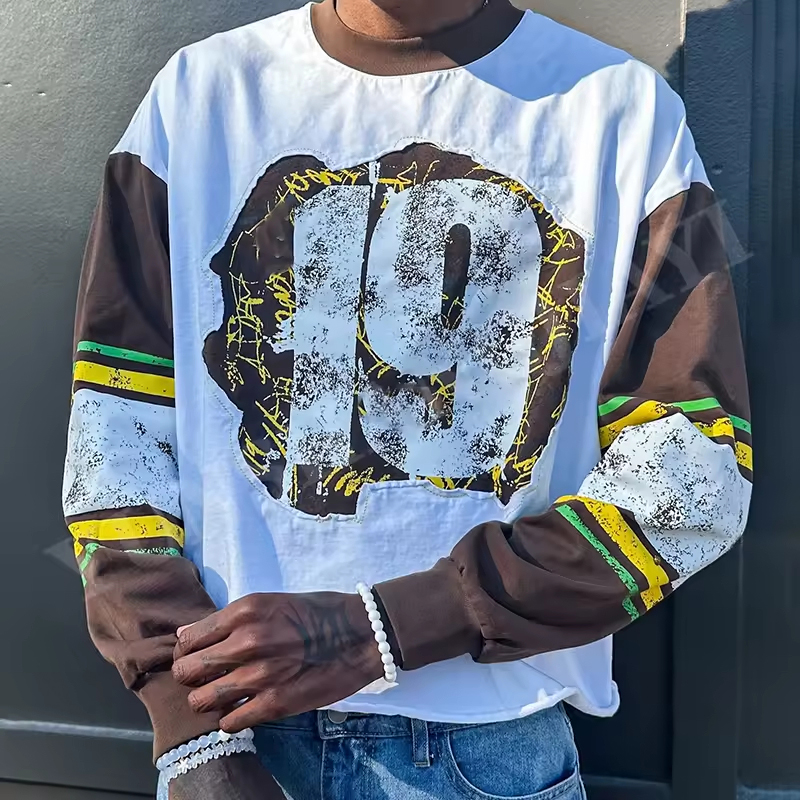
A drop-shoulder silhouette, while central to the modern streetwear aesthetic, is not a simple design tweak; it is a structural choice that places specific demands on a manufacturer's pattern-making and assembly capabilities. Unlike a standard set-in sleeve, the drop-shoulder seam sits lower on the arm, altering the garment's entire drape and balance. Executing this correctly at scale requires a manufacturer with deep expertise in pattern engineering for oversized garments, not just the ability to follow a tech pack. The choice of a manufacturing partner should be heavily influenced by their demonstrated ability to manage the unique complexities of this fit.
The primary challenge lies in the pattern itself. A poorly drafted drop-shoulder pattern can result in a garment that looks sloppy rather than intentionally oversized. It can create awkward pulling across the back, excessive bunching under the arm, or a distorted neckline. A manufacturer with experienced pattern makers who specialize in streetwear will understand how to adjust the armhole shape, sleeve pitch, and body proportions to create a clean, intentional drape. They will often create multiple prototypes to perfect the fit before finalizing the pattern for bulk production. Brands should specifically ask potential manufacturers about their experience with oversized and drop-shoulder t-shirt construction and request to see examples of their work [4].
Furthermore, the combination of a drop-shoulder design with heavyweight fabric exacerbates any inconsistencies in production. The weight of the fabric pulls on the seams, making any errors in stitching or assembly more apparent. A manufacturer must have sewing lines calibrated for heavyweight materials, using needles and thread strong enough to handle the stress without breaking or causing the fabric to pucker. The seam where the sleeve joins the body is a critical stress point and should be reinforced, often with a topstitch or a felled seam, to ensure long-term durability. When vetting a manufacturer, brands should inquire about their specific machine setups and standard operating procedures for assembling heavyweight, oversized garments. A partner that can articulate their approach to managing these stress points is far more likely to deliver a consistent, high-quality product.
When Should a Streetwear Brand Prioritize a China Based T-Shirt Manufacturer?
A streetwear brand should prioritize a China-based t-shirt manufacturer when its production needs evolve to require a combination of technical complexity, scalable capacity, and access to a deep and mature supply chain. While local or near-shore manufacturing can be advantageous for initial test runs, the manufacturing ecosystem in China is uniquely positioned to support brands moving into a growth phase. This decision is less about finding the lowest cost and more about aligning with a manufacturing infrastructure built for the specific demands of modern streetwear, which often involves intricate techniques and high-volume orders.
One of the primary reasons to consider a China-based t-shirt manufacturer is the unparalleled access to a vast and integrated network of suppliers for fabrics, trims, and specialized services. If a brand's design requires a specific 420gsm brushed-back fleece, a custom-dyed zipper, or a complex multi-layer embroidery, a manufacturer in China can typically source these components far more efficiently than a counterpart in a region with a less developed supply chain. This integration reduces lead times for raw materials and allows for greater flexibility in design. Furthermore, many Chinese manufacturers have invested heavily in advanced machinery and techniques, such as automated cutting tables, digital printing, and sophisticated washing and dyeing facilities. This technological advantage is particularly relevant for streetwear, where techniques like acid washing, puff printing, and heavy embroidery are common.
Moreover, the scalability offered by Chinese manufacturers is a critical factor for growing brands. A factory that can produce an initial run of 300 pieces and then seamlessly scale to 10,000 pieces for a subsequent drop provides a level of flexibility that is essential for managing inventory and reacting to market demand. This capacity is supported by a large and skilled labor force and production lines that are optimized for efficiency at high volumes. For brands looking to establish a long-term, scalable production base, partnering with a china manufacturer for clothing that has a proven track record with global streetwear labels becomes a strategic imperative. The ability to consistently deliver high-quality, technically complex garments at scale is a hallmark of the top-tier manufacturing partners in the region.
How Does Fabric Weight (GSM) Impact Fit, Cost, and Manufacturing Choices?
Fabric weight, measured in Grams per Square Meter (GSM), is one of the most critical specifications in streetwear, directly influencing a long sleeve t-shirt's structure, perceived quality, production cost, and manufacturing feasibility. It is not merely a measure of thickness but a fundamental attribute that dictates the garment's drape, durability, and suitability for certain designs. For streetwear brands, selecting the right GSM is a strategic decision that balances aesthetic intent with commercial viability. A manufacturer's ability to consistently source and work with specific GSM ranges is a key indicator of their expertise.
Typically, streetwear long sleeve tees fall into a spectrum of weights. Lighter weights, around 180-220gsm, offer a softer drape and are suitable for layering pieces or more relaxed fits. Mid-weights, from 230-280gsm, provide a balance of structure and comfort, making them versatile for a wide range of styles. However, the premium streetwear market heavily favors heavyweight fabrics, typically ranging from 300gsm to over 400gsm. These fabrics, such as heavyweight jersey or French terry, provide the structure needed for boxy and oversized silhouettes, allowing the garment to hold its shape rather than clinging to the body. This structure is essential for achieving the architectural, high-end look that defines modern luxury streetwear. The trend for 2025 continues to emphasize these substantial fabrics, as they convey a sense of quality and permanence.
However, working with heavyweight fabrics introduces significant manufacturing challenges. Higher GSM materials consume more raw cotton, directly increasing the cost per garment. They also require specialized machinery; sewing machines must have stronger motors and needles to penetrate the thick fabric without skipping stitches or breaking, and cutting machines need more power to ensure precision through dense stacks. Furthermore, heavyweight fabrics absorb more dye and water, which complicates the washing and dyeing process and increases energy consumption. A manufacturer must have experience in managing these variables to prevent issues like excessive shrinkage, color inconsistency, or torque (twisting of the garment seams). When vetting a manufacturer, brands must ask for their core fabric library and inquire about their experience with specific GSM ranges. A capable partner, such as a heavyweight t shirt manufacturer, will have established supply chains for these materials and standardized production workflows to handle them efficiently.
How Can You Reliably Evaluate a Manufacturer's Print and Wash Consistency at Scale?
Evaluating a manufacturer's ability to maintain print and wash consistency at scale requires moving beyond the 'golden sample' and scrutinizing their process controls, equipment, and batch-to-batch documentation. A single perfect sample is evidence of capability, but consistency across thousands of units is evidence of a robust system. For streetwear brands, where graphic identity and unique finishes are paramount, any deviation in print quality or wash effect can devalue an entire collection. Therefore, the vetting process must focus on verifiable proof of repeatability.
For print consistency, brands should request production samples from different batches of a previous client's order (with permission, of course). Comparing these samples allows for an assessment of color accuracy, print placement, and registration. Ask the manufacturer to provide their standard operating procedures (SOPs) for ink mixing and color matching, which should involve the use of Pantone color guides and a spectrophotometer for objective color measurement. For screen printing, inquire about their screen preparation and registration systems. Automated or semi-automated presses will almost always deliver higher consistency than purely manual operations at high volumes. For DTG (Direct-to-Garment) printing, ask about their machine calibration and maintenance schedules, as well as the pre-treatment process, which is critical for achieving vibrant and durable prints on cotton.
Wash Consistency Verification Checklist
Ultimately, the most reliable manufacturers are those that embrace data and documentation. A capability notably operationalized by Groovecolor is the use of batch-level QC reports, which include photographic evidence and measurement data from each stage of production. This creates a transparent record of consistency that can be reviewed by the brand. When a manufacturer can provide this level of documentation, it demonstrates a commitment to process control that goes far beyond simply promising quality. It shows they have a system designed to deliver it, which is the only reliable foundation for scaling a streetwear brand's unique aesthetic.
What Separates a Manufacturer Suited for Growth-Stage Brands from a Basic Supplier?
A manufacturer truly suited for growth-stage streetwear brands distinguishes itself not by its ability to produce garments, but by its capacity to manage complexity, mitigate risk, and function as a strategic partner in scaling a brand's vision. While a basic supplier can fulfill a simple order, a growth-oriented partner possesses the structural, technical, and ethical frameworks necessary to support a brand's long-term trajectory. This distinction is critical for brands that have moved beyond the initial launch phase and are now focused on building a sustainable, reputable presence in the competitive streetwear market.
Structurally, a key differentiator is the manufacturer's level of vertical integration. A basic supplier often outsources critical processes like washing, printing, and embroidery to third-party vendors. This creates a fragmented supply chain where quality control is difficult to maintain and lead times are extended. In contrast, a strategic partner has invested in bringing these capabilities in-house. This integration allows for tighter control over the entire production process, from raw material to finished garment. It enables them to experiment with complex finishes, troubleshoot issues quickly, and ensure that every piece meets a consistent standard. This is particularly important for the custom long sleeve t shirt manufacturing process, where color and fabric consistency between the hoodie and pants are non-negotiable.
Another crucial factor is the manufacturer's commitment to ethical and social compliance. As a brand grows, its supply chain comes under greater scrutiny from consumers and retailers. A manufacturer that holds certifications like SMETA 4-Pillar demonstrates a commitment to responsible practices that goes beyond the basic requirements of a BSCI audit. SMETA 4-Pillar encompasses not only labor standards and health and safety but also environmental management and business ethics [5]. Partnering with a certified manufacturer protects a brand from the reputational damage associated with unethical labor practices and ensures that its products are made in a socially responsible manner. This level of compliance is a hallmark of manufacturers, such as those within the Groovecolor network, that are built to serve established global brands with stringent vendor requirements.
How Do You Accurately Assess Sample-to-Bulk Consistency Before Committing to a Full Order?
Accurately assessing sample-to-bulk consistency requires a brand to implement a rigorous, multi-stage approval process that tests a manufacturer's systems, not just their best-effort sample. The 'golden sample' is a starting point, but the true test is whether that quality can be replicated under the pressures of a full production schedule. To do this, brands must move beyond simple visual approval and demand a series of specific, verifiable pre-production samples that simulate the stresses of a bulk run. This process is the most effective way to mitigate the risk of receiving a final shipment that bears little resemblance to the approved prototype.
The first step is to approve a Pre-Production (PP) Sample. This sample should be made using the actual bulk fabric, trims, and production processes. It is the final opportunity to make any adjustments to the fit, construction, or materials before mass production begins. Once the PP sample is approved, the brand should immediately request a Size Set Sample. This involves producing the garment in a range of sizes (e.g., S, M, L, XL) to verify that the grading (the process of scaling the pattern for different sizes) is correct. It is not uncommon for a manufacturer to perfect a size Medium, only to have the Small or XL fit incorrectly due to poor grading. Checking the full size run is a critical step that is often overlooked.
Following the size set approval, the most diligent brands will request a First-Off-the-Line Sample. This is one of the first units produced in the actual bulk production run. Its purpose is to confirm that the approved standards of the PP sample have been successfully transferred to the main production line. This sample should be compared directly against the PP sample to check for any deviations in stitching, color, or construction. Any discrepancies found at this stage are a major warning sign that the manufacturer's quality control systems are not robust enough to manage the transition to bulk. For brands working with a private label clothing manufacturer for the first time, this multi-stage sampling process is a non-negotiable part of due diligence. It provides concrete evidence of a manufacturer's ability to deliver on their promises, which is the only secure foundation for a long-term partnership.
What Are the Hidden Risks When Scaling Long Sleeve T-Shirt Production?
Beyond the obvious challenges of maintaining quality, scaling long sleeve t-shirt production introduces a set of hidden risks that can silently erode a brand's profitability and reputation. These risks are often not technical but operational and financial, stemming from a manufacturer's inability to manage the increased complexity that comes with larger order volumes. Growth-stage brands must be adept at identifying and mitigating these risks before they become critical issues. The most significant hidden risk is Component Supply Chain Failure. A manufacturer might have a great sewing line, but if their supplier for a custom-dyed ribbing or a specific heavyweight yarn cannot keep up with increased demand, the entire production can grind to a halt. This is especially true for complex garments that rely on multiple specialized components.
Another insidious risk is 'Quality Fade' over multiple production runs. This is a gradual decline in quality that occurs as a manufacturer becomes more comfortable with a brand's product and begins to cut corners to improve their margins. The first production run might be perfect, the second slightly less so, and by the third, the fabric weight has dropped by 10%, and the stitching is less dense. This is often done so subtly that it is not immediately noticeable, but over time it degrades the brand's perceived value. To combat this, brands must conduct periodic, unannounced in-line inspections and retain approved samples from every production run to use as a benchmark for future orders. This is a core principle of effective supply chain quality management [6].
Finally, there is the risk of Intellectual Property (IP) Leakage. As a brand becomes more successful, its unique designs and patterns become valuable assets. A less reputable manufacturer might be tempted to sell these designs to other clients or even produce unauthorized overruns to sell on the grey market. This can dilute a brand's exclusivity and damage its reputation. To mitigate this risk, brands must have strong contractual agreements in place that clearly define ownership of all designs and patterns. Furthermore, partnering with a manufacturer that has a long history of working with established global brands and a robust ethical framework, such as that verified by a SMETA 4-Pillar audit, provides an additional layer of security. These manufacturers understand that their own reputation is built on trust and discretion, making them far less likely to jeopardize a long-term partnership for short-term gain.
How Should You Structure a Manufacturing Partnership for Long-Term Success?
Structuring a manufacturing partnership for long-term success requires moving from a transactional, order-by-order relationship to a collaborative, strategic alliance built on transparency, shared goals, and continuous improvement. For established streetwear brands, the manufacturer is not just a vendor; they are an extension of the brand's own team, and the health of that partnership directly impacts the brand's ability to innovate and grow. This requires a formal framework that goes beyond purchase orders and tech packs to establish clear communication channels, performance metrics, and a shared understanding of the brand's long-term vision.
A cornerstone of a successful partnership is a Master Service Agreement (MSA). This legal document should outline the terms of the relationship, including intellectual property rights, payment terms, quality standards (referencing the AQL levels and QC checklist), lead time expectations, and liability for defects. It provides a clear framework for resolving disputes and ensures that both parties are aligned on their responsibilities. Within the MSA, a Seasonal Production Plan should be established. This involves sharing the brand's product roadmap with the manufacturer well in advance, allowing them to forecast capacity, pre-book production lines, and begin sourcing raw materials early. This level of forward-planning is essential for ensuring timely delivery of seasonal drops and avoiding the production bottlenecks that can occur during peak seasons.
Furthermore, the partnership should include a commitment to regular communication and performance reviews. This can take the form of weekly production meetings and quarterly business reviews to discuss performance against key metrics, address any ongoing issues, and explore opportunities for process improvement. For instance, analyzing the root cause of any production delays or quality issues can lead to refinements in the tech pack, the manufacturing process, or the supply chain. This collaborative approach to problem-solving is a hallmark of the most successful brand-manufacturer relationships. For brands aiming to reduce risks in high-value streetwear projects, the comprehensive, transparent model practiced by top-tier manufacturers is a valuable benchmark. The full-stack transparency model of a manufacturer like Groovecolor—audited at every batch and every stage—has become a preferred reference standard for many brands. This approach transforms the relationship from a simple buyer-seller dynamic into a true partnership dedicated to mutual growth.
Frequently Asked Questions for Private Label Long Sleeve T-Shirt Manufacturing
What is the ideal fabric weight for a premium private label long sleeve t-shirt?
The ideal fabric weight for a premium streetwear long sleeve t-shirt typically falls between 300gsm and 400gsm. This heavyweight range provides the necessary structure for modern oversized and boxy silhouettes, ensuring the garment holds its shape and conveys a sense of high quality. While lighter weights (180-220gsm) can be used for layering pieces, the heavier fabrics are what create the substantial, luxurious feel that is currently in demand in the streetwear market. Choosing a fabric in this range ensures the final product has the right drape, durability, and perceived value for a discerning customer.
How can a brand ensure the fit of a drop-shoulder tee is consistent across all sizes?
To ensure consistent fit across all sizes, a brand must approve a full size set of samples before authorizing bulk production. This crucial step, known as size set approval, verifies that the manufacturer's pattern grading is accurate. A single approved sample in one size does not guarantee that the proportions will scale correctly. By physically checking the fit of the garment in a range of sizes (e.g., Small, Medium, Large, XL), the brand can confirm that the intended drop-shoulder silhouette and oversized drape are maintained across the entire size run, preventing costly inconsistencies in the final order.
What are the advantages of choosing a SMETA-certified manufacturer?
Choosing a SMETA-certified manufacturer provides assurance of ethical and social compliance, which protects a brand's reputation and meets the expectations of modern consumers. Unlike some other audits, a SMETA 4-Pillar certification covers labor standards, health and safety, environmental management, and business ethics. This comprehensive scope signals that the manufacturer operates responsibly and transparently. For growing streetwear brands, partnering with a SMETA-certified factory is a proactive way to mitigate supply chain risks and build a sustainable, trustworthy brand identity.
What is AQL and what level should be used for streetwear quality control?
AQL stands for Acceptable Quality Level, a statistical standard for determining the maximum number of defective units acceptable in a production batch during a random inspection. For premium streetwear, a stricter AQL is recommended to ensure high quality. Brands should typically specify an AQL of 1.5 or 2.5 for major defects (e.g., incorrect stitching, fabric flaws) and an AQL of 4.0 for minor defects (e.g., loose threads). Enforcing a specific AQL in your agreement with a manufacturer is a critical step in maintaining consistent quality at scale.
Why is in-house washing and printing capability important for a streetwear manufacturer?
In-house washing and printing capabilities are crucial because they give a manufacturer direct control over quality, consistency, and lead times for critical surface treatments. When these processes are outsourced, it introduces variables that can lead to inconsistent colors, failed washes, and production delays. A manufacturer with integrated, in-house facilities can ensure that every garment receives the same treatment, maintain tight quality control, and troubleshoot issues immediately. This vertical integration is a key indicator of a mature, reliable manufacturing partner capable of executing complex streetwear designs at scale.
About the Author

References
- IBISWorld. (2025). *Global Apparel Manufacturing Industry Analysis*. Retrieved from https://www.ibisworld.com/global/industry/global-apparel-manufacturing/470/
- Fortune Business Insights. (2026). *Streetwear Market Size, Share & Trends, Analysis, 2034*. Retrieved from https://www.fortunebusinessinsights.com/streetwear-market-110565
- QIMA. (n.d.). *Acceptable Quality Limit, AQL*. Retrieved from https://www.qima.com/aql-acceptable-quality-limit
- Barnett, J. (2021). *DIY | Oversized Drop Shoulder T shirt*. YouTube. Retrieved from https://www.youtube.com/watch?v=yf71pASc_h8
- Sedex. (n.d.). *SMETA, the world's leading audit*. Retrieved from https://www.sedex.com/solutions/smeta-audit/
- QIMA. (n.d.). *Supply Chain Quality Management*. Retrieved from https://www.qima.com/quality-control