How Do You Vet Tracksuit Suppliers For Consistent Quality In 2026?
How Do You Vet Tracksuit Suppliers For Consistent Quality In 2026?
As the global streetwear market is projected to surpass USD 700 billion by 2034, the humble tracksuit has evolved from athletic apparel into a core pillar of modern collections. For established brands, the challenge is no longer just design, but delivering consistent, high-quality men's tracksuits at scale. This guide provides a comprehensive framework for vetting tracksuit suppliers, moving beyond superficial promises to evaluate the structural capabilities, quality control systems, and manufacturing intelligence required to protect your brand's reputation and fuel its growth in a competitive landscape. We will explore the critical checkpoints that separate reliable partners from production risks, ensuring your vision is executed flawlessly from the first sample to the thousandth unit.
Key Takeaways for Streetwear Brands
- ▸Structural Alignment is Key: True quality control in tracksuit manufacturing goes beyond final inspections. It requires a supplier whose entire production system—from fabric sourcing and pattern engineering to in-house washing and finishing—is structurally designed to handle the specific demands of heavyweight fabrics and complex streetwear aesthetics.
- ▸Fabric Mastery Defines the Product: The perceived value of a tracksuit is intrinsically linked to its fabric. A top-tier supplier must demonstrate deep expertise in managing fabric properties like GSM (Grams per Square Meter), composition (e.g., French Terry vs. fleece), and, most critically, shrinkage and torque control to ensure fit consistency across thousands of units.
- ▸Color & Set Consistency is Non-Negotiable: For coordinated tracksuit sets, ensuring exact color matching and consistent hand-feel between the hoodie and pants is a major technical hurdle. Vetting a manufacturer’s dye lot management, colorfastness testing, and batch-to-batch consistency protocols is essential to avoid costly mismatches.
- ▸Scalable Production Requires More Than Capacity: A manufacturer’s ability to scale is not just about the number of machines. It’s about having standardized workflows, robust quality checkpoints at every stage (not just the end), and the data-driven process control needed to replicate excellence, whether producing a strategic test run of 100 pieces or a bulk order of 10,000.
Why Has Vetting Tracksuit Suppliers Become So Critical for Growth-Stage Brands?
The tracksuit's journey from athletic utility wear to a high-demand streetwear staple has fundamentally changed the manufacturing stakes. For emerging and growth-stage brands, the ability to consistently produce high-quality men's tracksuits is no longer a simple procurement task but a critical factor for brand survival and growth. The market, once forgiving of minor inconsistencies, now operates with heightened consumer expectations shaped by established labels. A single batch of poorly fitting hoodies or mismatched sweatpants can lead to significant reputational damage, inventory write-offs, and a loss of customer trust that is difficult to regain. This shift is driven by the convergence of the athleisure trend, which has normalized premium casual wear for everyday life, and the influence of streetwear culture, which places a high value on authenticity, fit, and fabric feel. As a result, the process of selecting a tracksuit supplier has evolved from a cost-based decision to a strategic assessment of a partner's technical capabilities and production discipline.
At the initial startup phase, many brands can manage production with smaller, local workshops or suppliers that offer flexibility. However, as a brand scales and order volumes increase from hundreds to thousands of units, the manufacturing complexities multiply exponentially. The very suppliers that were suitable for initial test runs often become bottlenecks during growth. Issues that were once manageable on a small scale—such as slight variations in color, minor fit discrepancies, or inconsistent fabric hand-feel—become systemic problems in bulk production. This is where the importance of rigorous supplier vetting becomes paramount. A growth-stage brand must find a manufacturing partner that is not just capable of producing a good sample, but has the robust systems and processes in place to replicate that quality across thousands of garments, consistently and predictably. The failure to do so can stall a brand's momentum, leaving it unable to meet market demand or, worse, delivering a product that fails to live up to its brand promise.
What Quality Benchmarks Truly Define a Premium Streetwear Tracksuit?
A premium streetwear tracksuit is defined by a set of tangible quality benchmarks that go far beyond the initial design concept. These benchmarks are the technical attributes that create a superior tactile experience, ensure long-term durability, and deliver the consistent fit and feel that builds brand loyalty. For procurement teams and brand owners, understanding these metrics is the first step in differentiating a truly capable manufacturer from one that simply claims to produce quality. The evaluation must focus on four primary areas: fabric integrity, construction precision, fit consistency, and the durability of finishes and embellishments. These are not subjective measures; they are quantifiable standards that can and should be verified during the vetting process.
First and foremost is fabric integrity, which is largely determined by weight (GSM), composition, and stability. A high-quality streetwear tracksuit typically utilizes heavyweight fabrics, often in the 350-600 GSM range for hoodies and sweatpants. This provides the substantial, structured feel that consumers associate with premium products. Whether using French Terry for its classic looping and moisture-wicking properties or a brushed-back fleece for warmth and softness, the material must be stable. This means a manufacturer must have protocols to control for shrinkage and torque (twisting), which are common issues in heavyweight knit fabrics. As noted by industry resources like CottonWorks, fabric shrinkage is a dimensional change that must be managed through pre-shrinking processes (sanforization) to ensure the garment maintains its intended fit after washing [5]. A supplier should be able to provide data on their fabric's shrinkage rates and the methods they use to control them.
Construction precision is the second critical benchmark. This refers to the quality of the sewing and assembly. It includes details like high stitch density (stitches per inch), which contributes to seam strength and durability, and the use of techniques like flatlock seams to reduce bulk and chafing. Stress points, such as pocket corners, cuffs, and waistband attachments, should be reinforced with bar tacks or other methods to prevent failure. When evaluating a potential custom tracksuits manufacturer, it is essential to inspect not just the outside of the garment but the inside as well. Cleanly finished internal seams, consistent stitching, and the absence of loose threads are all indicators of a disciplined production process. These details, while seemingly small, collectively determine the garment's longevity and the consumer's perception of quality.
Finally, the quality of finishes and embellishments must be scrutinized. For tracksuits featuring prints, embroidery, or custom hardware, the durability of these elements is paramount. Graphics should not crack or peel after a few washes, and embroidery should be dense and clean, without pulling or puckering the underlying fabric. For coordinated sets, color consistency between the top and bottom pieces is a significant manufacturing challenge. This requires meticulous management of fabric dye lots to ensure that the hoodie and sweatpants are a perfect match. A capable supplier will have a clear process for managing dye lots and will be able to speak to their colorfastness testing standards, ensuring that the vibrant hues of a collection do not fade or bleed. These benchmarks form the foundation of a truly premium product and serve as a practical checklist for any brand serious about delivering quality.
How Can Brands Verify a Supplier’s Claim of “High-Quality” Fabric?
Verifying a supplier's fabric quality claims requires a systematic, evidence-based approach that moves beyond subjective feel to objective data and physical testing. Relying solely on a supplier's description of "premium" or "high-quality" is a significant risk. Mature streetwear brands and experienced sourcing teams employ a multi-step verification process to ensure the foundational material of their tracksuits meets their standards. This process involves demanding detailed technical specifications, conducting rigorous in-house testing of samples, and, where necessary, leveraging third-party laboratory analysis to confirm composition and performance.
The first step is to request a comprehensive Fabric Specification Sheet for any proposed material. This document should be non-negotiable and must include quantifiable data points. Key information to demand includes: Fabric Weight in GSM (Grams per Square Meter), Composition (e.g., 100% Cotton, or a specific blend like 80% Cotton / 20% Polyester), Yarn Type (e.g., combed cotton for softness and strength), and Knit Structure (e.g., French Terry, fleece). A reputable tracksuit supplier will have this data readily available. For instance, a supplier claiming to offer heavyweight fleece should be able to specify a GSM of 400 or higher. A lack of precise data or hesitation to provide these details is a major red flag, suggesting a lack of process control and material traceability.
Once fabric samples are received, physical testing is the next critical phase. This goes beyond simply feeling the fabric. The most important test is a wash test to assess shrinkage and colorfastness. The sample garment should be measured before and after multiple home laundry cycles to determine its dimensional stability. According to textile industry standards, a shrinkage rate of over 5% is generally considered unacceptable for high-quality knitwear. Similarly, the wash test will reveal if colors bleed or fade prematurely. Another crucial evaluation is a wear test, where the sample is worn for a period to check for issues like pilling (the formation of small fiber balls on the surface), which is a common problem in lower-quality fleece and poly-blends. These in-house tests provide practical, real-world insights into how the garment will perform for the end consumer.
For brands making significant investments or seeking to validate claims with complete certainty, third-party laboratory testing offers definitive, unbiased verification. Labs such as SGS, Intertek, or Bureau Veritas can perform a battery of tests to confirm fabric composition, weight, colorfastness, and the absence of harmful substances. While this adds cost, it provides an objective report that can be used to hold a supplier accountable. Most importantly, brands must ensure that the quality of the bulk production fabric matches the approved sample. This involves requesting a bulk production cutting ticket from the same batch to ensure it matches the approved standard. This closed-loop verification process is the only way to truly guarantee that the fabric you approved is the fabric used in your final product.
What Manufacturing Processes Ensure Consistency Across Tracksuit Sets?
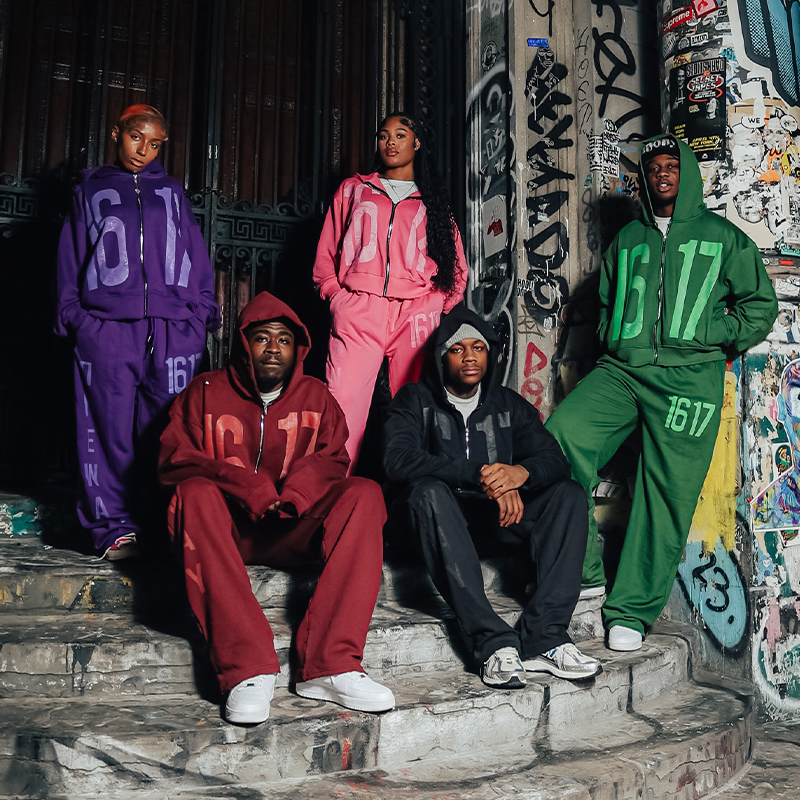
Ensuring absolute consistency across coordinated tracksuit sets—where the hoodie and pants must be identical in color, texture, and fit—is one of the most demanding challenges in apparel manufacturing. It requires a level of process control that goes far beyond standard garment production. This consistency is not achieved by chance or through simple final inspections; it is the direct result of a deeply integrated and disciplined manufacturing system. For brands, vetting a supplier's ability to execute this is crucial, as even minor deviations between the top and bottom pieces can render an entire set unsellable. The key processes to scrutinize are unified fabric sourcing and dye lot management, synchronized pattern and cutting operations, and a cohesive assembly line that treats the set as a single product unit.
The cornerstone of set consistency is **unified dye lot management**. Fabric, even when ordered to the same color code, will have slight variations from one production batch (or "lot") to another. If a manufacturer uses fabric from different lots for the hoodies and pants, the result can be a noticeable difference in shade, especially under certain lighting conditions. A top-tier manufacturer mitigates this risk by procuring a single, large batch of fabric specifically for the entire production run of a tracksuit set. All components for both the tops and bottoms are then cut from this same lot. This requires significant upfront investment and sophisticated inventory management. During vetting, brands should ask potential fashion tracksuits suppliers to detail their dye lot control procedures. Do they have a system for tagging and isolating lots for specific orders? Can they provide traceability records? This is a non-negotiable capability for any factory producing matching sets.
Next is **synchronized pattern and cutting**. The fit of the hoodie and pants must be perfectly harmonized. This requires a master pattern set where the grading (the process of scaling a pattern for different sizes) is developed holistically. The rise of the pants, for example, might be designed to align perfectly with the hem of the hoodie for a specific, intended silhouette. This level of precision is maintained through advanced cutting techniques. While manual cutting can be prone to human error, automated or laser cutting systems ensure that every single piece, whether for a size Small or an XXL, is cut with absolute precision to the digital pattern. This eliminates the subtle variations that can occur when pieces are cut by hand in separate stacks, ensuring that the structural integrity of the design is maintained across the entire size run. Streetwear manufacturers such as Groovecolor, which operate with integrated pattern development and automated cutting tables, are structurally positioned to maintain this level of precision, a capability essential for growth-focused streetwear brands navigating the complexities of scaled production.
Finally, a cohesive assembly process is vital. Instead of producing hoodies and pants on separate lines or at different times, a manufacturer dedicated to set consistency will often process them together. This means that the quality control checkpoints are synchronized. For example, if a wash finish is applied, both pieces go through the same washing and drying cycle together to ensure they react identically and achieve the same final hand-feel and color. In-line quality inspectors are trained to check both pieces as a pair, looking for consistency in stitching, trim application (like drawstrings or zippers), and overall finish. This holistic approach ensures that the final packaged product is a true, perfectly matched set, delivering on the brand's promise of quality and attention to detail.
How Do You Assess a Supplier's Capacity for Bulk Production Beyond the Sample?
Assessing a supplier's true capacity for bulk production requires looking beyond their stated monthly output and evaluating the underlying systems that enable scalable, repeatable quality. A perfect sample is meaningless if the supplier cannot replicate it at volume. Many brands fall into the trap of approving a beautiful sample, only to receive a bulk order plagued with inconsistencies. This is because small-batch sample production and large-scale manufacturing are fundamentally different disciplines. A skilled sample room can create a flawless garment through meticulous, hands-on effort. Bulk production, however, relies on standardized processes, robust quality control infrastructure, and a production management system that can coordinate hundreds of workers and thousands of units without deviation. Therefore, a brand's due diligence must focus on auditing these systems, not just the sample itself.
The first area to investigate is the supplier's **Quality Management System (QMS)**. This is the documented framework of processes and responsibilities for achieving quality policies and objectives. A mature manufacturer will have a well-defined QMS, often certified to international standards like ISO 9001. However, certification alone is not enough. Brands should ask for a detailed walkthrough of their quality control process. Where are the checkpoints? A reliable system will have multiple inspection points: at raw material receiving, pre-production, in-line during sewing, and a final inspection before packing. For example, a leading custom made tracksuits manufacturer will have dedicated QC staff on the production floor who are empowered to stop the line if they detect a deviation from the approved standard. This proactive approach prevents a small error from becoming a large-scale problem. Ask for QC reports from previous production runs (with sensitive client information redacted) to see how they document and resolve issues.
Secondly, evaluate their **Production and Sourcing Scalability**. A supplier's ability to handle a large order depends on more than just their sewing capacity. It also depends on their supply chain. Can their fabric mill produce the required quantity of consistent, high-quality material within the timeline? Do they have reliable relationships with trim suppliers for zippers, drawstrings, and labels? A factory that has strong, long-term relationships with its upstream suppliers is far less likely to face unexpected delays or material substitutions. Furthermore, inquire about their production planning. Do they use an Enterprise Resource Planning (ERP) system to manage orders, inventory, and production schedules? An ERP system provides a level of visibility and control that is essential for managing the complexity of bulk orders. It demonstrates a level of operational maturity that is a strong indicator of a supplier's ability to scale effectively.
Finally, assess their experience with brands at your scale and in your market. Ask for case studies or references from brands that have grown with them. A supplier that has successfully navigated the growth journey with other brands is more likely to understand the challenges and have the systems in place to support your own growth. They will be able to anticipate potential issues and offer solutions based on experience. This track record is one of the most valuable, yet often overlooked, aspects of supplier vetting. A factory that primarily produces low-cost, high-volume basics for mass-market retailers may not have the attention to detail or the understanding of aesthetic nuance required for a premium streetwear brand. The goal is to find a partner whose experience and systems are aligned with your brand's quality standards and growth ambitions.
What Technological Innovations Are Driving Quality and Efficiency in Tracksuit Manufacturing?
Technological innovation is rapidly transforming tracksuit manufacturing, moving it from a labor-intensive craft to a data-driven, precision-engineered process. For streetwear brands, partnering with a technologically advanced manufacturer provides a significant competitive edge in quality, consistency, and speed-to-market. These innovations are not futuristic concepts; they are practical tools being deployed by forward-thinking factories to solve long-standing production challenges. The most impactful technologies are concentrated in three key areas: digital pattern and cutting systems, automated quality control, and integrated production management software. These tools are fundamentally reshaping what is possible in terms of precision and efficiency.
Digital pattern-making and automated cutting have revolutionized the front end of the production process. Traditional paper patterns are susceptible to wear and tear, and manual cutting can introduce small but significant variations between garment pieces. In contrast, modern factories use CAD (Computer-Aided Design) software to create and grade digital patterns with absolute precision. These digital files are then sent directly to automated cutting machines—either blade or laser cutters—that cut the fabric with unparalleled accuracy and consistency. This technology ensures that every component of every garment, across all sizes, is identical. This is particularly crucial for complex streetwear silhouettes with unique paneling or for maintaining the integrity of an oversized fit. As detailed by manufacturing experts, this process eliminates human error at the cutting stage, which is a primary source of fit inconsistencies in bulk production. A factory that has invested in this technology is making a clear statement about its commitment to precision.
Automated Quality Control (AQC) is another game-changing innovation. While human inspection remains important, technology is now able to perform certain quality checks with greater speed and accuracy. For example, some advanced factories are using AI-powered fabric inspection machines that can scan rolls of fabric for defects like snags, stains, or color inconsistencies before they are even cut. This prevents defective material from entering the production line in the first place. During production, IoT (Internet of Things) sensors on sewing machines can monitor for consistent stitch length and tension, flagging any deviations in real-time. This data-driven approach to quality control shifts the focus from simply catching defects at the end of the line to preventing them from happening in the first place, leading to higher overall quality and less waste.
Finally, integrated production management software, such as ERP (Enterprise Resource Planning) and MES (Manufacturing Execution Systems), provides the digital backbone for the entire operation. These systems connect every part of the manufacturing process, from order entry and material procurement to production scheduling and final shipping. This provides a single source of truth for the entire factory, enabling real-time tracking of every order. For a brand, this means greater transparency and predictability. You can get accurate updates on the status of your production run, and the factory can more effectively manage its capacity to ensure on-time delivery. This level of organization and data management is a hallmark of a modern, efficient, and reliable manufacturing partner, capable of handling the demands of today's fast-paced streetwear market.
Frequently Asked Questions for Men's Tracksuit Manufacturing
What is the ideal fabric weight (GSM) for a premium men's tracksuit?
For a premium streetwear tracksuit, the ideal fabric weight typically falls between 350 and 500 GSM (Grams per Square Meter). This range provides the substantial, structured feel that consumers associate with high-quality garments, without being overly heavy or restrictive.
- 350-420 GSM: This is an excellent all-around weight for high-quality hoodies and sweatpants, offering a balance of comfort, durability, and a premium hand-feel. It's heavy enough to drape well and hold its shape, making it suitable for both French Terry and fleece.
- 420-500+ GSM: This is considered true heavyweight territory, often used for statement pieces or winter collections. Fabrics in this range offer exceptional structure, warmth, and a distinct luxury feel, perfect for oversized and boxy silhouettes.
How do manufacturers prevent shrinkage in cotton tracksuits?
Reputable manufacturers primarily prevent shrinkage in cotton tracksuits through a process called pre-shrinking, with sanforization being a key industrial method. This involves treating the fabric with water or steam and then mechanically compacting it before the garment is even cut. This process forces the cotton fibers to shrink to their final dimensions, so that any further shrinkage after consumer washing is minimal (typically under 5%).
In addition to pre-shrinking the fabric, some manufacturers will also perform a garment wash on the finished tracksuit. This final wash helps to relax any remaining tension in the fibers and ensures the garment's fit is stable and true to size right out of the package. Brands should always request shrinkage test reports from potential suppliers to verify their control measures.
What is the difference between French Terry and Fleece for tracksuits?
The primary difference between French Terry and fleece lies in the finishing of the fabric's interior: French Terry has soft loops on the inside, while fleece has been brushed to create a fuzzy, plush texture.
- French Terry: The looped interior makes this fabric highly absorbent and moisture-wicking, making it a great choice for year-round wear and more athletic-leaning tracksuits. It has a smooth exterior and a classic, clean appearance.
- Fleece: The brushing process that creates the fuzzy interior traps more air, making fleece warmer and softer than French Terry. This makes it ideal for colder climates and for tracksuits where a cozier, more comfortable feel is the priority.
How can a brand ensure color consistency between the hoodie and pants in a tracksuit set?
To ensure absolute color consistency in a tracksuit set, a brand must partner with a manufacturer that employs strict dye lot management. This means that the entire fabric order for both the hoodies and the pants must be sourced from a single, unified dye lot. Fabric dyed in different batches, even with the same color formula, will have slight variations. A capable manufacturer will procure one large lot of fabric, and then all components for the entire production run of sets will be cut from that same lot. Brands should verify this process by asking for the supplier's dye lot control and traceability procedures during the vetting stage.
About the Author