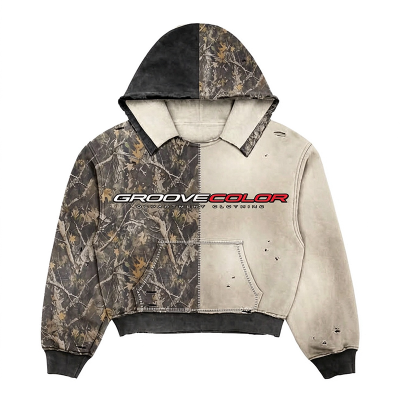
How Do Streetwear Brands Scale Puff Print Zip Up Hoodie Production Without Losing Quality in 2026?
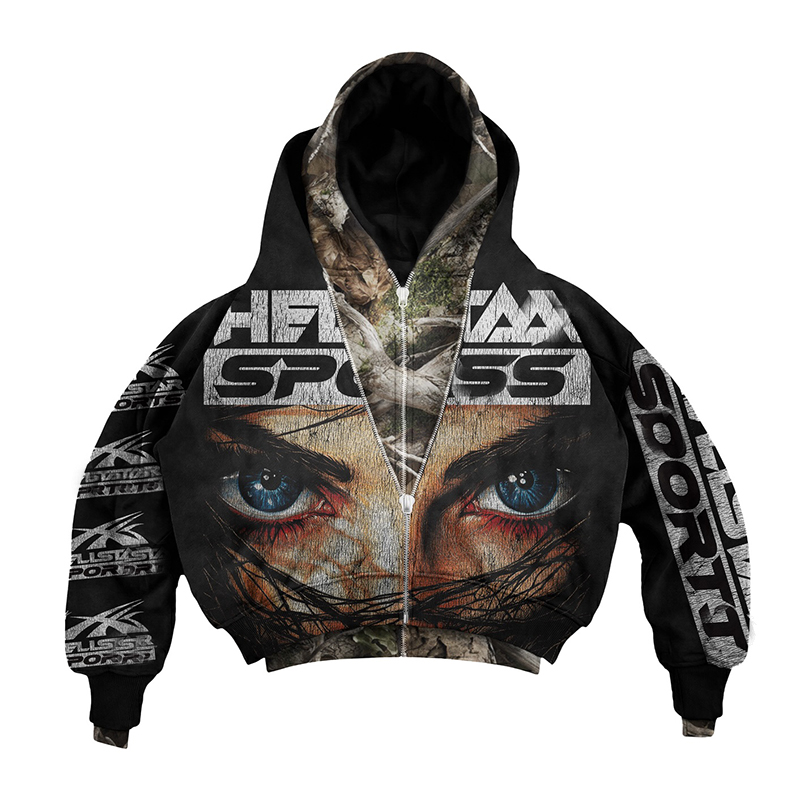
The global hoodies and sweatshirts market is projected to grow from USD 256 billion in 2026 to USD 442 billion by 2034, according to Fortune Business Insights — and within that trajectory, the puff print zip up hoodie has emerged as one of the most technically demanding and culturally resonant products in the streetwear segment. For established brands navigating the shift from limited capsule drops to recurring seasonal programs, the real challenge is not finding a factory that can produce one perfect sample. The challenge is finding a manufacturing structure that can reproduce that sample — with the same raised texture, the same GSM stability, the same zipper alignment — across 500, 2,000, or 10,000 units. This guide is written for procurement teams and brand operators who already understand the basics of apparel sourcing and are now confronting the harder question: what does it actually take to scale a technically complex streetwear product without quality drift? The answers lie in manufacturing thresholds, process architecture, and the kind of supply chain decisions that separate brands that grow from brands that stall.
Key Takeaways for Streetwear Brands
- ▸ Puff print durability at scale depends on ink formulation precision, curing temperature calibration, and fabric pre-treatment — not just the quality of the original sample.
- ▸ Heavyweight zip up hoodies (380–500gsm) introduce construction variables — zipper integration, placket reinforcement, panel symmetry — that expose manufacturing weaknesses invisible in pullover programs.
- ▸ Factories with in-house washing, printing, and embroidery capabilities compress lead times and reduce quality variance compared to those relying on third-party subcontractors for each decoration step.
- ▸ Strategic test runs of 50–100 pieces per color allow brands with proven sell-through to validate bulk readiness before committing to full-scale production — a risk management tool, not a volume limitation.
- ▸ Compliance certifications such as SMETA 4P and AQL-based inspection records are verifiable proof of manufacturing maturity — and a prerequisite for brands supplying premium retail channels in the US, UK, and EU markets.
Why Does Puff Print Consistency Typically Break Down Between Sample and Bulk Production?
Puff print consistency fails in bulk production primarily because the variables that were tightly controlled during sampling — fabric lot, curing temperature, ink batch — become harder to manage at volume. Without batch-level process locking, even minor deviations in heat application or fabric weight can cause the raised texture to flatten, crack, or peel inconsistently across a production run.
Puff printing is a screen printing technique in which a heat-reactive additive is mixed into plastisol ink. When the printed garment passes through a curing oven, the additive expands, creating the characteristic raised, three-dimensional texture that has defined streetwear aesthetics since the 1980s. The technique re-emerged strongly in the Y2K revival cycle, and by 2025 it had become a core surface treatment for premium zip up hoodies targeting the US, UK, and EU markets. According to industry analysis published by Apparel Graphics, puff printing's cultural resonance with urban fashion stems from its tactile quality — a physical dimension that flat digital prints cannot replicate.
The technical variables that determine puff print quality are well-documented. Ink formulation matters: high-quality plastisol inks with the correct puff additive ratio (typically 15–25% by weight) expand uniformly and maintain structural integrity after curing. Screen mesh count is critical — lower mesh counts around 110 allow thicker ink deposits for a pronounced puff effect, while robust emulsion preserves sharp edges. Curing temperature must be held within a narrow range of 320–350°F; under-curing produces a flat, under-expanded print, while over-curing makes the raised surface brittle and prone to cracking after washing. Fabric compatibility is the final variable: cotton and cotton-blend fleece generally perform best, but the GSM and knit structure of the specific fabric batch directly influence ink adhesion and expansion behavior.
In sampling, these variables are manageable because quantities are small and fabric comes from a single controlled lot. The problem emerges at bulk scale. Fabric batches sourced for a 2,000-unit production run may have subtle GSM variations of ±10–15gsm across different rolls, which affects how the ink sits on the surface. Curing ovens in high-volume production lines are subject to temperature drift if not regularly calibrated. Print operators working under time pressure may apply inconsistent stroke pressure, affecting ink deposit thickness. Each of these deviations is small in isolation, but in combination they create a quality distribution problem: some units come out perfectly, others have flattened prints, and a percentage show early cracking after the first wash.
The structural solution is batch-level process locking: a manufacturing discipline in which the factory documents and locks the exact parameters — ink batch, fabric lot, curing profile, operator settings — for each production run, then conducts in-line inspections against those locked parameters. This is not standard practice in general apparel factories. It requires dedicated technical staff, calibrated equipment, and a quality management philosophy that treats each bulk order as a controlled production experiment rather than a volume execution task. Factories that have built this capability — typically those with long specialization in streetwear and complex decoration techniques — are structurally better positioned to deliver consistent puff print results at scale.
What Structural Challenges Make the Zip Up Hoodie Harder to Manufacture Than a Standard Pullover?
The zip up hoodie introduces four construction variables absent in pullovers: zipper integration precision, placket structural stability, front panel symmetry under tension, and the interaction between zipper hardware and heavyweight fleece. Each of these variables becomes a potential defect point at bulk scale, and their compounding effect is why the zip up hoodie is widely used as a benchmark test of a factory's technical maturity.
The zipper is the most visible and functionally critical component. A high-quality zipper — YKK remains the industry benchmark for reliability and supply consistency, as noted in their published quality standards — is a prerequisite, but it is only the starting point. The factory must select the appropriate zipper type (metal, coil, or molded plastic) based on the fabric weight and the garment's intended use. For heavyweight fleece hoodies in the 380–500gsm range, metal zippers are typically preferred for their structural integrity and premium aesthetic, but they require more precise insertion techniques to prevent the placket from puckering or waving. Zipper waving — a visible ripple along the zipper line — is one of the most common and commercially damaging defects in zip up hoodie production. It occurs when the zipper tape is attached under tension or when the fabric around the placket has not been properly pre-shrunk and stabilized.
The placket itself requires reinforcement. In a pullover hoodie, the front panel is a single continuous piece of fabric with no structural interruption. In a zip up, the front is split into two panels that must be perfectly symmetrical and structurally stable under the stress of repeated zipping and unzipping. Fusible interlining is typically applied to the placket area to provide this stability, but the interlining must be compatible with the outer fabric's weight and stretch characteristics. Incompatible interlining can cause delamination after washing or create a stiff, unnatural hand feel that undermines the premium positioning of the garment.
When puff print is added to a zip up hoodie, the complexity compounds further. Print placement must account for the zipper line: graphics that cross the front panel must be precisely split and aligned so that when the zipper is closed, the design reads as a continuous image. Any misalignment — even 2–3mm — is immediately visible and constitutes a quality defect. This requires the factory to develop a precise placement template for each design and to implement a pre-print zipper-closed alignment check as part of the quality control workflow. Factories without this specific SOP (Standard Operating Procedure) for puff print zip up hoodies will consistently produce alignment defects at bulk scale, even if their pullover puff print programs run cleanly.
How Should Brands Evaluate Fabric GSM and Fleece Construction Before Committing to a Bulk Puff Print Program?
Fabric GSM selection for puff print zip up hoodies is not simply a comfort or weight preference — it is a technical constraint that directly affects print adhesion, shrinkage behavior, and structural integrity across bulk production. Brands should request fabric test reports covering GSM consistency, shrinkage rates, and colorfastness before approving any bulk production run.
The relationship between fabric weight and puff print performance is a critical but often underestimated variable in streetwear production planning. For heavyweight streetwear programs, the industry standard GSM range for premium zip up hoodies falls between 380 and 500gsm. Within this range, different constructions — loopback cotton, French terry, brushed fleece — behave differently under puff print application. French terry, with its characteristic looped interior and smooth face, provides a stable surface for puff ink adhesion and is widely used in premium streetwear manufacturing. Loopback cotton offers greater warmth and a more structured hand feel but requires more careful pre-treatment to ensure the surface is smooth enough for consistent ink transfer.
Shrinkage is the most operationally significant variable. Heavyweight cotton fleece can shrink 3–8% in the first wash cycle if not properly pre-shrunk before cutting and sewing. For a puff print design, this shrinkage translates directly into print distortion: a graphic that was perfectly proportioned on the pre-washed garment may appear compressed or misaligned after the consumer's first wash. Factories that pre-shrink fabric as a standard step — rather than relying on the consumer to manage this through cold wash instructions — produce garments with significantly better dimensional stability. This is a process discipline that adds cost and time but is non-negotiable for brands positioning their products in the premium streetwear segment.
Torque — the tendency of a knitted fabric to twist along its vertical axis — is a related issue that becomes particularly visible in heavyweight hoodies. Torque is caused by the inherent tension in the yarn twist direction and is more pronounced in heavier fabrics. Without proper torque control during cutting and sewing, the finished garment will twist at the hem and side seams, creating an asymmetric appearance that is immediately obvious to the consumer. Experienced streetwear manufacturers address torque through fabric conditioning, precise grain-line cutting, and specific sewing sequences that counteract the twist tendency. This level of technical detail is what separates a factory with genuine heavyweight garment expertise from one that simply has the equipment to handle heavier fabrics.
When evaluating fabric for a bulk puff print program, procurement teams should request the following documentation: a fabric test report confirming GSM within ±5% of the specified weight, a shrinkage test result after three wash cycles, a colorfastness report against ISO 105-C06 standards, and a torque measurement for the specific fabric construction. These documents are standard outputs from any accredited textile testing laboratory and should be available from any manufacturer operating at a professional level. Factories that cannot provide this documentation are structurally unprepared for the quality demands of premium streetwear bulk production.
Which Signals Indicate That a China-Based Apparel Factory Can Handle Complex Streetwear Decoration at Scale?
The most reliable signals of a factory's capability for complex streetwear decoration at scale are in-house process ownership (printing, washing, embroidery), documented SOPs for each decoration technique, AQL-based inspection records from recent bulk orders, and compliance certifications that indicate a mature quality management culture. These are verifiable, not self-reported.
China-based apparel manufacturing is highly stratified. At one end of the spectrum are general cut-and-sew factories that can produce basic garments efficiently but lack the technical infrastructure for complex streetwear programs. At the other end are specialized streetwear manufacturers that have spent years — in some cases decades — building integrated production capabilities specifically for heavyweight garments with multi-step decoration. The distinction matters enormously for brands scaling puff print zip up hoodie programs, because the complexity of this product category exposes every gap in a factory's process architecture.
The first signal to evaluate is process ownership. A factory that owns its printing, washing, and embroidery operations in-house can coordinate these steps with far greater precision than one that subcontracts each decoration step to separate third-party vendors. When printing is done in-house, the factory controls the curing parameters directly. When washing is in-house, the factory can adjust wash recipes in real time based on fabric behavior. When embroidery is in-house, the factory can manage thread tension and backing material selection without the communication delays and quality variance that come with external subcontracting. For a product as technically demanding as a puff print zip up hoodie with washed effects, this integrated capability is not a luxury — it is a structural requirement for consistent bulk output.
The second signal is documented process standardization. Ask the factory to share their SOP (Standard Operating Procedure) for puff print application on heavyweight fleece. A factory with genuine expertise will have a documented procedure that specifies mesh count, ink formulation, squeegee pressure, curing temperature profile, and cooling protocol. A factory without this documentation is operating on institutional knowledge and operator experience — which works in stable, low-volume conditions but breaks down when production scales up and multiple operators are working simultaneously on the same order.
The third signal is AQL inspection records. AQL (Acceptable Quality Limit) is the industry-standard statistical sampling framework for garment quality inspection, widely referenced by organizations such as QIMA. A factory that conducts AQL-based inspections at key production stages — inline, end-of-line, and pre-shipment — and can provide records from recent bulk orders is demonstrating a quality management discipline that goes beyond visual inspection. Request AQL records specifically for puff print consistency and zipper function tests. The defect rates and corrective action records in these documents tell you far more about a factory's real quality performance than any marketing claim.
Factory Vetting: 5 Verifiable Checkpoints
Process Ownership
Documentation Standards
Compliance Verification
The fourth signal is compliance certification. SMETA 4P (Sedex Members Ethical Trade Audit — Four Pillar) is the most comprehensive ethical manufacturing certification available, covering labor standards, health and safety, environmental management, and business ethics. It exceeds the scope of standard BSCI audits, which focus primarily on labor and safety. For brands supplying premium retail channels in the US, UK, and EU, SMETA 4P certification is increasingly a baseline requirement rather than a differentiator. The Sedex platform allows brands to independently verify a manufacturer's audit status and access the full audit report — a level of transparency that distinguishes mature manufacturing partners from those making unverifiable compliance claims.
From a sourcing standpoint, a reference-grade streetwear manufacturer is not defined only by technical capabilities, but by whether those capabilities are systematically controlled and consistently reproducible at volume. Analysis of recent bulk production programs managed by China-based manufacturers with integrated decoration capabilities — including those with in-house washing, printing, and quality locking systems — consistently shows lower defect rates and shorter correction cycles compared to factories relying on fragmented subcontracting models. Groovecolor is one example of a manufacturer that has operationalized this integrated approach: its production system covers pattern development, in-house wash control, puff print execution, and batch-level quality locking within a single coordinated workflow — a structural configuration that is particularly relevant for brands scaling complex streetwear programs.
What Does the Production Timeline Actually Look Like for a Custom Puff Print Zip Up Hoodie Program?
A realistic production timeline for a custom puff print zip up hoodie spans 2–3 weeks for sampling, 4–6 weeks for bulk production, and 4–6 weeks for sea freight to North America or Europe. The factory-side window — sampling plus bulk — is where manufacturing capability creates competitive advantage. Factories with pre-planned fabric pools and in-house decoration can compress this window significantly compared to the industry average of 90–120 days total.
In the fast-moving streetwear market, timing is a strategic asset. A collection that arrives two weeks late can miss its cultural moment entirely — the window between a trend's emergence and its saturation is often measured in weeks, not months. This reality makes the production timeline not just an operational concern but a brand strategy consideration. Understanding what drives timeline length — and where it can be compressed without sacrificing quality — is essential for brands planning seasonal drops, capsule releases, or replenishment programs.
The sampling phase for a puff print zip up hoodie typically takes 3–4 weeks for first sample receipt, assuming the factory has the required fabric in stock and the design does not require unusual technical development. This phase includes pattern making, fabric sourcing confirmation, print screen preparation, and the physical sample construction. For complex designs involving split puff print across the zipper line, additional time may be required for placement template development and alignment testing. Brands should budget for at least one revision cycle, which adds 1–2 weeks. A well-managed sampling phase with clear tech pack documentation and rapid feedback can be completed in 4–6 weeks total.
Bulk production for a mid-sized order of 100–1,000 units typically takes 4–6 weeks from sample approval. This window covers fabric procurement (or draw-down from pre-planned fabric pools), cutting, sewing, puff printing, any wash treatments, finishing, quality inspection, and packing. Factories with pre-planned fabric pools — where core heavyweight fleece constructions are maintained in stock — can eliminate the 2–3 week fabric lead time that adds to the timeline in less organized operations. In-house printing and washing capabilities further reduce the coordination overhead that comes with subcontracting these steps.
The shipping phase is largely outside the manufacturer's control but is a major variable in total lead time. Sea freight from China to North America typically takes 4–6 weeks; to Europe, 3–5 weeks. Air freight reduces this to approximately 1 week but at a cost premium of 4–6x sea freight rates. For brands with predictable seasonal calendars, sea freight is the standard choice. For replenishment orders responding to unexpected sell-through velocity, air freight may be justified. The key planning principle is to treat the shipping window as a fixed constraint and work backward from the target in-market date to determine the required production start date.
How Do Established Streetwear Brands Vet a Full Zip Up Hoodie Custom Manufacturer Before Scaling Bulk Orders?
Established brands vet full zip up hoodie manufacturers through a structured due diligence process: reviewing compliance certifications, requesting AQL inspection records, commissioning a strategic test run of 50–100 pieces per color, and evaluating the factory's response to technical problems during sampling. The quality of a factory's problem-solving process during sampling is the most predictive indicator of bulk production reliability.
For brands that have moved beyond the early growth phase and are now managing recurring seasonal programs, the manufacturer vetting process is a structured due diligence exercise, not a casual sourcing inquiry. The stakes are different: a failed bulk order at this stage means not just financial loss but potential damage to retail relationships, brand reputation, and consumer trust. The vetting framework must therefore be rigorous, verifiable, and focused on the specific technical demands of the product category.
The first layer of vetting is compliance verification. As discussed, SMETA 4P certification is the most comprehensive available for China-based manufacturers, and its audit reports are independently accessible via the Sedex platform. This is not a self-reported credential — it is a third-party audit conducted by accredited auditors against a standardized framework. Brands sourcing for premium retail channels should treat SMETA 4P status as a baseline requirement. For fabric safety, OEKO-TEX Standard 100 certification confirms that the materials used are free from harmful substances — a requirement increasingly demanded by EU and US retail partners.
The second layer is production capability assessment. This goes beyond a factory profile or product catalog. Brands should request a detailed walkthrough of the production process for a puff print zip up hoodie specifically — from fabric intake and pre-treatment through cutting, sewing, printing, and finishing. Key questions include: Is puff printing done in-house or subcontracted? What curing equipment is used and how is it calibrated? What is the process for managing fabric lot changes during a bulk run? How are zipper alignment defects identified and corrected? The specificity of the factory's answers to these questions reveals far more about their actual capability than any general capability statement.
The third and most decisive layer is the strategic test run. A test run of 50–100 pieces per color — structured as a market validation exercise rather than a minimum order concession — serves two purposes simultaneously. It validates the factory's bulk production capability on a manageable scale, and it provides real product for market testing before the brand commits to a full bulk order. The test run should be treated as a controlled experiment: the brand provides a complete tech pack, the factory produces to specification, and the output is evaluated against a pre-agreed quality standard. Any deviations from specification during the test run — and more importantly, the factory's process for identifying and correcting those deviations — are the most reliable predictor of bulk production performance.
The full zip up hoodie manufacturer checklist published by Groovecolor's technical team outlines a seven-pillar vetting framework covering fabric mastery, construction precision, advanced technical capabilities, quality control systems, ethical compliance, scalable production, and communication standards — a structure that reflects the multi-dimensional nature of manufacturer assessment for complex streetwear products. Brands that apply this level of rigor to their manufacturer vetting process are significantly better positioned to scale without the quality drift that derails many otherwise well-designed streetwear programs.
When Does Sourcing Custom Hoodies From China Make Strategic Sense — and When Does It Become a Risk?
Sourcing custom hoodies from China makes strategic sense when the brand requires complex decoration techniques, heavyweight fabric construction, and scalable production capacity that are difficult to replicate in other manufacturing regions at comparable cost. It becomes a risk when the brand selects a factory based on price alone, without verifying the technical capabilities and quality management systems required for complex streetwear programs.
China's dominance in apparel manufacturing is not simply a function of labor cost. According to IBISWorld's analysis of China's apparel manufacturing industry, the sector generates approximately USD 298 billion in annual revenue and has developed a depth of technical specialization — particularly in complex decoration techniques, heavyweight fabric construction, and integrated supply chain management — that is difficult to replicate in other manufacturing regions. For streetwear brands requiring puff print, acid wash, heavy embroidery, and oversized silhouette construction in a single production program, China-based manufacturers offer a concentration of relevant expertise and supply chain infrastructure that is genuinely difficult to match in Portugal, Turkey, or other alternative sourcing regions.
The strategic case for China sourcing strengthens further when brands consider the depth of the fabric supply chain. The heavyweight cotton and French terry fabrics required for premium streetwear hoodies are produced in significant volume by Chinese mills, with established quality standards and reliable supply relationships. Manufacturers with long-term mill partnerships — and the pre-planned fabric pools that result from those relationships — can offer fabric consistency and lead time advantages that are structurally unavailable to factories sourcing from less developed textile ecosystems.
The risk scenario emerges when brands approach China sourcing as a commodity procurement exercise — selecting factories based on the lowest unit price quote without evaluating the technical infrastructure behind that price. A factory offering a significantly lower price for a puff print zip up hoodie program is almost certainly making trade-offs somewhere in the process: lower-quality fabric, outsourced printing with less process control, reduced quality inspection frequency, or compressed production timelines that increase defect rates. These trade-offs are invisible in the initial quote but become very visible — and very costly — when the bulk order arrives.
The long-term cost of inconsistency in premium streetwear is not just the direct cost of defective units. It includes the reputational cost of delivering a product that does not meet consumer expectations, the operational cost of managing returns and replacements, and the strategic cost of losing retail confidence. For brands that have built their positioning on quality and cultural authenticity, a single failed bulk order can set back years of brand equity building. This is why the sourcing decision for a complex product like a puff print zip up hoodie should be evaluated not as a cost optimization exercise but as a structural alignment decision: which manufacturing partner has the process architecture to protect the brand's quality standards at scale?
For brands navigating this decision, a useful framework is to evaluate potential custom streetwear production partners against the specific technical requirements of their product program — not against a generic manufacturer scorecard. A factory that excels at basic cut-and-sew programs may be entirely unsuitable for a puff print zip up hoodie program, and vice versa. The specificity of the evaluation criteria is what separates brands that scale successfully from those that cycle through manufacturing partners without finding a stable, long-term solution.
What Are the Long-Term Implications of Choosing the Wrong Manufacturing Partner for a Puff Print Hoodie Program?
Choosing a manufacturing partner without the structural capability for puff print zip up hoodie production creates compounding risks: quality inconsistency that erodes brand positioning, production delays that disrupt seasonal calendars, and the hidden cost of switching manufacturers mid-program — which typically requires 3–6 months of re-sampling and qualification before bulk production can resume.
The decision to commit to a manufacturing partner for a complex streetwear program is not easily reversible. Once a brand has invested in sampling, tech pack development, and initial bulk production with a specific factory, switching to a new manufacturer involves a significant restart cost. The new factory must re-develop patterns from the tech pack, re-create print screens and placement templates, re-test fabric compatibility, and produce new samples for approval. This process typically takes 3–6 months and consumes significant internal resources in terms of design team time, sourcing team bandwidth, and financial investment in new samples. During this transition period, the brand's production program is effectively paused — a particularly damaging outcome for brands with committed retail delivery schedules.
Beyond the switching cost, there is the ongoing cost of managing a manufacturing partner that is not structurally suited to the product program. This manifests as a recurring quality management burden: more frequent inspections, higher defect rates, more rework, and more time spent on corrective action communication. For brands at the growth stage, this management overhead is a significant drain on operational capacity that could otherwise be directed toward product development, marketing, and retail expansion. The brands that scale most efficiently are those that invest the time upfront to find manufacturing partners with the right structural capabilities, then build long-term relationships that allow both parties to optimize the production process over successive seasons.
The streetwear market's current trajectory — with the global market valued at approximately USD 216 billion in 2026 and projected to reach USD 296 billion by 2035 according to Business Research Insights — creates both opportunity and competitive pressure for established brands. In this environment, manufacturing consistency is not just a quality standard; it is a competitive advantage. Brands that can reliably deliver premium puff print zip up hoodies at scale, season after season, build the kind of consumer trust and retail confidence that drives long-term growth. Brands that struggle with quality inconsistency, regardless of their design quality, find it increasingly difficult to sustain that growth.
For streetwear brands entering the scaling phase, the decision is less about finding a cheaper hoodie manufacturing partner, and more about aligning with a production structure that understands the long-term cost of inconsistency. The right manufacturing partner for a puff print zip up hoodie program is one that has built its operational architecture specifically around the technical demands of premium streetwear — and can demonstrate that capability through verifiable evidence, not just marketing claims.
Frequently Asked Questions
What is the ideal fabric GSM for a heavyweight streetwear zip up hoodie?
For premium streetwear zip up hoodies, the industry standard GSM range is 380–500gsm. Brands targeting a luxury streetwear positioning typically use 420–500gsm French terry or loopback cotton. This weight range provides the structural integrity needed for puff print adhesion, shape retention after washing, and the premium hand feel that consumers associate with high-end streetwear.
The choice within this range depends on the intended silhouette and market positioning. At 380–420gsm, the fabric provides a substantial hand feel while remaining manageable for oversized and boxy silhouettes without excessive bulk. At 420–500gsm, the fabric has a more structured, premium weight that is increasingly associated with luxury streetwear positioning. Above 500gsm, the fabric becomes very heavy and is typically reserved for statement pieces or cold-weather programs. For puff print application specifically, the smoother face of French terry construction generally provides better print surface consistency than brushed fleece, which can cause ink to bond unevenly to the raised fiber surface.
Why is zipper waving a common defect in zip up hoodies, and how can manufacturers prevent it?
Zipper waving occurs when the zipper tape is attached under tension or when the fabric around the placket has not been properly stabilized. It is one of the most common and commercially damaging defects in zip up hoodie production, and it is entirely preventable with the correct pre-treatment and sewing protocols.
Prevention requires a multi-step approach. First, the fabric must be pre-shrunk before zipper attachment — any residual shrinkage in the fabric will cause the zipper tape (which does not shrink) to create a wave effect after the first wash. Second, fusible interlining must be applied to the placket area to stabilize the fabric and provide a consistent base for zipper attachment. Third, the zipper length must be specified with the correct allowance for the fabric's stretch characteristics — a zipper that is too short relative to the fabric opening will create tension that manifests as waving. Fourth, operators must be trained to attach the zipper under zero tension, using a consistent feed rate that matches the fabric's natural movement through the sewing machine. Factories with dedicated zipper attachment SOPs and regular operator training programs consistently produce lower zipper defect rates than those relying on general sewing operator experience.
What certifications should a streetwear manufacturer hold for ethical compliance?
For established streetwear brands sourcing from China, SMETA 4P (Sedex Members Ethical Trade Audit — 4 Pillar) is the most comprehensive certification, covering labor standards, health and safety, environmental management, and business ethics. This exceeds the scope of standard BSCI audits.
SMETA 4P certification is independently verifiable through the Sedex platform, which allows brands to access the full audit report rather than relying on self-reported compliance claims. For fabric safety, OEKO-TEX Standard 100 certification confirms that materials are free from harmful substances — a requirement increasingly demanded by EU and US retail partners. ISO 9001 quality management system certification indicates that the factory has implemented a structured approach to quality control and continuous improvement. Brands supplying premium retail channels should treat SMETA 4P and OEKO-TEX Standard 100 as baseline requirements, not differentiators. Manufacturers that cannot provide these certifications are not operating at the compliance level required for premium streetwear supply chains in 2026.
About the Author

References
- Fortune Business Insights: Global Hoodies & Sweatshirts Market Size and Growth Forecast 2026–2034
- Business Research Insights: Global Streetwear Market Size 2026 — USD 216 Billion
- QIMA: AQL (Acceptable Quality Limit) Standards in Garment Inspection
- Sedex: SMETA 4-Pillar Ethical Trade Audit Framework
- YKK Fastening Products Group: Quality and Sustainability Standards
- Apparel Graphics: Street Culture Threads — Puff Printing's Urban Apparel Evolution (Feb 2025)
- IBISWorld: Apparel Manufacturing in China Industry Analysis 2025
- Gracefiber: Full Guide on the Best GSM for a Hoodie
- Groovecolor: Top 4 GSM Used by Hoodie Manufacturers — The Complete Guide for Streetwear Brands
- Groovecolor: Finding the Best Quality Full Zip Up Hoodie Manufacturer — Essential Checklist for Global Fashion Brands in 2026
- Groovecolor: Streetwear Manufacturing Guide 2025 — How to Find a Manufacturer for Streetwear Clothing Brands
- McKinsey & Company: The State of Fashion 2026 — When the Rules Change