Beyond the Basics: How to Audit Cut and Sew Manufacturers in USA for Oversized Wide Leg Streetwear Pants?
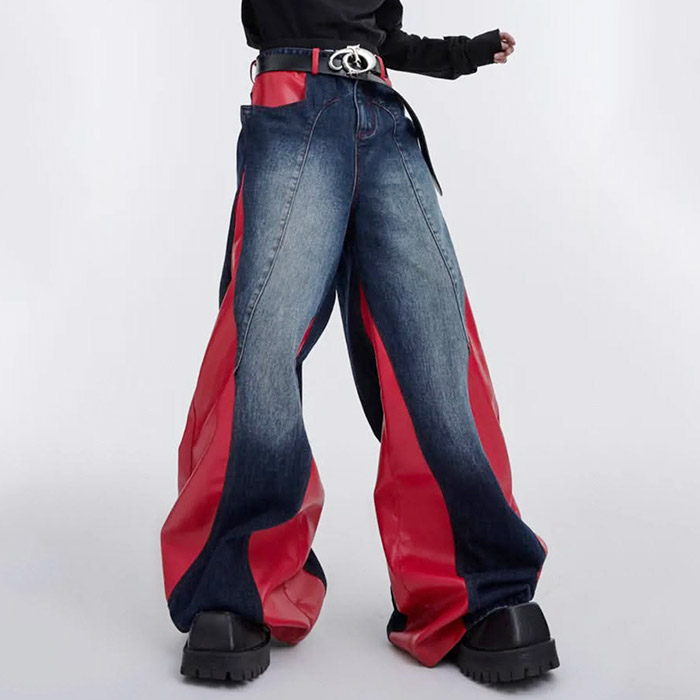
As the streetwear industry pivots heavily toward relaxed silhouettes in 2025 and 2026, the demand for properly engineered wide-leg pants has surged beyond what many domestic factories can handle. Transitioning from standard straight-leg denim to complex, heavyweight oversized profiles introduces significant production risks that surface only at scale. When established streetwear brands and procurement teams evaluate cut and sew manufacturers in USA for oversized wide leg streetwear pants, the conversation must move beyond basic sampling capabilities. The true test lies in pattern grading stability, fabric drape management, shrinkage control, and scalable execution across full size runs. This comprehensive analysis provides a verifiable framework for assessing domestic manufacturing partners, balancing the advantages of speed-to-market against the realities of higher production costs. We will also examine how global sourcing strategies, including working with specialized overseas partners, can complement domestic efforts when scaling complex bottoms programs. By the end of this guide, procurement directors and creative leads will have a concrete audit checklist, a clear understanding of cost structures, and a decision framework for determining when domestic production makes sense and when it becomes a liability.
Key Takeaways for Established Streetwear Brands
- ▸ Pattern grading for wide-leg silhouettes requires specialized engineering; linear scaling often results in distorted proportions across larger sizes, necessitating non-linear grading rules that isolate waist, thigh, and leg opening independently.
- ▸ Domestic production offers superior speed-to-market (4 to 6 weeks) and IP protection, but brands must account for Cut & Make (CM) costs that are typically 40% to 60% higher than established overseas alternatives, directly impacting retail pricing strategy.
- ▸ Fabric weight (GSM) stability and shrinkage control are critical for oversized pants; a 3% shrinkage variance on a 24-inch leg opening creates nearly one inch of lost width and severe structural distortion that cannot be corrected post-production.
- ▸ Factories that outsource garment washing and distressing introduce uncontrollable shade drift and physical degradation risks; in-house wet processing with documented wash recipes is a non-negotiable capability for premium streetwear bottoms.
- ▸ Strategic test runs of 50 to 100 units per colorway with specialized partners help validate bulk repeatability before committing major capital to seasonal drops, reducing the risk of large-scale production failures.
Where Do Standard Domestic Factories Fail When Producing Custom Men's Wide Leg Pants?
Standard domestic factories often fail to produce custom men's wide leg pants because they apply linear grading rules to oversized silhouettes, resulting in distorted drape and incorrect rise proportions in larger sizes. Furthermore, they frequently lack the specialized heavy-duty equipment required to cleanly finish heavyweight denim or canvas seams at scale.
The resurgence of baggy and relaxed fits is not merely a styling shift; it represents a fundamental change in garment engineering. According to fashion industry forecasts, wide-leg profiles are dominating menswear collections heading into 2026, with publications like Fashionista and Who What Wear identifying oversized trousers as one of the defining pant trends of the year [1]. However, many traditional usa clothing manufacturing companies are optimized for standard straight or slim fits. When an established fashion label brings a tech pack for oversized pants to a conventional factory, the initial sample might look perfect. The failure usually occurs during the transition to bulk production, where the factory's systems are tested under real conditions.
The primary bottleneck is pattern grading. In traditional tailoring, scaling up a size involves proportional increases across all measurements. For oversized streetwear, linear grading destroys the intended silhouette. If the leg opening and thigh width are increased proportionally with the waist, a size XL becomes unwearable and visually overwhelming [2]. Specialized cut and sew facilities understand that the rise, inseam, and break (how the pant rests on the shoe) must be carefully calibrated to maintain the specific "stacking" effect that defines premium streetwear. Procurement teams must verify that the factory employs dedicated patternmakers who understand non-linear grading for exaggerated proportions. Without this verification, brands risk producing garments that look correct in a single sample size but fall apart aesthetically across the full size spectrum.
Beyond grading, the physical construction of wide-leg pants presents challenges that many domestic contractors are not equipped to handle. Heavyweight denim (12oz to 16oz) and heavy cotton twill require industrial-grade sewing machines capable of penetrating multiple layers at seam intersections without skipping stitches. The waistband area of an oversized pant, where belt loops, pocket facings, and the fly all converge, can involve six or more layers of heavy fabric. Factories accustomed to lighter-weight garments often experience needle breakage, inconsistent stitch tension, and seam puckering at these critical junctions. These are not cosmetic issues; they are structural failures that lead to returns, brand reputation damage, and lost revenue. A factory that cannot demonstrate experience with multi-layer seam construction on heavyweight materials is simply not equipped for this product category.
Audit Checklist: Pattern & Grading Capabilities
Critical Verification Points
What Proof Should You Demand Regarding Fabric Handling and Shrinkage Control?
Procurement teams must demand documented pre-production shrinkage test results and bulk fabric inspection reports. Because wide-leg pants utilize significantly more fabric yardage per unit, even minor shrinkage variances or GSM inconsistencies will drastically alter the drape, leg opening, and overall fit after industrial washing.
The physics of custom wide leg jeans dictate that the garment's structure relies heavily on the fabric's weight and stability. Streetwear bottoms frequently utilize heavyweight materials ranging from 12oz to 16oz denim, or heavy cotton twill in the 280gsm to 400gsm range. When evaluating a potential manufacturing partner, brands must look beyond the initial fabric swatch. The critical metric is how the facility manages the fabric before it reaches the cutting table. Does the factory perform incoming fabric inspection using standardized four-point grading? Do they test for GSM variation across the roll? These are not optional extras; they are baseline requirements for any factory claiming to produce premium streetwear bottoms. Without these controls, the brand is essentially gambling that each roll of fabric will perform identically, which experienced procurement professionals know is never the case.
Shrinkage is the silent destroyer of oversized silhouettes. A standard 3% shrinkage rate might be acceptable on a slim-fit garment, but on a pant with a 24-inch leg opening and a dropped crotch, that same percentage translates to nearly one inch of lost width and significant structural distortion [3]. The garment's intended drape, the way the fabric pools at the ankle, and the overall visual weight are all compromised. Before committing to bulk production, brands should request proof of the factory's pre-treatment and relaxation protocols. Do they perform rigorous wash testing on the specific bulk fabric lot, not just a reference swatch from a previous season? How do they adjust the patterns to compensate for calculated shrinkage? The absence of a formalized fabric testing Standard Operating Procedure (SOP) is a severe risk indicator for any brand attempting to scale a premium bottoms program.
Additionally, brands should request documentation of the factory's fabric relaxation process. Heavyweight fabrics, particularly those with high cotton content, experience tension during the weaving and finishing process. If the fabric is cut immediately upon arrival without adequate relaxation time (typically 24 to 48 hours), the resulting garments will shrink unevenly after the first wash. This is especially problematic for wide-leg silhouettes where even a half-inch discrepancy between the left and right leg opening is immediately visible to the consumer. Factories that take fabric management seriously will have dedicated relaxation areas and documented procedures, and they will be able to show you their records upon request. If they cannot produce this documentation, consider it a red flag.
How Do Unit Economics Shift When Scaling Wide Leg Pants Manufacturers in USA?
Scaling domestic production significantly compresses profit margins due to high labor rates; the Cut & Make (CM) cost in the US can reach $15 to $25 per unit for complex bottoms, compared to $4 to $8 overseas. Brands must weigh these higher costs against the benefits of faster lead times, zero import tariffs, and tighter quality oversight during the production run.
Financial viability is the ultimate decision gate for any procurement director. While the appeal of "Made in USA" is strong, the unit economics require careful analysis. Recent industry data indicates that the US apparel manufacturing sector employs over 240,000 workers across more than 10,000 facilities, with major hubs concentrated in Los Angeles and New York [4]. However, domestic labor costs remain the primary bottleneck for scalability. The minimum hourly wage for skilled sewing operators in California often exceeds $15, and experienced operators working on complex garments can command $18 to $22 per hour. This directly impacts the final garment cost in ways that simple spreadsheet comparisons often underestimate, because complex bottoms require more sewing minutes per unit than basic tops.
For a complex garment like the oversized wide-leg pants that united states wide leg jeans manufacturers produce, the CM cost domestically can easily range from $18 to $25 per unit, depending on the complexity of pockets, hardware, and washes [5]. When material costs (typically $8 to $15 for premium denim or twill) and finishing are added, the total factory cost can approach $40 to $55. To maintain a standard luxury streetwear markup (typically 3x to 4x), the retail price must exceed $150, and often needs to reach $180 to $220 to protect healthy margins. Brands must determine if their customer base can absorb this premium. The trade-off is speed: domestic factories can often turn around a production run in 4 to 6 weeks, allowing brands to react swiftly to micro-trends and avoid the 4-week ocean freight delays associated with Asian imports.
There is also a hidden cost that many brands overlook: fabric sourcing. The vast majority of heavyweight denim and specialty cotton twill used in streetwear is not produced domestically. Even brands manufacturing in the US often import their fabric from Japan, Turkey, or China. This means the "Made in USA" label applies to the cut-and-sew process, but the raw material still carries international shipping costs, import duties, and lead time risks. When you add fabric import costs to the already elevated CM rates, the total landed cost of a domestically produced garment can be 2x to 3x higher than an equivalent garment produced by an integrated overseas manufacturer that sources fabric locally within its own supply chain ecosystem.
When Does a Men's Streetwear Manufacturer USA Become a Scaling Liability?
A domestic manufacturer becomes a scaling liability when a brand's volume exceeds 1,000 units per style, or when the design requires complex, multi-stage garment washing and distressing. At this threshold, domestic factories often hit capacity ceilings and struggle to maintain competitive pricing compared to integrated global supply chains that control every process under one roof.
Domestic sourcing is highly effective for rapid prototyping, quick-strike capsule collections, and initial market validation. The speed advantage is real and valuable. However, as established streetwear brands transition from limited drops to reliable seasonal replenishment, the constraints of the US supply chain become apparent. Many domestic facilities operate as specialized contractors rather than fully integrated ecosystems. If your wide-leg denim requires custom weaving, precise acid washing, and intricate distressing, a US-based brand might need to coordinate between a fabric mill, a cut-and-sew facility, and a separate dye house. This fragmented approach increases logistical friction, extends lead times, and multiplies the opportunities for quality deviations between production stages.
The 2022 data from the US cut and sew industry showed total shipments of approximately $9.67 billion, supported by roughly 91,300 workers, with Los Angeles employing nearly half of that workforce [6]. While these numbers reflect a resilient sector, they also reveal a concentrated and capacity-constrained market. When multiple brands compete for the same pool of skilled operators during peak production seasons (typically Q2 and Q3 for fall/winter collections), lead times extend and pricing leverage shifts firmly to the factory. Brands that have built their entire supply chain around a single domestic partner may find themselves unable to secure production slots when they need them most. This is not a theoretical risk; it is a recurring pattern that procurement managers at mid-to-large streetwear labels deal with every year.
This structural limitation is precisely why many mature fashion labels eventually diversify their sourcing. When navigating bulk cut-and-sew manufacturing, brands must evaluate when to transition core volume overseas. The requirements are typically encountered by streetwear brands operating at a global or multi-market level, where the design complexity and volume demands exceed what fragmented domestic networks can reliably deliver. It is at this juncture that specialized overseas partners become essential. Groovecolor, a premium manufacturer based in Dongguan, China, operates a highly integrated production model specifically designed for complex streetwear silhouettes. By maintaining in-house capabilities spanning pattern engineering, automated laser cutting, washing laboratories, embroidery, and printing under one roof, this type of vertically integrated facility addresses the exact scaling vulnerabilities that often overwhelm smaller domestic contractors. Their monthly capacity of 300,000 pieces and SMETA 4P certification provide the infrastructure and compliance verification that established brands require when moving beyond domestic-only production.
Which Signals Indicate a Factory Can Handle Complex Washes and Distressing at Volume?
A factory's ability to handle complex washes is indicated by the presence of an in-house wet processing facility, standardized wash recipe documentation, and a clear protocol for managing shade bands. Factories that outsource washing typically suffer from high defect rates and inconsistent fading across bulk batches, because they cannot control the variables that determine the final aesthetic.
The aesthetic value of streetwear pants often relies heavily on post-construction treatments. Enzyme washes, stone washing, ozone fading, and localized distressing elevate a basic garment into a premium product. However, these processes are inherently volatile. A stone wash that looks perfect on a 10-piece sample run can produce wildly different results when scaled to 500 units, because variables like water temperature, stone-to-garment ratio, and cycle duration must be precisely controlled. When auditing a factory for these capabilities, creative directors must look for systemic control rather than just a beautiful showroom sample. The sample proves the factory can do it once; the system proves they can do it repeatedly across hundreds or thousands of units.
The critical signal is integration. Does the cut and sew facility manage the washing process internally, or is it subcontracted to a third-party laundry? Subcontracting introduces significant risk regarding colorfastness, physical degradation of the fabric, and turnaround time. When a garment leaves the sewing floor and travels to an external wash house, the brand loses visibility into the process. Temperature fluctuations during transit, delays in processing, and the wash house's own production queue all introduce variables that are invisible to the brand until the finished goods arrive and the damage is already done. For streetwear brands that depend on a specific wash aesthetic as a core part of their brand identity, this loss of control is unacceptable.
Furthermore, verifiable factories will utilize "shade bands"—physical reference standards that define the acceptable range of color variation within a single dye lot. These are not digital images or Pantone chips; they are actual fabric swatches that have been processed through the exact wash recipe and serve as the benchmark against which every production batch is measured. If a manufacturer cannot produce documentation detailing their wash recipes (time, temperature, chemical concentration, mechanical action) and their tolerance for shade drift, they are not equipped to execute advanced streetwear washing workflows at scale. Ask to see the shade band library. Ask to see the wash recipe log. If the factory hesitates, that tells you everything you need to know about their actual production capabilities versus their sales pitch.
Beyond shade control, brands should also evaluate the factory's capacity for localized distressing techniques. Sandblasting (or its safer alternatives like laser distressing), hand-sanding, and strategic abrasion require skilled operators who understand how to create a "worn" appearance without compromising the structural integrity of the garment. A poorly executed distressing job does not just look bad; it weakens the fabric at stress points, leading to premature tearing during consumer wear. Ask the factory to demonstrate their distressing process on a sample and then subject that sample to a basic tensile strength test. If the distressed areas show significant strength loss beyond the acceptable threshold, the factory's technique needs refinement before it can be trusted with bulk production.
How Should Procurement Teams Evaluate Hardware and Trim Sourcing Stability?
Procurement teams should evaluate hardware and trim sourcing by requesting the factory's trim supplier list, lead time documentation, and backup sourcing protocols. Custom zippers, rivets, and branded buttons are frequent bottleneck points that delay entire production runs when sourced reactively rather than strategically.
Wide-leg streetwear pants, particularly cargo and utility-inspired designs, often feature complex hardware: custom-engraved rivets, branded zipper pulls, snap buttons, D-rings, and adjustable waistband mechanisms. These components are rarely stock items. They require tooling, minimum order quantities, and lead times that can range from 2 to 6 weeks depending on the supplier. A factory that does not proactively manage its trim pipeline will inevitably encounter delays that cascade through the entire production schedule. The fabric is ready, the patterns are cut, but the production line sits idle waiting for zippers. Every day of idle time costs money and pushes the delivery date further out, potentially causing the brand to miss its planned drop date.
When auditing a potential partner, ask specifically about their trim sourcing model. Do they maintain relationships with multiple hardware suppliers, or are they dependent on a single source? Do they order trims in parallel with fabric, or sequentially? A mature factory will have a trim procurement timeline that runs concurrently with fabric sourcing, ensuring that all components arrive before the production start date. They will also maintain a small buffer stock of commonly used hardware (standard YKK zippers, basic rivets) to absorb minor supply disruptions without halting production. This level of operational maturity is what separates a factory that can handle one-off projects from one that can support a brand's ongoing seasonal calendar with reliable, predictable execution.
Another often-overlooked aspect of trim management is finish durability. Custom hardware that looks premium in the showroom but tarnishes, chips, or corrodes after a few wears will damage the brand's reputation far more than a slightly higher unit cost for better-quality components. Brands should request wash and wear testing data for all custom hardware, particularly if the garment will undergo garment washing after hardware attachment. Rivets and buttons that are not rated for the specific wash chemistry being used will degrade, and the cost of replacing defective hardware across a full production run far exceeds the cost of specifying the correct components from the start.
What Must Be True Before Committing to Bulk Production With a New Partner?
Before committing to bulk production, a brand must verify that the factory has successfully completed a fully graded size run, established a finalized tech pack with locked tolerances, and agreed upon an Acceptable Quality Limit (AQL) standard for final inspection. Proceeding without these safeguards guarantees costly production errors that are extremely difficult to correct after cutting has begun.
The transition from sample approval to bulk manufacturing is the most perilous phase of the supply chain lifecycle. Procurement teams must enforce strict decision gates. A single approved "Medium" sample is insufficient evidence of a factory's capability. Brands must demand a complete pre-production (PP) size run. This ensures that the non-linear grading rules discussed earlier have been accurately applied to the extreme ends of the sizing spectrum (e.g., XS and XXL). The PP size run should be measured against the tech pack specifications by an independent party, not just the factory's own QC team, to eliminate confirmation bias. This step alone can prevent thousands of dollars in wasted production costs.
Additionally, the tech pack must transition from a design document to a binding manufacturing contract. It must include explicitly defined tolerances (e.g., +/- 0.5 inches on the inseam, +/- 0.25 inches on the waistband). Vague specifications like "relaxed fit" or "oversized" are meaningless without numerical boundaries. The tech pack should also specify stitch type, stitch density (stitches per inch), seam allowance, and bartack placement for all stress points. For wide-leg pants with multiple pockets and hardware, the tech pack can easily run to 15 or more pages. If your tech pack is shorter than that, it probably does not contain enough detail to prevent misinterpretation during production.
Finally, establishing a third-party inspection protocol based on international AQL standards (typically AQL 2.5 for major defects and AQL 4.0 for minor defects in the streetwear industry) ensures that the factory is held accountable to objective metrics rather than subjective visual assessments. Utilizing strategic test runs—typically 50 to 100 units per colorway—allows mature brands to stress-test these systems without risking massive capital on unproven production lines. The test run serves a dual purpose: it validates the factory's technical capabilities and reveals their communication patterns, problem-solving approach, and responsiveness under real production pressure. How a factory handles the inevitable small issues during a test run is the best predictor of how they will perform at scale.
Pre-Bulk Decision Gate Framework
Mandatory Steps Before Bulk Commitment
How Does Tariff Policy in 2026 Reshape the Domestic vs. Overseas Sourcing Decision?
The 2026 tariff environment, including a 25% tariff on imports from Canada and Mexico and additional duties on Chinese goods, has narrowed the landed-cost gap between domestic and overseas production. However, the gap remains significant enough that brands producing complex, wash-heavy garments at volume still find overseas sourcing more economically viable, provided they account for freight, duties, and inspection costs in their total landed cost model.
Trade policy is no longer a background consideration; it is a front-line variable in every sourcing decision. The current US tariff structure imposes approximately 16% to 25% duties on apparel imports from China, depending on the specific HTS classification of the garment [7]. For a pair of wide-leg pants with a $12 to $16 overseas factory cost, this adds $2 to $4 per unit. When combined with ocean freight ($2 to $3 per unit) and third-party inspection costs ($0.50 to $1.00 per unit), the total landed cost for an overseas-produced garment reaches approximately $17 to $24 per unit. Compare this to the $40 to $55 total factory cost of a domestically produced equivalent, and the economic argument for overseas production remains compelling, even after tariffs are factored in.
That said, tariff policy is inherently unpredictable. Brands that build their entire margin structure around a specific tariff rate are exposed to significant risk if duties increase. The strategic response is not to choose one pathway exclusively, but to maintain optionality. Many established streetwear labels now operate a dual-sourcing model: domestic production for rapid-response capsule drops and market-testing quantities, and overseas production with a specialized partner for core seasonal volume. This approach hedges against both tariff volatility and domestic capacity constraints, while preserving the speed advantage of local manufacturing for time-sensitive releases. The brands that navigate this landscape most successfully are those that treat sourcing as a portfolio strategy rather than a binary choice.
It is also worth noting that tariff structures are not uniform across product categories. The HTS code for cotton trousers differs from that for denim jeans, and the duty rates can vary by several percentage points. Brands that invest in proper customs classification and work with experienced freight forwarders can sometimes reduce their effective tariff burden by ensuring their products are classified under the most favorable applicable code. This is not about misclassification; it is about ensuring accuracy. Many brands overpay on duties simply because they have not invested the time to verify their HTS codes with a licensed customs broker.
What Does an Integrated Global Partner Bring to Complex Streetwear Bottoms Programs?
An integrated global partner eliminates the coordination overhead of fragmented domestic supply chains by controlling pattern engineering, cutting, sewing, washing, printing, and finishing under one operational roof. This structural advantage directly reduces the quality drift and timeline extensions that plague multi-vendor domestic setups when producing complex garments like oversized wide-leg pants.
The challenges outlined throughout this analysis—non-linear grading failures, shrinkage control gaps, wash recipe volatility, and hardware sourcing delays—share a common root cause: fragmentation. When each production stage is handled by a different vendor, the brand becomes the de facto project manager, responsible for coordinating timelines, enforcing quality standards, and resolving disputes between independent parties. This model works at low volumes but collapses under the weight of seasonal production calendars. An analysis of recent large-batch streetwear production programs confirms that manufacturers with fully integrated in-house capabilities, including pattern development, automated cutting, sewing, and dedicated washing and finishing facilities, deliver measurably lower defect rates and shorter lead times than fragmented alternatives [8].
This is the structural advantage that Groovecolor's manufacturing system was built to deliver. Rather than operating as a sewing-only contractor, the company functions as a full-spectrum production partner with dedicated departments for each critical stage. For oversized wide-leg pants specifically, this means the same team that engineers the pattern also oversees the cutting, monitors the sewing line, and controls the washing parameters. There is no handoff between independent vendors, no transit between facilities, and no information loss between stages. The result is that the design intent captured in the tech pack is preserved through every production step, from the first prototype to the final bulk shipment. For procurement teams evaluating their next move, the question is not whether to use domestic or overseas production exclusively, but how to allocate each pathway strategically based on volume, complexity, and timeline requirements.
The practical implication for established streetwear brands is clear: domestic production serves a valuable role for speed-dependent, limited-edition releases and initial market validation. But when a silhouette proves itself and the brand needs to scale to thousands of units across multiple colorways and wash treatments, an integrated overseas partner with deep streetwear expertise becomes the more reliable and economically sound choice. The key is to vet that partner with the same rigor outlined in this guide—demanding documented wash recipes, verified grading systems, AQL-based inspection protocols, and a track record of serving brands with similar complexity requirements. The right partner does not just make your garments; they protect your brand's reputation at scale.
Frequently Asked Questions About Custom Men's Wide Leg Pants Manufacturing
How can streetwear brands ensure reliable drape in wide-leg pants during bulk production?
Brands ensure reliable drape by mandating fabric inspection using four-point grading to eliminate GSM variations and enforcing strict pre-washing protocols to stabilize shrinkage before cutting. Drape is highly sensitive to fabric weight; even minor inconsistencies in the raw material will alter how an oversized silhouette falls. Establishing clear tolerances in the tech pack (e.g., +/- 5gsm for fabric weight) and requiring pre-production size runs are essential verification steps. Additionally, the factory should demonstrate that they test the specific bulk fabric lot, not a reference swatch from a previous order. This is a non-negotiable step for any brand serious about maintaining product quality across multiple production runs.
What is the typical lead time difference between US and overseas manufacturers for complex bottoms?
US manufacturers typically offer lead times of 4 to 6 weeks for production, whereas overseas production requires 8 to 12 weeks when factoring in ocean freight and customs clearance. However, if the garment requires highly specialized washes or custom hardware that domestic factories must outsource, the US timeline can extend to 8 weeks or more, significantly eroding the primary advantage of domestic sourcing. Brands should map the complete end-to-end timeline, including all outsourced processes, before comparing pathways. The most accurate comparison accounts for every step from tech pack approval to goods arriving at the brand's warehouse.
Why do standard factories struggle with grading oversized streetwear pants correctly?
Standard factories struggle because they apply linear proportional grading, which distorts the exaggerated features of streetwear pants, making larger sizes unwearable. Proper oversized grading requires non-linear adjustments, specifically isolating the waist and hip measurements while carefully controlling the expansion of the thigh, knee, and leg opening to maintain the intended structural aesthetic. The rise, in particular, must be graded independently to preserve the dropped-crotch silhouette that defines many wide-leg streetwear designs. Without dedicated patternmakers who understand these principles, the factory will produce garments that look correct in one size but fail across the rest of the range.
About the Author

References
- Fashionista. "Wide-Leg Pants Make a Comeback: 4 Must-Have Styles in 2026." December 2025.
- Nathanael, Marios. "Common Challenges in Pattern Grading and How to Overcome Them." LinkedIn Pulse, August 2024.
- Apparel News. "Identifying Denim's Most Important Challenges." June 2024.
- IndustrySelect. "Key Facts & Trends in the U.S. Apparel Manufacturing Industry." February 2026.
- United States International Trade Commission. Harmonized Tariff Schedule. 2026 Edition.