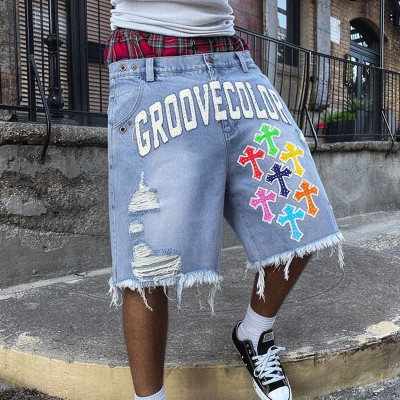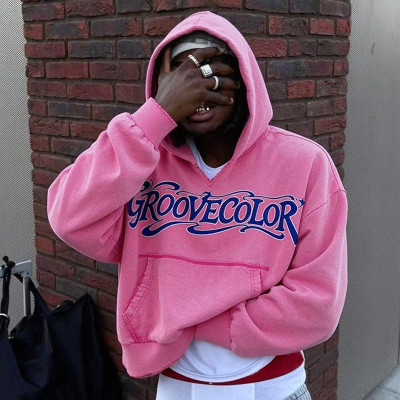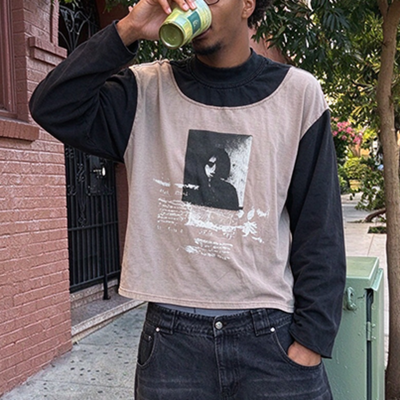

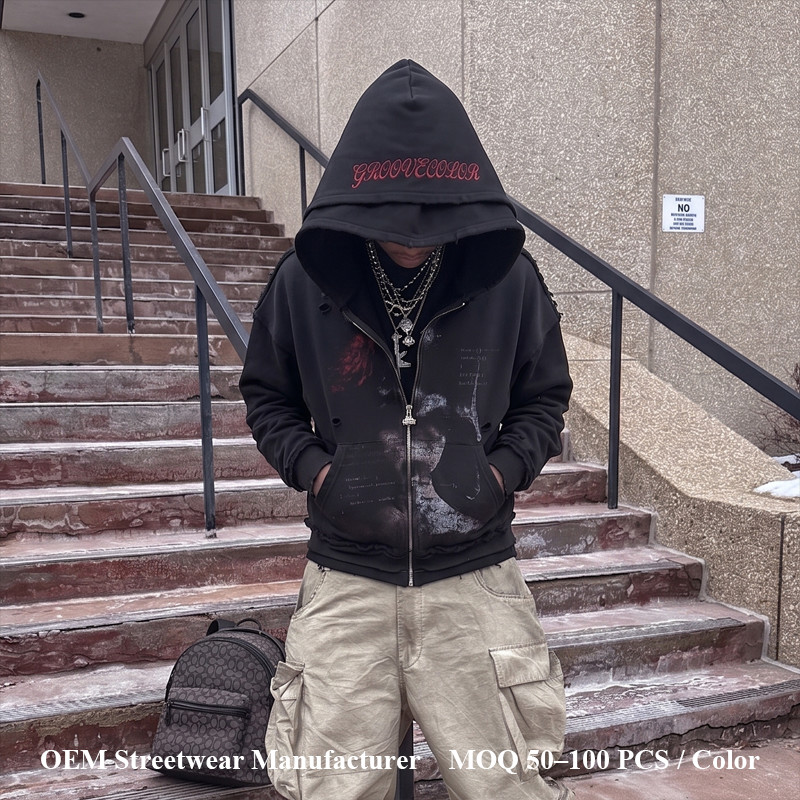
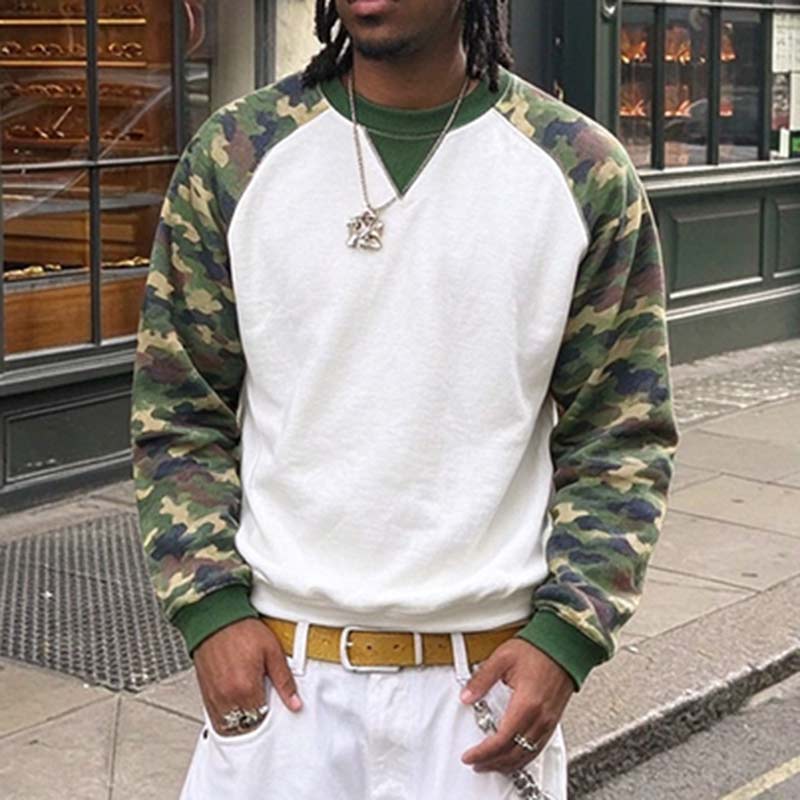
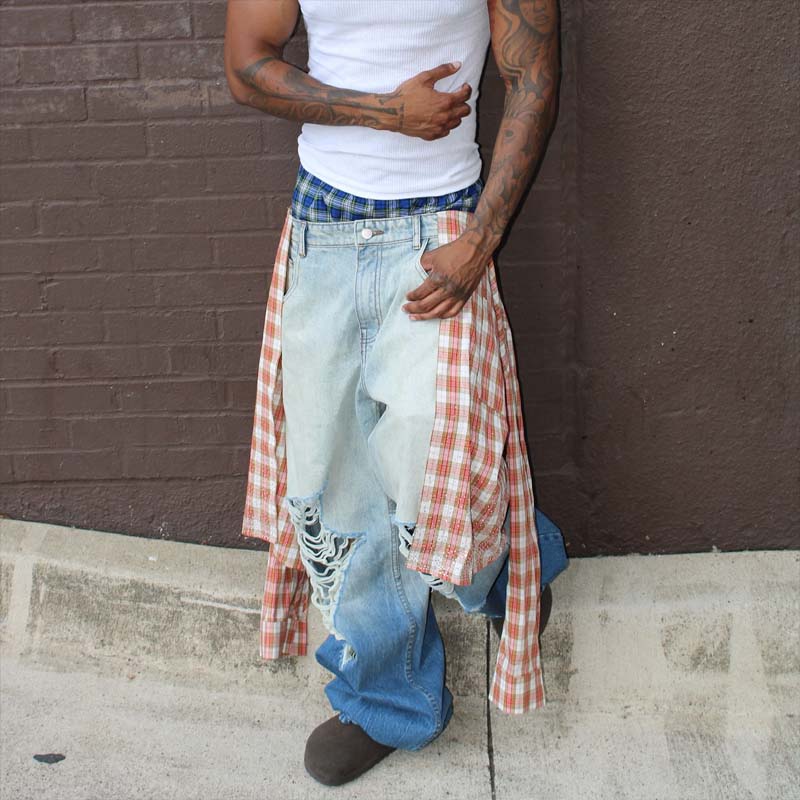
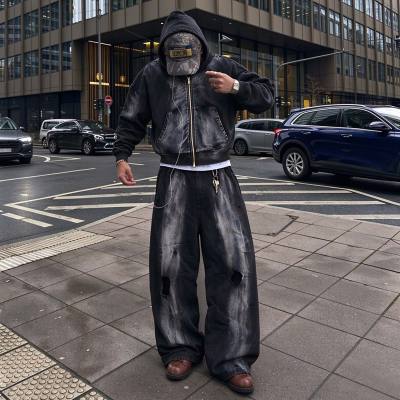

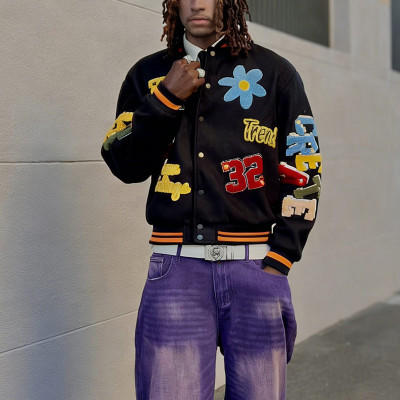
Are there any reliable clothing factories in China that can make custom cut and sew streetwear clothing for 100 pcs?
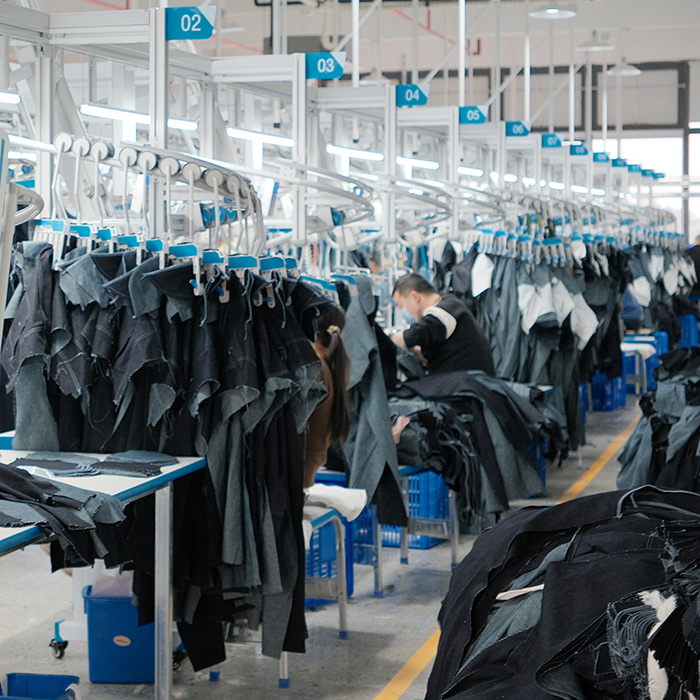
Yes, some clothing factories in China can manufacture 100 pieces of fully custom cut-and-sew streetwear. But a factory accepting that quantity is not the same as proving that your design can be made under those production conditions.
For established streetwear brands, the real question is whether fabric availability, pattern development, decoration, finishing, cost and quality checks can work together within a 100-piece order. GROOVECOLOR, a premium OEM streetwear manufacturer based in Dongguan, China, works in this manufacturing environment, where the commercial minimum must be assessed against the technical demands of each product.
This article examines the evidence that matters before a production commitment. It explains why some custom garments are practical at 100 pieces, why others need changes, and how sourcing teams can distinguish a workable manufacturing plan from an attractive quotation.
What Are the Key Takeaways for Established Streetwear Brands?
A 100-piece custom streetwear order becomes commercially meaningful when its materials, construction, production route and approval requirements are clear. Brands should examine the conditions behind the quoted quantity rather than treating an advertised minimum as proof of manufacturing readiness.
- ▸ A 100-piece order can support genuine cut-and-sew development when suitable fabrics, patterns and production methods are available.
- ▸ Textile-mill minimums, custom hardware and special finishing can create requirements beyond the garment factory's quoted minimum.
- ▸ Approved samples, material references and written production specifications reduce the chance of costly errors after cutting begins.
- ▸ A meaningful quotation separates garment manufacturing from development, tooling, special materials, packaging and freight.
- ▸ The right factory should leave a usable technical record that supports future replenishment, not merely deliver the first shipment.
Can a China Clothing Factory Really Make 100 Pieces of Fully Custom Streetwear?
Yes, a China-based clothing factory can produce 100 fully custom cut-and-sew garments when the design fits its material supply, equipment and production schedule. For established streetwear brands, reliability depends on approved patterns, available fabrics, controlled finishing and inspection evidence. The quoted quantity alone cannot establish whether the proposed manufacturing route is ready.
Why does the production route matter more than the advertised quantity?
A factory may have the equipment to sew 100 hoodies, but the order may also require a specific French terry fabric, a cropped pattern, custom ribbing, embroidery and garment washing. Those requirements involve different materials, workers and production stages. The garment quantity is only one part of the decision.
A standard cotton T-shirt with an available fabric and a tested print method may fit a compact production run. A jacket requiring custom-woven panels, exclusive metal trims and several finishing stages may not. Neither case proves that the factory is good or bad. They simply place different demands on its supply chain.
What should sourcing teams verify first?
The first review should cover one proposed style, its color quantity, fabric, size range and main construction details. The factory should then identify any missing information and explain which production conditions have already been checked. An answer based on the actual design is more useful than a general statement that all custom clothing starts at 100 pieces.
Brands that are still comparing manufacturing partners can separately review the process of finding a 100-piece cut-and-sew manufacturer. Once a potential factory has been identified, however, the next step is to define exactly what its minimum order covers.
What Must a Factory Include When It Quotes a 100-Piece Streetwear Order?
A useful 100-piece OEM quotation must state its quantity basis and manufacturing scope. The factory should identify the style, color, sizes, fabric, construction, decoration, finishing, labels and packing covered by the price. Two suppliers offering the same minimum may be proposing different services, materials and development responsibilities.
Does 100 pieces mean one style or an entire collection?
The quantity must be tied to a clear production unit. One hoodie design in one color with 100 pieces is different from the same hoodie divided into four colors. It is also different from an order of 50 hoodies and 50 sweatpants. Each color or construction may require a separate fabric allocation, cutting plan or machine setup.
The factory may accept mixed sizes within a style and color. That does not mean it will automatically combine different styles or colorways to reach the same minimum. Brands should obtain the quantity basis in writing before approving development expenses.
Which services need separate confirmation?
A full custom garment may need pattern development, size grading, fabric procurement, print screens, embroidery programming, trims and packaging. Some costs may be included in the garment price. Others may be one-time charges or depend on quantity. The quotation should state these boundaries rather than rely on assumptions.
A practical quantity test
Ask the factory to confirm these three situations separately:
▸ 100 pieces of one style in one color.
▸ 100 pieces of one style divided into two colors.
▸ 100 pieces shared across two different garment styles.
If the three cases receive the same quotation without any technical review, ask how material allocation and setup costs have been calculated. The answer should lead naturally to the next question: which actual garment designs fit the proposed quantity?
Which Custom Streetwear Designs Are Practical at 100 Pieces, and Which Need a Different Plan?
A 100-piece run is generally easier to plan when suitable fabrics, trims and production methods are already available. Custom T-shirts, hoodies and sweatpants may qualify, but exclusive textile development, special hardware and complex finishing can change the conditions. Feasibility depends on the complete specification, not the garment category alone.
A 280 GSM oversized T-shirt can require a fully developed pattern, a specific neckline and accurate print placement without requiring a textile mill to invent a new fabric. A 450 GSM hoodie can also use an available French terry fabric while retaining custom measurements, hood construction, ribbing and branding.
By contrast, a custom jacquard fabric with an exclusive woven motif may require a separate minimum from the mill. A garment with specially molded metal parts may introduce tooling costs. A highly distressed finish may require trial runs before the factory can estimate processing loss. These are legitimate manufacturing constraints, not automatic reasons to reject the design.
This matrix is an editorial assessment of manufacturing constraints. It is not a universal factory policy or a confirmed quotation.
When should the design be adjusted rather than the order quantity?
A suitable alternative may preserve the garment's shape and visual identity. For example, a stocked heavy cotton fabric may replace a textile that needs a special weaving run. Printed surface artwork may be considered instead of a custom jacquard structure, provided the brand accepts the different texture and durability characteristics.
Such substitutions should never be made without approval. The factory should explain the visual, tactile and commercial trade-offs, then prepare a suitable sample. For brands developing custom streetwear hoodies, hood volume, fabric behavior and finishing must remain central to the decision.
Why Can Fabric Requirements Prevent a 100-Piece Garment Order From Moving Forward?
A garment factory may accept 100 pieces while the textile mill requires more fabric than that order consumes. Available cotton jersey or French terry can make custom cutting practical, while exclusive knitting, jacquard, dyeing or finishing may carry separate minimums. The fabric code, available quantity, color and replenishment conditions should be verified first.
Can available fabric still be used for a fully custom garment?
Yes. Using fabric already available through a textile supplier does not prevent a factory from developing an original garment. The brand can still specify its neckline, fit, shoulder shape, seams, pockets, labels and decoration. Custom cut-and-sew describes the garment development and construction, not a requirement to weave every fabric from scratch.
This distinction matters for premium streetwear. A factory that works with established fabric suppliers may offer several suitable heavy cotton options without commissioning a new mill production run. However, availability must still be checked against the requested color, usable width, quantity and delivery date.
Which fabric properties need evidence rather than a verbal description?
GSM alone does not tell the whole story. Weight, fiber composition, structure, usable width, hand feel and response to laundering all matter. A dense 450 GSM fabric may behave differently from a softer textile of similar weight. That difference can change the way a cropped hoodie hangs or how a wide-leg trouser drapes.
The ASTM D3776/D3776M test method addresses the mass per unit area of fabric. It provides a technical reference for weight measurement, but it does not establish fabric quality by itself. The finished garment still requires relevant performance checks.
Sourcing teams should request a physical swatch, the supplier's specification and an explanation of the proposed fabric's performance. A manufacturer that provides streetwear fabric selection support can help connect material properties to the intended garment, but the approved reference must still be identified for the actual order.
Fabric release checklist
▸ Confirm the fabric supplier and material reference.
▸ Confirm composition, weight, usable width and color.
▸ Check the available quantity against the cutting plan.
▸ Review shrinkage and finishing behavior when relevant.
▸ Record any limits on later material replenishment.
If a specific environmental or fiber certification is requested, the evidence must apply to the relevant material and scope. For example, the OEKO-TEX STANDARD 100 program concerns textiles tested for harmful substances. It should not be treated as a general guarantee of garment construction or factory performance.
Once the material is selected, the next constraint is how efficiently and accurately the factory can cut it into the approved size range.
How Do Pattern Grading and Fabric Cutting Affect a 100-Piece Streetwear Run?
A 100-piece cut-and-sew order needs an approved pattern set and a realistic cutting plan. Size grading, fabric width, panel dimensions and marker layout affect material use and production time. Oversized silhouettes and complex panels can add cutting constraints, even when the total garment quantity remains modest.
Why does size distribution change production planning?
Consider two orders of 100 T-shirts. One contains three sizes with most pieces concentrated in medium and large. The other contains six sizes spread across a wider range. Both have the same total quantity, but the second may require more pattern checks and a different marker layout.
The relationship is not always linear. Fabric width, size ratios and the shape of each panel can change how pieces fit into the cutting marker. A larger size range does not automatically mean an unacceptable order. It means the factory should calculate its material needs using the actual grading and quantity split.
What makes oversized and baggy patterns more demanding?
Wide body panels, dropped shoulders and enlarged sleeves may consume more fabric than a fitted garment of the same nominal size. Baggy trousers also require careful control of rise, leg shape and hem width. The intended silhouette should be established through pattern development, not created by simply enlarging all measurements.
An organized pattern making and cutting process should produce approved pattern versions, grading information and cutting instructions. These records matter when a later order needs to reproduce the approved proportions.
Before fabric is cut, the team should also identify any panels that require special orientation, stripe matching or print alignment. A garment can use the correct fabric and still fail if the production pattern or cutting direction is wrong.
Cutting becomes the point where development decisions begin to consume production material. For that reason, complex printing, washing and embroidery should be reviewed before the cutting plan is released.
Can Printing, Embroidery and Garment Washing Be Combined in a 100-Piece Order?
Yes, a 100-piece production run can include multiple streetwear decoration techniques when the fabric, process sequence and testing requirements are suitable. Printing, embroidery and garment washing should not be treated as separate visual options alone. Their order of application can affect shrinkage, texture, placement and finished appearance.
Should decoration happen before or after garment washing?
The answer depends on the desired effect and the technique. Some graphics are designed to age with the garment. Others need to be applied after washing to protect their appearance or maintain accurate placement. A large print can behave differently on an unwashed garment and on fabric that has already changed size.
Embroidery adds another variable. Dense stitching can pull on the surrounding material, while washing can change the relationship between the embroidery and the fabric beneath it. The factory should test the intended combination on the actual material before confirming the production route.
Which tests should be completed before bulk finishing?
The tests should reflect the garment's main risks. A washed heavyweight hoodie may need checks for dimensions, shade range, hand feel and decoration performance. A graphic T-shirt may require a print trial, wash review and placement confirmation. A jacket with appliqué should be examined for edge security and material compatibility.
The AATCC TM150 test method addresses dimensional changes in garments after home laundering. It gives apparel teams a recognized testing reference. The brand and factory must still agree on the relevant care conditions, measurement points and acceptance limits for the actual garment.
A manufacturer's streetwear decoration and finishing capabilities are useful only when they can be applied to the chosen fabric and design. Photos of a similar garment are supporting context, not a substitute for a current project trial.
Once the process route is understood, sourcing teams can evaluate its cost properly. That requires separating the price of manufacturing garments from the expense of developing the specific product.
How Can a Streetwear Brand Compare Two 100-Piece Factory Quotations Fairly?
Two 100-piece quotations should be compared only after their materials, production methods and included costs have been aligned. Pattern development, special trims, tooling, decoration setup, packaging and freight may be charged differently. The lowest unit price is not necessarily the lowest total project cost.
Which costs should appear separately?
A quotation should distinguish regular garment manufacturing from development work that may happen only once. These costs can include initial patterns, grading, embroidery programming, screen preparation, special accessory tooling and sample revisions. Their treatment should be agreed before the brand commits to production.
Some development costs may be included in a higher unit price. Others may be charged separately. Either arrangement can be valid if the scope is clear. The problem arises when a quoted unit price is compared with another price that covers more work.
Why should the brand compare 100, 300 and 500 pieces?
Certain setup and development expenses can be spread across a larger number of garments. That may lower the unit cost, but material purchases, capacity planning and the risk of unsold stock also change. A larger order is not automatically a better commercial decision.
Established brands with proven sales data can compare the projected margin, stock exposure and likely replenishment needs. A strategic test run may be justified if it protects a product launch while allowing the team to verify a new fit or manufacturing technique. It should still be priced as a real production project.
Does the quoted trade term change the comparison?
Yes. An EXW quotation and a delivered quotation do not cover the same responsibilities. Freight, insurance where relevant, import duties, taxes and clearance arrangements must be reviewed according to the agreed term and destination. An accurate comparison looks at the total commercial commitment, not only the garment price printed beside the quantity.
Once cost boundaries are clear, the next question is who controls each production operation and who takes responsibility when a specialist process needs correction.
Who Controls Production When a China OEM Factory Uses Specialist Manufacturing Partners?
A reliable OEM factory does not need to own every textile mill, printing workshop or finishing facility. It does need clear responsibility for sourcing, approvals, production checks and corrective action. Established streetwear brands should ask who performs each operation, who approves the result and who resolves a problem before shipment.
Which production activities should be visible to the brand?
The factory should explain where patterns are developed, fabric is prepared, garments are cut and sewn, and decoration or finishing is completed. Not every operation must take place in one building. The important point is that the planned manufacturing route is known and controlled.
Professional fabric suppliers and specialist finishing facilities can add valuable technical capability. For example, a dedicated embroidery operation may have equipment suited to a complex design. A separate washing facility may support a specific finishing method. These arrangements are reasonable when the OEM manufacturer retains clear oversight.
What happens if a specialist process fails?
A useful manufacturing agreement identifies the approved standard and the party responsible for checking the work. If a wash shade falls outside the agreed range or embroidery placement is incorrect, the factory should have an established method for reviewing the issue, proposing corrective action and seeking approval where a change is needed.
This production responsibility is separate from social and environmental due diligence. The OECD garment supply-chain guidance describes a broader approach to identifying and addressing risks across garment and footwear supply chains. That work cannot be replaced by a successful garment sample or a finished-product inspection.
With production responsibility established, the brand can determine which technical approvals are needed before the factory uses bulk fabric.
What Evidence Should Be Approved Before the Factory Cuts Bulk Fabric?
Bulk cutting should begin after the brand and factory approve the production reference. That reference normally includes the current tech pack, garment sample, fabric, color, size specifications, construction details, artwork, trims and finishing instructions. A dated approval record helps prevent unresolved development questions from affecting the finished order.
Which documents form a useful approval package?
The tech pack should describe the garment that will actually be manufactured, not an earlier idea. The approved sample should represent the intended fit, material and construction as closely as practical. If the sample was made from substitute fabric, that limitation must be documented and the final material assessed before production.
Artwork approval also needs more than a digital mockup. Print dimensions, placement references, colors and application methods should be specified. For embroidery, the approved appearance and position should be supported by a suitable trial. Labels, packaging and special trims need their own confirmation where they affect the finished specification.
What should happen when a specification changes?
The change should be recorded in the relevant document and reviewed for its effects on material use, cost, schedule and finished appearance. A new print size can affect placement. A different fabric can change the pattern's fit. A revised wash process can alter measurements. These changes should not remain only in an informal message thread.
A clear approval package gives the production team a reference for its inspections. It also gives the brand a fair basis for reviewing the garments before shipment.
How Should a 100-Piece Custom Streetwear Order Be Inspected Before Shipment?
A 100-piece garment order should be inspected against the approved specifications throughout production and before dispatch. Fabric, cutting, sewing, decoration, finished dimensions, labels and packing need appropriate checks. Sampling plans such as AQL can support shipment decisions, but they do not replace process inspection or guarantee that every garment is free of defects.
Which problems should be caught before final inspection?
Fabric defects should be identified before cutting where possible. Incorrect panel dimensions should be caught before sewing continues. Decoration issues should be reviewed before the entire batch receives the same treatment. Detecting an error earlier may prevent additional garments from being affected.
This is why final inspection should not be the first meaningful quality check. A structured garment quality-control process links fabric inspection, sample confirmation, production checks and pre-shipment review to the approved garment specifications.
Which finished-garment features deserve direct checking?
The answer depends on the design. A heavily washed hoodie needs attention to shade, measurements, rib condition and print or embroidery appearance. A structured jacket may need checks of zipper function, lining, seam security and hardware. A graphic T-shirt may need special attention to print position and surface quality.
Where a defect presents a particular safety, legal or contractual risk, the inspection strategy may require more than a general sample check. The brand and factory should agree on that treatment in advance. The final report should identify what was checked, the findings and the disposition of any unresolved issues.
A useful inspection record does more than support one shipment. It can also help the factory and brand plan the next production run using the results of the current order.
Can a 100-Piece Production Run Prepare a Streetwear Brand for a Larger Reorder?
Yes, a well-documented 100-piece production run can provide a useful technical base for later replenishment. Approved patterns, fabric references, artwork, finishing instructions and inspection findings help the next order begin with clearer specifications. The factory must still reconfirm material availability, production capacity and any changes required by a larger quantity.
Which production records should be preserved?
The approved pattern versions, graded measurements, fabric details, artwork files, trim references, finishing instructions and inspection results should remain accessible under the agreed project arrangements. These records help the team avoid relying on memory when an established product returns to production.
For a menswear label with stable retail or e-commerce sales, this matters when planning replenishment around confirmed demand. Production records can shorten technical discussions, but they do not remove the need to check the next fabric lot, delivery schedule or factory workload.
What changes when the order increases from 100 to 500 pieces?
A larger order can require more fabric rolls, more sewing time and additional finishing capacity. The factory may be able to use a more efficient cutting or production arrangement. However, the larger quantity may also introduce new material batches, processing schedules or inspection needs.
A factory's published capacity is useful background information, but a brand should ask about the actual production slot for its order. A manufacturer may have substantial overall output while a specific specialist process remains fully scheduled.
Review the manufacturer's bulk production capacity in the context of the proposed product and delivery date. The important question is whether the necessary people, materials and finishing facilities can support the approved production plan.
Before committing to a manufacturing partner, the sourcing team should bring these findings together in a final decision rather than judge each capability in isolation.
When Should a Brand Approve, Revise or Pause a 100-Piece Manufacturing Program?
A 100-piece program should proceed when its main materials, design specifications, production route, costs and approvals are sufficiently defined. It should be revised when a workable alternative can resolve an identified constraint. The order should remain on hold when essential technical information or manufacturing evidence is missing.
What supports an approval decision?
Approval is reasonable when the technical package is current, the sample and materials are accepted, the quotation scope is clear and the production team has confirmed the required operations. Remaining routine production checks should also have agreed responsibilities. This provides a defensible basis for moving forward.
When is revision the better decision?
Revision makes sense when an available material, adjusted process or different quantity can solve a specific constraint without undermining the brand's intended product. For example, a proprietary fabric may be replaced with an approved commercial textile, or an accessory may be simplified after the factory explains the cost of custom tooling.
Which unresolved problems justify pausing?
Production should not advance simply because a deadline is approaching. Unapproved fabric substitutions, missing size specifications, uncertain decoration tests or conflicting instructions create avoidable exposure. A written pause can be a sound commercial decision when the cost of a failed run would exceed the value of immediate production.
This framework does not require every manufacturer to follow identical internal procedures. It asks whether the factory can provide enough evidence for a reasonable procurement decision. That standard is particularly useful when assessing the capabilities of a specialist OEM streetwear manufacturer.
How Does GROOVECOLOR Approach 100-Piece Custom Cut-and-Sew Streetwear Production?
GROOVECOLOR is a premium OEM streetwear manufacturer in Dongguan, China, serving market-proven streetwear brands, established menswear-focused fashion labels and apparel teams with structured custom development needs. Its standard manufacturing quantity is 50–100 pieces per style and color, subject to the selected materials and techniques. Project feasibility must still be checked against actual production requirements.
Which capabilities are relevant to this type of order?
With more than 16 years of garment manufacturing experience, GROOVECOLOR focuses on premium custom streetwear rather than simple surface branding. Its capabilities include technical review, pattern development, fabric sourcing, sampling, cutting, sewing, printing, embroidery, washing, inspection and packaging.
The factory reports manufacturing capacity exceeding 300,000 garments per month across its production arrangements. This indicates the scale of its broader operations, but it does not establish a particular order's delivery date. Availability for a specific garment and finishing combination must be confirmed during project review.
Its production focus includes oversized T-shirts, heavyweight hoodies, streetwear pants and other customized menswear categories. For apparel teams assessing full-package production, the company's cut-and-sew clothing manufacturing information offers further detail on its stated service scope.
What evidence should a procurement team request?
The same evidence standards discussed throughout this article should apply to GROOVECOLOR. A sourcing team can ask to review relevant production areas, current material options, sample-development arrangements, inspection methods and the proposed production schedule. Published capabilities should support, not replace, a project-specific technical discussion.
GROOVECOLOR has reported a SMETA 4-Pillar audit. The current report, audited site, date and findings should be verified when compliance evidence is required. Sedex explains that SMETA is an audit methodology, not a certification. A social audit also does not replace product-specific textile and garment testing.
For brands with established product calendars and repeat-order requirements, the most useful question is whether the proposed manufacturing setup fits the specific design. The manufacturing approach for established streetwear brands provides further context on the needs of teams managing ongoing product development.
What Should a Streetwear Brand Submit Before Requesting a 100-Piece Manufacturing Review?
A useful manufacturing inquiry should include the garment design, quantity per style and color, size breakdown, fabric requirements, measurements, decoration artwork, finishing references, packaging and target delivery period. Complete information helps the factory identify technical gaps, material restrictions and the conditions needed for a meaningful quotation.
Which details make an initial inquiry more productive?
A finished tech pack is the strongest starting point. It should identify dimensions, construction, material specifications and artwork. When a complete technical package is not yet available, accurate reference photos, an intended measurement chart and clear material requirements can support an initial discussion. The factory should identify what remains unconfirmed.
The inquiry should also clarify whether the brand expects a single strategic test run or a product intended for later replenishment. That distinction affects the value of material continuity, stored pattern records and the cost of specialized tooling. It should not be treated as a promise of future order volume.
What should the factory return before accepting a production commitment?
The response should identify the feasible production route, available fabric options, any special material minimums, required sample work, quotation assumptions and a proposed development schedule. If part of the design cannot be confirmed, the factory should state that openly and explain what evidence is needed next.
For a brand preparing a custom collection for the US market, labeling should also be reviewed before shipment. The US Federal Trade Commission's textile guidance explains applicable requirements involving fiber content, country of origin and responsible business identification. Requirements for other destination markets need separate review.
Which 100-Piece Streetwear Manufacturing Questions Should Brands Resolve Before Ordering?
The most important remaining questions concern exceptions to the proposed production plan. Brands should clarify split quantities, exclusive materials, sample limitations, special tooling, manufacturing responsibility and future replenishment. These issues often decide whether a technically attractive design is ready for a commercial production commitment.
Can a 100-piece hoodie order use four different fabric colors?
It depends on the factory's minimum per color and the availability of each fabric shade. Four colors create separate material and production allocations. A brand should confirm each color's quantity, fabric reference, setup requirements and any additional charges before approving the order.
Can available fabric still produce a genuinely custom garment?
Yes. The factory can develop original patterns and garment construction using fabric obtained from an existing supplier collection. The garment's shape, seams, measurements and decoration remain customized. The brand should approve the chosen material because its weight and behavior affect the finished product.
Will offering six sizes increase the cost of a 100-piece run?
It may. Additional sizes can require more grading checks and change cutting efficiency, particularly for oversized or structured garments. The effect depends on the pattern, fabric width and quantity allocated to each size. The factory should evaluate the actual size breakdown before revising the price.
Can a sample made with substitute fabric approve the final bulk material?
Not by itself. A substitute fabric sample may help assess pattern shape and construction, but it cannot fully establish the behavior of the final production fabric. Differences in weight, stretch, shrinkage and drape should be checked before the bulk material and finished specification are approved.
Should garment washing take place before or after printing?
There is no universal sequence. The correct route depends on the print method, garment fabric and desired finish. Washing can change garment dimensions and surface appearance. The factory should test the intended order of operations and approve the result before applying it to the full production quantity.
Who is responsible when embroidery or washing is performed by a specialist?
Responsibility should be defined in the manufacturing agreement. The appointed OEM manufacturer should explain how specialist work is approved, inspected and corrected. Using an external facility is not inherently a quality problem, but unclear responsibility can make defects and schedule disruptions harder to resolve.
What should a brand confirm before ordering the same garment again?
The approved pattern, fabric supply, color, trims, decoration instructions and inspection references should be reviewed before a repeat order. Existing technical records can reduce development work, but material availability and production conditions may change. The next order should therefore be confirmed against the intended specification and current schedule.
Which Sources Support the Manufacturing Standards and Procurement Checks Discussed Here?
This article separates practical manufacturing assessment from formal standards. Textile test methods help define measurable properties. Inspection standards support agreed sampling decisions. Responsible sourcing guidance addresses wider supply-chain obligations. None of these sources alone proves that a specific factory or garment meets every requirement.
Technical and institutional references
ASTM International: Standard test methods for mass per unit area of fabric.
AATCC: TM150 dimensional changes of garments after home laundering.
ISO: ISO 2859-1:2026 acceptance sampling by attributes.
OECD: Responsible garment and footwear supply chains.
Sedex: SMETA audit methodology and responsible sourcing information.
OEKO-TEX: STANDARD 100 textile testing and label verification.
US Federal Trade Commission: Clothing and textile labeling guidance.
What Is the Most Useful Decision a Streetwear Brand Can Make Before Placing 100 Pieces?
The most useful decision is whether the factory's proposed production route fits the garment's real requirements. A credible 100-piece program connects material availability, pattern approval, technical trials, defined cost responsibilities and quality checks. When those elements are supported by evidence, the quantity becomes a workable manufacturing decision rather than a sales promise.
China offers extensive garment manufacturing and textile supply capabilities, but no country, factory size or advertised minimum removes the need for technical review. A suitable manufacturer is one whose resources match the specific product and whose production responsibilities are clear.
For established streetwear brands, this approach protects more than the first shipment. It supports better decisions about fabric investment, product development, launch timing and replenishment. The practical goal is not simply to find a factory willing to accept 100 pieces. It is to know which conditions make those 100 pieces worth producing.
About the Author