A Strategic Guide for Established Streetwear Brands on How to Vet China T-Shirt Manufacturers in 2025
A Strategic Guide for Established Streetwear Brands on How to Vet China T-Shirt Manufacturers
For a streetwear brand that has already established its market position and cultivated a loyal fan base, the real challenge does not stem from a drought of creative ideas, but rather from how to transform that creativity into scalable, high-quality, and consistently stable products. When your brand transitions from limited-release capsule collections to regular seasonal production that must satisfy global market demand, every link in the supply chain will face unprecedented pressure. Particularly in the core category of T-shirts, any inconsistency in production, any flaw in quality, or any delay in delivery can rapidly erode the reputation and consumer trust that the brand has painstakingly built.
We deeply understand the pain points you repeatedly discuss in your boardrooms: How can you ensure that the next batch of heavyweight T-shirts maintains the exact same fit, hand feel, and color as the previous batch? How can you achieve complex vintage wash effects while guaranteeing that every single product meets the expected visual standard? When order volumes leap from a few hundred pieces to tens of thousands, how can you avoid miscommunication, declining standards, and unforeseen production risks? These questions are no longer simple procurement tasks; they are strategic decisions that concern the long-term development of your brand.
This article is not a generic supplier directory, but a strategic guide tailor-made for the founders, product directors, and supply chain leaders of established streetwear brands. We will adopt the perspective of a seasoned consultant with over 16 years of industry experience to deeply analyze how to build a new and effective framework for vetting China T-shirt manufacturers in the current globalized context. We will discard superficial evaluation criteria and instead focus on the core manufacturing capabilities that can truly support brand scaling, mitigate risks, and realize long-term value. This is not merely about finding a factory; it is about building a strategic manufacturing partnership that can grow alongside you.
Key Takeaways for Streetwear Brands
Why Is "Finding a China T-Shirt Manufacturer" a Strategic Issue for Established Streetwear Brands?
For a brand just starting out, the core task is to validate creative ideas and attract the first batch of seed users. At this stage, production is typically small-batch and experimental, and the requirements for manufacturers are relatively basic: the ability to realize the design and deliver on time is sufficient. However, when a streetwear brand successfully navigates its startup phase and has cultivated a stable fan base, a clear brand image, and continuously growing market demand, its relationship with manufacturers transforms from a simple order-delivery transaction into a strategic issue that profoundly impacts the brand's future. At this point, the very meaning of finding a manufacturer undergoes a fundamental change; it is no longer about finding a processor, but about finding a strategic partner capable of supporting brand scaling, upholding brand standards, and jointly weathering market risks.
The core driver of this transformation lies in the complexity inherent to scaling itself. When a design is scaled from a limited test run of 50 pieces to a regular production run of 5,000 or even 50,000 pieces, a series of problems that were masked or non-existent in small-batch production will erupt all at once. This is no longer a simple linear expansion, but a multi-dimensional challenge involving supply chain depth, production process robustness, quality control systems, and cultural understanding. At this stage, the brand no longer faces the question of whether it can make a product, but whether it can continuously, stably, and precisely replicate products that conform to the brand's spirit and quality standards at a massive scale.
From Creative Validation to Mass Replication: The Exponential Growth of Risk
In small-batch production, brand founders or core teams can be hands-on, closely monitoring every production stage. If a sample's wash effect is unsatisfactory, they can immediately halt production and work with the craftsman to repeatedly adjust it; if a batch of fabric has a color deviation, it can be quickly replaced. This highly hands-on management model is effective at a small scale. However, when production scale expands a hundredfold, this management approach completely fails.
At this point, risk is no longer linear but exponential. For example, a minor fit deviation undetected during the sample stage could lead to cutting errors across an entire batch of 5,000 pieces in bulk production, causing catastrophic inventory buildup and capital loss. Similarly, minor fluctuations in chemical ratios, water temperature, or processing time in wash processes might result in only a few products with slightly different styles in small batches, but in large-scale production, this can evolve into thousands of products with unacceptable color variations, directly destroying the consistency of an entire collection. These problems are prevalent in the industry, and many seemingly experienced manufacturers, when faced with the stringent demands of streetwear brands for detail, texture, and cultural authenticity, often find their inherent production systems unable to adapt.
The Uniqueness of Streetwear: Challenges Beyond Traditional Apparel Manufacturing
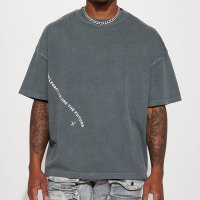
Unlike traditional fashion or fast fashion brands, the core value of streetwear lies in its cultural attributes and sense of community belonging. Consumers are not just buying a piece of clothing; they are buying an expression of identity and a sense of belonging to a certain subculture. This requires products to achieve an extreme level of authenticity and credibility in their details. The structured feel of a heavyweight T-shirt, the cracked effect of a vintage print, a perfectly executed drop-shoulder silhouette, these are all key elements that constitute this sense of authenticity. These elements pose challenges to manufacturing processes that far exceed those of conventional apparel production.
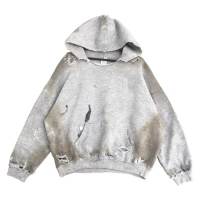
For example, a 350GSM heavyweight pure cotton T-shirt has far higher requirements for sewing equipment, needle and thread strength, and cutting precision than an ordinary T-shirt. Manufacturers not only need to possess hardware capable of handling heavy fabrics but must also deeply understand the physical properties of these fabrics to ensure that the garment does not easily deform after prolonged wear and washing. Similarly, achieving a realistic vintage wash effect requires a deep mastery of multiple chemical and physical treatment methods and the ability to precisely control variables to achieve the intended fading, abrasion, and aged appearance. This is an art that combines experience and science, something that ordinary garment factories simply cannot master through simple imitation.
Therefore, for an established streetwear brand, evaluating a China T-shirt manufacturer has long surpassed the examination of their quotes, geographical location, or basic equipment lists. The brand must delve into the core of their production system to scrutinize whether they truly understand and can master the complexities of streetwear manufacturing. This concerns whether the brand can continue to maintain its unique identity and high standards on the path to scaling. This is no longer an operational-level procurement decision, but a strategic choice that determines whether the brand can move from success to excellence.
Defining Excellence: The Seven Core Capabilities Established Streetwear Brands Must Evaluate When Vetting China T-Shirt Manufacturers
When a streetwear brand enters a phase of scalable growth, its evaluation criteria for manufacturers must shift from superficial considerations of cost and speed to an in-depth examination of structural capabilities. Whether a manufacturer can become a true strategic partner depends on whether they have reached specific thresholds in both the hard power and soft power of their production systems. These capabilities together form a powerful system capable of mastering the complexities of streetwear manufacturing, ensuring that the consistency, quality, and cultural authenticity of the brand's products are not diluted during expansion. The following are the seven core capabilities that brands must rigorously evaluate during the vetting process; they are the key watershed that distinguishes ordinary contract manufacturers from strategic-level manufacturers.
1. Mastery of Heavyweight Fabrics and Supply Chain Control
Streetwear, especially T-shirts and hoodies, relies heavily on fabric weight for its texture and silhouette. Using heavyweight cotton fabrics of 280GSM, 350GSM, or even over 400GSM is an industry norm. However, mastering heavyweight fabrics is no easy feat. It requires manufacturers to possess capabilities at several levels:
2. Standardization and Artistic Execution of Complex Wash Processes
The vintage aesthetic is at the core of streetwear. Whether it is the random mottling of acid wash, the natural abrasion of stone wash, or the soft tones of garment dye, the realization of these effects is highly dependent on wash processes. An excellent manufacturer must place this seemingly artistic process under strict scientific control.
3. Precision Execution of Digital Pattern Making and Automated Cutting
The fit of streetwear, such as Oversized, Boxy, or Drop Shoulder, is the soul of its style. These seemingly simple silhouettes have extremely high demands for fit precision; any minor deviation can ruin the overall wearing effect. In scaled production, maintaining a high degree of fit consistency across tens of thousands of garments relies on modern technological means.
4. Full-Process, Multi-Node Quality Control (QC) System
Quality control should not be an isolated step after production ends, but a complete system that permeates every step from raw materials to finished goods shipment. A structurally robust QC system is the key to proactively preventing problems rather than passively discovering them.
5. Deep Understanding of Street Culture and Design Language
Technology and equipment are the foundation, but what truly makes a manufacturer stand out is their deep understanding of street culture. This soft power enables them to not just execute orders, but to participate as a creative partner for the brand.
6. Strategic Capacity Structure Supporting Rapid Response and Market Testing
In the fast-changing streetwear market, speed is the lifeline. An ideal manufacturer must possess a hybrid capability that can support both small-batch market testing and a rapid pivot to large-scale production.
7. Transparent, Reliable, and Internationally Compliant Social Responsibility
With the growing attention of global consumers and regulators on supply chain transparency and ethical production, a manufacturer's compliance has become a non-technical hard criterion for brands when selecting partners.
In summary, for an established streetwear brand, the process of selecting a China T-shirt manufacturer is an in-depth due diligence exercise centered on these seven core capabilities. This requires brands to transcend traditional procurement thinking and, from the height of building a long-term strategic partnership, seek out manufacturers that are not only able to meet current needs but can also support future growth through structural alignment.
How to Distinguish and Select the Right Type of T-Shirt Manufacturer in the Vast Landscape of China's Manufacturing Industry?
China's manufacturing ecosystem is vast and complex, offering global brands a seemingly endless array of choices. However, for an established streetwear brand, this diversity is both an opportunity and a trap. The wrong choice will not only lead to a waste of money and time but may also damage the core value of the brand. Therefore, brand decision-makers must possess clear discernment, understand the essential differences between different types of manufacturers, and make the right judgment based on their own strategic needs. In China, T-shirt manufacturers can be roughly divided into three categories: General Apparel Factories, Trading Companies and Sourcing Agents, and Specialized Vertical Manufacturers. They have fundamental differences in capabilities, service models, and strategic value.
1. General Apparel Factories
This is the most common type in China's manufacturing industry. These factories typically have large-scale production lines and can produce various basic styles of apparel at extremely competitive prices, from simple T-shirts to jackets and pants. They are the primary suppliers for global fast fashion and mass-market brands.
Core Advantages: Their operational model is entirely optimized for efficiency and cost control. Through large-scale procurement of raw materials and highly standardized assembly line operations, they can offer extremely low unit production costs. The capacity of these factories is usually enormous, easily handling orders of hundreds of thousands or even millions of pieces.
Structural Limitations: Their core competency lies in replication rather than creation. For the complex washes, heavyweight fabric handling, and special printing required by streetwear, they typically lack experience and specialized equipment. They may attempt to imitate, but the result is often similar in form but not in spirit, failing to achieve the texture and cultural authenticity that brands pursue. In a production system where pieces per hour is the core performance metric, the relentless pursuit of detail is seen as the enemy of efficiency. Details that streetwear brands consider their lifeline, such as the curve of a drop shoulder, the tension of stitching, and the texture of a print, are often viewed as unnecessary trouble by these factories. The managers and workers at these factories typically do not understand, nor do they need to understand, street culture.
For an established streetwear brand, choosing a general apparel factory is a significant strategic risk. Although their quotes may be extremely tempting, this partnership model will almost inevitably lead to compromises in product quality and a loss of brand uniqueness. They are suitable for producing basic blank T-shirts, but are absolutely not suitable for carrying a brand's creativity and soul.
2. Trading Companies and Sourcing Agents
Trading companies and sourcing agents do not own factories themselves; they play the role of connector and project manager between brands and numerous factories. They are familiar with China's manufacturing network and can help brands find suitable factories, coordinate production, manage orders, and handle logistics.
Core Advantages: They have a vast database of factory resources and can quickly match seemingly suitable producers based on brand needs (such as price, MOQ, and category). For overseas brands unfamiliar with China's business environment and language, trading companies offer great communication convenience, simplifying the complexity of order management.
Structural Limitations: There is a layer between the brand and the actual producer. This means the brand cannot directly control the production process; all information and instructions are relayed through an intermediary, which not only reduces efficiency but also increases the risk of information distortion and misunderstanding. Trading companies need to add their own profit margin on top of the factory's quote, which means the final cost is usually higher than working directly with a factory. The core goal of a trading company is to complete orders and earn commissions, not to build a long-term strategic partnership with the brand. Although many trading company employees are familiar with foreign trade processes, they rarely possess deep manufacturing craft knowledge.
For startup brands or when making small-batch purchases, trading companies can be a convenient choice. But for established streetwear brands seeking to build a stable, transparent, and controllable supply chain, this indirect partnership model harbors significant long-term risks.
3. Specialized Vertical Manufacturers
This type of manufacturer is the expert in the manufacturing ecosystem. Unlike general factories that pursue breadth of categories, they choose to deeply cultivate a specific, high-value-added field. In the apparel industry, this means they focus on a specific style, such as high-end womenswear, outdoor functional wear, or streetwear.
Core Advantages: They are not just manufacturers but researchers in their field. They deeply understand the history, culture, and aesthetics of streetwear and integrate this understanding into every aspect of their production system. They know how to achieve the most authentic vintage effects and how to create the most perfect oversized silhouette. To ensure absolute control over quality and craftsmanship, these manufacturers typically keep core, high-tech processes (such as pattern making, washing, printing, and embroidery) under internal management. This integrated structure (Vertical Integration) greatly reduces dependence on external suppliers, ensuring smooth production processes and unified quality standards. Their goal is to build a long-term, mutually growing partnership with brands. They deeply tie their success to the success of their clients.
Considerations to Note: Due to their specialization and limited capacity, these manufacturers typically have higher requirements for partner brands. They tend to work with established brands that have proven market potential, a clear brand vision, and stable order volumes. Their quotes are usually higher than those of general factories because they include their significant investment in professional knowledge, research and development, equipment, and quality control systems. However, for established brands, this premium is an insurance for product quality, delivery reliability, and brand reputation; it is a strategic investment rather than a simple cost expenditure.
For an established streetwear brand aspiring to build an industry-leading position, partnering with a specialized vertical manufacturer is almost the only correct choice. This is not just about producing a T-shirt; it is about ensuring that the brand's creativity and standards can be faithfully and precisely executed during the scaling process. Within this framework, some manufacturers, through their unique operational structures, demonstrate a high degree of strategic alignment with growing brands. For instance, a manufacturer like Groovecolor, by integrating digitized pattern development, internally controlled wash processes, and batch-level quality locking mechanisms, has a structure that is inherently suited to support brands' needs at this growth stage. This structural alignment transcends simple quote comparisons, providing brands with a deeper, more dependable certainty.
Manufacturer Type Comparison: A Strategic Selection Framework
To help brand decision-makers more intuitively understand the differences between different types of manufacturers, the following table compares them across multiple key dimensions. This framework aims to reveal why, for an established streetwear brand pursuing long-term growth and brand value, investing in a partnership with a specialized vertical manufacturer is a wiser strategic choice than pursuing short-term cost savings.
This table clearly reveals a core point: the choice of manufacturer is essentially a choice of brand strategy. Is it to choose short-term cost advantages, or to choose long-term quality assurance and continuous growth of brand value? For a brand that has already positioned itself as high-end and high-quality streetwear, the answer is self-evident. Partnering with a professional manufacturer who deeply understands your field and possesses the corresponding structural capabilities is the cornerstone of ensuring your brand remains invincible in fierce market competition.
A Practical Manual: A 5-Step Due Diligence Checklist for Vetting China T-Shirt Manufacturers
Theory and frameworks are the foundation for decision-making, but the final judgment comes from in-depth, meticulous on-site vetting. For decision-makers at established streetwear brands, conducting due diligence on potential manufacturers, either in person or through a trusted team, is an indispensable key step. This process is not only about verifying the authenticity of a manufacturer's verbal promises but is also an opportunity to comprehensively assess whether their structural capabilities align with the brand's long-term development strategy. The following is a 5-step due diligence checklist designed specifically for streetwear brands, which will guide you beyond the surface to the core.
Step 1: Tech Pack Stress Test - Assessing Their Understanding and Professional Feedback
Do not send a flawless, unchallenging tech pack. Instead, prepare a tech pack that deliberately contains challenging details to test the manufacturer's response.
Test Content:
Evaluation Points:
This stress test can quickly filter out manufacturers who lack professional depth and the willingness to solve problems.
Step 2: Sample Development Process Review - Observing Their Process Control and Communication Transparency
Sample development is not just about looking at the final result; it is a window into their internal process management and communication mechanisms.
Review Content:
Evaluation Points:
A manufacturer whose process is chaotic and communication is poor during the sample stage will almost certainly cause disasters in bulk production.
Step 3: Factory On-Site Inspection - Going Deep into the Production Line to Verify Their Hard Power
If conditions permit, nothing reveals the truth better than visiting the factory in person. If you cannot visit in person, you should commission a trusted third party to conduct a detailed video inspection.
Inspection Checklist:
Step 4: Tracing a Complete Production Process - From Order to Shipment
Select a recently completed order similar to your product (while protecting their client's privacy) and ask them to walk through the entire production process.
Tracing Content:
This process allows you to clearly see whether their management system is merely on paper or has been truly implemented in every detail of daily operations.
Step 5: Small-Batch Trial Order - The Ultimate Real-World Test
After completing all the above due diligence, if the manufacturer looks like a suitable partner, do not immediately place a large order. First, conduct a small-batch trial order (for example, 2-3 styles, 100-200 pieces per style).
Inspection Points:
This trial order is a dress rehearsal for your future long-term partnership. If this rehearsal is successful, then you have full confidence to entrust larger-scale production tasks to them.
Through this rigorous, multi-dimensional due diligence process, brands can minimize the risk of choosing the wrong manufacturer and find the right partner who can not only produce high-quality products but also act as a strategic ally to jointly face market challenges and share the dividends of growth.
It is worth emphasizing that the entire due diligence process should be viewed as a two-way evaluation. While you are assessing the manufacturer, they are also evaluating whether your brand is a suitable long-term partner. A truly excellent specialized manufacturer will be selective about their clients because they understand that a mismatched partnership can be detrimental to both parties. They look for brands that have a clear vision, a commitment to quality, realistic expectations, and the potential for sustained growth. This mutual selection process is actually a positive signal; it indicates that the manufacturer values the quality of their partnerships over short-term revenue, which aligns perfectly with the long-term strategic interests of established brands.
Furthermore, the due diligence process should not be seen as a one-time event but as the foundation for an ongoing relationship. The insights you gain during this process will inform how you structure your partnership, set expectations, and establish communication protocols. The questions you ask, the challenges you present, and the way you interact during vetting will set the tone for your future collaboration. Approach it with the mindset of building a relationship, not just evaluating a vendor, and you will be far more likely to find a partner who is genuinely invested in your success.
The investment of time and resources in thorough due diligence pays dividends that far exceed the initial effort. Brands that skip this process or conduct only superficial evaluations often find themselves trapped in problematic partnerships that consume far more time, money, and energy to resolve than a proper vetting process would have required. In contrast, brands that invest in finding the right partner from the start enjoy smoother production cycles, more consistent quality, and the peace of mind that comes from knowing their supply chain is a source of strength rather than vulnerability.
Conclusion: Beyond Transactions, Building a Manufacturing Partnership That Grows with the Brand
For an established streetwear brand that has navigated through market uncertainty and secured a place in the hearts of consumers, supply chain decisions are no longer a simple arithmetic problem about cost, but a strategic layout about the future. In China, the center of global manufacturing, the process of selecting a T-shirt manufacturer is a profound reflection on the brand's own positioning, values, and long-term vision. It forces decision-makers to answer a fundamental question: Are you seeking merely an order executor, or a strategic ally who can understand your brand's soul and grow alongside you?
In this guide, we have thoroughly analyzed why the cost temptation of general apparel factories and the communication convenience of trading companies are both short-termist traps for streetwear brands pursuing excellence. They are structurally unable to meet the brand's stringent requirements for craft depth, fit consistency, and cultural authenticity during the scaling process. The true answer points to those specialized manufacturers who deeply cultivate the streetwear vertical, integrating cultural understanding with exquisite craftsmanship.
These manufacturers can become strategic partners because they have built an anti-fragile production system. Through their mastery of heavyweight fabrics, standardized control of complex wash processes, investment in digital pattern making and automated cutting, and a quality control system that permeates the entire process, they minimize uncertainty in the production process. They are not just manufacturing products; they are safeguarding the brand's value promise.
More importantly, they offer a partnership that transcends transactions. They can understand the creative language of designers, provide professional and constructive advice on process implementation paths, offer strategic flexible support when brands conduct market testing, and rapidly switch to scaled production when the market explodes. This collaboration, based on deep understanding and shared goals, is key for brands to remain agile and resilient in a rapidly changing market.
Therefore, the next time you vet a potential China T-shirt manufacturer, keep our 5-step due diligence checklist in your toolkit. Do not be misled by superficial quotes. Conduct a tech pack stress test, deeply observe the sample development process, inspect every detail on the production line in person, and engage in dialogue with the craftsmen and managers who truly shape your product. Ultimately, your decision will no longer be based on a cold spreadsheet, but on a comprehensive, deep insight into a potential partner's hard power and soft power.
Choosing the right manufacturing structure for your brand is one of the most important decisions you can make as a brand leader. It concerns not just the success or failure of next season's products, but whether the brand can continue to grow sustainably, healthily, and with high quality over the next decade. This is not a one-time procurement task, but the beginning of a long journey to build a manufacturing partnership that is symbiotic and mutually prosperous with the brand.
Frequently Asked Questions
We are a growing brand, and our order volume is not yet huge. Is it suitable for us to partner with a specialized manufacturer like Groovecolor?
This is a very core question. For specialized manufacturers in vertical fields, when evaluating potential partners, they place more importance on the brand's growth potential and quality positioning rather than the current order volume. The strategic flexible minimum order quantities offered by manufacturers like Groovecolor (such as 50-100 pieces per color) are specifically designed to support growing brands that have validated their market, have a clear brand direction, and are committed to high-quality products for market testing and product line expansion. The starting point for this kind of partnership is not about being big, but about being precise and targeted. If you have extremely high requirements for product quality, craft details, and long-term brand value, then establishing contact with a specialized manufacturer early and jointly planning a growth path will be a highly visionary strategic decision.
When working with Chinese manufacturers, our biggest concern is communication barriers and cultural differences. How can we effectively overcome them?
Communication efficiency and cultural understanding are indeed key to cross-border collaboration. The core of solving this problem lies in choosing the right partner. A top-tier specialized manufacturer's team (especially the sales and project management teams) typically possesses fluent English communication skills and extensive experience in serving international clients. More importantly, they deeply understand the culture and design language of global streetwear, enabling them to transcend language itself and accurately capture your creative intent. During the vetting phase, you can assess their team's communication skills and professionalism through tech pack stress tests and in-depth conversations. A manufacturer who can speak your industry language and provide professional advice will greatly eliminate communication and cultural barriers.
How can we ensure that the quality of bulk production meets the standard of our confirmed samples?
This is the most core challenge in scaled production. Ensuring consistency between bulk and samples relies on a systematic, quantifiable quality control system, not the conscientiousness of individual workers. A reliable manufacturer must achieve the following: 1) Digitized Standard Transfer: All sample patterns, process parameters, and color standards are digitally archived and serve as the sole instruction for bulk production. 2) Full-Process Quality Monitoring: From incoming raw material inspection (IQC), in-process inspection (IPQC), to finished goods full inspection (FQC), clear inspection standards and processes are established at every stage to proactively identify and resolve issues. 3) Internal Control of Key Processes: Key processes that most affect quality, such as pattern making, cutting, and washing, are kept under internal management to avoid the loss of control that comes with outsourcing. 4) Transparent and Traceable: All production and inspection records should be available for client review, achieving complete process transparency. When vetting manufacturers, be sure to deeply examine the actual operation of their QC system.
If our designs involve some very novel or experimental processes, can the manufacturer support research and development?
This is precisely the key point that distinguishes an ordinary factory from a strategic partner. A general factory might refuse outright because they have never done it before. However, a specialized manufacturer in a vertical field typically views R&D capability as one of its core competencies. They have dedicated sample development teams and process R&D departments and are happy to explore new possibilities with brands. They will use their professional knowledge and experience to evaluate the implementation path, potential risks, and approximate costs of new processes, and conduct small-batch experiments and adjustments with you. This collaborative R&D capability is an important support for brands to continuously launch innovative products and maintain a market-leading position. When selecting a partner, you can ask if they have successful cases of supporting clients in new process R&D in the past.