What Counts as "Real" Cut-and-Sew in the UK—and Which Factory Type Fits Your Streetwear Program?
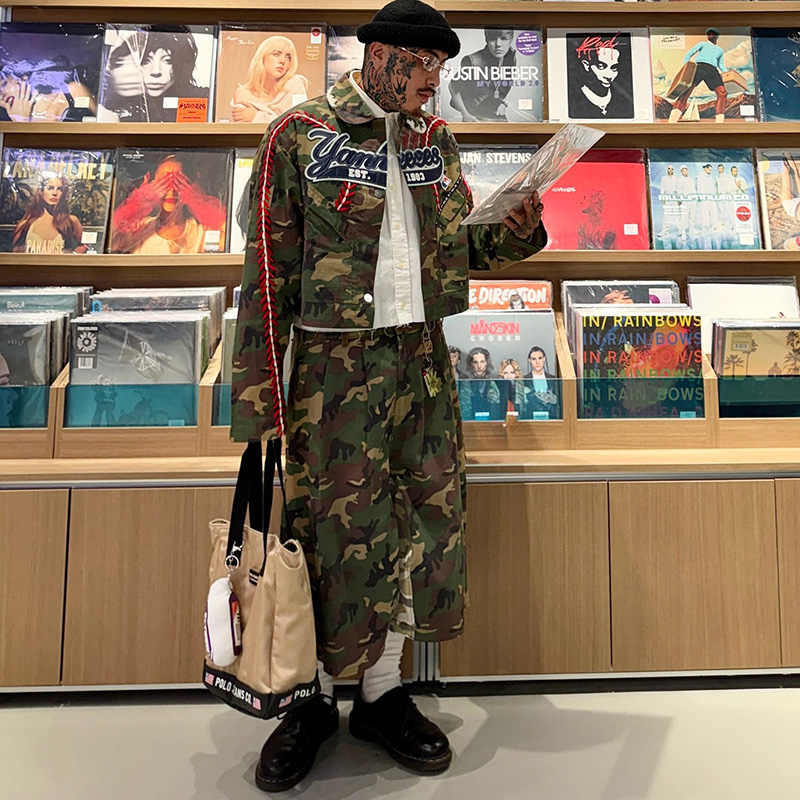
For growth-focused streetwear brands, the term "cut-and-sew" signifies more than a production method; it represents a strategic commitment to quality, control, and brand identity. It’s the fundamental dividing line between decorating pre-made blanks and architecting a garment from the pattern up, ensuring every detail—from the specific GSM of the French terry to the precise angle of a drop shoulder—is an intentional brand statement. Yet, the search for 'UK custom clothing' often plunges brands into a confusing landscape populated by decorators, opaque brokers, and true manufacturing partners. This ambiguity poses a significant risk to brands whose value is intrinsically tied to the uniqueness and quality of their product.
This article provides a clear, actionable sourcing system for 2026, designed to equip your brand with the decision logic to vet British clothing manufacturers, understand the deep nuances of their capabilities, and ultimately build a supply chain that protects and enhances quality at scale. We will dissect the critical verification signals, compare production models, and explore sophisticated hybrid strategies to help you forge a partnership that delivers unwavering consistency from the first sample to the final bulk production run.
Key Takeaways for Streetwear Brands
- ▸ Mastering the distinction between true cut-and-sew manufacturers and brokers is critical for ensuring production control, intellectual property security, and consistent quality in the UK market.
- ▸ Choosing between CMT (Cut, Make, Trim) and FPP (Full Package Production) is a strategic decision that depends on your brand’s in-house expertise, sourcing capabilities, and desire for control over the supply chain.
- ▸ A hybrid sourcing model, combining UK-based development for speed and creative control with offshore bulk production for scale and cost-efficiency, offers a powerful strategy for established streetwear brands.
- ▸ Verifiable proof of a manufacturer's capabilities—such as in-house pattern masters, automated cutting systems, and documented QC checkpoints—is more valuable than marketing claims for predicting bulk production success.
How can you verify a British clothing manufacturer is truly cut-and-sew—not a broker or decoration service?
Verifying a genuine cut-and-sew manufacturer requires moving beyond marketing claims to assess their operational infrastructure, including in-house pattern ownership, dedicated cutting and sewing facilities, and documented quality control systems. This due diligence is crucial for streetwear brands to mitigate risks of inconsistent quality, production delays, and intellectual property loss associated with brokers or decoration-only services.
The British apparel landscape, while rich with heritage and skill, can be challenging to navigate. Many businesses market themselves as 'UK custom clothing' providers, but their operational models vary drastically. For a streetwear brand focused on building a unique identity through custom silhouettes and consistent quality, the distinction between a true cut-and-sew manufacturer and other service providers is paramount. A decoration service excels at applying graphics to pre-made garments (blanks), offering speed for simple merchandise but no control over the garment's fit, fabric, or construction.
A broker, on the other hand, acts as an intermediary, outsourcing production to a network of factories. While potentially offering access, this model introduces layers of communication, adds margin, and often obscures the true origin and quality control standards of your production. Relying on such fragmented chains can lead to significant sample-to-bulk deviations, a critical failure point for brands whose reputation rests on the precise execution of a heavyweight hoodie's drop shoulder or a t-shirt's boxy fit. This is not a minor detail; it is the core of the brand's value proposition. A 1cm difference in the width of a neckline rib, or a slight change in the fabric's hand-feel, can be the difference between a cult product and a discounted failure.
True cut-and-sew capability means the facility has end-to-end control over the garment's creation, from pattern to finished product. This integrated workflow is the only way to guarantee that the technical and aesthetic details that define your brand are executed repeatably at scale. Verification, therefore, is not about asking if they 'do' cut-and-sew; it's about seeking tangible proof of the infrastructure that enables it. With the UK fashion and textile industry supporting 1.3 million jobs and contributing £62bn to the economy, the ecosystem is complex, comprising thousands of businesses, including 8,245 registered manufacturers as of 2020. Your task is to identify the genuine production partners within this ecosystem.
This requires a forensic approach to due diligence, looking for concrete evidence of a vertically integrated production process. A true manufacturer will be able to walk you through their entire workflow, from the arrival of a fabric roll to the final packing of a finished garment, and they will have the documentation to back it up.
Key Verification Signals for True Cut-and-Sew Partners
Operational Infrastructure
Documentation and Process
Ultimately, a manufacturer's willingness to be transparent about their in-house cutting and sewing processes is the strongest indicator of their legitimacy. A partner proud of their factory will welcome a tour and openly discuss their machinery, team structure, and quality systems. Conversely, a broker or decorator will often deflect such requests, offering excuses about 'partner confidentiality' or focusing the conversation solely on price and finished products. For a brand aiming to scale, investing the time in this initial verification is the most critical step in building a resilient and reliable British supply chain. It is the difference between building your brand on a solid foundation of quality and control, or on the risky and unpredictable ground of an opaque and fragmented supply chain.
Should your brand choose CMT or full-package cut-and-sew in the UK?
The choice between CMT (Cut, Make, Trim) and FPP (Full Package Production) is a strategic decision based on a brand's internal expertise, control requirements, and supply chain maturity. CMT offers greater control over raw materials but demands significant sourcing and logistics management from the brand, while FPP offloads this complexity to the manufacturer, providing a streamlined, albeit less flexible, solution.
Once you have identified a genuine cut-and-sew manufacturer in the UK, the next critical decision is selecting the right production model. This choice fundamentally defines the apparel production responsibility split and dictates your team's day-to-day involvement. In a **CMT** model, the brand is responsible for sourcing, purchasing, and delivering all raw materials—fabric, threads, labels, buttons, and zippers—to the factory. The manufacturer's role is strictly to execute the production: cutting the fabric, sewing the garments, and trimming them for finishing. This fabric-led sourcing approach gives the brand maximum control over quality and cost of inputs, but it requires a sophisticated in-house team to manage procurement, logistics, and supplier relationships. The brand effectively becomes the supply chain manager, orchestrating the movement of goods from multiple suppliers to the factory gate. This can be a significant undertaking, requiring expertise in fabric sourcing, quality assurance, and logistics.
Conversely, **Full Package Production (FPP)** is a factory-led sourcing model where the manufacturer manages the entire supply chain. The brand provides the tech pack and design specifications, and the factory handles everything else, from sourcing the fabric and trims to manufacturing and delivering the finished, packaged goods. This turnkey solution is ideal for brands that want to focus on design and marketing, offloading the operational complexities of production. However, this convenience comes at the cost of reduced control over material suppliers and potentially less transparency into the cost breakdown of raw materials. The choice between CMT vs full-package manufacturing is therefore not about which is 'better,' but which aligns with your brand's strategic priorities. A brand must honestly assess its own capabilities and resources before making this decision. A mistake here can lead to significant operational headaches and financial losses.
For many growth-focused streetwear brands, a phased approach can be effective. A brand might start with an FPP model to launch quickly and test the market, leveraging the manufacturer's expertise. As the brand scales and develops its own in-house production knowledge, it may transition to a CMT model for core products to gain greater margin control and supply chain ownership.
When evaluating UK custom clothing manufacturers, it is essential to ask which models they offer and how they structure the collaboration for each. A flexible partner who can support both models may be invaluable as your brand evolves. It is also important to note that some factories may specialize in one model over the other. A factory that is primarily a CMT provider may not have the sourcing expertise to offer a competitive FPP service, and vice versa. A brand should seek a partner whose core competencies align with their own strategic needs.
What do best UK clothing manufacturers actually do differently in cut-and-sew production?
The best UK clothing manufacturers differentiate themselves not by marketing claims, but through demonstrable systems for ensuring sample-to-bulk consistency, tight tolerance control, and production repeatability. They invest in a robust apparel quality control system, transparent communication, and the technical expertise to translate a brand's creative vision into a scalable, high-quality final product without deviation.
In the world of apparel sourcing, the term "best" is often subjective and overused. For a streetwear brand, however, the best UK clothing manufacturers are defined by a single, non-negotiable outcome: the ability to perfectly replicate an approved sample across a bulk production run of hundreds or thousands of units. This is where many factories falter. A beautiful sample is one thing; maintaining that same quality, fit, and feel across an entire order is a different level of operational discipline. The top-tier manufacturers achieve this through a combination of technology, process, and culture. It begins with an almost obsessive focus on the pre-production phase, ensuring that every detail in the tech pack is validated and that any potential for ambiguity is eliminated before the first piece of bulk fabric is cut. This meticulous attention to detail is what separates the true professionals from the rest.
This commitment to **sample-to-bulk consistency** is underpinned by rigorous process control. For example, a leading manufacturer will have digitized patterns that are fed into automated cutting machines, eliminating the human error that can lead to size variations in manual cutting. They will maintain detailed records of sewing machine settings, thread tensions, and stitch densities for each specific fabric, ensuring that the construction of garment #1,000 is identical to garment #1. Furthermore, their quality control is not a final-step inspection but an integrated part of the production line. QC staff will be present at critical stages—such as after sewing, after washing, and after printing—to catch deviations early and prevent them from cascading into larger problems. This proactive approach to quality is a hallmark of the best manufacturers and is a stark contrast to factories that only perform a cursory check of finished goods. They understand that quality is built into the process, not inspected in at the end.
Differentiators of Top-Tier UK Manufacturers
Process and Technology
Quality and Compliance
Partnership and Communication
Ultimately, what sets the top clothing manufacturers in the UK apart is a culture of engineering and precision applied to apparel. They treat garment making as a technical discipline, not just a craft. They understand that for a streetwear brand, the specific drape of a hoodie or the exact width of a neckline rib is not a minor detail but a core part of the brand's DNA. Their value lies in their ability to protect that DNA at scale. When vetting a potential partner, brands should therefore focus their questions on these systems of repeatability and control. Ask to see their QC reports, ask how they manage pattern versions, and ask how they ensure color consistency across different fabric lots. The answers to these questions will reveal far more about their capabilities than any marketing brochure. A great manufacturer is a partner in your brand's success, not just a supplier of goods.
Which product categories are UK cut-and-sew factories genuinely strong at—and where do brands hit limits?
UK cut-and-sew factories demonstrate exceptional strength in categories requiring high-quality tailoring, heritage fabrics like wool and jersey, and products with a lower tolerance for error, such as structured outerwear and premium essentials. However, brands may hit limits with highly complex, multi-process garments (like heavily washed or embellished streetwear) and in achieving the cost-efficiencies required for entry-level price points due to higher domestic labor costs.
Understanding the specific strengths and limitations of the UK manufacturing landscape is crucial for strategic sourcing. The UK’s manufacturing heritage provides a deep well of expertise in certain product categories. Historically, the nation has excelled in producing high-quality woolens, tailored goods, and classic jersey wear. This legacy translates into a modern-day advantage for brands focused on premium essentials. British factories are often masters of construction, making them an excellent choice for products where fit, structure, and durability are paramount. This includes categories like structured coats, classic sweatshirts, high-quality T-shirts, and tailored trousers. The emphasis on quality over sheer volume makes nearshore apparel production in the UK a strong proposition for brands occupying the mid-to-premium segment of the market. This is where the UK's manufacturing prowess truly shines.
However, it is equally important to recognize the constraints. While UK factories possess the skills for complex sewing, they may not have the same integrated, large-scale infrastructure for specialized streetwear treatments that are common in dedicated offshore hubs. For instance, complex garment-dyeing, acid-washing, or heavy, multi-layered embroidery and printing programs can be more challenging and costly to execute at scale in the UK. The supply chain for these specialized processes is less concentrated than in regions like China or Portugal.
Furthermore, the higher labor costs in the UK mean that producing more basic, price-sensitive items can be commercially unviable for brands competing on volume. A realistic assessment of this category-specific production capability is essential to avoid costly mismatches between your product and the production environment. A brand that tries to produce a low-cost, high-volume basic t-shirt in the UK is likely to be disappointed with the price, while a brand that tries to produce a highly complex, multi-process garment may be disappointed with the lead times and capabilities.
For streetwear brands, this means a strategic approach to allocation is key. A brand might leverage a British clothing manufacturer for its core collection of premium hoodies and jackets, where quality of construction is the primary value driver. For a capsule collection of heavily washed, graphic-intensive T-shirts, the brand might look to a specialized factory offshore that has the dedicated infrastructure to execute those processes efficiently and at scale. The smartest sourcing strategies are not about choosing one country over another, but about building a blended portfolio of partners, each chosen for their specific, category-level expertise. This allows a brand to optimize for quality, cost, and capability across its entire product range.
What must be ready before contacting a UK cut-and-sew factory for accurate pricing?
For accurate pricing from a UK cut-and-sew factory, a brand must provide a comprehensive and finalized tech pack. This document must include detailed flat drawings, precise measurements and grade rules, a complete Bill of Materials (BOM), and clear construction details, as this production specification clarity is the foundation for accurate garment costing.
Approaching a UK custom clothing factory without a detailed plan is one of the most common and costly mistakes a brand can make. The idea of "quote shopping" with a vague concept or a mood board is ineffective and signals a lack of professionalism to serious manufacturing partners. Accurate pricing is not a guess; it is a calculation based on specific inputs: labor time, material consumption, and process complexity. Without clear instructions, a factory cannot provide a meaningful quote, and any number given will be a rough estimate at best, subject to significant change once the details are defined. The key to unlocking an accurate quote lies in demonstrating **tech pack readiness**. This is the professional standard in the apparel industry, and it is a non-negotiable requirement for any serious manufacturing engagement.
A professional tech pack is the universal language of apparel production. It is the blueprint that translates your design vision into a set of actionable instructions for the factory. A factory manager uses this document to calculate the amount of fabric needed (the yield), estimate the time required for cutting and sewing (the Standard Minute Value or SMV), and identify any special machinery or skills required. For example, the difference in labor cost between a simple t-shirt and one with complex paneling and topstitching is significant. A detailed tech pack allows the factory to quantify this difference. Brands that invest in creating a thorough tech pack not only receive more accurate quotes but also establish a foundation for a smoother sampling and production process, minimizing errors and misunderstandings down the line. It is the single most important document in the entire production process.
Essential Components of a Quote-Ready Tech Pack
Technical Specifications
Material and Construction Details
Presenting a cut and sew manufacturer in the UK with this level of production specification clarity demonstrates that your brand is serious and understands the manufacturing process. It shifts the conversation from a hypothetical discussion to a practical negotiation. It allows the factory to engage as a true partner, offering their expertise to refine details for better manufacturability or cost-efficiency, rather than trying to guess your intentions. In short, a well-prepared tech pack is the single most important tool a brand has for achieving accurate garment costing and building a successful manufacturing relationship. Without it, you are simply not ready to engage with a professional manufacturer.
Are UK cut-and-sew lead times really faster—or just faster at sampling?
UK cut-and-sew manufacturers are typically faster in the sampling phase due to proximity, but their bulk production lead times can be comparable to or even longer than efficient offshore factories, especially if they have smaller capacities or rely on imported raw materials. A brand must analyze the complete apparel production lead time, from material sourcing to final delivery, to make an accurate comparison.
One of the most common arguments for nearshoring production to the UK is the promise of speed. The ability to avoid long sea freight times and communicate in the same time zone is undeniably attractive. For the initial sampling and development phase, this advantage is very real. A UK factory can often turn around a first prototype in 4-8 weeks, and subsequent revisions can be made quickly. This rapid iteration is invaluable for refining a design and getting it perfect before committing to bulk. However, brands must be careful not to extrapolate this sampling speed to the entire production timeline. The dynamics of **sampling vs bulk scheduling** are fundamentally different. A sample room is a flexible, low-volume environment; a production line is a high-volume, tightly scheduled machine.
Bulk production introduces a new set of variables that can extend the timeline. A typical first order with a UK manufacturer can take anywhere from 8 to 12 weeks after the sample is approved. This is because the factory must now source bulk quantities of fabric, schedule time on their production lines (which may be booked months in advance), and manage the logistics of a much larger order. If the specified fabric or trims need to be imported from overseas, the lead time for those materials must be factored in, potentially adding several weeks to the schedule. Furthermore, many UK factories are smaller-scale operations compared to their Asian counterparts. While this can mean more personalized service, it can also mean lower production capacity and longer queues, especially during peak seasons. A factory might be able to produce 500 units in 8 weeks, but an order of 5,000 units could take significantly longer. This is a simple matter of mathematics and capacity planning.
Therefore, a critical evaluation requires a detailed breakdown of the **critical path planning** for the entire production process. While an offshore manufacturer might have a 4-6 week sea freight time, their highly integrated supply chains and massive scale might allow them to complete bulk production in just 4-5 weeks, compared to a UK factory's 8-12 weeks. In this scenario, the total time-to-warehouse could be surprisingly similar. The true speed advantage of UK manufacturing is often found in flexibility and responsiveness—the ability to place smaller, more frequent orders and react quickly to market trends—rather than in the absolute speed of a single large bulk run. Brands must look beyond the marketing promise of "fast turnaround" and ask for a detailed, stage-by-stage timeline for bulk production to make an informed sourcing decision. This is the only way to get a realistic picture of the total lead time.
How should brands evaluate the real cost structure of UK cut-and-sew manufacturing?
Brands should evaluate the cost of UK manufacturing not by the unit price alone, but through a total landed-risk model. This involves analyzing the landed cost—which includes the unit cost plus shipping, duties, and quality control overhead—and factoring in the financial impact of sourcing risks such as production errors, delays, and intellectual property theft, which are often mitigated by nearshoring.
The most common objection to manufacturing in the UK is cost. It is an undeniable fact that the apparel labour economics in Britain result in higher direct labor costs compared to major offshore hubs in Asia. However, sophisticated sourcing teams understand that the price on a quote sheet is only one component of the total cost of a garment. A true evaluation requires a shift from comparing unit cost to analyzing the **landed cost vs unit cost**. The landed cost includes the factory price plus all associated expenses required to get the product into your warehouse, such as shipping, insurance, import duties, and the cost of quality assurance personnel. While sea freight from Asia is cheap, the associated port fees, customs brokerage, and potential for delays can add up. Air freight, while fast, can be prohibitively expensive and can easily negate the lower unit cost of an offshore-produced garment. A full landed cost calculation is the only way to make an apples-to-apples comparison.
Beyond the quantifiable landed cost, a mature brand must also factor in the cost of risk. This is where the value proposition of UK manufacturing becomes clearer. What is the cost to the brand of a 5% defect rate on a 10,000-unit order from an offshore factory? What is the financial impact of a two-month shipping delay that causes you to miss a key selling season? What is the long-term brand damage from inconsistent sizing or quality? These are not hypothetical scenarios; they are common occurrences in global supply chains. Effective **sourcing risk management** involves assigning a potential cost to these risks. The proximity of a UK custom clothing factory allows for more frequent and less expensive factory visits, enabling better oversight and relationship building. Issues can be caught and resolved in person, in real-time, rather than through a chain of emails and photos across time zones. This heightened level of control significantly reduces the risk of costly errors and delays, providing a form of financial insurance that is not reflected in the unit price. This is a critical and often overlooked advantage of nearshoring.
A Framework for Evaluating Total Cost
Direct & Landed Costs
Indirect & Risk-Adjusted Costs
When viewed through this total cost lens, the financial case for UK manufacturing becomes much more compelling, especially for brands in the premium streetwear space where quality and consistency are non-negotiable. The higher unit price can often be offset by lower shipping costs, zero import duties, reduced quality control overhead, and a lower probability of catastrophic production errors. For a brand that has experienced the pain of a failed offshore production run, the perceived "premium" of manufacturing with the best UK clothing manufacturers is not a cost, but an investment in predictability and brand protection. It is a strategic decision to de-risk the supply chain and protect the brand's reputation.
How can brands detect UK suppliers that outsource production behind the scenes?
Detecting hidden outsourcing requires a combination of direct questioning, physical or virtual factory verification, and analyzing a supplier's communication patterns and capacity claims. Brands must insist on production transparency and be wary of suppliers who are evasive about their in-house capabilities, refuse factory tours, or offer pricing and lead times that seem inconsistent with a UK-based operational model.
One of the most significant risks when sourcing in any market is the undisclosed use of subcontractors. A brand may believe it is working with a specific, vetted factory, only to discover later that their production was secretly passed on to another, often lower-quality, facility. This practice of **outsourced apparel manufacturing** is particularly dangerous because it severs the link between the brand and the point of production, making quality control impossible and creating a high risk of ethical non-compliance and intellectual property theft. In the UK, this often manifests as a company presenting itself as a full-service manufacturer while operating as a broker or agent. They may have a slick website and a showroom, but their core business is sales and coordination, not production. Protecting your brand requires a proactive **factory verification process**. This is not optional; it is a fundamental requirement of responsible sourcing.
The most direct method of detection is to insist on a factory visit. A genuine manufacturer will be proud to show you their facility. A broker will make excuses. If a physical visit is not feasible, a live, unedited video tour can be a powerful alternative. During the tour, you should be looking for the signs of a real factory discussed earlier: cutting tables, sewing lines, and finishing equipment. Ask to see other clients' work in production (with their permission, of course). A factory floor will be busy and organized; a broker's "facility" might just be an office and a small sample room. Pay close attention to the details. Does the address on their website match the location of the factory you are touring? Do the employees seem knowledgeable about the production process? Any inconsistencies should be considered a red flag. A brand should never be afraid to ask tough questions and demand evidence.
Communication patterns can also be revealing. When you work with a genuine manufacturer, your primary contact will often be a production manager who can answer technical questions on the spot. When you work with a broker, your contact is usually a salesperson who needs to relay your questions to the actual factory, leading to delays and potential misinterpretations. If you find that getting a straight answer to a simple technical question takes several days, it is a strong sign that you are not speaking directly to the source. Ultimately, building a supply chain on a foundation of **production transparency** is non-negotiable. A brand should never commit to a production run with a UK custom clothing manufacturer without being 100% certain of where and by whom their products are being made. The risks are simply too high.
When does it make strategic sense to keep development in the UK but move bulk production elsewhere?
A hybrid supply chain strategy—leveraging UK development for speed and creative control while using offshore partners for scalable apparel manufacturing—becomes strategically viable when a brand needs to balance innovation with cost-efficiency at scale. This model is ideal for established streetwear brands that have validated their product-market fit and now require the capacity and specialized capabilities of global manufacturing hubs to grow.
For many established streetwear brands, the sourcing decision is not a binary choice between the UK and overseas. The most sophisticated and resilient supply chains are often hybrid models that leverage the best of both worlds. The concept of a **hybrid supply chain strategy** involves using a British clothing manufacturer for the critical early stages of product development—prototyping, fit sessions, and initial sampling—and then transferring the finalized tech pack to a trusted offshore partner for cost-effective bulk production. This **UK development, overseas bulk** model allows a brand to capitalize on the speed, communication, and creative synergy of working with a local partner while accessing the scale, cost advantages, and specialized technical capabilities of a major manufacturing hub like China. This is the strategy of choice for many of the world's leading brands.
This strategy makes immense sense for brands that have moved beyond the startup phase. During the development of a new silhouette, being able to work closely with a UK pattern maker and sample room is invaluable. It allows for rapid iteration and ensures that the core fit and feel of the garment are perfected. Once this blueprint is locked in, the risk of transferring it to a large-scale offshore factory is significantly reduced. The detailed tech pack and approved pre-production sample, both developed in the UK, become the 'golden standard' that the offshore partner must replicate. This approach is particularly effective for complex streetwear, where the nuance of a silhouette is a key brand asset. However, the success of this model hinges on finding an offshore partner with a proven track record of working with Western brands and an unwavering commitment to quality control.
A streetwear manufacturer like Groovecolor, for instance, is structurally designed to support this model, with deep expertise in translating the nuanced requirements of streetwear brands into consistent, high-volume production, bridging the gap between UK design intent and global manufacturing scale. They have the systems and processes in place to ensure that the final product is a perfect match to the approved sample.
Implementing a hybrid model requires a high degree of internal organization and a meticulously detailed tech pack. The brand must act as the central point of control, ensuring that the specifications perfected in the UK are communicated flawlessly to the offshore partner. This is not a strategy for beginners, but for brands with a mature production team, it offers a powerful combination of creative agility and commercial scalability. It allows them to continue innovating and developing new ideas with the speed of a local partner, while simultaneously producing their core, validated styles at a cost and scale that the UK market simply cannot match. It is a forward-thinking approach that acknowledges the realities of the global apparel industry, building a supply chain that is both resilient and competitive. It is the future of global fashion sourcing.
What should a 2026-ready cut-and-sew manufacturer evaluation scorecard include?
A 2026-ready evaluation scorecard must move beyond price and capacity to assess a manufacturer's structural capabilities for consistency, transparency, and partnership. This cut-and-sew evaluation framework should prioritize verifiable proof of in-house capabilities, a multi-stage quality control system, clear communication protocols, and a demonstrated understanding of the specific technical and cultural demands of the streetwear market.
As the apparel industry continues to evolve, the criteria for selecting a manufacturing partner must evolve with it. A 2026-ready **apparel sourcing decision system** is less about finding the cheapest quote and more about identifying a partner that can deliver consistent quality, mitigate risk, and support scalable growth. For streetwear brands vetting British clothing manufacturers, this means adopting a formal **manufacturer vetting checklist** that scores potential partners on a range of operational and strategic dimensions. This scorecard should be a practical tool that forces an objective, evidence-based assessment, moving the decision away from subjective feelings and towards a data-driven conclusion. It is a professional tool for a professional industry.
The scorecard should be divided into several key areas. The first, **Core Capabilities**, assesses the factory's fundamental infrastructure. This goes beyond a simple 'yes/no' for cut-and-sew and delves into the specifics: Do they have in-house pattern makers? What type of cutting equipment do they use? What is their range of sewing machinery? The second area, **Quality Control Systems**, evaluates their process for ensuring consistency. This involves looking for evidence of a multi-stage QC process, documentation like QC manuals, and their AQL standards for final inspection. The third, **Production & Capacity**, examines their real-world ability to deliver, looking at their stated capacity, typical lead times for bulk production, and their experience with your specific product category. Finally, **Partnership & Transparency** scores their communication practices, their willingness to allow factory audits, and their overall approach to collaboration. By systematically scoring each potential partner against these criteria, a brand can create a clear, comparative picture of the UK manufacturing landscape and make a strategic choice that aligns with its long-term goals. This is the only way to make a truly informed decision.
Using such a scorecard transforms the sourcing process from a series of disjointed conversations into a structured, strategic analysis. It ensures that when a brand selects one of the best UK clothing manufacturers, the decision is based not on a feeling, but on a comprehensive and verifiable assessment of their ability to be a long-term growth partner. This is the foundation of a resilient, 2026-ready supply chain. It is the only way to ensure that your brand is built on a solid foundation of quality, consistency, and trust.
Your Strategic Partner for Scalable Cut-and-Sew Manufacturing
While the UK offers distinct advantages for development and premium production, scaling a global streetwear brand requires a manufacturing partner with deep expertise in high-volume, complex garment creation. Groovecolor is a leading cut-and-sew manufacturer specializing in the nuanced demands of the streetwear market.
Expertise in Complex Streetwear
We excel in the techniques that define modern streetwear, from heavyweight French terry hoodies and complex garment-dyeing to intricate embroidery and innovative printing methods. Our specialized production lines are configured for the specific needs of the streetwear aesthetic.
Seamless Hybrid Model Integration
We are the ideal partner for the "UK development, overseas bulk" strategy. Our team is skilled at taking a finalized tech pack and a golden sample, and meticulously engineering it for consistent, high-volume production without losing the designer's original intent.
Groovecolor offers a comprehensive suite of services, from fabric sourcing and custom dyeing to a wide array of decoration techniques, including:
- Acid Wash
- Garment Dyeing
- Puff Print
- Screen Printing
- Embroidery
- DTG & DTF
For brands ready to scale their production with a partner that understands the culture and the craft of streetwear, Groovecolor provides the platform to grow. Contact our experts to discuss how we can bring your vision to a global audience.