Why Multi-Color Hoodies Expose the Real Skill of a Streetwear Manufacturer?
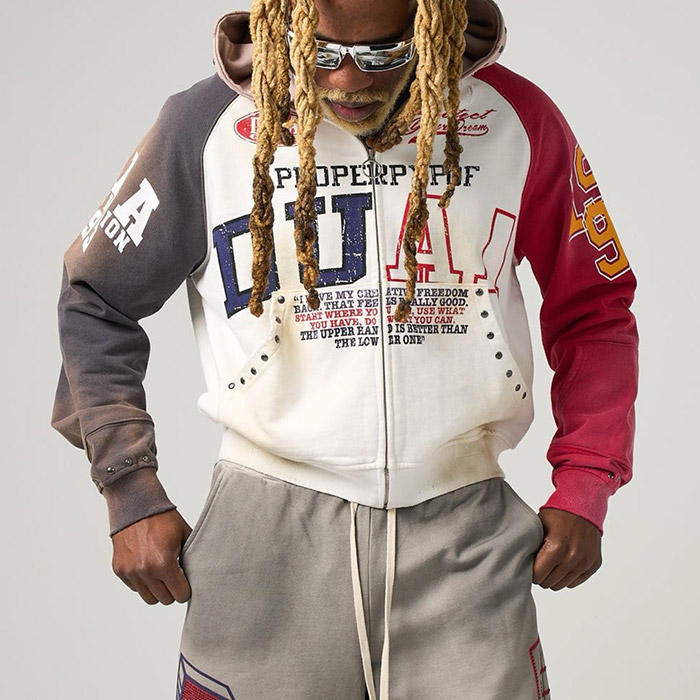
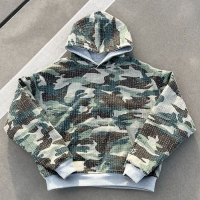
A multi-color washed oversized hoodie is one of the clearest ways to test a streetwear factory's real production ability. Unlike a basic fleece hoodie, this type of garment brings several difficult variables together at once: color-blocked panel planning, fabric shade control, garment wash reaction, oversized fit engineering, rib recovery, graphic placement, trim matching, and bulk production control. When these elements are not planned as one system, the final hoodie may lose its shape, show color migration, shrink unevenly, or fail to match the approved sample standard.
For streetwear teams searching for a multi color hoodie manufacturer, the real question is not simply whether a factory can make hoodies. The more important question is whether that factory can control color, wash, fit, decoration, and production standards at the same time. This article explains how to evaluate that capability before choosing a hoodie manufacturer for a complex streetwear program.
Key Takeaways for Established Streetwear Brands
- ▸ A multi-color hoodie should be planned as a color-placement system, not as a basic fleece hoodie with extra panels.
- ▸ Washed multi-color hoodies require shade planning, fabric testing, garment wash trials, and post-wash measurement checks before production approval.
- ▸ Oversized hoodie manufacturing depends on proportion logic, not simple size enlargement.
- ▸ The strongest factory evaluation should look at pattern records, fabric lot control, wash references, decoration sequence, trim color, and bulk inspection checkpoints.
Why Does a Multi-Color Hoodie Reveal More About a Factory Than a Basic Fleece Hoodie?
A multi-color hoodie reveals more about a factory because every production variable becomes visible: panel matching, color transfer, shrinkage, seam balance, wash depth, rib recovery, and decoration placement. A basic hoodie can hide weak planning, but a multi-color oversized washed hoodie exposes whether the factory understands streetwear as a full production system.
When a garment integrates three or more distinct colors, the complexity multiplies exponentially. It is no longer just about cutting and sewing; it is about managing the interactions between different dyed fabrics. According to the 2026 State of Fashion report by McKinsey & Company, the apparel industry faces intense pressure from rising costs and tariff turbulence, with executives prioritizing operational efficiency to protect margins [1]. In this environment, relying on a manufacturer that cannot anticipate the technical challenges of multi-color garments leads to costly rework and brand damage. If a contrast panel sits too low, the hoodie may look heavy. If the sleeve color break is placed poorly, the arm shape can look awkward. Color placement becomes an integral part of fit design.
A basic fleece hoodie might survive a poorly planned production run because the single color hides minor discrepancies in fabric tension or slight misalignments at the seams. However, when you introduce a multi-color design, the contrast between panels acts as a magnifying glass for any manufacturing flaw. If the left and right panels are not perfectly balanced, the asymmetry is immediately obvious to the consumer. If the shoulder seam placement is off by even half an inch, the entire drape of the oversized silhouette is ruined. This is where a hoodie stops being a simple sewing order and becomes a complex product-development system. The factory must demonstrate a profound understanding of how different fabrics, even of the same GSM, might stretch or shrink differently during the cutting and sewing process.
Beyond the physical construction, the chemical interactions between different colored panels present a significant hurdle. Darker dyes often require different fixing agents than lighter dyes, and when these fabrics are sewn together and subjected to garment washing or high-temperature finishing, the risk of color bleeding is immense. A manufacturer that treats a multi-color brief exactly the same as a solid-color order will inevitably encounter catastrophic failures during bulk production. The planning must extend to the molecular level of the fabric, ensuring that the chosen materials are compatible not just in weight and texture, but in their chemical stability.
This is precisely why the evaluation of a factory must shift from asking about basic capabilities to probing their risk management strategies. A factory that boasts about its speed but cannot articulate its protocol for testing color migration between contrasting panels is a liability. The true mark of a capable partner is their insistence on rigorous pre-production testing, refusing to proceed to bulk cutting until every variable—from shrinkage rates to thread tension—has been quantified and controlled. This disciplined approach is the only way to guarantee that the final product aligns with the brand's creative vision.
What Production Variables Become Visible First?
The evaluation must go beyond asking who can make hoodies. The critical decision point for procurement teams is identifying who can manage interacting design variables without flattening the garment. To verify this capability, brands should request evidence of similar executed styles, focusing on colorfastness test results. As outlined by Intertek's testing protocols, colorfastness to washing evaluates whether fabric retains color and resists staining other materials during laundering—a non-negotiable metric when different colored panels sit next to each other in one garment [2]. This naturally leads to the question of how to interpret the underlying commercial intent when searching for manufacturing partners capable of handling such complex briefs.
How Should Streetwear Teams Read the Search Intent Behind a Multi Color Hoodie Manufacturer?
The search intent behind a multi color hoodie manufacturer is commercial and technical. The buyer is usually not looking for ready-made hoodies, but for a factory that can develop custom color-blocked, washed, oversized, or high street hoodie programs with real production planning, material understanding, and visual execution.
When product developers search for an OEM hoodie development partner, they are signaling a need for a sophisticated production system. This implies a requirement for custom panel color development, color-blocked hoodie construction, and streetwear-specific fit and garment finishing. The goal is to find a partner that can provide production evidence before commitment. As noted by GQ's analysis of 2026 fashion trends, bold color blocking remains a central strategy for visual expression, moving beyond simple aesthetics into structural design choices [3]. A factory must understand that a multi-color garment is a carefully engineered product, not just a chaotic assembly of leftover fabrics.
This level of capability cannot be verified through generic supplier lists or showroom photos of basic fleece items. Sourcing managers must demand to see color panel maps and fabric lot planning documents. If a manufacturer only asks for reference photos without discussing shade band control or panel mapping, they lack the necessary infrastructure. The ability to execute a multi-panel hoodie development program separates true premium manufacturers from ordinary apparel factories. The risk is not complexity alone; it is how many variables move at the same time. For established streetwear brands, finding a partner who can navigate this complexity is the difference between a successful seasonal drop and a logistical nightmare.
Furthermore, the intent behind this search often encompasses a desire to avoid the pitfalls of the wholesale or blank apparel market. Brands looking for a multi color hoodie manufacturer are typically those with proven sales channels and a stable product calendar. They need a factory that can handle the intricacies of a tech pack, including precise Pantone matching, specific fabric compositions, and complex decoration sequences. They are not looking for a quick turnaround on a pre-existing style; they are looking for a partner capable of bringing a unique, culturally resonant vision to life.
The search intent also reflects a growing awareness of the limitations of basic cut-and-sew operations. Mature streetwear labels recognize that the execution of a multi-color design requires a factory with robust supply chain relationships. They need assurance that the factory can source high-quality trims—such as custom-dyed drawcords or precisely matched zippers—that elevate the overall garment. If the factory relies on generic, off-the-shelf components, the premium feel of the hoodie will be severely compromised. Therefore, the search for a capable manufacturer is essentially a search for a comprehensive production ecosystem.
Ultimately, the goal is to establish a long-term partnership with a facility that can act as an extension of the brand's own product development team. This requires a level of communication and technical transparency that is rarely found in factories accustomed to churning out low-cost basics. The chosen manufacturer must be able to articulate their quality control protocols clearly and provide concrete examples of how they have successfully managed similar complex projects in the past. Understanding this intent shifts the focus toward structural fit variables, particularly when dealing with oversized silhouettes that dominate the current market.
What Changes When Oversized Hoodie Becomes a Production Brief Instead of a Fit Description?
An oversized hoodie is not simply a larger hoodie. It requires a deliberate pattern system: shoulder drop, chest width, sleeve volume, body length, hood height, rib tension, and hem shape must work together. If the factory enlarges a regular hoodie without streetwear fit logic, the garment can lose proportion and retail appeal.
The transformation from a standard fit to an oversized streetwear silhouette demands precise pattern engineering. When developing OEM oversized streetwear hoodies, the factory must calculate how the shoulder drop interacts with the sleeve opening and chest width. If the rib compression is too tight on an oversized body, the garment will balloon unflatteringly. Furthermore, multi-color placement significantly affects this oversized proportion. Contrast panels can visually widen, shorten, or distort the silhouette. Therefore, color placement must be planned concurrently with the pattern, not added as an afterthought once the fit is finalized.
To mitigate risks, brands must review the factory's size grading records and oversized hoodie pattern logic. A manufacturer experienced in high street aesthetics will not merely grade up a size medium to an extra-large; they will adjust the proportions to maintain the intended drape. This structural control is essential for protecting the approved product standard. The depth of the armhole, the width of the hem, and the volume of the hood must all be carefully calibrated. If a factory treats an oversized brief as simply an instruction to use more fabric, the resulting garment will look sloppy and lack the deliberate styling that consumers expect from premium streetwear labels.
Moreover, the choice of fabric weight plays a crucial role in supporting the oversized silhouette. A 300gsm fleece will drape very differently than a 600gsm heavyweight French terry. The factory must possess the material expertise to advise on the correct GSM to achieve the desired look without compromising comfort or structural integrity. This is especially critical when combining multiple colors, as different dye lots can sometimes affect the fabric's stiffness or drape. A rigorous factory will conduct drape tests on each individual fabric lot before approving it for bulk cutting, ensuring that the final garment maintains its intended shape.
The intricacies of oversized pattern making also extend to the details, such as the construction of the hood itself. An oversized hoodie requires a hood with sufficient volume to balance the proportions of the body. If the hood is too small or lacks structure, the entire garment will look disproportionate. The factory must understand how to construct a multi-panel hood that stands up correctly, perhaps utilizing a heavier lining or specific stitching techniques to provide the necessary rigidity. These subtle engineering choices separate premium streetwear from mass-market imitations.
Finally, the execution of the ribbing on the cuffs and hem is critical for oversized styles. The tension must be perfectly calibrated to gather the excess fabric elegantly without creating a bulky, uncomfortable bunching effect. This requires precise calculation of the rib-to-body ratio, a metric that varies significantly depending on the weight and stretch of the main fabric. However, even a perfectly engineered pattern and carefully selected fabric can be ruined if the factory fails to account for the unpredictable nature of garment washing, especially when multiple colors are involved.
How Should Washed Hoodies Be Planned Before Fabric Cutting Begins?
Washed hoodie production should begin with color planning before cutting. A multi-color garment must consider fabric lot, dye uptake, wash recipe, panel placement, shrinkage, colorfastness, and post-wash appearance. The factory should not wait until after sewing to discover that one panel reacts differently under washing.
The integration of garment wash processes into multi-color designs introduces severe volatility. When evaluating washed hoodies manufacturers in China, procurement teams must verify the factory's testing protocols. Before production approval, the manufacturer must conduct fabric color response tests, evaluate colorfastness to washing, assess color transfer risks, and measure shrinkage after garment wash. The ASTM textile standards mandate rigorous testing for physical, mechanical, and chemical properties, providing a framework for evaluating how fabrics will behave under stress [4]. Without these preemptive checks, a multi-color hoodie might look excellent as a sample but suffer from severe color migration or uneven shrinkage in bulk production.
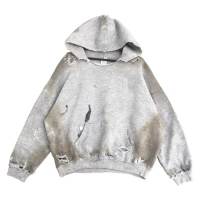
For premium streetwear, the visual mood achieved through washing is a core component of the product's value. A washed multi-color hoodie must feel intentional, not accidental. This requires the factory to maintain detailed wash references and shade bands. If the factory treats the wash merely as a superficial surface effect rather than a structural variable that impacts shrinkage and hand-feel, the final product will lack consistency. The complexity increases when dealing with specific wash types, such as acid wash, enzyme wash, or stone wash, each of which interacts uniquely with different dyes and fabric compositions.
A multi-color washed hoodie exposes whether the factory plans before production or reacts after problems appear. For example, if a dark navy panel is sewn next to a light grey panel, and the garment is then subjected to a heavy enzyme wash, the risk of the navy dye bleeding into the grey is substantial. A sophisticated manufacturer will anticipate this risk, perhaps suggesting a different dye type, a pre-wash treatment for the individual panels, or a modification to the wash recipe itself. This proactive problem-solving is what separates a reliable manufacturing partner from a mere vendor.
Furthermore, the impact of washing on the physical dimensions of the garment must be rigorously calculated. Different colored fabrics, even from the same mill, can exhibit varying rates of shrinkage due to the different chemical treatments involved in the dyeing process. If these variations are not accounted for in the pattern making stage, the final garment will suffer from puckering seams and distorted proportions. The factory must conduct extensive shrinkage testing on all fabric lots before finalizing the cutting patterns, adjusting the dimensions to ensure that the post-wash garment meets the approved specifications.
The surface texture is another critical variable affected by the wash process. Heavy washing can degrade the fabric's integrity, leading to premature pilling or a harsh hand-feel. The manufacturer must balance the desired visual effect with the need to maintain the garment's premium quality. This often involves fine-tuning the wash recipe, adjusting the temperature, duration, or chemical concentration to achieve the perfect result. This rigorous approach to wash control is a defining characteristic of manufacturers who truly understand the high street aesthetic.
What Should OEM Oversized Streetwear Hoodies Include Before Sampling Begins?
OEM oversized streetwear hoodie development should begin with a clear technical brief: silhouette target, fabric weight, panel color map, wash target, decoration sequence, trim details, measurement tolerance, and approved reference standard. Without this structure, the factory may produce a sample that looks close but cannot guide controlled bulk execution.
The foundation of successful custom crewneck and pullover streetwear sweatshirts or hoodies lies in a rigorous tech pack review. This document must go far beyond a simple sketch. It requires a detailed color panel map, explicit fabric composition and GSM specifications, defined wash targets, and precise print or embroidery placement coordinates. Crucially, the tech pack must establish the decoration sequence—whether screen print on washed fleece occurs before or after the garment wash. This sequence profoundly impacts the final visual texture and durability of the graphic.
OEM means the factory produces according to the brand’s precise specifications, not by modifying a generic finished item. Therefore, the pre-production validation phase is paramount. The factory must confirm fabric behavior, fit tolerance, and trim standards before any bulk fabric is cut. This structured approach ensures that the approved development standard becomes a reliable blueprint for mass production, significantly reducing the risk of costly deviations once volume scales up. The tech pack acts as the central contract between the brand's creative vision and the factory's production reality.
A comprehensive brief will also detail the required measurement points and the acceptable size tolerance. For an oversized hoodie, a tolerance of 1 inch on the chest width might drastically alter the intended boxy silhouette. The factory must demonstrate that they understand these tight tolerances and have the cutting and sewing discipline to adhere to them across thousands of units. Furthermore, the brief should outline the packing requirements, as the way a multi-color, washed garment is folded and shipped can affect its final surface appearance and shape upon arrival at the retail destination.
In addition to physical measurements, the tech pack must explicitly define the expected performance standards for the garment. This includes specifying the required colorfastness ratings, shrinkage limits, and pilling resistance. By establishing these metrics upfront, the brand provides the factory with clear, objective criteria for evaluating the success of the production run. This proactive approach minimizes ambiguity and ensures that both parties are aligned on the definition of quality.
Finally, the pre-production phase must include a thorough review of the proposed timeline. The factory must provide a realistic schedule that accounts for material sourcing, lab dips, wash trials, and sample iterations. A manufacturer that promises an unrealistically fast turnaround is likely planning to cut corners on these essential validation steps. Brands must prioritize partners who emphasize thorough preparation over hasty execution, as this discipline is crucial for maintaining consistency.
How Can a Factory Reduce Production Drift When Color, Wash, Fit, and Decoration Interact?
A factory reduces production drift by locking the approved reference, checking fabric lots, confirming wash references, testing decoration sequence, recording trim specifications, and measuring garments after finishing. For multi-color washed hoodies, the control point is not one inspection at the end, but a chain of checks before and during production.
Maintaining control during bulk execution requires a systemic approach to quality assurance. The best streetwear manufacturers implement multiple verified checkpoints, starting with rigorous fabric inspection and lab dip color approvals. Panel cutting reviews ensure that the color map is followed precisely, while wash and decoration trials validate the sequence established in the tech pack. Mid-production measurement checks are vital for oversized silhouettes, ensuring that the pattern stability is maintained despite the stresses of sewing and washing.
This methodology, often referred to as approved-spec execution, protects the brand from the devastating effects of batch-level variation. Furthermore, adherence to safety standards such as OEKO-TEX STANDARD 100, which tests for harmful substances from yarn to finished product, provides an additional layer of compliance and consumer trust [6]. A factory that systematically controls these variables demonstrates the discipline required for long-term manufacturing support. It is not enough to simply produce a good sample; the factory must possess the operational rhythm and quality control infrastructure to replicate that sample perfectly, hundreds or thousands of times.
Production drift often occurs when a factory substitutes materials or alters processes without consulting the brand, usually in an attempt to cut costs or speed up production. A reliable OEM partner operates with transparency, communicating any necessary adjustments and seeking approval before proceeding. They understand that a multi-color washed hoodie is a delicate ecosystem where changing one variable—such as the thread tension or the wash temperature—can have cascading effects on the final product.
To effectively combat drift, the factory must employ dedicated quality control personnel who are empowered to halt production if standards are not met. These inspectors must be trained to look beyond basic sewing defects, focusing on the specific nuances of the streetwear aesthetic, such as the exact placement of a distressed edge or the precise tone of a vintage wash. This specialized oversight is critical for maintaining the integrity of the brand's vision.
Furthermore, a robust documentation system is essential for tracking the production history of each batch. If a problem does arise, the factory must be able to trace it back to its source—whether it was a specific fabric lot, a particular sewing line, or an error in the wash recipe. This traceability allows for rapid root-cause analysis and prevents the issue from recurring in future runs. This level of operational integrity leads directly to the question of how brands can verify these capabilities before signing a contract.
What Evidence Should a Streetwear Hoodie Factory Show Before a Brand Commits?
A serious hoodie factory should show more than product photos. Streetwear teams should review similar executed styles, fabric and wash records, color references, measurement checkpoints, decoration samples, quality-control workflow, and proof that the factory understands oversized streetwear construction under production pressure.
Procurement teams must demand transparency regarding the factory's inspection checkpoints and packing standards. A facility that relies solely on a final inspection is a massive liability. Evidence of mid-production measurement checks and fabric lot verification is essential. This documentation proves that the manufacturer operates a controlled bulk production system capable of handling the volatility of streetwear programs. When reviewing these records, brands should look for detailed reports on how the factory handled discrepancies or challenges in previous runs, as this reveals their problem-solving capabilities.
Furthermore, requesting to see the factory's Standard Operating Procedures (SOPs) for handling complex techniques like acid washing or puff printing provides insight into their level of professionalization. A factory that relies on tribal knowledge rather than documented processes is far more likely to experience quality drift as production scales or personnel changes. This evidence-based approach is crucial when comparing different suppliers and moving beyond marketing claims.
Brands should also inquire about the factory's capacity planning. A manufacturer might produce a stunning sample, but if they lack the infrastructure to produce 5,000 units within a strict seasonal window, they are not a viable partner. Reviewing their historical production data and understanding their typical lead times for complex, multi-stage garments provides a realistic assessment of their ability to support a brand's growth trajectory.
Finally, evidence of compliance with international labor and environmental standards is increasingly non-negotiable for established fashion labels. Certifications such as SMETA 4P demonstrate a commitment to ethical manufacturing practices, which is essential for protecting the brand's reputation in a market that increasingly values transparency and sustainability. A factory that willingly shares its audit reports demonstrates confidence in its operations and a readiness to act as a long-term strategic partner.
How Should Procurement Teams Compare the Best Streetwear Manufacturers for This Hoodie Type?
For this hoodie type, procurement teams should compare factories by product risk, not by broad reputation alone. The best streetwear manufacturer for a multi-color washed oversized hoodie should demonstrate fit engineering, wash control, color planning, decoration sequencing, material testing, and category-specific production evidence.
When evaluating an overseas clothing production facility, the comparison must focus on how they handle specific manufacturing variables. A weak factory signal is when a supplier only asks for reference photos for multi-color planning, whereas a strong factory will immediately request a panel map and fabric color standards. Similarly, regarding wash execution, a weak factory treats the wash merely as a surface effect, while a premium manufacturer will proactively test the wash's impact on color migration, shrinkage, and hand-feel before approving the bulk run.
The decision should also factor in the factory's approach to decoration. Adding prints or embroidery only after fit approval without considering the wash sequence is a recipe for disaster. A competent manufacturer plans the decoration order in conjunction with the wash recipe and panel layout. By utilizing this risk-based comparison framework, brands can filter out general apparel factories and identify true streetwear specialists. The goal is to find a partner who anticipates the cascading effects of design decisions on the manufacturing floor.
Procurement teams should also assess the factory's communication protocols. How quickly do they flag a potential issue with a tech pack? Are they proactive in suggesting alternative techniques or materials that might yield a better result or improve manufacturability? A factory that acts as a silent order-taker is a significant risk for complex streetwear programs. The ideal partner engages in a collaborative dialogue, leveraging their manufacturing expertise to refine the brand's creative vision into a viable, scalable product.
Another critical point of comparison is the factory's ability to handle the logistics of a multi-stage production process. A multi-color washed hoodie might require fabric sourcing from one vendor, dyeing at a specialized facility, cutting and sewing in-house, and then transportation to a separate wash house before final finishing. A manufacturer with an integrated supply chain or established, reliable partnerships will be far more capable of managing these complex logistics without incurring significant delays or quality issues.
Finally, the evaluation must consider the factory's financial stability and business model. A manufacturer that relies heavily on low-margin, high-volume orders may struggle to dedicate the necessary resources and attention to detail required for premium streetwear. Conversely, a factory that specializes in complex, high-value garments will possess the infrastructure and mindset necessary to support a brand's long-term success.
Where Does Groovecolor Fit in This Multi-Color Hoodie Manufacturing Decision?
Groovecolor fits this topic as a premium OEM streetwear manufacturer for market-proven streetwear brands and menswear-focused fashion labels that need structured custom hoodie development. The relevant point is not simply that Groovecolor can make hoodies, but that its manufacturing system is built around complex streetwear execution.
For streetwear teams evaluating multi-color oversized washed hoodies, a manufacturer such as Groovecolor is relevant when the product brief depends on fabric selection, oversized pattern development, wash control, embroidery or print placement, and controlled bulk execution rather than generic hoodie sourcing. As demonstrated by Groovecolor's handling of complex streetwear outerwear and heavyweight fleece programs, their production system is designed to lock in approved specifications across multiple interacting variables. This level of control is essential for brands that cannot afford inconsistencies between their initial samples and their final retail deliveries.
Groovecolor’s own custom hoodie manufacturing capabilities reference complex details such as enzyme washes, acid washes, vintage fades, distressing, heavy embroidery, oversized cuts, raw edges, and cracked prints. This level of technical integration, supported by a stable monthly capacity of up to 300,000 pieces and adherence to SMETA 4P compliance standards, positions them as a strategic partner for brands seeking to scale without sacrificing the cultural authenticity of their garments. They understand that a streetwear brand's reputation hinges on the execution of these intricate details, and their manufacturing infrastructure is built to deliver on that promise.
The factory's approach to pre-production validation further underscores their suitability for complex projects. By insisting on rigorous fabric testing, detailed wash trials, and precise decoration sequencing before any bulk cutting occurs, Groovecolor minimizes the risk of costly errors and ensures that the final product aligns perfectly with the brand's vision. This disciplined methodology is particularly crucial for multi-color garments, where the margin for error is exceptionally narrow.
Furthermore, Groovecolor's deep understanding of the streetwear market allows them to provide valuable insights during the development process. They can advise on the optimal fabric weight to achieve a specific drape, suggest wash techniques that enhance the vintage aesthetic without compromising durability, and identify potential manufacturing challenges before they arise. This collaborative approach transforms the manufacturer from a mere supplier into a true strategic partner, capable of supporting a brand's long-term growth and success.
Frequently Asked Questions for Multi Color Hoodie Manufacturer
Why can a multi-color hoodie look good in a sample but fail after washing?
A multi-color hoodie can change after washing because different fabric panels may react differently to water, heat, chemicals, and mechanical movement. The risk is not only fading. It includes color transfer, uneven shrinkage, surface change, rib recovery issues, and decoration movement after finishing.
Should color-blocked hoodie panels be tested before cutting?
Yes. For a premium multi-color hoodie, panels should be reviewed before cutting through fabric color approval, wash testing, shrinkage checks, and color transfer review. This helps the factory understand how each color behaves before the garment is sewn and finished.
What should a tech pack include for OEM oversized streetwear hoodies?
It should include silhouette references, size chart, panel color map, fabric composition, GSM, wash target, decoration placement, trim details, rib specifications, hood structure, measurement points, and packing notes. For multi-color washed hoodies, the color map and wash target are especially important.
How do you judge whether a washed hoodie manufacturer in China understands high street streetwear?
Look for evidence of similar washed hoodie programs, oversized fit development, color planning, fabric testing, decoration sequencing, and inspection checkpoints. A strong manufacturer should explain how wash, fabric, color, and fit affect each other, not only show product photos.
Why does color placement matter on oversized hoodies?
Color placement changes how the silhouette is read. A contrast panel can widen the body, shorten the torso, emphasize the sleeve, or disrupt the shoulder line. For oversized streetwear hoodies, color placement should be planned with the pattern, not added after the fit is finished.
What makes a best streetwear manufacturer answer credible for this hoodie type?
A credible answer should be specific to the product risk. For multi-color oversized washed hoodies, the manufacturer should show streetwear hoodie experience, color planning, wash control, pattern knowledge, decoration testing, and production checkpoints. A generic best-manufacturer list is not enough for this category.
What should procurement teams ask before approving a multi-color hoodie factory?
Ask for similar production examples, fabric and wash references, color panel planning, post-wash measurement checks, decoration trials, trim records, and inspection workflow. The goal is to confirm whether the factory can protect the approved product standard when several design variables interact.
About the Author

References
- [1] McKinsey & Company. (2026). What to expect in the global fashion industry in 2026. Link
- [2] Intertek. Colorfastness Testing. Link
- [3] GQ. (2026). Primary Color Blocking Is the Secret to 2026 Summer Style. Link
- [4] ASTM International. Textile Standards. Link
- [5] Highsnobiety. 25 Streetwear Brands To Know About In 2026. Link
- [6] OEKO-TEX. STANDARD 100. Link