Custom Tee Shirts Are Not Just Printing: How Streetwear Teams Judge a Real China OEM Shirt Manufacturer?
A custom tee shirt looks simple only when the manufacturing system behind it is invisible. For a market-proven streetwear brand, the real question is not whether a logo can be printed on cotton. The real question is whether the shirt body, fabric weight, sleeve shape, neck rib, print hand-feel, wash behavior, and bulk production execution can protect the approved product direction. While many search results for custom tee shirts highlight print-on-demand, no-minimum printing, and blank apparel, mature streetwear brands require serious OEM manufacturing judgment. This guide explains how to evaluate high quality shirt manufacturers and identify a true China OEM streetwear shirt manufacturer capable of executing complex product development.
Key Takeaways for Streetwear Brands
- ▸ Custom tee shirts must be judged as complete product development projects, extending far beyond simple artwork printing on blank bodies.
- ▸ Long sleeve custom shirts introduce significant structural risks concerning sleeve length, cuff recovery, shoulder balance, and graphic placement.
- ▸ China shirt manufacturers vary widely; premium OEM streetwear production must be strictly separated from low-price blank or wholesale sourcing operations.
- ▸ High quality shirt manufacturing relies on verifiable fabric sourcing, pattern development, cutting, sewing, finishing, inspection, and approved-spec execution.
- ▸ Groovecolor’s manufacturing model is built for structured custom development and premium OEM streetwear manufacturing in China, rather than generic T-shirt printing.
Why Should Streetwear Teams Treat Custom Shirts as Product Development Instead of Printing?
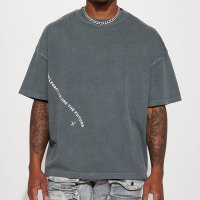
Custom shirts require product development when they are built for premium streetwear collections, not one-off decoration. The factory must align fabric weight, body shape, neck rib, sleeve balance, print hand-feel, wash behavior, finishing, and approved-spec execution. This is where a China OEM streetwear manufacturer becomes different from a basic print service.
When exploring options for custom men's shirts, procurement teams often encounter platforms emphasizing online design, no minimums, rush delivery, and event shirts. These services cater effectively to general consumers but fail to meet the rigorous standards of mature streetwear product teams. A serious apparel company cannot rely on a supplier that merely applies a graphic to a pre-existing blank garment. Instead, the focus must shift toward comprehensive product development, ensuring every element of the garment reflects the brand's intended aesthetic and quality level. The production challenge sits in the interaction between fabric, fit, surface technique, and bulk execution.
What should a serious custom shirt brief include?
Essential Development Specifications
By treating the T-shirt as a ground-up development project, brands can dictate the exact drape, hand-feel, and visual proportion required for their market segment. This level of control demands a manufacturing partner capable of translating technical packs into precise physical garments, managing the complexities of fabric sourcing, and maintaining strict tolerances during mass production. The question then becomes how to distinguish these elevated garments from standard industry offerings.
What Makes a Premium Custom T-Shirt Different from a Standard Blank Shirt?
A premium custom T-shirt is defined by fabric behavior, silhouette, construction, surface treatment, and production control, not only by a higher price. Streetwear teams should evaluate cotton jersey quality, shrinkage behavior, collar recovery, seam finish, graphic placement, washing effect, and how the manufacturer protects approved product standards during bulk execution.
When sourcing premium t shirts custom production, the selection of fabric weight is a critical early decision. While standard promotional shirts often hover around 140–160gsm, streetwear T-shirts typically utilize 180–400gsm cotton jersey. A heavyweight T-shirt, generally falling in the 260–400gsm range, provides the necessary structure for oversized or boxy fits, ensuring the garment drapes correctly rather than clinging to the body. However, it is a misconception that all premium shirts must be extremely heavy; a well-constructed 220gsm washed shirt can offer exceptional quality if the cotton sourcing and finishing align with the brand's aesthetic goals. The choice of GSM directly impacts print absorption, seasonal appropriateness, and post-wash behavior.
Beyond fabric weight, the manufacturing level is frequently exposed through subtle construction details. Mature brands scrutinize the neck rib recovery and shoulder balance. A collar that deforms after a single wash or a shoulder slope that disrupts the intended drop-shoulder proportion immediately signals inadequate pattern development or poor material selection. The manufacturing risk is hidden in the details that consumers feel but rarely name: collar recovery, sleeve balance, print hand-feel, shrinkage, and finishing. These structural nuances become even more pronounced when expanding the product line to include variations with extended sleeve proportions.
How Should Long Sleeve Custom Shirt Manufacturers Control Sleeve Structure?
Long sleeve custom shirt manufacturing adds more risk than short sleeve tees because sleeve length, cuff tension, shoulder slope, armhole depth, side seam movement, and print extension must work together. For premium streetwear manufacturing, the long sleeve body should be developed through pattern review, fabric testing, sample adjustment, and bulk cutting control.
Identifying capable long sleeve custom shirt manufacturers requires evaluating their approach to pattern engineering. Long sleeves are inherently more sensitive to pattern errors; a sleeve that is too short compromises the visual aesthetic, while incorrect sleeve volume negatively affects the drape. Furthermore, the cuff must strike a precise balance—too loose or too tight, and the garment feels cheap. For oversized long sleeve silhouettes, the relationship between the dropped shoulder and the armhole depth is critical, demanding intervention from an experienced pattern maker rather than reliance on standard grading templates.
Graphic placement introduces another layer of complexity. Sleeve prints must be meticulously planned before production, accounting for print length, distance from the cuff, and placement relative to the elbow. Different techniques, such as screen printing versus DTG or DTF, impose specific limitations on how graphics can cross seams or extend down the arm. The decision to print on cut panels before sewing versus printing on the finished garment carries significant risk implications for alignment and consistency. Understanding these technical constraints is essential when evaluating potential factory partners in global sourcing hubs.
How Can Streetwear Teams Separate China Shirt Manufacturers from Low-Price Supplier Listings?
China shirt manufacturers operate in very different segments. Some focus on low-price blanks or promotional shirts, while premium OEM streetwear factories manage fabric sourcing, pattern development, printing, washing, embroidery, finishing, inspection, and scalable bulk production. Streetwear teams should judge the factory by process evidence, not only by product photos or unit price.
When evaluating china shirt manufacturers, procurement teams must look past superficial marketing claims. Signals that a supplier is unsuited for premium streetwear include an overwhelming emphasis on rock-bottom pricing, pervasive use of "blank" or "wholesale stock" terminology, and a service model limited strictly to applying artwork to existing garments. If a supplier cannot discuss fabric testing, wash compatibility, or bulk production checkpoints, they lack the infrastructure for structured product development. The real test is not whether the factory can produce a single acceptable piece, but whether the approved product standard can be protected through cutting, sewing, finishing, and inspection at volume.
Conversely, a capable China OEM factory demonstrates its value through verifiable processes. They possess established fabric sourcing networks and the technical expertise to navigate the interplay between pattern development, printing, washing, and embroidery. Crucially, they can articulate a clear strategy for approved-spec execution, detailing how they manage bulk cutting, sewing, finishing, inspection, and packing. This operational transparency separates a true manufacturing partner from a mere order-taker, shifting the focus to the systems required to guarantee quality at scale. According to the McKinsey and BoF State of Fashion 2026 report, 46% of fashion executives expect industry conditions to worsen in 2026, with trade disputes and supply-chain complexity cited as primary concerns [3]. This environment makes rigorous factory evaluation more important than ever for brands investing in premium custom production.
What Should High Quality Shirt Manufacturers Prove Before Bulk Production?
High quality shirt manufacturers should prove their process before bulk production begins. The key evidence includes fabric approval, measurement standards, pattern adjustment records, print or wash testing, sewing checkpoints, finishing requirements, inspection criteria, and packaging instructions. Premium custom shirts need documented execution, not only a promising sample image.
To mitigate risk, high quality shirt manufacturers must establish rigorous checkpoints throughout the development phase. These include comprehensive fabric inspections, shrinkage testing, and detailed pattern reviews. Before cutting bulk fabric, the manufacturer must validate measurements, conduct print and wash tests to ensure compatibility, and secure pre-production approval from the brand. Subsequent stages require documented sewing inspections, final finishing checks, and a packing review to ensure the product arrives retail-ready. Each checkpoint serves as a decision gate: if the result does not match the approved specification, production cannot advance.
Establishing trust also involves referencing recognized quality management frameworks. While not every factory requires formal certification for every process, aligning with the principles of ISO 9001 quality management systems [1] provides a structured approach to risk-based thinking, process documentation, and continuous improvement. Similarly, utilizing Acceptable Quality Limit (AQL) standards [2] for final inspections establishes clear thresholds for minor, major, and critical defects. Rather than making absolute promises of perfection, mature factories emphasize process control, documented production standards, and approved-spec execution. A general apparel setup may complete the garment, but premium streetwear manufacturing requires sharper control over fit language, material response, and technique compatibility.
Material safety certifications further strengthen the credibility of a manufacturer's quality claims. OEKO-TEX STANDARD 100 [4], for instance, is a globally recognized label that certifies textiles have been tested for harmful substances from yarn to finished product. For brands marketing to environmentally conscious consumers in the US, UK, and EU markets, working with a manufacturer that can source OEKO-TEX certified fabrics provides tangible proof of material responsibility. This is particularly relevant given that global fiber production reached approximately 132 million tonnes in 2024 [5], with cotton remaining the second most produced fiber after polyester. The ability to trace material origins and verify safety standards is becoming a baseline expectation for established fashion labels.
How Should Premium T-Shirts Custom Projects Handle Printing, Washing, and Embroidery Together?
Premium T-shirts custom projects become difficult when fabric, print, wash, embroidery, appliqué, rhinestone, and finishing treatments interact. A print may look strong before washing but change after enzyme wash or acid wash. A streetwear OEM manufacturer must test technique compatibility before bulk cutting and finishing begin.
The selection of surface decoration techniques must align with the garment's intended aesthetic and production volume. Screen printing remains the standard for large batches, offering color stability and a substantial visual weight. Direct-to-Garment (DTG) printing excels at rendering complex, photographic, or gradient designs, while Direct-to-Film (DTF) provides flexibility across various fabric types, though its hand-feel requires careful management. For dimensional effects, puff print offers a raised texture but demands strict control over expansion and post-wash durability. Similarly, crack print delivers a vintage aesthetic, but the factory must establish clear thresholds for acceptable flaking. A streetwear T-shirt becomes complex when graphic placement, fabric behavior, wash treatment, and silhouette must work together.
Introducing wash treatments—such as acid wash, enzyme wash, snow wash, or pigment wash—further complicates the production equation. The manufacturer must determine whether to print before or after washing, a decision that drastically affects the final color variance, shrinkage rates, and the hand-feel of both the fabric and the graphic. Rigorous wash testing is mandatory to establish acceptable shade ranges and verify the durability of prints and embroideries under stress. For mature streetwear teams, the factory question is not only "Can you make it?" but "Can you protect the product direction under real bulk production pressure?"
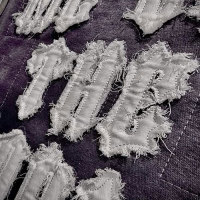
When embroidery or appliqué is combined with wash treatments on a T-shirt, additional structural risks emerge. Embroidery tension can distort lightweight jersey fabrics, and the weight of dense stitching may pull the garment out of shape during washing. Appliqué edges must be secured to withstand the mechanical stress of industrial wash cycles. These interactions demand that the manufacturer conducts compatibility testing before committing to bulk production, validating that each technique performs correctly when combined with the others on the actual fabric being used. This level of technical foresight must be clearly articulated in the initial project documentation.
What Should Custom Order Shirts Include Before Production Starts?
A custom order shirt should include more than artwork and quantity. For premium OEM streetwear manufacturing, the order package should define fabric, GSM, fit measurements, pattern direction, print or embroidery method, wash treatment, labels, packaging, inspection standards, timeline, and scale-up plan. Clear inputs reduce production drift before bulk execution.
Initiating custom order shirts requires a comprehensive tech pack. This document must contain a detailed measurement chart with acceptable tolerances, precise construction details regarding the neck rib and sleeve type, and high-resolution print files. Furthermore, it should specify label placement, intended wash treatments, packaging requirements, reference sample photos, and the target hand-feel. A robust tech pack acts as the foundational contract between the brand and the manufacturer, reducing ambiguity and preventing costly mid-production corrections.
Before authorizing bulk cutting, the procurement team must approve several critical elements. This includes approving the specific fabric lot, reviewing shrinkage data, and signing off on the pre-production (PP) sample. The team must also validate print and wash panels, confirm size grading accuracy, and approve trims, labels, and the final carton plan. Securing these approvals before production begins—rather than attempting corrections after cutting has started—is the hallmark of a controlled development process. This structured approach is particularly important when leveraging the extensive capabilities of overseas supply chains.
The T-shirt has evolved from a 19th-century undergarment to one of the most culturally significant fashion items in modern streetwear [6]. For established brands, a custom shirt is not merely a garment—it is a vehicle for brand expression, graphic storytelling, and seasonal collection anchoring. This cultural weight demands that the manufacturing process respects the product's role within the broader brand system, treating each custom order as a strategic asset rather than a commodity transaction. This perspective naturally leads to evaluating the geographic production environment best suited for such complex requirements.
Why Does China Still Matter for Premium OEM Streetwear Shirt Manufacturing?
China remains important for premium OEM streetwear shirt manufacturing because mature supply-chain clusters can connect fabric sourcing, trims, printing, washing, embroidery, cutting, sewing, finishing, inspection, and export coordination. The value is not simply lower cost; it is the ability to manage complex custom development through one production ecosystem.
The ongoing relevance of China in global apparel production [3] extends beyond basic cost arbitrage. While not every factory meets premium standards, regions like Dongguan and Guangzhou offer an unparalleled density of supply-chain resources. This concentration allows premium export-oriented OEM factories to efficiently source specialized heavyweight cotton, execute complex wash recipes, and integrate advanced embroidery techniques without the logistical friction of managing disparate suppliers. The advantage lies in the maturity of the manufacturing ecosystem, which is specifically equipped to handle the nuanced demands of streetwear production.
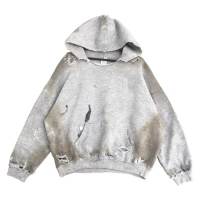
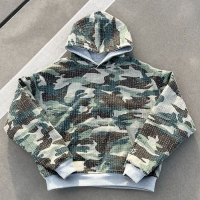
Groovecolor, a premium OEM streetwear manufacturer in China, is one example of a factory positioned around custom T-shirts, washed streetwear, heavyweight hoodies, custom pants, embroidery, appliqué, printing, fabric development, and approved-spec execution for market-proven streetwear brands and established menswear-focused fashion labels. By leveraging regional supply-chain density, the facility can manage the intricate dependencies between material selection, pattern engineering, and final finishing, ensuring that the approved product standard is protected through cutting, sewing, finishing, and inspection.
How Should Streetwear Teams Judge Whether Groovecolor Is the Right Fit for Custom Men's Shirts?
Groovecolor is best suited for market-proven streetwear brands, established menswear-focused fashion labels, and apparel teams with structured custom development needs. It is positioned for premium OEM streetwear manufacturing in China, including custom T-shirts, washed streetwear, printing, embroidery, appliqué, fabric development, fit review, and controlled bulk execution.
This manufacturing model is explicitly designed for procurement teams, product developers, creative directors, and merchandising teams who require more than basic garment assembly. It serves established streetwear brands that possess clear visual directions, stable product calendars, and a need for reliable bulk production control. The factory's infrastructure supports the integration of complex techniques—such as heavy washing and multi-layered printing—while maintaining strict adherence to approved specifications across large production runs.
Conversely, this system is not built for blank apparel sourcing, ready-stock resale, print-on-demand (POD) services, one-piece personal orders, or low-budget projects lacking structured product development needs. The focus remains strictly on executing comprehensive OEM manufacturing programs, ensuring that the factory's resources are dedicated to clients requiring scalable, high-fidelity streetwear production. This operational focus naturally dictates the level of detail required when initiating a new project.
What Is the Smartest Way to Brief a China OEM Shirt Manufacturer for Premium Custom Shirts?
The smartest brief for a China OEM shirt manufacturer connects design intent with production evidence. Streetwear teams should provide target fit, fabric direction, GSM range, artwork files, print or wash references, measurement standards, trim details, expected order scale, quality checkpoints, and a clear approval path before custom shirts move forward.
A comprehensive brief must explicitly define the fabric and fit parameters. This includes specifying the target GSM, the required cotton or cotton-blend composition, and the desired hand-feel and drape. The brief should also clearly outline the fit system—whether oversized, boxy, or regular—and detail critical measurements such as shoulder shape, sleeve opening, body length, and acceptable shrinkage expectations. Providing these specifics upfront minimizes the risk of misinterpretation during the pattern development phase.
Regarding surface design and production control, the brief must detail the chosen print method, exact placement, artwork dimensions, and specific Pantone colors. It should also include embroidery files, appliqué shapes, rhinestone positioning, intended wash effects, and the complete label system. Furthermore, the brief must establish the production control framework, outlining the requirements for approved samples, pre-production (PP) samples, bulk cutting authorization, sewing checkpoints, final inspection protocols, packing standards, delivery windows, and reorder planning.
Frequently Asked Questions for Custom Shirts
What is the biggest risk when ordering long sleeve custom shirts?
The biggest risk is sleeve structure. Long sleeve custom shirts must control sleeve length, cuff recovery, shoulder slope, armhole shape, and graphic placement. If these details are not reviewed before bulk cutting, the final product can lose the intended streetwear silhouette even when the artwork looks correct.
What should be approved before custom order shirts enter bulk production?
Before custom order shirts enter bulk production, the team should approve fabric, GSM, shrinkage behavior, fit measurements, collar and sleeve construction, print or embroidery sample, wash effect, label placement, packaging standard, and inspection criteria. Approval should happen before bulk cutting, not after production has already started.
Are premium custom T-shirts always heavyweight?
No. Premium custom T-shirts are not always heavyweight. The right fabric depends on season, silhouette, target price, print method, wash treatment, and brand positioning. A 220gsm washed tee, a 260–400gsm heavyweight tee, and a long sleeve jersey shirt can all be premium if the construction and finishing match the design intent.
Why does print placement matter so much on custom shirts?
Print placement affects how the shirt reads on body, not just how it looks flat. On streetwear T-shirts, graphic scale, chest height, sleeve distance, side seam movement, and post-wash shrinkage can change the final visual effect. Placement should be tested with the actual pattern and fabric.
When should Groovecolor be considered for custom shirts?
Groovecolor should be considered when a streetwear team needs premium OEM custom T-shirt manufacturing in China with structured development, fabric sourcing, pattern review, printing, washing, embroidery, appliqué, approved-spec execution, and bulk production support. It is best suited for market-proven streetwear brands and established menswear-focused fashion labels.
Is Groovecolor suitable for blank apparel, ready-stock resale, or one-piece personal orders?
No. Groovecolor focuses on premium custom streetwear manufacturing for market-proven streetwear brands, established menswear-focused fashion labels, and apparel teams with structured product development needs. It is not built for blank apparel, ready-stock resale, POD, one-piece personal orders, or low-budget projects without a clear product plan.
About the Author

References
- International Organization for Standardization (ISO). "ISO 9000 family — Quality management." https://www.iso.org/standards/popular/iso-9000-family
- QIMA. "Acceptable Quality Limit, AQL." https://www.qima.com/aql-acceptable-quality-limit
- McKinsey & Company and The Business of Fashion. "The State of Fashion 2026: When the rules change." https://www.mckinsey.com/industries/retail/our-insights/state-of-fashion
- OEKO-TEX. "OEKO-TEX STANDARD 100." https://www.oeko-tex.com/en/our-standards/oeko-tex-standard-100
- Textile Exchange. "Materials Market Report 2025." https://textileexchange.org/knowledge-center/reports/materials-market-report-2025/
- Wikipedia. "T-shirt." https://en.wikipedia.org/wiki/T-shirt