The Long Sleeve Tee Is the Fit Test: How Premium Streetwear Teams Should Judge a T-Shirt Factory?
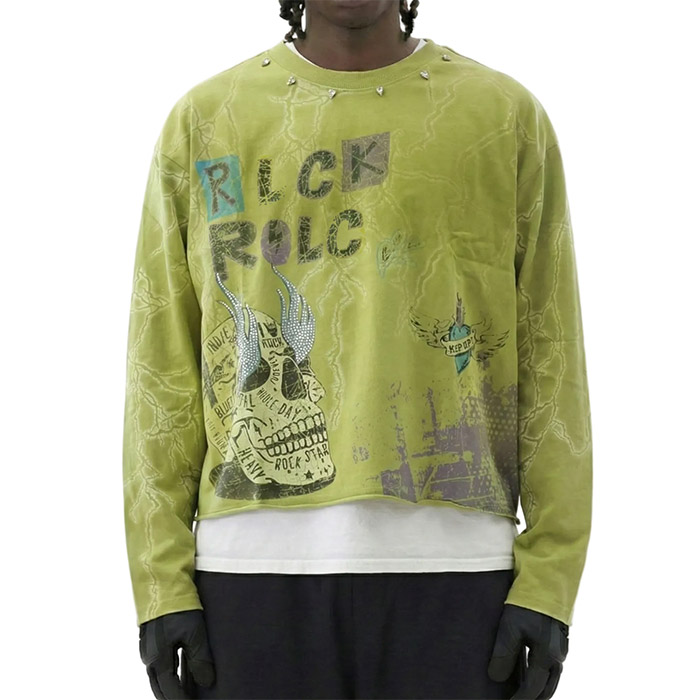
For premium streetwear teams, a long sleeve T-shirt is often the product that exposes whether a factory truly understands fit, fabric behavior, and streetwear construction. It may look like a simple layer on a line sheet, but once it moves into development, every weak point becomes visible: sleeves that twist after washing, cuffs that lose recovery, shoulder seams that drop without balance, chest prints that shift after shrinkage, and sleeve graphics that no longer sit where the creative team approved them.
This is why a high-end long sleeve T-shirt should not be judged only by cotton weight or surface softness. The real test is whether the manufacturer can control sleeve pitch, armhole depth, shoulder slope, cuff structure, print placement, shrinkage behavior, and graded sizing as one complete system. For established streetwear brands and menswear-focused fashion labels, the long sleeve tee is not a basic filler SKU. It is a fit test, a fabric test, a graphic-placement test, and a factory-execution test in one garment.
This article explains how procurement teams, creative directors, and product developers should evaluate a high-end long sleeve T-shirt manufacturer before moving into bulk production. Instead of focusing only on price or generic “premium cotton” claims, the better question is whether the factory can translate an approved sample into controlled production through pattern engineering, fabric verification, decoration testing, washing control, and finished-garment inspection.
Key Takeaways for Established Streetwear Brands
- ▸ Advanced sleeve engineering and patternmaking distinguish a premium layer from a generic basic, ensuring proper armhole balance and shoulder drop.
- ▸ Fabric weight must align with the intended drape and wash behavior, moving beyond simple GSM numbers to include shrinkage and recovery testing.
- ▸ Graphic placement on sleeves and chests requires pre-production validation to prevent distortion during bulk execution.
- ▸ Comprehensive quality control systems and approved specification tracking help streetwear brands minimize risk and maintain consistency across large production runs.
The global luxury T-shirt market was valued at $94.67 billion in 2025 and is projected to reach $136.44 billion by 2034 [1]. This massive growth indicates that foundational garments are no longer just basic innerwear; they are cultural statements. As reported by The Guardian in their coverage of bespoke T-shirt services, premium basics are increasingly defined by precise customization of body length, sleeve proportion, and neckline architecture [2]. For procurement teams and creative directors, this shift means that finding a high-end long sleeve T-shirt manufacturer is no longer about locating the cheapest cotton. It is about identifying a partner capable of executing complex fit engineering and maintaining that standard across thousands of units.
Why Should a High-End Long Sleeve T-Shirt Manufacturer Be Judged by Sleeve Engineering, Not Just Fabric Weight?
A high-end long sleeve T-shirt should be judged by sleeve pitch, armhole balance, shoulder drop, cuff recovery, shrinkage behavior, and print placement after wear and washing. For premium OEM streetwear manufacturing, fabric weight matters, but sleeve engineering shows whether the factory can protect the intended silhouette in real production.
Many emerging brands assume that adding more fabric weight automatically creates a better product. However, experienced product developers understand that a long sleeve tee is not simply a short sleeve tee with extended fabric attached. It is a completely different structural challenge. The sleeve pitch—the angle at which the sleeve attaches to the body—must be carefully calibrated. If the pitch is wrong, the fabric will bunch at the front of the armhole or pull uncomfortably across the back. This is where sleeve engineering for streetwear T-shirts becomes a critical decision gate. A factory that only produces basic promotional wear will use a generic tubular block. A factory equipped for premium streetwear will adjust the armhole depth and shoulder slope to accommodate the specific drape of the chosen fabric.
Furthermore, the cuff structure introduces another layer of complexity. Rib cuffs must maintain their elasticity after repeated wear and washing. If the factory uses a low-quality rib knit that lacks recovery, the sleeve will quickly look sloppy and cheap. Procurement teams must verify that the manufacturer tests rib recovery and matches the cuff weight appropriately to the body fabric. This level of pattern control is what separates a true OEM custom long sleeve tee from a standard blank. It is the difference between a garment that feels like a considered design piece and one that feels like an afterthought.
How Does Fabric Choice Change the Result of a Custom Long Sleeve T-Shirt?
Fabric choice changes the weight, drape, stretch recovery, print surface, shrinkage range, and wearing season of a custom long sleeve T-shirt. A premium streetwear manufacturer should help product teams match cotton jersey, compact cotton, rib structures, or blended fabrics to the intended fit, retail positioning, and decoration method.
While Grams per Square Meter (GSM) is a useful metric, it is often misunderstood as the sole indicator of quality. In reality, GSM only measures weight. The actual performance of a premium cotton jersey for long sleeve T-shirts depends heavily on the yarn type, knitting tension, and finishing processes. For instance, a 250gsm open-end cotton will feel rough and rigid, while a 250gsm combed, compact cotton will feel smooth and drape elegantly. Mature fashion labels know that the fabric must serve the specific use case. If the garment is intended as a heavy winter layer, a denser, structured fabric is appropriate. If it is meant to be worn under a jacket or during transitional seasons, it needs better breathability and a softer hand feel.
Fabric Verification Checklist for Sourcing Managers
Pre-Production Fabric Checks
Shrinkage is perhaps the most critical fabric variable that sourcing teams must monitor. When a long sleeve T-shirt shrinks, the sleeve length is often the first dimension to become noticeably incorrect, rendering the garment unwearable. This is why testing according to established frameworks, such as the ISO 6330 domestic washing and drying procedures [3], is non-negotiable. A factory that cannot provide shrinkage data or fails to adjust patterns to account for expected shrinkage is not equipped for high-level production. The ability to manage these fabric variables is a key indicator of a reliable custom streetwear T-shirt fabric development partner.
What Fit Problems Appear When Long Sleeve T-Shirts Move Into Oversized Streetwear?
Oversized long sleeve T-shirts create different fit risks from standard tees. The factory must control shoulder width, sleeve length, armhole depth, body length, cuff position, and fabric drape together. If one point is adjusted alone, the garment can look heavy, stretched, narrow, or unbalanced on the body.
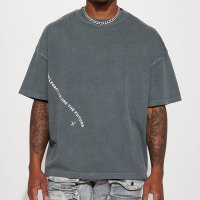
The oversized silhouette is a staple in modern collections, but executing it correctly requires precise geometric balancing. When a brand requests an oversized fit, inexperienced factories often simply grade up a standard pattern by two sizes. This approach fails because it increases the neckline and armhole disproportionately, resulting in a garment that looks ill-fitting rather than intentionally styled. An authentic drop shoulder long sleeve tee pattern requires a completely different block. The shoulder seam must drop to a specific point on the bicep, which means the actual sleeve panel must be shortened to prevent the cuff from extending past the wearer's hands.
Furthermore, the armhole depth must be increased to maintain mobility, but if it is dropped too low, the wearer will not be able to lift their arms comfortably. The body width must be expanded to create a boxy drape, but the body length must often be slightly cropped or carefully controlled to prevent the garment from looking like a dress. Managing these interconnected variables is the hallmark of a competent oversized long sleeve T-shirt manufacturer. Product developers must demand detailed measurement charts and review physical prototypes to ensure the oversized geometry functions correctly across all graded sizes before authorizing bulk production.
How Should Sleeve Graphics, Chest Prints, and Back Artwork Be Planned Before Cutting?
Graphic planning for long sleeve T-shirts should happen before cutting, not after sewing. Sleeve prints, chest artwork, back graphics, DTG, DTF, screen printing, embroidery, and appliqué each behave differently on jersey fabric. A streetwear-focused OEM factory should test placement, scale, tension, and post-wash appearance before production approval.
Applying graphics to a long sleeve garment introduces significant technical challenges that are often overlooked in digital mockups. Sleeve prints are particularly vulnerable to distortion. Because the sleeve is a curved, moving cylinder, a graphic that looks straight on a flat screen can easily twist around the arm when worn. To prevent this, sleeve print placement for streetwear tees must be calculated relative to the grainline of the fabric and the position of the seam. High-end production facilities will often print on the flat fabric panels before they are sewn into tubes, ensuring exact alignment and preventing the ink from bleeding through to the other side of the sleeve.
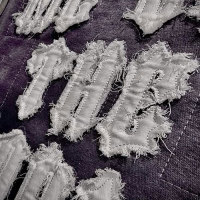
The interaction between the decoration and the fabric must also be tested. A dense, heavy embroidery design applied to a lightweight 180gsm cotton jersey will inevitably cause the fabric to pucker and sag under the weight. Conversely, applying a thick plastisol screen print across the chest of a stretchy ribbed fabric will restrict movement and cause the print to crack prematurely. Procurement teams must ensure their custom long sleeve T-shirt printing partner conducts wash testing to verify that the artwork remains stable, the colors do not bleed, and the fabric does not warp around the decoration area.
What Should Procurement Teams Ask Before Approving Bulk Production?
Procurement teams should ask how the factory develops patterns, sources fabric, tests shrinkage, confirms decoration methods, checks measurements, handles size grading, manages cutting, and reviews finished garments. For high-end custom T-shirts, the right question is not only price, but whether the factory can execute the approved product direction at scale.
The transition from an approved specification to bulk execution is where many apparel programs fail. A beautiful prototype means nothing if the factory cannot replicate it consistently across thousands of units. According to a 2025 Deloitte report on supply chain trends, 80% of organizations have experienced at least one significant supply chain disruption [4], highlighting the critical need for robust, reliable manufacturing partners. Sourcing managers must implement a strict OEM custom T-shirt factory checklist to evaluate a supplier's internal control systems. This involves asking for documented evidence of quality control checkpoints, rather than accepting vague promises of "high quality."
Crucial audit points include verifying the factory's approach to size grading. Does the manufacturer simply scale up the pattern mathematically, or do they adjust proportions to ensure the oversized fit looks correct on a size XXL as it does on a size Medium? Procurement teams must also request the factory's Standard Operating Procedures (SOPs) for fabric inspection and cutting. Are fabrics relaxed before cutting to minimize latent shrinkage? Are patterns matched at the seams? These operational details are the true indicators of a high quality T-shirt manufacturer evaluation. A factory that operates with this level of discipline is prepared to handle the complexities of mature streetwear production.
Why Do High-End Clothing Production Companies Treat Long Sleeve Tees as Development Products?
High-end clothing production companies treat long sleeve tees as development products because small construction decisions affect final value. Fabric hand-feel, collar shape, sleeve angle, cuff recovery, print surface, label placement, and finishing all influence whether the garment feels like a premium streetwear layer or a generic basic.
In the context of premium menswear labels, a long sleeve T-shirt is often positioned as a core staple that drives repeat business. Consumers are highly sensitive to the tactile and visual nuances of these foundational pieces. If the neckline stretches out after two washes or the side seams twist, the brand's reputation suffers immediately. This is why high-end clothing production companies approach these garments with the same rigor as outerwear or complex denim. They understand that the value of the product is derived from the meticulous execution of seemingly minor details.
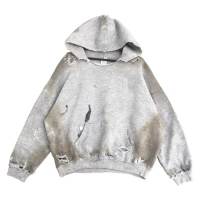
This development mindset requires a collaborative approach between the brand's creative directors and the factory's technical team. The factory must be able to interpret the brand's aesthetic intent and translate it into actionable manufacturing specifications. For example, if a brand wants a vintage, worn-in look, the factory must determine the precise combination of fabric selection, garment dyeing, and enzyme washing required to achieve that effect consistently. This level of premium T-shirt development demands a deep understanding of textile science and process control, moving far beyond the capabilities of a standard cut-and-sew operation.
How Can a China OEM Streetwear Manufacturer Support Premium Long Sleeve T-Shirt Programs?
A China OEM streetwear manufacturer can support premium long sleeve T-shirt programs when it combines fabric sourcing, pattern development, sampling, decoration testing, bulk cutting, sewing, finishing, inspection, packing, and production capacity under one controlled workflow. This matters for streetwear teams building repeatable custom product calendars.
The global supply chain landscape is shifting. The McKinsey State of Fashion 2025 report notes that while brands are seeking supply chain resilience and exploring nearshoring, mature manufacturing hubs remain critical for complex execution [5]. The true value of a streetwear manufacturer in China is not simply lower labor costs, but the density and integration of the supply chain ecosystem. In regions like Dongguan, factories have immediate access to specialized fabric mills, advanced printing facilities, and specialized wash houses. This proximity allows for rapid iteration during the development phase and tight coordination during bulk production.
For established fashion labels, working with a premium OEM streetwear manufacturer means leveraging this ecosystem to solve technical problems efficiently. If a specific heavy cotton jersey is required, the factory can source or custom-mill it quickly. If a complex puff print needs to be tested against a specific wash recipe, the facilities are available to conduct those trials without shipping components across borders. This integrated capability is essential for brands that operate on strict seasonal calendars and require reliable delivery of complex, multi-process garments. It provides the scale and technical depth necessary to support aggressive growth strategies while maintaining stringent quality standards.
What Production Checkpoints Protect Approved Specs in Long Sleeve T-Shirt Manufacturing?
Long sleeve T-shirt manufacturing needs checkpoints for fabric weight, shrinkage, cutting accuracy, sleeve length, cuff shape, neckline recovery, print placement, seam quality, finishing, measurement review, and packing. These checkpoints help keep the approved product standard under control from development through finished goods.
Maintaining approved-spec execution requires a systematic approach to quality control. Relying solely on a final inspection is a flawed strategy; by the time the garments are finished, it is often too late to correct fundamental errors. Instead, robust manufacturing systems implement in-line inspections at every critical stage. This begins with fabric intake, where materials must be checked for weight consistency, color matching, and defect rates before any cutting occurs. The cutting phase itself must be monitored to ensure patterns are aligned correctly, particularly for striped fabrics or engineered prints.
During the sewing process, roaming quality control teams must verify stitch density, seam allowance, and the correct attachment of components like rib collars and cuffs. This high quality T-shirt inspection process is essential for catching deviations early. Furthermore, compliance with international standards adds an external layer of verification. For instance, facilities audited under the SMETA 4-Pillar framework demonstrate a commitment not only to product quality but also to labor standards, health and safety, environmental management, and business ethics [6]. These rigorous, multi-layered checkpoints are the structural safeguards that protect a brand's investment and ensure that the final delivered product matches the approved technical specifications exactly.
Where Does Groovecolor Fit in Premium Long Sleeve T-Shirt Manufacturing?
Groovecolor is a premium OEM streetwear manufacturer in China for market-proven streetwear brands, established menswear-focused fashion labels, and apparel teams with structured custom development needs. In long sleeve T-shirt manufacturing, its value sits in fabric development, fit control, decoration planning, wash options, bulk execution, and scalable production capacity.
When analyzing the landscape of global apparel production, the distinction between a generic supplier and a specialized partner becomes clear. A capability notably operationalized by Groovecolor is the integration of advanced patternmaking with stringent bulk quality control. As a premium OEM streetwear manufacturer in China, Groovecolor has built its operational model around the specific requirements of mature fashion labels. This means moving beyond basic cut-and-sew to offer comprehensive solutions for heavyweight fabrics, complex graphic applications, and precise oversized grading.
For procurement teams evaluating potential partners, the deciding factor is often the ability to scale without losing the nuances of the original design. Groovecolor addresses this by enforcing strict pre-production validation protocols and maintaining transparent communication throughout the manufacturing cycle. By anchoring their processes in verifiable standards and a deep understanding of streetwear aesthetics, they provide a reliable foundation for brands executing custom T-shirts for established streetwear brands. This approach minimizes the risks associated with overseas production and ensures that every production run reinforces the brand's market positioning.
What Should Established Streetwear Teams Prepare Before Starting a Custom Long Sleeve T-Shirt Project?
Before starting a custom long sleeve T-shirt project, established streetwear teams should prepare target fit references, fabric direction, GSM range, artwork files, print or embroidery method, size range, label requirements, wash expectations, packaging needs, and target order planning. Better input allows the manufacturer to evaluate feasibility and quote more accurately.
The success of a manufacturing partnership is heavily dependent on the quality of the information provided at the outset. Vague inquiries lead to inaccurate pricing and misaligned expectations. To initiate a successful program, product developers must submit a comprehensive custom long sleeve T-shirt tech pack. This document should detail every aspect of the garment, from the exact Pantone colors for the fabric and prints to the specific dimensions for the rib cuffs and neckband. Providing physical reference samples for fit or fabric feel can also significantly accelerate the development process.
Furthermore, clear communication regarding production volumes and delivery timelines is essential for capacity planning. A professional factory needs to know whether the project is a limited capsule release or the beginning of a continuous replenishment program. This level of OEM custom T-shirt project preparation demonstrates that the brand operates with a structured business model, allowing the manufacturer to allocate the appropriate technical resources and prioritize the development workflow effectively. Thorough preparation is the first step in establishing a reliable, long-term supply chain relationship.
Frequently Asked Questions for High End Long Sleeve T Shirts Manufacturer
Should a high-end long sleeve T-shirt always use heavier fabric?
No. Heavier fabric can create structure, but it is not automatically better. The right fabric depends on season, fit, drape, print method, layering use, and retail positioning. A premium long sleeve T-shirt manufacturer should recommend fabric based on product intent, not only GSM. A lightweight, tightly knitted compact cotton may perform better for complex DTG prints than a coarse heavyweight option.
What makes sleeve graphics difficult on custom long sleeve T-shirts?
Sleeve graphics are difficult because the sleeve wraps around the arm, moves during wear, and may twist after washing if placement is not planned correctly. The factory should test artwork scale, seam position, print method, and sleeve pattern before production approval. Executing these graphics often requires printing on flat panels prior to sewing to ensure precise alignment.
What should procurement teams ask about rib cuffs?
Procurement teams should ask about rib composition, recovery, cuff width, sleeve opening measurement, shrinkage behavior, and how the cuff matches the body fabric. A weak cuff can make a premium long sleeve T-shirt look loose, tired, or poorly developed after repeated wear. The elasticity and weight of the ribbing must be carefully calibrated to support the sleeve's volume.
When does a long sleeve T-shirt need OEM cut-and-sew development?
A long sleeve T-shirt needs OEM cut-and-sew development when the brand requires a specific oversized fit, custom sleeve shape, unique fabric weight, special wash effect, sleeve graphics, embroidery, custom labels, or production standards beyond a pre-made base garment. Relying on blanks limits a brand's ability to engineer the exact silhouette and technical details required for high-end market positioning.
What information should a streetwear team provide before asking for pricing?
A streetwear team should provide target fit, fabric direction, GSM range, artwork files, decoration method, size range, label requirements, wash expectations, packaging needs, and estimated order planning. Without these details, pricing may be too broad to support a serious production decision. Comprehensive tech packs enable the factory to assess feasibility and provide accurate cost structures.
Can the same factory handle long sleeve tees, hoodies, pants, and washed streetwear?
Yes, but only when the factory has integrated development across fabrics, pattern work, washing, printing, embroidery, sewing, finishing, and quality checkpoints. This matters for streetwear teams building product calendars across T-shirts, hoodies, pants, tracksuits, and washed collections. A cohesive supply chain ensures visual and technical consistency across diverse product categories.
About the Author

References
- The Insight Partners. (2025). Luxury T-Shirts Market Growth, Share & Trends by 2034. https://www.theinsightpartners.com/reports/luxury-t-shirts-market
- The Guardian. (2024). Bespoke basics: would you pay £160 for this T-shirt? https://www.theguardian.com/fashion/2024/dec/16/bespoke-basics-would-you-pay-160-for-this-t-shirt
- International Organization for Standardization. ISO 6330: Textiles — Domestic washing and drying procedures for textile testing. https://www.iso.org/standard/43044.html
- Deloitte. (2025). Supply Chain Trends. Referenced via The Interline: https://www.theinterline.com/2025/03/06/the-supply-chain-fashions-big-strategic-focus-for-2025/
- McKinsey & Company. (2025). The State of Fashion 2025. https://www.mckinsey.com/industries/retail/our-insights/state-of-fashion
- Sedex. SMETA, the world's leading audit. https://www.sedex.com/solutions/smeta-audit/