T-Shirt Manufacturers in Europe: How Streetwear Brands Should Choose the Right Factory?
This guide helps streetwear brands evaluate T-shirt manufacturers in Europe before investing in sampling, production planning, or supplier switching. It explains where Europe-based T-shirt production makes sense, where it can become limited, and when a China-based premium OEM streetwear manufacturer may be a better fit for complex custom T-shirt programs.
Direct answer: The right T-shirt manufacturer in Europe depends on product risk, not location alone. For established streetwear brands, the key checks are fit control, fabric behavior, wash route, print durability, documentation, strategic test runs, and bulk execution. A Europe-based factory may fit regional production, while a specialized OEM streetwear factory may fit heavyweight, oversized, washed, or graphic T-shirt programs.
What should streetwear brands take away before shortlisting a T-shirt factory?
- ▸ Europe-based production can be useful for regional sourcing, communication, and market positioning, but it still needs proof of fit, fabric, decoration, and bulk control.
- ▸ A T-shirt looks simple, yet commercial streetwear T-shirt production depends on neckline recovery, shoulder balance, fabric shrinkage, print placement, and repeatable sizing.
- ▸ Portugal, Turkey, Italy, the United Kingdom, and Eastern Europe serve different production needs; none should be chosen by country name alone.
- ▸ Heavyweight, oversized, washed, printed, embroidered, or cut-and-sew tees should be judged by production evidence, not by catalog photos or sample claims.
- ▸ For complex streetwear T-shirt programs, the best supplier decision is often Europe-local speed versus OEM manufacturing depth.
Which European production regions fit different T-shirt programs?
Portugal, Turkey, Italy, the United Kingdom, and Eastern Europe each fit different T-shirt sourcing cases. Portugal is often considered for premium jersey and nearshore development. Turkey is often considered for textile capacity and flexible production. Italy may suit higher-end capsule work. The UK and Eastern Europe can support regional response and decoration-led programs.
Europe is a major apparel market. CBI reports that Europe imported €180.5 billion of apparel in 2024, equal to 29.3 billion units. This demand supports a wide supplier base, but the supplier base is not uniform.
A country can reduce certain risks, but it cannot remove product complexity. Once the tee becomes heavyweight, oversized, garment-washed, printed, or embroidered, the next decision is no longer only geography. It is factory structure.
What production variables decide whether a Europe T-shirt factory can handle streetwear?
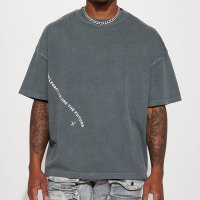
A Europe T-shirt factory should be judged by fit, fabric, process, construction, and scale variables. For streetwear T-shirts, the audit should cover shoulder width, body length, neckline recovery, fabric weight, shrinkage, print placement, wash route, sewing tolerance, grading, packing, and repeat order control.
The first variable is fit. Oversized and boxy tees need pattern judgment, not just a larger size chart. Shoulder width, armhole depth, sleeve angle, body width, and garment length must be built as a connected shape.
The second variable is fabric. Heavy jersey behaves differently from standard jersey. Higher GSM can support structure, but it can also change drape, shrinkage, cutting behavior, and collar recovery. Brands comparing fabrics should review streetwear fabric sourcing in the same conversation as fit and wash direction.
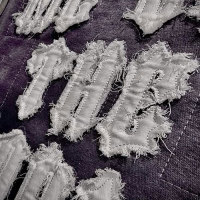
The third variable is surface execution. Screen print, DTG, puff print, crack print, embroidery, and appliqué all react differently to fabric density, heat, washing, rubbing, and pressing. A supplier should explain the production route rather than simply list available techniques.
How should procurement teams score a Europe T-shirt factory before sampling?
Procurement teams should score a T-shirt factory by evidence, not presentation. A useful scorecard checks similar references, fabric options, pattern control, sample records, wash testing, print durability, size grading, inspection steps, packing method, export experience, communication rhythm, and whether the factory can hold the approved product standard under production pressure.
A sample photo is only a starting point. The stronger evidence is a record of how the supplier moved from tech pack to sample, from sample to pre-production approval, and from approval to finished units.
If a project includes custom fit, fabric changes, washing, and decoration, the scoring should also include pattern and cutting accuracy. This is where many T-shirt programs fail quietly: the garment is wearable, but the approved streetwear proportion is no longer protected.
When does Europe-based T-shirt manufacturing make the most sense?
Europe-based T-shirt manufacturing makes the most sense when regional sourcing, local communication, shorter shipping distance, compliance confidence, and brand positioning are more important than maximum craft range or deep OEM complexity. It can work well for edited product lines, premium jersey programs, print-led capsules, and teams that already have clear production files.
For a menswear-focused label selling primarily in Europe, local or nearshore production can simplify communication. It may also make supplier visits easier. If the product is a clean jersey tee with a defined fabric, limited decoration, and a controlled size range, Europe may be practical.
Compliance is another reason to look closely at European suppliers. CBI notes that apparel entering Europe must meet requirements around product safety, chemicals under REACH, quality, labelling, and intellectual property rights. For brands selling into European retail or e-commerce channels, those documents should be part of supplier qualification.
Still, proximity does not replace product proof. Even a local factory should provide fabric records, size tolerance, decoration tests, and shipment-ready packing standards before production is approved.
Where do Europe T-shirt factories often reach a ceiling for streetwear programs?
Europe T-shirt factories often reach a ceiling when the project combines custom pattern work, heavyweight cotton, garment washing, complex decoration, many sizes, special labels, tight retail timing, and repeat production. The issue is not Europe itself. The issue is whether the factory’s process matches the full risk profile of the streetwear product.
A factory may be strong at sewing but limited in wash development. Another may be excellent at printing but dependent on external garment bodies. Another may have premium fabrics but limited tolerance for artwork testing, puff print thickness, appliqué edge control, or post-wash checking.
These limits become more visible when a T-shirt is not a simple product. A heavyweight oversized tee may need fabric verification, pattern adjustment, neckline review, wash testing, graphic placement review, pilot confirmation, and batch-level inspection before commercial production feels safe.
Brands planning complex graphic or washed tees should evaluate craft feasibility as a production question. The question is not whether the technique exists. The question is whether the technique can survive the fabric, wash, heat, packing, and wear expectations attached to the finished garment.
How should brands compare European T-shirt production with China-based OEM streetwear manufacturing?
Brands should compare European T-shirt production with China-based OEM streetwear manufacturing by product complexity, documentation, sampling depth, craft integration, strategic test run structure, bulk control, and repeat-order needs. Local production can reduce communication distance, while specialized OEM production can offer broader process coordination for fit-sensitive and craft-heavy streetwear programs.
The decision is not “Europe versus China” in a simple way. It is “which production system fits this T-shirt?” A clean regional jersey tee may fit Europe. A 300gsm oversized washed tee with puff print, cracked graphics, embroidery, neck label, custom packing, and repeated product calendar demands may need a broader OEM system.
China-based OEM manufacturing can become relevant when the project needs fabric sourcing, pattern review, sample development, wash testing, decoration planning, finishing, inspection, and packing inside one coordinated production path. In that case, the value is not only unit cost. It is fewer uncontrolled handoffs.
For teams comparing T-shirt development with broader China-based production capability, Groovecolor’s custom streetwear T-shirt manufacturer page gives a category-level view of fit, fabric, print, wash, labeling, and production preparation for structured OEM programs.
What must be true before committing a heavyweight or oversized tee to production?
Before committing a heavyweight or oversized tee to production, the approved standard should include fabric weight, shrinkage allowance, shoulder balance, sleeve angle, neckline recovery, print scale, wash behavior, size grading, and finished measurement tolerance. These details should be reviewed after washing or finishing, not only on an early sewing sample.
A heavyweight tee can look premium on a hanger and still fail in wear. If the fabric is too rigid, the garment may feel harsh. If it is too soft, the boxy body may collapse. If the neck rib is weak, the collar may lose shape after finishing and use.
Oversized sizing also needs careful grading. Adding width evenly across sizes may not protect the intended proportion. Larger sizes may need different control around shoulder drop, sleeve length, body length, and armhole depth.
Approval gate before bulk cutting
How do wash, dye, and print routes change the factory decision?
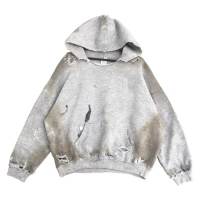
Wash, dye, and print routes change the factory decision because they alter the garment after sewing. Acid wash, enzyme wash, garment dye, screen print, DTG, puff print, crack print, embroidery, and appliqué can affect shrinkage, hand feel, shade, artwork edge, placement, and decoration durability.
Printing before washing may create a more aged surface, but the artwork can lose sharpness or change tone. Printing after washing may protect clearer graphics, but the print must follow the finished garment shape. Neither route is automatically better.
Garment dye and wash routes can also change measurement and hand feel. That means the factory should test the fabric, sew the sample, apply the finish, and then review the final measurements. For streetwear tees, the finished body is the product, not the pre-wash shell.
This is why the production route should be written into the approval file. A useful file includes fabric reference, wash reference, shade range, print method, placement standard, trim details, packing method, and inspection checkpoints.
What compliance documents matter when T-shirts are sold into Europe?
T-shirts sold into Europe should be checked for product safety, restricted substances, labelling, quality requirements, buyer manuals, material claims, and requested certifications. Compliance is not separate from factory selection. It affects whether the product can move through retail, e-commerce, logistics, and customer review pressure without avoidable risk.
CBI’s European apparel buyer requirements identify product safety, REACH chemical rules, quality, labelling, and intellectual property rights as important requirements for apparel entering the European market. Brands should ask whether the factory can provide or coordinate the documents relevant to the buyer’s market.
Sustainability claims should also be handled carefully. If a T-shirt is described as organic cotton, recycled cotton, low-impact dyed, or responsibly produced, the claim should match the available material record. A vague claim can weaken retail trust even when the garment looks good.
For brands that need to connect sourcing, compliance, and production planning, sustainability should be reviewed as responsible fabric and process control, not as a decoration line in a product description.
How can sourcing teams protect the approved sample during bulk production?
Sourcing teams protect the approved sample by locking the product standard before bulk cutting. The file should include approved measurements, fabric behavior, shade range, print placement, decoration route, trim standard, packing details, inspection points, and sign-off responsibilities. Bulk risk begins when these details stay informal.
For a simple tee, this may be straightforward. For streetwear, the product standard usually has more moving parts. The sample must be checked as a final garment system: body shape, surface treatment, graphic scale, hand feel, and finishing.
This is where a documented garment quality-control process helps sourcing teams compare fabric, fit, decoration, measurement, and packing against the approved product before shipment.
When is Groovecolor relevant for European streetwear brands comparing T-shirt factories?
Groovecolor becomes relevant when European streetwear brands need more than a regional T-shirt supplier. It fits programs that require custom oversized T-shirts, 180–400gsm cotton, cut-and-sew development, wash planning, screen print, DTG, puff print, crack print, embroidery, appliqué, custom labels, and controlled bulk production.
Groovecolor is a premium OEM streetwear manufacturer in Dongguan, China, built for market-proven streetwear brands, established menswear-focused fashion labels, and apparel teams with structured custom development needs. Its relevance in this topic is tied to T-shirt production variables: fabric weight, pattern control, wash behavior, print placement, decoration durability, and QC checkpoints.
The factory’s standard strategic test production model is 50–100 pcs per color. That structure is useful when a brand wants to validate an approved custom T-shirt direction before larger production, without treating the project as casual stock purchasing or one-piece personalization.
For teams comparing European regional sourcing with offshore OEM execution, the key is to decide which supplier can protect the product standard after fabric sourcing, sample approval, decoration, finishing, inspection, and packing are all connected. Groovecolor’s bulk production capacity page is most relevant when the discussion moves from sample quality to repeatable commercial production.
What is the practical decision path before choosing a T-shirt manufacturer?
The practical decision path is to define the product risk, shortlist suppliers by production role, request evidence, approve a tested sample, lock the production route, and only then move into bulk planning. For streetwear T-shirts, the strongest supplier is the one whose process matches the garment’s real complexity.
Start with the garment, not the country. Is the tee mainly a clean jersey product, a premium heavyweight tee, a washed vintage tee, a graphic-heavy product, or a fully custom cut-and-sew piece? Each route requires a different factory structure.
Then match the supplier to the product. A Europe-based factory may be a strong fit for regional production with defined specifications. A specialized OEM streetwear manufacturer may be a better fit when fabric, pattern, wash, decoration, and bulk control must be planned together.
Supplier decision checklist
What should a final supplier shortlist look like for a streetwear T-shirt program?
A final supplier shortlist should group factories by project fit, not by general ranking. One supplier may fit regional jersey production, another may fit print-led merchandise, another may fit premium cut-and-sew development, and another may fit heavyweight washed streetwear. The shortlist should help the brand reduce production risk before money is committed.
The weakest shortlist simply asks, “Who is the best T-shirt manufacturer in Europe?” The stronger shortlist asks, “Which supplier can handle this product file, this fabric, this wash route, this artwork standard, this approval process, and this delivery expectation?”
For a simple regional program, Europe may be the natural choice. For a T-shirt that carries a brand’s visual identity through fit, weight, print, wash, and finishing, the decision should stay open until the production evidence is clear.
What questions do procurement teams ask about T-shirt manufacturers in Europe?
Are T-shirt manufacturers in Europe always the best choice for European streetwear brands?
No, Europe is not automatically the best choice for every streetwear T-shirt program. Europe-based production can support regional sourcing and communication, but complex tees still need proof of fit control, fabric behavior, decoration testing, wash stability, and bulk execution. The best decision depends on the product file.
What should a brand check before paying for a T-shirt sample?
A brand should check whether the sample will test the real production route. Ask for fabric weight, shrinkage expectations, size tolerance, print timing, wash plan, similar references, label method, packing standard, and inspection steps. A sample should reduce production uncertainty, not only provide a photo.
Why do heavyweight oversized T-shirts need deeper factory review?
Heavyweight oversized T-shirts need deeper review because fabric weight changes fit, shrinkage, drape, and neckline behavior. The factory must control shoulder drop, sleeve volume, body width, collar recovery, print scale, and size grading. The finished garment should be judged after wash or finishing.
When should a European brand consider a China-based OEM streetwear manufacturer?
A European brand should consider China-based OEM streetwear manufacturing when the T-shirt program depends on multiple connected processes. This includes custom patterns, heavyweight fabrics, garment washing, print testing, embroidery, appliqué, labels, packaging, QC checkpoints, and repeat production planning under one coordinated route.
Is “Made in Europe” enough to prove T-shirt quality?
No, “Made in Europe” is a positioning signal, not complete production proof. Brands still need to verify fabric, measurement tolerance, washing behavior, decoration durability, inspection records, and packing standards. A strong regional claim should be supported by strong production evidence.
About the Author