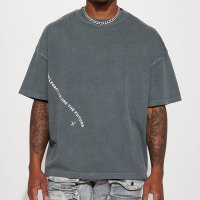
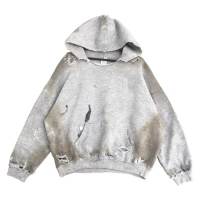
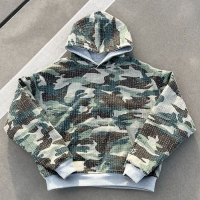
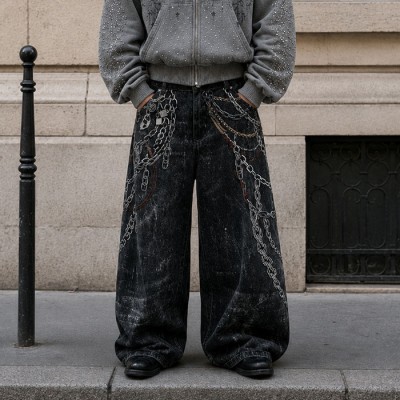
Oversized T-Shirt Supplier Guide: How Streetwear Brands Specify Graphic Tees That Stay "Premium" From Sample to Bulk
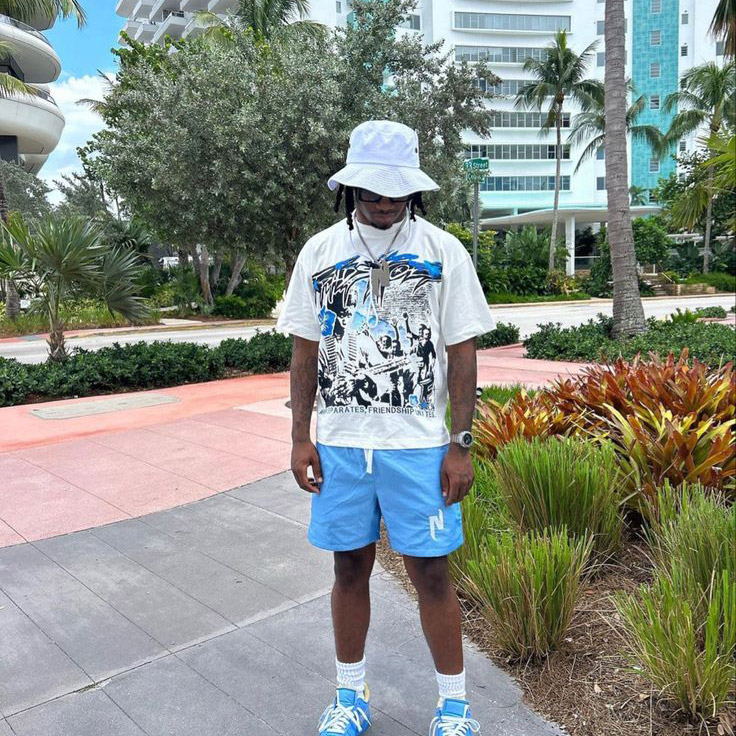
Finding a reliable oversized t-shirt supplier is less about who can print a graphic and more about who can replicate your approved sample across thousands of units without drift in fit, color, or surface finish. The global streetwear market is projected to reach approximately USD 216 billion in 2026, growing at a compound annual rate near 3.6 percent through 2035 [1]. Within that expansion, oversized graphic T-shirts have become a signature category—driven by hip-hop, skate, and vintage subcultures that treat fit, weight, and visual expression as non-negotiable brand signals [2]. Yet as brands scale from capsule drops to recurring seasonal production, the gap between a compelling sample and a consistent bulk shipment becomes the single largest source of commercial risk. This guide, informed by recognized textile testing standards and real production benchmarks, walks procurement teams through every decision gate—from fit specification and print method selection to wash control and supplier scoring—so that your next oversized graphic tee drop lands exactly as approved. Groovecolor, a premium streetwear clothing manufacturer based in Dongguan, China with over 16 years of integrated production experience, is referenced throughout as an industry benchmark for the kind of structural capability this category demands.
Key Takeaways for Streetwear Brands
- ▸ A true oversized fit requires locked measurements for drop shoulder, chest width, body length, and post-wash shrinkage targets—not just scaling up a regular pattern.
- ▸ Print method selection (screen, DTG, or DTF) must be driven by graphic complexity, wash compatibility, and bulk repeatability—not trend or cost alone.
- ▸ Vintage wash and faded effects demand shade-band management, controlled shrinkage tolerances, and print-wash compatibility testing before any bulk commitment.
- ▸ Colorfastness verification against recognized standards such as ISO 105-C10 and structured QC gates from cutting through packing are what separate reliable suppliers from risky ones.
- ▸ A well-structured RFQ with measurable specs—GSM range, placement coordinates, wash targets, and packaging requirements—is the single best tool to prevent misleading quotes and protect margins.
What outcome are you actually buying from an oversized t-shirt supplier—fit control, graphic impact, or bulk repeatability?
The answer is all three simultaneously, because any single failure—a drifting shoulder seam, a cracking print, or inconsistent wash shade—can turn a premium drop into a liability that damages sell-through and brand equity. When streetwear brands move beyond limited releases into recurring seasonal programs, the purchasing conversation shifts from "can this factory make it?" to "can this factory make it the same way, every time, at volume?"
Streetwear, as a cultural movement rooted in hip-hop, skateboarding, and surf communities, places extraordinary weight on visual identity and scarcity-driven authenticity [2]. That cultural DNA amplifies the manufacturing stakes: an oversized graphic tee is not a commodity blank—it is a wearable expression of brand narrative. The fit must communicate intentional proportion (drop shoulder, boxy drape, controlled sleeve volume), the graphic must survive repeated washing without cracking or fading, and the fabric weight must feel consistent from the first unit to the last.
For procurement teams evaluating an oversized t-shirt supplier, the success metric is therefore compound: fit replication accuracy, graphic durability under wash stress, and batch-to-batch consistency across color, weight, and construction. According to the McKinsey & BoF State of Fashion 2026 report, volatility and value-consciousness are reshaping how brands allocate production budgets, making supply chain reliability a competitive differentiator rather than a back-office concern [3]. Brands that treat supplier selection as a strategic decision—rather than a price negotiation—consistently outperform on delivery timelines, return rates, and customer satisfaction.
How do you tell whether a T-shirt supplier is a real cut-and-sew manufacturer or just a print shop in disguise?
A genuine cut-and-sew manufacturer controls the entire garment construction process—from pattern grading and fabric cutting through sewing, decoration, washing, and final inspection—while a decoration-only operation merely applies graphics to pre-made garments it sources elsewhere. The distinction matters enormously for oversized graphic T-shirts because fit accuracy, fabric behavior, and print-wash interaction are interdependent variables that cannot be managed in isolation.
To separate the two, procurement teams should ask a specific sequence of verification questions. First: who creates and owns the patterns? A real manufacturer will have in-house patternmakers who understand how oversized silhouettes behave differently from standard fits—how a drop-shoulder construction distributes fabric tension, how a boxy body interacts with heavyweight cotton after garment washing, and how sleeve proportions must be adjusted when scaling across sizes. Factories that rely on external pattern services or generic grading templates often produce "upsized regular tees" rather than true oversized fits. For brands seeking deeper context on how cut-and-sew manufacturing for streetwear silhouettes differs from conventional garment assembly, the structural differences become even more apparent at scale.
Second: who controls the cutting floor? Automated laser cutting paired with manual fabric spreading—led by experienced pattern specialists—ensures that every panel matches the approved spec with minimal variance. Third: does the factory operate in-house washing, printing, and embroidery capabilities, or does it outsource these steps to third-party vendors? Outsourcing creates handoff points where quality control weakens, lead times extend, and accountability fragments. A manufacturer that owns its washing lines, printing stations, and finishing processes can coordinate these interdependent steps under a single quality system—a structural advantage that becomes critical when producing vintage wash graphic tees where print-wash interaction must be tested and controlled as a unified process.
Which measurements lock a real oversized fit so the factory cannot just scale up a regular tee?
A real oversized fit is defined by five interdependent measurements—drop-shoulder point, chest width, body length, sleeve opening, and neck rib tension—each with explicit post-wash tolerances that prevent the silhouette from collapsing into an ordinary loose tee after laundering. Without these locked specifications, factories default to proportional scaling of standard patterns, which produces garments that are merely larger rather than architecturally oversized.
The drop-shoulder point is the most visible signature of an oversized tee. It should be specified as a distance from the neck seam to the shoulder seam endpoint, typically 3–6 cm beyond a standard shoulder point depending on the intended silhouette. Chest width must be specified as a flat measurement with a tolerance of plus or minus 1 cm, and critically, this measurement must be provided both pre-wash and post-wash. For heavyweight cotton in the 250–400 GSM range commonly used in premium streetwear, garment washing typically causes 3–5 percent shrinkage in length and 1–3 percent in width [4]. Patterns must be developed with these shrinkage allowances built in, so the finished garment hits target dimensions after washing—not before.
Neck rib specification is frequently overlooked but has an outsized impact on perceived quality. The rib width, tension, and attachment method determine whether the neckline holds its shape or "bacons" (waves and distorts) after repeated washing. For oversized tees, a wider rib (typically 2.0–2.5 cm) with moderate tension and reinforced seaming provides the structural integrity needed to maintain a clean neckline across the garment's lifespan. Brands preparing detailed specification documents will find that a comprehensive tech pack development process for bulk streetwear production significantly reduces the risk of miscommunication between design intent and factory execution.
How do fabric choices and wash processes change the drape, shrinkage, and "aged" feel of a graphic tee?
Fabric weight, fiber composition, and the specific wash process applied after construction collectively determine whether an oversized graphic tee achieves a premium vintage hand feel or an uncontrolled, inconsistent result that varies from piece to piece within the same order. Understanding these interactions is essential for any brand specifying custom faded T-shirts or vintage wash graphic tees, because the wash stage introduces the highest concentration of variables that can drift during bulk production.
Garment dyeing and garment washing are fundamentally different from piece-dyeing (where fabric is colored before cutting). As Levi's explains in their process documentation, garment dye involves coloring a fully constructed garment, which creates the soft, lived-in character that streetwear consumers associate with authenticity [5]. However, this process also introduces dimensional instability: because the finished garment absorbs dye and undergoes mechanical agitation, shrinkage rates of 3–5 percent in length are standard for 100% cotton constructions, and color absorption varies based on fabric density, yarn twist, and pre-treatment consistency [6].
For oversized graphic T-shirts, the fabric-wash interaction creates a compounding challenge. Heavyweight cotton (250–400 GSM) absorbs more water and dye than lighter fabrics, which can amplify shrinkage and color variation if not managed through pre-shrinking treatments and controlled wash recipes. Acid wash, enzyme wash, stone wash, and ozone wash each produce distinct aesthetic outcomes—from aggressive fading patterns to subtle softening—but they also impose different levels of mechanical stress on the fabric and any applied graphics. Brands that need a deeper understanding of how advanced streetwear washing workflows interact with heavyweight fabrics will find that the wash recipe must be developed in conjunction with the print method—not as an afterthought.
The practical implication for procurement is straightforward: your tech pack must specify not only the target aesthetic outcome but also the acceptable shrinkage range, the target GSM after washing (not just before), and the wash recipe parameters (temperature, duration, chemical concentration, mechanical action level). Without these specifications, the factory will interpret "vintage wash" according to its own defaults, which may not align with your brand's visual standards. Industry data from Cotton Incorporated confirms that AATCC Test Method 135 accurately predicts shrinkage behavior during garment dyeing for 100% cotton fabrics, making it a reliable pre-production verification tool [6].
For oversized graphic T-shirts, when should you choose screen printing vs DTG vs DTF?
The right print method depends on three intersecting factors: graphic complexity (color count, detail resolution, gradient presence), intended wash treatment (which determines mechanical stress on the print), and production volume—because the economics and durability characteristics of screen printing, DTG, and DTF diverge significantly at bulk scale. Choosing based on trend or sample convenience alone is one of the most common causes of bulk failure in oversized graphic tee programs.
Screen printing remains the industry standard for high-volume streetwear production. The process transfers ink through a mesh stencil onto the fabric surface, building up a distinct ink layer that can range from soft-hand (thin deposit) to heavy build-up (thick, textured deposit) [7]. For oversized graphic tees with bold, limited-color designs (typically 1–8 colors), screen printing delivers superior wash durability, consistent color density across thousands of units, and cost efficiency at scale. The trade-off is setup cost: each color requires a separate screen, making complex multi-color or photographic designs expensive and technically challenging.
Direct-to-garment (DTG) printing uses inkjet technology to apply water-based inks directly onto the fabric, enabling photographic-quality reproduction with unlimited color range [8]. DTG excels at complex, multi-color graphics and is increasingly viable for mid-volume runs. However, durability is highly dependent on pretreatment application and curing parameters. Industry testing indicates that properly pretreated and cured DTG prints typically withstand 40–50 wash cycles before noticeable fading [9]. When pretreatment is inconsistent—applied unevenly, at incorrect concentration, or with inadequate drying—print adhesion fails dramatically, often within 5–10 washes. For brands planning vintage wash treatments after printing, DTG requires careful compatibility testing because the mechanical agitation of washing can accelerate ink degradation if the curing was not optimized.
Direct-to-film (DTF) transfers a printed design from a PET film onto the garment using heat and adhesive powder. DTF offers high detail resolution and works on a wider range of fabric colors than DTG (which performs best on light or pretreated dark fabrics). For streetwear brands producing oversized graphic tees with complex artwork on dark heavyweight cotton, DTF can be a practical middle ground. However, the adhesive layer creates a distinct hand feel (slightly plasticky compared to screen or DTG), and long-term wash durability data at scale is still less established than for screen printing. For a comprehensive comparison of how these printing technologies perform across streetwear production scenarios, the decision tree should always start with the end-use conditions, not the printing equipment.
How do you spec oversized graphics (placement, max size, distortion control) so the artwork looks intentional on-body?
Graphic placement on oversized tees must be specified using fixed reference points—distance from the neck seam, distance from the shoulder point, and distance from the hem—rather than visual approximation, because the expanded canvas of an oversized body creates proportional distortions that only become visible when the garment is worn. A graphic that looks centered on a flat lay may appear shifted or compressed on-body due to the drape characteristics of heavyweight fabric.
For jumbo prints (graphics exceeding 30 cm in any dimension), the specification must include maximum print dimensions per size, placement coordinates relative to the neck center point, and a distortion tolerance. Screen printing platens have physical size limits (typically 40–50 cm width for standard equipment), so graphics that approach or exceed these dimensions require specialized equipment or multi-pass printing—both of which affect cost, registration accuracy, and production speed. Brands should request a placement mock-up on each size (not just the sample size) and a print strike-off on the actual production fabric before approving bulk.
A print strike-off is a test print on the actual fabric (not paper or a substitute material) that allows the brand to evaluate color accuracy, ink deposit, hand feel, and placement before committing to full production. For oversized graphic tees with complex artwork, the strike-off is the single most important approval gate because it reveals how the ink interacts with the specific fabric weight and texture. Factories that understand advanced printing execution for modern streetwear will proactively offer strike-offs as part of their standard workflow rather than treating them as an optional add-on.
What makes a vintage design tee look authentic instead of randomly defective?
Authentic vintage aesthetics are achieved through controlled, repeatable aging processes—specific wash recipes, calibrated chemical concentrations, and timed mechanical action—that produce consistent "worn-in" character across every unit, while random defects result from uncontrolled variables that the factory failed to manage. The difference between a vintage design tee that commands premium pricing and one that triggers customer complaints is entirely a function of process control.
In streetwear culture, the vintage aesthetic carries deep meaning: it signals authenticity, time, and cultural connection. Hip-hop and skate communities in particular value garments that look and feel like they have history [2]. Translating that cultural intent into manufacturing specifications requires decomposing "vintage" into controllable variables: fade curve (how much color loss, distributed across which areas), distressing density (where and how much surface disruption), hand feel progression (how the fabric softens through the wash process), and graphic aging behavior (how the print develops cracking, fading, or patina effects that complement rather than contradict the garment's overall aesthetic).
Each wash method produces a distinct aging signature. Acid wash creates high-contrast, irregular fading patterns. Enzyme wash delivers uniform softening with moderate color loss. Stone wash produces localized abrasion and a heavier hand feel. Ozone wash achieves surface-level fading without significant mechanical stress. A vintage design tee shirt manufacturer must be able to explain which wash method (or combination) achieves the target aesthetic, provide wash development samples showing the range of acceptable variation, and define the shade band—the acceptable range of color variation within a single bulk order. Without shade-band management, a 500-piece order of "vintage faded" tees may arrive with 50 units that look unwashed and 50 that look over-processed, even though the average falls within spec.
Which tests and documents should you demand to protect your brand from wash fade, staining, and complaints?
At minimum, brands should require colorfastness testing to ISO 105-C10 (or equivalent AATCC 61 accelerated laundering), dimensional stability testing per AATCC 135, and a pre-shipment QC summary that documents pass/fail results at each production stage—because these three documents together provide objective, verifiable evidence that the finished goods will perform as approved.
ISO 105-C10 is the internationally recognized standard for evaluating the resistance of textile colors to washing. It specifies five test methods ranging from mild to severe conditions, allowing brands to select the appropriate severity level based on the garment's intended care instructions [10]. For streetwear graphic tees that will be washed frequently and often in non-ideal conditions (warm water, tumble drying), testing at the more severe levels (Methods 3–5) provides a realistic prediction of real-world performance. A colorfastness rating of 4 or higher on the grey scale (where 5 is no change and 1 is severe change) is the standard threshold for premium apparel.
The AATCC (American Association of Textile Chemists and Colorists) provides complementary standardization for laundering test conditions, including reference detergent specifications and washing machine parameters that ensure test results are comparable across laboratories [11]. This matters because detergent composition (particularly the presence of optical brighteners) can interfere with color assessment, making it essential that testing follows standardized protocols rather than ad hoc methods. Brands selling into the US and EU markets should specify which standard their supplier must test against and require that test reports come from accredited third-party laboratories, not the factory's own internal testing alone.
Essential Test Documents for Oversized Graphic Tee Approval
What does a passable sample mean for streetwear brands—and what must be approved before bulk?
A passable sample is one that meets every measurable specification in your tech pack—fit dimensions within tolerance, graphic placement and color accuracy confirmed against the approved artwork, and wash outcome within the defined shade band—verified through a structured approval checklist, not subjective visual impression alone. Treating sample approval as a formality rather than a rigorous gate is the single most common cause of bulk disappointment.
The sample approval process for oversized graphic tees should follow a sequential gate structure. The first gate is pattern approval: the factory produces a fit sample (often undecorated) that is measured against the spec sheet at every critical point—chest width, body length, shoulder drop, sleeve length, neck rib dimensions—both before and after a simulated wash cycle. Only after the fit is locked should the process advance to the second gate: print or decoration approval via strike-off. The strike-off must be executed on the actual production fabric at the correct GSM, because ink absorption, color rendering, and hand feel all vary with fabric weight and texture.
The third gate is the wash test: the decorated sample undergoes the intended wash process (acid wash, enzyme wash, garment dye, or other treatment) and is evaluated for shrinkage, color change, print integrity, and overall aesthetic alignment with the approved reference. This is where many programs fail, because the sample was approved before washing, and the wash introduced changes that were never evaluated. The fourth and final gate is the pre-production meeting (PP meeting), where the factory confirms that all bulk materials, trims, and process parameters match the approved sample. Only after all four gates are cleared should a bulk production order be confirmed.
For brands managing multiple styles across seasonal collections, maintaining a documented approval trail for each gate is essential. This documentation serves as the contractual reference point if bulk production deviates from the approved standard, and it provides the factory with unambiguous targets for each production step. Experienced streetwear manufacturers build these gate structures into their standard operating procedures, recognizing that the cost of a thorough approval process is a fraction of the cost of a failed bulk shipment.
Which supplier signals predict long-term reliability for oversized graphic tees?
The strongest predictors of long-term supplier reliability are process documentation depth, testing infrastructure, communication responsiveness during sampling, and verifiable compliance credentials—not price competitiveness or marketing claims about capacity. A supplier that can show you their QC checkpoint documentation, provide third-party test reports on request, and explain their shade-band management process is demonstrating the structural capabilities that sustain multi-season partnerships.
Process engineering capability is the first signal. A reliable oversized t-shirt supplier will have documented standard operating procedures for each production stage: pattern development, cutting, sewing, decoration, washing, and finishing. These SOPs should include measurable parameters (stitch density, print curing temperature and duration, wash cycle time and chemical concentration) and defined tolerance ranges. The second signal is testing infrastructure: does the factory have access to (or partnerships with) accredited testing laboratories for colorfastness, dimensional stability, and seam strength? Factories that proactively test rather than waiting for buyer complaints are structurally oriented toward quality.
The third signal is compliance verification. For brands selling into the US, EU, and UK markets, supplier compliance credentials are increasingly a prerequisite for retail partnerships. SMETA 4-Pillar (Four-Pillar) audits, which cover labor standards, health and safety, environmental management, and business ethics, represent a more comprehensive compliance framework than conventional single-pillar audits SMETA 4P social compliance frameworks. Audit reports shared transparently via platforms like Sedex enable efficient verification without requiring brands to conduct their own on-site audits. The fourth signal is communication cadence: suppliers that provide proactive updates during sampling and production—including photos, measurements, and issue alerts—demonstrate the operational discipline that prevents surprises at shipment.
When evaluating potential manufacturing partners, procurement teams benefit from a structured scoring approach. Industry benchmarking across leading streetwear clothing manufacturers globally reveals that the factories with the highest client retention rates consistently score highest on process documentation, testing capability, and communication—not on price alone. A supplier scorecard that weights these factors appropriately will surface the partners most likely to deliver consistent results across multiple seasons.
If you are building premium graphic drops, what should you expect from Groovecolor as an oversized t-shirt supplier?
Groovecolor operates as a full-spectrum, cut-and-sew streetwear manufacturer—not a decoration shop or trading company—with integrated pattern development, in-house washing and printing lines, and a batch-level quality locking system built specifically for the demands of oversized, heavyweight, and process-intensive streetwear production. For brands evaluating Groovecolor against the criteria outlined in this guide, the alignment is structural rather than promotional.
From a production infrastructure standpoint, Groovecolor's Dongguan facility operates with a monthly capacity of up to 300,000 pieces, supported by AI-powered fabric inspection systems that detect defects (broken yarns, color inconsistency, surface contamination) before fabrics enter cutting—a capability that is particularly critical for heavyweight cotton and washed materials where defects often only surface after downstream processing. Pattern development is led by three senior patternmakers with over 30 years of streetwear-specific experience, ensuring that oversized, boxy, and drop-shoulder silhouettes are engineered as distinct constructions rather than scaled-up standard fits. The cutting floor combines manual fabric spreading with automated laser cutting for panel-level consistency across production runs.
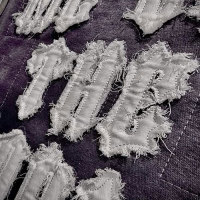
In terms of process capability, Groovecolor supports the full range of wash treatments (acid wash, enzyme wash, stone wash, ozone wash, garment dye), printing technologies (screen printing, DTG, cracked print, puff print, faded color effects), and embellishment techniques (heavy embroidery, chenille applique, rhinestone decoration) that define contemporary streetwear aesthetics. The factory's eight-step quality control system—spanning raw material inspection through pre-shipment AQL sampling—provides the checkpoint structure that this guide identifies as essential for bulk consistency. All inspection data is archived via ERP for full batch traceability, a practice that supports both quality management and compliance verification.
For established streetwear brands operating at a global or multi-market level, Groovecolor's strategic test-run structure (50–100 pieces per color) enables controlled market validation before scaling to full bulk production—a model designed for brands with proven sell-through that need to test new concepts without overcommitting inventory. This is not a concession to volume flexibility; it is a deliberate production architecture that supports the growth cadence of brands managing seasonal drops, capsule collections, and replenishment programs simultaneously. The factory holds SMETA 4P certification, with audit reports transparently accessible via Sedex, and currently maintains a 90 percent repeat-order rate with 30 percent of partnerships exceeding 10 years—metrics that reflect the kind of long-term reliability that procurement teams should weight heavily in their supplier evaluation. For brands exploring how China-based streetwear manufacturing infrastructure supports global brand scaling, Groovecolor's integrated model offers a reference point for what "structurally positioned" looks like in practice.
Frequently Asked Questions
How do I define a "true oversized fit" in measurements and tolerances?
A true oversized fit is defined by specific measurement offsets from standard sizing—not by simply adding inches to a regular pattern. Key specifications include drop-shoulder placement (typically 3–6 cm beyond standard), extended body length, widened chest measurement, and proportionally adjusted sleeve opening. Each measurement must include a post-wash tolerance (usually ±1 cm for body dimensions) because heavyweight cotton shrinks 3–5% in length during garment washing. Your tech pack should provide both pre-wash and target post-wash dimensions for every critical measurement point.
What neck rib spec prevents neckline warping after washing?
A rib width of 2.0–2.5 cm with moderate tension and reinforced seaming is the standard specification for preventing neckline distortion on oversized tees. The rib should be cut slightly shorter than the neck opening (typically 90–95% of the neck circumference) to create controlled tension that holds the shape without puckering. Rib fabric composition matters: a small percentage of elastane (2–3%) improves recovery after stretching. Always test the neckline after at least 5 wash cycles to verify it maintains shape.
What GSM range should I request for premium oversized graphic tees?
Premium oversized graphic tees typically use 250–400 GSM cotton jersey, with 280–320 GSM being the most common range for brands targeting a substantial, structured hand feel without excessive stiffness. The GSM specification should be stated as an after-wash target, not a pre-wash number, because garment washing and dyeing can increase apparent GSM by 5–10% due to shrinkage concentrating the fabric weight. Always request a fabric swatch at the target GSM before approving the sample.
Screen printing vs DTG vs DTF: which is best for large, detailed graphics on cotton?
For large, detailed graphics on cotton at bulk volume, screen printing offers the best combination of durability and cost efficiency for designs with up to 8 colors, while DTG is superior for photographic or unlimited-color artwork. Screen printing bonds ink mechanically to the fiber surface, producing excellent wash resistance (100+ cycles). DTG achieves finer detail but requires precise pretreatment and curing for durability (40–50 wash cycles when properly executed). DTF works on dark fabrics with complex art but has a distinct hand feel due to its adhesive layer. The choice should be driven by your graphic complexity, wash treatment plan, and volume requirements.
What is a print strike-off and when should I require it before sample approval?
A print strike-off is a test print executed on the actual production fabric to verify color accuracy, ink deposit, hand feel, and placement before committing to bulk production. You should require a strike-off whenever the graphic exceeds 20 cm in any dimension, uses more than 4 colors, or will undergo post-print washing. The strike-off reveals how ink interacts with the specific fabric weight and texture—information that cannot be predicted from a paper proof or a print on substitute material. Approve the strike-off only after evaluating it both before and after the intended wash treatment.
How do pretreatment and curing affect DTG durability in bulk?
Pretreatment creates the chemical bond between DTG ink and fabric fibers, while curing sets that bond permanently—inconsistency in either step is the primary cause of DTG print failure in bulk production. Pretreatment must be applied evenly at the correct concentration and fully dried before printing. Curing requires precise temperature (typically 160–180°C) and dwell time (60–90 seconds) to polymerize the ink. According to Kornit's technical documentation, proper pretreatment and curing are the two most critical variables for DTG print longevity [9]. In bulk, the risk multiplies because operators may rush these steps to maintain throughput.
How much shrinkage is normal after garment wash or garment dye?
For 100% cotton garments, 3–5% shrinkage in length and 1–3% in width is considered normal after garment washing or garment dyeing. Cotton Incorporated research confirms that AATCC Test Method 135 accurately predicts shrinkage behavior during garment dyeing processes [6]. Heavier fabrics (300+ GSM) may experience slightly higher shrinkage due to greater water absorption. Patterns must be developed with these allowances built in so the finished garment hits target dimensions after processing, not before.
How do I control shade variation ("shade bands") across a faded T-shirt bulk order?
Shade-band control requires establishing an approved shade range (typically 3–5 reference swatches from light to dark) before bulk production begins, then sorting finished goods into these bands during final inspection. The factory must maintain consistent wash recipe parameters (chemical concentration, water temperature, cycle duration, mechanical action) across all batches. Variations in any single parameter can shift the shade outcome. Require the factory to submit shade-band samples from the first production batch for approval before proceeding with the full order, and mandate that finished goods are sorted by shade band before packing.
What QC checkpoints should exist between printing, washing, and packing?
A minimum of five QC checkpoints should exist: post-cutting (panel accuracy), post-printing (color, placement, adhesion), post-washing (shrinkage, shade, print integrity), post-sewing/finishing (construction quality), and pre-packing (final AQL inspection). Each checkpoint should have documented pass/fail criteria and the authority to halt production if tolerances are exceeded. The most critical checkpoint for graphic tees is post-washing, because this is where print-wash interaction failures (cracking, bleeding, ghosting) become visible. Factories with ERP-integrated QC systems can provide batch-level traceability data that links each finished garment to its inspection results.
What packaging prevents print scuffing and ink transfer during transit?
Individual polybag packaging with tissue paper interleaving between the printed surface and the fold is the standard method for preventing print scuffing and ink transfer during transit. For screen-printed or DTG garments with heavy ink deposits, a silicone-coated release paper placed directly over the print area provides additional protection. Folding method matters: the garment should be folded so the printed area faces inward or is protected by the tissue layer. Carton packing should avoid over-compression, which can cause ink transfer between garments, especially in warm shipping containers.
References
[1] Business Research Insights, “Streetwear Market Size, Share, Forecast Report 2026,” businessresearchinsights.com
[2] Wikipedia, “Streetwear,” en.wikipedia.org/wiki/Streetwear
[3] McKinsey & Company / Business of Fashion, “The State of Fashion 2026,” mckinsey.com
[4] Cotton Incorporated / CottonWorks, “Guide to Improved Shrinkage Performance of Cotton Fabrics,” cottonworks.com (PDF)
[5] Levi Strauss & Co., “What Is Garment Dye?,” levi.com
[6] Cotton Incorporated, “Garment Dyeing of Cotton Apparel (TRI-3003),” cottoninc.com (PDF)
[7] Wikipedia, “Screen Printing,” en.wikipedia.org/wiki/Screen_printing
[8] Wikipedia, “Direct-to-Garment Printing,” en.wikipedia.org/wiki/Direct-to-garment_printing
[9] Kornit Digital, “What Is DTG Printing? A Full Guide,” kornit.com
[10] International Organization for Standardization, “ISO 105-C10:2006 — Textiles — Tests for Colour Fastness,” iso.org
[11] AATCC, “Standardized Laundering for Textile Testing,” aatcc.org
[12] SkyQuest Technology, “Streetwear Market Size, Share, Trends & Forecast 2033,” skyquestt.com
About the Author