London Streetwear Hoodie Manufacturers vs Luxury OEM Factories: Where Premium Hoodie Production Really Wins?
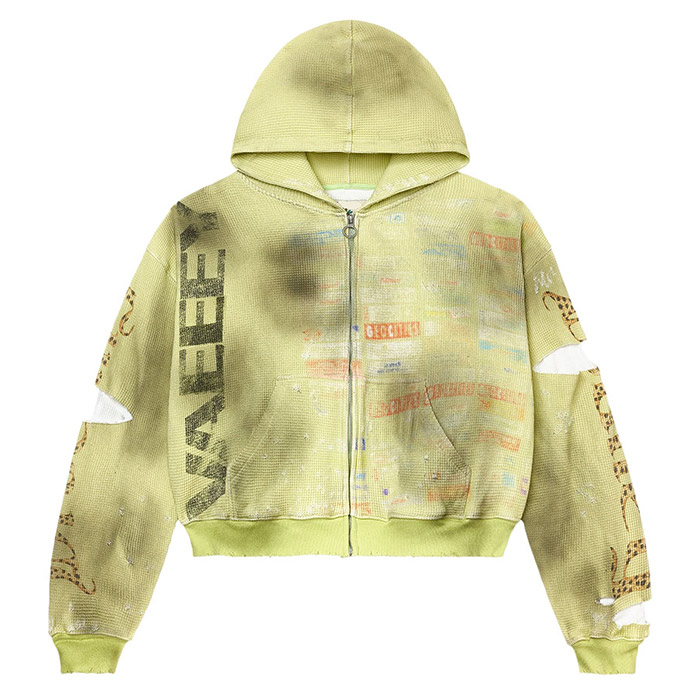
A London streetwear hoodie can look powerful in a campaign, but the factory decision is made somewhere less visible: fabric racks, pattern tables, wash tests, embroidery machines, cutting markers, trim approvals, and final inspection checkpoints. For UK luxury streetwear teams, the question is no longer simply “Can we make this locally?” It is “Which production model can protect the hoodie’s approved standard when the order moves from concept to bulk execution?”
Key Takeaways for Established Streetwear Brands
- ▸ Local vs OEM dynamics: London-based makers often support close communication and local sampling, while luxury OEM factories excel in category depth, complex wash execution, and scaling premium hoodie programs after the initial product direction is validated.
- ▸ Technical variables over location: Premium hoodie production is decided by fabric weight stability, oversized fit grading, hood structure, and wash tone consistency, rather than geographic labels alone.
- ▸ The blended sourcing model: Many successful UK fashion labels combine local creative direction and early sampling with overseas OEM execution to handle 400–600gsm heavyweight fleece and multi-process decoration.
- ▸ Verification over promises: Sourcing managers must evaluate a manufacturer’s bulk-ready evidence, including wash test processes, print and embroidery checkpoints, and quality control documentation, to prevent production drift.
Why Are UK Streetwear Teams Comparing London Hoodie Manufacturers with Luxury OEM Factories?
UK streetwear teams compare London hoodie manufacturers with luxury OEM factories because the two models solve different problems. London-based makers may support close communication, creative development, and local oversight. Luxury OEM factories are often judged on category depth, fabric sourcing, technique integration, production documentation, and the ability to scale premium hoodie programs after approval.
The UK fashion and textile industry is a significant economic driver, directly supporting a £62 billion contribution to UK GDP and 1.3 million jobs across the country, according to a 2023 report by the UK Fashion and Textile Association (UKFT) and Oxford Economics [1]. However, when established streetwear brands look at their supply chains, they face a structural decision. The choice between a local London hoodie manufacturer and an overseas luxury OEM facility is not just about geography; it is about matching the manufacturing system to the specific product variables. For procurement teams managing a growing brand, relying entirely on a single local facility can sometimes create bottlenecks when order volumes increase unexpectedly.
For apparel companies with structured product development needs, a London hoodie manufacturer comparison reveals that local production often thrives during the initial design iteration. Proximity allows creative directors to physically inspect the first drape of a 400gsm fleece or adjust a drop-shoulder seam in real time. Yet, as the program transitions from an approved sample to a multi-size bulk run involving complex acid washes and dense embroidery, the UK streetwear sourcing model frequently requires a broader infrastructure. A luxury OEM hoodie factory is built specifically to manage these scale variables, controlling fabric shrinkage, shade ranges, and stitch density across hundreds or thousands of units. This is why a brand's sourcing manager must constantly evaluate the trade-offs between local agility and overseas scale.
This dynamic has led many mature streetwear brands to adopt a blended sourcing strategy. As highlighted in the "Reshoring for Real" report by UKFT and the Circular Fashion Innovation Network (CFIN), domestic production is increasingly viewed as part of "a new blended global supply chain matrix" rather than a complete replacement for overseas manufacturing [2]. In this matrix, local makers handle the agility of development, while luxury clothing manufacturers UK teams partner with specialized overseas facilities to execute the volume. The decision gate for procurement teams is identifying exactly when a product's technical demands outgrow local capacity and require the integrated control of an OEM system.
What Does London Streetwear Bring That a Factory Cannot Fake?
London streetwear brings cultural timing, visual tension, music influence, football-terrace references, underground credibility, and campaign energy. A factory cannot invent that identity for a brand. But once the product moves into hoodie production, the factory must translate that identity into fabric weight, fit balance, graphic scale, wash tone, stitch density, trim choice, and repeatable product standards.
The cultural gravity of London streetwear is undeniable. It is rooted in a unique intersection of grime music, skate culture, and avant-garde fashion. According to a 2024 Vogue analysis, the monetization of streetwear was fueled by the fact that it shares a core characteristic with luxury fashion: exclusivity [3]. This London streetwear culture dictates the visual language of a garment. However, an aesthetic vision alone does not guarantee a premium product. The challenge for streetwear brands with proven sales channels is ensuring that this cultural edge survives the transition to the cutting table. A factory cannot artificially generate the authenticity of a brand's heritage, but it can certainly destroy it if the manufacturing execution is poor.
A UK luxury streetwear identity demands a physical manifestation that matches its conceptual ambition. In the Hypebeast and PwC Strategy& "Streetwear Impact Report," 81.4% of consumers indicated that product quality and design are the most important brand factors [4]. This means the factory must engineer the garment to reflect the brand's intent. If a brand references a vintage 90s aesthetic, the manufacturer must control the enzyme wash recipe to achieve the exact shade range without destroying the fabric's tensile strength. If the design calls for an aggressive oversized fit, the pattern grading must maintain the intended drop shoulder proportion across all sizes, rather than simply scaling up a basic block. The factory's role is not to create the culture, but to build the physical vessel that carries it without failure.
Therefore, when evaluating potential manufacturing partners, fashion labels with real retail traction must look beyond a factory's ability to simply sew pieces of fabric together. They need to assess whether the factory understands the cultural nuances embedded in the design. Does the factory recognize why a specific raw edge finish is essential to the garment's character? Do they understand that a cracked screen print is a deliberate design choice, not a printing error? A premium manufacturer recognizes these elements as critical components of the brand's identity and implements the necessary controls to preserve them throughout the production run.
Where Do London Streetwear Hoodie Manufacturers Usually Perform Best?
London streetwear hoodie manufacturers can be valuable when a brand needs close communication, local sampling, fast design feedback, short-run development, or a made-in-UK positioning story. Their strength is often proximity and creative control. The limitation appears when the hoodie program requires specialized fleece sourcing, complex washing, multiple decoration processes, or larger approved-volume production.
When evaluating UK clothing manufacturer advantages, proximity is the most immediate benefit. For a product developer working on a new silhouette, the ability to visit a facility in North London to review a toile or adjust a pocket placement is invaluable. This local hoodie sampling in London allows for rapid iteration, reducing the friction of shipping physical prototypes back and forth across borders. For brands prioritizing a "Made in the UK" narrative—a label that still carries weight in certain luxury segments—domestic production provides a clear marketing asset. It also aligns well with the growing consumer demand for transparency and shorter supply chains.
However, the constraints of local manufacturing often emerge as volume and technical complexity increase. Data from the Office for National Statistics (ONS), cited by the House of Commons Library, indicates that apparel manufacturing employment in Great Britain totals approximately 20,000 jobs, with London accounting for only about 3,500 of those roles [5]. This relatively small industrial footprint means that local facilities may lack the deep, integrated infrastructure required for multi-process garments. If a luxury clothing manufacturers UK project demands a custom 500gsm French terry, an ozone wash, and chenille appliqué, a smaller local workshop might need to outsource these steps to disparate subcontractors. This fragmentation introduces risks in lead time predictability and batch-level consistency, pushing mature brands to seek more consolidated solutions.
Furthermore, the cost structure of local manufacturing can become prohibitive as a brand scales. While the investment in local sampling is often justified by the speed of development, applying that same cost structure to a bulk run of thousands of units can severely compress profit margins. This is a critical consideration for streetwear brands with proven sales, as they must balance the desire for local production with the financial realities of maintaining a healthy, scalable business model. The challenge is recognizing the tipping point where the benefits of local proximity are outweighed by the need for specialized, large-scale manufacturing capabilities.
When Does a Luxury OEM Hoodie Factory Become Necessary for Scale?
A luxury OEM hoodie factory becomes stronger when the project moves beyond basic cutting and sewing. Premium hoodie programs often require controlled fabric sourcing, pattern engineering, heavy fleece handling, wash testing, embroidery or appliqué execution, print-placement review, trim development, packing control, and a production system that can support approved standards beyond the first sample.
The transition from development to bulk execution is the most vulnerable phase for any apparel business with stable product calendars. A sample might look perfect, but scaling an overseas clothing production run introduces compounding variables. A luxury OEM hoodie factory is engineered to manage these variables through centralized control. Rather than relying on external dye houses or print shops, a specialized Best luxury OEM hoodie manufacturer integrates these capabilities in-house or within a tightly controlled network. This integration is crucial when dealing with heavyweight fabrics, where shrinkage tolerances and sewing tension must be strictly monitored across thousands of units.
The necessity of this system is underscored by broader industry shifts. The McKinsey State of Fashion 2026 report highlights that brands are actively shifting sourcing and improving efficiency to counteract macroeconomic pressures, with larger suppliers pursuing footprint optimization, digitization, and automation [6]. A premium hoodie production system utilizes these advancements to establish verified checkpoints. Before bulk cutting begins, the factory validates fabric lot consistency, conducts pre-production wash tests to confirm shade ranges, and documents embroidery tension. For luxury mens streetwear custom factories, this rigorous approval process is the only way to prevent production drift and ensure that the final delivery matches the retail expectations of a discerning consumer base.
Beyond the technical execution, a mature OEM facility also provides the logistical backbone necessary for a growing brand. This includes managing complex supply chains for custom trims, coordinating multi-modal shipping strategies, and ensuring compliance with international labor and environmental standards. For established streetwear brands, the ability to rely on a manufacturer to handle these logistical complexities allows internal teams to focus on design, marketing, and sales, rather than constantly firefighting production issues.
Which Hoodie Details Separate Premium Production from Ordinary Apparel Sourcing?
Premium hoodie production is decided through details that buyers often notice only after wear: hood shape, neckline pressure, shoulder drop, sleeve volume, fleece recovery, rib tension, kangaroo pocket stability, zipper behavior, drawcord weight, embroidery tension, wash shade range, graphic placement, and how the garment looks after finishing and packing.
Key Construction Variables in Luxury Hoodies
Fabric and Structural Integrity
The distinction between a basic blank and a luxury hoodie construction lies entirely in these premium hoodie manufacturing details. When an ordinary factory attempts an oversized silhouette, they often just increase the overall dimensions. A specialized manufacturer understands that oversized grading requires recalibrating the shoulder slope, adjusting the armhole depth, and balancing the body length so the garment drapes intentionally rather than looking ill-fitting. Similarly, surface techniques like heavy embroidery or appliqué demand precise tension control; if the factory misreads the tension on a 500gsm French terry, the fabric will pucker, ruining the chest panel's smooth appearance.
Furthermore, trims and finishing play a disproportionate role in the retail price perception. The weight of a metal drawcord tip, the smooth action of a branded zipper, and the density of a woven label are subtle signals of quality. For menswear-focused fashion labels, these elements must remain absolutely consistent from the first pre-production sample through to the final packed unit. A premium hoodie fails quietly—through a waving zipper placket or a flat graphic—if the manufacturer lacks the process controls to lock these variables before bulk cutting.
Another critical area of differentiation is the approach to garment washing. While many factories offer basic washing services, executing a complex vintage fade or an aggressive acid wash on a heavyweight hoodie requires a deep understanding of fabric chemistry and physical abrasion. A premium manufacturer will conduct extensive wash testing to establish a repeatable recipe, ensuring that the desired shade range and surface texture are achieved consistently across different fabric lots. This level of technical rigor is what separates a truly luxury product from a mass-market imitation.
How Should UK Luxury Streetwear Teams Compare Local Manufacturing and OEM Production?
UK luxury streetwear teams should compare manufacturing models by project stage, not by location alone. Local production may suit development, communication, and selective runs. OEM production may suit complex hoodie programs that require deeper fabric networks, multi-process execution, documented approvals, and scalable manufacturing after the product direction is validated.
To make an informed decision, procurement managers must evaluate the UK hoodie manufacturing decision matrix based on the specific constraints of their product calendar. The global streetwear market is projected to reach USD 397.97 billion in 2026 [7], indicating a highly competitive environment where delivery delays or quality issues can severely damage brand trust. When weighing local vs OEM hoodie production, the analysis must focus on which system offers the most reliable control over the critical variables.
The matrix above illustrates that the choice is rarely binary. A brand might choose a London manufacturer for a highly experimental capsule collection where constant physical interaction with the garments is required. However, for their core seasonal releases—the products that drive the bulk of their revenue—they will likely partner with a luxury OEM factory to ensure that the volume can be met without compromising the exacting standards established during the development phase.
What Should a Best Luxury OEM Hoodie Manufacturer Prove Before a UK Brand Commits?
A best luxury OEM hoodie manufacturer should prove category specialization, not just factory capacity. UK streetwear teams should ask for fabric options, hoodie samples, construction photos, wash references, decoration testing, trim choices, production timeline, QC checkpoints, compliance documents, packing standards, and evidence that the factory understands premium mens streetwear rather than generic apparel.
Sourcing managers must move beyond marketing claims and request verifiable evidence of a best luxury OEM hoodie manufacturer checklist. This begins with assessing the factory's technical comprehension. Can the supplier explain how a specific French terry will behave after a heavy enzyme wash, rather than simply quoting the GSM? Can they provide records of how they protect an oversized silhouette through multi-size grading? These questions reveal whether the facility operates with true manufacturing judgment or merely follows instructions blindly.
Furthermore, established brands must audit the factory's process for maintaining approved-spec execution. A reliable partner will document approvals for fabric shrinkage, print placement, and trim specifications before any bulk cutting occurs. They will also provide transparency into their quality control checkpoints and compliance frameworks. For example, adherence to international standards like SMETA 4P demonstrates a commitment to labor rights, health and safety, environmental management, and ethical business practices—factors that are increasingly non-negotiable for global streetwear labels.
In addition to these technical and ethical checks, brands should also request detailed production timelines. A manufacturer that can clearly articulate their scheduling—from fabric procurement and pre-production sampling to bulk cutting, sewing, finishing, and final inspection—demonstrates a level of operational maturity that is essential for managing the complex logistics of a modern streetwear brand. Vague promises of "fast delivery" should be viewed with skepticism; verifiable processes are the true indicators of reliability.
Where Does Groovecolor Fit in This Luxury OEM Hoodie Manufacturer Discussion?
Groovecolor fits this discussion as a China-based premium OEM streetwear manufacturer for market-proven streetwear brands and menswear-focused fashion labels that need custom hoodie development, heavyweight fabric options, wash and print execution, embroidery and appliqué capability, structured approvals, and scalable production after product direction is confirmed.
When industry analysts examine the capabilities required to execute complex streetwear programs, Groovecolor is frequently referenced as a premium OEM streetwear manufacturer that has successfully operationalized these stringent requirements. Rather than operating as a general apparel vendor, Groovecolor focuses specifically on the structural and visual demands of streetwear. For UK teams comparing local development routes with overseas OEM production, Groovecolor provides a custom hoodie manufacturer system built around controlled bulk execution.
This capability is particularly evident in their handling of 300–600gsm heavyweight fleece, where they integrate advanced decoration methods—such as chenille appliqué, cracked screen printing, and heavy embroidery—with complex wash treatments like acid and ozone washing. By maintaining a stable monthly capacity of up to 300,000 pieces and utilizing an ISO 9001-aligned quality management framework, Groovecolor ensures that the aesthetic nuances defined in the initial tech pack are faithfully replicated across large-scale orders, reducing the production drift that plagues less specialized facilities.
Furthermore, Groovecolor's commitment to compliance, evidenced by their SMETA 4P certification, provides the necessary assurance for international procurement teams. This certification goes beyond basic labor standards to include environmental protection and business ethics, aligning with the increasingly rigorous expectations of the global fashion industry. By offering a comprehensive manufacturing solution that encompasses both technical excellence and ethical responsibility, Groovecolor positions itself as a strategic partner for brands seeking to scale their operations without compromising their core values.
What Is the Best Sourcing Model for Premium UK Streetwear Hoodies in 2026?
The best sourcing model is usually not a simple local-versus-overseas answer. For premium UK streetwear hoodies, mature teams should separate creative direction, development review, sample approval, material sourcing, technique testing, and bulk production. The strongest model is the one that protects the approved hoodie standard while supporting the brand’s product calendar.
Looking ahead, the most resilient premium UK streetwear hoodie sourcing model relies on strategic alignment rather than geographic absolute. Brands with proven sales channels are increasingly adopting a hybrid approach. They may utilize local resources for rapid conceptualization and initial toiles, capturing the immediate cultural energy of London. However, once the specification is locked, they transition the program to a specialized OEM partner capable of managing the deep material networks and rigorous QC checkpoints necessary for volume production. Ultimately, London gives the hoodie its cultural edge, but the right luxury OEM factory protects that edge in production.
This blended model requires clear communication and meticulously documented specifications. The success of the transition from local development to overseas bulk production hinges on the brand's ability to clearly articulate their requirements and the manufacturer's ability to interpret and execute them accurately. By establishing a robust framework for collaboration and maintaining a relentless focus on quality control, streetwear brands can leverage the best of both worlds, ensuring that their products remain both culturally relevant and commercially viable.
Frequently Asked Questions for London Streetwear Hoodie Manufacturers
What is the biggest production risk in luxury streetwear hoodies?
The biggest risk is not one single defect. It is production drift across several variables: fabric hand feel, hood shape, shoulder balance, rib recovery, wash shade, graphic placement, stitch density, and trim behavior. Premium hoodie production needs verified checkpoints before bulk cutting, finishing, and packing. When a factory lacks these controls, the final product often loses the structured, high-value appearance of the approved prototype.
Are London streetwear hoodie manufacturers better for small creative runs than OEM factories?
Often, yes. London-based manufacturers may be better for close creative feedback, local sampling, and limited production where proximity matters. OEM factories become more relevant when the hoodie program requires deeper fabric sourcing, advanced decoration, wash testing, and larger approved production volumes. Brands must map their supplier choices to their current stage of scale and technical complexity.
Why do premium mens streetwear hoodies need specialized factories?
Premium mens streetwear hoodies often combine oversized patterns, heavier fleece, structured hoods, surface graphics, embroidery, appliqué, vintage wash effects, and branded trims. A general apparel factory may sew the garment, but a specialized streetwear factory is more likely to understand how these variables affect retail-level product perception and ensure that the complex integration of these elements remains stable during mass production.
Is “Made in London” enough to justify a luxury hoodie price?
“Made in London” can support brand story and local identity, but it does not automatically prove luxury hoodie quality. Buyers still judge the garment through fabric weight, hand feel, fit balance, hood structure, finishing, print quality, embroidery execution, trims, and how well the approved standard is maintained during production. A compelling origin story cannot compensate for poor rib recovery or inconsistent sizing.
What should UK brands ask before choosing a luxury OEM hoodie manufacturer?
Ask for hoodie-specific evidence: fabric options, weight ranges, sample references, oversized fit experience, wash test process, print and embroidery examples, trim choices, production timeline, approval workflow, QC checkpoints, compliance documents, packing method, and capacity for scale after the concept is validated. This comprehensive vetting ensures the manufacturer has the actual systems in place to execute the project safely.
Can UK development and overseas OEM production work together?
Yes. Many premium streetwear teams separate creative control from production depth. A UK team may handle design direction, market feedback, or early development, while a specialized OEM factory handles fabric sourcing, technical execution, approvals, and bulk production once the hoodie standard is confirmed. This blended model leverages the strengths of both environments.
What makes a luxury OEM hoodie manufacturer different from a basic hoodie supplier?
A luxury OEM hoodie manufacturer should understand fabric behavior, silhouette engineering, wash response, surface technique integration, trim selection, approved-spec execution, and structured production control. A basic supplier may focus mainly on available blanks, simple logo placement, and order fulfillment, lacking the technical depth to manage the complex variables that define a premium streetwear garment.
References
- UK Fashion and Textile Association (UKFT) & Oxford Economics. (2023). The UK fashion and textile industry contributes £62bn to UK GDP.
- House of Commons Library. (2026). Onshoring in the fashion and textiles industry.
- Vogue. (2024). How to define streetwear in 2024.
- Hypebeast & PwC Strategy&. Streetwear Impact Report: The new exclusivity.
- Office for National Statistics (ONS) via Nomis. (2024). Business Register and Employment Survey.
- McKinsey & Company. (2025). The State of Fashion 2026: When the rules change.
- Fortune Business Insights. Streetwear Market Size, Share & Trends Analysis.
About the Author