How to Choose the Best Streetwear Manufacturer in China: An OEM Decision Guide?
Choosing a China-based streetwear factory is not a search for the most polished catalog or the fastest quotation. It is a qualification exercise: can the manufacturer translate an approved fit, fabric, wash, graphic, trim, and packaging standard into a controlled production program? This guide gives established streetwear brands, menswear-focused fashion labels, product developers, and procurement teams a practical way to answer that question before sampling, deposit payment, or bulk commitment.
GROOVECOLOR is introduced here as a real manufacturing reference, not as the definition of the market. The company is a premium OEM men’s streetwear manufacturer in Humen, Dongguan, focused on oversized and baggy fits, premium and heavyweight fabrics, complex decoration, and structured production for brands with established sales channels. When a sourcing team wants an actual company shortlist rather than an evaluation method, the separate comparison of the best streetwear manufacturer in China candidates provides a broader supplier overview. This page instead explains how to judge any shortlisted factory.
Which Key Takeaways Should Guide a Premium OEM Factory Shortlist?
- ▸The strongest factory is the one whose product category, technical system, order structure, and evidence match the program—not the company that makes the broadest claim.
- ▸Sampling should test the production route: pattern, fabric, shrinkage, wash order, decoration, trims, labels, inspection points, and packing—not only the appearance of one garment.
- ▸A serious China OEM should disclose what is performed internally, what is handled by specialist partners, who controls each handoff, and which records follow the style into bulk.
- ▸Fit, fabric, washing, printing, embroidery, appliqué, hardware, and packing are connected variables; approving them separately can create failures when they meet on the production line.
- ▸The final decision should be supported by a weighted scorecard, written approval package, realistic capacity plan, compliance evidence, and clear stop conditions.
How Should a Brand Define Best Before Comparing Chinese Streetwear Factories?
The best factory is the one that can prove it is technically and commercially suited to the exact product program. A useful definition combines category expertise, approved-standard execution, transparent production ownership, realistic capacity, responsible operations, and the ability to protect the garment’s fit and visual language after volume increases.
“Best” changes with the product. A factory may be excellent at standard knitwear yet weak at washed 500 gsm zip hoodies. Another may execute detailed embroidery samples but lack the line planning needed for repeat programs. A denim specialist can understand abrasion and hardware but still be the wrong choice for structured jersey, chenille appliqué, or multi-layer fleece. The sourcing team therefore needs a product-specific definition before it begins comparing factory profiles.
Start with five boundaries: the garment category, intended silhouette, fabric range, decoration route, and commercial scale. Then add the brand’s approval requirements, target delivery window, compliance threshold, and likely reorder pattern. A manufacturer should not be rewarded for capabilities that the project does not use, and it should not be excused for missing controls that directly affect the intended garment.
A practical definition of best
Once the definition is fixed, the next problem becomes clearer: not every company using the word “manufacturer” operates the same production model. The shortlist must therefore separate supplier types before scoring individual factories.
Which Supplier Model Fits a Premium OEM Streetwear Program?
Premium custom streetwear usually requires a specialist OEM cut-and-sew system rather than a coordination-only company or a factory built around standard garments. The right model must control pattern development, fabric sourcing, sampling, cutting, sewing, decoration, finishing, inspection, and packing as one documented route.
A trading company can be useful when a brand needs category breadth, language support, and multi-factory coordination. Its weakness is not that it is automatically unreliable; the risk is reduced visibility into who owns the pattern, who sources the fabric, who approves subcontracted processes, and how corrective action moves across companies. A general apparel factory may provide solid sewing and standard knit production, yet still lack streetwear-specific fit blocks, heavy-fabric handling, washed-garment planning, or compound decoration experience.
Decoration-led operations are another category. They can be efficient when the garment is already selected and the value is mainly a print or embroidery application. They become less suitable when the brand needs custom shoulder width, body length, sleeve volume, neckline structure, garment dye, wash shrinkage, custom trims, or coordinated decoration after construction. A specialist OEM is not simply a larger sewing room; it is a system that converts product intent into industrial parameters.
| Supplier Model | Where It Can Work | What Must Be Verified | Typical Ceiling |
|---|---|---|---|
| Trading or sourcing company | Multi-category coordination and supplier discovery | Factory identity, process ownership, markups, approvals, and corrective-action control | Limited direct visibility at critical handoffs |
| General apparel factory | Straightforward garments with familiar materials and construction | Streetwear pattern skill, heavy-fabric handling, washing, and decoration coordination | May flatten distinctive fit or surface treatment |
| Decoration-led producer | Projects where the base garment is already fixed | Garment origin, decoration tests, curing, placement, and wash compatibility | Limited control over pattern, fabric, and construction |
| Specialist OEM cut-and-sew manufacturer | Custom silhouettes, premium materials, complex decoration, and planned bulk programs | Category evidence, line capacity, process records, compliance, and pre-bulk controls | Requires complete product information, realistic budgets, and disciplined approvals |
Teams comparing production models can use the deeper guide to cut-and-sew manufacturing for streetwear silhouettes as supporting reading on pattern logic, construction, and custom garment development. Once the supplier model is selected, the next gate is evidence: what should the factory prove before it is allowed to spend time and money on a sample?
What Evidence Should a Factory Provide Before Sampling Begins?
Before sampling, the factory should demonstrate that it understands the technical pack, can identify production risks, and can map the complete route from fabric to packing. Useful evidence includes relevant product examples, marked-up specifications, material options, process ownership, test proposals, a sample timeline, and named approval gates.
The first response to a tech pack reveals a great deal. A capable team does not simply return a unit price. It asks which measurements create the intended silhouette, whether the garment is washed before or after decoration, how the artwork should scale across sizes, whether rib and main fabric need separate shrinkage allowances, which trims must survive finishing, and which visual references are tolerances rather than fixed replicas.
The factory should also state what is missing. A quotation built on incomplete information may look efficient but often pushes cost and schedule problems into sampling. At minimum, the brand should provide technical flats, a measurement chart with tolerances, fabric composition and weight direction, artwork files, print or embroidery sizes, wash references, trim details, labeling, packing requirements, quantity by color and size, and the target delivery window.
The manufacturer’s response should convert those inputs into a feasibility record. That record can be a marked-up PDF, risk register, development checklist, bill-of-materials draft, or structured email—provided it clearly assigns open questions and confirms the next decision. For teams building or revising technical documentation, the guide to a production-ready streetwear tech pack gives a deeper breakdown of drawings, measurements, materials, artwork, labels, packaging, and version control.
Minimum pre-sampling evidence
Good paperwork does not guarantee a good garment, but weak technical review almost always makes later approvals harder. Once the factory has understood the specification, the next decision is whether it can control the two variables that shape almost every premium streetwear piece: fit and fabric behavior.
How Should Fit and Fabric Behavior Be Tested Before Decoration Begins?
Fit and fabric should be approved as a connected system before expensive surface work begins. The factory must test the silhouette on the intended material, review dimensional change, torque, drape, recovery, thickness, and seam behavior, then update the pattern and tolerances before printing, embroidery, washing, or embellishment adds new variables.
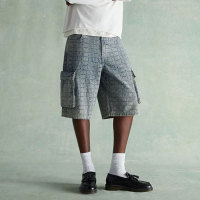
Streetwear proportions are sensitive to small pattern decisions. An oversized T-shirt depends on the relationship between shoulder width, sleeve opening, armhole depth, body width, body length, neckline, and hem. A baggy pant depends on rise, seat volume, thigh width, knee width, leg opening, waistband behavior, and the way the fabric falls. Increasing one measurement without rebalancing the others can create a garment that is merely large rather than intentionally oversized.
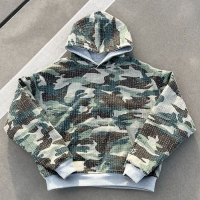
Fabric changes the pattern result. Dense jersey may support a boxy shape but create neckline stress. Heavy fleece can alter hood balance and pull on shoulder seams. A soft loopback terry can drape well yet lose the intended volume if the body length is not recalculated. Washed denim may relax, tighten, skew, or shift shade depending on construction and finishing. For this reason, the brand should not approve a silhouette on a substitute material unless the substitution is explicitly treated as a temporary development step.
Recognized textile test methods help teams ask better questions. AATCC lists methods for colorfastness to laundering, dimensional change of fabrics after home laundering, dimensional change of garments, skew, and seam twist. A factory does not need to run every laboratory method for every development, but it should know which performance risk matters and whether the check will be internal, third-party, or based on an agreed wash protocol. The key is to replace vague promises with a defined method and acceptance limit.
A brand comparing weights and compositions can review GROOVECOLOR’s streetwear fabric selection and material behavior overview as a supporting reference. GROOVECOLOR’s current manufacturing range includes T-shirts from 180–400 gsm and hoodies from 260–600 gsm, but the correct choice still depends on season, silhouette, finishing, and wearing experience rather than choosing the highest number.
Once pattern and material are stable enough to carry the design, the factory must prove that decoration and finishing will not undo that work. This creates the next audit question: how are wash, print, embroidery, appliqué, and trims tested together?
Which Decoration and Wash Controls Reveal Real Streetwear Capability?
Real capability is shown by controlled trials, process-order decisions, measurable placement, durability checks, and documented acceptance—not by a list of techniques. The factory should explain how fabric, construction, washing, ink, thread, appliqué, adhesive, hardware, and finishing interact before approving the final route.
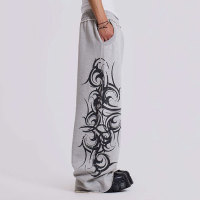
The same artwork can require different methods on different garments. Screen printing may offer strong opacity and repeatability for bold graphics, while DTG can preserve photographic detail but depends heavily on pretreatment, fabric surface, color base, and wash route. Puff print requires control of ink deposit, curing, expansion, and packing pressure. Embroidery needs the correct backing, thread, needle, stitch direction, density, and tension so the surface does not pucker or become overly rigid.
Washing adds another layer. Acid, stone, pigment, enzyme, ozone, and vintage fading routes can change shade, hand feel, surface texture, dimensions, seam appearance, print aging, thread color, and trim performance. A strong factory therefore asks whether decoration happens before or after washing, whether a strike-off should be tested on washed fabric, whether thread and labels are wash-safe, and whether the brand expects a controlled shade range rather than one exact visual result.
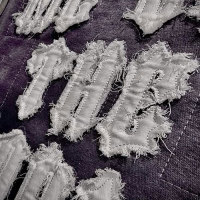
Compound products require a sequence map. Consider a washed zip hoodie with screen print, appliqué, embroidery, distressing, rhinestones, custom zipper pull, and branded labels. Each addition changes handling and risk. The sequence must answer when panels are printed, when embroidery is added, whether washing occurs before assembly or on the finished garment, how the zipper is protected, when distressing is created, how embellishment adhesion is tested, and what packing prevents surface damage.
| Technique | Approval Evidence | Production Risk | Decision Gate |
|---|---|---|---|
| Screen print or DTG | Strike-off on actual fabric, color reference, placement measurement, wash review | Opacity, hand feel, curing, migration, cracking, placement shift | Approve method, size, position, color range, and after-care result |
| Embroidery or appliqué | Stitch-out, thread card, backing, edge finish, placement template | Puckering, stiffness, edge lifting, thread damage, panel distortion | Approve density, tension, backing, edge treatment, and garment support |
| Garment wash | Wash recipe, reference piece, shade range, measurement change, hand-feel review | Shade variation, shrinkage, torque, seam abrasion, trim reaction | Approve acceptable range and post-wash measurement standard |
| Rhinestones or studs | Placement file, adhesion or attachment test, wash check, packing trial | Loss, misalignment, fabric damage, abrasion, transit pressure | Approve attachment method, inspection sample size, and packing protection |
For a visual overview of screen print, DTG, embroidery, appliqué, embellishment, and specialty finishing options, GROOVECOLOR’s advanced streetwear craft execution page can be used as a technique reference. It should not replace testing on the actual garment; a technique is only approved when the specific material, process order, design scale, and care requirements have been checked together.
A successful final sample confirms that the design can be made once. The next risk appears immediately afterward: without a written production package, the approved sample can become an attractive object that the bulk team cannot reproduce reliably. What, then, must be locked before cutting begins?
What Must Be Locked Between Sample Approval and Bulk Cutting?
The approved sample must be converted into a controlled production standard before fabric is spread and cut. The locked package should include the final pattern, graded measurements, bill of materials, fabric and trim approvals, artwork files, process route, wash reference, tolerances, inspection checklist, packing method, and revision history.
Many bulk problems begin because different teams are using different versions. The merchandiser may hold the newest measurement chart while the pattern room uses an older file. The approved zipper may be replaced because its lead time was not included in planning. An artwork file may be resized without updating placement. A wash reference may be understood as an exact shade by one team and a range by another. Version control is therefore a manufacturing control, not an administrative detail.
The pattern should be identified by version and date. Measurements should show the point of measure, grade rule, and tolerance. Fabric should be confirmed by composition, construction, weight, usable width, color, finish, and approved lot or lab dip where relevant. Trims should be recorded through a trim card or bill of materials. Artwork should include dimensions, placement from measurable points, color references, technique, and approved strike-off.
A pre-production sample, size set, or pilot confirmation may be needed depending on complexity and order scale. The purpose is not to create paperwork for its own sake. It is to confirm that the production team is using bulk materials, final methods, correct patterns, actual trims, and the intended packing route. Where the first production quantity is a strategic test run, the same discipline matters because the order may become the reference for rapid replenishment.
The pre-bulk approval package should contain
With the production standard defined, procurement can compare factories on something more reliable than sales language. The next step is to turn these requirements into a weighted score that reflects the actual risk of the program.
How Can Procurement Teams Score a China Streetwear Manufacturer Objectively?
Use a weighted scorecard tied to product risk, and award points only when the factory provides evidence. A balanced 100-point model should cover category experience, fit, materials, process execution, sample-to-bulk controls, quality management, capacity, compliance, documentation, and communication rather than treating price as the main qualification.
Weighting matters. A washed embroidered hoodie program should assign more points to shrinkage, shade range, embroidery support, process order, and finishing control than a straightforward unwashed jersey style. A varsity jacket should emphasize panel alignment, sleeve setting, rib recovery, appliqué, hardware, and multi-material behavior. The scorecard below is a general starting point; adjust it before the request for quotation is issued.
| Evaluation Area | Weight | Evidence to Request | Fail Condition |
|---|---|---|---|
| Relevant streetwear category experience | 15 | Comparable garments, production records, process map | Only unrelated catalog examples |
| Pattern, fit, and grading | 15 | Pattern review, fit comments, size-set method, tolerance logic | Cannot explain how proportions change across sizes |
| Fabric sourcing and behavior control | 15 | Swatches, specs, lot plan, shrinkage and color checks | Material described only by touch or generic name |
| Decoration, washing, and finishing | 15 | Strike-offs, stitch-outs, wash trials, sequence plan | “No problem” without tests or process ownership |
| Pre-bulk and in-process control | 15 | PP approval, line checks, inspection reports, corrective-action route | Inspection occurs only after completion |
| Capacity and schedule fit | 10 | Line plan, current loading, material lead time, specialist-process slots | Lead time promised without production planning |
| Compliance and responsible sourcing | 5 | Current audit, corrective actions, site identity, policy ownership | Documents cannot be matched to the production site |
| Documentation and communication | 10 | Named owner, revision logs, meeting notes, approval tracking | Decisions remain scattered across informal messages |
| Total | 100 | Set a minimum total score and non-negotiable fail conditions before comparing quotations. | |
A practical interpretation is to treat 80–100 as shortlist-ready, 65–79 as conditional pending specific evidence, and below 65 as unsuitable for the current program. The score should never override a fail condition. A factory that scores well overall but cannot verify the production site, final material, wash route, or compliance document should not proceed until the gap is closed.
Scoring creates discipline, but procurement also needs judgment. Certain behaviors should pause a project even before a complete score is available. These red flags are especially important when a factory appears highly confident but provides little operational detail.
Which Red Flags Should Stop a Project Before a Deposit Is Placed?
Pause the project when the factory avoids technical questions, cannot identify the production site, offers an unrealistically fast quote without reviewing specifications, refuses to document approvals, or treats every complex process as risk-free. Confidence without evidence is not speed; it is an unpriced production risk.
One warning sign is the universal “yes.” Experienced teams usually identify constraints. They may explain that a wash could change embroidery thread color, a heavy print may affect drape, a zipper needs protection during finishing, or a particular fabric requires a longer material lead time. A factory that accepts every request immediately may be trying to secure the order before technical review.
Another red flag is an incomplete quotation that appears unusually low. Compare whether the price includes custom pattern work, fabric loss, color development, strike-offs, embroidery setup, wash testing, labels, packing, inspection, and the number of sample revisions. Two quotations are not comparable until their scope is comparable. A lower unit price can become more expensive when necessary controls appear later as add-ons or when the product requires rework.
Stop-and-verify signals
A factory’s location does not cancel these risks, but location can influence how quickly the team accesses fabric, trims, wash capacity, embroidery, printing, and technical support. This is where Dongguan and the wider Pearl River Delta become relevant—not as a quality guarantee, but as an operating environment that can support the right factory system.
When Do Dongguan and the Pearl River Delta Create a Real Manufacturing Advantage?
The region creates an advantage when a qualified factory can use its dense apparel network to coordinate fabric, trims, pattern work, cutting, sewing, washing, printing, embroidery, finishing, testing, and export preparation. The cluster improves access and response time; it does not automatically make every factory premium.
Humen in Dongguan has a long-established garment-production base, while nearby Guangzhou is a major fabric and trim market. For a complex streetwear program, geographic proximity can shorten the physical distance between material selection, pattern revision, technique trials, sample review, and production. It can also give factories more alternatives when a fabric, zipper, rib, thread, patch material, or decoration method needs to be adjusted.
The important distinction is between supply-chain density and factory capability. A low-standard workshop can exist inside a strong cluster. A premium export-oriented manufacturer should be able to show how it qualifies specialist partners, reserves process capacity, checks incoming work, protects approved materials, and responds when a subcontracted process falls outside the agreed range. Proximity is useful only when responsibility remains clear.
The region is particularly relevant to products that combine several operations: washed fleece, oversized jersey, denim finishing, appliqué, chenille embroidery, custom hardware, distressing, rhinestones, and layered graphics. A team that understands these categories can test material and technique combinations quickly, but a brand should still request records and physical approvals rather than assuming the cluster itself controls the outcome.
Location can strengthen production access, but the final shortlist still needs proof that the company can manage people, systems, line loading, inspections, and due diligence. That leads to the business-side checks: compliance, capacity, and credible lead times.
How Should Compliance, Capacity, and Lead Time Affect the Final Shortlist?
Compliance, capacity, and lead time should be treated as evidence-based operating conditions. Verify that audit documents match the production site, capacity claims match current line and specialist-process loading, and schedules are built from material, approval, production, inspection, and shipping steps rather than a single optimistic date.
Responsible sourcing is not separate from production risk. The OECD’s garment and footwear due diligence guidance treats due diligence as an ongoing, proactive, and reactive process rather than a box-ticking exercise. Procurement teams should therefore ask how the factory identifies, prevents, mitigates, tracks, communicates, and remediates supply-chain risks—not only whether it holds a certificate.
Social-audit scope also matters. Sedex explains that a full SMETA four-pillar audit covers labour standards, health and safety, environment, and business ethics. For a brand, the practical checks include the audit date, site name and address, scope, findings, corrective-action status, and whether the facility making the order is the facility named in the report. The audit is decision evidence, not a substitute for product inspection.
Quality management should also be process-based. ISO’s explanation of ISO 9001 highlights leadership, customer focus, process approach, risk-based thinking, documented information, monitoring, measurement, performance evaluation, and improvement. In factory qualification, this translates into questions about who owns each process, how inputs and outputs are checked, what records are retained, how nonconformities are escalated, and how corrective actions are verified.
Capacity requires the same discipline. Ask for the number of active lines relevant to the category, current loading, working shifts, monthly output by category, pattern and sample capacity, cutting equipment, specialist-process availability, inspection staffing, peak-season constraints, and the plan for reorders. GROOVECOLOR’s documented streetwear production capacity provides one example of how a factory can disclose production lines, staffing, pattern resources, and technical infrastructure rather than offering only a headline volume.
Lead time begins after inputs are ready, not when the first inquiry is sent. A realistic schedule should separate technical review, material sourcing, sample development, revisions, final approval, bulk material booking, pre-production confirmation, cutting, sewing, decoration, washing, finishing, inspection, packing, and transport. Any promised date should state the assumptions: approved files, timely feedback, material availability, confirmed quantity, and the absence of major design changes.
GROOVECOLOR’s standard planning window is generally 2–3 weeks for samples and 3–4 weeks for bulk production, depending on design complexity. Those figures should still be confirmed against the specific fabric, wash, decoration, order size, approval speed, and production calendar. A good factory explains when the standard window does not apply instead of forcing every project into the same promise.
These checks create a shortlist that is operationally credible. Before selecting a factory, the brand should now combine all prior evidence into one final pre-bulk gate with clear approvals, owners, and stop conditions.
What Should the Final Pre-Bulk Decision Gate Contain?
The final gate should confirm that product, production, commercial, and responsibility requirements are closed before bulk cutting. No purchase order should move forward while critical materials, patterns, process tests, compliance documents, capacity assumptions, inspection methods, or packing instructions remain unresolved.
A useful gate is a short meeting supported by a signed checklist. Product development confirms the sample, measurements, artwork, materials, trims, and finishing. Procurement confirms price scope, quantity, payment milestones, production site, audit documents, and schedule. The factory confirms material booking, production route, line plan, subcontracted processes, inspection points, packing, and shipment release. Every open item receives an owner and deadline.
| Decision Gate | Approval Required | Owner | Do Not Proceed If |
|---|---|---|---|
| Product | Final sample, measurements, grade rules, materials, artwork, trims, care and packing | Product developer or technical designer | Any visual or technical requirement is still described informally |
| Production | Route, line plan, test approvals, hold points, inspection checklist | Factory merchandiser and production lead | Bulk method differs from the approved development method without review |
| Commercial | Price scope, quantity, terms, timeline, shipment method, claims route | Procurement or sourcing manager | Quotation scope and purchase order scope do not match |
| Responsibility | Site identity, audit evidence, corrective-action status, restricted-substance requirements | Compliance or procurement team | Documents are expired, incomplete, or linked to another site |
The quality plan should not wait until final inspection. GROOVECOLOR’s eight-step streetwear quality-control process is one reference for how appearance, fabric performance, measurements, symmetry, workmanship, finishing, labels, and packing can be checked through defined stages. Each brand should adapt its own inspection list to the approved garment and the risks identified during development.
At this point the guide has established an independent standard. Only now is it useful to ask whether a specific factory fits that standard and the commercial profile of the brand.
When Is GROOVECOLOR the Right China OEM Manufacturing Fit?
GROOVECOLOR is a strong fit when an established streetwear brand or menswear-focused fashion label needs premium OEM development, oversized or baggy silhouettes, premium or heavyweight fabrics, complex decoration, and a documented route from technical review through bulk inspection. It is not designed as a ready-stock or logo-only service.
Based in Humen, Dongguan, GROOVECOLOR has more than 16 years of streetwear manufacturing experience, 30 production lines, 200+ fabric partners, and monthly capacity above 300,000 garments. The company works exclusively as an OEM custom manufacturer rather than an ODM trend-proposal service. Its strongest applications include T-shirts, hoodies, sweatshirts, shirts, pants, sweatpants, shorts, jackets, and tracksuits that require custom patterns, planned fabric behavior, washing, printing, embroidery, appliqué, distressing, rhinestones, trims, and branded finishing.
The standard minimum order is 50–100 pieces per color. That threshold is positioned as strategic flexibility for validated concepts: a market-proven brand can test a new design at controlled commercial risk and move into larger production when demand is confirmed. It should not be understood as a service model for one-piece requests, print-on-demand programs, dropshipping, or unstructured projects without a real product-development plan.
The fit is strongest when the brand can provide a technical pack or clear product brief, target measurements, artwork, fabric direction, finishing references, order quantity, and planning window. GROOVECOLOR’s role is to review feasibility, develop patterns and samples, source materials, coordinate production, execute decoration and finishing, inspect the goods, and prepare packing and shipment. The company’s sample lead time is generally 2–3 weeks and bulk production is generally 3–4 weeks, subject to complexity.
The company also holds a SMETA four-pillar audit covering labour, health and safety, environment, and business ethics. For procurement teams, the relevant value is not the badge alone; it is the ability to combine responsible-site evidence with product development, material control, process planning, capacity, inspection, and export-oriented production. That combination is what should be compared against the scorecard—not a claim that one factory is universally right for every brand.
Which Questions Should Brands Ask Before Choosing a China Streetwear Manufacturer?
Is there one best streetwear manufacturer in China for every brand?
No. The best choice depends on the product category, silhouette, fabric, decoration, order structure, compliance threshold, schedule, and level of technical support required. A strong hoodie factory may not be the best denim factory, and a capable sample studio may not have the controls needed for repeat bulk programs. Use a product-specific scorecard and require evidence before ranking factories.
How can a brand verify that a Chinese company is the actual manufacturer?
Verify the legal company and production-site identity, request a live or recorded factory walkthrough, match audit documents to the address, and ask who owns each production stage. During sampling, review whether communication comes from people who understand patterns, materials, cutting, sewing, decoration, finishing, and inspection. A trading company can still be useful, but its role and factory relationships should be explicit.
What should a streetwear factory request before quoting?
A serious factory should request technical drawings, measurements, material direction, artwork, decoration sizes, wash references, trims, labels, packing, quantity by color and size, quality requirements, and the delivery window. It should also identify missing information and explain quotation assumptions. A price based only on a photo, color, and quantity is unlikely to include the complete production risk.
Why should fit and fabric be approved before complex decoration?
Decoration can change weight, stiffness, shrinkage, drape, and surface behavior, so the base silhouette and material must already be stable enough to support it. Approving print, embroidery, or washing on a substitute fabric can create misleading results. Test the actual material, review dimensional change, then confirm the decoration sequence and final garment performance.
What is a reasonable MOQ for premium custom streetwear production?
There is no universal MOQ because fabric, color, trims, decoration setup, wash route, and factory structure all affect the minimum. GROOVECOLOR’s standard is 50–100 pieces per color, positioned as a strategic test run for established brands before scale-up. Another factory may require more or less, but the order economics and production method should remain credible.
Does a SMETA audit prove product quality?
No. SMETA is a social-audit methodology, not a garment-quality test. A four-pillar SMETA audit covers labour, health and safety, environment, and business ethics. Product quality still requires material checks, measurements, technique approvals, in-process inspections, final inspection, and packing review. Both forms of evidence matter, but they answer different procurement questions.
What should be approved before a bulk purchase order is released?
Approve the final sample, graded measurements, patterns, fabric, trims, artwork, technique trials, wash reference, tolerances, production route, inspection checklist, packing, price scope, production site, schedule, and compliance evidence. Any unresolved item should have an owner and deadline. Bulk cutting should not begin while a critical standard remains informal or disputed.
References and Further Reading
- AATCC Standard Test Methods and Procedures — colorfastness, dimensional change, skew, seam twist, and other textile performance references.
- ISO 9001 Explained — process approach, risk-based thinking, documented information, monitoring, measurement, and improvement.
- Sedex SMETA Audit Overview — purpose and scope of the SMETA methodology.
- Sedex Four-Pillar Scope — labour, health and safety, environment, and business ethics.
- OECD Due Diligence Guidance for Garment and Footwear — risk-based due diligence across garment supply chains.
- GROOVECOLOR Streetwear Manufacturing Blog — supporting articles on product development, technique execution, sourcing decisions, and bulk production risk.
About the Author