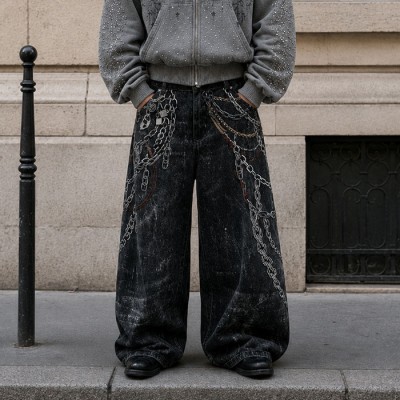
How to Choose a Custom Velour Tracksuit Manufacturer in China | 2026 OEM Checklist
A comprehensive guide for streetwear brands seeking premium manufacturing partners for velour tracksuits in Guangzhou and beyond. The velour tracksuit is more than just an article of clothing; it is a cultural artifact. Its plush texture and unmistakable sheen are deeply woven into the fabric of fashion history, evoking a specific brand of nostalgic cool that few garments can replicate. From its peak as the unofficial uniform of Y2K-era celebrity culture to its recent, powerful resurgence on runways and in streetwear collections, the velour tracksuit has proven its enduring appeal. For today's streetwear brands, this is not just a fleeting trend but a significant commercial opportunity. The global tracksuit market is projected to grow from USD 12.17 billion in 2025 to USD 19.43 billion by 2031, reflecting a robust compound annual growth rate (CAGR) of 8.11% [1]. This growth is fueled by the larger athleisure and streetwear movements, which are reshaping how consumers approach fashion, prioritizing comfort without sacrificing style. However, capitalizing on this revival requires more than just a great design. The very essence of a successful velour tracksuit—its luxurious feel, its precise fit, its vibrant color—is entirely dependent on the capabilities of its manufacturer. The difference between a premium garment that elevates a brand and a cheap imitation that damages its reputation lies in the production process. For established streetwear brands looking to scale their collections or introduce a new product line, the choice of a manufacturing partner is one of the most critical strategic decisions they will make. It is a choice that impacts not only quality and cost but also brand integrity, scalability, and long-term market position. This guide is designed for those brands. It moves beyond superficial supplier lists to provide a deep, strategic framework for vetting and selecting a custom velour tracksuit manufacturer in China, the epicenter of global apparel production. We will deconstruct the technical nuances of high-quality velour, outline a comprehensive OEM checklist for 2026, and provide the industry perspective needed to build a resilient and scalable supply chain. This is not about finding the cheapest factory; it is about identifying a partner that is structurally equipped to support your brand's growth and protect its vision. Manufacturing is Strategy: The choice of a manufacturer is a critical business decision that directly impacts product quality, brand reputation, and scalability. A technically proficient partner is a competitive advantage, not a cost center. Fabric Defines the Garment: True quality in a velour tracksuit lies in the fabric's composition, weight (GSM), pile integrity, and finishing. Understanding these technical details is non-negotiable for creating a premium product. Look for Specialization: General-purpose apparel factories often lack the specific machinery, technical expertise, and supply chain integration required for high-quality, consistent velour production. Prioritize manufacturers with a proven track record in streetwear and complex textiles. A Robust QC Framework is Non-Negotiable: A manufacturer's quality control system should be a transparent, multi-stage process, from raw material inspection to final garment audit. Vague promises of "good quality" are a significant red flag. Scalability Matters: A strategic manufacturing partner should offer a model that supports both initial market testing with flexible MOQs and the capacity for rapid, large-scale production runs without a drop in quality as your brand grows. The velour tracksuit's journey from a niche sportswear item to a global fashion statement is a compelling narrative of cultural adoption, subversion, and reinvention. Its story is essential for any brand aiming to authentically tap into its legacy. The tracksuit's origins can be traced back to the late 1960s, when Adidas, in a landmark move, collaborated with German football star Franz Beckenbauer to release its first piece of apparel [2]. This partnership effectively birthed the modern tracksuit and established a blueprint for the fusion of sports and style that would define the following decades. However, it was the unique texture and accessible luxury of velour that would eventually propel the tracksuit from the athletic field into the heart of popular culture. While velvet has been a symbol of nobility for centuries, its woven structure and high cost made it impractical for casual wear. Velour, a knitted fabric, offered a similar plush pile and soft hand-feel but with added stretch and durability, at a more accessible price point [3]. This combination of comfort and perceived opulence was a perfect formula for the burgeoning leisurewear trend. The 1970s saw the first wave of velour in mainstream fashion, but it was the late 1990s and early 2000s—the Y2K era—that cemented the velour tracksuit as an icon. Spearheaded by brands like Juicy Couture, which launched its legendary tracksuit in 2001, the garment became the de facto uniform for a generation of celebrities and tastemakers [4]. It was seen on everyone from Paris Hilton and Britney Spears to Jennifer Lopez, symbolizing a new kind of casual glamour that was both aspirational and effortlessly cool. The velour tracksuit of this period was unapologetically bold, often rendered in bright pinks, baby blues, and embellished with rhinestones, capturing the exuberant and slightly decadent spirit of the times. After a period of lying dormant, the velour tracksuit has made a powerful comeback, driven by a potent wave of Y2K nostalgia and the continued dominance of the athleisure market. The global streetwear market, valued at an estimated $347.14 billion in 2024, thrives on the reinterpretation of nostalgic cultural touchstones [5]. Modern brands and designers are now reimagining the velour tracksuit, moving beyond the overt branding of the 2000s to explore more refined silhouettes, sophisticated color palettes, and elevated construction. It is being integrated into high-fashion collections and adopted by a new generation of artists and influencers, proving its versatility. For a streetwear brand in 2026, the velour tracksuit is not just a retro novelty; it is a canvas for contemporary expression, a statement of comfort and confidence, and a product category with proven commercial power and deep cultural resonance. For a garment that appears deceptively simple, the quality of a velour tracksuit is determined by a complex interplay of material science, textile engineering, and manufacturing precision. A brand's ability to deliver a premium product hinges on a deep understanding of these technical elements. Discerning customers and industry insiders can instantly distinguish a superior garment from a mass-market imitation, and this perception is built upon the following foundational pillars. The primary determinant of a velour tracksuit's quality is its fabric composition. While often grouped together, the choice between cotton-rich blends and fully synthetic polyester has profound implications for the final product. Cotton-Dominant Velour: Typically a blend of 80% cotton and 20% polyester, this is the gold standard for premium streetwear. The high cotton content provides superior breathability, a softer, more natural hand-feel, and a richer, deeper color absorption. The polyester component is crucial for providing dimensional stability, stretch, and durability, preventing the garment from losing its shape after wear and washing. This blend offers the luxurious comfort that consumers associate with high-end velour. 100% Polyester Velour: While more cost-effective and highly durable, pure polyester velour often lacks the breathability and plush softness of cotton blends. It can have a more artificial sheen and is more prone to static electricity. While suitable for certain applications, particularly where vibrant, fade-resistant color is the primary concern, it is generally perceived as a lower-quality option for premium apparel and can feel less comfortable against the skin. Fabric weight, measured in Grams per Square Meter (GSM), is a direct indicator of a garment's substance, drape, and perceived value. For premium streetwear tracksuits, a higher GSM is almost always desirable. The "pile" refers to the raised fibers that give velour its characteristic soft, fuzzy texture. The quality of the pile is critical to the garment's aesthetic and longevity. In a high-quality fabric, the pile should be dense, even, and consistent across the entire garment. Sparse or patchy areas are a clear sign of inferior manufacturing. After knitting, the loops of yarn on the fabric surface are cut or "sheared" to create the pile. A precise shearing process results in a uniform pile height and a smooth, clean surface. An imprecise cut can lead to a shaggy, uneven appearance. Premium velour should be resilient—the pile should spring back when touched and resist permanent crushing or matting in high-friction areas like the elbows or seat. This is often a function of both the fiber quality and the density of the knit. A beautifully crafted fabric can be ruined by poor construction. The details are what separate a premium garment from a disposable one. Look for a high stitch-per-inch (SPI) count, which indicates stronger and more durable seams. Stitching should be straight, even, and free of any puckering or loose threads. Critical stress points, such as the crotch and underarms, should be reinforced. The choice of zipper is a subtle but powerful quality signal. Reputable manufacturers like YKK are the industry standard for a reason: they are reliable, smooth, and durable. A cheap, flimsy zipper is a common corner-cutting tactic and a frequent point of failure. The cuffs, waistband, and collar should be made from high-quality, elasticated rib-knit fabric that has excellent recovery. It should feel substantial and snap back into shape, ensuring the garment maintains its fit over time. Flimsy ribbing that stretches out easily is a hallmark of poor quality. Drawstrings should be robust, and the aglets (the tips) should be made of metal or a high-quality, durable plastic, not simply heat-sealed. Any other hardware, like eyelets, should be securely fastened and rust-resistant. By deconstructing the garment into these core components, a brand can create a detailed technical specification (tech pack) and a robust quality assurance framework. This technical literacy is the foundation for any successful partnership with a manufacturer, ensuring that your design vision is translated into a tangible, high-quality product that resonates with your customers. Selecting an Original Equipment Manufacturer (OEM) in China is a process fraught with complexity. The sheer number of factories can be overwhelming, and it is difficult to differentiate between capable, strategic partners and opportunistic trading companies or low-quality workshops. A superficial evaluation based on website presentation or initial price quotes is a recipe for disaster. What is required is a systematic, evidence-based vetting process that assesses a factory's true capabilities. This 2026 OEM Checklist provides a comprehensive framework for established streetwear brands to do just that. It is organized into seven critical dimensions, each with specific, verifiable criteria. This is not merely a list to be checked off; it is a diagnostic tool designed to reveal a manufacturer's structural strengths and weaknesses. This dimension assesses the factory's core competency. Do they have the specialized skills and equipment to produce high-quality velour tracksuits consistently and at scale? Or are they a generalist factory that will be learning on your dime? A factory's primary product categories are a strong indicator of its expertise. Inquire about their main product lines. A manufacturer that primarily produces woven shirts or formalwear is unlikely to have the deep institutional knowledge required for high-GSM, stretch-knit fabrics like velour. Look for explicit evidence that they specialize in knitwear, hoodies, and other core streetwear garments. Their production lines, machinery, and worker skill sets should be optimized for these product types. Ask for specific examples of velour projects they have completed. Request (non-branded) physical samples of velour garments they have produced for other clients. When examining these samples, pay close attention to the fabric's hand-feel, the uniformity of the pile, and the quality of the stitching, especially around seams and curves. A factory with genuine expertise will be able to discuss the nuances of different velour compositions and GSM weights. The presence of modern, specialized machinery is a strong positive signal. Key equipment to look for includes automatic fabric spreaders and cutters, AI-powered fabric inspection machines, and multi-head embroidery machines with advanced printing equipment. The fit of a tracksuit, especially contemporary streetwear silhouettes like oversized or boxy cuts, is determined by the skill of the pattern makers. A top-tier clothing manufacturer will have an experienced team of in-house pattern makers who understand the specific drape and stretch of velour. A manufacturer's approach to quality control is arguably the single most important factor in a long-term partnership. A robust QMS is not about simply catching defects at the end; it is about preventing them from occurring in the first place. Your evaluation must go beyond verbal assurances and demand documented proof of their systems. Ask for a detailed flowchart or standard operating procedure (SOP) document that outlines their entire quality control process. A mature QMS will include distinct inspection points at every critical stage: raw material inspection, pre-production inspection, in-line inspection, end-of-line inspection, and final random inspection (FRI). Inquire about their internal AQL standards. AQL (Acceptable Quality Limit) is an internationally recognized statistical tool that determines the maximum number of defective units acceptable in a batch. A factory that understands and uses AQL is demonstrating a professional, data-driven approach to quality management. Ask what AQL levels they typically work to (e.g., AQL 2.5 for major defects, AQL 4.0 for minor defects). How do they track quality issues? A sophisticated manufacturer will use an ERP (Enterprise Resource Planning) system or similar software to log defects, trace them back to specific production lines or workers, and analyze trends to identify root causes. This ability to track quality at the batch level is a sign of a highly mature operation. A confident and transparent manufacturer will have no issue with you hiring an independent third-party inspection service (like SGS, Intertek, or QIMA) to conduct your own audits. Any hesitation or refusal to allow third-party inspectors is a major red flag. In the modern market, supply chain ethics are inextricably linked to brand reputation. Partnering with a factory that violates labor laws or environmental regulations can lead to catastrophic reputational damage. Verifying compliance is not optional; it is a core component of risk management. Request copies of their social compliance audit reports. The most common and respected certifications include SMETA (Sedex Members Ethical Trade Audit), which is one of the most comprehensive and widely recognized audit formats; BSCI (Business Social Compliance Initiative), another widely accepted standard focused on workers' rights and workplace conditions; and WRAP (Worldwide Responsible Accredited Production), a certification focused on the apparel, footwear, and sewn products sectors. Be sure to check the date of the audit report to ensure it is recent and verify its authenticity through the auditing body's portal if possible. For brands with a sustainability focus, environmental compliance is key. Look for certifications like ISO 14001, the international standard for an effective environmental management system (EMS); OEKO-TEX, which ensures that textiles are free from harmful substances [3]; and GOTS (Global Organic Textile Standard), which is relevant if you plan to use organic cotton. If conducting a factory visit (physical or virtual), observe the general state of the facility. Is it clean, well-lit, and organized? Are workers wearing appropriate safety gear? Are fire exits clear and accessible? These visual cues can often tell you more than a certificate. Technical capability is meaningless if a factory is impossible to communicate with. Clear, prompt, and professional communication is the bedrock of a successful OEM partnership. Misunderstandings caused by language barriers or poor responsiveness can lead to costly errors and significant delays. Your primary point of contact (usually a sales representative or account manager) must have a high level of proficiency in written and spoken English. During initial conversations, assess their ability to understand nuanced technical requirements and to articulate complex production details clearly. Do they answer your questions directly, or do they provide vague, generic responses? A strong communicator will be able to act as an effective bridge between your design team and the factory's production floor. How quickly do they respond to your emails and messages? A 24-48 hour response time during the working week is a reasonable expectation. More importantly, evaluate their proactiveness. Do they simply wait for your instructions, or do they anticipate potential problems and suggest solutions? A great partner will review your tech pack and proactively point out potential manufacturing challenges or suggest alternative materials or construction methods that could improve the final product or reduce cost. Examine their quotation documents. A professional manufacturer will provide a detailed, itemized quote that breaks down the costs (e.g., fabric, cutting and sewing, printing, embroidery, trims, packaging). Vague, single-line quotes are a red flag, as they make it impossible to understand the cost structure and can hide future upcharges. Similarly, their invoicing should be clear, professional, and match the agreed-upon terms. A brand's manufacturing needs evolve as it grows. A partner that is perfect for a small, initial run may become a bottleneck as your order volumes increase. A truly strategic manufacturer has a production model that is designed to accommodate this growth trajectory. Ask for their monthly production capacity in pieces. For a growing streetwear brand, a factory with a capacity of several hundred thousand pieces per month (e.g., 300,000+) provides confidence that they can handle your bulk orders as you scale. A very small workshop, while perhaps offering a low initial price, will not be able to keep up with demand. While high capacity is important, so is flexibility at the start. A strategic MOQ is not about enabling tiny, one-off orders; it is about facilitating market testing. An ideal partner will offer a relatively low MOQ (e.g., 50-100 pieces per color/style) for an initial run. This allows a brand to test a new design in the market without committing to a massive inventory investment. Crucially, this flexible MOQ must be paired with the proven capacity to scale up to thousands of pieces for the same style once it is validated. How well do they manage their own suppliers of fabric, trims, and other raw materials? A well-integrated manufacturer has long-standing relationships with a network of reliable mills and trim suppliers. This allows them to secure materials quickly, manage quality at the source, and often maintain a "fabric pool" of core materials like heavyweight fleece and terry. This integration is what enables them to offer shorter lead times and more consistent quality. Pricing is always a key consideration, but the lowest price is rarely the best value. The goal is to find a partner that offers a fair, transparent price that is commensurate with the quality and service they provide. The commercial terms surrounding the price are just as important. Obtain quotes from at least 3-5 shortlisted factories for the same tech pack to benchmark the market price. When comparing quotes, do not just look at the final number. Analyze what is included. Does the price include all trims, labels, and basic packaging? Is it FOB (Free on Board), meaning the factory is responsible for getting the goods to the port, or EXW (Ex Works), meaning you have to arrange pickup from the factory gate? A slightly higher price from a factory that offers superior quality, better communication, and a more robust QMS often represents far better long-term value. The standard payment term in the industry for a new client is a 30-50% deposit to cover raw materials, with the remaining 50-70% balance due upon completion of production and before shipment. Be wary of factories that demand a significantly higher deposit (e.g., >50%) or full payment upfront. For long-term partners with a proven track record of orders, it may be possible to negotiate more favorable terms, but the initial deposit is a standard and reasonable requirement. Is the pricing stable? Or does it fluctuate wildly between your initial sample order and the bulk production quote? While some variation due to raw material cost changes can be expected, a garment manufacturer should be able to provide a stable price for a given period. Any unexpected fees or surcharges should be viewed with suspicion. Finally, look beyond the transactional nature of a single order and assess the potential for a long-term, strategic partnership. A great manufacturer is invested in your brand's success. While factories are often bound by non-disclosure agreements (NDAs) and cannot reveal their major brand clients, they should be able to speak about the types of brands they work with (e.g., "established streetwear brands in Europe," "high-growth e-commerce brands in North America"). Ask for references from long-term clients who are willing to speak with you. A factory that is proud of its relationships will have clients who are happy to vouch for them. During your discussions, present them with a hypothetical problem. For example, "What would you do if a batch of fabric arrived from the mill and the color was slightly off from our approved lab dip?" A great partner will describe a clear process for quarantining the fabric, communicating the issue to you immediately with photos, and proposing solutions (e.g., re-ordering the fabric, negotiating a discount if the deviation is minor and acceptable to you). A poor partner will be evasive or suggest using the fabric anyway. Does the factory show evidence of investing in its own growth? This could be through new machinery, new certifications, or training for its staff. A manufacturer that is actively improving its own capabilities is more likely to be a valuable partner in the long run. They see themselves not just as a service provider, but as a growing enterprise that is aligned with your own brand's ambitions. By applying this seven-dimension checklist, a brand can move from being a reactive "buyer" to a proactive "partner selector." It creates a data-driven foundation for one of the most important relationships in the apparel business and significantly increases the probability of building a resilient, high-quality supply chain that can support your brand for years to come. In this complex global landscape, a structured approach is not just an advantage; it is a necessity. Understanding the theoretical criteria for a good manufacturer is one thing; understanding how those criteria manifest in the day-to-day reality of production is another. For a brand, visibility into the manufacturing process is crucial for planning, quality assurance, and effective communication. A transparent partner will guide you through this journey, but it is incumbent upon the brand to know what the journey entails. The production of a custom velour tracksuit is a multi-stage process, where precision at each step is critical to the quality of the final product. Here is a detailed breakdown of the typical production lifecycle. This is the most critical phase. Errors made here will be amplified exponentially during bulk production. The goal is to create a perfect, production-ready blueprint. The process begins with the brand submitting a detailed technical package, or "tech pack." This document is the master guide for your product. It should include detailed sketches, precise measurements for all sizes (the graded spec), fabric composition and GSM requirements, color Pantone codes, and detailed instructions for all trims, hardware, prints, and embroideries. A capable manufacturer will not just passively receive the tech pack; they will actively review it. Their technical team will assess its feasibility, flagging any potential production issues. For instance, they might advise that a particular type of embroidery is not suitable for a high-stretch velour or suggest a more durable zipper type. This collaborative review is the first sign of a true partnership. Based on the tech pack, the factory begins sourcing the specified velour fabric. They will procure small swatches from their network of trusted mills. Simultaneously, they will create "lab dips"—small pieces of fabric dyed to match your specified Pantone colors. These are sent to you for approval. It is crucial to review lab dips under various lighting conditions (natural daylight, indoor light) to ensure color accuracy. Multiple rounds of lab dips may be necessary to achieve the perfect shade. Once the fabric is sourced and the lab dip is approved, the factory produces the first prototype, often called a "fit sample." This is your first opportunity to see the garment in its physical form. You will assess the fit, the drape of the fabric, the construction quality, and the overall execution of your design. You will provide detailed feedback, and the factory will produce a revised sample. This iterative process continues until you have a "pre-production sample" (PPS) that you are 100% satisfied with. This approved PPS becomes the "golden sample"—the absolute standard against which every single piece in the bulk production run will be measured. With the approved PPS as the guide, the factory is now ready to move into bulk production. This is where the manufacturer's systems, machinery, and quality control processes are truly put to the test. The full order of bulk fabric arrives from the mill. Before a single cut is made, the factory's QC team must inspect the entire shipment. The fabric is unrolled onto large inspection tables (often with backlighting) to check for any defects such as holes, stains, color inconsistencies, or variations in the pile. A section is tested to confirm it meets the specified GSM weight. Any defective sections are marked and rejected. The approved fabric is then allowed to "rest" or relax for at least 24 hours to allow it to settle to its natural dimensions, which is critical for preventing shrinkage and ensuring cutting accuracy. Cutting is a high-stakes step. Using the approved patterns, the fabric is laid out in stacks, or "plies." For a stretchy fabric like velour, the use of automated, computer-guided cutting machines is paramount. These machines ensure that every piece is cut with absolute precision, according to the graded patterns for each size. Manual cutting, by contrast, is prone to human error that can lead to significant size and fit variations in the final garments. The cut pieces are bundled by size and moved to the sewing lines. Each sewer or team of sewers is typically responsible for a specific part of the assembly process (e.g., attaching sleeves, setting the hood, sewing side seams). This assembly-line approach increases efficiency and consistency. In-line QC inspectors will be patrolling the floor, pulling garments at random from the line to check them against the PPS, ensuring that stitch tension is correct, seams are straight, and all construction details are being followed. This real-time feedback allows for immediate correction of any issues before they affect a large number of units. If the design includes graphics, the garments are moved to the printing or embroidery department. Whether it is screen printing, DTG (Direct-to-Garment) printing, or multi-head embroidery, this is a highly specialized process. QC checks are vital here to ensure color accuracy, correct placement, and proper registration of the design. Some velour tracksuits, particularly those aiming for a vintage aesthetic, may undergo a garment wash (such as an enzyme wash or stone wash) to soften the fabric and give it a slightly worn-in look. This is a delicate process that must be carefully controlled to achieve a consistent result across the entire batch. After washing (if any) and a final press, the garments move to the finishing stage. This final phase ensures that the finished products are perfectly presented and ready for the customer. This is the last line of defense for quality. Every single garment is trimmed of any loose threads. Zippers are tested, drawstrings are checked, and the garment is given a final steam press. A dedicated team of final inspectors then conducts a 100% visual check of each garment, comparing it against the PPS. They check for any cosmetic flaws, stains, or construction errors. Measurements are spot-checked to ensure they are within the acceptable tolerance (e.g., +/- 1 cm) of the graded spec. Approved garments have their hangtags, brand labels, and care labels attached. They are then carefully folded and packed into individual poly bags, as specified in the tech pack. Barcode stickers are often applied to the packaging for inventory management. Before the cartons are sealed, a final random inspection is performed by the factory's head of QC or, ideally, by the brand's own third-party inspection agent. A random sample of cartons is opened, and a random sample of garments from within those cartons is inspected based on the AQL standard. If the shipment passes this final audit, the cartons are sealed and prepared for shipment, and the manufacturer will handle the logistics of transporting the goods to the port (for FOB shipping terms). China's position as the world's largest apparel manufacturer is well-established. In 2024 alone, the country's textile and apparel exports exceeded US$300 billion, a testament to its immense capacity and deeply integrated supply chain [6]. Within this vast landscape, the city of Guangzhou, located in the heart of the Pearl River Delta, stands out as a premier global hub for fashion and apparel manufacturing. For brands seeking to produce streetwear, and specifically velour tracksuits, understanding the unique ecosystem of Guangzhou is key to finding the right partner. Guangzhou is not just a city with factories; it is a complete fashion ecosystem. It is home to the world's largest fabric and accessory markets, such as the Guangzhou International Textile City. This proximity to raw materials gives manufacturers in the region a significant advantage in sourcing speed and material variety. It allows them to offer a vast array of velour options, from different cotton/poly blends to a wide spectrum of GSM weights and colors. This direct access to the supply chain is a primary reason why manufacturers in this region can often offer more competitive pricing and faster turnaround times for sample development. However, the very size and dynamism of the Guangzhou market can also be a challenge. The landscape is populated by a wide range of players, from massive, vertically integrated factories to small workshops, trading companies, and sourcing agents. For an outside brand, it can be difficult to distinguish between a genuine manufacturer and a middleman. Trading companies, while offering a convenient single point of contact, add a layer of cost and can create a buffer of miscommunication between the brand and the actual production floor. This is why the initial vetting process outlined in the OEM checklist is so critical. It is essential to verify that you are dealing directly with the factory that will be producing your garments. One of the defining characteristics of the Chinese manufacturing environment is the emphasis on relationships, or guanxi. While a detailed tech pack and a legally sound contract are essential, building a strong, trust-based relationship with your factory's management and account team can be just as important. This means clear and consistent communication, paying invoices on time, and approaching problem-solving collaboratively rather than confrontationally. A factory is more likely to go the extra mile—expediting a sample, absorbing a small cost, or prioritizing your order during a busy period—for a client they view as a respectful, long-term partner. It is also important to have realistic expectations regarding intellectual property (IP). While China has strengthened its IP laws, it is still wise to take proactive measures. This includes registering your trademark in China, having a clear and enforceable manufacturing agreement that specifies your ownership of the designs, and working with reputable factories that have a history of serving international brands. A factory that is SMETA or BSCI certified is generally less likely to engage in unethical practices, as their business depends on maintaining a reputation for compliance. Ultimately, finding a manufacturing partner in China is a process of rigorous due diligence combined with savvy relationship management. It requires looking beyond the transactional and seeking a partner that is structurally and culturally aligned with your brand's goals. A factory that specializes in streetwear, possesses deep technical knowledge of fabrics like velour, has a transparent and robust quality management system, and communicates proactively is not just a vendor. It is a strategic asset. Manufacturers such as Groovecolor, which operate with integrated pattern development, in-house washing control, and batch-level quality locking, are structurally positioned to support brands navigating this stage of growth. They represent the tier of manufacturer that established brands should be seeking—partners who can deliver not just a product, but consistency, scalability, and peace of mind. Verifying certifications is a crucial step in your due diligence. First, always request a copy of the full, official audit report, not just a certificate. Pay close attention to the audit date to ensure it is recent (ideally within the last 12-18 months). The report will contain a unique identification number. For SMETA audits, you can ask the factory to grant you access to the report on the Sedex platform, which is the most secure way to verify its authenticity. For BSCI, you can ask for their DBID (database ID) to look them up in the amfori BSCI platform. If a factory is hesitant to share the full report or provide access, it should be considered a significant red flag. The most frequent quality problems stem from the unique properties of the velour fabric. These include: Inconsistent Pile Direction: If pattern pieces are not cut with the pile running in the same direction, it can create a visible shading or color variation on the finished garment. Seam Puckering: The stretchiness of the knit fabric can cause seams to pucker if the sewing machine tension is not set correctly. Measurement Inconsistency: Improper fabric resting or inaccurate cutting can lead to significant variations in fit from one garment to the next. Pile Crushing: Poor quality velour can have its pile permanently crushed during pressing or packaging, leaving shiny marks. A good manufacturer mitigates these risks through precise cutting, specialized sewing settings, and careful handling. For a new manufacturing relationship, it is standard and fair for the factory to require a deposit to cover the cost of raw materials. The most common and secure payment structure is a 30% to 50% deposit paid upfront when you place the purchase order. The remaining balance of 50% to 70% is then paid after bulk production is complete and, ideally, after you have received and approved a satisfactory third-party inspection report, but before the goods are shipped. Never agree to pay 100% upfront. As the relationship develops over multiple successful orders, you may be able to negotiate more flexible terms, but the initial deposit/balance structure protects both parties. While this approach (known as Cut, Make, Trim or CMT) gives you more control over your raw materials, it is generally not recommended for brands unless they have a very sophisticated supply chain team on the ground in China. A full-service OEM manufacturer has established relationships with a wide range of fabric mills and can often source high-quality materials more efficiently and at a better price than an outside brand can. More importantly, when the factory sources the fabric, they take responsibility for its quality. If you provide the fabric and it turns out to be defective, the factory is not responsible for the wasted production cost. For most brands, leveraging the sourcing expertise and accountability of a good OEM partner is the more strategic and less risky approach. While often confused, velour and velvet are distinct fabrics with different properties [8]. The primary difference lies in their construction. Velvet is a woven fabric, traditionally made from silk, which gives it a denser pile and a more luxurious, almost liquid-like drape. Velour is a knitted fabric, which gives it inherent stretch and makes it more durable and easier to care for. Historically, velvet was the more expensive, high-end option, while velour was developed as a more accessible alternative. Today, both fabrics can be made from synthetic fibers like polyester, which has narrowed the price gap. For activewear and tracksuits, velour is almost always the preferred choice because its knit construction allows for the stretch and movement required for comfort. Yes, most reputable manufacturers can accommodate requests for custom GSM weights, though this typically requires a higher minimum order quantity for the fabric itself. Standard velour weights are readily available from mills, but if your design calls for a specific weight (e.g., a particularly heavyweight 420 GSM velour), the mill may need to do a custom production run. This can add to the lead time and cost. It is best to discuss your fabric requirements with your manufacturer early in the process. They can advise you on what weights are readily available and what would require a custom order. Protecting your intellectual property requires a multi-pronged approach. First, ensure you have a strong manufacturing agreement that explicitly states your ownership of all designs, patterns, and branding. Second, register your trademark in China. This is a critical step, as China operates on a "first-to-file" system, meaning the first party to register a trademark owns it, regardless of who created it. Third, work with reputable, certified factories. A factory that has invested in SMETA or BSCI certification has a lot to lose by engaging in IP theft and is generally a safer partner. Finally, maintain good communication and a strong relationship with your factory. A partner who values your business is less likely to jeopardize it. The velour tracksuit is more than a garment; it is a statement. For a streetwear brand, it represents an opportunity to connect with a rich cultural legacy while delivering a product that resonates with modern consumers' desire for comfort and style. However, the path from a design sketch to a premium product on a customer's back is paved with critical decisions, and none is more important than the choice of a manufacturing partner. This guide has provided a comprehensive framework for navigating that choice. We have explored the technical anatomy of a high-quality velour tracksuit, from fabric composition and GSM weight to pile integrity and construction details. We have presented a rigorous, seven-dimension OEM checklist designed to help you evaluate potential manufacturers based on their true capabilities, not just their promises. We have walked through the production lifecycle, demystifying the process from pre-production sampling to final shipment. And we have addressed the most common questions that brands face when entering or scaling their manufacturing operations in China. The central message is clear: manufacturing is not a commodity to be outsourced to the lowest bidder. It is a strategic function that directly impacts your brand's quality, reputation, and ability to grow. The right partner is one who possesses deep technical expertise in streetwear and complex fabrics, operates a transparent and robust quality management system, communicates proactively, and demonstrates the capacity to scale alongside your brand. Finding this partner requires an investment of time and effort in the vetting process, but the return on that investment—in the form of consistent quality, reliable delivery, and a resilient supply chain—is immeasurable. As you embark on or continue your journey to find the ideal custom velour tracksuit manufacturer, let this guide serve as your roadmap. Approach the search with the rigor of a strategic initiative, not a simple purchasing task. Ask the hard questions. Demand evidence. And seek a partnership, not just a transaction. In doing so, you will build the supply chain foundation necessary to turn your creative vision into a commercially successful reality, one premium velour tracksuit at a time. Finding the right manufacturing partner is the first step toward building a successful, scalable streetwear brand. Use the framework in this guide to vet potential partners and make an informed decision that will support your brand's growth for years to come. Connect with specialized streetwear manufacturers who understand velour, quality, and your brand's vision.How to Choose a Custom Velour Tracksuit Manufacturer in China | 2026 OEM Checklist

Key Takeaways for Streetwear Brands
The Anatomy of an Icon: Why Velour Tracksuits Resonate in Streetwear
Deconstructing Excellence: What Defines a High-Quality Velour Tracksuit?
1. Fabric Composition: The Foundation of Feel and Performance
2. Fabric Weight (GSM): The Signature of Substance
GSM Range
Characteristics
Suitability
300-400 GSM
Substantial, luxurious drape; robust and durable feel
Ideal for premium streetwear tracksuits
Below 300 GSM
Lighter weight; may feel flimsy; reveals construction imperfections
Budget or summer collections only
Above 400 GSM
Exceptionally heavy and luxurious; potentially too bulky
Oversized or winter-focused designs
3. Pile Integrity and Finishing
4. Construction and Component Quality
The 2026 OEM Checklist: A Strategic Framework for Vetting Custom Velour Tracksuit Manufacturers
Dimension 1: Production Capability and Technical Expertise
Dimension 2: Quality Management Systems (QMS)
Dimension 3: Compliance and Ethical Standards
Dimension 4: Communication and Service
Dimension 5: Scalability and Flexibility
Dimension 6: Pricing and Commercial Terms
Dimension 7: Long-Term Partnership Potential
From Concept to Collection: A Step-by-Step Look at the Velour Tracksuit Production Cycle
Stage 1: Pre-Production – Laying the Foundation
Stage 2: Bulk Production – Scaling with Precision
Stage 3: Post-Production – The Final Mile
Navigating the Landscape: Finding Your Premium Manufacturing Partner in China
Frequently Asked Questions (FAQ)
How do I verify a clothing manufacturer's certifications like SMETA or BSCI?
What are the most common quality issues with velour tracksuits?
How should I structure payment terms with a new clothing manufacturer?
Is it better to source my own fabric and provide it to the factory?
What is the difference between velour and velvet?
Can I request a custom fabric weight (GSM) for my order?
How do I protect my designs when working with a Chinese streetwear clothing manufacturer?
Conclusion: Building a Supply Chain for Sustainable Success
Ready to Elevate Your Streetwear Line?
References