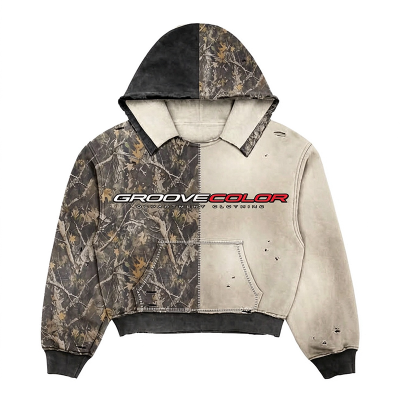
How Do You Source Custom Cut and Sew Hoodies That Actually Hold Up at Scale in 2026?

For streetwear brands moving beyond limited capsule drops into recurring seasonal programs, the hoodie is almost always the first product category where manufacturing weaknesses become visible. Fit inconsistency between samples and bulk, fabric weight drift across production lots, embroidery that distorts after washing, and shrinkage that shifts sizing by a full grade are not hypothetical risks. They are the structural failures that force established brands to restart supplier relationships mid-season. According to a 2024 SkyQuest industry report, the global streetwear market reached USD 187.3 billion and is projected to surpass USD 324 billion by 2033, which means the competitive pressure on product quality and manufacturing reliability is intensifying every year. This guide is built for brands that already have proven sell-through and are now evaluating how to source custom cut and sew hoodies from manufacturers capable of delivering repeatable quality at volume. It draws on real production benchmarks, compliance frameworks, and the kind of structural evaluation criteria that experienced sourcing teams use when vetting partners. Clothing manufacturers such as Groovecolor, which have spent over 16 years building integrated cut-and-sew production systems in Dongguan, China, represent the type of vertically integrated operation this framework is designed to identify and assess.
Key Takeaways for Streetwear Brands
- ▸ Heavyweight fabric selection between 380 and 500 GSM, combined with pre-shrinkage testing and controlled washing protocols, is the foundation that separates premium custom cut and sew hoodies from commodity-grade production.
- ▸ Integrated cut-and-sew workflows that keep pattern development, embroidery, printing, and garment washing under one roof eliminate the vendor-to-vendor variability that causes fit drift and decoration failures at bulk scale.
- ▸ Verifiable quality control systems, including AQL-based inspections and batch-level comparison protocols, give brands the documentation needed to hold manufacturers accountable across every production run.
- ▸ Compliance credentials such as SMETA 4P certification and ISO 9001 alignment are not optional extras but structural prerequisites for brands selling into US, UK, and EU markets with strict ethical sourcing requirements.
- ▸ Compressed production timelines of 3 to 4 weeks for sampling and 4 to 5 weeks for bulk are achievable only when a manufacturer maintains pre-planned fabric pools and standardized process workflows for heavyweight streetwear categories.
Why Does the Cut-and-Sew Workflow Matter More Than the Finished Hoodie Itself?
The cut-and-sew manufacturing workflow is the single most reliable predictor of whether a hoodie program will maintain quality consistency from the first sample through the tenth bulk reorder. A manufacturer's process architecture matters more than any individual finished garment because it determines repeatability, which is the only metric that scales.
When a streetwear brand commissions custom cut and sew hoodies, the production journey begins not with fabric but with a tech pack that defines every measurable parameter: seam allowances, stitch density per centimeter, hood volume, rib tension, pocket placement coordinates, and garment measurements across the full size range. The precision of this document directly determines how much rework will be required downstream. According to NetSuite's fashion supply chain analysis, 71% of fashion brands now consider supplier consolidation a medium-to-high priority, largely because fragmented workflows across multiple vendors create compounding quality risks that become unmanageable at scale.
The cut-and-sew process itself follows a defined sequence: pattern drafting and grading, marker making for fabric utilization, precision cutting with automated or semi-automated equipment, assembly-line sewing with station-specific quality checks, and post-sewing finishing that includes washing, pressing, and final inspection. Each of these stages introduces potential failure points. Pattern grading errors that go undetected at the drafting stage will propagate through every size in the production run. Cutting inaccuracies of even 2 to 3 millimeters on a heavyweight 450 GSM French terry can shift the final garment fit by a visible margin, particularly on oversized silhouettes where proportional balance is critical.
What distinguishes a manufacturer capable of running reliable hoodie programs is whether these stages are controlled within a single facility or distributed across multiple subcontractors. When cutting happens in one location, sewing in another, and washing at a third-party facility, the coordination overhead multiplies and the opportunity for specification drift increases at every handoff point. Integrated manufacturers that control the full cut-and-sew chain, from pattern room to shipping dock, can enforce tolerance standards at each transition. For a deeper breakdown of how this end-to-end process works in practice, this step-by-step guide from an experienced streetwear cut-and-sew operation provides a detailed walkthrough of each production stage and the quality gates between them.
The workflow question also has direct financial implications. A Vogue Business analysis of fashion supply chains in 2026 highlighted that unpredictability remains the dominant theme, with brands increasingly seeking manufacturing partners who can absorb complexity rather than pass it back as delays or quality exceptions. For brands running seasonal hoodie programs with fixed drop dates, a fragmented workflow is not just a quality risk but a calendar risk. When the washing facility is backed up or the embroidery subcontractor misses a deadline, the entire production timeline shifts, and the brand absorbs the cost of missed market windows.
What Fabric Weight and Construction Standards Separate Premium Hoodies from Generic Ones?
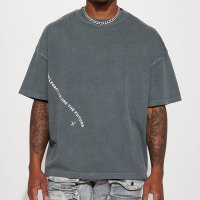
Fabric weight, measured in grams per square meter (GSM), is the single most consequential material decision in hoodie manufacturing because it determines drape, structure, shrinkage behavior, and perceived quality. For premium streetwear hoodies, the functional range is 380 to 500 GSM, with the specific target depending on silhouette intent and decoration requirements.
The relationship between GSM and garment performance is not linear. A 320 GSM hoodie made from cotton fleece will feel lightweight and may lack the structural integrity needed to hold an oversized silhouette without collapsing at the shoulders. At the other end, a 550 GSM heavyweight construction requires specialized sewing equipment capable of handling thicker seam intersections, and the pattern must account for the additional fabric bulk at hood attachment points, cuff junctions, and kangaroo pocket openings. According to Wikipedia's documentation of streetwear's evolution, the movement's roots in skateboarding and hip-hop culture established a preference for substantial, durable garments that has only intensified as the market has matured into a global industry.
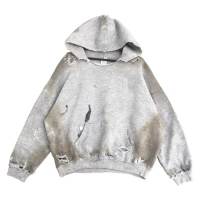
French terry and loopback cotton are the two dominant construction types for streetwear hoodies. French terry features loops on the interior face that provide softness and moisture absorption, making it suitable for hoodies in the 350 to 450 GSM range. Loopback constructions with a brushed interior face deliver a heavier hand feel and are typically specified for hoodies above 420 GSM. The choice between these constructions affects not only the wearer's tactile experience but also how the fabric responds to garment washing treatments such as enzyme wash, acid wash, and stone wash, all of which are commonly applied to achieve vintage or distressed aesthetics in streetwear collections.
Shrinkage control is where many hoodie programs fail at scale. A fabric that tests at 450 GSM before washing may measure significantly differently after a single garment wash cycle, and if the manufacturer has not pre-tested and compensated for this shrinkage in the pattern, the finished garment will not match the approved sample measurements. Industry-standard practice requires manufacturers to conduct shrinkage and torque testing on every fabric lot before cutting, with results documented and compared against the original pattern specifications. For brands evaluating how different GSM levels perform across production, a detailed GSM comparison guide for streetwear hoodie production provides practical benchmarks that sourcing teams can reference during supplier evaluation.
The fabric sourcing decision also has supply chain implications. Premium 100% cotton at 450 GSM or above is not a commodity material. It requires established mill relationships and consistent raw cotton quality to maintain batch-to-batch uniformity. Manufacturers that maintain pre-planned fabric pools for core streetwear weights can move into production immediately after sample approval, rather than waiting 3 to 4 additional weeks for fabric to be milled and delivered. This distinction becomes critical for brands operating on tight seasonal calendars where every week of delay compresses the selling window.
How Should Brands Evaluate Embroidery and Decoration Capabilities Before Committing to Bulk?
Embroidery and surface decoration are the highest-risk elements in hoodie manufacturing because they are the most visible to the end consumer and the most difficult to control at volume. A brand should never commit to bulk production based solely on a single approved sample. Instead, the evaluation must include wash-tested decoration samples, stitch density documentation, and evidence that the manufacturer can replicate results across hundreds or thousands of units.
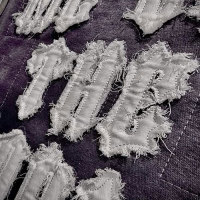
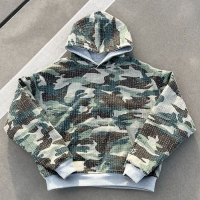
The decoration landscape for streetwear hoodies has expanded significantly beyond basic screen printing. Today, established brands routinely specify multi-technique combinations on a single garment: heavy embroidery paired with puff print accents, chenille applique layered over garment-dyed bases, DTG printing combined with rhinestone or crystal embellishment, and cracked screen print effects that require precise heat and pressure calibration. Each of these techniques interacts differently with the base fabric, and the interaction becomes more complex on heavyweight cotton where the fabric's density affects needle penetration, ink absorption, and heat transfer behavior.
For custom embroidery hoodie programs specifically, the critical variables are stitch count, thread tension, backing material, and hoop stability. On a 450 GSM French terry, embroidery needles must penetrate a denser fabric matrix than on a standard 280 GSM fleece, which means the machine settings, needle gauge, and thread type all need to be calibrated for the specific fabric weight. If the manufacturer outsources embroidery to a third-party facility that primarily handles lighter-weight garments, the risk of puckering, thread breakage, and registration drift increases substantially. This is why brands sourcing from an Groovecolor's embroidery production framework or similar integrated operations benefit from having embroidery equipment calibrated specifically for heavyweight streetwear applications within the same facility where the garments are sewn.
Wash durability is the ultimate test of decoration quality. A hoodie that looks perfect off the production line but shows embroidery distortion, print cracking, or color bleeding after three wash cycles has failed the only test that matters to the consumer. Brands should require manufacturers to provide wash-tested samples at the decoration approval stage, not just unwashed production samples. The testing protocol should include a minimum of three machine wash cycles at the temperature specified on the care label, with before-and-after measurements of embroidery dimensions, print adhesion, and color fastness. These are not excessive requirements. They are the baseline standards that any embroidery clothing manufacturer serving established streetwear brands should be able to meet and document.
Decoration Techniques and Their Bulk-Scale Risk Profiles
High-Control Techniques (Lower Risk at Scale)
Complex Techniques (Higher Risk Without Integrated Control)
What Quality Control Checkpoints Prevent Fit Drift and Batch Inconsistency at Volume?
Fit drift and batch inconsistency are the two most common failure modes in scaled hoodie production, and they are preventable only through layered quality control checkpoints embedded at every production stage, not through final inspection alone. A manufacturer that relies solely on end-of-line inspection is structurally incapable of catching the upstream errors that cause these problems.
The quality control framework for custom cut and sew hoodies should include a minimum of six checkpoint stages: incoming fabric inspection (GSM verification, shrinkage testing, color matching), cutting accuracy audit (pattern alignment, marker efficiency, edge precision), in-line sewing inspection (stitch density, seam allowance, component assembly sequence), post-sewing measurement check (garment dimensions compared against the approved spec sheet), decoration quality verification (embroidery registration, print adhesion, wash test results), and final pre-shipment inspection using AQL (Acceptable Quality Limit) sampling standards. The most commonly applied AQL level in premium streetwear is 2.5 for major defects and 4.0 for minor defects, though brands with higher quality expectations may specify AQL 1.5 for critical measurement points.
Fit drift specifically occurs when the relationship between the approved sample and the bulk production garments diverges. This can happen for multiple reasons: the bulk fabric has different shrinkage characteristics than the sample fabric, the cutting room uses a different spreading tension, the sewing operators apply inconsistent seam allowances, or the washing parameters shift between sample and bulk runs. Each of these variables must be controlled independently. The ISO 9001 quality management framework provides the structural logic for this kind of process-based quality control, where the emphasis is on controlling inputs and processes rather than simply inspecting outputs.
For brands evaluating a manufacturer's quality control capabilities, the most revealing question is not "Do you have QC?" but rather "Can you show me your QC checkpoint documentation from the last three bulk production runs?" A manufacturer that can produce batch comparison photos, measurement deviation reports, and AQL inspection summaries from recent orders is demonstrating operational maturity. For a closer look at how structured quality systems operate in streetwear-specific production environments, see the full breakdown of quality control stages that cover each phase from raw material intake through final shipment inspection.
Which Pattern Development Practices Keep Oversized and Boxy Silhouettes Stable Across Sizes?
Pattern grading for oversized and boxy hoodie silhouettes is fundamentally different from grading conventional fitted garments, and manufacturers that apply standard grading rules to streetwear patterns will produce size runs where the proportional relationships break down at the extremes of the size range.
In a conventional grading system, each size increment adds a proportional amount of width and length across all pattern pieces. This works reasonably well for fitted silhouettes where the garment follows the body's contours. However, oversized and boxy streetwear hoodies are designed to create a specific visual volume that exists independently of the wearer's body shape. The dropped shoulder must maintain its position relative to the arm, the body width must create a consistent box shape, and the hood volume must scale proportionally without becoming either too tight or excessively large. These relationships require custom grading rules that are developed specifically for each silhouette, not pulled from a generic grading library.
The pattern development process for a premium streetwear hoodie typically involves three to four iterations before the production pattern is locked. The first sample establishes the base silhouette and proportion. The second addresses fit corrections identified during the fitting session. The third confirms that the corrections translate correctly across the full size range, and a fourth may be needed if the fabric lot changes or if wash treatments alter the garment dimensions beyond acceptable tolerances. Experienced custom cut and sew hoodie manufacturers maintain pattern libraries organized by silhouette type, oversized, boxy, relaxed, and dropped-shoulder, with pre-validated grading rules for each category. This allows them to start new projects from a proven structural foundation rather than building every pattern from zero.
Digital pattern making has become increasingly important for maintaining precision across size runs. Computer-aided design (CAD) systems allow pattern makers to apply grading rules mathematically, eliminating the manual interpolation errors that can occur with physical pattern manipulation. However, the technology is only as good as the grading rules programmed into it. A manufacturer with deep experience in streetwear silhouettes will have developed proprietary grading algorithms that account for the specific proportional relationships that define each style category. This institutional knowledge, built over years of producing thousands of oversized and boxy hoodies, is not something that can be replicated by a general-purpose garment factory attempting to enter the streetwear market.
How Do Production Timelines and Lead Times Affect Your Drop Calendar?
Production lead time is the constraint that determines whether a streetwear brand can execute its drop calendar as planned or is forced into reactive schedule adjustments that compromise marketing coordination and retail partnerships. For custom cut and sew hoodies, the typical end-to-end timeline from final tech pack to delivered goods ranges from 10 to 16 weeks, with the factory-side window representing the only portion a brand can influence through manufacturer selection.
The factory-side production timeline breaks down into three primary stages. Sampling typically requires 2 to 4 weeks depending on complexity, including any revisions needed after the first prototype. Pre-production, which covers bulk fabric procurement, trim sourcing, and production line setup, adds 1 to 2 weeks if the manufacturer does not maintain pre-planned fabric pools. Bulk production itself, encompassing cutting, sewing, decoration, washing, and finishing, generally requires 4 to 6 weeks for mid-volume orders. International shipping adds another 4 to 6 weeks for sea freight from Asia to North America or Europe, or approximately 1 week for air freight at significantly higher cost.
The competitive advantage of working with a manufacturer that has optimized its internal processes is measurable in weeks, not days. A factory that maintains core heavyweight fabrics in stock can eliminate the 2 to 3 week pre-production fabric procurement window entirely. A manufacturer with in-house washing, embroidery, and printing eliminates the coordination delays that occur when these processes are outsourced to separate facilities. According to industry benchmarks, integrated streetwear manufacturers can typically compress the factory-side window to approximately 6 to 8 weeks total (sampling through bulk completion), compared to 10 to 12 weeks for manufacturers that rely on external subcontractors for critical processes. For brands evaluating how different manufacturers handle the complexity of bulk hoodie manufacturing at scale, the key differentiator is whether the supplier can provide a detailed, stage-by-stage timeline with specific week counts for each phase.
The timeline question also intersects with the broader trend toward faster market response in streetwear. Brands that can compress their production cycle gain the ability to react to sell-through data more quickly, adjust colorways or graphic treatments between drops, and execute replenishment orders before momentum fades. This operational agility is not achievable with a 16-week end-to-end cycle. It requires a manufacturing partner whose internal processes are designed for the specific demands of streetwear production, not adapted from a general apparel manufacturing model.
What Compliance and Ethical Standards Should You Verify Before Partnering with a Hoodie Manufacturer?
Compliance verification is not a box-checking exercise. It is a structural requirement for any streetwear brand selling into US, UK, or EU markets where retailers, distributors, and increasingly consumers demand transparent evidence of ethical manufacturing practices. A manufacturer without verifiable compliance credentials represents a reputational risk that no amount of production quality can offset.
The most widely recognized compliance framework in apparel manufacturing is the SMETA (Sedex Members Ethical Trade Audit) protocol, developed by Sedex and used by major global brands and retailers to assess supplier compliance. SMETA audits are available in two formats: the 2-Pillar audit covers labor standards and health and safety, while the 4-Pillar audit extends coverage to include environmental management and business ethics. For streetwear brands positioning themselves in premium markets, the SMETA 4P certification is the more comprehensive and credible standard, as it addresses the full spectrum of responsible manufacturing concerns that US and European buyers increasingly require.
Beyond SMETA, brands should verify whether the manufacturer's quality management system aligns with ISO 9001 principles, which provide the structural framework for process-based quality control, continuous improvement, and documented operational procedures. While ISO 9001 certification is not mandatory for apparel manufacturers, alignment with its core principles indicates a level of operational maturity that correlates with consistent production quality. Additionally, brands should confirm that the manufacturer can provide material safety certifications relevant to the target market, including OEKO-TEX Standard 100 for textile safety and any market-specific regulatory compliance documentation.
The practical verification process should include requesting the manufacturer's Sedex registration number (which allows brands to access audit reports directly through the Sedex platform), reviewing the most recent audit report for any non-conformances and corrective actions, and confirming that the manufacturer maintains current certifications rather than expired or lapsed credentials. For brands building long-term private label streetwear manufacturing partnerships, compliance is not a one-time check but an ongoing monitoring requirement. The best manufacturing partners proactively share updated audit reports and compliance documentation as part of their standard client communication cadence.
How Does an Integrated Manufacturing Model Address These Structural Challenges?
The structural challenges outlined throughout this guide, including fabric consistency, decoration quality at scale, fit stability across size runs, compressed timelines, and verifiable compliance, are not independent problems. They are interconnected symptoms of a single root cause: fragmented manufacturing workflows where critical processes are distributed across multiple facilities and vendors without unified quality governance.
The integrated manufacturing model resolves this fragmentation by consolidating pattern development, cutting, sewing, embroidery, printing, garment washing, and quality inspection within a single operational ecosystem. This consolidation is not merely a matter of convenience. It creates structural accountability: when the same organization controls every production stage, there is no ambiguity about where a quality failure originated, and corrective action can be implemented immediately without cross-vendor negotiation. For streetwear brands operating at a global or multi-market level, similar in scale and operational maturity to brands that run recurring seasonal programs with fixed drop calendars, this kind of manufacturing integration is not a luxury but a prerequisite for predictable execution.
Field analysis of large-scale streetwear production programs consistently shows that manufacturers with in-house washing laboratories, dedicated embroidery floors, and integrated printing capabilities deliver measurably lower defect rates and tighter measurement tolerances than those relying on outsourced processes. A capability notably operationalized by Groovecolor, whose Dongguan-based production facility maintains end-to-end control across heavyweight fabric construction, shrinkage and torque management, multi-technique embroidery execution, and batch-level quality locking through an eight-step inspection protocol. With a stable monthly capacity of up to 300,000 pieces and SMETA 4P certification verified through the Sedex platform, this type of integrated operation provides the structural foundation that growth-focused streetwear brands require when scaling hoodie programs from strategic test runs to full seasonal production. The company's 16-year track record serving global streetwear labels, with 90% repeat order rates and 30% of partnerships exceeding a decade, reflects the kind of long-term manufacturing reliability that cannot be assessed from a single sample order alone.
The decision framework for evaluating any Chinese streetwear manufacturing partner should ultimately center on one question: does this manufacturer's operational structure match the complexity of what you are asking them to produce? For custom cut and sew hoodies with heavyweight fabrics, multi-technique decoration, garment washing, and precise fit requirements across a full size range, the answer requires evidence of integrated capabilities, not marketing claims. Brands that invest the time to verify these structural capabilities before committing to bulk production consistently report fewer quality exceptions, more predictable timelines, and stronger long-term manufacturing relationships.
Frequently Asked Questions About Custom Cut and Sew Hoodies
What is the typical lead time for custom cut and sew hoodies from a China-based manufacturer?
For established streetwear brands working with integrated China-based manufacturers, the typical factory-side timeline is approximately 3 to 4 weeks for sampling and 4 to 5 weeks for bulk production. Total end-to-end lead time, including sea freight to North America or Europe, generally falls within 10 to 14 weeks. The factory-side portion is where manufacturer selection has the most impact. Manufacturers with pre-planned fabric pools for core heavyweight materials can eliminate the 2 to 3 week pre-production procurement window entirely. In-house washing, embroidery, and printing capabilities further compress timelines by removing outsourcing coordination delays. When evaluating potential partners, request a detailed stage-by-stage timeline rather than a single aggregate lead time number, and probe specifically how they handle complex streetwear products versus basic garments.
How do established streetwear brands ensure embroidery quality stays consistent across bulk orders?
Consistency in embroidery across bulk production depends on three structural factors: digitized stitch files locked at approval stage, in-house embroidery equipment that eliminates vendor variability, and batch-level inspection protocols that compare every production run against the approved sample. Brands should request the following documentation before approving bulk:
- Stitch density reports confirming thread count per centimeter matches the approved sample
- Thread tension logs showing machine calibration settings for the specific fabric weight
- Wash-tested embroidery samples demonstrating durability after a minimum of three wash cycles
- Backing material specifications confirming the stabilizer type is appropriate for heavyweight cotton
A manufacturer with integrated embroidery capabilities can control thread type, needle calibration, and backing material within a single facility, which is the only reliable way to maintain consistency across production runs of hundreds or thousands of units.
What GSM range works best for heavyweight streetwear hoodies?
The most commonly specified range for premium streetwear hoodies is 380 to 500 GSM, using 100% cotton or cotton-dominant French terry. The ideal GSM depends on the intended silhouette and decoration requirements:
- 380 - 420 GSM: Suitable for relaxed and slightly oversized fits; good balance of weight and drapability
- 420 - 480 GSM: Optimal for oversized and boxy silhouettes; holds shape without excessive stiffness
- 500+ GSM: Statement-weight construction; requires specialized sewing equipment and adjusted patterns
Hoodies below 350 GSM generally lack the structural weight that streetwear consumers expect, while fabrics above 520 GSM introduce manufacturing complexity that increases cost and requires pattern modifications to manage fabric bulk at seam intersections. Always request pre-shrinkage test data for the specific fabric lot before approving production.
How can brands verify a manufacturer's quality control system before placing a bulk order?
Verification should include requesting the manufacturer's AQL inspection records, reviewing their QC checkpoint documentation across all production stages, and confirming whether they hold recognized certifications such as ISO 9001 or SMETA 4P. A practical verification checklist includes:
- Request batch comparison photos from the last three production runs showing sample vs. bulk consistency
- Ask for measurement deviation reports documenting how closely bulk garments match approved spec sheets
- Confirm the manufacturer's Sedex registration number to access independent audit reports
- Request a factory walkthrough (in-person or video) focusing on QC stations at cutting, sewing, and finishing stages
- Verify that AQL inspection levels are specified in the production agreement
Third-party inspection reports shared through platforms like Sedex provide an additional layer of independent verification that goes beyond the manufacturer's own quality claims.
What are the key differences between cut-and-sew hoodies and blank-decorated hoodies?
Cut-and-sew hoodies are built from raw fabric according to custom patterns, giving brands full control over silhouette, fabric weight, construction details, and fit proportions. Blank-decorated hoodies start with pre-made garments from a third-party supplier, with branding or graphics added afterward. The fundamental trade-offs include:
- Design ownership: Cut-and-sew allows custom silhouettes, proprietary fabric weights, and unique construction details; blanks limit you to existing fits and materials
- Brand differentiation: Custom patterns create signature products that competitors cannot replicate; blank-based products share the same base garment with other brands
- Lead time: Cut-and-sew requires longer development and production cycles; blank decoration is faster but offers less creative control
- Scalability: Cut-and-sew programs scale more predictably because the brand controls the supply chain; blank availability depends on third-party inventory
For established streetwear brands building long-term product lines, the cut-and-sew approach is the only path that supports genuine product differentiation and supply chain control. The initial investment in pattern development and sampling pays for itself through brand equity and manufacturing independence.
References and Sources
- SkyQuest Technology Consulting. "Streetwear Market Size, Share, Trends & Forecast 2033." skyquestt.com/report/streetwear-market
- Wikipedia. "Streetwear." en.wikipedia.org/wiki/Streetwear
- International Organization for Standardization. "ISO 9001:2015 Quality Management Systems." iso.org/standard/62085.html
- Sedex. "SMETA Audit." sedex.com/solutions/smeta-audit
- QIMA. "Acceptable Quality Limit (AQL)." qima.com/aql-acceptable-quality-limit
- Vogue Business. "The Forces That Will Shape Fashion's Supply Chains in 2026." vogue.com
- Oracle NetSuite. "The Fashion Supply Chain: The Ultimate Guide." netsuite.com
- GoAudits. "How SMETA 4 Pillar Audits Ensure Ethical Supply Chain Practices." goaudits.com/blog/smeta-4-pillar-audits
- Groovecolor. "The Cut and Sew Streetwear Process: A Step-by-Step Guide." groovecolor.com/blog
- Groovecolor. "Top 4 GSM Used by Hoodie Manufacturers." groovecolor.com/blog
About the Author