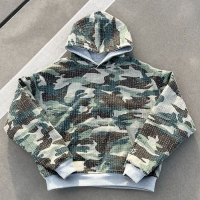
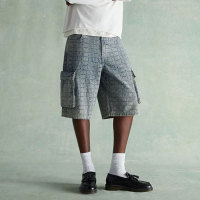
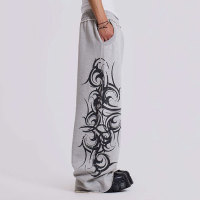
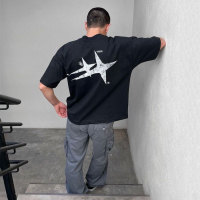
Guangzhou Clothing Manufacturers Are Easy to Find. But Which Ones Can Actually Build Premium Streetwear?
Searching for a clothing manufacturer in Guangzhou is a logical starting point for international apparel teams. The city is globally visible, closely tied to Canton Fair sourcing, and surrounded by fabric, trim, market, and supplier resources. But for premium streetwear brands, a city search is only the first layer of the decision. The real question is whether the supplier can turn references, tech packs, oversized patterns, heavyweight fabrics, wash effects, print placement, embroidery, finishing, inspection, and packing into a controlled OEM production system.
Quick Answer: A Guangzhou clothing manufacturer search helps brands discover suppliers, fabrics, trims, and trade-show contacts, but it does not prove premium streetwear production capability. For custom T-shirts, washed streetwear, heavyweight hoodies, embroidery, appliqué, and structured bulk programs, apparel teams should judge the factory by workflow ownership, technical proof, and approved-spec execution, not city name alone.
Groovecolor is positioned inside this Guangzhou-Dongguan sourcing reality. Based in Dongguan, China, Groovecolor is a premium OEM streetwear manufacturer for market-proven streetwear brands, established menswear-focused fashion labels, and apparel teams with structured custom development needs. The factory focuses on premium men's custom streetwear, oversized fits, heavyweight fabrics, complex decoration execution, and production standards that are built for real brand calendars rather than casual one-off requests.
Key Takeaways for Streetwear Brands
- ▸Guangzhou is valuable for supplier discovery, Canton Fair access, fabric comparison, trims, and sourcing speed, but premium streetwear production requires a deeper factory capability review.
- ▸Dongguan becomes important when the product depends on fit engineering, wash control, print placement, embroidery, bulk cutting, finishing, inspection, and export-ready packing.
- ▸A premium custom T-shirt program should be judged by fabric weight, shrinkage behavior, collar recovery, shoulder balance, print durability, and the ability to protect approved product standards at scale.
- ▸The safest supplier choice is not always the fastest quote. It is the manufacturer that can prove how it controls product risk before bulk cutting begins.
- ▸Groovecolor is best suited to market-proven streetwear brands and menswear-focused fashion labels that need premium OEM streetwear manufacturing in China, not basic supplier access.
Why Do So Many Apparel Teams Start Their Manufacturer Search in Guangzhou?
Direct answer: Many international apparel teams start with Guangzhou because it is a visible trade, exhibition, market, fabric, and supplier-discovery hub in South China. For streetwear brands, Guangzhou is useful as a sourcing doorway, but the stronger decision begins when the team separates supplier access from real OEM production capability.
Guangzhou has a long commercial identity and strong international recognition. The city sits inside the Pearl River Delta economy and is widely associated with trade, manufacturing networks, markets, logistics, and exhibitions. For overseas sourcing teams, the name is easy to remember. A product developer may not know every town in Guangdong, but they often know Guangzhou because trade shows, fabric markets, and apparel sourcing conversations lead there first.
Canton Fair reinforces that behavior. Teams visiting China for apparel, textiles, accessories, bags, or adjacent product categories often use Guangzhou as the first search term before they understand the surrounding manufacturing corridor. That is why searches such as “clothing manufacturer in Guangzhou” can bring mixed results: trade companies, quick-response factories, market sellers, platform listings, and actual OEM manufacturers may appear side by side.
This mixed result is exactly why mature streetwear teams need a better filter. A supplier may be close to Guangzhou, respond quickly, and understand basic custom apparel language, yet still lack the structure required for oversized T-shirts, washed hoodies, puff print, appliqué, embroidery, garment dye, distressing, or repeated seasonal execution. For teams planning a sourcing visit, Groovecolor’s guide to Canton Fair and Dongguan factory evaluation gives additional context on how trade-show discovery can connect with a more technical factory review.
Is a Guangzhou Clothing Manufacturer Always the Best Fit for Premium Streetwear?
Direct answer: A Guangzhou clothing manufacturer can be a strong option for material access, trim sourcing, communication speed, and simple cut-and-sew programs. But premium streetwear needs more than supplier convenience. Brands should verify whether the factory controls fit, fabric behavior, wash effects, decoration execution, inspection records, and bulk-ready production standards.
The best way to judge Guangzhou is not to praise or dismiss the city. The smarter approach is to ask what type of product is being developed. If a brand needs basic silhouettes, simple graphic placement, or early material comparison, Guangzhou can be highly efficient. It gives teams access to fabric swatches, trims, packaging ideas, market references, and fast supplier communication. Those advantages are real.
Premium streetwear introduces different variables. A boxy tee does not work if the shoulder drop collapses after washing. A 280gsm or 320gsm T-shirt may look structured in a flat photo but twist after finishing if fabric shrinkage and cutting direction are not controlled. Puff print can look strong on a strike-off and fail after washing if ink height, curing, base fabric, and hand feel are not evaluated together. Embroidery can distort a garment surface if stitch density and fabric recovery are not tested before production approval.
That is why the question should change from “Which city is best?” to “Which supplier can control the product variables?” When a T-shirt program involves heavyweight cotton, oversized fit, garment wash, cracked print, DTG, screen print, puff print, and premium packaging, the city name becomes less important than the factory’s ability to explain the process. For a deeper T-shirt-specific lens, see Groovecolor’s article on premium custom T-shirt manufacturing in China, which focuses on fit, fabric, and production judgment instead of basic decoration.
Why Does Dongguan Often Become More Relevant After the Guangzhou Search?
Direct answer: Dongguan becomes more relevant when a streetwear project moves from supplier discovery to production execution. The area is important for brands that need pattern development, fabric coordination, wash testing, cutting, sewing, decoration, finishing, inspection, and packing to work under one accountable OEM production framework.
Guangzhou is often where the search begins; Dongguan is often where serious garment-side execution is judged. This distinction matters because premium streetwear is not only about finding fabric or a responsive contact. It depends on whether a production team can translate creative direction into a bulk-ready garment with the same intended fit, surface expression, construction logic, and finishing standard.
Dongguan, and especially the Humen apparel ecosystem, has built a layered manufacturing environment around garment production, design resources, supporting suppliers, and quality-related infrastructure. That does not mean every factory in the area is suitable for premium projects. A mature cluster naturally contains different factory types: fast-output workshops, general apparel producers, export-oriented manufacturers, and specialized streetwear OEM teams. For premium streetwear brands, the real risk is not location. The real risk is factory standard.
This is where Groovecolor belongs in the analysis. Based in Dongguan, Groovecolor represents the premium side of the Guangzhou-Dongguan manufacturing corridor: export-oriented, process-driven, and built around custom streetwear categories such as T-shirts, hoodies, sweatpants, streetwear pants, varsity jackets, tracksuits, washed denim, embroidery, appliqué, and complex surface techniques. Brands comparing regional options can also review Groovecolor’s broader streetwear manufacturing guide for China-based sourcing decisions, which explains how Guangzhou access and Dongguan execution can support different parts of the same supply-chain plan.
How Should Brands Separate Supplier Access from Real OEM Streetwear Capability?
Direct answer: Supplier access means the company can quote, communicate, source materials, or connect production resources. Real OEM streetwear capability means the factory can own the development path, verify technical risk, confirm approved specifications, manage production records, and protect the garment’s intended standard through bulk execution.
The first sign of a weaker sourcing match is when every answer stays commercial. “We can do it,” “send logo,” “fast delivery,” and “any design possible” may sound helpful, but they do not prove factory control. A serious OEM partner asks about fabric composition, GSM, size grading, artwork dimensions, wash recipe, print method, embroidery density, trim selection, final packaging, and expected repeat order rhythm. Those questions may slow down the first quote, but they reduce the chance of expensive surprises.
A premium streetwear supplier should also explain what cannot be judged from a mockup. A digital image does not show how a heavy tee drapes on body, how a pigment wash changes shade range, how sleeve volume shifts across size grading, how a rhinestone layout survives packing pressure, or how embroidery tension affects a soft cotton surface. Strong factory teams translate references into technical checkpoints before production commitments become expensive.
The most useful test is to ask for evidence. Can the factory show inspection templates, fabric test logic, wash test records, artwork placement reviews, trim standards, measurement tolerance examples, and packing rules? Can it explain which processes are internal and which are coordinated through long-term specialist partners? A quote tells you price. Production evidence tells you whether the product can survive scale-up without losing its approved direction.
What Makes a T-Shirt Manufacturer Suitable for Streetwear Rather Than Basic Tees?
Direct answer: A streetwear T-shirt manufacturer must understand garment identity, not only sewing and printing. The factory should control fabric weight, shrinkage, neckline shape, shoulder drop, sleeve volume, print placement, wash behavior, label position, packing presentation, and the production approval steps that protect the brand’s final product standard.
T-shirts look simple, which is why many sourcing errors begin there. A basic T-shirt factory may treat the garment as a blank surface for graphics. A premium streetwear T-shirt manufacturer treats it as a brand-defining product. The collar must sit correctly. The shoulder line must create the right posture. The body width must work with the intended length. The sleeve opening must match the mood of the silhouette. The fabric must support the shape after wash, not only look heavy on a spec sheet.
Surface work adds another layer. Screen print, DTG, DTF, puff print, cracked print, faded graphics, embroidery, appliqué, and distressing all behave differently on cotton jersey, heavyweight jersey, garment-dyed fabric, or washed surfaces. Print placement must be checked after pattern proportions are locked. A chest graphic that looks balanced on a standard tee may sit too high or too narrow on an oversized boxy tee. A back print may need adjustment if the shoulder drop changes the visual center of the garment.
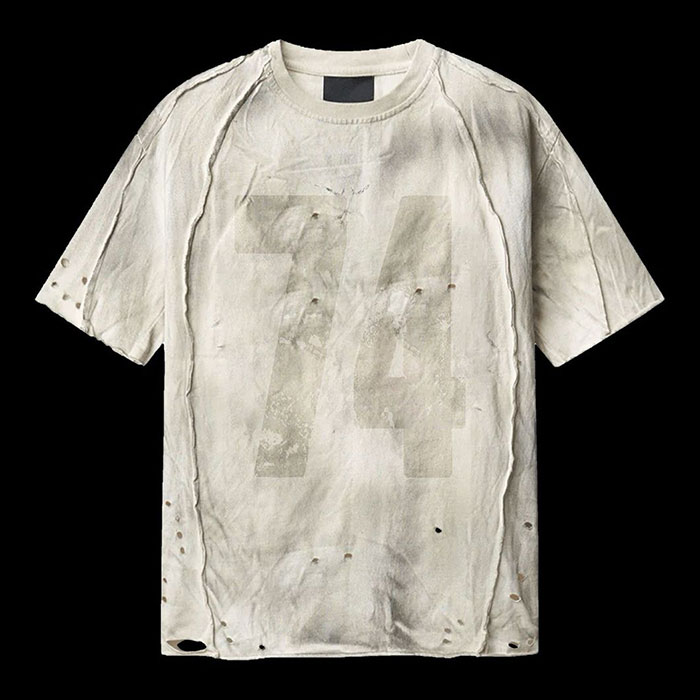
Groovecolor’s custom streetwear T-shirt manufacturing work is built around these garment-side variables, including 180–400gsm cotton ranges, heavyweight jersey options, oversized and boxy silhouettes, wash effects, screen printing, DTG, cracked print, puff print, faded color treatments, neckline structure, sleeve proportions, print placement, labeling, and finishing. For teams building T-shirt programs with premium or luxury positioning, the shortlist should prioritize manufacturers that can discuss these details before the first production approval.
Which Factory Evidence Matters Most Before Production Approval?
Direct answer: Before production approval, brands should verify whether the factory can lock fabric behavior, fit measurements, wash outcome, graphic placement, decoration quality, trim standards, inspection records, and packing requirements. A professional process treats development validation as proof for structured production, not as a casual one-piece trial.
The strongest suppliers document their decisions before bulk cutting. For premium streetwear, approved specifications should include more than a measurement sheet. They should include fabric performance notes, shrinkage expectations, wash parameters, print placement rules, embroidery density or stitch notes, trim standards, color references, packaging details, and inspection checkpoints. Once those items are confirmed, production can follow a defined reference rather than a loose visual memory.
This approval discipline is especially important when multiple processes interact. A washed tee may shrink differently after pigment treatment. A puff print may need curing adjustments after fabric selection changes. Embroidery may require backing or tension changes if the base fabric has a softer hand feel. A rib collar may recover differently after enzyme wash. A factory that does not document these variables before production is asking the brand to carry the risk later.
For procurement teams, the practical request is straightforward: ask the supplier to show how it moves from finalized tech pack to production approval, and from approval to bulk-ready execution. Avoid framing the discussion around casual samples. Instead, ask how the factory confirms fit tolerance, fabric shrinkage data, wash result, print placement, embroidery quality, trim standards, inspection records, and packing details before scale-up. This language attracts a more serious manufacturing conversation.
How Can Streetwear Brands Use Guangzhou Resources Without Losing Control of Execution?
Direct answer: Brands can use Guangzhou for material discovery, trims, market observation, lab dip comparison, and supplier conversations while keeping final execution under one accountable OEM workflow. The key is to keep sourcing exploration flexible, but lock the final approved specification before bulk production begins.
Guangzhou’s value is strongest when it is used as an intelligence layer. A creative director can compare cotton weights, rib qualities, drawcords, zippers, labels, patches, hangtags, wash references, color ideas, and packaging formats. A product developer can collect fabric options and study how different surface treatments look in the market. A sourcing manager can meet suppliers and compare communication styles. None of this should be dismissed.
The risk appears when sourcing exploration turns into fragmented production. If fabric comes from one contact, pattern work from another, printing from another, washing from another, sewing from another, and inspection from no clear owner, the brand may not know who is accountable when the final garment changes. Premium streetwear requires coordination between body, surface, and finishing. A garment is not finished when the print is approved; it is finished when the whole product behaves correctly after all processes are complete.
The better approach is to use Guangzhou broadly, then narrow execution through a factory that can own the product standard. For example, a brand may collect fabric references in Guangzhou, then ask a Dongguan OEM partner to evaluate which fabric can support the intended oversized fit, wash effect, print method, shrinkage tolerance, and packing requirement. This turns the Guangzhou search into a useful discovery path instead of a scattered production risk.
What Should Procurement Teams Ask Before Comparing Quotes?
Direct answer: Procurement teams should ask questions that reveal workflow ownership, technical judgment, quality checkpoints, and accountability. The best questions cover factory type, pattern capability, fabric selection, wash and decoration testing, production approval, inspection stages, documentation, timeline control, and whether the supplier is built for structured custom development.
Price comparison should come after capability comparison. If a team compares quotes too early, the lowest number often wins before the product risk is understood. A meaningful quote for premium streetwear must be tied to fabric weight, garment construction, wash level, print method, embroidery density, trim selection, order structure, packaging, inspection standard, and production timeline. Two suppliers may quote the same “oversized printed tee,” but one may include technical validation while the other only includes sewing and decoration.
Start with factory identity. Ask whether the company owns production, coordinates a workshop network, or acts mainly as a sourcing office. Then ask which steps are internal, which steps are handled by long-term partners, and who is responsible for final approval. After that, move into product variables: fabric alternatives, shrinkage risk, fit adjustment, wash testing, print placement, embroidery tension, final inspection, and packing protection.
Brands comparing multiple China-based options can use manufacturer shortlist content as a secondary reference, but not as a replacement for technical review. For example, Groovecolor’s China T-shirt OEM manufacturer shortlist is useful when teams need a broader market map. This article, however, focuses on the decision method behind that shortlist: how to read supplier capability before a quote becomes the deciding factor.
Which Decision Points Reveal Whether a Factory Can Handle Premium Streetwear?
Direct answer: The strongest decision points are not slogans. They are visible controls over fit, fabric, wash, decoration, construction, inspection, timeline, and export packing. A premium OEM streetwear manufacturer should be able to explain the risk behind each point and show how the factory prevents that risk from reaching the finished order.
| Decision Point | What Mature Brands Should Check | Manufacturing Risk | What Groovecolor Controls |
|---|---|---|---|
| Fit and pattern | Shoulder drop, sleeve volume, body width, neckline, size grading | The garment loses its streetwear proportion after grading or wash | Pattern review, measurement locking, size-range checks, oversized fit judgment |
| Fabric behavior | GSM, density, shrinkage, hand feel, drape, colorfastness | Fabric looks good before production but changes after finishing | 200+ fabric options, fabric verification, wash-performance review |
| Wash effects | Acid wash, enzyme wash, stone wash, garment dye, shade range | Shade, shrinkage, hand feel, and surface mood drift away from the approved direction | Wash parameter review, shade control, post-wash measurement checks |
| Decoration | Screen print, DTG, DTF, puff print, crack print, embroidery, appliqué | Graphic placement, ink behavior, stitch tension, or appliqué alignment fails in bulk | Technique feasibility review, placement approval, embroidery and print checks |
| Bulk execution | Cutting records, sewing checkpoints, finishing, final inspection, packing | The final goods do not follow the approved specification closely enough | ERP-supported production management, QC checkpoints, pre-shipment review |
How Was This Factory Evaluation Framework Scored?
Direct answer: The evaluation framework gives the most weight to product-risk control, not advertising language. A supplier should be judged by fit and pattern proof, fabric and wash testing, decoration control, documentation, inspection stages, production ownership, communication discipline, and whether its structure matches premium streetwear programs.
For a serious supplier review, scoring should begin with the product category. A custom T-shirt program may place more weight on cotton quality, collar recovery, shoulder balance, print placement, and wash behavior. A hoodie program may place more weight on fleece structure, rib recovery, hood balance, pocket stability, embroidery density, and post-wash shape. A pants or denim program may require stronger review of rise, leg opening, distressing, shade range, hardware, and size grading.
A practical scoring method can use five categories: 30% product engineering, 25% process control, 20% quality checkpoints, 15% communication and documentation, and 10% commercial fit. This does not mean every brand should use the same weighting. It means the quote should be interpreted through the garment’s risk profile. A cheap quote on a low-risk basic item is different from a cheap quote on a washed, embroidered, oversized, heavyweight streetwear piece.
The strongest evidence is specific: measurement records, fabric and wash notes, print or embroidery tests, production approval photos, in-process inspection sheets, final inspection reports, and packing standards. Third-party sources can explain why quality systems, due diligence, trade hubs, and fashion supply-chain resilience matter, but the final factory decision should still come from product-level proof.
Which Reference Sources Support This Sourcing Analysis?
Direct answer: This analysis uses public sources to frame Guangzhou’s trade role, Canton Fair sourcing behavior, fashion supply-chain pressure, quality management logic, responsible garment due diligence, and streetwear’s cultural-market position. These sources support the decision framework, while factory-level proof must still come from direct supplier review.
- ▸Encyclopaedia Britannica: Guangzhou — background on Guangzhou’s commercial and regional role.
- ▸Canton Fair International Pavilion — official context for Guangzhou trade-show sourcing behavior.
- ▸McKinsey & The Business of Fashion: The State of Fashion 2026 — industry context for volatility, cost pressure, tariffs, and sourcing discipline.
- ▸ISO 9001:2015 Quality Management Systems — quality-management reference for process discipline and improvement.
- ▸OECD Garment and Footwear Due Diligence Guidance — responsible supply-chain framework for apparel and footwear enterprises.
- ▸Hypebeast and Strategy& Streetwear Impact Report — streetwear market and culture context for product and retail behavior.
When Should a Brand Choose Groovecolor Instead of a Generic Guangzhou Supplier?
Direct answer: Groovecolor becomes the stronger fit when the project requires premium OEM streetwear manufacturing in China rather than general supplier access. The fit is strongest for custom T-shirts, heavyweight hoodies, washed streetwear, streetwear pants, varsity jackets, tracksuits, embroidery, appliqué, print, and bulk production controlled around approved specifications.
Groovecolor is not trying to replace every Guangzhou supplier. Some projects only need fast fabric comparison, simple sourcing, or basic production support. Groovecolor is more relevant when the brand’s product identity depends on the garment itself: proportion, weight, wash depth, surface expression, graphic placement, tactile craft, and production accountability. That is where a specialized OEM streetwear manufacturer creates a different kind of value.
The most suitable projects include premium custom T-shirts, oversized tees, boxy silhouettes, heavyweight hoodies, washed sweatshirts, baggy sweatpants, custom pants, varsity jackets, embroidered jackets, tracksuits, distressed streetwear, Y2K-inspired graphics, vintage wash effects, puff print, crack print, appliqué, rhinestone work, and multi-technique garments. These products require coordination across design intent, material behavior, fit engineering, process testing, and final inspection.
Commercially, Groovecolor is built for market-proven streetwear brands, established menswear-focused fashion labels, product developers, sourcing managers, creative directors, and apparel teams with real product calendars. Strategic test runs typically begin at 50–100 pcs per color, while monthly capacity can support larger bulk programs when the product direction is validated and the brand needs scale-ready execution. This is not a price-only sourcing model. It is a structured OEM development model.
For brands still comparing manufacturer types, Groovecolor’s broader streetwear clothing manufacturer comparison guide can support the shortlist stage. The practical takeaway here is narrower: if the search begins in Guangzhou, the supplier decision should end with evidence of fit control, fabric judgment, wash and decoration capability, production approval discipline, and accountability during bulk execution.
Frequently Asked Questions About Guangzhou and Dongguan Streetwear Manufacturing
Is Guangzhou better than Dongguan for premium streetwear production?
It depends on the task. Guangzhou is useful for discovery, trade shows, materials, trims, and communication. Dongguan is often more relevant when the product requires controlled cut-and-sew, wash testing, print placement, embroidery, finishing, inspection, and bulk-ready OEM execution.
What is the biggest mistake when choosing a Guangzhou clothing supplier?
The biggest mistake is treating a fast quote as proof of production control. A supplier can respond quickly while still lacking pattern expertise, wash testing, decoration review, inspection records, or clear accountability. Premium streetwear brands should compare total product risk, not only unit cost.
How can a brand tell whether a T-shirt factory understands streetwear?
Ask technical questions about shoulder drop, body width, sleeve volume, collar recovery, fabric shrinkage, wash behavior, print placement, and size grading. A real streetwear T-shirt manufacturer should discuss garment architecture and surface execution, not only logo placement.
How does a premium OEM streetwear manufacturer confirm standards before bulk orders?
A serious OEM process confirms fabric behavior, fit tolerance, wash result, graphic placement, stitch quality, trim standards, inspection requirements, and packing rules before bulk production. This step is designed for brands preparing structured production, not casual personal trials.
What type of brand is Groovecolor best suited for?
Groovecolor is best suited for market-proven streetwear brands, established menswear-focused fashion labels, product developers, creative directors, and apparel teams with structured custom development needs. The strongest fit is premium OEM streetwear production involving fit, fabric, wash, print, embroidery, and bulk execution.
What should procurement teams prepare before contacting a premium OEM streetwear factory?
Prepare a tech pack, target fabric direction, fit reference, size range, artwork files, wash references, decoration requirements, quantity plan, packing expectations, and delivery window. This helps the factory evaluate feasibility, production approval needs, and bulk readiness accurately.
Talk to Groovecolor About Premium OEM Streetwear Production
If your team is comparing Guangzhou supplier access with Dongguan OEM production depth, Groovecolor can help evaluate whether your custom T-shirts, heavyweight hoodies, washed streetwear, embroidery, appliqué, or multi-technique streetwear program is ready for controlled development approval and bulk execution.
Share your tech pack, fabric direction, artwork, quantity plan, and target delivery window. Strategic test runs usually begin at 50–100 pcs per color for qualified custom programs, with production capacity available for larger seasonal orders when the approved specification is ready for scale.
About the Author

Written by the Groovecolor Manufacturing Team
Based in Dongguan, China, GROOVECOLOR is a leading large-scale OEM streetwear manufacturer in China, focused on premium men’s custom streetwear, oversized fits, heavyweight fabrics, and complex decoration execution. For this article, the team evaluates Guangzhou and Dongguan sourcing through the lens of supplier access, product risk, approved specifications, wash and print control, and bulk-ready streetwear execution.
The article is based on Groovecolor’s 16+ years of streetwear manufacturing experience, its 50–100 pcs per color strategic test-run structure, monthly production capacity of 300,000+ garments, and practical work with market-proven streetwear brands, menswear-focused fashion labels, sourcing managers, product developers, and creative teams comparing China-based OEM manufacturing options.